
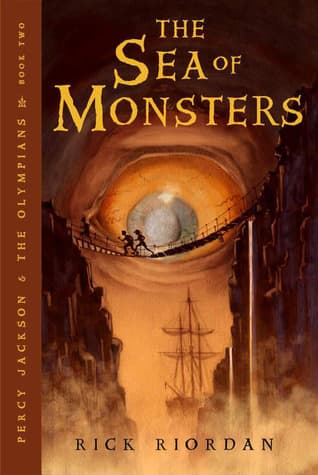
Synopsis
Covers the whole plot, including the ending.
- Difficulty
- Easy
- Pacing
- Fast
- Mood
- Exciting, Humorous, Adventurous
- Read it if
- You enjoy fast-paced adventures, Greek mythology, and stories about friendship and self-discovery.
- Skip it if
- You prefer realistic fiction or dislike action-heavy fantasy stories.
The Sea of Monsters Plot Summary
Covers the whole plot, including the ending.
A Normal School Year, Until the Monsters Arrive
Percy Jackson has a normal seventh-grade year at Meriwether College Prep, despite recurring dreams of Grover in trouble. His only real friend is Tyson, a large, homeless boy who seems impervious to insults. During a dodgeball game against new students, Percy realizes they are Laistrygonian giants when they begin throwing flaming projectiles. With Tyson's incredible strength and Annabeth Chase's timely arrival, Percy defeats the giants. Annabeth tells Percy that Camp Half-Blood is under attack and in danger, so they must flee. During their escape, Tyson reveals himself to be a Cyclops, much to Percy's shock and Annabeth's discomfort.
Camp Half-Blood Under Siege and a Prophecy Revealed
Percy, Annabeth, and Tyson arrive at Camp Half-Blood to find its magical borders failing, allowing monsters to breach the defenses. Thalia's pine tree, which provides the camp's protective barrier, has been poisoned. Chiron has been fired, replaced by Tantalus, a spirit from the Underworld who is cursed with eternal hunger and thirst and holds a grudge against demigods. Clarisse La Rue, daughter of Ares, gets a quest to find the Golden Fleece, believed to be the only cure for Thalia's tree. Percy believes he should go, haunted by a prophecy from the Oracle that mentions a child of the Big Three saving or destroying Olympus.
A Dangerous Journey to the Sea of Monsters
Despite Tantalus's refusal to grant him a quest, Percy decides to go after the Fleece with Annabeth and Tyson. Hermes helps them, providing supplies like thermoses containing the winds and a magical multivitamin. They hail a magical taxi, the Chariot of Damnation, driven by the three Graeae, who share one eye. Percy gives them a drachma and briefly takes their eye for information about their destination – the Sea of Monsters. He learns the coordinates: 30, 31, 75, 12. They escape the taxi, which is a monster, and find themselves at a cruise ship called the Princess Andromeda, which Percy recognizes from his dreams.
Encounter with Luke and the Princess Andromeda
On board the Princess Andromeda, Percy, Annabeth, and Tyson discover it is Luke Castellan's base. Luke reveals his plan to resurrect Kronos, the Titan Lord, using the Golden Fleece. He captures them and tries to turn Percy against the gods, explaining his resentment towards them. Luke shows a golden sarcophagus where Kronos's essence is slowly re-forming. With Tyson's strength and Annabeth's quick thinking, they escape Luke's forces, including a Manticore, by jumping overboard. A group of Hippocampi, led by a female named Rainbow, rescue them from the ocean. They recognize Tyson and take them towards their destination.
Circe's Island and the Sirens
The Hippocampi take Percy, Annabeth, and Tyson to a spa resort island, which is Circe's island. Circe, a sorceress, tries to transform Percy into a guinea pig, successfully doing so before Annabeth, using Hermes' multivitamin, transforms him back. They escape Circe's island and continue their journey. Annabeth wants to visit the Sirens' island, hoping to hear their song and gain insight into her greatest desires and fears. Percy reluctantly ties her to the mast, but she breaks free and is tormented by visions before Percy rescues her. He learns about her insecurity and desire for her parents' approval and a better world.
The Clashing Rocks and Clarisse's Arrival
Their journey leads them to the strait between Charybdis and Scylla, the Clashing Rocks, a dangerous passage. They decide to navigate through Charybdis, hoping it will be less destructive than Scylla. During the attempt, Tyson falls overboard and is presumed dead, devastating Percy. Soon after, they encounter Clarisse's ship, the CSS Birmingham, powered by Confederate zombie sailors. Clarisse, having failed to navigate the strait, is in trouble. Percy and Annabeth board her ship, and Percy reveals himself, convincing Clarisse to work together. He helps fix her ship, and they resume the quest, mourning Tyson's loss.
Polythemus's Island and Grover's Predicament
Following the coordinates from the Graeae, they arrive at Polyphemus's island, where the Golden Fleece is. They find Grover, captured by Polyphemus and mistaken for a female Cyclops, and also discover the Golden Fleece. Polyphemus is a giant, one-eyed Cyclops who guards the Fleece. Percy, Annabeth, and Clarisse plan to rescue Grover and retrieve the Fleece. They use their wits and strength, with Annabeth distracting Polyphemus while Percy and Clarisse try to free Grover and get the Fleece. During the confrontation, Tyson reappears, rescued by a Hippocampus, much to Percy's relief and joy.
Retrieving the Fleece and a Difficult Escape
Tyson's unexpected return helps. He fights Polyphemus with Percy, using his Cyclops strength to overpower the giant. Annabeth's quick thinking and Grover's knowledge of the island also help them succeed. They blind Polyphemus with a stick, like Odysseus's trick, and retrieve the Golden Fleece. Escaping the island with the Fleece and the now-freed Grover is another challenge. They face more of Polyphemus's sheep and navigate the terrain, making their way back to Clarisse's ship, the Birmingham, which waits for them near the shore.
A Race Against Time and Luke's Ambush
With the Golden Fleece secured, Clarisse is tasked with returning it to Camp Half-Blood by Ares, who appears to her in a dream. Percy, Annabeth, Tyson, and Grover travel separately back to camp, unsure if they will make it in time. Luke intercepts them on the Princess Andromeda, demanding the Fleece. A battle happens on the ship. Percy and Luke duel, where Luke reveals his full power and loyalty to Kronos. Luke wants to stop Percy and get the Fleece for his own purposes, using it to empower Kronos.
The Fleece's Power and a Shocking Reawakening
Luke wounds Percy with a poisoned blade, but they escape, thanks to Tyson's intervention and Annabeth's quick thinking. Clarisse successfully delivers the Golden Fleece to Camp Half-Blood just in time. The Fleece's magic immediately begins to heal Thalia's poisoned tree, restoring the camp's protective barrier and driving away the monsters. The Fleece's healing power has an unforeseen side effect: Thalia Grace, daughter of Zeus, who was turned into a pine tree years ago to save her life, is resurrected as a human. This reawakening changes the Great Prophecy, as there are now two children of the Big Three (Percy and Thalia) who could fulfill it.
Principal Figures
Percy Jackson
Protagonist
Son of Poseidon, burdened by prophecy and seeking to save his friends and camp.
Percy is a brave, loyal, and often sarcastic demigod, son of Poseidon. In this book, he struggles with feelings of inadequacy and being overshadowed, especially when Clarisse is given the quest. He grapples with the responsibility of the Great Prophecy and his role in it. His loyalty to his friends, particularly Grover and Tyson, drives many of his decisions. He also displays a growing sense of leadership and strategic thinking, though he often acts impulsively. His bond with Tyson, his Cyclops half-brother, is a central part of his emotional journey.
Relationships: Annabeth Chase (Best friend, intellectual partner, unacknowledged romantic tension); Tyson (Half-brother, loyal companion, source of comfort and strength); Grover Underwood (Best friend, satyr protector); Luke Castellan (Antagonist, former friend, betrayer); Clarisse La Rue (Rival, reluctant ally, fellow demigod)
Annabeth Chase
Supporting
Daughter of Athena, highly intelligent strategist and loyal friend.
Annabeth is fiercely intelligent, a skilled strategist, and a loyal friend to Percy. She often acts as the brains of the operation, using her knowledge of Greek mythology and battle tactics to help them out of dangerous situations. Her deepest desire, revealed by the Sirens, is for her parents to approve of her and for a world built by demigods, showcasing her ambition and underlying insecurities. She initially struggles to accept Tyson due to her past traumatic experiences with Cyclopes but eventually comes to trust and even care for him.
Relationships: Percy Jackson (Best friend, intellectual partner, unacknowledged romantic tension); Tyson (Initially distrustful, later accepting and protective friend); Grover Underwood (Friend, fellow quest member); Luke Castellan (Former crush, now an enemy she struggles to reconcile with)
Tyson
Supporting
Percy's Cyclops half-brother, kind-hearted and incredibly strong.
Tyson is a young Cyclops, son of Poseidon and therefore Percy's half-brother. He is initially mistaken for a homeless boy due to his disheveled appearance and simple nature. Despite his immense strength and size, Tyson is gentle, innocent, and incredibly loyal, especially to Percy. He is sensitive to the prejudice he faces from others, particularly Annabeth at first, but his unwavering kindness eventually wins them over. His unique abilities, such as being immune to fire and able to talk to horses (Hippocampi), prove vital to the quest. He is a powerful force for good and a symbol of unconditional love and acceptance.
Relationships: Percy Jackson (Half-brother, best friend, protector); Annabeth Chase (Initially wary, later a trusted friend); Poseidon (Father)
Grover Underwood
Supporting
Percy's satyr best friend, captured while searching for Pan.
Grover is Percy's best friend and satyr protector. He is kind-hearted, anxious, and deeply committed to his search for the lost god Pan. At the beginning of the book, he is in distress, having been captured by Polyphemus and mistaken for a female Cyclops. His resourcefulness and knowledge of nature, even when trapped, prove useful. His desire to find Pan leads him to the Sea of Monsters, which inadvertently puts him in danger but also leads to the discovery of the Golden Fleece. He provides comic relief but also demonstrates courage when it truly matters.
Relationships: Percy Jackson (Best friend, charge); Annabeth Chase (Friend, fellow quest member); Tyson (Friend)
Luke Castellan
Antagonist
Son of Hermes, bitter demigod, and loyal servant of Kronos.
Luke is the primary antagonist, a charismatic but deeply resentful son of Hermes. He is driven by a profound hatred for the Olympian gods, whom he believes are neglectful and uncaring. He serves as Kronos's general, recruiting demigods to his cause and orchestrating the poisoning of Thalia's tree. He is cunning, manipulative, and powerful, wielding Backbiter, a sword that can harm both mortals and immortals. His personal history with Annabeth and Percy makes his betrayal particularly painful, highlighting the theme of broken trust and the dangers of unchecked resentment.
Relationships: Percy Jackson (Former friend, now archenemy); Annabeth Chase (Former friend and crush, now an enemy she struggles to fight); Kronos (Master, entity he serves)
Clarisse La Rue
Supporting
Daughter of Ares, tough and competitive, chosen for the quest.
Clarisse is a formidable and aggressive daughter of Ares. She is initially portrayed as a bully but reveals a deeper sense of duty and loyalty to Camp Half-Blood. She is chosen by her father, Ares, to retrieve the Golden Fleece, much to Percy's chagrin. Despite her rivalry with Percy, she shows a grudging respect and even cooperation when their goals align. Her determination and courage, though often masked by her tough exterior, are evident during the quest. She is ultimately successful in her mission, demonstrating her capabilities as a hero.
Relationships: Percy Jackson (Rival, reluctant ally); Ares (Father); Annabeth Chase (Fellow demigod, occasional ally)
Chiron
Supporting
Centaur activities director, unjustly fired from Camp Half-Blood.
Chiron is a wise and ancient centaur, the activities director at Camp Half-Blood and a mentor to countless heroes, including Percy. He is a calm and knowledgeable presence. At the beginning of the book, he is unfairly fired by the Olympian Council, accused of poisoning Thalia's tree, which causes significant distress and instability at the camp. His absence leaves a void of leadership and guidance, emphasizing his importance. His firing is a direct result of Luke's machinations, further highlighting the extent of the threat to the demigod world.
Relationships: Percy Jackson (Mentor, friend); Dionysus (Colleague); Olympian Council (Employers)
Tantalus
Supporting
Accursed spirit, temporary director of Camp Half-Blood, hostile to demigods.
Tantalus is an unfortunate spirit from the Underworld, eternally cursed with hunger and thirst just out of reach. He is appointed as the temporary activities director of Camp Half-Blood after Chiron's dismissal. Tantalus is petty, vindictive, and openly hostile towards demigods, particularly Percy, whom he tries to sabotage. He is an ineffective and cruel leader, embodying the gods' sometimes arbitrary and harsh punishments. His presence at camp highlights the dire situation and the lack of proper guidance for the young heroes, further motivating Percy to take matters into his own hands.
Relationships: Percy Jackson (Antagonistic superior); Dionysus (Colleague); Olympian Council (Appointer)
Polyphemus
Antagonist
Giant Cyclops, guardian of the Golden Fleece, captor of Grover.
Polyphemus is a gigantic, one-eyed Cyclops who lives on an island in the Sea of Monsters, guarding the Golden Fleece. He is a direct reference to Homer's Odyssey, being a son of Poseidon and a shepherd of monstrous sheep. He is depicted as brutish, slow-witted, and incredibly strong. He captures Grover, mistaking him for a female Cyclops, and intends to marry him. He is a formidable physical threat, but his arrogance and lack of foresight are his weaknesses, allowing Percy and his friends to outsmart him and retrieve the Fleece.
Relationships: Grover Underwood (Captor/intended spouse); Percy Jackson (Adversary); Poseidon (Father)
Thalia Grace
Mentioned/Supporting
Daughter of Zeus, resurrected at the end of the book, formerly a pine tree.
Thalia Grace is the daughter of Zeus, who, years before the events of the series, sacrificed herself to protect her friends, including Luke and Annabeth, from monsters. Zeus, in an act of mercy, turned her into a pine tree, which then formed the magical barrier protecting Camp Half-Blood. Her poisoned tree is the central problem driving the plot. Her unexpected resurrection at the end of the book is a critical twist, as it introduces another child of the Big Three, directly impacting the Great Prophecy and changing the future dynamics of the demigod world. She is a powerful and significant figure, even in her brief re-appearance.
Relationships: Zeus (Father); Luke Castellan (Former friend); Annabeth Chase (Former friend); Percy Jackson (Fellow child of the Big Three)
Themes & Insights
Family and Brotherhood
The theme of family, especially brotherhood, is central to the story, mainly through Percy's relationship with Tyson. Percy at first struggles to accept Tyson as his half-brother, feeling embarrassed and protective, but quickly grows to deeply love and rely on him. Their bond goes beyond their differences, showing that family is about unconditional love and loyalty, not just shared lineage or appearance. This theme is also seen in Luke's twisted sense of family, as he seeks to build a new world free from the gods he feels abandoned him, forming a dark parallel to Percy's quest for belonging.
“He's my brother," Percy said, pulling Tyson closer. "He's not stupid. He's just... different.”
Prejudice and Acceptance
Prejudice is a recurring theme, most notably through how Tyson is treated. Annabeth at first shows strong distrust and fear of Tyson due to a past traumatic experience with a Cyclops, mirroring the broader demigod community's dismissive attitude towards him. Tyson's innocence and kindness, however, slowly break down these barriers, forcing characters like Annabeth to confront their preconceived notions. This theme shows the importance of looking beyond appearances and past experiences to judge individuals on their own merits, advocating for empathy and acceptance in a world often quick to categorize and fear the 'other'.
“He looked at me with those big, innocent brown eyes, and I knew I couldn't leave him. Not ever.”
The Nature of Heroism and Leadership
The book explores what makes a hero and a good leader. Percy questions his own heroism when Clarisse is chosen for the quest, and he struggles with the burden of prophecy. He learns that heroism is not just about divine parentage or prophecies, but about loyalty, self-sacrifice, and making difficult choices for the greater good. Tantalus's bad leadership at Camp Half-Blood shows that true leadership requires empathy, trust, and the ability to inspire, not just authority or punishment. Percy's actions throughout the quest confirm his role as a compassionate and capable leader.
“Being a hero doesn't mean you're invincible. It just means you're brave enough to stand up and do what's needed.”
Consequences of Neglect and Resentment
This theme is shown by Luke Castellan. His bitterness towards the Olympian gods comes from a perceived sense of neglect and abandonment, which he uses to recruit other demigods who feel the same way. His actions, from poisoning Thalia's tree to attempting to resurrect Kronos, are direct results of his resentment. The gods' past failures, such as not claiming their children and their internal squabbles, create fertile ground for Luke's rebellion. The book suggests that such neglect can lead to bad outcomes, showing the importance of accountability and addressing grievances before they turn into destructive forces.
“The gods don't care about us, Percy. They never have. We're just pawns in their games.”
Sacrifice and Redemption
The idea of sacrifice is throughout the story. Thalia's original sacrifice to save her friends, transforming into a tree, starts the plot. The quest for the Golden Fleece is an attempt to make up for this sacrifice and restore the camp's safety. Tyson's presumed death and miraculous return show how characters are willing to sacrifice themselves for loved ones. The healing of Thalia's tree, while saving the camp, also brings about her unexpected resurrection, creating new dilemmas and setting up future themes of destiny and choice.
“A hero's life is about sacrifice, Percy. Sometimes, the hardest choices are the ones you have to make for others.”
Plot Devices & Literary Techniques
The Golden Fleece
A magical artifact with immense healing and restorative powers.
The Golden Fleece serves as the primary MacGuffin of the story, the object that drives the entire quest. Its legendary healing and restorative properties are crucial for saving Thalia's poisoned tree, which in turn protects Camp Half-Blood. Its power is so immense that it not only heals the tree but also resurrects Thalia herself, introducing a significant twist. The Fleece symbolizes hope and the potential for renewal, but also carries the unexpected consequence of altering the Great Prophecy, making it a catalyst for future conflicts.
Thalia's Pine Tree
A magical barrier for Camp Half-Blood, poisoned by Luke.
Thalia's pine tree is a powerful symbol and a critical plot device. It literally forms the magical border protecting Camp Half-Blood, imbued with the life force of Thalia Grace. Its poisoning by Luke is the inciting incident, creating an immediate and dire threat to the demigods. The tree's deteriorating health mirrors the vulnerability of the camp and the growing power of Kronos's forces. Its healing by the Golden Fleece at the climax signifies the temporary victory of the heroes, but its side effect – Thalia's resurrection – fundamentally alters the future of the series.
The Great Prophecy
An ancient prophecy foretelling a child of the Big Three's choice.
The Great Prophecy, first introduced in 'The Lightning Thief,' continues to be a driving force and a source of tension. It foretells that a child of one of the Big Three (Zeus, Poseidon, Hades) will reach sixteen and make a choice that will either save or destroy Olympus. Percy's existence already makes him a candidate, but the unexpected resurrection of Thalia Grace, a daughter of Zeus, at the end of the book adds another potential candidate. This device creates suspense and raises the stakes, as the identity of the prophesied child and the nature of their choice remain ambiguous, shaping Percy's destiny and the overarching narrative.
The Princess Andromeda
Luke's monster-filled cruise ship and base of operations.
The Princess Andromeda functions as a mobile antagonist headquarters and a symbol of Luke's growing power and influence. It is a cruise ship that has been converted into a base for Kronos's army, filled with monsters and disillusioned demigods. This device allows Luke to operate covertly and move his forces around, making him a more elusive and dangerous threat. It also serves as a stage for key confrontations, such as Percy's infiltration and his duel with Luke, highlighting the scale of the rebellion against the gods and the reach of Kronos's influence.
The Sea of Monsters (Bermuda Triangle)
A dangerous mythical region where the quest takes place.
The Sea of Monsters is not just a setting but a crucial plot device, representing a dangerous, untamed, and mythologically rich area. It is identified as the Bermuda Triangle, grounding the fantastical elements in a recognizable, mysterious real-world location. This sea is home to various mythical creatures and perils, including Scylla, Charybdis, Circe's island, and Polyphemus's island. It serves as a literal and metaphorical journey into the unknown, testing the heroes' courage, resourcefulness, and bonds, and is the only place where the Golden Fleece can be found, making it the unavoidable destination for the quest.
The Sea of Monsters Quotes
“Families are messy. Immortal families are eternally messy. Sometimes the best we can do is to remind each other that we're related for better or for worse... and try to keep the maiming and killing to a minimum.”
“Even strength must bow to wisdom sometimes.”
“The real story of the Fleece? There were these two children of Zeus, Cadmus and Europa, and they sailed on the Argo, blah, blah, blah. They ended up in Colchis, where they stole the Fleece from the dragon, blah, blah, blah.”
“If my life is going to mean anything, I have to live it myself.”
“Don't feel bad, I'm usually about to die.”
“The sea does not like to be restrained.”
“You deal with mythological stuff for a few years, you learn that paradises are usually places where you get killed.”
“A half-blood of the eldest gods, shall reach sixteen against all odds.”
“I'm not going to die for you.”
“Sometimes mortals can be more horrible than monsters.”
“That's the thing about being a hero: sometimes you have to fight even when you know you can't win.”
“The Fleece can heal anything, even the land.”
“I'd rather fight a hundred monsters than take a math test.”
“Friendship is a powerful weapon.”
Quiz
10 questions on the plot and the characters. Each answer comes with a short explanation.
Question 1
What is the main reason Percy Jackson must retrieve the Golden Fleece in 'The Sea of Monsters'?
- To prove himself as a hero to the gods
- To save his friend Grover from Polyphemus
- To heal the poisoned Thalia's tree and protect Camp Half-Blood
- To win a bet with Hermes
Show answer
C. To heal the poisoned Thalia's tree and protect Camp Half-Blood The Golden Fleece has healing properties, and Percy needs it to cure Thalia's tree, which protects Camp Half-Blood from monsters. The tree was poisoned by Luke, threatening the camp's safety.
Question 2
Who is revealed to be Percy's half-brother in 'The Sea of Monsters'?
- Luke Castellan
- Tyson
- Grover Underwood
- Clarisse La Rue
Show answer
B. Tyson Tyson, who initially appears as a homeless boy, is revealed to be a Cyclops and Percy's half-brother, as both are sons of Poseidon.
Question 3
What mythological creature does Percy and his friends encounter on the Princess Andromeda cruise ship?
- A Siren
- A Hydra
- A Scylla and Charybdis
- A Sphinx
Show answer
D. A Sphinx On the Princess Andromeda, which is controlled by Luke, Percy and his friends face a Sphinx that quizzes them with riddles before attacking.
Question 4
How does Percy initially react when he learns Tyson is his half-brother?
- He is excited and immediately accepts him
- He is confused but supportive from the start
- He is angry and rejects Tyson, feeling betrayed
- He doesn't believe it and ignores the revelation
Show answer
C. He is angry and rejects Tyson, feeling betrayed Percy struggles with the news, feeling hurt and betrayed because Tyson is a Cyclops, whom demigods often distrust. He eventually learns to accept and protect Tyson.
Question 5
What is the name of the island where the Golden Fleece is located in the Sea of Monsters?
- Ogygia
- Polyphemus's Island
- Aeaea
- The Lotus Casino
Show answer
B. Polyphemus's Island The Golden Fleece is on Polyphemus's Island, guarded by the Cyclops Polyphemus, who has captured Grover.
Question 6
Why does Clarisse La Rue also seek the Golden Fleece in the story?
- To gain glory for herself and her father Ares
- To help Percy out of friendship
- To trade it for a powerful weapon
- To destroy it and prevent its misuse
Show answer
A. To gain glory for herself and her father Ares Clarisse, daughter of Ares, is on a quest assigned by her father to retrieve the Fleece, aiming to bring honor to herself and Ares, showing rivalry with Percy.
Question 7
What key lesson does Percy learn about leadership during his quest in 'The Sea of Monsters'?
- That strength alone wins battles
- That trusting and working with others, even rivals, is crucial
- That gods should always be obeyed without question
- That quests are best done alone
Show answer
B. That trusting and working with others, even rivals, is crucial Percy learns to collaborate with others, including accepting help from Tyson and working with Clarisse, emphasizing teamwork over solo heroism.
Question 8
How does the prophecy from the Oracle affect Percy's decisions in the book?
- It tells him exactly how to retrieve the Fleece, making his quest easy
- It warns him to fail the quest to avoid a greater disaster
- It predicts a betrayal by a friend, causing him to distrust everyone
- It guarantees his success, so he acts recklessly
Show answer
C. It predicts a betrayal by a friend, causing him to distrust everyone The prophecy includes the line 'You shall be betrayed by one who calls you a friend,' leading Percy to suspect his companions, which influences his interactions and adds tension.
Question 9
What mythological reference is made when Percy uses a 'party ponies' service during the quest?
- The Trojan Horse
- Pegasus
- The Hippocampi
- The Chariot of Helios
Show answer
C. The Hippocampi The 'party ponies' are actually Hippocampi, sea horses from Greek mythology, which Percy summons to help travel across the ocean, showcasing his connection to Poseidon.
Question 10
At the end of 'The Sea of Monsters', what major consequence results from using the Golden Fleece on Thalia's tree?
- The tree dies, forcing Camp Half-Blood to relocate
- Thalia is resurrected as a human, changing the Great Prophecy
- The Fleece loses its power forever
- Percy becomes immortal as a reward
Show answer
B. Thalia is resurrected as a human, changing the Great Prophecy The Golden Fleece's healing power not only cures the tree but also brings Thalia back to life, as she was turned into the tree. This revival impacts the prophecy about a child of the Big Three, setting up future conflicts.
The Sea of Monsters FAQ
What is 'The Sea of Monsters' about?
Percy Jackson, a demigod son of Poseidon, must retrieve the Golden Fleece from the Sea of Monsters to save Camp Half-Blood's magical borders from being destroyed by poison. Alongside his friends Annabeth Chase and his newly discovered cyclops half-brother Tyson, he faces monsters like the Sirens, Scylla and Charybdis, and the sorceress Circe while racing against his rival Luke Castellan.
Why should I read 'The Sea of Monsters'?
This book expands the Percy Jackson universe with deeper Greek mythology integration, introduces key characters like Tyson and Clarisse La Rue, and raises the stakes with a quest that directly threatens the safety of all demigods. It combines humor, fast-paced adventure, and emotional growth as Percy grapples with family secrets and loyalty.
What is the background/setting of 'The Sea of Monsters'?
The story alternates between modern-day New York, where Percy attends a troubled school year, and mythical locations like Camp Half-Blood, the Princess Andromeda cruise ship (controlled by Luke), and the Sea of Monsters (the Bermuda Triangle), which is infested with ancient Greek monsters and dangers.
What are the most memorable quotes?
Key quotes include Percy's realization 'Families are messy' reflecting his bond with Tyson, and Chiron's warning 'The Fleece has the power to heal the land, but also to corrupt,' highlighting the quest's dual nature. Annabeth's line 'You're not getting away from me. Never again' underscores their deepening friendship.
What writing style does the author use?
Rick Riordan employs a first-person narrative from Percy's perspective, blending sarcastic humor with accessible explanations of Greek myths. The style is fast-paced and action-oriented, using short chapters and cliffhangers to appeal to young readers while weaving in themes of identity and heroism.
What minor details add significant meaning?
Percy's dream sequences of Grover in a wedding dress subtly foreshadow Grover's imprisonment by Polyphemus, while the 'AAA Unattended Monster Assistance' card from Hermes hints at the gods' indirect help. Tyson's ability to speak to mechanical objects, like the CSS Birmingham, underscores his unique cyclops traits tied to Hephaestus.
What are some subtle foreshadowing moments?
Early mentions of Thalia's pine tree weakening foreshadow the camp's vulnerability, and Percy's discomfort with Luke's new ship hints at Luke's alliance with Kronos. Clarisse's initial rivalry with Percy subtly sets up her crucial role in retrieving the Fleece, showing her growth as a hero.
What unexpected character connections exist?
Tyson is revealed as Percy's cyclops half-brother, sharing Poseidon as a father, which redefines Percy's view of family. Hermes, Luke's father, aids Percy by providing supplies, highlighting the complex parent-child dynamics among gods and demigods that drive the series' conflicts.
What are unspoken character motivations?
Luke seeks the Fleece not just to heal the camp but to resurrect Kronos, driven by resentment toward the gods for neglecting him. Annabeth's determination to succeed stems from her desire to prove herself after her failure in the first book, while Clarisse's quest is motivated by a need for her father Ares' approval.
What psychological complexities do characters exhibit?
Percy struggles with jealousy and protectiveness toward Tyson, initially seeing him as a burden but learning to embrace family. Annabeth battles guilt over Thalia's death and loyalty conflicts between Percy and Luke, showcasing her internal turmoil as she navigates friendships and past traumas.
What are the major emotional turning points?
Percy accepting Tyson as his brother after Tyson saves him from the Sirens marks a shift in their relationship. The revelation that Luke poisoned Thalia's tree causes betrayal and anger, while Grover's near-sacrifice by Polyphemus heightens the stakes, emphasizing the bonds of friendship and sacrifice.
How do relationship dynamics evolve?
Percy and Annabeth's friendship deepens through shared dangers, moving from rivalry to mutual trust. Percy and Tyson's bond grows from initial embarrassment to unwavering loyalty, and Clarisse transitions from antagonist to ally, earning respect by completing her quest with Percy's indirect help.
Which parts remain ambiguous or open-ended?
The full extent of Kronos's resurrection plan is left vague, hinting at future threats. The fate of minor characters like Circe and the Sirens is unresolved, and the long-term implications of the Fleece's power on Camp Half-Blood are not fully explored, setting up sequels.
What are controversial scenes or decisions?
Percy's decision to let Clarisse take credit for retrieving the Fleece sparks debate over whether it was selfless or undermined his heroism. Luke's betrayal and poisoning of the tree raise questions about the gods' neglect, with some readers sympathizing with his rebellion against divine indifference.
'The Sea of Monsters' ending explained: how it ends & what it means
Percy and his friends retrieve the Golden Fleece, healing Thalia's tree and saving Camp Half-Blood, but Luke uses it to begin resurrecting Kronos. The Fleece also accidentally brings Thalia back to life, setting up her as a key character. This ending signifies escalating conflicts with Titans and themes of unintended consequences in heroism.
About the author
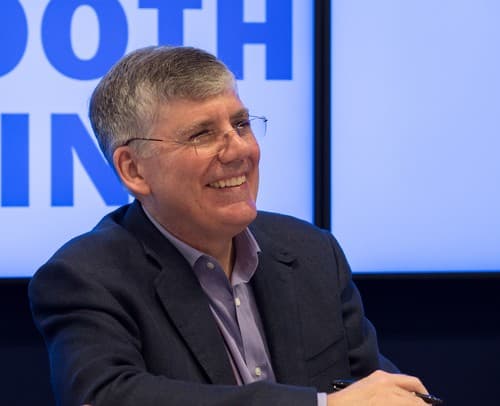
Rick Riordan is an American author known for his young adult fiction, particularly in the fantasy genre. He is best known for the "Percy Jackson & the Olympians" series, which includes "The Lightning Thief," "The Sea of Monsters," "The Titan's Curse," "The Battle of the Labyrinth," and "The Last Olympian," as well as "The Lost Hero," part of the subsequent Heroes of Olympus series. His works often blend mythology with contemporary themes, appealing to a wide audience.
Similar books
- The Lightning Thief
Rick Riordan
4.3 (2M) average on GoodreadsFantasyThe first book in the Percy Jackson series, establishing the characters and world.
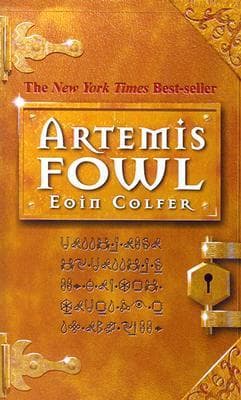
- Artemis Fowl
Eoin Colfer
3.9 (496k) average on GoodreadsFantasyFeatures a young protagonist in a fantastical world with a blend of humor and action.
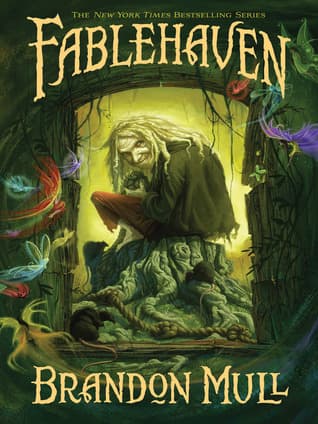
- Fablehaven
Brandon Mull
4.1 (134k) average on GoodreadsFantasyFablehaven also features children discovering a hidden world of magical creatures and facing mythical threats. Both series excel at creating imaginative magical bestiaries and action-packed sequences. However, Mull's series tends to lean more into traditional high fantasy elements, with a focus on ancient magical artifacts and a more overt good vs. evil struggle, often presenting clearer moral lines. Riordan, by contrast, frequently blurs these lines by portraying gods and mythical figures with complex, often flawed, human-like personalities, offering a more nuanced view of morality within the mythological framework.
- Harry Potter and the Sorcerer's Stone
J.K. Rowling
4.5 (7M) average on GoodreadsFantasyRescued from a miserable life under the stairs, an orphaned boy discovers he's a wizard destined for a magical school, where he uncovers a dangerous secret tied to the dark wizard who murdered his parents.
- The Hunger Games
Suzanne Collins
4.3 (6.4M) average on GoodreadsFantasyIn a future where children fight to the death on live television, Katniss Everdeen volunteers for the arena, turning a death sentence into a fight for survival and a spark of rebellion.
- 1984
George Orwell
4.2 (3.1M) average on GoodreadsPoliticsIn a future where surveillance and thought control are absolute, a man's search for truth clashes with the Party, showing that hope can be a form of rebellion.




Enjoyed the summary?
A summary gives you the shape of the book. The book itself has the detail, the examples and the voice.
Find The Sea of Monsters on AmazonAs an Amazon Associate, BookBrief earns from qualifying purchases. How we're funded