

Synopsis
Covers the whole plot, including the ending.
- Difficulty
- Easy
- Pacing
- Moderate
- Mood
- Humorous, Dreamy, Melancholy, Escapist
- Read it if
- You enjoy classic short stories with a blend of humor, fantasy, and a touch of melancholy, exploring the inner world of an ordinary man.
- Skip it if
- You prefer fast-paced plots with external conflict and clear resolutions, or dislike stories where the main character is largely passive in reality.
The Secret Life of Walter Mitty Plot Summary
Covers the whole plot, including the ending.
The Daring Commander Mitty
Walter Mitty drives his wife, Mrs. Mitty, to Waterbury. As she reminds him to buy puppy biscuits and overshoes, Walter drifts into a vivid daydream. He is Commander Mitty, a calm pilot of a Navy hydroplane, navigating a hurricane. His crew looks to him for leadership as the 'old man' calmly gives orders, his voice steady amidst the storm's fury and the plane's violent shaking. He expertly manages the 'eight-engined Navy hydroplane' through 'the worst storm in twenty years of flying,' showing his skill and courage, a clear contrast to his meek reality.
A Surgeon's Skill
After Mrs. Mitty criticizes him for driving too fast and nearly hitting a car, Walter's imagination takes flight again. He is Dr. Mitty, a famous surgeon, entering a crowded operating room where specialists are confused by a complex surgical case. The patient, a millionaire banker, needs a new, innovative procedure that only Dr. Mitty, with his 'new anaesthetizer' and 'left-handed reverse-curve incision,' can perform. He commands the room, dismissing other doctors' outdated methods and preparing to execute a life-saving operation with his brilliant, unconventional technique, demonstrating his genius under pressure.
The Courtroom Drama
Mrs. Mitty leaves Walter to park the car and run errands, reminding him to get his overshoes. While waiting, Walter flips through a magazine and is inspired by a headline about a murder trial. He becomes Walter Mitty, a calm defendant on trial for murder. Despite the district attorney's aggressive questioning and a 'haughty, overbearing' prosecutor, Mitty remains steady. He delivers a witty, defiant retort, hinting at a secret weapon or motive, captivating the courtroom with his enigmatic charm and intelligence, proving himself innocent with a single, clever line that silences his accusers.
Facing the Firing Squad
As Walter waits for his wife outside the hotel, he lights a cigarette. This action triggers his final, most dramatic daydream. He is Walter Mitty, standing before a firing squad, condemned to death. He refuses a blindfold and takes a final, defiant drag on his cigarette, his face 'pale and resolute.' He stands alone against his executioners, accepting his fate with stoic courage and dignity, a solitary hero facing impossible odds. This final fantasy embodies his desire for ultimate self-possession and heroic sacrifice, a powerful end to his imagined adventures.
Principal Figures
Walter Mitty
Protagonist
A meek, henpecked husband who escapes his mundane life through elaborate daydreams.
Walter Mitty is a quiet, unassuming man, seemingly dominated by his wife and the routines of daily life. He is prone to incredibly vivid and elaborate daydreams, where he transforms into a variety of heroic figures: a daring Navy commander, a brilliant surgeon, a suave courtroom defendant, and a stoic man facing a firing squad. These fantasies are his coping mechanism, allowing him to experience courage, skill, and agency that are absent in his real existence. He yearns for excitement and recognition, which he finds only within his own mind.
Relationships: Mrs. Mitty (Wife, dominant and critical)
Mrs. Mitty
Antagonist/Supporting
Walter's overbearing and practical wife who anchors him to reality.
Mrs. Mitty is Walter's wife, a pragmatic and controlling woman who constantly reminds him of his duties and perceived shortcomings. She is the embodiment of the mundane reality from which Walter attempts to escape. Her dialogue often consists of nagging, instructions, and criticisms, such as reminding him to buy puppy biscuits, wear his overshoes, and drive carefully. She is oblivious to Walter's rich inner life, serving as a constant foil to his heroic fantasies and highlighting his real-life subservience and lack of agency.
Relationships: Walter Mitty (Husband, whom she frequently scolds and directs)
Themes & Insights
Escapism and Fantasy vs. Reality
The main theme explores the clear difference between Walter Mitty's dull, controlled reality and his heroic fantasy life. His daydreams are a coping mechanism, allowing him to escape the mundane and the feeling of being henpecked by his wife. Each fantasy starts with a real-world event, like driving past a hospital or hearing a news report, but quickly becomes an elaborate scenario where Mitty is the brave, competent hero. This highlights a universal human desire to escape daily frustrations through imagination, even if only for a short time. The story suggests that while reality may be unfulfilling, the mind's power can create a rich, alternative existence.
“Walter Mitty the Undefeated, inscrutable to the last.”
The Mundanity of Domestic Life
The story subtly critiques the stifling nature of typical domesticity and societal expectations. Walter Mitty's real-life interactions are marked by his wife's nagging, errands, and general subservience. He is a man stripped of his individuality and control by the routines and demands of his marriage. The mundane tasks—buying puppy biscuits, remembering overshoes, driving carefully—are presented as oppressive forces that push him into his imaginative world. This theme suggests that for some, the ordinary demands of life can be so overwhelming that the only freedom lies within one's own mind.
“"We're going to allow you to take the case," said the first anaesthetist. "I've got to take a look at the hydroplane first," said Mitty.”
Plot Devices & Literary Techniques
Daydream as a Framing Device
Walter Mitty's elaborate fantasies provide the structure and action of the story.
The entire narrative is framed by Walter Mitty's daydreams. Each fantasy sequence, triggered by a seemingly trivial real-world event (like a reminder from his wife or an observation), transports the reader into a new, exciting scenario. These daydreams serve as the primary 'plot' of the story, showcasing Mitty's inner heroism and providing the conflict and resolution he desires, even if only in his mind. The transitions between fantasy and reality are abrupt, often marked by his wife's voice or a sudden real-world interruption, emphasizing the stark contrast between his inner and outer worlds.
Juxtaposition
The sharp contrast between Mitty's heroic fantasies and his meek reality.
Thurber masterfully uses juxtaposition to highlight the comedic and tragic aspects of Walter Mitty's life. The dramatic, action-packed scenarios of his daydreams (piloting through a hurricane, performing complex surgery) are constantly contrasted with the mundane, often humiliating realities (being scolded by his wife, forgetting errands). This sharp contrast emphasizes Mitty's desire for a more exciting life and the extent of his real-world powerlessness. It creates both humor, in the absurdity of the shifts, and a sense of pathos for Mitty's unfulfilled aspirations.
The Secret Life of Walter Mitty Quotes
““We’re going through!” The Commander’s voice was crisp, even in the din.”
“I’m driving, aren’t I?” Walter Mitty said. “You don’t have to tell me when to stop.”
“I was thinking,” said Walter Mitty. “Does it ever occur to you that I am sometimes thinking?”
“To see what’s what,” said the Commander. “You can’t go around with your eyes shut.”
““I could have licked that young cur with one hand tied behind me,” said Walter Mitty.”
““Things are not what they used to be,” said Walter Mitty.”
““Man is a creature of habit,” said Walter Mitty.”
““You’re not a young man any longer,” his wife said.”
“The Old Man’ll get us through,” said the Commander. “He always does.”
“He was not a man to be trifled with.”
““I’ve got to get some overshoes,” said Mrs. Mitty.”
““It’s the right thing to do,” said Walter Mitty.”
“He looked at the distant trees and he was thinking of the life that lay before him.”
“He was thinking about the time he had almost run over a small boy.”
Quiz
10 questions on the plot and the characters. Each answer comes with a short explanation.
Question 1
What is Walter Mitty's first imagined scenario at the beginning of the story?
- A daring fighter pilot during a bombing raid.
- A Navy commander piloting a hydroplane through a hurricane.
- A brilliant surgeon performing a complex operation.
- A skilled marksman on trial for murder.
Show answer
B. A Navy commander piloting a hydroplane through a hurricane. The story opens with Walter Mitty imagining himself as 'Commander Mitty' guiding a Navy hydroplane through a violent storm.
Question 2
What is Mrs. Mitty constantly nagging Walter about as they drive to Waterbury?
- His driving speed.
- His forgetfulness and need for overshoes.
- His tendency to talk to himself.
- His habit of daydreaming.
Show answer
B. His forgetfulness and need for overshoes. Mrs. Mitty repeatedly reminds him to buy overshoes and mentions his general forgetfulness.
Question 3
In one of his daydreams, what medical procedure does 'Dr. Mitty' famously perform that no other doctor can?
- Removing a rare brain tumor with a fountain pen.
- Fixing a broken heart valve using a paperclip.
- Repairing a faulty anesthetizer with a fountain pen.
- Inventing a new surgical tool on the spot.
Show answer
C. Repairing a faulty anesthetizer with a fountain pen. As the brilliant surgeon, Dr. Mitty improvises a repair on a faulty anesthetizer using a fountain pen and a bending wire.
Question 4
What real-world item or event often triggers Walter Mitty's daydreams?
- The sight of an airplane.
- A specific phrase or sound he hears.
- His wife's direct commands.
- The feeling of being bored.
Show answer
B. A specific phrase or sound he hears. His daydreams are often triggered by mundane real-world stimuli, such as a phrase like 'Pocketa-pocketa-pocketa' from a car or a newspaper headline.
Question 5
What is the primary theme explored through Walter Mitty's character and his daydreams?
- The importance of communication in marriage.
- The conflict between reality and fantasy as a coping mechanism.
- The dangers of unchecked imagination.
- The pursuit of fame and recognition.
Show answer
B. The conflict between reality and fantasy as a coping mechanism. The story centers on Mitty's escape from a mundane, overbearing reality into a rich, heroic fantasy life, highlighting the contrast between the two.
Question 6
Which of the following is NOT one of the roles Walter Mitty imagines himself to be?
- A fearless bomber pilot.
- A brilliant defense attorney.
- A famous concert pianist.
- A courageous captain facing a firing squad.
Show answer
C. A famous concert pianist. Walter Mitty imagines himself as a pilot, a surgeon, a defendant on trial, and a military captain, but not a concert pianist.
Question 7
In the courtroom daydream, what is Walter Mitty accused of?
- Espionage.
- Murder.
- Bank robbery.
- Grand theft auto.
Show answer
B. Murder. In this particular fantasy, Mitty is on trial for murder, impressing everyone with his marksmanship and calm demeanor.
Question 8
The story ends with Walter Mitty facing a firing squad. What is the significance of this final daydream?
- It symbolizes his desire for a heroic death.
- It represents his ultimate defiance and unyielding spirit in the face of his mundane reality.
- It suggests he is finally giving up on his fantasies.
- It foreshadows a tragic end to his actual life.
Show answer
B. It represents his ultimate defiance and unyielding spirit in the face of his mundane reality. The final image of Mitty facing the firing squad 'undefeated' and 'haughtily' represents his enduring spirit of defiance and escape through fantasy, even in the face of an imagined ultimate defeat.
Question 9
How does Walter Mitty's real-world persona contrast with his imagined personas?
- In reality, he is adventurous; in fantasy, he is cautious.
- In reality, he is dominant; in fantasy, he is submissive.
- In reality, he is meek and ineffectual; in fantasy, he is brave and competent.
- In reality, he is a genius; in fantasy, he is ordinary.
Show answer
C. In reality, he is meek and ineffectual; in fantasy, he is brave and competent. His actual life portrays him as a timid, forgetful, and henpecked man, a stark contrast to the courageous, skillful, and respected figures in his daydreams.
Question 10
What specific sound in the real world prompts Walter Mitty's final daydream about the firing squad?
- The ticking of a clock.
- The sound of a gun going off in the distance.
- The 'pocketa-pocketa-pocketa' of a machine.
- There is no direct sound trigger; it's a culmination of frustrations.
Show answer
D. There is no direct sound trigger; it's a culmination of frustrations. Unlike earlier daydreams, the final fantasy is not directly triggered by a specific sound but rather emerges from his general weariness and defiance after being nagged by his wife and facing the mundane tasks of his life.
The Secret Life of Walter Mitty FAQ
What is the central premise of 'The Secret Life of Walter Mitty'?
The story centers on Walter Mitty, an ordinary, submissive man who frequently escapes his mundane reality and the nagging presence of his wife by retreating into vivid, heroic daydreams. In these fantasies, he transforms into a series of brave, competent, and admired figures, such as a Navy commander or a brilliant surgeon, starkly contrasting his real-life persona.
Who is Mrs. Mitty and what is her role in Walter's life?
Mrs. Mitty is Walter's overbearing and critical wife, who constantly reminds him of his perceived flaws and tasks. Her nagging and dismissive attitude in reality often directly triggers Walter's escapist fantasies, as he seeks to compensate for his perceived inadequacy and lack of agency under her influence.
Describe one of Walter Mitty's most famous daydreams.
One of Mitty's most iconic daydreams casts him as a daring Navy commander piloting a hydroplane through a raging hurricane, courageously navigating a complex machinery failure. This fantasy highlights his desire for control, bravery, and the admiration of others, contrasting sharply with his real-life struggle to remember puppy biscuits.
What mundane tasks does Walter Mitty perform during the story?
Throughout his real-life journey, Walter Mitty is tasked with several mundane errands by his wife, including buying puppy biscuits, fetching overshoes, and remembering to get new spark plugs for the car. These trivial responsibilities underscore the dullness of his existence and often intrude upon or trigger his elaborate fantasies.
How does the story end for Walter Mitty in reality?
The story ends with Walter Mitty standing against a firing squad in another heroic daydream, facing death with stoic defiance, 'undefeated and defiant.' In reality, he is simply waiting for his wife outside a drugstore, his final fantasy providing a powerful, if temporary, escape from his dreary circumstances.
Are there any subtle clues that Mrs. Mitty might be aware of Walter's daydreaming tendencies?
While not explicitly stated, Mrs. Mitty's frequent admonishments to Walter, such as 'You're not a young man any longer,' and her general fussing over his absentmindedness, could be subtly interpreted as her being vaguely aware of his mental wanderings, even if she doesn't grasp the depth of his fantasy life. Her sharp commands often pull him back to reality, suggesting she's used to his distraction.
Is there any significance to the objects or events that trigger Walter's daydreams?
Yes, many of Walter's daydreams are directly triggered by a mundane object, sound, or phrase from his real environment. For example, the sound of chains on a tire reminds him of a storm at sea, while a nurse mentioning 'streptothricosis' instantly transforms him into a brilliant surgeon, linking his fantasies to his immediate surroundings.
Does Walter Mitty ever show any real-life competence or bravery, even in small ways?
No, the story deliberately contrasts Walter's fantastic competence with his real-life ineptitude. He struggles with simple tasks like remembering items and is easily intimidated by others, never displaying genuine bravery or competence outside of his imagined worlds. His real-life character is consistently submissive and forgetful.
What psychological need do Walter's daydreams fulfill for him?
Walter's daydreams primarily fulfill a deep psychological need for competence, respect, and agency that is completely absent in his real life. They allow him to escape feelings of inadequacy, emasculation, and boredom, providing an outlet for unexpressed desires for adventure and control.
How does Walter Mitty's character reflect the archetype of the 'henpecked husband'?
Walter Mitty perfectly embodies the 'henpecked husband' archetype through his submissive demeanor, constant deference to his wife's commands, and his inability to assert himself in his marriage. His wife's controlling nature directly contributes to his need for mental escape, highlighting his real-life powerlessness.
Is Walter Mitty's daydreaming a healthy coping mechanism, or a sign of deeper psychological issues?
While his daydreams offer a temporary escape from his frustrations, they are arguably an unhealthy coping mechanism as they prevent him from confronting or improving his real-life circumstances. They represent a retreat from reality, suggesting a deeper inability to cope with his marital dynamics and personal dissatisfaction.
How does the author use humor to explore Walter Mitty's psychological state?
James Thurber uses situational irony and the absurdity of Mitty's elaborate fantasies juxtaposed with his mundane reality to create humor. The grandiosity of his imagined self against his actual helplessness, such as saving lives while fumbling for overshoes, elicits both laughter and a subtle pathos for his psychological predicament.
Is Walter Mitty a tragic figure, a comedic one, or both?
Walter Mitty is a complex blend of both tragic and comedic. His inability to find fulfillment in real life and his constant retreat into fantasy is tragic, highlighting a poignant human desire for meaning. However, the exaggerated nature of his daydreams and his bumbling real-life persona make him an undeniably comedic figure.
What message, if any, does Thurber convey about the human condition through Walter Mitty?
Thurber seems to suggest that imagination is a vital, if sometimes escapist, component of the human condition, particularly when faced with monotony or oppression. The story can be interpreted as a commentary on the universal human desire for significance and adventure, even in the most ordinary lives.
Could Walter Mitty's daydreams be interpreted as a form of silent rebellion against his wife?
Absolutely. While he never verbally defies Mrs. Mitty, his elaborate daydreams can be seen as a powerful, internal form of rebellion. In his fantasies, he is everything she is not: dominant, competent, and admired, offering a psychological counterpoint to her real-life control over him.
Does the story advocate for escapism, or does it critique it?
The story offers a nuanced perspective rather than a clear advocacy or critique. While it portrays escapism as a necessary psychological refuge for Mitty, it also subtly highlights its limitations, as his real-life problems remain unresolved. It acknowledges the power of imagination but doesn't necessarily endorse it as a solution.
How might the story be different if Mrs. Mitty were a more supportive character?
If Mrs. Mitty were more supportive, Walter's need for such elaborate escapism might be significantly reduced or even eliminated. He might find more confidence and fulfillment in his real life, potentially leading to fewer, less dramatic daydreams, or perhaps even a healthier integration of his imaginative side with reality.
What is the significance of Mitty's final daydream where he faces a firing squad?
The final daydream is highly significant as it portrays Mitty facing death with unflinching courage, 'undefeated and defiant.' This ultimate act of imagined bravery serves as a powerful, albeit internal, triumph over his real-life subjugation and mundane existence, cementing his identity as a hero in his own mind.
About the author
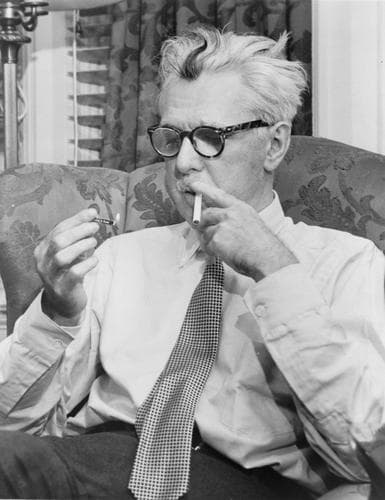
James Grover Thurber was an American cartoonist, writer, humorist, journalist and playwright. He was best known for his cartoons and short stories, published mainly in The New Yorker and collected in his numerous books.
Similar books
- A Christmas Carol
Charles Dickens
4.1 (600k) average on GoodreadsFantasyFeatures a character's internal journey and transformation (albeit through supernatural means).
- Dubliners
James Joyce
3.9 (123k) average on GoodreadsLiterary Fiction"The Secret Life of Walter Mitty" is more overtly humorous and less bleak than Dubliners. While both explore character paralysis and escapism, Mitty's fantasies are a lighter coping mechanism compared to the often profound and despairing epiphanies of Joyce's characters. Thurber's internal monologue is more whimsical, whereas Joyce's is more deeply introspective and often leads to significant self-realization or existential dread.
- Harry Potter and the Sorcerer's Stone
J.K. Rowling
4.5 (7M) average on GoodreadsFantasyRescued from a miserable life under the stairs, an orphaned boy discovers he's a wizard destined for a magical school, where he uncovers a dangerous secret tied to the dark wizard who murdered his parents.
- The Hunger Games
Suzanne Collins
4.3 (6.4M) average on GoodreadsFantasyIn a future where children fight to the death on live television, Katniss Everdeen volunteers for the arena, turning a death sentence into a fight for survival and a spark of rebellion.
- 1984
George Orwell
4.2 (3.1M) average on GoodreadsPoliticsIn a future where surveillance and thought control are absolute, a man's search for truth clashes with the Party, showing that hope can be a form of rebellion.
- Divergent
Veronica Roth
4.2 (2.9M) average on GoodreadsFantasyIn a society divided by virtues, a sixteen-year-old's difference from the norm starts a rebellion that threatens her world.






Enjoyed the summary?
A summary gives you the shape of the book. The book itself has the detail, the examples and the voice.
Find The Secret Life of Walter Mitty on AmazonAs an Amazon Associate, BookBrief earns from qualifying purchases. How we're funded