
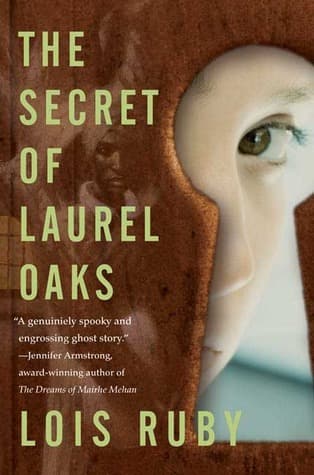
Synopsis
Covers the whole plot, including the ending.
- Difficulty
- Easy
- Pacing
- Moderate
- Mood
- Mysterious, Atmospheric, Historical, Redemptive
- Read it if
- You enjoy historical mysteries with a supernatural twist, especially stories involving uncovering past injustices and a strong sense of place.
- Skip it if
- You prefer hard science fiction or strictly realistic historical fiction, or are easily unsettled by ghost stories.
The Secret of Laurel Oaks Plot Summary
Covers the whole plot, including the ending.
Arrival at Laurel Oaks
Thirteen-year-old Lila and her family – her parents, Mr. and Mrs. Penrose, and her older brother, Brad – arrive at Laurel Oaks Plantation in Louisiana for a summer vacation. Lila is immediately drawn to the historic house's eerie atmosphere, rumored to be haunted. Her parents and Brad are skeptical, with Brad often teasing Lila about her sensitivity to the supernatural. Lila, however, feels a connection to the house and a sense of anticipation, believing there might be more to the ghost stories than her family thinks. She notices subtle signs that suggest a presence, setting her apart from her pragmatic family.
First Encounters
Soon after their arrival, Lila experiences unusual occurrences. Objects move, she hears faint whispers, and feels cold spots in certain rooms. Unlike her family, who attribute these events to the old house settling or their imaginations, Lila believes they are signs of a ghostly presence. During one strong experience in an upstairs bedroom, she feels a powerful, almost desperate, energy. This encounter confirms her belief that a spirit is trying to communicate, and she feels a growing need to understand what it wants.
Daphne's Introduction
Through clearer communications, Lila realizes she is connecting with the spirit of a young slave girl named Daphne. Daphne tells Lila that she lived at Laurel Oaks in the 1840s and was wrongly accused of poisoning the master's wife, Mrs. Laurance, and her two daughters, Clara and Eleanor. Daphne's spirit is restless and unable to find peace, trapped by the unproven accusations and the desire for her innocence to be recognized. She sees Lila as the only one who can hear her and help her clear her name, forming a unique bond between the living girl and the deceased one.
The Past Unveiled
As Lila talks with Daphne, the story shifts to Daphne's life in the 1840s. Daphne describes her life as a house slave at Laurel Oaks, detailing daily routines, the strict hierarchy, and her relationships with other slaves and the Laurance family. She shares her close bond with Mrs. Laurance's daughters, Clara and Eleanor, especially Clara, who was kind to her. Daphne also talks about tensions in the household, including the master's frequent absences and Mrs. Laurance's declining health, which she thought was an unknown illness, not poison.
The Poisoning
Daphne describes the night Mrs. Laurance and her two daughters became gravely ill and died. She remembers the chaos and fear that took over the plantation. Despite her efforts to help, she was quickly identified as the culprit, mainly because she prepared the family's meals and remedies. The evidence against her was indirect, driven by prejudice and the need for a quick scapegoat. Daphne strongly denied poisoning them, but her pleas were ignored by the panicked and grieving white residents, leading to her swift condemnation.
Lila's Investigation
Moved by Daphne's pleas and her own growing belief in the spirit's innocence, Lila starts her own investigation into the historical events. She looks through old documents, local histories, and plantation records at Laurel Oaks, hoping to find overlooked details or inconsistencies in the original account. Her parents and Brad remain unaware or dismissive of her efforts, seeing her activities as typical teenage curiosity. Lila feels a growing responsibility to Daphne, knowing she is the only one who can truly help.
Discovering Discrepancies
As Lila looks deeper, she finds inconsistencies in the historical records and Daphne's account. She learns about a local doctor who often visited the plantation, and about herbal remedies used by slaves. Daphne also recalls a specific plant that grew near the house, which she sometimes used for medicine. Lila begins to suspect that the deaths might not have been deliberate poisoning, but perhaps an accident, or even a natural illness misdiagnosed before modern medicine. She focuses on the specific symptoms Daphne described.
The Real Culprit (or Cause)
Through Daphne's fragmented memories and Lila's research, the truth appears. Lila finds historical information about the Yellow Jasmine plant, which grew commonly around Laurel Oaks and was sometimes mistakenly used for its medicinal properties, but was highly poisonous if ingested incorrectly. Daphne's memories confirm she had used a similar-looking plant for a remedy for Mrs. Laurance's stomach issues, believing it to be helpful. The deaths were not a deliberate act of poisoning by Daphne, but a tragic accident, a misunderstanding of powerful natural remedies, made worse by the limited medical knowledge of the time.
Sharing the Truth
With her evidence, Lila presents her findings to her skeptical parents and brother. Initially, they are dismissive, but Lila's detailed explanation, along with some unexplained phenomena in the house, begins to sway them. Her mother, in particular, starts to consider Daphne's innocence. The family's initial skepticism turns into a reluctant acceptance, then a realization of the historical injustice. This is a turning point, as Lila finally has allies in her quest to bring peace to Daphne.
Daphne's Peace
Once Lila and her family acknowledge the truth and understand the injustice of Daphne's accusation, a change occurs. Daphne's presence, which had been urgent and restless, begins to soften. Lila experiences a final, clear communication from Daphne, a feeling of gratitude and release. The lingering chill in the house disappears, and the subtle ghostly signs stop. Daphne's spirit, finally free from the burden of her wrongful accusation, is able to move on, leaving Lila with a sense of accomplishment and a lasting connection to the past.
Leaving Laurel Oaks
As their vacation at Laurel Oaks Plantation ends, Lila and her family prepare to leave. The experience has left a mark on all of them, especially Lila. While her family may not fully understand her connection with Daphne, they have seen her dedication and the clear shift in the house's atmosphere. Lila carries with her not just the memory of a haunted house, but the story of a young girl's injustice and her role in correcting a historical wrong. The Penrose family leaves with a new perspective on history, empathy, and the unseen world.
The Secret of Laurel Oaks Characters
Lila Penrose
Protagonist
A sensitive teenager who can communicate with spirits.
Lila is a thirteen-year-old girl with a natural sensitivity to the supernatural, often feeling presences that others dismiss. She is intelligent, empathetic, and determined, driven by a strong sense of justice. Unlike her pragmatic family, Lila is open-minded and willing to believe in the unseen, which makes her the perfect conduit for Daphne's story. She initially feels isolated by her unique abilities but ultimately embraces them to help another. Her quiet resolve allows her to delve into a complex historical mystery.
Relationships: Daphne (Spiritual connection, investigator/subject, friend); Mr. Penrose (Father, initially skeptical but eventually supportive); Mrs. Penrose (Mother, initially skeptical but eventually supportive); Brad Penrose (Older brother, initially teasing and dismissive, later surprised and respectful)
Daphne
Supporting/Central Ghost
The restless spirit of a slave girl wrongly accused of murder.
Daphne is the spirit of a young slave girl from the 1840s who was unjustly blamed for the poisoning deaths of Mrs. Laurance and her two daughters. Her spirit is bound to Laurel Oaks Plantation, unable to find peace due to the stain on her name. She is desperate for someone to hear her story and prove her innocence. Through Lila, she recounts her life as a house slave, her interactions with the Laurance family, and the tragic events that led to her wrongful accusation. Her primary drive is to clear her name and achieve eternal rest.
Relationships: Lila Penrose (Spiritual connection, relies on Lila to clear her name); Mrs. Laurance (Mistress, employer, the victim of the alleged poisoning); Clara Laurance (Youngest daughter of Mrs. Laurance, Daphne had a kind relationship with her)
Mr. Penrose
Supporting
Lila's pragmatic and initially skeptical father.
Mr. Penrose is Lila's father, a practical and logical man who initially dismisses any talk of ghosts or supernatural phenomena. He views the Laurel Oaks vacation as a historical excursion, not a paranormal one. He loves his family but struggles to understand Lila's unique sensitivities, often attributing strange events to rational explanations. His skepticism provides a contrast to Lila's openness, but he eventually becomes more open-minded when faced with undeniable evidence and Lila's conviction.
Relationships: Lila Penrose (Father-daughter, initially dismissive of her beliefs, later supportive); Mrs. Penrose (Husband-wife); Brad Penrose (Father-son)
Mrs. Penrose
Supporting
Lila's empathetic mother, who becomes a key ally.
Mrs. Penrose is Lila's mother, initially sharing some of her husband's skepticism but possessing a more empathetic and open nature. She is concerned about Lila's well-being and her intense focus on the ghost stories, but as Lila uncovers more evidence, Mrs. Penrose becomes more receptive to the idea of Daphne's innocence. She plays a crucial role in validating Lila's experiences and helping the family to understand the historical injustice, offering emotional support and understanding.
Relationships: Lila Penrose (Mother-daughter, supportive, eventually believes her); Mr. Penrose (Wife-husband); Brad Penrose (Mother-son)
Brad Penrose
Supporting
Lila's older brother, who teases her about her beliefs.
Brad is Lila's older brother, a typical teenager who enjoys teasing his younger sister, especially about her interest in the supernatural. He is practical and often sarcastic, dismissing the idea of ghosts as childish fantasy. His initial role is to provide a foil to Lila's sensitivity and to represent the common skeptical viewpoint. However, as Lila's investigation progresses and strange events persist, even Brad finds himself questioning his staunch disbelief, showing a subtle shift in his perspective.
Relationships: Lila Penrose (Brother-sister, initially teasing and dismissive, later surprised and respectful); Mr. Penrose (Son-father); Mrs. Penrose (Son-mother)
Mrs. Laurance
Mentioned/Historical Figure
The mistress of Laurel Oaks, whose death sparks the central mystery.
Mrs. Laurance was the mistress of Laurel Oaks Plantation in the 1840s, and her death, along with her two daughters, is at the heart of the mystery. From Daphne's memories, she is depicted as often ailing and reliant on various remedies. Her character represents the tragic victim whose death led to a grave injustice against Daphne. While not directly a character in the present narrative, her past life and demise are central to Daphne's torment and Lila's investigation.
Relationships: Daphne (Mistress-slave, recipient of care and remedies from Daphne); Clara Laurance (Mother-daughter); Eleanor Laurance (Mother-daughter)
Clara Laurance
Mentioned/Historical Figure
One of Mrs. Laurance's daughters, who was kind to Daphne.
Clara Laurance was one of Mrs. Laurance's daughters, a young girl who, according to Daphne's memories, showed kindness and compassion towards her. Her gentle nature stands in contrast to the harsh realities of plantation life. Her death, alongside her mother and sister, is part of the tragic event that Daphne was blamed for. Her memory reinforces Daphne's innocence, as Daphne held no ill will towards her.
Relationships: Daphne (Young mistress-slave, had a kind relationship); Mrs. Laurance (Daughter-mother)
The Secret of Laurel Oaks Themes
Justice and Injustice
The novel explores justice and injustice, especially through historical wrongs. Daphne, an innocent slave girl, is wrongly accused and condemned for a crime she did not commit, showing the systemic prejudices of the 19th-century South. Lila's quest is driven by a desire to correct this historical injustice, to prove Daphne's innocence, and to bring peace to her restless spirit. The mystery's resolution is about solving a puzzle and achieving a moral rightness denied in the past, as seen when Lila's family finally believes her about Daphne's innocence.
“She just wants someone to believe her. To know the truth.”
The Power of Empathy and Connection
Empathy is central to Lila's ability to connect with Daphne. Lila's sensitivity allows her to feel Daphne's pain and desperation, crossing the boundaries of time and death. Her empathy drives her to investigate, even when her family is skeptical, and helps her understand Daphne's story from the spirit's view. This theme shows how deep human connection, even with those long gone, can lead to healing and resolution, demonstrated by Lila's commitment to Daphne's cause.
“I felt her sadness, her fear, like it was my own.”
History and Memory
The novel looks at how history is recorded, remembered, and potentially twisted, especially when the voices of marginalized people are silenced. The official history of Laurel Oaks calls Daphne a murderer, but Daphne's ghostly memories offer a truer story. Lila's investigation involves sifting through historical records and comparing them with Daphne's experiences, revealing gaps and biases in historical accounts. The story suggests that true history is not just about documented facts, but also about understanding individuals' lived experiences and injustices, allowing the past to truly speak.
“History isn’t always what’s written down. Sometimes, it’s what’s remembered.”
Skepticism vs. Belief
This theme is shown by the different views within the Penrose family. Lila represents belief and openness to the supernatural, while her parents and brother, Brad, represent skepticism and reliance on rational explanations. The story explores the tension between these two views, showing how skepticism can blind people to truths beyond their immediate understanding, while also showing the importance of seeking evidence. Ultimately, the story suggests that belief, when combined with a search for truth, can lead to discoveries, as the family's skepticism gradually fades with Lila's findings and Daphne's undeniable presence.
“It’s just an old house, Lila. Houses creak.”
Plot Devices & Literary Techniques
The Haunted House Trope
Laurel Oaks Plantation serves as the setting for spiritual unrest and historical revelation.
The Laurel Oaks Plantation functions as a classic haunted house, but with a unique twist. It's not merely a place of jump scares or malevolent spirits; instead, it's a repository of unresolved history and a stage for an innocent spirit seeking justice. The house's eerie atmosphere, unexplained phenomena, and historical significance are central to the plot, creating the ideal environment for Lila's psychic connection to flourish. It acts as a character in itself, holding the secrets of the past and enabling the communication between worlds.
Dual Narrative Perspective
The story alternates between Lila's present-day investigation and Daphne's past experiences.
The novel employs a dual narrative structure, shifting between Lila's contemporary investigation in the present and Daphne's firsthand accounts of life and tragedy in the 1840s. This device allows readers to experience both the unfolding mystery and the historical context simultaneously. It builds suspense as Lila pieces together clues and provides crucial backstory and emotional depth from Daphne's perspective, making the historical injustice more immediate and poignant. This interweaving of timelines is essential for understanding the full scope of the tragedy and its resolution.
The Sensitive Protagonist
Lila's unique psychic ability to connect with spirits drives the entire plot.
Lila's inherent sensitivity and ability to perceive and communicate with spirits is the primary plot device that sets the entire story in motion. Without her unique gift, Daphne's story would remain untold, and the historical injustice would persist. This ability is not just a supernatural flair; it's the engine for the mystery, the catalyst for the emotional connection, and the means by which the truth is ultimately uncovered. It highlights the idea that some truths require a different kind of perception to be revealed.
Historical Document Research
Lila's use of historical records to corroborate Daphne's ghostly memories.
Lila's investigation is not solely reliant on her psychic abilities; she also engages in tangible historical research, examining old plantation records, local histories, and scientific information about plants. This plot device grounds the supernatural elements in reality, providing a logical framework for solving the mystery. It allows Lila to cross-reference Daphne's fragmented memories with verifiable facts, lending credibility to the ghostly narrative and strengthening the final revelation of Daphne's innocence. It emphasizes that history can be re-examined and re-interpreted.
The Secret of Laurel Oaks Quotes
“The past is never really gone, not as long as there are people to remember it.”
“Sometimes the biggest mysteries aren't about what happened, but why.”
“A house holds secrets, not just in its walls, but in the very air you breathe inside it.”
“Fear can make people do terrible things, but hope can make them do extraordinary ones.”
“The truth isn't always neat and tidy. Sometimes it's messy and complicated, like life itself.”
“Every object has a story, if you only know how to listen.”
“It's easy to judge the past from the comfort of the present, but you weren't there.”
“Some bonds are stronger than time, stronger than distance, stronger even than death.”
“The greatest treasures aren't gold or jewels, but the stories we carry in our hearts.”
“You can't change what happened, but you can change how you remember it, how you learn from it.”
“Sometimes, the answers you're looking for have been right in front of you all along, just hidden in plain sight.”
“The past doesn't just inform the present; it actively shapes it, like clay in a potter's hands.”
“Courage isn't the absence of fear, but the willingness to act despite it.”
“Even in the darkest corners, there's always a glimmer of light, if you know where to look.”
Quiz
10 questions on the plot and the characters. Each answer comes with a short explanation.
Question 1
What is the name of the plantation Lila and her family visit in Louisiana?
- Oak Alley
- Laurel Oaks
- Myrtle Grove
- Evergreen
Show answer
B. Laurel Oaks The book explicitly states that Lila and her family visit Laurel Oaks Plantation.
Question 2
Which character is the slave girl from the 1840s who seeks Lila's help?
- Chloe
- Sarah
- Daphne
- Eliza
Show answer
C. Daphne Daphne is the slave girl's spirit who was blamed for the poisonings and needs Lila to prove her innocence.
Question 3
What is Daphne accused of doing that led to her spirit being unrest?
- Stealing valuable jewelry
- Setting fire to the plantation house
- Poisoning two girls and their mother
- Helping other slaves escape
Show answer
C. Poisoning two girls and their mother Daphne was blamed for the poisoning deaths of two girls and their mother, which is the mystery Lila must solve.
Question 4
How does Lila's family react to the idea of Laurel Oaks being haunted?
- They are all terrified and want to leave immediately.
- They scoff at the claim and don't believe in ghosts.
- They are excited and try to communicate with the spirits themselves.
- They are indifferent and don't pay much attention to the stories.
Show answer
B. They scoff at the claim and don't believe in ghosts. Lila's parents and brother scoff at the claim that the house is haunted, contrasting with Lila's secret suspicions.
Question 5
What is the primary reason Daphne's spirit needs Lila's help?
- To find a hidden treasure on the plantation.
- To get revenge on those who wronged her.
- To prove her innocence and allow her spirit to rest.
- To reveal a secret passage in the house.
Show answer
C. To prove her innocence and allow her spirit to rest. Daphne's spirit senses that Lila can prove her innocence, which is necessary for her spirit to finally rest.
Question 6
What literary device is used by shifting between Lila's world in the present and Daphne's world in the past?
- Foreshadowing
- Flashback
- Dual narrative / Parallel plotlines
- Stream of consciousness
Show answer
C. Dual narrative / Parallel plotlines The story shifts 'back and forth from Lila’s world in the present to Daphne’s world in the past,' indicating a dual or parallel narrative structure.
Question 7
What real-life location is Laurel Oaks Plantation a thinly disguised version of?
- The Houmas House Plantation
- The Myrtles Plantation
- Oak Alley Plantation
- Rosedown Plantation
Show answer
B. The Myrtles Plantation The book description explicitly states that 'Laurel Oaks is a thinly disguised version of the legendary Myrtles Plantation in Louisiana.'
Question 8
What specific ability does Lila possess that makes her unique in communicating with the spirits?
- She can see the spirits physically.
- She can hear their thoughts directly.
- She is the only one the spirits are willing to communicate with.
- She can make objects move through telekinesis.
Show answer
C. She is the only one the spirits are willing to communicate with. The description notes 'secretly, Lila suspects there are ghostly presences willing to communicate with her, and her alone,' highlighting her unique connection.
Question 9
Beyond solving a mystery, what broader theme is explored by juxtaposing Lila's present with Daphne's past?
- The advancements in technology over time.
- The enduring impact of historical injustices and the search for truth.
- The unchanging nature of human relationships.
- The evolution of architectural styles.
Show answer
B. The enduring impact of historical injustices and the search for truth. The core of the story involves uncovering a past injustice (Daphne's false accusation) to bring peace, directly addressing the enduring impact of history.
Question 10
What is the ultimate goal of the narrative, as stated in the book's description, regarding the two timelines?
- To show the contrast between modern and historical plantation life.
- To illustrate the differences in social classes.
- To reveal the true story of what really happened that fateful night.
- To establish a new legend for the haunted plantation.
Show answer
C. To reveal the true story of what really happened that fateful night. The description states, 'shifting back and forth... the true story of what really happened that fateful night finally comes to light,' indicating the narrative's primary objective.
The Secret of Laurel Oaks FAQ
What is the central mystery Lila needs to solve in 'The Secret of Laurel Oaks'?
Lila must uncover the true circumstances surrounding the poisoning deaths of two girls and their mother at Laurel Oaks Plantation in the 1840s. The spirit of Daphne, a slave girl, was blamed for these deaths and seeks Lila's help to prove her innocence so her spirit can find peace.
How does Lila communicate with the spirits at Laurel Oaks, particularly Daphne?
Lila possesses a unique sensitivity that allows her to perceive and communicate with the ghostly presences at Laurel Oaks. While her family dismisses the hauntings, Lila experiences direct interactions and visions, making her the sole conduit for Daphne's story to be told.
Who is Daphne, and what is her connection to the historical tragedy?
Daphne was a young enslaved girl at Laurel Oaks Plantation in the 1840s who was wrongly accused of poisoning the mistress of the house and her two daughters. Her spirit is trapped, unable to rest, until her innocence can be proven through Lila's intervention.
What role does Laurel Oaks Plantation play in the narrative?
Laurel Oaks Plantation is more than just a setting; it's a character itself, holding the echoes of the past and the trapped spirits. Its historical significance and reputation as a haunted location are central to both the mystery and the connection between Lila and Daphne.
How does the author structure the narrative to reveal the past and present simultaneously?
The novel employs a dual narrative structure, shifting back and forth between Lila's experiences in the present day and Daphne's life and the events leading up to the tragedy in the 1840s. This allows readers to piece together the mystery alongside Lila.
What specific historical details or events from the 1840s are crucial to understanding Daphne's story?
The social hierarchy, the dynamics between enslavers and the enslaved, and the specific daily routines and power imbalances within a Southern plantation in the 1840s are crucial. These details illuminate Daphne's vulnerable position and the ease with which she could be scapegoated.
Are there any clues early in the book that hint at the true culprit or the nature of the poisonings?
Subtle details about the plantation's flora, the household staff's interactions, and the mistress's health or habits might provide early clues. The focus on Daphne's perspective also subtly highlights the systemic injustices that would make her an easy target for false accusations.
Does the book suggest any specific historical inspirations beyond Myrtles Plantation for the characters or events?
While Myrtles Plantation is the primary inspiration for the setting, the specific characters and the poisoning plot are likely fictionalized, though they draw on the broader historical context of slavery, injustice, and the often-unaccounted-for lives of enslaved people in the American South.
How does Lila's empathy and determination drive the plot forward?
Lila's deep empathy for Daphne's plight and her unwavering determination to seek justice for a spirit she's never met in life are the primary motivators. Her refusal to dismiss Daphne's pleas pushes her to investigate and uncover truths her family ignores.
What psychological impact does interacting with spirits have on Lila?
Interacting with spirits like Daphne places a significant psychological burden on Lila, separating her from her family's skepticism and forcing her to confront traumatic historical events. It can be isolating but also empowers her with a unique purpose and sense of justice.
How does the novel explore themes of injustice and the silencing of marginalized voices through Daphne's story?
Daphne's story is a powerful exploration of how enslaved individuals were easily blamed and punished without due process. Her spirit's inability to rest symbolizes the historical silencing and denial of justice for marginalized voices, with Lila serving as the agent to finally give her a voice.
What is the significance of Daphne being 'waiting for' Lila specifically?
Daphne's specific wait for Lila implies a unique spiritual connection or Lila's inherent ability to bridge the gap between worlds. It suggests Lila possesses a purity of heart or a specific sensitivity that makes her the destined person to right a century-old wrong.
Does the novel offer any commentary on the nature of historical memory and how the past continues to affect the present?
Absolutely. The novel strongly suggests that the past is not truly past, especially when injustices remain unresolved. The haunting of Laurel Oaks and Daphne's trapped spirit are direct metaphors for how historical traumas and unresolved issues continue to resonate and demand attention in the present.
What might be the symbolic meaning of the poisonings themselves, beyond just the literal act?
The poisonings could symbolize the insidious nature of systemic injustice and the slow, unseen damage it inflicts. It might also represent the hidden grievances and resentments simmering beneath the surface of plantation life, erupting in a quiet, deadly manner.
How does the book's ending provide resolution for both Daphne and Lila?
The ending provides resolution for Daphne by finally revealing the truth of her innocence, allowing her spirit to find peace and move on. For Lila, it brings a sense of accomplishment, validates her unique abilities, and solidifies her understanding of justice and historical impact.
Could there be an alternative interpretation of the hauntings, perhaps not as literal spirits but as manifestations of collective historical guilt?
While the novel presents the spirits as literal, an alternative interpretation could view them as powerful psychological manifestations of the plantation's dark history and collective guilt. Daphne's presence could represent the enduring pain of countless injustices from that era.
What lesson does Lila's family learn, if any, from her experiences at Laurel Oaks?
Lila's family, initially skeptical, might learn to be more open-minded about phenomena beyond their understanding. More importantly, they may gain a deeper appreciation for the weight of history and the importance of listening to those who have been silenced, even if it's through their daughter.
Similar books
- Asylum
Madeleine Roux
3.9 (2k) average on GoodreadsThrillerFeatures a contemporary teen protagonist uncovering dark secrets in a historical, eerie setting.
- The Evolution of Calpurnia Tate
Jacqueline Kelly
4.0 (30k) average on GoodreadsChildren'sWhile both feature young protagonists in historical settings solving problems, Kelly's book focuses on scientific discovery and societal expectations, lacking the overt supernatural elements central to Ruby's narrative. Ruby's inclusion of a ghost offers a distinct mode of historical revelation.
- Harry Potter and the Sorcerer's Stone
J.K. Rowling
4.5 (7M) average on GoodreadsFantasyRescued from a miserable life under the stairs, an orphaned boy discovers he's a wizard destined for a magical school, where he uncovers a dangerous secret tied to the dark wizard who murdered his parents.
- The Hunger Games
Suzanne Collins
4.3 (6.4M) average on GoodreadsFantasyIn a future where children fight to the death on live television, Katniss Everdeen volunteers for the arena, turning a death sentence into a fight for survival and a spark of rebellion.
- 1984
George Orwell
4.2 (3.1M) average on GoodreadsPoliticsIn a future where surveillance and thought control are absolute, a man's search for truth clashes with the Party, showing that hope can be a form of rebellion.
- Divergent
Veronica Roth
4.2 (2.9M) average on GoodreadsFantasyIn a society divided by virtues, a sixteen-year-old's difference from the norm starts a rebellion that threatens her world.




Enjoyed the summary?
A summary gives you the shape of the book. The book itself has the detail, the examples and the voice.
Find The Secret of Laurel Oaks on AmazonAs an Amazon Associate, BookBrief earns from qualifying purchases. How we're funded