
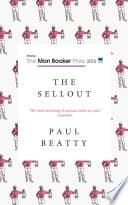
Synopsis
Covers the whole plot, including the ending.
- Difficulty
- Hard
- Pacing
- Fast
- Mood
- Satirical, Provocative, Darkly Humorous, Absurdist, Challenging
- Read it if
- You enjoy biting, no-holds-barred satire, dark humor, and complex explorations of race, identity, and American society that challenge conventional thinking.
- Skip it if
- You are easily offended by controversial topics, racial slurs, and explicit language, or prefer straightforward narratives without heavy use of irony and absurdity.
The Sellout Plot Summary
Covers the whole plot, including the ending.
A Supreme Court Hearing and a Peculiar Request
The story begins with the narrator, called 'Bonbon' by his father, at the U.S. Supreme Court. He is accused of trying to bring back slavery and racial segregation in his hometown of Dickens, California. Bonbon's lawyer, an old, nearly senile civil rights figure named Hominy Jenkins, cares more about being Bonbon's slave than defending him. The Court, especially Justice Harlan, does not understand Bonbon's actions or Hominy's strange behavior. Bonbon thinks about how absurd the situation is. He realizes his extreme actions, meant to get his erased community recognized, have instead brought him to the highest court, where he must explain his old-fashioned social experiments.
Growing Up in Dickens and the Father's Experiments
Bonbon tells about growing up in the poor, mostly Black farming community of Dickens, a fictional 'agrarian ghetto' outside Los Angeles. His father, a self-proclaimed and often misguided social scientist, used Bonbon as the main subject for his racially charged psychological experiments. These experiments included forced exposure to classical literature and art, and strange social interactions designed to test Bonbon's reactions to racial stereotypes and expectations. Bonbon's father believed he was raising a 'new black man' free from the psychological burdens of systemic racism, but his methods were often abusive and isolating. This left Bonbon with a complicated and often contradictory understanding of his own identity and race.
The Death of a Father and the Eradication of Dickens
Bonbon's father dies in a drive-by shooting, a random act of violence in the neglected community of Dickens. This event is a major turning point, leaving Bonbon without his main, though flawed, mentor. After his father's death, Bonbon finds out that his father's promised memoir, which was supposed to secure their money, never existed. Adding to his despair, the city of Los Angeles, citing a bureaucratic error and a wish to remove a stain on its image, officially disincorporates Dickens and removes it from all maps and records. The town's residents, including Bonbon, are left in legal and existential uncertainty; their home is no longer recognized.
The Birth of an Outrageous Idea
Filled with grief, anger, and a desperate wish to bring Dickens back into existence and give its residents an identity, Bonbon plans an outrageous scheme. He believes that by bringing back the most offensive symbols of racial oppression—slavery and segregation—he can force the world to acknowledge Dickens. He argues that if Black people are to be treated as second-class citizens, they might as well get the 'benefits' of being a recognized underclass. This radical idea, born from despair and a twisted sense of cultural pride, puts him against societal norms and the law.
Hominy Jenkins: The First 'Slave'
Bonbon's first 'slave' is Hominy Jenkins, an elderly, forgotten actor from the 'Golden Age of Hollywood' who played subservient Black characters. Hominy, feeling irrelevant in modern society, actively seeks out Bonbon, begging to be his slave. He wants the defined role and recognition, however demeaning, that his past roles gave him. Bonbon first resists, but Hominy's persistence and Bonbon's own growing belief lead him to accept Hominy as his 'property.' This unusual relationship forms the emotional center of Bonbon's experiment, showing the complexities of identity, history, and the desire for belonging, even at a high cost.
Segregating the Local High School
To help bring Dickens back into public awareness, Bonbon decides to segregate the local high school. He paints a white line down the middle of the school's common areas, designates separate entrances, and even tries to create separate water fountains. This act immediately causes outrage and confusion among students, parents, and the wider community. While some residents, especially older Black residents, find a strange sense of nostalgic comfort in the familiar, though oppressive, structures, many others are appalled. The segregation of the school becomes the most visible and controversial part of Bonbon's social experiment, drawing the attention of local authorities and eventually the federal government.
The Dum Dum Donut Cart and the Agricultural Collective
Bonbon sets up the 'Dum Dum Donut Cart' as a front for his growing agricultural collective, which he runs with Hominy. The donut cart serves as a mobile base for their activities, which include growing marijuana and other crops in the now-unrecognized lands of Dickens. This venture is part of Bonbon's larger effort to create an independent economy and community for the displaced residents of Dickens. The donut cart also becomes a symbol of their defiance and a meeting point for those drawn to, or simply curious about, Bonbon's increasingly radical ideas. It represents a small, self-sustaining world within the chaos.
Marry Me, Marry Me
Bonbon's childhood sweetheart, Marry Me, is important in his life. She is strong-willed and independent, often questioning Bonbon's radical ideas while also being drawn to his passion. Their relationship is complicated by Bonbon's experiments and his inner struggles. Marry Me represents a connection to a more conventional life and a source of emotional stability for Bonbon, but she is also caught up in the absurdity of Dickens and Bonbon's attempts to 'fix' it. Their interactions provide moments of tenderness and conflict, showing the personal cost of Bonbon's grand, controversial project.
The Legal Battle Escalates
As Bonbon's experiments in slavery and segregation become known, they attract the attention of various civil rights organizations and the federal government. A class-action lawsuit is filed against him, accusing him of breaking constitutional rights and trying to reverse racial progress. The legal battle quickly grows, moving through lower courts and eventually reaching the U.S. Supreme Court. Bonbon becomes a reluctant public figure, forced to defend his actions on a national stage. This legal challenge forms the main story structure of the novel, with the Supreme Court hearing serving as both the beginning and end of his story.
The Supreme Court's Deliberation and Bonbon's Defense
During the Supreme Court hearing, Bonbon, with Hominy Jenkins beside him, tries to explain the complex reasons behind his actions. He argues that his experiments were not about real oppression but about forcing a discussion about race, identity, and the erasing of Black history and communities. He explains that by bringing back the symbols of segregation and slavery, he aimed to make Dickens visible again and to provide a clear, if shocking, identity for its forgotten residents. The Court struggles to understand his reasoning, moving between outrage, confusion, and a hint of understanding about the deeper societal issues Bonbon is trying to show.
The Verdict and its Aftermath
The Supreme Court, after much thought and internal debate, gives a verdict as unconventional as Bonbon's case. While the exact legal outcome is somewhat unclear, it implies that Bonbon's actions, though extreme, have succeeded in forcing a national conversation. The ruling acknowledges the historical injustices faced by communities like Dickens, even if it does not approve of Bonbon's methods. Bonbon is left to consider the true impact of his 'sellout' performance, questioning whether his radical approach truly helped his community or simply made the already difficult situation of race relations in America more complicated.
Principal Figures
The Narrator (Bonbon)
Protagonist
A black man from the erased town of Dickens who attempts to reinstate slavery and segregation.
Bonbon is a complex, intelligent, and deeply conflicted individual. Raised by a 'social scientist' father who subjected him to bizarre racial experiments, Bonbon struggles with his identity and the legacy of racism. He is driven by a profound sense of loss and a desperate desire to make his erased hometown of Dickens visible again. His methods are shocking and controversial, born from a mix of despair, dark humor, and a twisted idealism. He is a keen observer of society, using satire and absurdity to highlight the hypocrisies and injustices of American race relations.
Relationships: Father (Subject of psychological experiments, complex love and resentment); Hominy Jenkins ('Master' and 'slave', symbiotic and absurd relationship); Marry Me (Childhood love, complicated romantic interest and intellectual sparring partner)
Bonbon's Father
Supporting/Mentor (Posthumous)
A misguided social scientist who conducts bizarre racial experiments on his son.
Bonbon's father is a brilliant but deeply flawed intellectual, a self-proclaimed sociologist who believes he can 'cure' his son of the psychological effects of racism. He is an absent-minded professor type, more concerned with his theories and experiments than with practical parenting. His methods are often abusive and isolating, yet he genuinely believes he is preparing Bonbon for a world that will judge him by his race. His death is the catalyst for much of Bonbon's later actions, and his legacy of unconventional racial analysis profoundly shapes Bonbon's worldview.
Relationships: The Narrator (Bonbon) (Father and subject of experiments, complex love and resentment)
Hominy Jenkins
Supporting
An aging black actor desperate to be Bonbon's 'slave'.
Hominy Jenkins is a tragicomic figure, an elderly black man who found fame in Hollywood playing subservient, caricatured roles. In his old age, he feels irrelevant and invisible, yearning for the defined identity and purpose, however demeaning, that his past roles provided. He actively seeks out Bonbon, begging to be his slave, believing it will give him back a sense of belonging and recognition. Hominy embodies the insidious psychological damage of systemic racism, where even a 'master-slave' dynamic offers a perverse form of visibility and structure in a society that otherwise ignores him.
Relationships: The Narrator (Bonbon) ('Slave' and 'master', symbiotic and absurd relationship)
Marry Me
Supporting
Bonbon's childhood sweetheart and love interest.
Marry Me is Bonbon's long-time love interest, a strong-willed and independent woman from Dickens. She is intelligent and perceptive, often challenging Bonbon's more extreme ideas while still caring deeply for him. Her presence grounds Bonbon, offering a perspective that is less cynical and more focused on practical solutions, though she too is caught in the absurdity of their shared circumstances. She represents a potential for a more conventional future for Bonbon, but her loyalty to Dickens and its people keeps her intertwined with his radical project.
Relationships: The Narrator (Bonbon) (Childhood love, complicated romantic interest and intellectual sparring partner)
Justice Harlan
Supporting
A Supreme Court Justice presiding over Bonbon's case.
Justice Harlan is one of the Supreme Court justices tasked with hearing Bonbon's bizarre case. He represents the institutional, often bewildered, face of the American legal system attempting to grapple with an unprecedented challenge to its core principles. He is intelligent and articulate but struggles to comprehend Bonbon's logic, finding his actions both offensive and baffling. Harlan's interactions with Bonbon and Hominy highlight the disconnect between abstract legal principles and the lived realities of racial identity and historical injustice.
Relationships: The Narrator (Bonbon) (Judge and defendant, intellectual sparring)
Foy
Mentioned
A childhood friend of Bonbon's.
Foy is a childhood friend of Bonbon's, often present in the narrator's recollections of growing up in Dickens. He serves as a contrast to Bonbon, representing a more 'typical' experience of growing up black in an impoverished community, though still shaped by the unique circumstances of Dickens. Foy's presence in flashbacks helps to flesh out Bonbon's past and the social environment in which he was raised, illustrating the range of responses to their shared reality.
Relationships: The Narrator (Bonbon) (Childhood friend)
Dumbass
Mentioned
A local resident and friend of Hominy Jenkins.
Dumbass is a resident of Dickens and a friend of Hominy Jenkins. He is often depicted as a simple, good-hearted man who, like many in Dickens, is caught in the strange currents of Bonbon's social experiments. Dumbass's interactions, though minor, often provide comic relief and highlight the everyday lives of the people impacted by Bonbon's radical ideas. He represents the ordinary citizens who are trying to navigate an increasingly absurd reality.
Relationships: Hominy Jenkins (Friend)
Themes & Insights
The Absurdity and Persistence of Racism
Beatty uses exaggeration and satire to show the absurdity and lasting nature of racism in America. Bonbon's choice to bring back slavery and segregation, while shocking, is presented as a logical, though twisted, response to the ongoing systemic neglect and dehumanization of Black communities. The novel suggests that even in a 'post-racial' society, the psychological and social structures of racism continue, often in subtle but equally harmful ways. The Supreme Court's confusion shows how deeply ingrained and often unacknowledged these issues are, making the 'outrageous' seem the only way to demand recognition. For example, Hominy Jenkins' desire to be a slave shows the tragic search for identity within historically oppressive roles.
“I'd tried to make Dickens a black utopia, and instead I'd only highlighted the fact that you can't build a utopia on a foundation of pain, no matter how much you try to sugarcoat it.”
Identity and Erasure
A central theme is the struggle for identity, both individual and communal, when history and culture are erased. The literal removal of Dickens from the map symbolizes the broader historical practice of making Black communities and their stories invisible. Bonbon's extreme actions are an attempt to regain visibility and define an identity, even if it is controversial. The novel explores how people cope when their history, home, and very existence are denied, forcing them to face what it means to be 'seen' in a society that would rather forget them. Hominy's situation as a forgotten actor also speaks to the erasure of Black contributions and the desperate need for recognition.
“You can't be a great nation,” I said, “without a great black neighborhood.”
The Legacy of Slavery and Segregation
The novel directly addresses the lasting psychological and social effects of slavery and segregation. Bonbon's experiments are not just abstract ideas; they make characters and readers confront the historical weight of these institutions. Hominy Jenkins' strong wish to be a slave is a stark and disturbing example of this legacy. It shows how deeply ingrained the desire for a defined, even demeaning, role can become in a society that offers little else. The segregation of the school, while absurd, also brings up the very real trauma of Jim Crow, asking whether progress is truly achieved or just renamed.
“I'd never really thought about it before, but the most subversive thing a black man could do was to be a slave.”
The Role of Performance and Art in Social Commentary
Paul Beatty uses the novel itself as a performance, a sharp satire meant to provoke thought and discomfort. Within the story, Bonbon's actions are a form of performance art, a shocking spectacle designed to force society to confront itself. Hominy Jenkins, as a former actor, embodies this theme; his life is a continuous performance of racial stereotypes. The novel suggests that sometimes the most effective way to criticize society is through exaggerated, confrontational, and often humorous performance, pushing limits to reveal uncomfortable truths. The entire Supreme Court hearing is a grand performance, showing how justice itself is performed.
“The only thing more frustrating than slander is truth.”
Parental Influence and Psychological Experimentation
Bonbon's childhood, shaped by his father's strange and often cruel psychological experiments, forms his worldview and his later actions. His father's attempts to 'protect' Bonbon against racism paradoxically leave him deeply scarred and uniquely able to understand and use racial dynamics. This theme explores the lasting impact of parental methods, however well-intended, and how they can shape a person's identity and their view of the world. Bonbon's own 'experiments' with Dickens can be seen as a direct, though radical, continuation of his father's legacy.
“My father was a social scientist, which is to say he was a black man in America with a clipboard.”
Plot Devices & Literary Techniques
Satire and Absurdism
Uses extreme exaggeration and humor to critique societal norms.
Beatty employs satire and absurdism as the primary vehicles for social commentary. Bonbon's decision to reinstate slavery and segregation is an extreme, darkly humorous exaggeration of racial tensions and the desire for identity. This device forces readers to confront uncomfortable truths by presenting them in a ludicrous, yet disturbingly logical, fashion. The absurdity of Hominy Jenkins' desire to be a slave, or the official erasure of Dickens, highlights the inherent ridiculousness of real-world racial injustices and bureaucratic indifference, making the critique sharper and more memorable than a straightforward narrative.
First-Person Narrative with Unreliable Narrator
The story is told from Bonbon's subjective and often biased perspective.
The novel is narrated entirely from Bonbon's first-person perspective, offering an intimate look into his complex mind. However, Bonbon is an unreliable narrator, his perceptions and judgments colored by his unique upbringing, trauma, and radical ideology. This device allows Beatty to explore the nuances of racial identity and the subjective nature of truth. Readers are forced to question Bonbon's motivations and interpretations, engaging critically with his arguments and the events he describes, rather than simply accepting them at face value, thus deepening the thematic exploration of race and perception.
Metafiction
The novel self-consciously draws attention to its own status as a fictional construct.
Beatty occasionally breaks the fourth wall, making references to the act of storytelling and the nature of fiction itself. This metafictional element serves to remind the reader that they are engaging with a constructed narrative, enhancing the satirical effect and inviting critical reflection on the book's themes. It also parallels Bonbon's own 'performance' within the story, blurring the lines between reality and artifice. For example, the narrator's awareness of his own story being told to the Supreme Court, or his father's failed memoir, adds layers to the exploration of narrative and truth.
Foil Characters
Characters who highlight the protagonist's traits through contrast.
Characters like Hominy Jenkins and Marry Me serve as foils to Bonbon. Hominy, in his desperate desire for a defined, subservient role, highlights Bonbon's own struggle with identity and his more active, albeit controversial, attempts to define it. Marry Me, with her grounded perspective and more conventional desires, contrasts with Bonbon's radicalism, questioning his methods while still caring for him. These contrasts illuminate different facets of Bonbon's character and the complex responses to racial injustice within the novel's world, providing a richer understanding of the protagonist's motivations and the broader societal context.
The Sellout Quotes
“I often thought of my father as a man with a lot of unfinished business.”
“There are three things you can’t buy in life: love, happiness, and a good lawyer.”
“Sometimes you have to go backward to go forward.”
“I was raised in a small agrarian community that, despite its bucolic setting, was a hotbed of intellectual and social experimentation.”
“If you don't have a plan, you become part of somebody else's plan.”
“Humor is a defense mechanism against the absurdities of life.”
“You can't legislate morality, but you can certainly legislate behavior.”
“The past is never dead. It’s not even past.”
“There’s nothing more dangerous than a man with nothing to lose.”
“To be truly free, one must first be truly enslaved.”
“I don't mind being the target, as long as I get to choose the weapon.”
“America is a nation of immigrants, but we're also a nation of amnesiacs.”
“Sometimes the only way to get people to listen is to make them uncomfortable.”
“A good story doesn't need to be true, it just needs to be believed.”
Quiz
10 questions on the plot and the characters. Each answer comes with a short explanation.
Question 1
What is the name of the fictional town in Los Angeles where the narrator grew up?
- Compton
- Watts
- Dickens
- Inglewood
Show answer
C. Dickens The narrator's hometown, Dickens, is a central setting that is literally wiped off the map, sparking much of the plot.
Question 2
What is the primary reason the narrator's father conducted racially charged psychological studies on his son?
- To prepare his son for a career in psychology.
- To gather material for a memoir that would solve their financial problems.
- To understand the effects of segregation on a young mind.
- To prove a controversial theory about racial superiority.
Show answer
B. To gather material for a memoir that would solve their financial problems. The narrator was led to believe his father's experiments were for a memoir that would bring them wealth, a promise that turns out to be false.
Question 3
What event immediately precedes the narrator's discovery that his father's promised memoir never existed?
- The narrator's graduation from high school.
- His father winning a prestigious literary award.
- His father's death in a drive-by shooting.
- The family losing their home due to foreclosure.
Show answer
C. His father's death in a drive-by shooting. It is after his father's death that the narrator learns there was no memoir, only a bill for a drive-through funeral.
Question 4
What two outrageous actions does the narrator take that ultimately lead him to the Supreme Court?
- He attempts to run for mayor and establish an independent state.
- He reinstates slavery and segregates the local high school.
- He burns down city hall and publishes a controversial manifesto.
- He organizes a massive protest and boycotts all local businesses.
Show answer
B. He reinstates slavery and segregates the local high school. Fueled by despair over Dickens being wiped off the map, the narrator takes these extreme measures to 'right this wrong,' leading to the legal battle.
Question 5
The novel is described as a 'biting satire.' What is satire's primary function in literature?
- To provide a straightforward historical account of events.
- To entertain readers with purely fantastical elements.
- To expose and criticize foolishness and corruption, often using humor, irony, or exaggeration.
- To offer a utopian vision of society without flaws.
Show answer
C. To expose and criticize foolishness and corruption, often using humor, irony, or exaggeration. Satire, as seen in 'The Sellout,' uses humor and exaggeration to critique societal issues like race, identity, and history.
Question 6
What is the significance of Dickens being 'literally wiped off the map'?
- It symbolizes the narrator's desire to escape his past.
- It represents the literal erasure of Black history and communities in America.
- It is a consequence of a natural disaster that destroyed the town.
- It is a metaphor for the narrator's failing memory.
Show answer
B. It represents the literal erasure of Black history and communities in America. The physical removal of Dickens from maps is a powerful metaphor for the systemic efforts to erase and deny the existence and history of certain communities, particularly Black communities.
Question 7
The novel features a 'drive-through funeral.' What does this detail suggest about the socio-economic conditions or cultural attitudes depicted in the story?
- It highlights a new trend in funerary services for convenience.
- It is an absurdist detail emphasizing the commodification of grief and the lack of dignity afforded to the poor or marginalized.
- It shows the community's innovative spirit in adapting to modern life.
- It is a practical solution to crowded funeral homes.
Show answer
B. It is an absurdist detail emphasizing the commodification of grief and the lack of dignity afforded to the poor or marginalized. The 'drive-through funeral' is one of the novel's many absurdities, satirizing how even solemn rites can be stripped of their dignity and made transactional, particularly for those with limited means.
Question 8
How does the narrator's upbringing, being the subject of his father's psychological studies, influence his later actions and worldview?
- It instills in him a deep respect for academic research and conventional societal norms.
- It makes him exceptionally empathetic and understanding of others' perspectives.
- It provides him with a unique, often detached and experimental perspective on race and social structures, leading to his unconventional solutions.
- It causes him to reject all forms of social interaction and live in isolation.
Show answer
C. It provides him with a unique, often detached and experimental perspective on race and social structures, leading to his unconventional solutions. His father's unconventional and often invasive 'studies' likely shaped the narrator's willingness to challenge norms and employ radical, almost experimental, methods to address social injustices.
Question 9
The book is described as having the 'uncanny ability to make readers want to both laugh and cry.' What literary device or stylistic choice primarily contributes to this effect?
- An overly sentimental and predictable plotline.
- The use of purely slapstick humor without any underlying meaning.
- Absurdist humor and biting satire applied to deeply serious and painful topics like race and history.
- A narrative solely focused on historical facts and figures.
Show answer
C. Absurdist humor and biting satire applied to deeply serious and painful topics like race and history. Beatty's ability to tackle profound and often tragic themes (like racial inequality and historical erasure) with an absurd, darkly humorous, and satirical lens is what evokes both laughter and emotional resonance.
Question 10
Given the novel's premise and the narrator's actions, what overarching theme is 'The Sellout' most aggressively exploring?
- The importance of traditional family values in modern society.
- The timeless appeal of classic literature and art.
- The complexities of racial identity, freedom, and the legacy of slavery in contemporary America.
- The triumph of capitalism and individual entrepreneurship.
Show answer
C. The complexities of racial identity, freedom, and the legacy of slavery in contemporary America. The narrator's radical actions—reinstating slavery and segregation—are extreme satirical devices used to force a confrontation with America's unresolved issues regarding race, its history, and the very concept of freedom and identity for Black people.
The Sellout FAQ
What is the central premise that lands the narrator, Bonbon, in the Supreme Court?
Bonbon is on trial before the Supreme Court for attempting to reinstate slavery and segregate the local high school in his hometown of Dickens. His actions are a desperate, satirical attempt to put Dickens back on the map after it was literally erased from existence, seeking recognition and a perverse form of community order.
Who is the narrator, and what is his relationship with his father?
The narrator, referred to as Bonbon, is a young Black man from the fictional Los Angeles suburb of Dickens. He spent his childhood as the primary subject of his father's bizarre, racially charged psychological and social experiments, which profoundly shaped his worldview and sense of identity.
What tragic event serves as a major catalyst for Bonbon's radical actions?
Bonbon's father is killed in a drive-by shooting, a seemingly random act that leaves Bonbon with a profound sense of loss and disillusionment. This event, coupled with the discovery that his father's promised memoir never existed, fuels his despair and motivates his extreme measures to 'right wrongs.'
How does the town of Dickens factor into the plot, and what happens to it?
Dickens is Bonbon's hometown, a neglected, predominantly Black community on the outskirts of Los Angeles. It is literally wiped off the map by the state of California, erased from official records and signage, prompting Bonbon's outrageous efforts to restore its identity and significance.
What role does Hominy Jenkins play in Bonbon's scheme to reinstate slavery?
Hominy Jenkins, a former child actor and the last remaining member of the 'Little Rascals' from Dickens, volunteers to be Bonbon's slave. His insistence on being enslaved becomes a crucial, absurd component of Bonbon's plan, providing a tangible example of the 'peculiar institution' he's trying to resurrect.
Beyond the literal act, what deeper societal 'slavery' is Bonbon satirizing by reinstating it?
Bonbon's actions satirize the invisible forms of systemic oppression, economic disenfranchisement, and psychological subjugation that persist in contemporary America. He highlights how many individuals, particularly Black Americans, are still 'enslaved' by poverty, lack of opportunity, and societal expectations, even without explicit chains.
How do Bonbon's father's psychological experiments foreshadow Bonbon's later actions?
His father's experiments, which often involved extreme, unconventional methods to 'prove' racial theories or observe behavior, instilled in Bonbon a willingness to push boundaries and challenge norms. Bonbon's own radical actions can be seen as an extension of this experimental, provocative approach to societal problems.
What is the significance of the 'F*ck You' sign that Bonbon erects in Dickens?
The 'F*ck You' sign is a defiant, symbolic gesture representing Bonbon's rage and frustration at the erasure of Dickens and the systemic neglect of its residents. It's a provocative reclamation of space and identity, a middle finger to the authorities who literally tried to make his community disappear.
How does Bonbon's perceived 'sellout' status connect to his efforts to re-segregate the high school?
By segregating the high school, Bonbon ironically attempts to create a sense of belonging and cultural identity for Black students, believing that integration has diluted their distinct heritage. He 'sells out' traditional notions of progress to preserve what he sees as a lost community and identity, even if it appears regressive.
What is the psychological impact of Dickens being 'wiped off the map' on Bonbon and its residents?
The erasure of Dickens creates a profound sense of non-existence and psychological displacement for its residents, particularly Bonbon. It invalidates their history, community, and very being, leading to a desperate need for recognition and an identity, however controversial, to fill the void.
How does Bonbon's relationship with his father contribute to his complex understanding of race and identity?
His father's relentless, often bizarre, racial studies forced Bonbon to constantly analyze and internalize racial dynamics from a young age. This upbringing leaves him with a highly critical, unconventional, and often cynical understanding of race, leading him to question established narratives and seek his own solutions.
In what ways does Bonbon exhibit a desire for control and order amidst chaos, despite his chaotic actions?
Despite his seemingly anarchic methods, Bonbon's actions are driven by a desire to impose order and definition on a world he perceives as chaotic and unjust. Reinstating slavery and segregation, in his distorted view, offers a clear, albeit horrifying, structure that he believes can bring a sense of identity and purpose back to his community.
Is Bonbon a villain, a hero, or something else entirely? How does the novel position him?
The novel deliberately positions Bonbon as an anti-hero, a deeply flawed but arguably well-intentioned individual driven to extreme measures by societal neglect and personal trauma. He is neither purely good nor evil, but a complex figure whose actions, while reprehensible on the surface, provoke critical thought about the nature of freedom and identity.
How does the novel use humor and satire to address serious issues of race, class, and history?
The novel employs biting, absurd humor and relentless satire to disarm readers and force them to confront uncomfortable truths about American society. By pushing boundaries and making readers laugh at the unthinkable, Beatty highlights the inherent absurdity and hypocrisy within historical narratives and contemporary racial discourse.
What is the book's ultimate message about 'progress' and 'post-racial' society?
The Sellout critiques the superficiality of 'progress' and the myth of a 'post-racial' society, suggesting that many underlying issues of racial inequality and systemic oppression remain unaddressed. It argues that simply ignoring or erasing racial distinctions does not solve problems, and can even exacerbate them by denying identity and history.
What is the significance of the novel being set in a fictional town named 'Dickens'?
The name 'Dickens' evokes the author Charles Dickens, known for his social commentary and critiques of poverty and injustice in Victorian England. This naming choice suggests that the struggles faced by the residents of this fictional American town are timeless and resonate with historical patterns of neglect and societal critique.
How does the Supreme Court setting contribute to the novel's satirical punch?
Placing Bonbon's absurd trial in the Supreme Court elevates the ridiculousness of his actions to the highest legal authority, highlighting the absurdity of legal frameworks trying to grapple with deeply ingrained social issues. It satirizes the judicial system's attempts to formalize and rationalize complex human experiences.
What role does the 'Dumbass' character play in Bonbon's narrative?
Dumbass is a friend and sometimes accomplice of Bonbon, often serving as a foil or a sounding board for Bonbon's radical ideas. His presence underscores the marginalization and unconventional nature of the characters inhabiting Dickens, providing another perspective on their shared reality.
About the author

Paul Beatty is an American author and an associate professor of writing at Columbia University. In 2016, he won the National Book Critics Circle Award and the Booker Prize for his novel The Sellout. It was the first time a writer from the United States was honored with the Man Booker.
Similar books
- Invisible Man
Ralph Ellison
3.9 (157k) average on GoodreadsLiterary FictionExplores themes of Black identity and invisibility in America through a satirical and philosophical lens.
- A Confederacy of Dunces
John Kennedy Toole
3.9 (231k) average on GoodreadsLiterary FictionFeatures an eccentric protagonist whose outrageous actions highlight societal absurdities through dark humor.
- Catch-22
Joseph Heller
4.0 (723k) average on GoodreadsHistorical FictionUses absurd situations and a satirical tone to critique institutional logic and the human condition.
- Nineteen Eighty-Four
George Orwell
4.2 (5.5M) average on GoodreadsFictionWinston Smith dreams of truth and rebellion in a world where Big Brother watches all, but he confronts the terrifying power of a regime that controls not just actions, but thoughts.
- The Frozen River
Ariel Lawhon
4.4 (600k) average on GoodreadsFictionIn 1789 Maine, a heroic midwife's diary helps her expose a murder and get justice in a town that wants to silence her.
- A Man Called Ove
Fredrik Backman
4.4 (569k) average on GoodreadsFictionA stubborn widower, who lives by strict rules, finds his quiet world changed by a lively new family next door, making him face his past and find happiness in human connection.





Enjoyed the summary?
A summary gives you the shape of the book. The book itself has the detail, the examples and the voice.
Find The Sellout on AmazonAs an Amazon Associate, BookBrief earns from qualifying purchases. How we're funded