
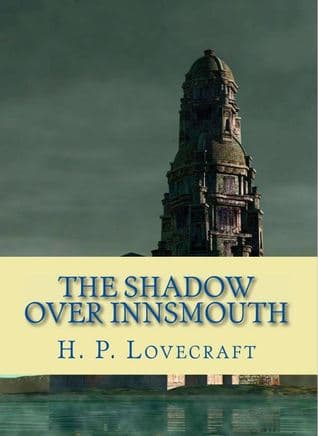
Synopsis
Covers the whole plot, including the ending.
- Difficulty
- Medium
- Pacing
- Slow
- Mood
- Atmospheric, Horrific, Mysterious, Grotesque, Unsettling
- Read it if
- You enjoy classic cosmic horror, atmospheric dread, and stories where the protagonist's own identity becomes the source of terror. Perfect for fans of slow-burn mysteries with grotesque revelations.
- Skip it if
- You prefer fast-paced action, clear-cut heroes, or stories with optimistic endings. Those sensitive to body horror or xenophobia might find elements disturbing.
The Shadow Over Innsmouth Plot Summary
Covers the whole plot, including the ending.
The Narrator's Journey and the Warning
The unnamed narrator, a student touring New England, decides to visit the decaying, avoided seaport town of Innsmouth after hearing disturbing rumors in Newburyport. Locals warn him against going, describing the inhabitants as strange, deformed, and reclusive, with peculiar 'Innsmouth look' features. They also speak of a terrible plague that struck the town years ago and the subsequent rise of the Obed Marsh family, who established a profitable but unsettling trade with mysterious islanders. Despite the warnings, the narrator's curiosity is strong, and he arranges for a bus to take him to Innsmouth, determined to uncover its secrets.
Arrival in Innsmouth and First Impressions
Upon arriving in Innsmouth, the narrator is immediately struck by the town's deep decay and the constant smell of fish. The buildings are crumbling, the streets are empty, and a heavy silence hangs in the air. He observes the few inhabitants he meets, noting their peculiar physical characteristics: narrow heads, flat noses, bulging unblinking eyes, and a strange walk—the infamous 'Innsmouth look.' These observations disturb him, confirming the unsettling descriptions he heard in Newburyport. He finds the local grocery store owner, who is clearly one of the deformed inhabitants, particularly unnerving, and struggles to find anyone willing to speak about the town's history.
Zadok Allen's Revelations
Wanting information, the narrator meets Zadok Allen, a very old, decrepit, and always drunken Innsmouth resident, who is one of the few 'normal' humans left. For some whiskey, Zadok tells the town's true, horrifying history. He explains that Captain Obed Marsh, an important figure, made a pact with the Deep Ones—amphibious, fish-like humanoids from an undersea city called Y'ha-nthlei. In exchange for gold and abundant fishing, the Deep Ones demanded human sacrifices and, later, interbreeding with the townspeople. Zadok describes the grotesque transformations of the Innsmouth residents into Deep Ones, their eventual move to the ocean, and the town's worship of Dagon and Hydra.
The Night of Terror
After Zadok's chilling confession, the narrator returns to his hotel, deeply disturbed. He tries to sleep but has nightmares. Around midnight, strange noises wake him, and he realizes that the town's hybrid inhabitants are looking for him. He overhears their guttural speech and the sounds of their peculiar shuffling walk. Fearing for his life, he tries to escape his room, only to find the hotel full of the grotesque creatures. He hides, seeing their horrifying forms and behavior up close, which confirms Zadok's story and the full extent of the town's corruption. He realizes he is trapped and hunted.
Escape and Pursuit
The narrator, hiding from the hybrids, eventually finds a chance to escape the Gilman House hotel. He moves through the deserted, decaying streets of Innsmouth under cover of darkness, constantly alert to the sounds of his pursuers. He sees more of the Deep Ones and their hybrid offspring, their forms becoming more monstrous and their numbers seemingly endless. He heads towards the railroad track, hoping to reach a nearby town and safety. The pursuit is constant, and he narrowly avoids capture many times, the chilling sounds of the creatures echoing behind him as he flees the town, his sanity barely holding on.
The Revelation of His Ancestry
Months after his terrifying escape, the narrator, now safe from Innsmouth, begins to research his own family history. He discovers a branch of his family, the Waite family of Newburyport, had connections to Innsmouth. Through old records and a diary, he learns that his great-grandmother, Eliza Orne, was a member of the Marsh family of Innsmouth, directly descended from Obed Marsh. This revelation chills him, suggesting a horrifying inherited link. He becomes increasingly paranoid, plagued by nightmares and a growing physical illness, fearing that the 'Innsmouth look' and its transformation might be his own inherited fate.
The Transformation Begins
As time passes, the narrator begins to notice subtle, then clear, physical changes in himself. His skin becomes scaly, his eyes bulge and become unblinking, and his ears begin to recede—the very signs of the 'Innsmouth look.' He also has increasingly vivid and disturbing dreams of an ancient, cyclopean undersea city, identifying it as Y'ha-nthlei, the home of the Deep Ones. He feels a growing urge to return to the sea, a primal longing that terrifies him. The truth of his lineage becomes horrifyingly clear: the transformation into a Deep One is not just a story, but his own inescapable destiny, a genetic curse passed down through generations of the Marsh family.
Cousin Obed and the Escape Plan
Driven by his increasing transformation and the terrifying dreams, the narrator learns of another distant relative, his cousin, 'Cousin Obed' (named after Captain Obed Marsh), who has been institutionalized in an asylum due to similar physical changes and mental decline. Upon visiting him, the narrator finds his cousin already significantly transformed, showing clear Deep One features and a growing desire for the sea. Rather than despair, the narrator finds a strange sense of kinship and morbid acceptance. Together, they decide to accept their heritage. The narrator plans to break his cousin out of the asylum, and they will journey to Innsmouth, and then descend into the ocean to join their Deep One kin in Y'ha-nthlei, accepting their monstrous fate.
Principal Figures
The Narrator (unnamed)
Protagonist
A curious antiquarian student who uncovers his horrifying lineage.
The unnamed narrator is a young, educated man with an interest in architecture and family history, initially driven by intellectual curiosity to explore New England towns. He is observant and intelligent, but also somewhat naive to the true horrors that lie beneath the surface of reality. His initial skepticism about the Innsmouth rumors slowly gives way to terror as he witnesses the town's decay and its inhabitants' deformities. Ultimately, he is a tragic figure, discovering that the very horror he sought to understand is intrinsically linked to his own genetic heritage, leading to his horrifying transformation.
Relationships: Zadok Allen (informant); Obed Marsh (great-great-grandfather); Cousin Obed (fellow Deep One hybrid and relative)
Zadok Allen
Supporting
An old, drunken Innsmouth resident who reveals the town's dark secrets.
Zadok Allen is one of the last remaining 'pure' humans in Innsmouth, though heavily degenerated by age, alcoholism, and the town's pervasive horror. He is a pivotal character, serving as the primary expositor of Innsmouth's history and the pact with the Deep Ones. Despite his decrepit state and the difficulty in extracting information from him, his detailed, if rambling, account provides the narrator (and the reader) with the crucial backstory of Obed Marsh, the Deep Ones, and the town's gradual transformation. He represents the last vestige of human memory and conscience in Innsmouth.
Relationships: The Narrator (confidant/informant)
Obed Marsh
Mentioned/Antagonist (posthumous)
The sea captain who initiated Innsmouth's horrific pact with the Deep Ones.
Captain Obed Marsh is a central figure in Innsmouth's history, though he is long dead by the time of the story. He was a wealthy and influential sea captain who, in the early 19th century, made contact with the Deep Ones on an uncharted island. Driven by greed and a desire for prosperity, he established a horrific pact with them, involving human sacrifice and, eventually, interbreeding, to gain gold and fishing bounties. He is the progenitor of the Deep One lineage in Innsmouth, including the narrator's own family, making him the ultimate source of the story's horror and the narrator's curse.
Relationships: Deep Ones (pact-maker/ally); Marsh Family (patriarch/progenitor)
Deep Ones
Antagonists
Amphibious, humanoid creatures from an undersea city, who interbreed with humans.
The Deep Ones are the primary antagonists and monstrous entities of the story. They are immortal, fish-like humanoids with bulging eyes, scaly skin, and gills, inhabiting the undersea city of Y'ha-nthlei. They are worshipped by the Innsmouth hybrids as gods (Dagon and Hydra) and are the source of the town's grotesque transformation. Their existence and their demand for human interbreeding are the core horror of the novella. They represent an ancient, alien intelligence and a terrifying evolutionary path that threatens humanity's purity and dominance.
Relationships: Obed Marsh (pact-maker/ally); Innsmouth Hybrids (offspring/worshippers)
Cousin Obed (unnamed)
Supporting
The narrator's distant cousin, also afflicted by the Deep One transformation.
Cousin Obed is a distant relative of the narrator, also descended from the Marsh family of Innsmouth. He has been institutionalized in an asylum due to the advanced stages of the Deep One transformation and its accompanying mental and physical degradation. His existence provides a glimpse into the narrator's inevitable future and offers a chilling confirmation of the genetic curse. Despite his monstrous appearance, he becomes a figure of morbid kinship for the narrator, as they both share the same horrifying fate and ultimately plan to embrace it together.
Relationships: The Narrator (cousin/fellow hybrid)
The Bus Driver
Supporting
The only reliable transportation to the shunned town of Innsmouth.
The bus driver is a minor but significant character who represents the last link to the outside world for the narrator. He is a pragmatic, somewhat surly individual who is clearly uncomfortable with Innsmouth and its inhabitants. His quick departure from the town underscores its isolation and the general apprehension felt by outsiders. He provides the initial physical journey into the heart of the story's horror, and his refusal to stay overnight highlights the town's ominous reputation.
Joe Sargent (Grocery Store Owner)
Supporting
An Innsmouth hybrid who exemplifies the 'Innsmouth look'.
Joe Sargent is the proprietor of the only functioning grocery store in Innsmouth. He is one of the first and most prominent examples of the 'Innsmouth look' that the narrator encounters. His disturbing physical deformities—bulging eyes, narrow head, receding forehead—are vividly described, confirming the grotesque rumors about the town's inhabitants. He is taciturn and unwelcoming, further contributing to the narrator's sense of unease and isolation in Innsmouth. He serves as a living, breathing testament to the town's horrifying secret.
Themes & Insights
Hereditary Curse and Degeneration
The most prominent theme is an inherited curse that shows up as physical and mental degeneration. The 'Innsmouth look' is not just a deformity but a sign of an inescapable, predetermined transformation into a Deep One. This is shown by the narrator's discovery of his Marsh ancestry and his subsequent physical changes, as well as the fate of Cousin Obed. The story suggests that bloodlines can carry ancient, monstrous legacies that eventually appear, trapping individuals in a horrifying destiny beyond their control. This theme explores the terrifying implications of ancestral sin and the power of genetics.
“It was the H. P. Lovecraft 'Shadow Over Innsmouth' look, of course — that of the hybrid Deep One, which was slowly claiming me.”
Fear of the Unknown and the Alien
Lovecraft uses the unknown to create fear. The initial rumors about Innsmouth are vague and unsettling, letting the reader's imagination fill in the gaps. The Deep Ones themselves are utterly alien—neither fully human nor animal, but an ancient, aquatic race with incomprehensible motives and a horrifying biology. The terror grows because of their slow, subtle infiltration of human society through interbreeding, blurring the lines between 'us' and 'them.' The story constantly emphasizes the alienness of the Deep Ones and their world, contrasting it with human norms and thereby increasing the sense of dread.
“And the worst thing was the way they talked—they didn’t talk like humans; they had a kind of gurgling, croaking voice that was simply horrible.”
Decay and Isolation
The physical state of Innsmouth itself reflects moral and spiritual decay. The crumbling buildings, empty streets, and constant stench show a town that has turned its back on humanity and embraced something monstrous. Its isolation, both geographical and social, allows the horror to grow unchecked. The town is a small example of decay, showing how a community can become corrupted and shunned when it deviates from accepted human norms. This theme shows the consequences of unnatural pacts and the slow, inevitable decline that follows.
“The place was a nightmare of decay and desertion, of rotting fish and rotting woodwork, of a ghastly, unhuman emptiness and a smell that I could not quite place.”
Loss of Identity and Humanity
As the narrator changes, he deals with the terrifying loss of his human identity. The physical changes come with a psychological shift, a growing acceptance and even longing for his Deep One heritage. This theme explores the fragile nature of self and the horrifying possibility of being taken over by an alien identity. The residents of Innsmouth, by interbreeding, willingly gave up their humanity, and the narrator's ultimate decision to join his kin shows the complete loss of his former self, embracing a monstrous new existence.
“Then I knew the truth, and was glad. My cousin and I would be together, always, in the cyclopean city of Y'ha-nthlei.”
Plot Devices & Literary Techniques
Unreliable Narrator
The narrator's deteriorating mental state and eventual transformation color his perception.
The unnamed narrator's perspective is crucial, yet becomes increasingly unreliable as the story progresses. Initially, he is a rational observer, but his encounters in Innsmouth and the subsequent discovery of his heritage slowly erode his sanity. His final decision to embrace his Deep One identity suggests a complete shift in his moral and psychological framework, making his 'acceptance' of the monstrous fate deeply unsettling and potentially a symptom of his transforming mind. This device heightens the horror by questioning the very nature of reality and the narrator's perception of it.
The 'Innsmouth Look'
A physical manifestation of the Deep One hybridity and an escalating sign of decay.
The 'Innsmouth Look' is a recurring physical characteristic—narrow head, flat nose, bulging unblinking eyes, receding forehead, peculiar skin texture, and gait—that marks the town's inhabitants as Deep One hybrids. It serves as a visual motif for the town's corruption and the gradual transformation of humans into Deep Ones. For the narrator, it initially signifies external horror, but later becomes a terrifying personal omen as he recognizes it in himself. This device externalizes the internal horror of genetic mutation and the loss of humanity.
Oral Testimony (Zadok Allen's Story)
A drunken old man's rambling account provides crucial backstory and exposition.
Zadok Allen's lengthy monologue serves as the primary means of revealing Innsmouth's horrifying history, the pact with the Deep Ones, and the details of their interbreeding. His account, delivered in a rambling, drunken manner, adds a layer of verisimilitude and a sense of forbidden knowledge being reluctantly shared. This device allows Lovecraft to deliver extensive exposition in a dramatic and character-driven way, making the revelations feel more organic and chilling than a straightforward historical account.
Dreams and Nightmares
Visions that foreshadow the narrator's transformation and connect him to the Deep Ones' world.
Dreams and nightmares are used to signal the narrator's internal psychological state and his genetic connection to the Deep Ones. Initially, they are vague and disturbing, reflecting his anxieties. Later, they become increasingly vivid, featuring the cyclopean undersea city of Y'ha-nthlei, and function as a direct communication from his Deep One heritage, drawing him towards his ultimate fate. This device blurs the line between conscious reality and subconscious horror, suggesting a deeper, primal connection to the monstrous entities.
The Shadow Over Innsmouth Quotes
“The place was a fishing town, and doubtless in its time had seen the landing of many a cargo from far places; but now it was sadly decayed, and the harbour displayed few signs of life.”
“I could not help feeling that they were evil beings—malign and grotesque apprentices who had become a little too much like their masters.”
“They worshipped, so they said, the great old ones who lived ages before there were any men, and who came to the young world out of the sky.”
“That is the real secret of the deep—it is old, so monstrously old that it has forgotten its own beginning.”
“Do not call up that which you cannot put down.”
“The shadow of the hill and the ruins of the mill were always over the town, and the shadow of the sea was over the hill.”
“It was the eldritch scurrying of those fiend-born things, and the damnable manner in which they regarded me.”
“There are things in this world that are better left unknown, and Innsmouth is one of them.”
“The ocean is more ancient than the mountains, and freighted with the memories and the dreams of Time.”
“I saw them in a limitless stream—flopping, hopping, croaking, bleating—surging inhumanly through the spectral moonlight in a grotesque, malignant saraband of fantastic nightmare.”
“We shall swim out to that brooding reef in the sea and dive down through black abysses to Cyclopean and many-columned Y'ha-nthlei.”
“The true epicure in the terrible, to whom a new thrill of unutterable ghastliness is the chief end and justification of existence, will esteem most of all the ancient, lonely farmhouses of backwoods New England.”
“I have looked upon all that the universe has to hold of horror, and even the skies of spring and the flowers of summer must ever afterward be poison to me.”
Quiz
10 questions on the plot and the characters. Each answer comes with a short explanation.
Question 1
What is the narrator's primary reason for visiting Innsmouth?
- To investigate rumors of supernatural occurrences
- To conduct genealogical research on his family history
- To take a sightseeing tour of New England coastal towns
- To meet with a mysterious relative living there
Show answer
C. To take a sightseeing tour of New England coastal towns The narrator visits Innsmouth as part of a sightseeing tour of New England, driven by curiosity about the town's strange reputation and architecture, not initially for investigation or family reasons.
Question 2
What physical feature do the Innsmouth residents share that the narrator finds disturbing?
- Glowing red eyes
- Webbed hands and feet
- Scaly skin and bulging eyes
- The 'Innsmouth Look'—narrow heads, flat noses, and bulging eyes
Show answer
D. The 'Innsmouth Look'—narrow heads, flat noses, and bulging eyes The 'Innsmouth Look' is a distinctive physical deformity among the townspeople, characterized by narrow heads, flat noses, and bulging eyes that never seem to close, hinting at their hybrid nature.
Question 3
Who does the narrator meet at the Gilman House hotel who provides key information about Innsmouth?
- Zadok Allen
- Captain Obed Marsh
- Old Man Whateley
- The hotel manager, Mr. Eliot
Show answer
A. Zadok Allen Zadok Allen, an elderly and drunken resident, meets the narrator at the Gilman House and reveals the town's dark history involving the Esoteric Order of Dagon and interbreeding with deep-sea creatures.
Question 4
According to Zadok Allen, what deal did Captain Obed Marsh make with the deep-sea creatures?
- Trading gold for human sacrifices
- Exchanging fishing rights for advanced technology
- Interbreeding humans with the creatures for wealth and immortality
- Allowing the creatures to build a underwater city near Innsmouth
Show answer
C. Interbreeding humans with the creatures for wealth and immortality Captain Obed Marsh brokered a pact where the townspeople interbred with the deep-sea creatures (the Deep Ones) in exchange for gold, prosperity, and a form of immortality through transformation.
Question 5
What event does the narrator witness that confirms the supernatural threat in Innsmouth?
- A ritual sacrifice at the Esoteric Order of Dagon church
- The townspeople transforming into fish-like creatures at night
- Being chased by hybrid creatures while trying to escape the town
- Finding ancient artifacts in a sunken ship
Show answer
C. Being chased by hybrid creatures while trying to escape the town While fleeing Innsmouth, the narrator is pursued by the hybrid townspeople, who reveal their monstrous forms, confirming the reality of the Deep Ones and the town's corruption.
Question 6
What is the significance of the Esoteric Order of Dagon in Innsmouth?
- It is a secret society that controls the town's politics
- It serves as a front for smuggling operations
- It is a religious cult that worships the Deep Ones and facilitates the interbreeding pact
- It is a historical preservation group for the town's architecture
Show answer
C. It is a religious cult that worships the Deep Ones and facilitates the interbreeding pact The Esoteric Order of Dagon is a cult that worships the Deep Ones and their god Dagon, central to maintaining the pact through rituals and enforcing the town's secrecy.
Question 7
How does the narrator ultimately discover his own connection to Innsmouth?
- By finding a family portrait in the town museum
- Through genealogical research revealing his descent from Captain Obed Marsh
- By being recognized by a relative during his escape
- From a dream sent by the Deep Ones
Show answer
B. Through genealogical research revealing his descent from Captain Obed Marsh After escaping, the narrator investigates his family history and learns he is a descendant of Captain Obed Marsh, meaning he carries the tainted bloodline and will eventually transform.
Question 8
What theme is most emphasized through the narrator's gradual acceptance of his transformation?
- The triumph of human will over supernatural forces
- The inevitability of fate and hereditary corruption
- The importance of scientific inquiry in uncovering truths
- The power of community in overcoming isolation
Show answer
B. The inevitability of fate and hereditary corruption The story highlights cosmic horror themes where the narrator cannot escape his destined transformation due to his bloodline, underscoring fate and the corrupting influence of ancestral sins.
Question 9
What does the narrator plan to do at the end of the story, indicating his final transformation?
- Destroy all records of Innsmouth to protect humanity
- Join the Deep Ones in their underwater city of Y'ha-nthlei
- Seek a cure for his condition through occult means
- Warn the authorities about the threat from Innsmouth
Show answer
B. Join the Deep Ones in their underwater city of Y'ha-nthlei In the climax, the narrator embraces his transformation, planning to dive into the ocean and join his kin in Y'ha-nthlei, symbolizing his complete assimilation into the Deep One lineage.
Question 10
How does Lovecraft use the setting of Innsmouth to enhance the horror?
- By depicting it as a bustling, modern town hiding secrets
- Through vivid descriptions of its decay, isolation, and eerie architecture
- By contrasting it with vibrant neighboring cities
- Using it as a symbol of industrial progress gone wrong
Show answer
B. Through vivid descriptions of its decay, isolation, and eerie architecture Lovecraft emphasizes Innsmouth's desolation, crumbling buildings, and oppressive atmosphere to create a sense of dread and alienation, mirroring the moral and physical decay of its inhabitants.
The Shadow Over Innsmouth FAQ
What is 'The Shadow Over Innsmouth' about?
The story follows a young antiquarian who visits the decaying coastal town of Innsmouth, Massachusetts, during a tour of New England. He discovers the town's inhabitants have grotesque physical traits and worship the Esoteric Order of Dagon, leading to a terrifying revelation about his own ancestry and the town's pact with deep-sea creatures called the Deep Ones.
Why should I read 'The Shadow Over Innsmouth'?
It's a foundational work of cosmic horror that masterfully builds dread through atmospheric description and gradual revelation of inhuman horrors. Lovecraft's exploration of hereditary taint, forbidden knowledge, and the insignificance of humanity in a vast, uncaring universe makes it essential reading for horror and weird fiction enthusiasts.
What is the background/setting of 'The Shadow Over Innsmouth'?
Set in the fictional town of Innsmouth, Massachusetts, in the late 1920s, the story depicts a once-prosperous seaport now in decay due to economic decline and mysterious events. The town's isolation, dilapidated architecture, and hostile, fish-like residents create a claustrophobic atmosphere of impending doom.
What are the most memorable quotes?
Key quotes include: 'The oldest and strongest emotion of mankind is fear, and the oldest and strongest kind of fear is fear of the unknown' (reflecting the story's theme), and 'I think their predominant colour was a greyish-green, though they had white bellies... They were mostly shiny and slippery, but the ridges of their backs were scaly.' describing the Deep Ones' terrifying appearance.
What writing style does the author use?
Lovecraft employs a dense, descriptive prose style with archaic language and meticulous attention to sensory details—especially visual and olfactory—to build an atmosphere of creeping horror. The first-person narrative gradually escalates from curiosity to terror, using understatement and implication to heighten the cosmic dread.
What minor details add significant meaning?
The narrator's initial interest in a strange piece of jewelry in a museum—later revealed as Esoteric Order of Dagon regalia—foreshadows his connection to Innsmouth. Also, the townspeople's avoidance of eye contact and their peculiar gait subtly hint at their non-human physiology before the full horror is revealed.
What are some subtle foreshadowing moments?
Early mentions of the 'Innsmouth look'—a fish-like appearance with bulging eyes and narrow heads—hint at the town's hybrid nature. The bus driver's reluctance to stop in Innsmouth and whispered warnings about 'devil-worship' foreshadow the narrator's danger and the town's dark secrets.
What unexpected character connections exist?
The narrator discovers that his great-grandmother, Lydia Marsh, was an Innsmouth native who married Captain Obed Marsh, linking him directly to the Deep One hybrid lineage. This revelation ties his personal fate to the town's history and the cosmic horror of the Mythos.
What are unspoken character motivations?
The Deep Ones seek to interbreed with humans to gain immortality and dominion over land, while the hybrid townspeople hide their true nature out of fear of persecution. The narrator's own drive to uncover his ancestry stems from a subconscious recognition of his inherited traits, though he initially denies it.
What psychological complexities do characters exhibit?
The narrator grapples with denial, terror, and eventual acceptance of his inhuman heritage, showcasing a descent into madness intertwined with self-discovery. The hybrid inhabitants display a dual consciousness—maintaining human facades while yearning for their oceanic origins, leading to isolation and resentment.
What are the major emotional turning points?
Key moments include the narrator's panic upon being trapped in the Gilman House hotel, his horror during the escape through the town's streets as hybrids pursue him, and the climactic realization in the finale that he is transforming into a Deep One, shifting from fear to a twisted sense of belonging.
How do relationship dynamics evolve?
The narrator's relationship with Innsmouth shifts from detached curiosity to visceral terror as he uncovers its secrets, culminating in a fatalistic connection when he accepts his ancestry. His view of humanity becomes alienated, as he realizes the townspeople—and himself—are part of a vast, inhuman lineage.
Which parts remain ambiguous or open-ended?
The ultimate fate of the Deep Ones and their plans for global domination are left vague, with the narrator only hinting at a future where they 'rise from the sea.' Additionally, the full extent of the Esoteric Order of Dagon's influence and the number of hybrid infiltrators in society are never specified, adding to the pervasive dread.
What are controversial scenes or decisions?
The story's themes of miscegenation and 'racial degeneration' have been criticized for reflecting Lovecraft's xenophobic views, particularly in the depiction of the Deep Ones as a corrupting foreign influence. The narrator's eventual embrace of his inhumanity can be seen as a resignation to hereditary determinism, sparking debate over its message.
'The Shadow Over Innsmouth' ending explained: how it ends & what it means
The narrator escapes Innsmouth but later discovers he is transforming into a Deep One, with webbed fingers and a craving for the ocean. He plans to dive into the sea and join his kind, implying a horrific acceptance of his fate. This ending underscores Lovecraft's themes of inescapable heredity and the allure of abandoning humanity for cosmic horror.
About the author
H.P. Lovecraft was an American writer known for his contributions to the genre of weird fiction and horror. His notable works include "The Call of Cthulhu," "The Case of Charles Dexter Ward," "The Shadow Over Innsmouth," "The Shunned House," "The Nameless City," and "Beyond The Wall Of Sleep," which explore themes of cosmic horror and the unknown. Lovecraft's influence on modern horror literature is significant, with many of his concepts and creatures becoming iconic in the genre.
Similar books
- The Call of Cthulhu
H.P. Lovecraft
4.0 (39k) average on GoodreadsFantasyShares the same cosmic horror themes, ancient entities, and sense of human insignificance.
- The Haunting of Hill House
Shirley Jackson
3.8 (162k) average on GoodreadsThrillerWhile both are masterpieces of horror, 'The Haunting of Hill House' focuses on psychological horror and the internal disintegration of its characters within a haunted setting, using the house as a manifestation of their fears. 'Innsmouth,' conversely, leans into cosmic and physical horror, where an external, ancient evil slowly encroaches upon and transforms humanity. Jackson's horror is more personal and internal, while Lovecraft's is existential and external, a confrontation with forces beyond human comprehension. Jackson excels at character depth, whereas Lovecraft prioritizes atmosphere and cosmic revelation.
- Harry Potter and the Sorcerer's Stone
J.K. Rowling
4.5 (7M) average on GoodreadsFantasyRescued from a miserable life under the stairs, an orphaned boy discovers he's a wizard destined for a magical school, where he uncovers a dangerous secret tied to the dark wizard who murdered his parents.
- The Hunger Games
Suzanne Collins
4.3 (6.4M) average on GoodreadsFantasyIn a future where children fight to the death on live television, Katniss Everdeen volunteers for the arena, turning a death sentence into a fight for survival and a spark of rebellion.
- 1984
George Orwell
4.2 (3.1M) average on GoodreadsPoliticsIn a future where surveillance and thought control are absolute, a man's search for truth clashes with the Party, showing that hope can be a form of rebellion.
- Divergent
Veronica Roth
4.2 (2.9M) average on GoodreadsFantasyIn a society divided by virtues, a sixteen-year-old's difference from the norm starts a rebellion that threatens her world.





Enjoyed the summary?
A summary gives you the shape of the book. The book itself has the detail, the examples and the voice.
Find The Shadow Over Innsmouth on AmazonAs an Amazon Associate, BookBrief earns from qualifying purchases. How we're funded