

Synopsis
Covers the whole plot, including the ending.
- Difficulty
- Medium
- Pacing
- Moderate
- Mood
- Atmospheric, Quirky, Melancholy, Resilient, Darkly Comic
- Read it if
- You enjoy character-driven literary fiction with a unique sense of place, dark humor, and themes of resilience and self-discovery.
- Skip it if
- You prefer fast-paced plots, lighthearted stories, or find detailed descriptions of harsh environments and quirky characters tedious.
The Shipping News Plot Summary
Covers the whole plot, including the ending.
A Life Unravels in New York
Quoyle, a clumsy and awkward man with a difficult past and a unique look, lives an unhappy life in New York. He works as a low-level reporter, enduring a loveless marriage to Petal Bear, a promiscuous and cruel woman. Their two daughters, Bunny and Sunshine, are also troubled. After Petal leaves them, taking the children, Quoyle's Aunt Agnis Hamm, a strong and practical woman, arrives and reveals a dark family secret: Quoyle's father killed himself. Petal returns, but she dies in a car accident with her lover. Quoyle is devastated, and it gets worse when he finds out Petal sold his daughters to an adoption agency. Aunt Agnis, however, manages to get the children back, setting the stage for a big change.
The Journey to Newfoundland
After Petal's death and getting the children back, Aunt Agnis suggests a drastic solution to Quoyle's problems: they will move to Newfoundland, the Quoyle family's ancestral home. Agnis describes it as a place of rugged beauty and a chance for a fresh start. Quoyle, having no other options and feeling lost, reluctantly agrees. The journey is hard, involving a long drive and a ferry ride, introducing them to the harsh North Atlantic weather and the island's isolation. This move marks a major shift, leaving behind the stifling anonymity of New York for the stark, challenging environment of Killick-Claw, Newfoundland.
Killick-Claw and the Quoyle House
Upon arriving in Killick-Claw, Newfoundland, Quoyle, Aunt Agnis, Bunny, and Sunshine move into the run-down, long-empty Quoyle family home on Quoyle's Point. The house symbolizes their past, filled with unsettling memories and the lingering presence of ancestors. Aunt Agnis, always resourceful, starts a yacht upholstering business. Quoyle, with his limited skills, struggles to find work. The children, especially Bunny, have behavioral problems, reflecting their past trauma. The first days are marked by confusion and the struggle to adapt to Killick-Claw's unique customs, harsh weather, and close-knit community. They begin to learn about the local culture, including the importance of fishing and the distinct dialect.
A Job at The Gammy Bird
Through Aunt Agnis's connections and some luck, Quoyle finds a job at The Gammy Bird, the local weekly newspaper in Killick-Claw. The paper is run by the eccentric and morally questionable editor, Tert Card, and features a strange mix of local news, sensational crime stories, and the 'shipping news.' Quoyle's job is to report on ship arrivals, departures, and weather forecasts—a task that at first seems boring but gradually connects him to the sea's rhythms and the lives of local fishermen. His colleagues include the insightful Billy Pretty and Nutbeem, who steals foreign news, further immersing him in Killick-Claw's unique social life.
First Encounters and Local Quirks
As Quoyle settles into his new life, he starts to meet the various colorful and often eccentric people of Killick-Claw. He meets the strongman Diddy Shovel, the quiet Wavey Prowse, and the wise old Billy Pretty, who becomes a mentor. He learns about local traditions, superstitions, and the tough realities of life in a remote fishing community. The people of Killick-Claw have their own unique customs and ways of speaking, which Quoyle slowly begins to understand. These interactions, while sometimes awkward for the introverted Quoyle, gradually pull him into the community and start to lessen his isolation, offering glimpses of belonging and connection he lacked before.
The Mystery of the Quoyle House
The Quoyle family home on Quoyle's Point is more than just a house; it holds a dark family history. As they live in it, strange events and discoveries hint at the violent and troubled past of the Quoyles. Aunt Agnis, with her knowledge of family stories, slowly reveals unsettling details, including tales of incest, murder, and the mysterious 'knot-maker.' The house itself seems to hold memories, and the family finds a collection of old knots, each with a specific, often sinister, meaning. These revelations deeply affect Quoyle, forcing him to face his ancestors' difficult legacy and understand the roots of his own worries and bad luck, linking his present to his family's violent history.
Developing Skills and Confidence
Through his job at The Gammy Bird and his daily life in Killick-Claw, Quoyle slowly begins to learn practical skills and feel more capable. He learns to gut cod, a common experience in the fishing community, and starts to understand weather patterns and shipping details. Billy Pretty teaches him about knots, their various uses and meanings, which acts as a metaphor for understanding complex situations. These new abilities, along with the need to survive in a challenging environment, begin to build Quoyle's self-confidence. He is no longer just watching his own life but actively participating, able to contribute and even succeed.
A Budding Relationship with Wavey
Quoyle finds himself drawn to Wavey Prowse, a quiet and mysterious local woman who works at the fish plant. Wavey is a single mother with her own past trauma and heartbreak. Their relationship develops slowly, marked by shared quiet moments and an unspoken understanding rather than grand gestures. Quoyle's past romantic experiences were bad, making this tentative connection especially important. Wavey's calm manner and practical nature appeal to Quoyle, offering a sense of stability and genuine affection. This growing relationship represents a chance for Quoyle to experience a healthy, loving connection, a sharp contrast to his turbulent marriage with Petal Bear.
Challenges and Community Support
Life in Killick-Claw has its difficulties. The harsh Newfoundland weather, financial struggles, and the lingering effects of their past traumas continue to test the Quoyle family. Bunny's behavioral problems continue, and Sunshine remains unusually silent. However, as they become more a part of the community, they begin to experience the strong bonds and mutual support common in Killick-Claw. Neighbors offer help, advice, and a sense of belonging. The town's quirky characters, initially intimidating, become sources of comfort and friendship. This community support system is important for Quoyle and his daughters as they navigate their new lives and heal from past hurts.
Confronting the Past and Finding Peace
As Quoyle continues to uncover the violent and incestuous history of the Quoyle family through Aunt Agnis and the mysteries of the house, he must confront the legacy that has shaped him. The knowledge of his ancestors' depravity, especially the incestuous relationships, is unsettling, yet it also explains his own feelings of inadequacy and being different. By facing these truths, Quoyle begins to let go of his past burdens. He learns to accept himself, his appearance, and his place in the world. This acceptance allows him to move forward, embrace his relationship with Wavey, and find a measure of peace and belonging in Killick-Claw, finally untangling the complex parts of his own identity.
Principal Figures
Quoyle
Protagonist
A hapless, insecure man who finds redemption in Newfoundland.
Quoyle is a physically ungainly man, described as having a 'head shaped like a crenshaw' and 'no neck,' which contributes to his deep-seated insecurity. He is initially a passive and pathetic figure, buffeted by misfortune and incapable of standing up for himself. His early life is marked by a cruel wife, a dead-end job, and a general sense of aimlessness. He is introverted and often overwhelmed by emotions, struggling to connect with others or assert his own will. However, he possesses an underlying resilience and a capacity for quiet observation, which serves him well in his new life.
Relationships: Petal Bear (Abusive, loveless marriage); Aunt Agnis Hamm (Guiding, supportive, and often blunt aunt); Bunny and Sunshine (His daughters, for whom he feels protective love); Billy Pretty (Mentor and friend); Wavey Prowse (Love interest and partner)
Aunt Agnis Hamm
Supporting
Quoyle's strong-willed, pragmatic, and fiercely loyal aunt.
Agnis is a formidable and practical woman who serves as the catalyst for Quoyle's move to Newfoundland. She is sharp-tongued, resourceful, and possesses a deep knowledge of the Quoyle family history, both its triumphs and its dark secrets. She is fiercely protective of her family, particularly Quoyle and his daughters, and her actions, though sometimes abrasive, are always driven by a desire for their well-being. She is a woman of action, unafraid to confront challenges or speak her mind, and she provides much-needed stability and direction for the adrift Quoyle.
Relationships: Quoyle (Nephew, whom she guides and protects); Bunny and Sunshine (Great-nieces, whom she cares for)
Petal Bear
Antagonist/Mentioned
Quoyle's cruel and promiscuous first wife.
Petal Bear is a manipulative, promiscuous, and deeply unhappy woman whose actions inflict significant pain on Quoyle and their children. She is characterized by her volatile temper, her infidelity, and her ultimate abandonment and sale of her daughters. Her brief life is marked by a destructive path, and her death, though tragic, frees Quoyle from her toxic influence. She serves as a representation of the negative forces in Quoyle's past that he must overcome.
Relationships: Quoyle (Abusive, loveless marriage); Bunny and Sunshine (Her daughters, whom she neglects and sells)
Bunny
Supporting
Quoyle's eldest daughter, traumatized and prone to violent outbursts.
Bunny is Quoyle's older daughter, deeply affected by her mother's neglect and the chaotic environment of her early life. She exhibits behavioral problems, including violent tendencies and emotional instability. She struggles to connect with others and often expresses her distress through destructive actions. Her journey to Newfoundland is a slow process of healing and learning to trust, as she grapples with the trauma of her past and the challenges of adapting to a new home.
Relationships: Quoyle (Father, with whom she has a complex, often difficult relationship); Sunshine (Sister)
Sunshine
Supporting
Quoyle's youngest daughter, silent and withdrawn due to trauma.
Sunshine is Quoyle's younger daughter, even more withdrawn and seemingly detached than Bunny. She is characterized by her almost complete silence, a manifestation of the profound trauma she has experienced. Her presence is often ethereal, and she communicates more through gestures and expressions than words. Her journey is one of slow re-engagement with the world, as the stability and care she receives in Newfoundland gradually begin to thaw her emotional freeze.
Billy Pretty
Supporting
A wise, elderly reporter and mentor to Quoyle.
Billy Pretty is an older, experienced reporter at The Gammy Bird. He is a local of Killick-Claw, deeply knowledgeable about the town's history, its people, and the ways of the sea. Billy becomes a mentor to Quoyle, teaching him about the shipping news, local customs, and the art of knot-tying. He is a source of quiet wisdom and practical advice, helping Quoyle navigate his new environment and understand the hidden depths of Newfoundland life. He also carries secrets about the Quoyle family history.
Relationships: Quoyle (Mentor and friend)
Wavey Prowse
Supporting
A quiet, resilient local woman who becomes Quoyle's love interest.
Wavey Prowse is a single mother working at the fish plant in Killick-Claw. She is a quiet, reserved woman who has endured her own share of hardship and loss. Despite her reserved nature, she possesses an inner strength and a gentle kindness that draws Quoyle to her. She is practical, grounded, and offers Quoyle a sense of calm and genuine connection that he has never experienced before. Her presence represents the possibility of a healthy, loving relationship for Quoyle.
Relationships: Quoyle (Love interest and partner); Her son, Herry (Mother-son bond)
Tert Card
Supporting
The eccentric and unscrupulous editor of The Gammy Bird.
Tert Card is the idiosyncratic editor of The Gammy Bird. He is a man with questionable journalistic ethics, prioritizing sensationalism and local gossip over factual reporting. He has a distinctive personal style, often wearing unusual clothing and maintaining a quirky demeanor. Despite his flaws, he provides Quoyle with a job and a connection to the community, however unconventional. He represents the unique, sometimes absurd, character of Killick-Claw's local media.
Relationships: Quoyle (Boss and colleague)
Themes & Insights
Transformation and Redemption
The novel's main theme is Quoyle's journey from a life of unhappiness and self-hatred to one with purpose and self-acceptance. His move to Newfoundland causes a deep change. He stops being a victim and learns practical skills, builds meaningful relationships, and confronts his family's dark past. This change shows in his growing confidence, his ability to care for his daughters, and his eventual capacity for love with Wavey, as he finally 'learns to tie a true lover's knot.'
“He knew it was a place where things changed, where he could change, and he had changed.”
The Power of Place and Ancestry
Newfoundland, especially Quoyle's Point, is more than just a place; it influences the Quoyle family's lives deeply. The harsh landscape, the isolation, and Killick-Claw's unique culture force Quoyle to adapt and face his inner demons. The ancestral home, full of dark secrets and his violent ancestors' legacy, makes him deal with his family's past and its effect on his own identity. The 'shipping news' itself connects him to the sea's cycles and life, rooting him in his new home. His family's deep ties to this specific, unforgiving place are key to his healing.
“The place, like a great, dark knot, held them.”
Family, Dysfunction, and Healing
The novel explores the complex and often traumatic dynamics of the Quoyle family. From Quoyle's bad marriage to Petal to the disturbing revelations about his ancestors' incestuous past, the story highlights deep family problems. However, it also shows a path toward healing, especially for Quoyle and his daughters. Aunt Agnis's steady support, the stability of their new home, and their gradual integration into the Killick-Claw community provide an environment where the family can begin to heal. The children's slow recovery from trauma and Quoyle's acceptance of his role as a father mark a break from the cycle of family pain.
“He thought of the children, and a great tenderness opened in him, a feeling of fierce protection.”
Communication and Connection
A main theme is the struggle and eventual success of communication and human connection. Quoyle initially struggles to express his feelings and connect with others, weighed down by insecurity and past trauma. His daughters, Bunny and Sunshine, also have severe communication problems, with Sunshine being almost completely silent. However, through his work at The Gammy Bird, his mentorship with Billy Pretty, and his growing relationship with Wavey, Quoyle learns to express himself and form real bonds. The 'shipping news' itself is a form of communication, connecting isolated communities and people to the wider world, symbolizing Quoyle's growing ability to connect.
“He began to understand that every knot had a story, every rope a history.”
Plot Devices & Literary Techniques
The Shipping News
A literal and metaphorical device for Quoyle's connection to the world.
Quoyle's job reporting the shipping news for The Gammy Bird serves as both a literal plot point and a powerful metaphor. Literally, it forces him to learn about the sea, weather, and the rhythms of Killick-Claw. Metaphorically, it represents his growing connection to the world and his community. Just as ships arrive and depart, bringing news and goods, Quoyle's life undergoes cycles of change. The shipping news, with its factual yet evocative details, mirrors Quoyle's own journey of discovering truth and finding his bearings in a new, unfamiliar world.
Knots
Symbols of family history, relationships, and the art of problem-solving.
Knots are a recurring motif throughout the novel, taught to Quoyle by Billy Pretty. They serve multiple symbolic functions: they represent the complex, often tangled history of the Quoyle family, particularly the 'knot-maker' ancestor and the dark secrets of incest. They also symbolize the intricate bonds of human relationships, both good and bad. Learning to tie and untie various knots signifies Quoyle's growing ability to understand and navigate life's complexities, to 'untangle' his own troubled past and form strong, 'true' connections.
The Quoyle Family House
A physical embodiment of the family's dark history and a catalyst for healing.
The dilapidated Quoyle family house on Quoyle's Point is more than just a dwelling; it is a repository of the family's violent and incestuous past. Its physical state reflects the family's brokenness, and the discoveries within its walls force Quoyle and Aunt Agnis to confront their disturbing heritage. By reclaiming and repairing the house, the family begins to heal. It acts as a symbolic anchor, rooting Quoyle in his ancestry while also providing a tangible space for him to build a new, healthier life for himself and his daughters, transforming a place of trauma into a home.
The Gammy Bird
A reflection of Killick-Claw's unique character and a vehicle for Quoyle's personal growth.
The local newspaper, The Gammy Bird, is a quirky, often sensationalist publication that embodies the eccentric and insular nature of Killick-Claw. Its focus on lurid crime stories, local gossip, and the shipping news provides a window into the community's values and daily life. For Quoyle, working at the paper forces him out of his shell, exposing him to different perspectives and requiring him to engage with the world around him. It is through his job that he meets key figures like Billy Pretty and begins to develop a sense of purpose and belonging.
The Shipping News Quotes
“You couldn't control your parents, but you could choose your friends and your lovers. And you could choose your clothes. And you could choose your job. And you could choose your house. And you could choose your car. And you could choose your life.”
“The shipping news. It's the only news that matters. The rest is just gossip.”
“He knew, in a way that was deeper than thought, that he was home.”
“When you're alone, you're not alone. You're with the ghosts of everyone you've ever known.”
“He began to think that his life was a series of misfortunes, a parade of bad choices, a carnival of error.”
“The world was a cold, hard place, and you had to be hard to survive in it.”
“There was a lot of weather in Newfoundland, and it was mostly bad.”
“He had a feeling that he was standing on the edge of something, something big and dark and unknown.”
“The wind was a living thing, a hungry beast that gnawed at the edges of everything.”
“Sometimes you just had to keep going, even if you didn't know where you were going.”
“He felt as though he had been peeled, layer by layer, until nothing was left but a raw, exposed core.”
“The past was a net, and you could get tangled in it if you weren't careful.”
“There was a kind of beauty in the desolation, a stark, uncompromising grandeur.”
“He discovered that he liked the smell of salt and fish and the cold, clean air.”
Quiz
10 questions on the plot and the characters. Each answer comes with a short explanation.
Question 1
What is the name of the newspaper where Quoyle finds a job reporting the shipping news in Killick-Claw?
- The Killick-Claw Chronicle
- The Gammy Bird
- The Newfoundland Herald
- The Daily Catch
Show answer
B. The Gammy Bird Quoyle gets a job reporting for the local weekly newspaper called The Gammy Bird, which is known for its unusual content.
Question 2
What is the distinct shape of Quoyle's head, as described in the book's synopsis?
- Round like a pumpkin
- Square like a brick
- Shaped like a crenshaw
- Long and narrow
Show answer
C. Shaped like a crenshaw The synopsis explicitly states Quoyle has a 'head shaped like a crenshaw,' highlighting his unusual physical appearance.
Question 3
What trade does Quoyle's aunt establish in Killick-Claw after their move to Newfoundland?
- Fish processing
- Boat repair
- Yacht upholstering
- General store owner
Show answer
C. Yacht upholstering The aunt sets up a business as a yacht upholsterer in Killick-Claw, demonstrating her resourceful nature.
Question 4
What skill does Quoyle learn by the time of the spring storms, among others like escaping a pickle jar?
- How to navigate by stars
- How to gut cod
- How to repair a snowmobile
- How to bake cod cheeks
Show answer
B. How to gut cod By the end of the described period, Quoyle has learned practical skills relevant to his new life, including how to gut cod.
Question 5
Which of the following describes the general climate and conditions of Newfoundland, as depicted in the synopsis?
- Mild temperatures year-round with abundant sunshine
- A country of coast and cove where the mercury rarely rises above seventy degrees, with cruel storms
- A dry, arid landscape prone to wildfires
- A bustling urban environment with modern amenities
Show answer
B. A country of coast and cove where the mercury rarely rises above seventy degrees, with cruel storms Newfoundland is described as a harsh place with a cold climate, where temperatures rarely exceed seventy degrees, and is subject to cruel storms.
Question 6
What fate befalls Quoyle's two-timing wife, leading to his drastic life change?
- She leaves him for another man
- She gets a promotion at her job
- She meets her 'just desserts'
- She decides to move to Newfoundland herself
Show answer
C. She meets her 'just desserts' The synopsis states that Quoyle's wife 'meets her just desserts,' implying a negative, deserved outcome, likely death, that precipitates Quoyle's move.
Question 7
Which of these characters is NOT mentioned in the synopsis as being part of the Newfoundland community Quoyle encounters?
- Mavis Bangs
- Alvin Yark
- Diddy Shovel
- Agnes Prowse
Show answer
D. Agnes Prowse The synopsis lists Mavis Bangs, Diddy Shovel, and Alvin Yark, among others, but refers to 'drowned Herald Prowse' not Agnes Prowse.
Question 8
The description of Newfoundland includes a 'collapsing fishery' and 'chronic unemployment.' What broader theme do these details contribute to in the novel?
- The beauty of untouched nature
- The resilience of community in the face of economic hardship and environmental decline
- The ease of finding new opportunities in remote areas
- The benefits of modern industrial development
Show answer
B. The resilience of community in the face of economic hardship and environmental decline These details highlight the difficult economic realities of Newfoundland, which forces characters to adapt and find resilience, a key theme in the novel about 'cobbling up new lives' in a harsh place.
Question 9
The house on desolate Quoyle’s Point is described as 'empty except for a few mementos of the family’s unsavory past.' What does this detail suggest about the Quoyle family's history and their new beginning?
- Their past is entirely forgotten and irrelevant to their future.
- They are starting completely fresh with no ties to their origins.
- Their new lives are inextricably linked to and potentially haunted by their difficult and morally questionable family history.
- The house is merely a temporary lodging with no significance.
Show answer
C. Their new lives are inextricably linked to and potentially haunted by their difficult and morally questionable family history. The presence of 'mementos of the family’s unsavory past' in an otherwise empty ancestral home suggests that the Quoyles' history, even its darker aspects, remains an influential force as they attempt to build new lives.
Question 10
The Gammy Bird newspaper specializes in 'sexual-abuse stories and grisly photos of car accidents.' What does this detail reveal about the local culture or the newspaper's editorial approach in Killick-Claw?
- It suggests a sophisticated and high-minded journalistic standard.
- It indicates a focus on sensationalism and the darker aspects of human experience, possibly reflecting the harsh realities of the community.
- It implies a strong commitment to objective reporting of local politics.
- It shows an interest in lighthearted community events and positive news.
Show answer
B. It indicates a focus on sensationalism and the darker aspects of human experience, possibly reflecting the harsh realities of the community. The explicit mention of 'sexual-abuse stories and grisly photos of car accidents' points to a sensationalist and perhaps morbid editorial approach, which might reflect the challenging and often dark circumstances of life in Killick-Claw.
The Shipping News FAQ
What is the primary catalyst that forces Quoyle to leave his life in New York and move to Newfoundland?
Quoyle's life is upended when his promiscuous wife, Petal Bear, dies in a car accident with her lover. This tragedy, coupled with the urging of his Aunt Agnis Hamm, prompts him to move with his two daughters, Bunny and Sunshine, to their ancestral home on Quoyle's Point in Newfoundland.
What kind of newspaper job does Quoyle secure in Killick-Claw, and what are some of its unusual characteristics?
Quoyle gets a job reporting the shipping news for the local weekly, The Gammy Bird. This newspaper is known for its sensational content, including lurid stories of sexual abuse, graphic car accident photos, and news stolen from radio broadcasts by Nutbeem, making Quoyle's role far from conventional journalism.
Who is Aunt Agnis Hamm, and what role does she play in the Quoyle family's relocation and new life?
Agnis Hamm is Quoyle's formidable aunt who convinces him to move to Newfoundland after Petal's death. She takes charge, establishing herself as a yacht upholsterer in Killick-Claw and providing a strong, if sometimes abrasive, presence as the family attempts to rebuild their lives in the harsh environment.
Describe the ancestral home on Quoyle's Point and its significance to the family's past.
The house on Quoyle's Point is largely empty but holds dark mementos of the family's unsavory history, including the story of the incestuous relationship between Quoyle's great-grandfather and his sister. This past casts a shadow over the present, hinting at cycles of trauma and the deep roots of the family's misfortunes.
What significant personal transformations does Quoyle undergo by the end of the novel?
By the spring storms, Quoyle has learned practical skills like gutting cod and escaping from a pickle jar, symbolizing his growing self-reliance. More profoundly, he learns to tie a true lover's knot, indicating his emotional growth and readiness for genuine connection, particularly with Wavey Prowse.
What is the significance of the 'shipping news' itself beyond Quoyle's job?
The shipping news, with its reports of vessels arriving and departing, serves as a metaphor for the characters' own journeys and transformations. It reflects the ebb and flow of life, the arrival of new opportunities, and the departure of old sorrows, mirroring Quoyle's own passage through life's currents.
Who is Billy Pretty, and what 'bag of secrets' does he carry that impacts the Quoyle family?
Billy Pretty is an old local who befriends Quoyle and carries a 'bag of secrets' related to the Quoyle family's past. He eventually reveals the dark history of incest between Quoyle's great-grandfather and his sister, Piran, which explains the family's genetic predisposition to certain physical traits and mental disturbances.
How does the character of Wavey Prowse connect to the deeper themes of loss and resilience in the novel?
Wavey Prowse, a local woman with whom Quoyle develops a relationship, is a widow whose husband, Herald Prowse, drowned. Her quiet strength and resilience in the face of her own grief and the challenges of her life mirror Quoyle's journey, making their connection a testament to finding hope after loss.
What is the symbolic meaning of the repeated motif of knots throughout the story?
Knots are a pervasive symbol, representing connection, entrapment, and skill. Quoyle's journey from being 'knotted up' emotionally to learning to tie a true lover's knot signifies his personal growth, his ability to form healthy attachments, and his mastery over the complexities of his life.
How does Quoyle's physical description – 'head shaped like a crenshaw, no neck, reddish hair...features as bunched as kissed fingertips' – reflect his initial psychological state?
Quoyle's unusual and somewhat pathetic physical description mirrors his initial psychological state of being awkward, isolated, and emotionally constricted. His 'bunched' features suggest a lack of openness and a life lived in a defensive, introverted manner, reflecting his low self-esteem and inability to navigate the world effectively.
Discuss the psychological impact of Petal Bear's death on Quoyle and his daughters.
Petal's death, while tragic, serves as a catalyst for Quoyle's eventual liberation from a toxic relationship. For his daughters, Bunny and Sunshine, it initially exacerbates their emotional disturbances, but the move to Newfoundland and the stability provided by Agnis and Quoyle's growth offer a chance for healing and a more grounded upbringing.
How does the harsh environment of Newfoundland contribute to the characters' psychological development?
The stark, unforgiving landscape and severe weather of Newfoundland force the characters, particularly Quoyle, to confront their vulnerabilities and develop resilience. The struggle against nature parallels their internal struggles, pushing them to adapt, find inner strength, and form stronger community bonds for survival and well-being.
What role does the 'demented cousin' play in exploring themes of mental illness and family history?
The 'demented cousin' whom Aunt Agnis refuses to recognize highlights the family's legacy of mental illness and the shame associated with it. This character serves as a stark reminder of the genetic and historical burdens the Quoyles carry, forcing a confrontation with their past and the need to break cycles of denial.
Is the ending of 'The Shipping News' optimistic or does it suggest a continuation of the Quoyle family's struggles?
While Quoyle achieves significant personal growth and finds love with Wavey, the ending is cautiously optimistic. The harsh realities of Newfoundland and the lingering shadows of the family's past suggest that while triumphs are possible, life remains a continuous struggle. It implies a journey of ongoing resilience rather than a definitive 'happily ever after.'
How does the novel use dark humor and eccentric characters to balance the bleakness of its setting and themes?
Proulx employs a vigorous, darkly comic tone and introduces a cast of highly eccentric characters like Mavis Bangs, Diddy Shovel, and Alvin Yark to inject levity and a sense of the absurd into the otherwise bleak setting and difficult themes. This humor prevents the narrative from becoming overly depressing, highlighting the resilience and oddities of human nature.
What is the significance of the Quoyle family's recurring physical traits, such as the 'crenshaw' head or reddish hair?
These recurring physical traits are a subtle nod to the family's incestuous past, revealed by Billy Pretty. They serve as a genetic marker, linking generations and subtly hinting at the inherited burdens and psychological predispositions that define the Quoyle lineage, underscoring the deep roots of their misfortunes.
How does Proulx's distinctive prose style, characterized by vivid descriptions and clipped sentences, contribute to the novel's overall effect?
Proulx's prose style, with its sharp, precise language and often terse sentences, mirrors the harsh, unvarnished reality of Newfoundland and its inhabitants. It creates an immediate, visceral reading experience, emphasizing the raw beauty and brutal honesty of the setting and characters, making the narrative feel both grounded and distinctive.
About the author
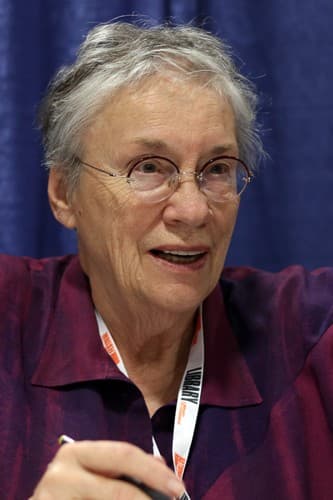
Edna Ann Proulx is an American novelist, short story writer, and journalist. She has written most frequently as Annie Proulx but has also used the names E. Annie Proulx and E.A. Proulx.
Similar books
- Gilead (Oprah's Book Club)
Marilynne Robinson
3.9 (126k) average on GoodreadsFictionExplores profound human experience through introspective narration and vivid setting.
- Spoon River Anthology
Edgar Lee Masters
4.0 (9k) average on GoodreadsHistorical FictionPresents a mosaic of small-town lives and their interconnected, often tragic, histories.
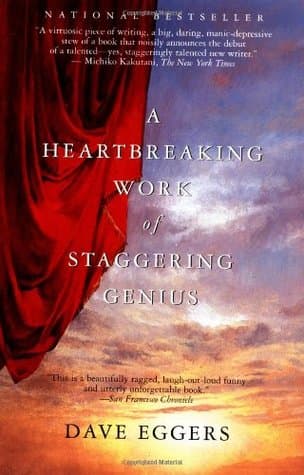
- A Heartbreaking Work of Staggering Genius
Dave Eggers
3.7 (171k) average on GoodreadsLiterary FictionFeatures an unconventional narrative voice grappling with loss and reinvention amidst dark humor.
- No Country for Old Men
Cormac McCarthy
4.1 (148k) average on GoodreadsThrillerWhile both novels feature bleak landscapes and characters facing harsh realities, Proulx's The Shipping News offers a narrative arc of hope and community integration, contrasting with McCarthy's often nihilistic and desolate worldview. Proulx finds pockets of warmth and humor amidst hardship, which is largely absent in McCarthy's work.
- Empire Falls
Richard Russo
3.9 (110k) average on GoodreadsLiterary FictionBoth novels explore small-town life and inherited struggles, but Russo's Empire Falls is more focused on socio-economic decline and intergenerational conflict within a conventional American industrial town. Proulx's novel, by contrast, uses the unique, remote, and almost mythical setting of Newfoundland to frame Quoyle's personal rebirth and community integration, offering a distinct cultural and geographical backdrop.
- The Old Man and the Sea
Ernest Hemingway
3.8 (831k) average on GoodreadsLiterary FictionA Cuban fisherman's long struggle with a giant marlin becomes a story of endurance and dignity, now retold for young adults with illustrations, phonetic guides, and writing prompts in Traditional Chinese.





Enjoyed the summary?
A summary gives you the shape of the book. The book itself has the detail, the examples and the voice.
Find The Shipping News on AmazonAs an Amazon Associate, BookBrief earns from qualifying purchases. How we're funded