
Synopsis
Covers the whole plot, including the ending.
- Difficulty
- Medium
- Pacing
- Variable
- Mood
- Introspective, Humorous, Melancholy, Chaotic, Self-referential
- Read it if
- You appreciate experimental memoirs, self-aware narration, and a raw, honest look at grief and responsibility with a touch of dark humor.
- Skip it if
- You prefer traditional, linear narratives without metafiction or extensive authorial asides, or find excessive self-consciousness off-putting.
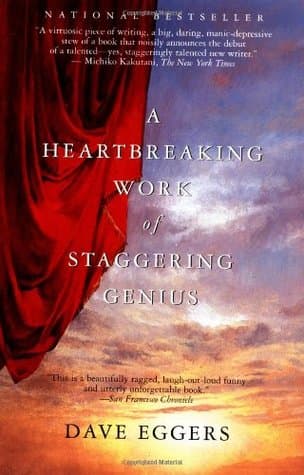
A Heartbreaking Work of Staggering Genius Plot Summary
Covers the whole plot, including the ending.
The Inevitable Loss
The story begins with the news that Dave's mother is dying of cancer, soon after his father's death a month earlier. This double tragedy makes Dave, at 21, the main caregiver and legal guardian for his eight-year-old brother, Toph. The older siblings—Bill, Beth, and Dave—are shaken, showing grief in different ways. Bill, the oldest, tries to keep peace and order, often using sighs to ease tension. Dave and Beth, however, turn their pain into anger and ambition, feeling a deep injustice and a strong desire to rebuild their lives after such loss. These early scenes set up the emotional chaos and the immediate, huge responsibility Dave faces.
Westward Bound: California Dreaming
After their parents' deaths, Dave decides to move himself and Toph from Chicago to Berkeley, California. This move comes from a mix of wanting to escape, to reinvent themselves, and a practical need for a new place where they can build a life free from old memories. Dave imagines a new life where he and Toph, with his backward hat and long hair, can be 'world-destroyers'—a phrase showing their mix of fatalism and confident ambition. They settle into a small house in Berkeley, a city that becomes the setting for their unusual and often turbulent new life, surrounded by diverse, eccentric people and the often absurd cultural currents of the San Francisco Bay Area in the late 1990s.
Guardianship and Growing Pains
Life in Berkeley quickly shows how challenging Dave's new role as Toph's guardian is. Dave, still young, deals with the responsibilities of parenting, which include managing Toph's schooling, social life, cooking, cleaning, and emotional support. His own youthful desires—for creative work, social connections, and personal freedom—often conflict with the constant, tiring demands of raising a child. Toph, for his part, handles his grief and unstable new life with childlike innocence, growing mischievousness, and surprising strength. Their dynamic is a main focus, showing their deep bond and the difficulties of their unique relationship.
The Magazine Venture: 'Might'
To use his energy and creative drive, Dave, with friends and other 'orphans' from the San Francisco scene, starts 'Might' magazine. This project becomes a major part of his life, giving him a place for his sarcastic humor, experimental writing, and a sense of purpose. The magazine's creation is shown as chaotic and often unglamorous, full of late nights, money problems, and staff conflicts. Despite the challenges, 'Might' represents Dave's serious attempt to create something meaningful, to comment on his culture, and to find a community of like-minded people after his personal tragedies.
The 'Real World' Audition
Driven by ambition, a desire for money, and perhaps a need for outside approval, Dave decides to audition for MTV's reality show, 'The Real World.' This event shows his complex relationship with media and fame, as he both criticizes and wants to be part of it. The audition itself is shown with a mix of self-deprecating humor and serious thought, as Dave tries to create a compelling image for the cameras while also thinking about the absurdity of the situation. This side story highlights his generation's interest in and doubt about reality television and the growing culture of personal branding.
Sibling Dynamics and Conflict
Despite the shared trauma of losing their parents, the relationships between Dave and his older siblings, Bill and Beth, have ongoing tension and unresolved conflict. Bill often acts as the tired peacemaker, while Dave and Beth frequently argue, their shared grief appearing as anger and resentment. These interactions show the different ways the family copes and the lasting impact of their parents' deaths on their relationships. The siblings' struggles to communicate and support each other, even in shared tragedy, highlight the complexities of family relationships under great stress. Their occasional visits and phone calls show the lingering family bonds, however strained.
The Mother's Legacy
Throughout the story, Dave often remembers his mother, especially her fight with cancer and her last days. These thoughts are filled with deep loss, guilt, and a continuing search for understanding. He looks at her art, her letters, and the details of her illness, trying to process her death and its effect on his life. These sections are often moving, showing his loving but complex relationship with her. Her memory is a constant, underlying force in his life, shaping his decisions, creative work, and emotions, even as he tries to move forward.
The Weight of Responsibility
The daily realities of caring for Toph weigh heavily on Dave. He struggles with money problems, the emotional demands of being a substitute parent, and the constant fear of failing his younger brother. His internal thoughts often show his worries about Toph's well-being, education, and future. Moments of frustration and despair are balanced with deep tenderness and love for Toph, showing their strong bond. This section looks at the practical challenges of single-parenting and the emotional toll it takes on Dave, forcing him to mature quickly and face the responsibilities placed on him.
Creative Endeavors and Self-Reflection
Beyond 'Might' magazine, Dave works on various creative projects, including screenwriting and personal essays, to understand his experiences. Writing, especially this memoir, becomes a central theme, as he deals with the ethics and challenges of telling his family's story. He often speaks directly to the reader, commenting on memoir writing, his reasons, and his self-doubt. These meta-narrative elements highlight his struggle to find an authentic voice and to build a clear story from his chaotic life, blurring the lines between author, character, and narrator.
The Search for Meaning and Connection
In California, Dave seeks connection and community among diverse friends, many also dealing with their own worries and life challenges. He forms close bonds with people like John and Jordan, who offer both support and more chaos to his life. His romantic relationships, though not a main focus, are also explored, showing his vulnerabilities and his struggle to form close connections while burdened by his past and present responsibilities. These interactions highlight his ongoing search for meaning and belonging in a world that often feels random and harsh, showing the human need for connection even when facing great difficulty.
A Heartbreaking Work of Staggering Genius Characters
Dave Eggers
Protagonist
A young man thrust into parenthood after the sudden death of his parents.
Dave is the memoir's author and protagonist, a sarcastic, ambitious, and deeply vulnerable young man. At 21, he becomes the legal guardian of his 8-year-old brother, Toph, after their parents die within a month of each other. Driven by a mix of grief, anger, and a desperate need for meaning, he moves to California, co-founds 'Might' magazine, and grapples with the immense responsibilities of parenthood. He is highly self-aware, constantly dissecting his own motivations and the ethics of writing his story, often breaking the fourth wall to address the reader directly.
Relationships: Toph Eggers (Guardian and younger brother, a deeply loving and complex bond.); Bill Eggers (Older brother, often a weary peacemaker.); Beth Eggers (Older sister, a source of both conflict and shared grief.); His Mother (Deceased, but a profound influence and source of ongoing grief and love.); His Father (Deceased, his death precedes his mother's, adding to Dave's trauma.); John (Friend and colleague at 'Might' magazine.); Jordan (Friend and creative collaborator.)
Toph Eggers (Christopher)
Supporting
Dave's eight-year-old younger brother, navigating profound loss with resilience.
Toph is Dave's younger brother, who at age eight loses both parents and is subsequently raised by Dave. He is portrayed as an intelligent, resilient, and often mischievous child, adapting to his new, unconventional life in California. Toph's innocence and developing personality provide a grounding force for Dave, reminding him of his responsibilities and the preciousness of life. His perspective, though filtered through Dave's narration, offers moments of childlike wonder and poignant insight into the impact of their shared trauma.
Relationships: Dave Eggers (Younger brother and ward, a profoundly close and dependent relationship.); Bill Eggers (Older brother.); Beth Eggers (Older sister.); His Mother (Deceased, but her memory affects him.); His Father (Deceased, his memory affects him.)
Bill Eggers
Supporting
Dave's eldest brother, attempting to maintain peace and order amidst chaos.
Bill is the eldest of the Eggers siblings. In the wake of their parents' deaths, he adopts a weary, conciliatory demeanor, often sighing and trying to mediate conflicts between Dave and Beth. He represents a more traditional, responsible approach to grief and family, contrasting sharply with Dave and Beth's more volatile reactions. While he doesn't live with Dave and Toph, his presence in the narrative highlights the differing coping mechanisms within the family and the lingering desire for familial harmony, even if it's often elusive.
Relationships: Dave Eggers (Older brother, often in a mediating role.); Toph Eggers (Older brother.); Beth Eggers (Brother, part of the sibling dynamic.); His Mother (Deceased, a shared source of grief.); His Father (Deceased, a shared source of grief.)
Beth Eggers
Supporting
Dave's older sister, whose anger and ambition mirror his own.
Beth is Dave's older sister, and like him, she reacts to their parents' deaths with a fierce anger and a drive to reinvent herself. She often clashes with Dave, their shared grief manifesting as competitive energy and sharp-tongued arguments. Despite the friction, there's an underlying bond of shared trauma and understanding between them. Her character highlights the diverse and sometimes destructive ways individuals cope with profound loss, and she serves as a foil and mirror to Dave's own volatile emotions and ambitions.
Relationships: Dave Eggers (Older sister, a source of both conflict and shared experience.); Toph Eggers (Older sister.); Bill Eggers (Sister, part of the sibling dynamic.); His Mother (Deceased, a shared source of grief.); His Father (Deceased, a shared source of grief.)
Dave's Mother
Mentioned
The artistic and influential matriarch whose death triggers the book's events.
Dave's mother, though deceased at the start of the memoir, is a profoundly influential character. Her battle with cancer and her artistic spirit are frequently revisited through Dave's memories, letters, and artwork. She is portrayed as a loving, creative, and somewhat eccentric figure whose death casts a long shadow over Dave's life, driving much of his grief, his creative impulses, and his struggle for meaning. Her memory serves as a constant touchstone for Dave, shaping his identity and his understanding of loss.
Relationships: Dave Eggers (Mother, a profound and lasting influence.); Toph Eggers (Mother.); Bill Eggers (Mother.); Beth Eggers (Mother.); Dave's Father (Husband.)
Dave's Father
Mentioned
The patriarch whose earlier death compounds the family's tragedy.
Dave's father dies just a month before his mother, compounding the family's tragedy and setting the stage for the book's central events. While less directly explored than his mother, his death contributes significantly to Dave's sense of abandonment and the rapid onset of his parental responsibilities. His memory is part of the collective grief that shapes the siblings' individual reactions and their strained family dynamics. His absence is a constant reminder of the fragility of life and the suddenness of loss.
Relationships: Dave Eggers (Father, his death is a catalyst for the plot.); Toph Eggers (Father.); Bill Eggers (Father.); Beth Eggers (Father.); Dave's Mother (Wife.)
John
Supporting
Dave's friend and co-founder of 'Might' magazine.
John is one of Dave's close friends and a key figure in the founding and operation of 'Might' magazine. He shares Dave's irreverent humor and creative ambition, navigating the chaotic world of independent publishing alongside him. John often serves as a sounding board and a source of camaraderie for Dave, though their working relationship is not without its challenges. He represents the community of eccentric, creative individuals Dave finds in California, providing both support and additional layers of absurdity to Dave's life.
Relationships: Dave Eggers (Friend and business partner.)
Jordan
Supporting
A friend and collaborator in Dave's creative endeavors.
Jordan is another friend who frequently appears in Dave's life, often involved in his creative projects or simply present in the social circles Dave navigates. Like John, Jordan contributes to the vibrant, often chaotic, atmosphere surrounding Dave. He is part of the larger group of 'orphans' and artists who populate Dave's world in California, offering companionship and reflecting the prevailing counter-cultural sensibilities. His presence underscores Dave's search for community and shared experience after his profound losses.
Relationships: Dave Eggers (Friend and collaborator.)
A Heartbreaking Work of Staggering Genius Themes
Grief and Loss
The theme of grief and loss is the emotional center of the memoir. Dave's parents die within a month, leaving him, at 21, to raise his 8-year-old brother, Toph. The story explores the raw, many-sided nature of grief—from initial shock and despair to the long process of coping, anger, and eventual acceptance. Dave's thoughts on his mother's illness and death, his guilt, and his attempts to understand the sudden emptiness in his life are central. The siblings' different reactions to loss (Bill's weariness, Dave and Beth's anger) further show the varied ways people handle deep tragedy. It drives all later events, leading to Dave's move to California and his ambition.
“if you could lose a couple of parents in a month, then basically anything could happen, at any time -- all bullets bear your name, all cars are there to crush you, any balcony could give way; more disaster seemed only logical.”
The Burden of Responsibility and Adulthood
This theme looks at Dave's quick change from a carefree young adult to the main caregiver and legal guardian for Toph. Forced into an adult role he is not ready for, Dave deals with the huge practical and emotional burdens of raising a child while still navigating his own youth. Scenes showing his struggles with cooking, cleaning, Toph's schooling, and money problems highlight how overwhelming his new responsibilities are. The conflict between his youthful desires and his parental duties is a constant internal struggle, driving his personal growth and making him face adulthood early. This theme is clear in his constant worrying about Toph's well-being and his efforts to provide a stable life.
“He was twenty-four, Beth was twenty-three, I was twenty-one, Toph was eight, and all of us were so tried already, from that winter.”
Identity and Reinvention
After his parents' deaths, Dave starts to reinvent himself, moving to California with Toph to escape the past and create a new identity. This theme appears in his ambition to be a 'world-destroyer' with Toph, his co-founding of 'Might' magazine, and even his audition for 'The Real World.' He actively tries to define himself outside his tragedy, doing creative work and embracing the Bay Area's counter-culture. The memoir itself is an act of identity formation, as Dave deals with how to present himself and his story, constantly questioning his own reasons and the narrative he is building. His desire to 'scoff and re-create and drive fast while singing loudly' shows this need for a new persona.
“And I decided that little Toph and I, he with his backward hat and long hair, living together in our little house in Berkeley, would be world-destroyers. We inherited each other and, we felt, a responsibility to reinvent everything, to scoff and re-create and drive fast while singing loudly and pounding the windows.”
The Nature of Memoir and Storytelling
A major meta-theme is Dave often speaking directly to the reader to comment on writing his own story. He questions the ethics of making money from personal tragedy, how reliable memory is, and how subjective narrative is. This self-awareness highlights the challenges and responsibilities of memoir writing, blurring the lines between author, character, and narrator. His detailed 'Rules and Suggestions for the Enjoyment of This Book' and the many footnotes further emphasize this theme, inviting the reader to think critically about storytelling itself and how truth is built in personal narratives. He often worries about how his story will be seen and if he is doing justice to his family's experiences.
“I mean, when we drive, Toph and I, and we drive past people, standing on top of all these hills, part of me wants to stop the car and turn up the radio and have us all dance in formation, and part of me wants to run them all over.”
Media, Fame, and Commercialism
Dave's experiences with 'Might' magazine and his audition for 'The Real World' directly address media, fame, and commercialism. He both criticizes popular culture's superficiality and wants its approval and money. The magazine, while a creative outlet, is also a commercial project, showing the tension between artistic integrity and financial need. His 'Real World' audition is a cynical yet earnest attempt to use the growing reality TV trend for personal gain, revealing a complex relationship with celebrity culture—both scornful and hopeful. This theme highlights the late 1990s cultural scene and media's widespread influence on personal ambition.
“Thus the public nudity, and this ridiculous magazine, and the Real World tryout, all this need, most of it disguised by sneering, but all driven by a hyper-awareness of this window, I guess, a few years when your muscles are taut, coiled up and vibrating.”
Plot Devices & Literary Techniques
Metafiction/Breaking the Fourth Wall
The author directly addresses the reader and comments on the act of writing the memoir.
Dave frequently breaks the fourth wall, addressing the reader directly, commenting on the process of writing the book, and questioning his own motivations and the ethics of his narrative. This device includes extensive footnotes, prefaces, and appendices that are part of the main text. It serves to deconstruct the traditional memoir form, highlighting the subjectivity of memory and the constructed nature of storytelling. This self-awareness invites the reader to critically engage with the narrative, emphasizing the author's struggle with authenticity and his own role as a narrator and character. It creates a highly personal and introspective tone, blurring the lines between author and subject.
Stream of Consciousness
The narrative often flows as a continuous, unedited stream of thoughts and feelings.
The memoir frequently employs a stream of consciousness style, particularly in Dave's internal monologues and reflections. Sentences can be long and winding, jumping between topics, memories, and present-day observations without clear transitions. This device mirrors the chaotic and often overwhelming nature of Dave's grief and his fragmented mental state. It allows the reader to experience his unfiltered thoughts, anxieties, and rapid shifts in emotion, creating an intimate and immersive, albeit sometimes disorienting, reading experience. It reflects the 'hopeless sort of exhilaration, a kind of arrogance born of fatalism' he describes.
Hyperbole and Self-Deprecating Humor
Exaggeration and self-mockery are used to convey emotion and critique.
Dave uses hyperbole and self-deprecating humor extensively to navigate his profound grief and the absurdity of his situation. He often exaggerates his own flaws, anxieties, and the dramatic nature of events, which serves both as a coping mechanism and a way to engage the reader. This comedic overlay prevents the memoir from becoming overly sentimental or self-pitying, allowing him to explore painful topics with a unique blend of wit and vulnerability. For example, his declaration of Toph and himself as 'world-destroyers' is a hyperbolic expression of their grief-fueled ambition.
Non-Linear Narrative
The story jumps back and forth in time, interweaving past memories with present events.
The memoir does not follow a strictly chronological timeline. Instead, Dave frequently interweaves present-day events in California with detailed flashbacks to his parents' illnesses and deaths, and earlier childhood memories. This non-linear structure reflects the way memory functions, particularly in the context of trauma, where past events continually intrude upon and inform the present. It allows Dave to explore the long-lasting impact of his losses and to gradually reveal layers of his family's history, enriching the reader's understanding of his emotional landscape and motivations.
A Heartbreaking Work of Staggering Genius Quotes
“We are the ones who are supposed to be smart, right? We are the ones who are supposed to be able to make things better. But we're not.”
“The thing is, you don't even know what you're capable of until you're put in a situation where you have to find out.”
“I want to be remembered as a person who tried to do the right thing, even when it was hard.”
“It’s like, you know, you think you’re going to be this one kind of person, and then life happens, and you’re totally different.”
“Sometimes I think the whole world is just a big, complicated joke, and we're all just trying to figure out the punchline.”
“The greatest trick the devil ever pulled was convincing the world he didn't exist. The greatest trick Dave Eggers ever pulled was convincing the world he was a genius.”
“There are some things you can never prepare for, no matter how hard you try.”
“The only way to make sense out of change is to plunge into it, move with it, and join the dance.”
“We were, in the end, just two kids trying to figure things out, and doing it with varying degrees of success.”
“Everything is possible, but nothing is easy.”
“The truth is, sometimes you just have to make things up as you go along.”
“You can't really explain what it's like to someone who hasn't been through it.”
“We were always looking for something, even if we didn't know what it was.”
“It's a heartbreaking work of staggering genius, if you ask me.”
Quiz
10 questions on the plot and the characters. Each answer comes with a short explanation.
Question 1
What significant life event immediately precedes the family's move to California, as described in the provided excerpt?
- Dave's graduation from college
- Bill's marriage
- The death of both parents
- Toph starting school
Show answer
C. The death of both parents The excerpt explicitly states, 'He had decided that after our parents died he just didn't want any more fighting between what was left of us... if you could lose a couple of parents in a month, then basically anything could happen.' This event is the catalyst for the family's subsequent actions and move.
Question 2
What is the age difference between Dave and his youngest brother, Toph, according to the excerpt?
- 10 years
- 13 years
- 15 years
- 8 years
Show answer
B. 13 years The excerpt states, 'I was twenty-one, Toph was eight.' 21 - 8 = 13 years.
Question 3
Which sibling is described as wanting 'no more fighting' and responding to conflict with sighs and a 'sorry kind of smile' after their parents' deaths?
- Dave
- Beth
- Bill
- Toph
Show answer
C. Bill The excerpt states, 'Well, this was when Bill was sighing a lot. He had decided that after our parents died he just didn't want any more fighting between what was left of us.'
Question 4
What does Dave mean by the phrase 'world-destroyers' when referring to himself and Toph?
- They literally intend to cause global destruction.
- They feel compelled to challenge conventions and redefine their existence after trauma.
- They are going to join a destructive cult in San Francisco.
- They plan to destroy their inherited family home.
Show answer
B. They feel compelled to challenge conventions and redefine their existence after trauma. Dave states, 'I decided that little Toph and I... would be world-destroyers. We inherited each other and, we felt, a responsibility to reinvent everything, to scoff and re-create and drive fast while singing loudly and pounding the windows.' This indicates a desire to break from the past and rebuild their lives on their own terms.
Question 5
The narrator describes his and Beth's reaction to their parents' deaths as being 'angry people wanting to exact revenge.' On whom do they wish to exact revenge?
- Their deceased parents
- Each other, specifically for past grievances
- The unfairness and randomness of life itself
- The people of San Francisco for their 'dumb ideas'
Show answer
C. The unfairness and randomness of life itself The excerpt states, 'we were angry people wanting to exact revenge. We came to California and we wanted everything, would take what was ours, anything within reach.' This 'revenge' is not directed at a specific person, but rather a generalized anger at their circumstances and a determination to seize life, likely as a response to the profound loss they experienced.
Question 6
What specific activities are mentioned as examples of the 'hopeless sort of exhilaration' and 'arrogance born of fatalism' experienced by the narrator and his peers in San Francisco?
- Working demanding jobs and saving money
- Public nudity, a ridiculous magazine, and a Real World tryout
- Volunteering for community service and political activism
- Studying for advanced degrees and pursuing academic careers
Show answer
B. Public nudity, a ridiculous magazine, and a Real World tryout The excerpt explicitly lists these activities: 'Thus the public nudity, and this ridiculous magazine, and the Real World tryout, all this need, most of it disguised by sneering...'
Question 7
The narrator compares the gathering of his friends in San Francisco to 'Dorothy's dream.' What does this allusion imply about the nature of their community?
- It suggests a return to childhood innocence and simplicity.
- It implies a fantastical, somewhat disorienting, and perhaps temporary assembly of disparate characters.
- It indicates a shared goal of finding a wizard to solve their problems.
- It highlights their collective desire to escape to a magical land.
Show answer
B. It implies a fantastical, somewhat disorienting, and perhaps temporary assembly of disparate characters. The allusion to 'Dorothy's dream' (from The Wizard of Oz) suggests a surreal, often chaotic gathering where familiar people appear in new, sometimes strange contexts, and where the reality of the situation might be questioned. It evokes a sense of being in a dreamlike, perhaps temporary, state with an unusual cast of characters.
Question 8
How does the San Francisco environment, as depicted in the excerpt, contribute to the characters' post-trauma behavior?
- It provides a rigid structure and strict social norms that help them cope.
- It offers a supportive, conventional community that encourages healing.
- It is a place where unconventional ideas and behaviors are tolerated, even encouraged, exacerbating their sense of 'reinvention' and recklessness.
- It forces them into isolation, leading to introspection and quiet grief.
Show answer
C. It is a place where unconventional ideas and behaviors are tolerated, even encouraged, exacerbating their sense of 'reinvention' and recklessness. The excerpt states, 'This was San Francisco, you know, and everyone had some dumb idea -- I mean, wicca? -- and no one there would tell you yours was doomed. Thus the public nudity, and this ridiculous magazine...' This suggests a permissive environment that allows their 'world-destroyer' mentality to flourish without external judgment.
Question 9
The narrator describes a dual impulse when driving past people on hills with Toph: 'part of me wants to stop the car and turn up the radio and have us all dance in formation, and part of me wants to run them all over.' What does this juxtaposition reveal about his emotional state?
- He is merely indecisive about his musical preferences.
- It illustrates a conflict between a desire for connection and joy, and a darker, destructive impulse stemming from his grief and fatalism.
- He is planning a flash mob while simultaneously harboring homicidal tendencies.
- He is expressing a common feeling of road rage in San Francisco.
Show answer
B. It illustrates a conflict between a desire for connection and joy, and a darker, destructive impulse stemming from his grief and fatalism. This stark contrast highlights the narrator's complex emotional landscape. The desire to dance in formation suggests a longing for connection, community, and joy, while the urge to 'run them all over' speaks to a raw, destructive anger and nihilism born from his profound trauma and the 'arrogance born of fatalism' mentioned earlier.
Question 10
The narrator refers to 'a few years when your muscles are taut, coiled up and vibrating.' What 'window' of time is he likely referring to, and what does it represent for him and his peers?
- The brief period of time immediately following their parents' deaths, characterized by intense grief.
- The years of early adulthood, marked by youthful energy, a sense of invincibility, and a drive to define oneself.
- The window of opportunity to become famous in San Francisco's counter-culture scene.
- The time before Toph grows up and no longer needs his care.
Show answer
B. The years of early adulthood, marked by youthful energy, a sense of invincibility, and a drive to define oneself. The phrase 'a few years when your muscles are taut, coiled up and vibrating' combined with the context of 'all this need' and the 'hyper-awareness of this window' strongly suggests the period of early adulthood (the narrator is 21, Beth 23, Bill 24) where energy, potential, and a desire to make an impact are at their peak, especially when fueled by a sense of fatalism and a need to 'reinvent everything' after trauma.
A Heartbreaking Work of Staggering Genius FAQ
What is the core premise of 'A Heartbreaking Work of Staggering Genius'?
The book chronicles Dave Eggers's experience becoming the primary guardian of his younger brother, Toph, at age 21, after both their parents died of cancer within a month of each other. It explores their move from Chicago to Berkeley, California, and their attempts to navigate grief, responsibility, and the chaotic energy of youth in the Bay Area.
Who are the key family members involved in Dave and Toph's story?
The primary family members are Dave and his younger brother, Toph. Their older siblings, Bill and Beth, are also significant figures, though Dave and Toph's cohabitation forms the central narrative arc. The loss of their parents, who died within a short period, is the catalyst for the entire memoir.
What role does the setting of San Francisco/Berkeley play in the narrative?
The Bay Area serves as a vibrant, often absurd backdrop for Dave and Toph's grief and ambition. Its culture of eccentricity, idealism, and artistic striving provides both opportunities and distractions, fostering Dave's publishing ventures and Toph's unconventional upbringing, while also highlighting their outsider status.
What is the significance of the title, 'A Heartbreaking Work of Staggering Genius'?
The title is intentionally ironic and self-deprecating, reflecting Dave's struggle with the perceived arrogance of memoir writing and the pressure to create something profound from personal tragedy. It simultaneously acknowledges the genuine heartbreak while subverting the typical expectations of a 'genius' work.
How does the book blend fact and fiction, or memoir and meta-commentary?
Eggers constantly blurs the lines, incorporating footnotes, disclaimers, a lengthy 'Rules and Suggestions for Enjoyment of this Book,' and direct addresses to the reader. This meta-commentary questions the nature of memory, truth, and the memoir genre itself, making the reader acutely aware of the author's process and anxieties.
What is the purpose of the 'Real World' tryout subplot?
The 'Real World' tryout serves as a satirical commentary on reality television, fame, and the commodification of personal tragedy. Dave's participation is an attempt to both mock and exploit the media landscape, reflecting his desperation for money and attention while simultaneously critiquing these desires.
How does the book explore the concept of inherited trauma or responsibility?
Dave feels an overwhelming sense of responsibility for Toph, seeing himself as inheriting not just his brother but also the burden of their parents' deaths and the need to 'reinvent everything.' This burden manifests in his hyper-vigilance, his attempts to protect Toph, and his own self-destructive tendencies.
Describe Dave's psychological state throughout the memoir.
Dave exhibits a complex mix of grief, anger, anxiety, and an almost manic energy. He's simultaneously overwhelmed by responsibility, deeply protective of Toph, and prone to self-sabotage and existential questioning. His internal monologue reveals a constant battle between profound sadness and a desperate need to create and control.
How does the dynamic between Dave and Toph evolve, and what does it reveal about their coping mechanisms?
Their dynamic is a volatile mix of deep affection, sibling rivalry, and surrogate parenting. Dave often overcompensates, trying to be both a father and a brother, while Toph, despite his young age, displays remarkable resilience and a disarming bluntness. Their shared experience of loss creates an unbreakable, though often fraught, bond.
What psychological impact do the sudden deaths of their parents have on the siblings, particularly Dave, Beth, and Bill?
The sudden deaths leave the siblings reeling, each coping differently. Bill retreats into a resigned sighing, seeking peace. Beth and Dave, however, become 'angry people wanting to exact revenge,' expressing their grief through fighting, rebellion, and a desperate desire to take what they felt was owed to them from the world.
Is the book primarily about grief, or is it about something broader?
While grief is undeniably central, the book transcends a simple narrative of mourning. It's also a profound exploration of youth, identity formation, sibling bonds, the anxieties of creative ambition, and the struggle to find meaning and purpose in a seemingly chaotic world after profound loss.
What is the author's stance on the nature of truth in memoir?
Eggers constantly questions and undermines the notion of objective truth in memoir. Through his meta-commentary and self-reflexivity, he suggests that memory is fallible, narrative is constructed, and the author's perspective is inherently subjective, inviting the reader to engage critically with the 'facts' presented.
How does the book challenge traditional notions of heroism or victimhood?
Dave portrays himself not as a noble hero, but as a flawed, often arrogant, and deeply insecure individual grappling with immense responsibility. He resists easy categorization as a victim, instead highlighting the messy, contradictory, and sometimes selfish ways people cope with tragedy.
What is the significance of the 'world-destroyers' mentality adopted by Dave and Toph?
This mentality is a nihilistic, yet exhilarating, response to their parents' deaths. It's an arrogance born of fatalism, a feeling that if they could lose so much, anything could happen. They feel a responsibility to 'reinvent everything,' to scoff, re-create, and drive fast, embodying a desperate need to control and reshape their chaotic world.
How does the book comment on the media and publishing industry?
The book offers a scathing, yet often humorous, critique of the media's obsession with personal tragedy and the commodification of grief. Dave's attempts to launch a magazine, his 'Real World' tryout, and his meta-commentary on writing the memoir itself all highlight the absurdities and pressures within these industries.
What is the role of humor in a book dealing with such heavy themes?
Humor serves as a crucial coping mechanism for Dave and a way to make the unbearable bearable. It's often dark, self-deprecating, and absurd, providing a counterpoint to the profound sadness and preventing the narrative from becoming solely a tale of woe. It also highlights the youthful energy and resilience of the characters.
About the author
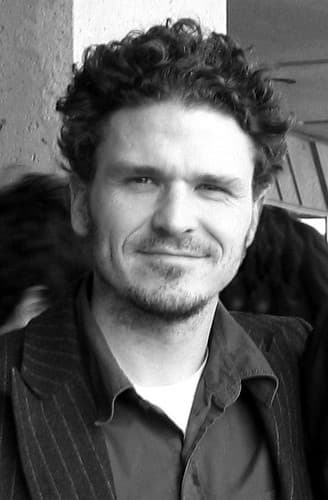
Dave Eggers is an American writer, editor, and publisher. He wrote the 2000 best-selling memoir A Heartbreaking Work of Staggering Genius. Eggers is also the founder of Timothy McSweeney's Quarterly Concern, a literary journal; a co-founder of the literacy project 826 Valencia and the human rights nonprofit Voice of Witness; and the founder of ScholarMatch, a program that matches donors with students needing funds for college tuition. His writing has appeared in several magazines.
Similar books
- Tenth of December
George Saunders
4.0 (62k) average on GoodreadsLiterary FictionExplores human connection and absurdity with a unique voice and experimental flair.
- Pastoralia
George Saunders
4.1 (18k) average on GoodreadsLiterary FictionOffers satirical commentary on modern life and work, blending humor with poignant observations.
- The Corrections
Jonathan Franzen
3.8 (156k) average on GoodreadsLiterary FictionFranzen offers a sprawling, multi-generational family saga with a more traditional narrative arc and literary realism. Eggers, conversely, narrows his focus to an intensely personal, immediate crisis, employing a fragmented and experimental style.
- The Old Man and the Sea
Ernest Hemingway
3.8 (831k) average on GoodreadsLiterary FictionA Cuban fisherman's long struggle with a giant marlin becomes a story of endurance and dignity, now retold for young adults with illustrations, phonetic guides, and writing prompts in Traditional Chinese.
- One Hundred Years of Solitude
Gabriel García Márquez
4.1 (753k) average on GoodreadsLiterary FictionThrough the multi-generational story of the Buendía family, a mythical town deals with the repeating patterns of time, love, and solitude, as the extraordinary mixes with the ordinary.
- The Goldfinch
Donna Tartt
3.9 (720k) average on GoodreadsLiterary FictionHaunted by a tragic explosion and clutching a stolen Dutch masterpiece, a young orphan navigates the opulent drawing rooms of New York and the gritty underbelly of the art world, desperately seeking connection and redemption amidst a life spiraling into crime and obsession.





Enjoyed the summary?
A summary gives you the shape of the book. The book itself has the detail, the examples and the voice.
Find A Heartbreaking Work of Staggering Genius on AmazonAs an Amazon Associate, BookBrief earns from qualifying purchases. How we're funded