
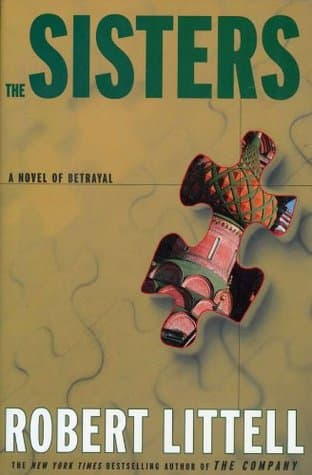
Synopsis
Covers the whole plot, including the ending.
- Difficulty
- Hard
- Pacing
- Moderate
- Mood
- Suspenseful, Deceptive, Cynical, Intelligent, Atmospheric
- Read it if
- You enjoy complex, cerebral spy thrillers with layers of deception and morally ambiguous characters, reminiscent of classic Cold War espionage.
- Skip it if
- You prefer fast-paced action over intricate plotting and psychological manipulation, or dislike stories with a cynical, often bleak view of intelligence work.
The Sisters Plot Summary
Covers the whole plot, including the ending.
The Sisters' Grand Design
The story introduces Francis and Carroll, two legendary CIA operatives known as 'the Sisters Death and Night.' They are orchestrating an elaborate plan to draw out 'the Potter,' a former head of the KGB's sleeper school, now retired. Their goal is to use the Potter's knowledge and influence to identify his last, best assassin, 'the Sleeper,' who has been dormant in the United States for decades. The Sisters' motivation is a mystery, hinting at a world-altering event they aim to prevent or control. They begin by subtly manipulating information channels, creating intrigue designed to reach the Potter and pique his paranoia.
Luring the Potter
Francis and Carroll execute the next phase of their plan, feeding the Potter carefully constructed disinformation. They use his known weaknesses and past methods against him, creating a scenario that suggests a threat to his former network and his legacy. They know that the Potter, despite retirement, protects his creations and reputation. This psychological warfare makes him believe he is discovering a plot independently, rather than being led by the Sisters. They hint at a potential activation of a sleeper agent, knowing this will force the Potter to investigate, drawing him back into the espionage world and into their trap.
The Potter Takes the Bait
As the Sisters predicted, the Potter, a man of intellect and suspicion, cannot resist the bait. He subtly re-engages with old contacts and methods, trying to uncover the truth behind the whispers. He believes he is protecting his past and his 'children' – the sleeper agents he trained. This investigation, however, is exactly what Francis and Carroll wanted. Every step the Potter takes, every inquiry he makes, brings him closer to revealing 'the Sleeper's' identity and location, the assassin he considered his masterpiece. The Sisters observe his movements, confirming their manipulation is working as the Potter unwittingly becomes their primary tool.
Identifying the Sleeper
Through deduction, guided by the breadcrumbs left by Francis and Carroll, the Potter identifies 'the Sleeper.' The revelation shocks him, as the Sleeper is someone he believed to be integrated into American society, living an unremarkable life. This discovery confirms the Sisters' initial idea: that the Potter had the unique insight to unmask his own creation. The Sleeper, a woman named Anna, is a seemingly ordinary citizen, her past as a trained assassin buried deep. The Potter now realizes his protégé is not only active but potentially poised to execute a catastrophic mission, a mission he suspects is orchestrated by the Sisters.
The Sisters' True Objective
With the Sleeper identified, the full scope of Francis and Carroll's plan begins to appear. It becomes clear that they are not just trying to neutralize the Sleeper, but are orchestrating a 'world-shattering crime' for reasons that remain unclear but suggest a geopolitical shift. They have manipulated the Potter into activating, or at least exposing, Anna, and now intend to use her for their own purposes. The Potter, horrified by the consequences of his unwitting participation, realizes he has been played. He understands that the Sisters' endgame is more complex and dangerous than he imagined, and that Anna is a pawn in a game of global stakes.
The Potter's Desperate Race
Overwhelmed by guilt and responsibility for Anna, the Potter begins a desperate mission to stop her from carrying out the Sisters' crime. He knows Anna's capabilities and the meticulousness of her training, which he instilled. His race against time is dangerous; he must locate Anna before she acts and circumvent the Sisters' watchful eyes, who anticipate his every move. He uses his old skills, relying on his understanding of espionage and human psychology, to track Anna while trying to understand the Sisters' master plan. He seeks to undo the damage he inadvertently helped create.
Anna's Activation
Anna, 'the Sleeper,' receives the final trigger for her mission. The activation method is subtle, ingrained deep within her training, and appears innocuous to an outsider. She sheds her civilian persona, her years of quiet integration falling away to reveal the efficient assassin she was trained to be. Her target and the nature of the 'world-shattering crime' she is meant to commit are revealed to her, aligning with the Sisters' grand design. She moves with precision, preparing for a mission that will have global repercussions. The Potter, meanwhile, is closing in, but Anna's deep cover and professional discipline make her difficult to intercept.
The Confrontation
The Potter confronts Anna, 'the Sleeper,' as she is about to execute her mission. The encounter is charged with history and betrayal. The Potter, who once molded her into the perfect weapon, now stands as her adversary, attempting to talk her down and prevent the catastrophic event. Anna, driven by her training and duty, struggles with the sudden appearance of her former mentor, whose words challenge her existence and purpose. The scene is a psychological battle, with the fate of the world in the balance, as the Potter tries to appeal to her humanity while the assassin in her prepares to strike.
The Sisters' Intervention
As the Potter and Anna's confrontation reaches its peak, Francis and Carroll are shown observing the events, pulling strings from a distance. Their presence emphasizes their control over the entire operation, from the initial lure of the Potter to Anna's activation and the final confrontation. They anticipated every move and counter-move. Their ultimate objective remains shrouded in a blend of patriotism and ruthlessness. They are not merely observers; they manage the unfolding crisis, ensuring the outcome serves their larger, enigmatic agenda. Their intervention at this critical juncture shows that no one is free from their influence.
The Unveiling of the Plot of Plots
In the climax, the true nature of the Sisters' 'plot of plots' is revealed. It is not simply about stopping Anna, but about using her, and the Potter, to achieve a calculated political or strategic outcome that reshapes global power dynamics. The 'world-shattering crime' is an engineered event designed to provoke a specific reaction, create a new status quo, or eliminate a perceived threat. The Sisters' motivations, while still complex, are rooted in a deep, if twisted, sense of national interest or personal ideology. The consequences of their actions resonate deeply, leaving a lasting impact on the characters and the geopolitical landscape of the story.
Aftermath and Lingering Questions
With the immediate crisis resolved, or at least altered, the characters deal with the fallout of the Sisters' actions. The Potter is deeply affected by his role in the events and Anna's fate. Anna herself, whether successful or thwarted, faces an existential crisis after her activation and confrontation. Francis and Carroll, ever enigmatic, retreat into the shadows, their ultimate victory or defeat unclear. The novel ends with questions about morality, loyalty, and the cost of operating in the murky world of espionage. The 'plot of plots' leaves a permanent scar on all involved, and the reader considers the nature of power and manipulation.
Principal Figures
Francis
Protagonist/Antagonist (ambiguous)
One of the two enigmatic CIA legends, 'Sister Death.'
Francis is one half of the formidable duo known as 'the Sisters.' She is a brilliant, ruthless, and highly strategic CIA operative. Her intellect is matched only by her capacity for manipulation, and she operates with a cold, calculating precision. Francis is driven by a deep-seated, albeit morally ambiguous, sense of purpose, believing that her elaborate schemes serve a greater good, even if it means sacrificing individuals. She views people as pawns in a grand geopolitical chess game, and her personal life, if any, is completely subsumed by her professional identity. Her motivations are complex, hinting at both patriotism and a desire for ultimate control.
Relationships: Carroll (professional partner, co-conspirator, 'sister'); The Potter (target of manipulation, unwitting pawn); Anna (The Sleeper) (asset, ultimate target of their machinations)
Carroll
Protagonist/Antagonist (ambiguous)
The other half of the 'Sisters,' 'Sister Night,' equally cunning and dangerous.
Carroll is the second half of the 'Sisters' duo. She complements Francis perfectly, often acting as the more outwardly assertive or direct component of their operations, though equally capable of subtle manipulation. Carroll shares Francis's sharp intellect and unwavering dedication to their objectives, and together they form an unstoppable force in the espionage world. She possesses a keen understanding of human psychology, which she expertly exploits to further their intricate plots. Like Francis, her personal life is a mystery, subsumed by her role as a master manipulator. Her loyalty is to their shared vision, which is often shrouded in secrecy.
Relationships: Francis (professional partner, co-conspirator, 'sister'); The Potter (target of manipulation, unwitting pawn); Anna (The Sleeper) (asset, ultimate target of their machinations)
The Potter
Supporting/Protagonist (reluctant)
A retired, legendary former head of the KGB's sleeper school.
The Potter is a brilliant, highly analytical, and deeply paranoid former KGB spymaster, now living in quiet retirement. He is a master of human psychology and the art of deception, having meticulously trained numerous sleeper agents, including Anna. Despite his retirement, he remains fiercely protective of his legacy and his 'children.' He is drawn back into the world of espionage by the Sisters' manipulations, initially believing he is uncovering a threat to his past. His primary drive becomes a desperate attempt to undo the catastrophic events he inadvertently helped set in motion, fueled by a sense of responsibility and guilt. He embodies the old guard of espionage, deeply rooted in Cold War tactics.
Relationships: Francis (manipulator/manipulated); Carroll (manipulator/manipulated); Anna (The Sleeper) (former protégé, 'daughter' figure, target he must stop)
Anna (The Sleeper)
Antagonist/Victim
The Potter's last and best assassin, living secretly in the United States.
Anna, known as 'the Sleeper,' is a highly trained and deeply integrated former KGB assassin. For decades, she has lived a seemingly ordinary life in the United States, her true identity and purpose dormant. She is the Potter's masterpiece, a testament to his meticulous training and psychological conditioning. When activated by the Sisters' machinations, her civilian persona peels away, revealing a cold, efficient, and utterly dedicated operative. She is driven by deeply ingrained programming and a sense of duty, making her a formidable and tragic figure. She is both a weapon and a victim of the intricate espionage world, her agency largely dictated by others.
Relationships: The Potter (former mentor, 'father' figure, now adversary); Francis (indirect manipulator); Carroll (indirect manipulator)
Unnamed CIA Director
Supporting/Mentioned
The official head of the CIA, often outmaneuvered by the Sisters.
This character represents the official hierarchy and bureaucracy of the CIA, often finding himself struggling to keep pace with, or even fully comprehend, the rogue operations of Francis and Carroll. He is aware of their legendary status and their effectiveness, but also wary of their unconventional and often morally ambiguous methods. He serves as a foil to the Sisters' autonomy, highlighting the tension between official channels and clandestine operations. His primary drive is to maintain control and oversight, a task made nearly impossible by the Sisters' intricate deceptions.
Relationships: Francis (subordinate (nominally), maverick agent); Carroll (subordinate (nominally), maverick agent)
Various CIA Analysts/Agents
Mentioned
Minor characters who provide background or assist in data gathering.
These characters populate the periphery of the story, serving as cogs in the larger intelligence machine. They are often depicted as intelligent and dedicated, but ultimately unaware of the true scope of the Sisters' 'plot of plots.' They provide technical support, gather intelligence, or act as messengers, unknowingly contributing to the Sisters' grand design. Their presence grounds the story in the operational realities of the CIA, even as the main characters transcend conventional espionage.
KGB Old Guard Contacts
Mentioned
Former associates of the Potter, subtly used in his investigation.
These are the remnants of the Potter's old network, individuals who once held positions of power or influence within the KGB. They are now scattered, some retired, some still subtly involved in the shadows of post-Soviet intelligence. The Potter reaches out to them for information or assistance, exploiting old loyalties or weaknesses. They provide fragmented pieces of the puzzle, unknowingly aiding the Potter in his quest, which in turn serves the Sisters' larger agenda. They represent the lingering specter of the Cold War and the deep-seated loyalties that can still be exploited.
Relationships: The Potter (former colleagues, sources of information)
Themes & Insights
Manipulation and Deception
The narrative builds on layers of manipulation and deception. Francis and Carroll are masters, orchestrating a complex 'plot of plots' that ensnares the Potter and activates Anna. They deceive everyone, including their own agency, to achieve their enigmatic goals. The Potter, a former spymaster, is a master of deception, yet he falls victim to the Sisters' game, showing how pervasive deceit is in espionage. This theme appears in every interaction, every piece of information, and every character's motivation, showing that truth is a malleable commodity.
““The plot of plots,” they called it, a tapestry woven from lies, half-truths, and the predictable reactions of men who believed they were free.”
The Nature of Identity
This theme is explored through Anna, 'the Sleeper.' Her adult life is a deception, a civilian identity masking an assassin. When activated, her programmed identity resurfaces, creating conflict. The Potter also struggles with his identity, torn between his past as a spymaster and his desire for retirement. The Sisters embody this theme, their public personas as CIA operatives barely scratching the surface of their true, manipulative selves. The book questions if a person can truly shed their past or if their core identity is immutable.
“She was a ghost of a woman, a phantom of a life, waiting for the word that would make her real again.”
Legacy and Responsibility
The Potter is driven by his legacy as a trainer of sleeper agents, especially Anna, whom he considers his masterpiece. When he realizes she is being used for a catastrophic purpose, his responsibility compels him to act, even at personal risk. The Sisters are also driven by a perceived legacy, believing their 'world-shattering crime' will secure a certain future, making them feel responsible for the geopolitical landscape. This theme explores the burden of creation and the moral implications of past actions, especially when human lives are tools.
“He had created her, honed her into a weapon. Now, he was bound to prevent her from firing.”
Power and Control
At its heart, 'The Sisters' is a story about the pursuit and exercise of power and control. Francis and Carroll are the orchestrators, manipulating individuals and global events from the shadows. They show an almost god-like level of control over the narrative and characters. The Potter, in his past role, also wielded power over his agents. The 'plot of plots' itself shows the desire to dictate outcomes, to shape the world according to a specific vision. This theme highlights the intoxicating nature of control and the ethical dilemmas of wielding such influence.
“The Sisters didn't just play the game; they designed the board, moved the pieces, and dictated the rules.”
Plot Devices & Literary Techniques
The MacGuffin (The 'World-Shattering Crime')
A mysterious, catastrophic event that drives the plot.
The 'world-shattering crime' that Anna is meant to commit serves as a classic MacGuffin. Its exact nature is initially vague, allowing the plot to focus on the intricate process of identifying and stopping Anna, rather than the specifics of the crime itself. This ambiguity heightens the suspense and allows the reader to project their own fears onto the potential outcome. As the story progresses, its details are slowly unveiled, revealing its geopolitical significance and the Sisters' true objectives, but its initial mystery is crucial for driving the early narrative and compelling the Potter into action.
The Chessmaster vs. The Pawn
A dynamic where manipulative masterminds control unwitting agents.
This device defines the core relationship between the Sisters and the other characters. Francis and Carroll are the ultimate chessmasters, meticulously planning every move and anticipating every counter-move. The Potter, despite his own past as a spymaster, becomes an unwitting pawn in their game, manipulated into revealing Anna. Anna herself is the ultimate pawn, a weapon activated and directed by external forces. This dynamic emphasizes the theme of control and highlights the power imbalance, creating a sense of inevitability and tragic irony as characters believe they are acting freely while being expertly guided by unseen hands.
Red Herring
Misleading clues or information designed to distract characters and readers.
The Sisters frequently employ red herrings to mislead the Potter and, by extension, the reader. They feed him carefully crafted disinformation, making him believe he is pursuing one threat, while subtly guiding him towards their true objective. This device creates layers of suspense and paranoia, as the Potter constantly questions the authenticity of the information he uncovers. It also reflects the deceptive nature of the espionage world, where nothing is as it seems, and every piece of intelligence must be scrutinized. The initial 'threat' that lures the Potter out of retirement is a prime example of a sophisticated red herring.
Flashback/Backstory
Recalling past events to reveal character motivations and history.
While not always presented as explicit flashbacks, the narrative frequently delves into the past to provide crucial backstory for characters like the Potter and Anna. Memories of Anna's rigorous training under the Potter, or the Potter's own career within the KGB, are woven into the present narrative. This device helps to establish the deep-seated connections between characters, explain their skills and motivations, and underscore the profound impact of past events on their current actions. It gives weight to the present-day stakes by illustrating the long history of manipulation and loyalty that drives the plot.
The Sisters Quotes
“There are no secrets in this business, only different levels of disinformation.”
“The truth was a weapon, and like all weapons, it could be aimed and fired.”
“Every man has his price, but for some, the currency is not money.”
“Fear was a sculptor, and it shaped men into whatever the situation demanded.”
“The past is never dead. It's not even past. It just waits for the right moment to ambush you.”
“Loyalty was a fragile thing, easily broken by a whisper of suspicion.”
“The greatest trick the devil ever pulled was convincing the world he didn't exist, and the greatest trick of intelligence is convincing the enemy you don't care.”
“In the shadow world, the lines between good and evil blurred until they ceased to exist.”
“A lie told often enough becomes the truth, especially when it's the truth people want to believe.”
“The silence was louder than any scream, filled with all the things left unsaid.”
“History is written by the victors, and rewritten by those who control the narrative.”
“There are always two sides to every story, and usually, a third, hidden one.”
“The hardest part of being a ghost is remembering you were once a man.”
“Justice was a luxury few could afford, and even fewer could deliver.”
Quiz
10 questions on the plot and the characters. Each answer comes with a short explanation.
Question 1
Who are 'the Sisters' in the novel 'The Sisters'?
- Two actual biological sisters working for the KGB.
- Francis and Carroll, two legendary and dangerous CIA agents.
- Two master assassins trained by the Potter.
- The codenames for a top-secret CIA operation.
Show answer
B. Francis and Carroll, two legendary and dangerous CIA agents. The book description explicitly states that Francis and Carroll are 'two enigmatic and extremely dangerous CIA legends dubbed “the Sisters Death and Night.”'
Question 2
What is the primary goal of Francis and Carroll in 'The Sisters'?
- To recruit the Potter to work for the CIA.
- To stop the Potter's protégé from assassinating a world leader.
- To execute an 'exquisitely planned, world-shattering crime' using the Potter's protégé.
- To dismantle the remaining KGB sleeper cells in the United States.
Show answer
C. To execute an 'exquisitely planned, world-shattering crime' using the Potter's protégé. The synopsis mentions that Francis and Carroll 'set off a desperate race against time as the Potter tries to stop his protégé from committing the Sisters' exquisitely planned, world-shattering crime,' indicating this is their ultimate objective.
Question 3
Who is 'the Potter' in 'The Sisters'?
- A high-ranking CIA director.
- A former head of the KGB sleeper school.
- The target of the Sisters' planned crime.
- An independent contractor hired by the Sisters.
Show answer
B. A former head of the KGB sleeper school. The text describes the Potter as 'a former head of the KGB sleeper school,' making him a key figure in the narrative.
Question 4
What specifically do Francis and Carroll do to initiate their plan involving the Potter?
- They directly threaten the Potter's family.
- They offer the Potter a large sum of money.
- They lure him into betraying his last and best assassin.
- They frame the Potter for a major espionage crime.
Show answer
C. They lure him into betraying his last and best assassin. The synopsis states: 'By luring the Potter... into betraying his last and best assassin living secretly in the United States, Francis and Carroll set off a desperate race against time.'
Question 5
What is the central theme highlighted by the New York Times quote, 'the plot of plots,' regarding 'The Sisters'?
- The devastating consequences of international espionage.
- The complex and deceptive nature of the narrative's scheme.
- The deep emotional bond between Francis and Carroll.
- The historical accuracy of the espionage tactics portrayed.
Show answer
B. The complex and deceptive nature of the narrative's scheme. The phrase 'the plot of plots' combined with the description of 'an abyss of artful deception' strongly suggests the complexity and intricate nature of the scheme being the central theme.
Question 6
What is the primary motivation for the Potter's desperate race against time?
- To escape retribution from Francis and Carroll.
- To protect his own identity from being revealed.
- To prevent his protégé from committing the Sisters' world-shattering crime.
- To reclaim his position as head of the KGB sleeper school.
Show answer
C. To prevent his protégé from committing the Sisters' world-shattering crime. The synopsis explicitly states, 'the Potter tries to stop his protégé from committing the Sisters' exquisitely planned, world-shattering crime,' indicating this is his urgent task.
Question 7
What specific detail is revealed about the Potter's protégé?
- They are a former CIA agent.
- They are living secretly in the United States.
- They are a high-ranking official in the U.S. government.
- They have retired from espionage entirely.
Show answer
B. They are living secretly in the United States. The text mentions Francis and Carroll 'luring the Potter... into betraying his last and best assassin living secretly in the United States,' which describes the protégé's current status.
Question 8
The description implies a particular kind of narrative structure for 'The Sisters.' Which best describes it?
- A character study focusing on the psychological profiles of Francis and Carroll.
- A slow-burn historical espionage drama.
- A high-stakes, fast-paced thriller driven by a race against time.
- A series of interconnected short stories about different spies.
Show answer
C. A high-stakes, fast-paced thriller driven by a race against time. Phrases like 'desperate race against time' and 'astonishing thriller' strongly suggest a fast-paced, high-stakes narrative structure.
Question 9
Considering the title and the nicknames 'Death and Night,' what literary device is most prominently used to describe Francis and Carroll?
- Hyperbole, exaggerating their abilities.
- Irony, as they are actually benevolent figures.
- Personification, giving them abstract, formidable qualities.
- Alliteration, for memorable branding.
Show answer
C. Personification, giving them abstract, formidable qualities. Dubbing them 'Death and Night' gives Francis and Carroll abstract, powerful, and ominous human-like qualities, which is a form of personification.
Question 10
What unique aspect of the 'plot' is emphasized by the phrase 'an abyss of artful deception'?
- The sheer number of characters involved in the conspiracy.
- The moral ambiguity of the characters' actions.
- The profound depth and intricate layers of trickery and manipulation within the plan.
- The historical accuracy of the Cold War espionage tactics.
Show answer
C. The profound depth and intricate layers of trickery and manipulation within the plan. 'Abyss of artful deception' points to a deep, complex, and skillfully crafted scheme filled with layers of trickery and manipulation, rather than just moral ambiguity or character count.
The Sisters FAQ
What is the central premise of 'The Sisters'?
The book revolves around two legendary, highly dangerous CIA operatives, Francis and Carroll, known as 'the Sisters Death and Night.' They manipulate the Potter, a former KGB sleeper school head, into unknowingly activating his best assassin in the US, setting in motion their 'plot of plots' with global implications.
Who are Francis and Carroll, and why are they called 'the Sisters'?
Francis and Carroll are two enigmatic and extremely dangerous CIA legends. They are dubbed 'the Sisters Death and Night' by those in the espionage world due to their ruthless efficiency, intricate planning, and the deadly consequences that follow their operations, often leaving a trail of destruction and deception.
What role does 'the Potter' play in the narrative?
The Potter is a former head of a KGB sleeper school, a master of human manipulation and creating deep-cover agents. He is lured by Francis and Carroll into betraying his last and best assassin, living secretly in the United States, thereby unknowingly initiating the Sisters' devastating plan.
What is the 'world-shattering crime' that the assassin is unknowingly tasked with?
The specific nature of the 'world-shattering crime' is a meticulously guarded secret that unfolds throughout the book. It is a highly elaborate, exquisitely planned act designed by Francis and Carroll to achieve a profound, far-reaching geopolitical impact, leveraging the assassin's skills for their ultimate goal.
Why does the Potter try to stop his protégé, and what does this reveal about his character?
Once the Potter realizes the true extent of the Sisters' manipulation and the catastrophic nature of the crime his protégé is about to commit, he embarks on a desperate race to stop it. This reveals a flicker of moral conscience and a deep-seated loyalty to his 'children,' the agents he trained, even if it means opposing the formidable Sisters.
Are Francis and Carroll actual sisters, or is it a metaphorical title?
The 'Sisters' moniker is largely metaphorical, highlighting their synchronized and deadly operational style, almost as if they share a single mind. While their bond is profound and almost familial in its intensity, the book focuses more on their professional symbiosis and shared vision rather than a literal sibling relationship.
What clues might readers miss about the true motivations of Francis and Carroll early on?
Early clues often lie in their seemingly detached analytical approach to human lives and geopolitical events, treating individuals as mere cogs in their grand designs. Their lack of overt emotional display and their absolute focus on the 'plot of plots' hint at a deeper, possibly ideological or personal, driving force beyond standard agency objectives.
How does the book subtly foreshadow the final twist or revelation concerning the 'plot of plots'?
The foreshadowing often comes through the unusual specificity of the target or the method, the extraordinary lengths Francis and Carroll go to, and the historical context of their past operations. Discrepancies in intelligence reports or the reactions of secondary characters to the Sisters' reputation can also hint at the true depth of their ambition.
What is the significance of the assassin's identity and background, and how does it play into the Sisters' plan?
The assassin's identity and background are meticulously chosen by the Sisters to fit specific parameters of their plan, making them the perfect, unwitting instrument. Their unique skill set, psychological profile, and perhaps even their personal history are all critical components that ensure the 'plot of plots' can be executed with precision and devastating effect.
How does the novel explore the psychological toll of a life in espionage on characters like the Potter?
The Potter's character arc deeply explores the psychological toll, showing how years of manipulation and creating 'sleepers' have desensitized him, yet left a lingering sense of paternal responsibility for his creations. His desperate attempt to stop his protégé highlights the internal conflict between his professional conditioning and his buried humanity.
What psychological traits make Francis and Carroll so effective and dangerous?
Francis and Carroll exhibit extreme levels of strategic thinking, emotional detachment, and an unwavering commitment to their objectives, bordering on fanaticism. Their ability to anticipate multiple contingencies, exploit human weaknesses, and operate without moral qualms makes them incredibly effective and profoundly dangerous adversaries.
How does the book delve into the psychology of a deep-cover assassin who is activated after years of dormancy?
The novel explores the disorienting and often traumatic experience of an assassin being activated after a long period of normal life. It delves into the fracturing of identity, the resurgence of dormant training, and the struggle between their constructed civilian persona and their ingrained killer instincts, often leading to profound internal conflict.
In what ways do Francis and Carroll manipulate the Potter's past and loyalties to achieve their goals?
Francis and Carroll expertly leverage the Potter's past pride in his creations and his latent paternalistic feelings towards his agents. They exploit his deep-seated psychological need to prove his legacy and the effectiveness of his training, subtly guiding him towards actions that inadvertently serve their grand design.
Is 'The Sisters' primarily a critique of intelligence agencies, or a celebration of strategic brilliance?
The book can be interpreted as both. While it showcases the terrifying strategic brilliance and intricate planning capabilities within intelligence operations, it also serves as a stark critique of the amorality and potentially devastating consequences when such power is wielded by individuals like Francis and Carroll, operating beyond conventional oversight.
What philosophical questions does the 'plot of plots' raise about control, free will, and global destiny?
The 'plot of plots' raises profound questions about the illusion of control in a world manipulated by unseen forces, and the extent to which individual free will can be subverted for larger, often sinister, agendas. It challenges readers to consider who truly shapes global destiny and the ethical boundaries of such power.
How does the book use the concept of 'truth' and 'deception' to challenge reader perceptions?
The narrative constantly blurs the lines between truth and deception, often presenting layers of misinformation that characters and readers must peel back. It challenges perceptions by showing how easily reality can be constructed and manipulated, making one question every piece of information and every character's true motives.
Could Francis and Carroll be seen as anti-heroes rather than pure villains, given their ultimate objective?
Whether Francis and Carroll are anti-heroes or villains depends on the reader's perspective on their ultimate objective and the morality of their methods. If their 'plot of plots' is aimed at a perceived greater good, however twisted their means, some might view them as anti-heroes willing to make impossible sacrifices, while others would condemn their ruthlessness.
What is the significance of the title 'The Sisters Death and Night' beyond their operational style?
Beyond their operational style, the title 'The Sisters Death and Night' symbolizes the pervasive and inescapable nature of their influence. 'Death' represents the destructive consequences of their actions, while 'Night' signifies the secrecy, hidden motives, and moral darkness that envelops their world and their targets, leaving no escape.
About the author

Robert Littell is an American author known for his works of fiction, particularly in the spy genre. His notable books include "The Company," which delves into the world of espionage, and "The Sisters," a narrative exploring complex relationships. Littell's writing often reflects his background in intelligence and his keen understanding of political intrigue.
Similar books
- The Company
Robert Littell
4.2 (5k) average on GoodreadsThrillerShares the same author's intricate plotting and deep dive into the CIA's world.
- Tinker Tailor Soldier Spy
John le Carré
4.1 (107k) average on GoodreadsFictionFeatures a similar focus on Cold War espionage, double-crossing, and the psychological toll of spycraft.
- A Perfect Spy
John le Carré
4.0 (16k) average on GoodreadsThrillerExplores the deep psychological layers of a spy's life and the moral ambiguities of intelligence.
- Angels & Demons
Dan Brown
3.9 (2.7M) average on GoodreadsThrillerA Harvard symbologist races through Rome's ancient sites, deciphering cryptic clues to unmask the Illuminati and stop a vengeful plot to destroy the Vatican with a stolen antimatter weapon.
- Gone Girl
Gillian Flynn
4.1 (2.3M) average on GoodreadsThrillerA wife's sudden disappearance on her fifth anniversary reveals a web of lies and psychological warfare, exposing the secrets within a seemingly perfect marriage.
- The Girl on the Train
Paula Hawkins
3.9 (2.1M) average on GoodreadsThrillerA woman’s fascination with a seemingly perfect couple she watches from her daily train commute leads her into a dark investigation when she witnesses something that shatters their idyllic image.





Enjoyed the summary?
A summary gives you the shape of the book. The book itself has the detail, the examples and the voice.
Find The Sisters on AmazonAs an Amazon Associate, BookBrief earns from qualifying purchases. How we're funded