
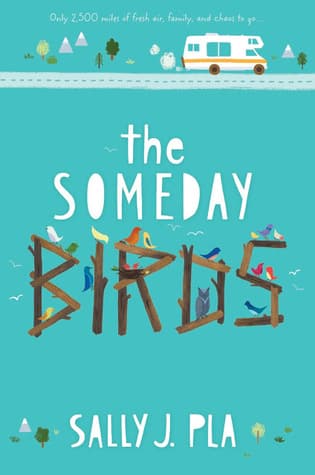
Synopsis
Covers the whole plot, including the ending.
- Difficulty
- Easy
- Pacing
- Moderate
- Mood
- Heartwarming, Hopeful, Emotional, Gentle Humor
- Read it if
- You enjoy heartwarming, character-driven stories about neurodivergent children, family road trips, and finding hope in difficult circumstances.
- Skip it if
- You dislike children's perspectives, stories with a focus on emotional journeys over fast-paced action, or themes of family illness.
The Someday Birds Plot Summary
Covers the whole plot, including the ending.
The Unraveling of Routine
Ten-year-old Charlie Finch, who has high-functioning autism, likes routine. His world is organized, from his bird books to his art supplies. But his life changes when his father, a war journalist, is severely injured in Afghanistan and needs special medical treatment in Virginia. This news breaks Charlie's sense of security and his family's stability. His older sister, Davis, deals with her own worries and a new interest in boys, while his younger twin brothers, Riley and Joel, are loud and messy, further challenging Charlie's need for order. The family's stable life now faces uncertainty and a long cross-country trip.
The Road Trip Begins
With their mother staying behind, Charlie, Davis, and the twins, Riley and Joel, start a road trip from California to Virginia to be with their father. A family friend named Dr. Mindy, a free-spirited woman, drives them. Charlie is uncomfortable with the disrupted routine and the unpredictable nature of car travel. To cope, he focuses on a list of 'Someday Birds' – rare birds he and his father had planned to see. He believes that if he completes this list, his father will recover, and their lives will return to normal.
The Desert and the Discomfort
The first part of the trip through the desert is hard for Charlie. The heat, bright sun, new sounds, and constant closeness to his siblings and Dr. Mindy create sensory overload. He finds comfort in his bird books and drawing, but the chaos of the car and unexpected stops often overwhelm him. Davis tries to help but is often busy with her phone and teenage concerns. The twins, Riley and Joel, are always noisy and mischievous, adding to Charlie's stress. Dr. Mindy, though well-meaning, has an unconventional way of traveling, which further disrupts Charlie's expectations.
A Snowy Detour and a Rare Bird
A sudden snowstorm makes the family take an unexpected detour, leaving them stuck in a small town. This unplanned stop is upsetting for Charlie at first, but it also creates an opportunity. While indoors, Charlie sees a Bohemian Waxwing, a rare bird on his 'Someday Birds' list, outside their window. This sighting gives him hope and strengthens his belief that finishing the list will help his father. The shared experience of the snowstorm and the bird sighting, despite the initial trouble, brings a brief moment of shared wonder and connection among the siblings and Dr. Mindy, showing Charlie that even unexpected events can bring good things.
The Grand Canyon and Growing Pains
The family visits the Grand Canyon, a place that both amazes and overwhelms Charlie. His fear of heights and the vast, open spaces are challenging. While there, he has a difficult encounter with tourists who don't understand his behavior, showing his social anxieties. Davis struggles with her own teenage issues, including a crush on a boy she's texting, and feels the weight of responsibility for her younger brothers. Dr. Mindy encourages Charlie to draw and observe, helping him process the overwhelming experience through his art. This stop highlights the individual struggles each family member faces during their journey.
Discovering Dr. Mindy's Secret
As the journey continues, Charlie becomes curious about Dr. Mindy. Her unusual behavior and deep knowledge of his father's medical condition make him suspicious. By watching and listening, Charlie learns that Dr. Mindy is not just a family friend, but a military psychologist assigned to his father's case. This news is unsettling for Charlie, as it adds more complexity to his disrupted world and makes him question the adults around him. However, it also clarifies her role and her understanding of his father's specific needs, which begins to lessen his initial distrust.
The Journey's End: Virginia
After weeks of travel, the family arrives in Virginia. The reunion with their father is emotional and complicated. Charlie faces the reality of his father's injuries, which are more severe than he had understood. His father is not the same, and recovery will take a long time. While the physical reunion is a relief, it also brings new challenges as the family begins to adapt to their father's changed condition and the new hospital environment. Charlie realizes that while the journey to get there is over, a new journey of healing and adjustment is just beginning for their family.
The Reality of Recovery
Charlie's father is undergoing intensive therapy for his brain injury. He struggles with memory, speech, and emotional regulation, which is hard for Charlie to see. Charlie continues to look for his 'Someday Birds,' but the reason for it starts to change. It is no longer just about a magical recovery, but about a shared connection with his father and a way to cope with uncertainty. He begins to understand that healing is a process, not an instant fix. He also starts to see that his father, despite his injuries, is still the father he loves, and their bond remains strong, even if expressed differently now.
A New Kind of Connection
As his father slowly recovers, Charlie finds new ways to interact with him. He shares his bird drawings and observations, which his father responds to, even if subtly. Dr. Mindy helps these connections, guiding Charlie on how to communicate with his father given his injuries. Charlie also starts to open up more to his siblings and Dr. Mindy, realizing they are all navigating this difficult time together. He begins to find comfort in their shared experiences and support, even if their methods differ from his own. The family starts to create a new normal, learning to adapt and support one another through the challenges.
Completing the List, Redefining Hope
Charlie eventually spots the final bird on his 'Someday Birds' list. By this point, his understanding of what completing the list means has changed. He no longer believes it will magically cure his father. Instead, he sees it as a sign of his strength, his love for his father, and the journey they have all taken. The list becomes a symbol of hope, not for a return to the past, but for a future where they can adapt and find joy together. He learns that sometimes, the best things are found in unexpected places, and that love and connection are stronger than any routine.
The Someday Birds Characters
Charlie Finch
Protagonist
A ten-year-old boy with high-functioning autism who loves birds and routine.
Charlie is a ten-year-old boy with high-functioning autism who relies heavily on routine, predictability, and his special interests, particularly birds and drawing. He struggles with sensory overload, social interactions, and changes to his environment. His internal world is rich with observations and artistic expression. He is deeply devoted to his father and believes that completing a specific 'Someday Birds' list will magically aid his father's recovery. He often expresses himself through his detailed drawings and encyclopedic knowledge of birds.
Relationships: Dad (Mr. Finch) (Deeply loving and connected; shared interest in birds.); Mom (Mrs. Finch) (Supportive and understanding, though physically absent for most of the journey.); Davis Finch (Typical sibling rivalry mixed with protective care, especially from Davis.); Riley and Joel Finch (Frustrating but ultimately beloved younger twin brothers.); Dr. Mindy (Initially distrustful, evolves into a bond of understanding and guidance.)
Dad (Mr. Finch)
Supporting
Charlie's war journalist father, severely injured in Afghanistan.
Charlie's father is a war journalist whose severe brain injury in Afghanistan precipitates the family's cross-country journey. Before his injury, he shared a deep bond with Charlie, particularly through their mutual love for birds. His recovery is slow and challenging, affecting his memory, speech, and emotional regulation. His presence, even in his injured state, is a powerful motivator for Charlie, and his eventual improvements, however small, signify hope for the family.
Relationships: Charlie Finch (Profound, loving connection; shared passion for birds.); Mom (Mrs. Finch) (Deeply loving and supportive marital relationship.); Dr. Mindy (Patient-therapist relationship, with a professional yet caring bond.)
Davis Finch
Supporting
Charlie's older sister, navigating teenage anxieties and family responsibilities.
Davis is Charlie's older sister, a typical teenager grappling with her own anxieties, a burgeoning interest in boys, and the immense stress of her father's injury. She often feels the pressure to be responsible for her younger brothers, especially Charlie, which can lead to frustration but also moments of deep care. She is initially preoccupied with her phone and social life but slowly becomes more engaged with the family's journey and Charlie's needs.
Relationships: Charlie Finch (Protective and sometimes exasperated older sister.); Riley and Joel Finch (Often annoyed by their antics, but ultimately caring.); Mom (Mrs. Finch) (Relies on her mother for guidance and support.)
Riley and Joel Finch
Supporting
Charlie's boisterous and chaotic younger twin brothers.
Riley and Joel are Charlie's younger twin brothers, a constant source of noise, energy, and mischief. Their boisterous nature and lack of inhibition often clash with Charlie's need for order and quiet, leading to many moments of tension and frustration during the road trip. Despite their chaos, they are loving and innocent, and their presence adds a layer of realism and humor to the family dynamic.
Relationships: Charlie Finch (Typical sibling relationship, often annoying but ultimately affectionate.); Davis Finch (Look up to their older sister, often testing her patience.)
Dr. Mindy
Supporting
A mysterious family friend and military psychologist.
Dr. Mindy is initially introduced as a mysterious, free-spirited family friend who drives the children across the country. She is unconventional, with a relaxed attitude and a knack for finding unusual adventures. It is later revealed that she is a military psychologist assigned to Charlie's father's case. She is insightful, patient, and skilled at understanding Charlie's unique needs, often guiding him and the other children in navigating the difficult journey and their father's recovery.
Relationships: Charlie Finch (Mentor and guide, helps him understand his father and himself.); Dad (Mr. Finch) (Professional patient-therapist relationship, deeply empathetic.); Mom (Mrs. Finch) (Professional colleague and trusted friend.)
The Someday Birds Themes
The Power of Routine vs. The Necessity of Adaptability
Charlie's life starts with strict routines due to his autism. The road trip forces him into constant change. While challenging, this journey teaches him the importance of adapting. He learns that while routines offer comfort, life's best experiences often come from unexpected detours, as seen when a snowstorm leads to a rare bird sighting. This theme shows the balance between finding comfort in order and growing by accepting the unknown.
“My brain liked things to be predictable. Smooth. Like chicken nuggets. But life wasn't chicken nuggets right now.”
Healing and Hope
The main conflict is about the family's journey toward healing, both physical and emotional, after the father's injury. Charlie's 'Someday Birds' list is a clear sign of his hope for his father's recovery. At first, this hope is based on a magical belief that finishing the list will fix everything. As the story goes on, and Charlie sees his father's slow, hard recovery, his understanding of hope grows. It changes from wanting instant restoration to accepting a new normal and believing in the lasting strength of family love, even with ongoing challenges. The birds become symbols of perseverance and shared connection, not a magical cure.
“Maybe the birds weren't a magic spell after all. Maybe they were just... birds. And maybe that was enough.”
Family Bonds and Communication
The Finch family, though loving, struggles to communicate, especially with Charlie's autism and the trauma of their father's injury. The road trip forces them together, highlighting how each person copes and where they misunderstand each other. Through shared experiences, difficulties, and Dr. Mindy's help, they learn to communicate better and support each other. Charlie, in particular, finds new ways to express himself and connect with his family, realizing that love can be shown and understood in many ways, even without perfect verbal communication, especially with his injured father.
“Sometimes, the biggest things weren't said with words. They were said with drawings, or with a shared look, or just being there.”
Understanding and Empathy
The book explores the challenges and rewards of understanding others, especially for Charlie as he lives in a neurotypical world. He struggles to understand social cues and others' emotions, while his family and Dr. Mindy learn to understand his unique perspective and needs. The journey is a continuous lesson in empathy for all characters. Davis learns to be more patient with Charlie, and Charlie begins to see his siblings and Dr. Mindy not just as sources of chaos or mystery, but as people with their own struggles and strengths. This mutual understanding strengthens their family and allows for deeper, more meaningful connections.
“It was hard to understand people sometimes. But maybe they were trying to understand me too.”
Plot Devices & Literary Techniques
The 'Someday Birds' List
A symbolic list of rare birds Charlie hopes to spot.
The 'Someday Birds' list serves as Charlie's primary coping mechanism and a central symbol of hope. Initially, it functions as a magical thinking device, where Charlie believes completing the list will miraculously heal his father. As the plot progresses, its meaning evolves, becoming a symbol of shared dreams, perseverance, and a tangible way for Charlie to process his grief and maintain a connection with his father. Each bird sighting marks a small victory and a step in Charlie's emotional journey, reflecting his growth and changing understanding of hope and healing.
The Road Trip
A cross-country journey serving as a physical and emotional catalyst.
The road trip from California to Virginia is more than just a means of transport; it's a classic literary device that forces the characters into close proximity and out of their comfort zones. It provides a series of diverse settings and challenges that accelerate character development and reveal underlying family dynamics. The constant change and unpredictability of the journey directly challenge Charlie's need for routine, pushing him to adapt and grow. Each stop and detour introduces new obstacles and opportunities for the family to interact, confront issues, and ultimately strengthen their bonds.
Charlie's Drawings and Bird Books
Tools for understanding, expression, and comfort.
Charlie's detailed bird drawings and his extensive collection of bird books are crucial plot devices. They serve as his primary means of processing information, expressing himself when words fail, and finding comfort amidst chaos. The drawings allow readers into Charlie's unique perspective, showing how he observes and interprets the world. The bird books are a source of predictable knowledge and a link to his father, providing him with a sense of control and purpose. They are also a way for him to communicate with his father post-injury, as his father can connect with the familiar images and shared interest.
Dr. Mindy's Mysterious Role
A source of initial intrigue and later, a guiding force.
Dr. Mindy's enigmatic presence and true identity function as a plot device that adds an element of mystery and gradually unfolds to reveal her crucial role. Her initially unclear relationship to the family and her unconventional methods keep Charlie (and the reader) guessing. This mystery eventually resolves into her being a military psychologist, which not only provides clarity on her expertise regarding his father's condition but also establishes her as a knowledgeable and empathetic guide. Her presence allows for exposition about brain injury and provides a catalyst for Charlie's emotional and social development.
The Someday Birds Quotes
“Every single bird is a someday bird.”
“The world was a big, noisy place, and sometimes it felt like it was shouting at him.”
“It was like the world was a giant puzzle, and he just couldn't find the right piece to fit in.”
“Sometimes, the quietest things make the most noise inside you.”
“Even when things are scary and uncertain, there's always a new bird to find.”
“Grief was a strange bird, sometimes loud and squawking, sometimes silent and heavy.”
“Everyone had their own kind of special. You just had to look for it.”
“Being different wasn't a flaw, it was just... different.”
“Adventures often started when you least expected them, and sometimes, they were the best kind.”
“The best way to see the world was through the eyes of someone who saw it differently.”
“Sometimes, you just had to trust that the path would appear, even if you couldn't see it yet.”
“Birds didn't care if you were different. They just were.”
“Even the smallest acts of kindness could make a big difference, like a tiny seed growing into a strong tree.”
“Home wasn't just a place; it was the people you loved, wherever they were.”
Quiz
10 questions on the plot and the characters. Each answer comes with a short explanation.
Question 1
What is Charlie's father's profession, and where was he injured?
- He's a doctor, injured in a car accident.
- He's a war journalist, injured in Afghanistan.
- He's a birdwatcher, injured during an expedition.
- He's a soldier, injured in Iraq.
Show answer
B. He's a war journalist, injured in Afghanistan. Charlie's father is a war journalist who was injured in Afghanistan, which is the catalyst for the family's road trip.
Question 2
What does Charlie wish his life could be as predictable and simple as?
- A perfectly organized bookshelf.
- A quiet library.
- Chicken nuggets.
- His favorite bird books.
Show answer
C. Chicken nuggets. The book states that Charlie wishes his life could be as predictable and simple as chicken nuggets, highlighting his desire for routine and order.
Question 3
What is Charlie's main goal or mission during the road trip?
- To find a new home for his family.
- To spot all the birds on 'The Someday Birds' list for his dad.
- To avoid his siblings as much as possible.
- To learn how to drive the car.
Show answer
B. To spot all the birds on 'The Someday Birds' list for his dad. Charlie's primary mission on the road trip is to complete 'The Someday Birds' list by spotting all the birds he and his dad had hoped to see, believing it might make things turn out okay.
Question 4
Who are the family members traveling with Charlie on the road trip?
- His mother, his older brother, and his baby sister.
- His boy-crazy sister, unruly twin brothers, and a mysterious new family friend.
- His grandmother, his aunt, and his cousin.
- His mother, his father, and his dog.
Show answer
B. His boy-crazy sister, unruly twin brothers, and a mysterious new family friend. The book explicitly mentions Charlie travels with his 'boy-crazy sister, unruly twin brothers, and a mysterious new family friend at the wheel'.
Question 5
What does Charlie's preference for 'clean room, carefully organized bird books and art supplies, his favorite foods, and comfortable routines' suggest about his personality?
- He is adventurous and spontaneous.
- He thrives on chaos and unpredictability.
- He values order, predictability, and is likely on the autism spectrum.
- He is lazy and unmotivated.
Show answer
C. He values order, predictability, and is likely on the autism spectrum. Charlie's strong preference for routine, organization, and specific foods are common traits associated with individuals on the autism spectrum, indicating a need for predictability.
Question 6
Why does Charlie's family have to travel across the country?
- For a family vacation.
- To move to a new house.
- To meet his father who is receiving medical treatment.
- To attend a birdwatching convention.
Show answer
C. To meet his father who is receiving medical treatment. The family travels across the country because Dad 'gets sent across country for medical treatment', and Charlie must reluctantly travel to meet him.
Question 7
What is the significance of the 'Someday Birds' list to Charlie?
- It's a list of birds he wants to avoid seeing.
- It represents a shared passion with his father and a hope for things to return to normal.
- It's a homework assignment from his science teacher.
- It's a random list he found in his dad's belongings.
Show answer
B. It represents a shared passion with his father and a hope for things to return to normal. The 'Someday Birds' list is a shared interest between Charlie and his dad. Completing it is Charlie's way of trying to regain control and hope that 'maybe, just maybe, things will turn out okay...', symbolizing a return to normalcy and connection with his father.
Question 8
The description 'Equal parts madcap road trip, coming-of-age story for an unusual boy, and portrait of a family overcoming a crisis' suggests which of the following about the book's themes?
- It primarily focuses on the technical aspects of birdwatching.
- It explores themes of family resilience, personal growth, and coping with trauma amidst an adventurous journey.
- It is a purely comedic story with no serious undertones.
- It is a guide to traveling across the country with children.
Show answer
B. It explores themes of family resilience, personal growth, and coping with trauma amidst an adventurous journey. This description directly points to themes of overcoming family crisis ('portrait of a family overcoming a crisis'), personal development ('coming-of-age story for an unusual boy'), and the journey itself ('madcap road trip').
Question 9
How does Charlie's 'unusual' nature likely impact his experience of the unpredictable road trip?
- He embraces the spontaneity and enjoys the lack of routine.
- He finds it challenging and anxiety-inducing due to his need for routine and predictability.
- He becomes the leader of the family, guiding them through the challenges.
- He uses it as an opportunity to escape from his family.
Show answer
B. He finds it challenging and anxiety-inducing due to his need for routine and predictability. Given Charlie's stated preference for 'predictable and simple' life, with 'comfortable routines' and his 'unusual' nature (implying neurodivergence), an 'anything but smooth' road trip would likely be a significant source of challenge and anxiety for him.
Question 10
The phrase 'life has been unraveling since his war journalist father was injured' suggests what primary emotional state for Charlie at the beginning of the story?
- Excitement and anticipation for a new adventure.
- Relief that his father is no longer in a dangerous profession.
- Anxiety, disruption, and a loss of control.
- Indifference to his family's situation.
Show answer
C. Anxiety, disruption, and a loss of control. The word 'unraveling' implies a loss of order and control, which would cause significant anxiety and disruption for Charlie, who values predictability and routine.
The Someday Birds FAQ
What is the central conflict Charlie faces at the beginning of the story?
Charlie's carefully ordered world is disrupted when his war journalist father is severely injured in Afghanistan. This forces Charlie, who thrives on routine and predictability due to his neurodivergence, to embark on an unpredictable cross-country road trip with his siblings to meet his father for medical treatment, far from his comfortable home.
Who accompanies Charlie on the road trip, and what are their personalities like?
Charlie travels with his boy-crazy older sister, Davis, who is focused on crushes and social media; his unruly younger twin brothers, Riley and Joel, who are chaotic and energetic; and a mysterious family friend named Brenda, who serves as their driver and guide. This diverse group creates a dynamic and often challenging travel environment for Charlie.
What is the significance of the 'Someday Birds' list for Charlie?
The 'Someday Birds' list is a collection of rare birds Charlie and his father had always dreamed of seeing together. For Charlie, completing this list during the road trip becomes a coping mechanism and a tangible goal, a way to feel connected to his father and to believe that if he finishes it, things might return to normal or improve for his family.
How does Charlie's neurodivergence (implied autism/Asperger's) manifest throughout the journey?
Charlie's neurodivergence is evident in his strong need for routine, his comfort in organizing and categorizing (like his bird books), his sensory sensitivities (disliking certain foods or loud noises), and his literal interpretations of language. The unpredictable nature of the road trip and his siblings' antics are particularly challenging for him, often leading to meltdowns or withdrawal.
What role does Brenda play in the family's journey and Charlie's development?
Brenda, initially a mysterious figure, acts as the family's driver and a grounding presence. She is patient with Charlie's unique needs, offers practical advice, and subtly encourages his growth. She also seems to have a deeper connection to the family's past or their father's work, providing a sense of security and guidance during their difficult time.
How does the road trip itself contribute to Charlie's character development?
The road trip, with its constant changes and unexpected detours, forces Charlie out of his comfort zone. He learns to adapt to new environments, interact with strangers, and navigate the chaos of his siblings. This journey of forced exposure helps him build resilience and develop a greater tolerance for unpredictability, even if it's difficult.
What specific 'hidden details' about Charlie's father's injury are revealed, and how do they impact the family?
Details emerge about the severity of his father's brain injury, including memory loss and changes in personality, which are more profound than initially understood by Charlie. These revelations bring a somber reality to the family's hope for a quick recovery and force them to confront the possibility of a 'new normal' rather than a full return to the past.
Are there subtle hints about Brenda's past or her connection to Charlie's father?
Yes, there are subtle hints, such as Brenda's knowledge of military protocols, her understanding of Charlie's father's work in Afghanistan, and her calm demeanor in crisis, suggesting she might have a background in military support or journalism herself, or was a close colleague of Charlie's father. These details imply a deeper, professional bond beyond just being a family friend.
How does Charlie's relationship with his siblings evolve throughout the journey?
Initially, Charlie is often exasperated by his siblings' loudness and lack of routine. However, as they face challenges together and share vulnerable moments, he begins to understand and appreciate them more. He learns to tolerate their quirks and even finds moments of shared joy and mutual support, forging a stronger sibling bond.
What is the significance of Charlie's art and drawing in the story?
Charlie's art and drawing are crucial for his emotional expression and processing. When words fail him or when he's overwhelmed, he often retreats into drawing birds or other subjects, using his art as a means to communicate his feelings, organize his thoughts, and find a sense of control and calm in a chaotic world.
How does the book explore the theme of 'home' for a child like Charlie?
For Charlie, 'home' is initially defined by routine, order, and specific physical spaces like his room. The journey challenges this definition, as he learns that home can also be found in the presence of his family, in adapting to new environments, and in the love and support they share, even amidst uncertainty and change.
What message does the ending convey about recovery and acceptance within a family facing trauma?
The ending suggests that recovery is not always about returning to the way things were, but about adapting and finding a new normal. It emphasizes acceptance of change, the enduring strength of family bonds, and the idea that even with challenges, love and support can help a family move forward, embracing imperfections and altered circumstances.
Is the 'Someday Birds' list ultimately fulfilled, and what does its completion or non-completion symbolize?
The complete fulfillment of the 'Someday Birds' list becomes less important than the journey itself and the connections made along the way. Whether every bird is spotted or not, the list symbolizes Charlie's hope, his connection to his father, and his effort to cope. Its symbolic meaning shifts from a magical solution to a catalyst for growth and acceptance.
How does the book balance the serious themes of war injury and family crisis with its 'madcap road trip' elements?
The book skillfully balances these themes by using the lighter, 'madcap' elements – like the siblings' antics and unexpected encounters – as both comic relief and a realistic portrayal of how life continues even amidst serious issues. These moments highlight the family's resilience and capacity for joy, preventing the narrative from becoming overly bleak while still acknowledging the underlying pain.
What is the significance of the specific bird species Charlie is looking for, beyond just being 'rare'?
Each 'Someday Bird' often carries a subtle symbolic meaning that resonates with Charlie's journey or his father's situation, though not always explicitly stated. For example, some birds might represent resilience, freedom, or the elusive nature of hope, subtly reinforcing the emotional landscape of the story and Charlie's internal quest.
How does the author use Charlie's unique perspective to explore themes of perception and difference?
The author uses Charlie's neurodivergent perspective to highlight how different individuals perceive the world. His literal interpretations, sensory experiences, and focus on details offer readers a unique lens, emphasizing that 'normal' is subjective and that there is richness and validity in diverse ways of understanding and interacting with the world.
Are there any recurring symbols or motifs, besides the birds, that appear throughout the book?
Beyond the birds, recurring symbols include Charlie's art supplies, representing his internal world and coping mechanisms; maps and routes, symbolizing the journey and the search for direction; and the concept of 'chicken nuggets,' which for Charlie, embodies comfort, predictability, and a longing for a simpler, ordered existence.
How does the family's financial situation, implicitly or explicitly, affect their decisions during the crisis?
While not explicitly detailed, the need for Brenda to drive them cross-country, rather than flying, and the focus on military medical facilities imply that financial considerations, combined with insurance and logistical support for a veteran's care, play a role in the family's decisions. The father's injury has significant economic ramifications beyond just emotional ones.
About the author

Sally J. Pla is an author known for her work in children's literature, particularly fiction. Her book, The Someday Birds, explores themes of family and resilience through the eyes of a young boy. Pla's writing often reflects her interest in the complexities of childhood and the challenges faced by young characters.
Similar books
- Rain Reign
Ann M. Martin
4.2 (19k) average on GoodreadsChildren'sFeatures a neurodivergent protagonist navigating personal challenges and family relationships.
- Wonder
R.J. Palacio
4.4 (733k) average on GoodreadsChildren'sExplores themes of empathy, acceptance, and a child's unique perspective in challenging situations.
- Harry Potter and the Sorcerer's Stone
J.K. Rowling
4.5 (7M) average on GoodreadsFantasyRescued from a miserable life under the stairs, an orphaned boy discovers he's a wizard destined for a magical school, where he uncovers a dangerous secret tied to the dark wizard who murdered his parents.
- The Hobbit, or There and Back Again
J.R.R. Tolkien
4.3 (2.9M) average on GoodreadsFantasyA comfort-loving hobbit named Bilbo Baggins is whisked away by a mischievous wizard and a band of dwarves on an unexpected journey to reclaim stolen treasure from a fearsome dragon, discovering courage and a magical ring along the way.
- Harry Potter and the Goblet of Fire
J.K. Rowling
4.6 (2.6M) average on GoodreadsFantasyA bewildered Harry Potter, underage and thrust into a deadly Triwizard Tournament, must brave dragons, mermaids, and a resurgent dark magic to survive a year that will forever alter the wizarding world.
- Harry Potter and the Order of the Phoenix
J.K. Rowling
4.5 (2.5M) average on GoodreadsFantasyIn a year of oppressive secrets and the threat of Voldemort, Harry Potter and Dumbledore's Army secretly train for war, shown through Jim Kay and Neil Packer's dark illustrations.





Enjoyed the summary?
A summary gives you the shape of the book. The book itself has the detail, the examples and the voice.
Find The Someday Birds on AmazonAs an Amazon Associate, BookBrief earns from qualifying purchases. How we're funded