

Synopsis
Covers the whole plot, including the ending.
- Difficulty
- Easy
- Pacing
- Fast
- Mood
- Humorous, Whimsical, Lighthearted, Nostalgic
- Read it if
- You enjoy humorous, light-hearted mysteries with a focus on friendship and the challenges of middle school, particularly if you're a fan of Star Wars or stories about quirky characters.
- Skip it if
- You prefer complex plots, serious themes, or stories without a strong emphasis on middle school social dynamics.
The Strange Case of Origami Yoda Plot Summary
Covers the whole plot, including the ending.
The Arrival of Origami Yoda
Tommy, a sixth-grader, starts his 'case file' by introducing his friend, Dwight, an eccentric and often socially awkward classmate. Dwight does many peculiar things, like wearing the same shirt for a month. One day, Dwight creates an origami finger puppet of Yoda. To Tommy's surprise, this Origami Yoda starts giving surprisingly wise and accurate advice to students dealing with typical middle school problems, from bullies like Harvey to social situations. Tommy is confused about how a paper puppet, manipulated by the often clueless Dwight, can have such insight. He wonders if there's a real mystery or if Dwight is just incredibly lucky.
Early Cases and Growing Belief
Tommy collects accounts from various classmates describing how Origami Yoda's advice helped them. Kellen, for instance, learned how to deal with the school bully, Harvey, by following Yoda's suggestion to 'find a different path.' Quavondo received advice on how to improve his basketball game, and Sara got guidance on dealing with a mean girl. These early successes begin to convince many of the skeptical students, including Tommy's friend Harvey, who initially calls Yoda 'stupid.' The growing number of accurate predictions and helpful solutions makes it harder for Tommy to just dismiss it as coincidence, pushing him to investigate the puppet's true nature.
Harvey's Skepticism and Challenge
Harvey, a major skeptic and a bit of a bully, wants to expose Origami Yoda as a fraud. He plans to ask Yoda a trick question about the lunch menu, believing a paper puppet cannot know. However, Dwight (as Yoda) gives a surprisingly specific and correct answer about the menu, further strengthening Yoda's reputation among the students. Harvey also tries to catch Dwight in a lie about how Yoda knows things, but Dwight always avoids the question or gives vague, Yoda-like answers, which only adds to the mystery. Harvey's attempts to disprove Yoda actually make Yoda seem more powerful and mysterious.
The Case of the Pop-Up Video
One case involves Rhondella, who struggles with a pop-up video project for school. Origami Yoda advises her to 'use the Force... to make it work.' While confusing at first, Dwight (as Yoda) clarifies that she should focus on her strengths and simplify her approach. Rhondella follows this advice, creating a more modest but effective project that earns her a good grade. This incident shows that Yoda's advice is not always magical or prophetic, but often practical common sense, presented in a Star Wars-themed way. It makes Tommy's understanding of whether Yoda is truly magical or if Dwight is just clever more complicated.
Origami Yoda's Origin Story
Tommy includes an interview with Dwight, asking about the creation of Origami Yoda. Dwight explains that he made the puppet after seeing a Star Wars movie and simply started giving advice through it. He does not offer any supernatural explanation, instead attributing it to 'the Force' in a vague, childlike manner. This interview does not clarify the mystery for Tommy, as Dwight's simple explanation does not account for the puppet's consistent wisdom. It leaves Tommy to wonder whether Dwight genuinely believes the Force is at work or if he's deliberately being evasive, adding another layer to the 'case.'
Tommy's Personal Dilemma
Tommy's main personal problem involves a girl named Sara, whom he likes. He is trying to decide whether to ask her to the upcoming school dance. He is nervous and unsure, considering asking Origami Yoda for advice. This personal stake makes his investigation into Yoda's authenticity more urgent. He wants to know if Yoda's advice is reliable enough to trust with something as important as his feelings for Sara. His internal conflict drives much of the story, as he weighs the evidence presented by his classmates against his own skepticism and desire for a clear answer.
The 'Mystery' Deepens
As Tommy continues his investigation, more students contribute to the 'case file' with their own experiences of Origami Yoda's wisdom. Some stories are simple, like Yoda helping a student find a lost item, while others involve more complex social problems. Each account, whether ordinary or significant, adds to the growing evidence of Yoda's effectiveness. The sheer volume and consistency of positive outcomes make it harder for Tommy to dismiss Yoda as a fluke or a simple trick. He begins to consider that there might be something genuinely extraordinary about the paper puppet, or at least about Dwight's connection to it.
The Dance and the Decision
The school dance approaches, and Tommy is still undecided about asking Sara. He debates whether to ask Origami Yoda directly for advice on this matter. After much thought and reviewing all the evidence in his case file, Tommy decides to make his own choice. He realizes that while Yoda's advice is often good, some decisions are his to make. He approaches Sara and asks her to the dance himself, without consulting the puppet. This moment shows Tommy's personal growth, as he learns to trust his own judgment.
The Aftermath and the 'Truth'
Tommy concludes his case file by reflecting on the events. Sara says yes to the dance, and they have a good time. He does not definitively prove whether Origami Yoda is truly magical or if Dwight is simply a very observant and clever kid. Instead, Tommy suggests that the 'magic' of Origami Yoda might be how it encourages people to think differently and act with more confidence. He implies that Dwight, through Yoda, provides a safe and fun way for kids to hear good advice, making them more receptive to it. The book ends with Tommy still not having a concrete answer, but having gained a deeper understanding of friendship and self-reliance.
The Strange Case of Origami Yoda Characters
Tommy
Protagonist
Sixth-grader investigating the mystery of Origami Yoda.
Tommy is the narrator and primary investigator of the 'Strange Case of Origami Yoda.' He is a thoughtful and somewhat skeptical sixth-grader who is trying to make sense of the peculiar phenomenon surrounding Dwight's origami puppet. He meticulously collects testimonies from his classmates, hoping to uncover the truth. He is also dealing with his own middle school anxieties, particularly his crush on Sara and the dilemma of asking her to the dance, which adds a personal stake to his investigation.
Relationships: Dwight (Friend, subject of investigation); Sara (Crush, friend); Harvey (Friend, fellow investigator (initially skeptical))
Dwight
Supporting
Eccentric sixth-grader who creates and operates Origami Yoda.
Dwight is an unusual and socially awkward sixth-grader who often struggles with conventional social interactions. He is known for his quirks, like wearing the same T-shirt for extended periods. Despite his apparent cluelessness, he is the creator and mouthpiece for Origami Yoda, delivering surprisingly insightful advice. His motivations for creating Yoda are unclear, and he offers only vague, 'Force-related' explanations, adding to the puppet's mystique. He seems genuinely dedicated to helping his classmates through Yoda.
Relationships: Tommy (Friend); Origami Yoda (Creator and operator)
Origami Yoda
Plot Device/Character
Paper finger puppet that dispenses wise advice, sparking the central mystery.
Origami Yoda is a paper finger puppet made by Dwight. It serves as the catalyst for the entire story, as it provides remarkably accurate and helpful advice to the students of McQuarrie Middle School. Its wisdom ranges from practical tips for dealing with bullies to guiding students through school projects and social dilemmas. The central question of the book revolves around whether Origami Yoda possesses genuine magical powers, is channeling the Force, or if Dwight is simply a clever and observant individual using the puppet as a mouthpiece.
Relationships: Dwight (Operator); Tommy (Subject of investigation)
Sara
Supporting
Tommy's crush and recipient of Yoda's advice.
Sara is a friendly and popular girl whom Tommy has a crush on. She is one of the students who seeks advice from Origami Yoda, specifically about dealing with a mean girl. Her positive experience with Yoda's advice adds to the growing evidence of the puppet's effectiveness. Her presence in the story is significant as she represents Tommy's personal dilemma and the stakes involved in his decision to trust or not trust Yoda's potential advice regarding the school dance.
Relationships: Tommy (Crush, friend)
Harvey
Supporting
Tommy's friend and initial skeptic of Origami Yoda.
Harvey is one of Tommy's friends and initially the most vocal skeptic of Origami Yoda. He sees Dwight's puppet as a silly gimmick and tries repeatedly to expose it as a fraud, often by asking trick questions or directly challenging Dwight. Despite his efforts, Yoda's advice consistently proves accurate, much to Harvey's frustration. His skepticism provides a counterpoint to the growing belief in Yoda, and his attempts to debunk the puppet often inadvertently strengthen its legend.
Relationships: Tommy (Friend); Dwight (Skeptic of Dwight's puppet)
Kellen
Supporting
Student who receives early advice from Origami Yoda on dealing with a bully.
Kellen is one of the first students to successfully use Origami Yoda's advice. He is being bothered by a bully and seeks Yoda's guidance. Yoda advises him to 'find a different path,' which Kellen interprets as avoiding the bully's usual routes. His positive experience is one of the foundational 'cases' in Tommy's file, demonstrating Yoda's early effectiveness and helping to establish its reputation among the student body.
Rhondella
Supporting
Student who receives advice on a school project.
Rhondella is a student who struggles with a pop-up video project and seeks help from Origami Yoda. Yoda's advice, 'use the Force... to make it work,' initially confuses her but ultimately guides her to simplify her project and play to her strengths. Her case highlights the practical, rather than purely magical, nature of some of Yoda's advice, showing that it often encourages problem-solving and self-reliance.
Quavondo
Mentioned
Student who receives advice on basketball.
Quavondo is a student mentioned in Tommy's case file who receives advice from Origami Yoda regarding his basketball skills. His story is another example of Yoda's diverse applications, offering guidance on extracurricular activities beyond social or academic issues. His case contributes to the cumulative evidence of Yoda's broad range of helpfulness.
The Strange Case of Origami Yoda Themes
The Nature of Wisdom and Advice
The book explores what wisdom is and how people receive it. Is it from a magical source, or simply common sense delivered in an appealing way? Origami Yoda's advice is often practical, but its delivery through a quirky puppet makes students more open to it. This theme asks whether the source of advice matters as much as how well it works, and if unusual methods can sometimes be more effective in reaching people, especially middle schoolers.
“'Sometimes you just gotta listen to what's inside you. That's what the Force is, you know.”
Identity and Self-Discovery
Tommy's journey is one of self-discovery as he struggles with trusting his own judgment versus relying on outside advice. His decision to ask Sara to the dance without Yoda's direct input is a key moment in his growth. Similarly, Dwight finds a unique way to express himself and connect with peers through Origami Yoda, quietly shaping his own identity. The book suggests that finding one's own 'Force' or inner wisdom is important for dealing with life's challenges.
“Maybe the Force isn't just about magic. Maybe it's about what you already know, but you just need a little push to believe it.”
The Power of Belief and Perception
A central theme is how belief shapes reality. Students who believe in Origami Yoda's wisdom are often successful, whether the advice is truly 'magical' or simply gives them power to act. Harvey's skepticism, while reasonable, often prevents him from seeing the good outcomes. The book quietly suggests that the perceived power of Yoda might be as important as any actual power, leading students to act more confidently and achieve what they want.
“Whether it was real Force or just Dwight being super smart, it worked. And that's all that really mattered, right?”
Friendship and Social Dynamics in Middle School
The book shows the social world of middle school, including crushes, bullies, and the desire for acceptance. Origami Yoda helps students navigate these challenges, often bringing them together and creating a sense of community. Tommy's friendships with Dwight and Harvey are central, showing the importance of understanding and accepting differences, even with quirky behaviors or strong doubts. The shared experience of Yoda creates bonds among the students.
“A true friend, you have. Always there to guide you, even when you do not know it.”
Plot Devices & Literary Techniques
Case File Narrative Structure
The story is presented as Tommy's investigative 'case file,' compiling evidence.
The entire book is framed as Tommy's personal 'case file' on 'The Strange Case of Origami Yoda.' This device allows for multiple perspectives, as Tommy includes interviews, observations, and accounts from various classmates. It creates a sense of mystery and objective investigation, even though Tommy is personally invested. This structure also provides a natural way to introduce different character voices and experiences, giving a comprehensive view of Origami Yoda's impact on the school.
Multiple Narrators (Testimonies)
Different characters contribute their experiences, offering varied viewpoints.
While Tommy is the primary narrator, the 'case file' format incorporates direct testimonies from numerous other students. Each student recounts their specific interaction with Origami Yoda and the outcome of the advice they received. This allows the reader to hear diverse voices and perspectives on Yoda's effectiveness, showcasing a range of problems and solutions, and contributing to the reader's own judgment about the puppet's true nature. It also adds depth to the middle school setting by presenting a variety of character types.
Origami Yoda Puppet
A physical symbol of wisdom, mystery, and unconventional communication.
The Origami Yoda puppet itself serves as a central plot device. It is both a tangible object and an enigmatic symbol. As a physical object, it's a simple paper puppet made by Dwight, which grounds the story in reality. As a symbol, it represents wisdom, the unknown, and a unique way for an awkward kid like Dwight to connect with his peers. Its very existence drives the mystery, forcing characters (and readers) to question the nature of intelligence, advice, and even magic.
Skeptic vs. Believer Dynamic
The interplay between Harvey's skepticism and the students' growing belief.
The conflict between Harvey's staunch skepticism and the increasing belief of the student body (and Tommy's internal struggle) is a key dynamic. Harvey's attempts to debunk Yoda provide narrative tension and force the 'evidence' to be stronger. This dynamic allows the book to explore themes of faith, critical thinking, and how individuals interpret unexplained phenomena. It also highlights the social pressures and groupthink that can occur in a middle school environment.
The Strange Case of Origami Yoda Quotes
“Do or do not. There is no try.”
“A great Jedi must be humble. And a great Jedi must share his wisdom.”
“Origami Yoda is probably just a paper puppet. But even if he is, he's a paper puppet that gave me good advice.”
“The Force is not just for fighting, Padawan. It is for helping.”
“Sometimes the right thing to do is not the easy thing to do.”
“If you are not brave, then you are not a Jedi.”
“Fear is the path to the dark side. Fear leads to anger. Anger leads to hate. Hate leads to suffering.”
“Many questions you have. The answers, you must find yourself.”
“Always remember, the Force is with you, always.”
“Sometimes you have to make your own luck.”
“Even a small thing can make a big difference.”
“The greatest teacher, failure is.”
“Patience you must have, my young Padawan.”
“Believe in yourself, you must.”
Quiz
10 questions on the plot and the characters. Each answer comes with a short explanation.
Question 1
Who is the main character narrating the 'case file' in 'The Strange Case of Origami Yoda'?
- Dwight
- Harvey
- Tommy
- Kellen
Show answer
C. Tommy Tommy is the main character who compiles the 'case file' to investigate the mystery of Origami Yoda.
Question 2
What unique item does Dwight create that seems to offer wise advice?
- A talking action figure of Luke Skywalker
- An origami finger puppet of Yoda
- A hand-drawn comic book featuring Jedi masters
- A robot that speaks in Yoda's voice
Show answer
B. An origami finger puppet of Yoda Dwight's creation is an origami finger puppet of Yoda, which is the central mystery of the book.
Question 3
What is Tommy's primary motivation for investigating Origami Yoda?
- He wants to learn how to make origami figures like Dwight.
- He wants to prove that Dwight is a genius.
- He needs to know if Yoda's advice is reliable before taking it for a 'VERY IMPORTANT' situation with a girl.
- He is trying to expose Dwight as a fraud to the entire sixth grade.
Show answer
C. He needs to know if Yoda's advice is reliable before taking it for a 'VERY IMPORTANT' situation with a girl. Tommy is concerned about a girl and needs to determine if Origami Yoda's advice is genuinely wise or just random, before acting on it for his own important situation.
Question 4
Why is Dwight considered an 'oddball' by his classmates?
- He is exceptionally good at sports but refuses to play.
- He often wears the same T-shirt for a month and asks people to call him 'Captain Dwight'.
- He speaks in a strange accent that no one understands.
- He always carries a pet lizard in his backpack.
Show answer
B. He often wears the same T-shirt for a month and asks people to call him 'Captain Dwight'. The book explicitly states that Dwight does weird things like wearing the same T-shirt for a month and telling people to call him 'Captain Dwight,' making him an oddball.
Question 5
What is the central question Tommy and his friends are trying to answer about Origami Yoda?
- How did Dwight learn to fold such intricate origami?
- Is Origami Yoda genuinely wise, or is Dwight secretly manipulating the advice?
- Where did Dwight get the special paper for Origami Yoda?
- Can Origami Yoda help them cheat on their next history test?
Show answer
B. Is Origami Yoda genuinely wise, or is Dwight secretly manipulating the advice? The core mystery is whether the wisdom comes from the Force through the puppet or if Dwight, despite his odd behavior, is the source of the insightful advice.
Question 6
How do the other sixth graders react to Origami Yoda's advice?
- They mostly ignore him, finding it silly.
- They are skeptical at first but then start lining up for advice because it works.
- They are afraid of him and try to avoid Dwight.
- They try to steal Origami Yoda to get his advice for themselves.
Show answer
B. They are skeptical at first but then start lining up for advice because it works. The text states that 'His advice actually works, and soon most of the sixth grade is lining up with questions,' indicating initial success and growing popularity.
Question 7
What literary device is primarily used to tell the story of 'The Strange Case of Origami Yoda'?
- A third-person omniscient narrator
- A series of letters and diary entries
- A 'case file' compiled by Tommy, including testimonials and observations
- A traditional linear narrative from a single character's perspective
Show answer
C. A 'case file' compiled by Tommy, including testimonials and observations The book is presented as Tommy's 'case file' of his investigation, featuring various perspectives and evidence, not a single linear narrative.
Question 8
What is the underlying theme explored through the contrast between Dwight's 'clueless' personality and Origami Yoda's wisdom?
- The power of the Force in everyday life.
- The idea that wisdom can come from unexpected sources or that people are more complex than they appear.
- The dangers of relying on supernatural advice.
- The importance of popularity in middle school.
Show answer
B. The idea that wisdom can come from unexpected sources or that people are more complex than they appear. The core of the mystery is the disjunction between Dwight's oddness and Yoda's wisdom, prompting Tommy to question if Dwight is secretly clever or if the wisdom is external, highlighting that people's true depth might be hidden.
Question 9
Why is it 'crucial' for Tommy to figure out the mystery of Origami Yoda's wisdom?
- He wants to impress the girl he likes by solving a complex puzzle.
- He needs to decide if he can trust Yoda's advice regarding a significant situation with a girl.
- His grade in science depends on his ability to prove or disprove the Force.
- He is being pressured by other students to expose Dwight as a fake.
Show answer
B. He needs to decide if he can trust Yoda's advice regarding a significant situation with a girl. Tommy's personal stake is high: he needs reliable advice for a 'VERY IMPORTANT' situation involving a girl, making the source of Yoda's wisdom critical to him.
Question 10
What does the phrase 'IT TAKES THE WISDOM OF YODA TO SURVIVE THE SIXTH GRADE' imply about the book's setting and challenges?
- Sixth grade is a relatively easy and uneventful period for students.
- Sixth grade presents complex social and personal challenges that require unusual insight to navigate.
- Students in sixth grade are obsessed with Star Wars and its characters.
- The curriculum in sixth grade is so difficult that only a genius like Yoda could pass.
Show answer
B. Sixth grade presents complex social and personal challenges that require unusual insight to navigate. The tagline suggests that the social and personal difficulties of sixth grade are significant enough to require profound wisdom, hinting at the relatable challenges characters face.
The Strange Case of Origami Yoda FAQ
What is 'The Strange Case of Origami Yoda' about?
The book follows sixth-grader Tommy as he investigates the mystery of Origami Yoda, a finger puppet created by his quirky classmate Dwight. Origami Yoda gives surprisingly wise advice that consistently works, leading Tommy to question whether the puppet genuinely possesses the Force or if Dwight is secretly a genius.
Why should I read 'The Strange Case of Origami Yoda'?
You should read it for its unique format, presented as Tommy's case file with various classmates' testimonials, offering a humorous and relatable look at the challenges of middle school, friendship, and finding your place. It's a charming story about believing in the unexpected and the power of quirky individuals.
What is the background/setting of 'The Strange Case of Origami Yoda'?
The story is set in a typical American middle school, specifically during sixth grade, focusing on the lunchroom, classrooms, and hallways where students navigate social hierarchies, crushes, and academic pressures. The setting provides a familiar backdrop for the extraordinary phenomenon of Origami Yoda.
What are the most memorable quotes?
While the book doesn't feature traditional 'quotes' in the literary sense, memorable lines often come from Origami Yoda's succinct, Yoda-esque advice, such as 'Fear leads to anger. Anger leads to hate. Hate leads to suffering. And suffering leads to no dance for you,' or 'Do or do not. There is no try,' applied to middle school dilemmas. These are impactful due to their context.
What writing style does the author use?
Tom Angleberger uses a unique, epistolary style, presenting the story as a 'case file' compiled by Tommy. It includes handwritten notes, doodles, and 'interviews' (testimonials) from various classmates, each with their distinct voice, making the narrative feel authentic, informal, and highly engaging for young readers.
What minor details add significant meaning?
The recurring mention of Dwight's odd habits, like wearing the same shirt for a month or calling himself 'Captain Dwight,' initially paints him as merely weird. However, these details later highlight his consistency and single-mindedness, which are crucial to understanding how he might sustain the Origami Yoda persona, whether consciously or unconsciously.
What are some subtle foreshadowing moments?
One subtle moment is when Harvey, skeptical of Origami Yoda, points out that Dwight is always present when Yoda gives advice, even if he seems distracted. This consistently links Dwight to the puppet's wisdom, subtly hinting that the source of the advice is not supernatural but rather Dwight himself.
What unexpected character connections exist?
The most unexpected connection is between Dwight's seemingly random actions and the profound wisdom of Origami Yoda. The book explores how a socially awkward, often-ignored kid like Dwight can possess or channel such insightful understanding of human nature and middle school social dynamics.
What are unspoken character motivations?
Dwight's unspoken motivation for creating Origami Yoda seems to be a desire to connect with his peers and offer help, albeit through an unconventional, anonymous means. He struggles with direct social interaction, so the puppet provides a safe conduit for his observations and empathy.
What psychological complexities do characters exhibit?
Tommy exhibits the psychological complexity of wanting to believe in magic and hope (Origami Yoda's wisdom) while simultaneously needing a rational explanation, reflecting the transition from childhood fantasy to adolescent skepticism. Dwight, on the other hand, shows a complex blend of social awkwardness and profound intuitive intelligence.
What are the major emotional turning points?
A major emotional turning point occurs when Tommy has to decide whether to trust Origami Yoda's crucial advice about asking Kellen to the dance. This decision forces him to confront his skepticism and ultimately choose between logical doubt and the hope offered by the puppet, leading to a significant personal risk.
How do relationship dynamics evolve?
The relationship dynamics evolve from Tommy being embarrassed by Dwight to grudgingly respecting him, and eventually understanding him better. The shared experience of seeking advice from Origami Yoda also fosters stronger bonds among the diverse group of sixth graders, uniting them in their common middle school struggles.
Which parts remain ambiguous or open-ended?
The core ambiguity is whether Origami Yoda truly channels the Force or if Dwight is simply a much smarter, more observant person than he lets on. While the book leans towards the latter, it never definitively closes the door on the possibility of a touch of magic, leaving room for readers to interpret the puppet's power.
What are controversial scenes or decisions?
One 'controversial' aspect for the characters is Tommy's decision to follow Origami Yoda's advice to ask Kellen to the dance, even when it seems counterintuitive and risky. This choice sparks debate among his friends about the reliability of the puppet's wisdom versus conventional social strategies.
'The Strange Case of Origami Yoda' ending explained: how it ends & what it means
The book ends with Tommy successfully asking Kellen to the dance, validating Origami Yoda's advice. While the mystery of Yoda's 'power' isn't definitively solved with a scientific explanation, Tommy concludes that it doesn't matter if it's the Force or Dwight's hidden genius; what matters is that the advice helps people. It means that sometimes, the source of wisdom is less important than the wisdom itself, and that even the quirkiest individuals can offer profound insights.
About the author

Tom Angleberger is an American author known for his children's and young adult fiction. He is best recognized for his works including "The Strange Case of Origami Yoda," "Darth Paper Strikes Back," and "Fake Mustache," which blend humor and creativity to engage young readers. Angleberger's writing often features inventive storytelling and relatable characters.
Similar books
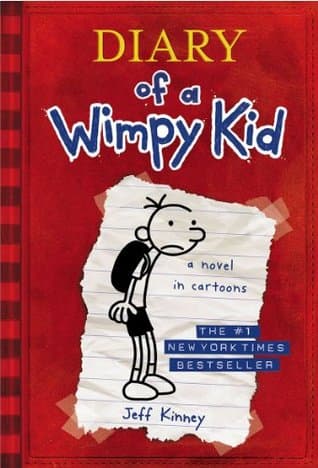
- Diary of a Wimpy Kid
Jeff Kinney
4.0 (446k) average on GoodreadsChildren'sBoth are told through a unique 'case file' or journal format, focusing on the everyday struggles and humor of middle school life.
- Wonder
R.J. Palacio
4.4 (733k) average on GoodreadsChildren'sFeatures a unique protagonist who stands out in middle school and explores themes of acceptance, kindness, and navigating social challenges.
- Harry Potter and the Sorcerer's Stone
J.K. Rowling
4.5 (7M) average on GoodreadsFantasyRescued from a miserable life under the stairs, an orphaned boy discovers he's a wizard destined for a magical school, where he uncovers a dangerous secret tied to the dark wizard who murdered his parents.
- The Hobbit, or There and Back Again
J.R.R. Tolkien
4.3 (2.9M) average on GoodreadsFantasyA comfort-loving hobbit named Bilbo Baggins is whisked away by a mischievous wizard and a band of dwarves on an unexpected journey to reclaim stolen treasure from a fearsome dragon, discovering courage and a magical ring along the way.
- Harry Potter and the Goblet of Fire
J.K. Rowling
4.6 (2.6M) average on GoodreadsFantasyA bewildered Harry Potter, underage and thrust into a deadly Triwizard Tournament, must brave dragons, mermaids, and a resurgent dark magic to survive a year that will forever alter the wizarding world.
- Harry Potter and the Order of the Phoenix
J.K. Rowling
4.5 (2.5M) average on GoodreadsFantasyIn a year of oppressive secrets and the threat of Voldemort, Harry Potter and Dumbledore's Army secretly train for war, shown through Jim Kay and Neil Packer's dark illustrations.





Enjoyed the summary?
A summary gives you the shape of the book. The book itself has the detail, the examples and the voice.
Find The Strange Case of Origami Yoda on AmazonAs an Amazon Associate, BookBrief earns from qualifying purchases. How we're funded