

Synopsis
Covers the whole plot, including the ending.
- Difficulty
- Medium
- Pacing
- Moderate
- Mood
- Magical, Reflective, Redemptive, Dramatic
- Read it if
- You enjoy classic plays, themes of revenge and forgiveness, and magical realism.
- Skip it if
- You dislike archaic language, plays meant for performance, or stories with strong supernatural elements without modern fantasy world-building.
The Tempest Plot Summary
Covers the whole plot, including the ending.
The Storm and the Shipwreck
The play starts with a violent storm at sea, created by Prospero, the rightful Duke of Milan, using his magic. A ship carrying King Alonso of Naples, his son Ferdinand, Alonso's brother Sebastian, Prospero's brother Antonio, and Gonzalo, is caught in the storm. The sailors struggle, and the ship appears to be breaking apart. Miranda, Prospero's daughter, sees the chaos from the island and asks her father to stop the storm, showing her kind nature. Prospero tells her that no one is harmed and explains that the storm is part of his plan to restore them to their proper place.
Prospero's Backstory Revealed
Prospero tells Miranda the story of their exile. Twelve years earlier, Prospero, focused on his magic studies, gave control of Milan to his brother Antonio. Antonio, ambitious and disloyal, worked with Alonso, the King of Naples, to take Prospero's dukedom. In exchange for tribute to Naples, Antonio became Duke, and Prospero and a three-year-old Miranda were left in a rotten boat, eventually landing on the remote island. Gonzalo, a kind counselor, secretly gave them food, water, and books from Prospero's library. Prospero explains that fate has brought their enemies to the island, offering a chance for his revenge and their return.
Ariel's Report and Caliban's Curse
Prospero summons his spirit servant, Ariel, who reports on the storm's success. Ariel describes how the ship's passengers were scattered but safe, and how Ferdinand, believing his father dead, was separated from the main group. Ariel wants his freedom, which Prospero promises after his tasks are done. Prospero then calls Caliban, the deformed, enslaved son of the witch Sycorax, who lived on the island before Prospero arrived. Caliban curses Prospero for taking his island and enslaving him, while Prospero reminds Caliban of his past attempts to rape Miranda and the kindness he first showed him. Their exchange shows the power struggle and deep resentment.
Ferdinand and Miranda's First Encounter
Led by Ariel's music, Ferdinand, believing himself the only survivor, meets Prospero and Miranda. Miranda, having seen no man other than her father and Caliban, is immediately drawn to Ferdinand, calling him a 'thing divine.' Ferdinand is equally smitten, believing Miranda to be the island's goddess. Prospero, seeing their instant connection, is pleased but pretends to be angry to test Ferdinand's sincerity and make the courtship harder. He accuses Ferdinand of being a spy and a usurper and magically binds him, forcing him to do menial tasks.
Treachery in the Woods
Meanwhile, King Alonso, Sebastian, Antonio, Gonzalo, and other lords wander the island, tired and without hope. Gonzalo tries to cheer them up by imagining a perfect society, but Antonio and Sebastian mock his ideas. Ariel, unseen, makes the group fall asleep, except for Antonio and Sebastian. Antonio, having taken his own brother's place, now tempts Sebastian to murder his sleeping brother, King Alonso, and take the throne. Sebastian, at first hesitant, is convinced by Antonio's ambition and the promise of power. As they draw their swords, Ariel wakes Gonzalo, who then wakes Alonso, stopping the assassination attempt.
Caliban's New Masters
Elsewhere on the island, Trinculo, King Alonso's jester, and Stephano, the King's drunken butler, are separated from the main group. Trinculo, seeking shelter from a storm, finds Caliban hiding under a cloak. Believing Caliban to be a strange fish, Trinculo joins him. Stephano then arrives, also drunk, and offers Caliban wine, which Caliban has never tasted. Caliban, believing Stephano to be a god and Trinculo a brave spirit, pledges his loyalty to them, seeing them as new masters who can free him from Prospero's rule. They form a foolish alliance, with Caliban urging them to kill Prospero and take the island.
Ferdinand's Toil and Miranda's Love
Prospero continues to make Ferdinand do hard tasks, like carrying logs, to test his resolve and love for Miranda. Miranda, feeling sorry for Ferdinand, offers to help him, but he refuses, determined to prove his worth. During their talk, they openly declare their love for each other. Miranda proposes marriage, and Ferdinand happily accepts. Prospero, hidden and watching, is pleased with the outcome of his test, seeing the true affection between them. He admits that his harshness has strengthened their bond and made their union more precious.
The Conspiracy Against Prospero
Caliban, Trinculo, and Stephano continue their drunken plotting. Caliban strongly urges Stephano to kill Prospero, suggesting burning his books, which are the source of his power, and then taking Miranda as his queen. He describes the island's riches and promises Stephano leadership. Ariel, unseen, overhears their entire conversation and reports it to Prospero. As they approach Prospero's cell, guided by Ariel's music, Ariel distracts them with tempting clothes, leading them into a foul-smelling pond. Prospero then sends spirits in the form of hounds to chase and torment them, stopping their plan.
The Masque and Prospero's Renunciation
Prospero, having approved Ferdinand and Miranda's marriage, presents them with a magical show, performed by spirits, celebrating marriage, fertility, and abundance. Iris, Ceres, and Juno bless the couple. This peaceful scene is suddenly interrupted when Prospero remembers Caliban's plot. After the spirits vanish, Prospero gives a speech, reflecting on the short nature of life, comparing human existence to 'such stuff as dreams are made on.' He then decides to give up his magic after his plans are complete, break his staff, and drown his book, choosing forgiveness over revenge.
The Forgiveness and Revelation
Ariel brings Alonso, Antonio, Sebastian, and Gonzalo before Prospero, who sees their tormented and regretful state. He acknowledges their suffering but decides to forgive rather than punish. Prospero then reveals himself in his ducal robes, surprising his enemies. Alonso, full of remorse, begs Prospero's pardon and restores his dukedom. Prospero then shows Ferdinand and Miranda playing chess, to Alonso's joy and relief. He confronts Antonio and Sebastian about their betrayal, but ultimately forgives them, though Antonio remains silent and unrepentant.
The Resolution and Departure
Prospero reveals that the ship is whole and the crew safe. He frees Ariel, granting him the liberty he has wanted. Caliban, Trinculo, and Stephano are brought before the group, looking messy and foolish. Caliban, seeing Prospero's power, expresses remorse and promises to be wise in the future. Prospero invites the royal party to spend one last night in his cell, where he will tell his life story. The next morning, they will sail back to Naples for Ferdinand and Miranda's wedding, and then Prospero will return to Milan to rule. The play ends with Prospero's epilogue, asking the audience for their applause to set him free.
Principal Figures
Prospero
Protagonist
The rightful Duke of Milan, a powerful sorcerer exiled to an island.
Prospero is a complex figure: a benevolent father, a powerful magician, and a vengeful exile. He was once Duke of Milan but was usurped by his brother Antonio due to his absorption in scholarly pursuits. Exiled to a remote island with his daughter Miranda, he masters magic through his books. He uses his powers to control the spirits of the island, particularly Ariel, and to enslave Caliban. His primary motivation is to restore himself and Miranda to their rightful place and to exact justice upon his enemies, though he ultimately chooses forgiveness.
Relationships: Miranda (Devoted father-daughter bond); Ariel (Master-servant, though Ariel seeks freedom); Caliban (Master-slave, marked by resentment and cruelty); Antonio (Usurping brother, source of Prospero's exile); Alonso (King of Naples, initially an enemy, later reconciled)
Miranda
Supporting
Prospero's innocent and compassionate daughter.
Miranda is Prospero's only child, raised in isolation on the island with only her father and Caliban for company. She is characterized by her profound innocence, compassion, and natural beauty. Having seen no other human male besides her father, her encounter with Ferdinand is a pivotal moment, leading to immediate love. She is fiercely loyal to her father but also possesses an independent spirit, as shown in her open declaration of love for Ferdinand. Her purity and goodness are central to the play's themes of hope and renewal.
Relationships: Prospero (Loving and obedient daughter); Ferdinand (Instantaneous and pure love interest); Caliban (Initially a tutor, then a victim of his attempted rape)
Ariel
Supporting
A powerful, airy spirit bound to Prospero's service.
Ariel is a magical, invisible spirit, previously imprisoned by the witch Sycorax and freed by Prospero. In gratitude, Ariel serves Prospero, carrying out his commands with speed and efficiency, from raising the tempest to leading Ferdinand and thwarting plots. Ariel longs for freedom, which Prospero repeatedly promises but delays. Ariel's actions are often accompanied by music and song, and his nature is ethereal and joyful, contrasting with Caliban's earthiness. Ariel represents the power of magic and the desire for liberty.
Relationships: Prospero (Indebted servant, longs for freedom)
Caliban
Antagonist/Supporting
The deformed, enslaved native inhabitant of the island.
Caliban is the son of the deceased witch Sycorax and a devil. He is portrayed as a grotesque, earthy creature, initially befriended by Prospero, who taught him language and treated him kindly. However, after Caliban attempted to rape Miranda, Prospero enslaved him and subjected him to harsh labor and magical torments. Caliban views Prospero as a usurper of his birthright (the island) and constantly plots rebellion. He is both pitiful and brutish, representing the colonized and the 'other,' and his desire for freedom is strong, though misguided.
Relationships: Prospero (Enslaved, resentful subject); Miranda (Former object of lust and attempted rape); Stephano (New, misguided master, object of his misplaced loyalty)
Alonso
Supporting
The King of Naples, complicit in Prospero's banishment.
Alonso is the King of Naples and father of Ferdinand. He was instrumental in Antonio's usurpation of Prospero's dukedom. On the island, he is consumed by grief, believing his son Ferdinand to be dead, and deeply regrets his past actions. His suffering makes him receptive to Prospero's magic and eventual forgiveness. He represents the possibility of redemption and the burden of guilt, ultimately finding solace in the reunion with his son and the prospect of his daughter's marriage.
Relationships: Ferdinand (Beloved son); Antonio (Ally in usurpation, later forgiven); Prospero (Former enemy, now reconciled)
Ferdinand
Supporting
Prince of Naples, son of King Alonso, and Miranda's love interest.
Ferdinand is the virtuous and noble son of King Alonso. After the shipwreck, he believes his father is dead and finds himself alone. He is immediately captivated by Miranda's beauty and innocence, falling deeply in love. He readily endures Prospero's harsh tests, proving his sincerity and worthiness. Ferdinand embodies traditional heroic qualities and serves as a symbol of hope for a new generation, free from the old conflicts and betrayals.
Relationships: Miranda (Love interest, future husband); Alonso (Devoted son); Prospero (Future father-in-law, initially a stern tester)
Antonio
Antagonist
Prospero's treacherous brother, the usurping Duke of Milan.
Antonio is Prospero's younger brother, characterized by his ambition, cunning, and lack of remorse. He exploited Prospero's dedication to his studies to usurp his dukedom, with the aid of Alonso. On the island, he attempts to persuade Sebastian to murder Alonso, demonstrating his continued capacity for treachery. Antonio remains largely unrepentant even after Prospero reveals himself and forgives him, serving as a foil to Prospero's eventual magnanimity and highlighting the destructive nature of unchecked ambition.
Relationships: Prospero (Usurped brother, antagonist); Sebastian (Co-conspirator in murder plot)
Sebastian
Supporting
King Alonso's brother, easily swayed by Antonio's treachery.
Sebastian is King Alonso's brother, depicted as cynical and weak-willed. He is easily persuaded by Antonio to plot the murder of his own brother, Alonso, in order to seize the crown of Naples. His ambition is secondary to Antonio's, and he lacks the same drive, but he is nonetheless complicit in the treachery. Sebastian represents the corruptibility of human nature and the allure of power, even for those who are not inherently malicious but lack strong moral conviction.
Relationships: Alonso (Brother, intended victim of murder plot); Antonio (Co-conspirator)
Gonzalo
Supporting
An honest and loyal old counselor to King Alonso.
Gonzalo is an honest and benevolent old counselor who secretly aided Prospero and Miranda during their banishment, providing them with necessities and Prospero's books. On the island, he attempts to maintain optimism and offers idealistic visions of a utopian society, though he is often mocked by Antonio and Sebastian. He is a voice of reason and kindness, contrasting with the malice of the conspirators. Gonzalo represents loyalty, compassion, and unwavering hope.
Relationships: Prospero (Loyal friend and benefactor); Alonso (Trusted counselor)
Stephano
Supporting
King Alonso's drunken butler.
Stephano is King Alonso's drunken butler, separated from the main group after the shipwreck. He quickly succumbs to the allure of power when Caliban pledges his servitude to him, believing him to be a god. Stephano becomes a comically ambitious figure, envisioning himself as king of the island with Miranda as his queen. His drunken foolishness and inflated sense of self-importance lead him into absurd plots, ultimately thwarted by Prospero's magic. He represents the corrupting influence of power, even on the most unlikely individuals.
Relationships: Caliban (New 'master', object of his misplaced loyalty); Trinculo (Drunken accomplice)
Trinculo
Supporting
King Alonso's jester.
Trinculo is King Alonso's jester, a cowardly and cynical character. He is separated from the main group and encounters Caliban, initially mistaking him for a strange fish. He quickly joins forces with Stephano and Caliban, primarily motivated by the prospect of wine and a share in the spoils. Trinculo is often the voice of cynical reason within the drunken trio, though he is easily led astray by Stephano's ambition. He provides comic relief, highlighting the absurdity of the lower-class plotters.
Relationships: Stephano (Drunken accomplice); Caliban (Fellow conspirator, object of his ridicule)
Themes & Insights
Colonialism and Power
The play explores colonialism through Prospero's relationship with Caliban. Prospero arrives on the island, asserts his intellectual and magical superiority, and enslaves Caliban, the island's native. Caliban sees Prospero as a usurper who stole his birthright and used his initial kindness. Prospero, in turn, justifies his rule by citing Caliban's attempted rape of Miranda and his 'savage' nature. This power struggle reflects historical colonial encounters, raising questions about rightful ownership, exploitation, and the imposition of culture and language. Ariel's servitude also touches on different forms of service and the desire for freedom. For example, Caliban's lament, 'This island's mine, by Sycorax my mother, / Which thou tak'st from me,' directly highlights dispossession.
“This island's mine, by Sycorax my mother, / Which thou tak'st from me.”
Forgiveness and Reconciliation
At the play's core is the journey from vengeance to forgiveness. Prospero, initially driven by a desire for revenge against those who wronged him, orchestrates the entire plot to bring his enemies to his island and torment them. However, with Ariel's gentle urging and his own reflection, he chooses mercy over revenge. He publicly forgives Antonio, Alonso, and Sebastian, and even offers a path to redemption for Caliban. This theme emphasizes forgiveness's power in breaking cycles of hatred and restoring harmony, leading to a hopeful resolution where past wrongs are acknowledged but not endlessly punished. This is clear in Prospero's speech where he declares, 'The rarer action is / In virtue than in vengeance.'
“The rarer action is / In virtue than in vengeance.”
Illusion vs. Reality
Magic and illusion fill 'The Tempest,' blurring the lines between what is real and what is conjured. Prospero's entire plot relies on elaborate illusions: the storm itself, Ariel's disguises, the magical banquet, and the masque. The characters often question the reality of their experiences on the island, wondering if they are dreaming or mad. This theme highlights the power of perception and how appearances can deceive. It also shows Prospero's control as a master illusionist, manipulating events and perceptions to achieve his desired outcome. The play itself, as a work of theatrical illusion, reflects this theme, ending with Prospero's epilogue where he acknowledges the 'insubstantial pageant' of the play.
“We are such stuff / As dreams are made on, and our little life / Is rounded with a sleep.”
Nature vs. Nurture
This theme is most clearly seen through Caliban. Prospero tries to 'civilize' Caliban by teaching him language and manners, but Caliban remains largely resistant, keeping his 'savage' and 'brutish' nature. Prospero sees Caliban as inherently evil, a 'born devil' incapable of goodness, suggesting that some natures cannot be improved by education or kindness. Conversely, Miranda, raised in isolation, embodies natural goodness and compassion, suggesting that an uncorrupted environment can foster virtue. The debate over whether character is determined by innate qualities or by upbringing is central to understanding the limits of Prospero's power and the inherent qualities of the island's inhabitants.
“A devil, a born devil, on whose nature / Nurture can never stick.”
Power and Control
Prospero's character is defined by his pursuit and use of power and control. Having lost his dukedom due to neglecting political power, he arrives on the island and immediately establishes control over its inhabitants: Ariel, Caliban, and implicitly, Miranda. He uses his magic to manipulate events, test characters, and orchestrate their fates. His ultimate goal is not just to regain his title but to show his mastery over both the natural and human worlds. The play examines the responsibilities that come with such power, and Prospero's eventual decision to give up his magic suggests a recognition that true leadership may not require absolute control.
“My high charms work, / And these mine enemies are in my power.”
Plot Devices & Literary Techniques
Magic and Sorcery
Prospero's supernatural abilities and the source of his control.
Magic is the central plot device, driving nearly every event in 'The Tempest.' Prospero's ability to conjure storms, control spirits like Ariel, and create illusions allows him to manipulate the characters and their circumstances. It serves as the primary means by which he seeks revenge and ultimately achieves reconciliation. Magic also provides the fantastical element of the play, creating a unique atmosphere and allowing for the suspension of disbelief. Prospero's decision to renounce his magic at the end symbolizes his return to the human world and his embrace of forgiveness over supernatural power.
The Island Setting
A remote, isolated location that serves as a crucible for transformation.
The uninhabited island functions as a symbolic space, isolated from civilization, where normal societal rules are suspended. It allows Prospero to wield absolute power and orchestrate events without outside interference. The island becomes a testing ground for the characters, revealing their true natures and forcing them to confront their past actions. Its wild, untamed nature contrasts with the 'civilized' world, and its magical properties allow for the fantastical events of the play. The isolation also fosters the pure love between Ferdinand and Miranda, untouched by courtly corruption.
The Masque
A theatrical performance within the play, celebrating marriage and fertility.
The masque, performed by spirits at Prospero's command for Ferdinand and Miranda, is an allegorical interlude. It serves multiple functions: it blesses the young couple's union, symbolizes hope and renewal, and demonstrates Prospero's benevolent use of his magic. The classical deities Iris, Ceres, and Juno represent fertility, harvest, and marriage, reinforcing the themes of new beginnings and a harmonious future. Its abrupt interruption by Prospero, remembering Caliban's plot, serves as a reminder of the ever-present threat of disorder and the ephemeral nature of even the most beautiful illusions.
Sleep and Awakening
A recurring motif representing altered states of consciousness and revelation.
Sleep and awakening are used repeatedly to signify shifts in perception and moments of revelation. Ariel frequently induces sleep on characters (e.g., Alonso and Gonzalo) to facilitate plots or prevent them. These moments of unconsciousness often lead to characters waking up in a new, disoriented state, questioning their reality, and sometimes experiencing a moral awakening. For instance, Alonso's deep sleep after the banquet of spirits precedes his profound grief and remorse. This device underscores the theme of illusion vs. reality and the transformative journey the characters undergo on the magical island.
The Tempest Quotes
“We are such stuff / As dreams are made on, and our little life / Is rounded with a sleep.”
“O brave new world, / That has such people in't!”
“Hell is empty / And all the devils are here.”
“Full fathom five thy father lies; / Of his bones are coral made; / Those are pearls that were his eyes; / Nothing of him that doth fade, / But doth suffer a sea-change / Into something rich and strange.”
“Misery acquaints a man with strange bedfellows.”
“The rarer action is / In virtue than in vengeance.”
“Thou dost here usurp / The name thou ow'st not, and hast put thyself / Upon this island as a spy, to win it / From me, the lord on't.”
“I will be wise hereafter, / And seek for grace. What a thrice-double ass / Was I, to take this drunkard for a god / And worship this dull fool!”
“Though this island fetch thee back, there is / Some defect in thy beauty.”
“I have used thee, / Filth as thou art, with human care, and lodged thee / In mine own cell, till thou didst seek to violate / The honour of my child.”
“My high charms work, / And these mine enemies are all knit up / In their distractions; they now are in my power.”
“A devil, a born devil, on whose nature / Nurture can never stick; on whom my pains, / Humanely taken, all, all lost, quite lost.”
“For I / Have cursed them enough. Now I will beg with them, / For my sake.”
“This thing of darkness I / Acknowledge mine.”
Quiz
10 questions on the plot and the characters. Each answer comes with a short explanation.
Question 1
Who is Prospero's daughter?
- Miranda
- Jessica
- Ophelia
- Desdemona
Show answer
A. Miranda Miranda is Prospero's only child, who grew up on the island with him and Caliban.
Question 2
What magical being serves Prospero and helps him carry out his plans?
- Caliban
- Ariel
- Sycorax
- Puck
Show answer
B. Ariel Ariel is an airy spirit bound to Prospero's service, eager for his freedom.
Question 3
Before being stranded on the island, what was Prospero's title in Milan?
- King
- Duke
- Prince
- Count
Show answer
B. Duke Prospero was the rightful Duke of Milan before his brother Antonio usurped him.
Question 4
What is Caliban's relationship to Sycorax?
- Sycorax is his mother.
- Sycorax is his sister.
- Sycorax is his master.
- Sycorax is his wife.
Show answer
A. Sycorax is his mother. Sycorax was the witch who previously inhabited the island and is Caliban's mother.
Question 5
What is the primary reason Prospero conjures the tempest?
- To destroy the ship carrying his enemies.
- To test Ferdinand's love for Miranda.
- To bring his enemies to the island and exact his revenge/justice.
- To impress Ariel with his magical power.
Show answer
C. To bring his enemies to the island and exact his revenge/justice. Prospero orchestrates the tempest to bring the ship carrying his usurping brother and King Alonso to the island, setting his long-awaited plan for justice in motion.
Question 6
Which character attempts to conspire with Caliban to murder Prospero and become king of the island?
- Antonio
- Sebastian
- Stephano
- Ferdinand
Show answer
C. Stephano Stephano, the drunken butler, along with Trinculo, are convinced by Caliban to plot against Prospero.
Question 7
What does Prospero ultimately decide to do with his magic at the end of the play?
- He passes it on to Miranda.
- He uses it to become King of Naples.
- He renounces it and breaks his staff.
- He uses it to punish Caliban permanently.
Show answer
C. He renounces it and breaks his staff. In his famous 'Our revels now are ended' speech, Prospero declares his intention to give up his magic, break his staff, and drown his book.
Question 8
What symbolic act does Prospero perform with his magic robe before confronting the shipwrecked nobles?
- He uses it to conjure a feast.
- He removes it, signifying his return to his human state and renunciation of magic.
- He uses it to transform Caliban.
- He wraps Miranda in it for protection.
Show answer
B. He removes it, signifying his return to his human state and renunciation of magic. Prospero explicitly removes his magic garment ('I'll drown my book') before confronting the nobles, symbolizing his shedding of his magical identity and return to his ducal self.
Question 9
The theme of 'forgiveness' is central to the play. Which character does Prospero struggle most with forgiving, even though he eventually does?
- King Alonso
- Sebastian
- Antonio
- Caliban
Show answer
C. Antonio While Prospero forgives all, his reconciliation with Antonio, his brother who usurped him, is the most difficult and perhaps the least fully resolved forgiveness in the play.
Question 10
What is the significance of the Epilogue delivered by Prospero at the end of the play?
- It is a final curse on his enemies.
- It directly appeals to the audience for applause and their release of him from the stage.
- It announces a sequel to the play.
- It explains the moral of the story in detail.
Show answer
B. It directly appeals to the audience for applause and their release of him from the stage. In the Epilogue, Prospero, now stripped of his magic, directly addresses the audience, asking for their 'gentle breath' (applause) to release him from the island and the play, blurring the lines between character and actor.
The Tempest FAQ
What is the basic premise of 'The Tempest'?
The play centers on Prospero, the exiled Duke of Milan, who uses magic to conjure a storm and maroon his usurping brother, Antonio, along with King Alonso of Naples and their retinue, on the remote island where Prospero has been living with his daughter, Miranda, for twelve years. His ultimate goal is to reclaim his dukedom and secure Miranda's future.
Who are the main characters involved in the conspiracy against Prospero?
The primary conspirators are Prospero's brother, Antonio, who usurped the dukedom of Milan, and King Alonso of Naples, who aided Antonio in the coup. Their presence on the island allows Prospero to enact his elaborate plan for revenge and reconciliation.
What is the role of Ariel in Prospero's plans?
Ariel is an airy spirit bound to Prospero's service, having been freed by Prospero from imprisonment by the witch Sycorax. Ariel carries out Prospero's magical commands, from creating the tempest to manipulating the shipwrecked party, and ultimately helps Prospero achieve his goals of bringing his enemies to justice and securing Miranda's marriage.
Who is Caliban and what is his relationship with Prospero?
Caliban is the monstrous son of the witch Sycorax and the original inhabitant of the island. Prospero initially befriended and taught Caliban, but later enslaved him after Caliban attempted to rape Miranda. Their relationship is marked by resentment, forced servitude, and Caliban's constant desire for freedom and revenge.
How does the play conclude for Prospero and the other characters?
Prospero forgives his enemies, reveals himself, and reclaims his dukedom. Miranda and Ferdinand, Alonso's son, are united in marriage. Prospero grants Ariel freedom and plans to return to Milan, where he will renounce his magic, leaving the island and Caliban behind.
Are there any subtle hints about Prospero's past actions that might justify Antonio's usurpation?
Prospero himself admits to neglecting his ducal duties, becoming 'rapt in secret studies' and entrusting the management of his state to Antonio. While this doesn't justify Antonio's treachery, it provides context for how Antonio gained power and influence, suggesting Prospero's initial irresponsibility contributed to his downfall.
What is the significance of the frequently mentioned 'brave new world' line?
Miranda utters 'O brave new world, / That has such people in't!' upon seeing the shipwrecked courtiers. This line, often quoted ironically, highlights her innocence and naiveté, as she perceives these men, many of whom are morally corrupt, through an idealized lens, unaware of the complexities and evils of the world beyond the island.
Is there a connection between Sycorax and Prospero's magic?
While Prospero's magic is presented as learned and benevolent, and Sycorax's as dark and malevolent, both characters are powerful sorcerers on the island. Prospero's ability to subdue Caliban and Ariel can be seen as a continuation or even a 'correction' of Sycorax's prior dominion, establishing a new order of magical control.
What might be the psychological impact of isolation on Miranda?
Miranda's isolation with only Prospero and Caliban as companions has made her deeply empathetic and innocent, but also sheltered and inexperienced. Her immediate attraction to Ferdinand and her wonder at the 'brave new world' reflect a longing for connection and a lack of exposure to the complexities of human nature, making her vulnerable to manipulation.
How does Prospero's need for control manifest psychologically?
Prospero's meticulous planning and manipulation of every character on the island suggest a profound need for control, possibly stemming from the trauma of his usurpation and exile. He orchestrates events to a precise degree, not only for revenge but also to reassert his authority and ensure a favorable outcome for himself and Miranda, revealing a controlling personality.
Analyze Caliban's psychological state regarding his servitude.
Caliban exhibits a complex psychological state of deep resentment, humiliation, and a yearning for freedom, coupled with a susceptibility to new masters, as seen with Stephano and Trinculo. He feels a profound injustice at being dispossessed of his island and subjected to Prospero's harsh punishments, leading to his constant plotting and desire for violent rebellion.
What psychological journey does Alonso undertake during the play?
Alonso undergoes a profound psychological journey of grief, guilt, and ultimately, repentance. Believing his son Ferdinand dead, he is tormented by the memory of his role in Prospero's overthrow and the loss of his son. His suffering leads to genuine remorse, making him receptive to Prospero's forgiveness and the restoration of order.
Is 'The Tempest' truly a play about forgiveness, or is it more about controlled revenge?
This is highly debated. While Prospero explicitly states his intention to forgive, his actions throughout the play involve significant manipulation and suffering inflicted upon his enemies before he offers clemency. Some argue his 'forgiveness' is contingent on his targets being sufficiently humbled and his own power fully re-established, suggesting a calculated rather than purely benevolent act.
Can Prospero be seen as a colonial oppressor, particularly in his treatment of Caliban?
Many interpretations view Prospero through a post-colonial lens, seeing him as an invader who enslaves the island's native inhabitant, Caliban, and imposes his own culture and language. Caliban's lament about being taught language only to curse, and his dispossession from his 'own island,' strongly support this interpretation of Prospero as a colonizer.
What is the significance of Prospero's renunciation of magic at the play's end?
Prospero's renunciation of magic can be interpreted in several ways: it may symbolize the playwright Shakespeare's farewell to the stage, a return to human limitations after exercising god-like power, or a necessary step for Prospero to fully re-enter the human world and govern without supernatural aid. It marks a transition from fantasy to reality.
Is Ariel's longing for freedom truly fulfilled, or is it a conditional liberty?
Ariel's freedom is granted by Prospero at the very end of the play, but it is entirely at Prospero's discretion and comes only after Ariel has meticulously fulfilled every command. Some argue that this conditional liberty, granted by a master, is not true freedom, but rather an earned release within a power dynamic that Ariel never truly escapes.
How does the storm itself function as a symbol in the play?
The tempest is a multifaceted symbol. It represents Prospero's power and control, the chaos and disruption he orchestrates, and the tumultuous emotional states of the characters. It also serves as a cleansing force, bringing the characters to the island where they must confront their past actions and undergo a process of change and revelation.
What might be the allegorical meaning behind the island setting?
The island can be seen as a microcosm of society, a testing ground, or even a psychological landscape where characters are stripped of their usual roles and forced to confront their true selves. It is a place of magic and transformation, where Prospero can enact his grand experiment in justice and reconciliation, isolated from the rules of the mainland.
About the author
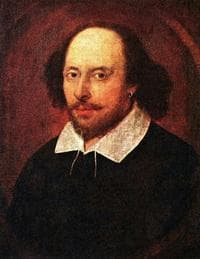
William Shakespeare was an English playwright, poet and actor. He is widely regarded as the greatest writer in the English language and the world's pre-eminent dramatist. He is often called England's national poet and the "Bard of Avon". His extant works, including collaborations, consist of some 39 plays, 154 sonnets, three long narrative poems, and a few other verses, some of uncertain authorship. His plays have been translated into every major living language and are performed more often than those of any other playwright. Shakespeare remains arguably the most influential writer in the English language, and his works continue to be studied and reinterpreted.
Similar books
- A Midsummer Night's Dream
William Shakespeare
4.0 (443k) average on GoodreadsFantasyFeatures magical beings, intricate plots of love and mischief, and a comedic tone.
- Circe
Madeline Miller
4.3 (343k) average on GoodreadsFantasyA modern retelling of a powerful sorceress on a remote island, dealing with gods and mortals.
- Harry Potter and the Sorcerer's Stone
J.K. Rowling
4.5 (7M) average on GoodreadsFantasyRescued from a miserable life under the stairs, an orphaned boy discovers he's a wizard destined for a magical school, where he uncovers a dangerous secret tied to the dark wizard who murdered his parents.
- The Hunger Games
Suzanne Collins
4.3 (6.4M) average on GoodreadsFantasyIn a future where children fight to the death on live television, Katniss Everdeen volunteers for the arena, turning a death sentence into a fight for survival and a spark of rebellion.
- 1984
George Orwell
4.2 (3.1M) average on GoodreadsPoliticsIn a future where surveillance and thought control are absolute, a man's search for truth clashes with the Party, showing that hope can be a form of rebellion.
- Divergent
Veronica Roth
4.2 (2.9M) average on GoodreadsFantasyIn a society divided by virtues, a sixteen-year-old's difference from the norm starts a rebellion that threatens her world.






Enjoyed the summary?
A summary gives you the shape of the book. The book itself has the detail, the examples and the voice.
Find The Tempest on AmazonAs an Amazon Associate, BookBrief earns from qualifying purchases. How we're funded