
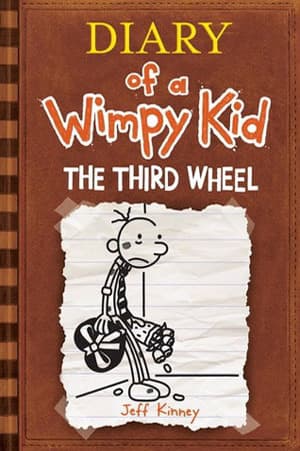
Synopsis
Covers the whole plot, including the ending.
- Difficulty
- Easy
- Pacing
- Fast
- Mood
- Humorous, Lighthearted, Relatable, Awkward
- Read it if
- You enjoy lighthearted, humorous stories about middle school life and the awkwardness of early crushes and dances.
- Skip it if
- You're looking for deep character development or complex plotlines.
The Third Wheel Plot Summary
Covers the whole plot, including the ending.
Valentine's Day Dance Announcement
Westmore Middle School announces a Valentine's Day dance, causing social pressure among students. Greg is worried about finding a date, fearing he will go alone or be a 'third wheel.' He watches how his classmates get dates, from big proposals to simple pairings. His best friend, Rowley Jefferson, seems less concerned, initially thinking he won't go. This gives Greg little comfort as he deals with the complex social world of middle school romance. Greg's main goal is to avoid the shame of attending the dance without a date.
Greg's Dating Dilemmas
Greg tries many times to find a date for the dance, but fails. He thinks about asking several girls, but he is too shy or awkward, or they already have partners. He tries to subtly see if girls are interested, but his attempts are clumsy. He even thinks about asking girls he doesn't like, just to avoid going alone. As the dance gets closer, his desperation grows, making him overthink every social interaction and misinterpret simple gestures as romantic interest. This entire process causes him much stress and embarrassment.
Rowley's Unexpected Popularity
To Greg's surprise and slight annoyance, Rowley Jefferson, who usually struggles socially, suddenly becomes popular with girls. This change happens because Rowley is seen as innocent and less intimidating than other boys. Girls start asking Rowley to the dance or showing interest in him. Greg, who always thought he was more socially skilled, is confused and a little jealous of Rowley's new appeal. This shift makes Greg's own dating problems harder, as he watches his best friend easily get attention.
Fregley's Dance Invitation
Greg gets an unexpected chance through Fregley, an unusual and socially awkward classmate. Fregley's uncle owns a limousine and offers to drive Fregley and a friend to the dance, making for a grand entrance. Fregley, in his strange way, invites Greg to be his 'date' in a friendly sense. Even though the invitation is odd, Greg sees it as a way to solve his dateless problem. It guarantees he can attend the dance without being completely alone, and with a bit of flash thanks to the limousine.
Abigail's Predicament
Just as Greg accepts going with Fregley, something new happens. Abigail Brown, a popular girl, suddenly needs a date because her original partner gets sick. Abigail's best friend, who is dating Fregley's uncle, suggests Abigail could go with Fregley and Greg. This creates an unusual group of three: Fregley, Greg, and Abigail. Greg is happy about going with a popular girl, even if it means sharing the experience with Fregley. He sees it as a much better plan than before.
Rowley Becomes the Third Wheel
With Greg now with Fregley and Abigail, the original plan of Greg and Rowley going to the dance together falls apart. Rowley, who was less worried about the dance at first, now has no date and feels like the 'third wheel.' He is clearly disappointed and left out as Greg eagerly takes the chance to go with Abigail. This change causes tension between Greg and Rowley, as Rowley feels abandoned by his best friend.
The Limousine Ride
The limousine ride to the dance is not as glamorous as Greg imagined. Fregley's uncle, though well-meaning, is odd, and Fregley acts in his usual strange ways, making Greg and Abigail uncomfortable. Fregley talks constantly, makes strange comments, and doesn't understand social cues. Greg tries to impress Abigail and fix the situation, but Fregley's presence and the uncle's odd driving make it hard to have a normal conversation or enjoy the ride. Greg starts to wonder if this was better than his original plan of having no date.
Arrival at the Dance
At the Valentine's Day dance, Greg, Abigail, and Fregley arrive, getting some attention because of the limousine. However, once inside, the dance floor's social rules become clear. Greg tries to talk to Abigail, but Fregley's constant presence and strange behavior remain a problem. Greg tries to dance, but his moves are awkward, and he feels self-conscious. He watches other couples, comparing his situation to theirs. He realizes that even with a popular girl, his night is not going well because of Fregley's unintentional interference.
Fregley's Dance Floor Antics
Fregley's odd behaviors get worse on the dance floor. He dances in his own unique, very unusual way, drawing stares and laughs from other students. He tries to get Greg and Abigail to play his strange games and join his conversations, completely unaware of their discomfort. Greg is embarrassed, feeling his chances of impressing Abigail disappear with each of Fregley's bizarre actions. Abigail, though polite, is clearly uncomfortable. Greg struggles to manage Fregley's behavior while trying to save his date, making the night stressful for him.
Rowley's Unexpected Heroism
While Greg struggles with Fregley, Rowley, who is at the dance alone, becomes an unexpected hero. A large punch bowl is accidentally knocked over, threatening to spill everywhere and possibly cause a power outage. Thinking fast, Rowley uses his large, baggy sweater to soak up the punch, preventing a disaster. His quick thinking and selflessness are noticed by everyone. He becomes the unlikely hero of the night, earning admiration and cheers from his classmates, including some girls who had shown interest in him before.
Abigail's True Feelings
After Rowley's heroic act, Abigail's attention shifts. She turns to Greg, but instead of showing interest in him, she says she finds Rowley's kindness and simple nature appealing. She says she was impressed by his actions and finds him truly sweet. This news upsets Greg, who had spent the whole night trying to impress her. He realizes that despite all his efforts and the elaborate setup, Abigail was drawn to his best friend's genuine character. This shows Greg's superficial approach to romance versus Rowley's real self.
The Aftermath and Reflection
The dance ends with Greg feeling disappointed. He realizes his search for a popular date made him ignore his true friend, Rowley. His attempts to be cool failed. He thinks about the night's events, understanding that real kindness and authenticity, not fake popularity, are what truly attract people. He sees how Rowley, despite having no date at first, ended up connecting with Abigail and earning others' admiration. Greg learns a valuable, though painful, lesson about friendship, how he sees himself, and the difficulties of middle school romance.
The Third Wheel Characters
Greg Heffley
Protagonist
A middle schooler constantly striving for popularity and social acceptance.
Greg is a self-centered and often insecure middle school student who consistently tries to navigate the social hierarchy of his school. He is driven by a desire to be popular and avoid embarrassment, often at the expense of his friends or family. He views social situations as a game to be won and is prone to elaborate, often ill-conceived, schemes to achieve his goals. Despite his flaws, he occasionally shows glimpses of insight and a desire to do the right thing, though his self-interest usually takes precedence. He struggles with self-awareness and understanding the impact of his actions on others.
Relationships: Rowley Jefferson (Best friend, often taken advantage of by Greg.); Abigail Brown (Greg's date for the dance, whom he tries to impress.); Fregley (Eccentric classmate who inadvertently helps Greg secure a date.)
Rowley Jefferson
Supporting
Greg's innocent and good-hearted best friend.
Rowley is Greg's loyal and kind-hearted best friend. He is generally more innocent, less cynical, and less concerned with popularity than Greg. Rowley often becomes the unwitting target or accomplice in Greg's schemes but maintains a forgiving nature. He possesses a genuine sweetness and lacks the social anxieties that plague Greg, allowing him to be his authentic self. His simplicity and kind demeanor often make him unexpectedly endearing to others, especially girls, much to Greg's bewilderment and occasional jealousy.
Relationships: Greg Heffley (Best friend, often overlooked or used by Greg.); Abigail Brown (Becomes the object of Abigail's affection by the end of the dance.)
Abigail Brown
Supporting
A popular girl who becomes Greg's unexpected date for the dance.
Abigail is presented as a popular and attractive girl at Westmore Middle School. She is polite and generally well-liked. Due to a last-minute change in plans, she ends up going to the Valentine's Day dance with Greg and Fregley. While initially going along with the unusual arrangement, she observes the behaviors of both Greg and Rowley throughout the night. She values genuine kindness and authenticity over superficial attempts at impressiveness, ultimately being drawn to Rowley's character.
Relationships: Greg Heffley (Her date for the dance, though her interest shifts.); Rowley Jefferson (Develops an attraction to him during the dance.)
Fregley
Supporting
An eccentric and socially awkward classmate whose unique circumstances impact Greg's plans.
Fregley is an extremely peculiar and socially oblivious classmate of Greg's. He has unusual habits and behaviors that often make others uncomfortable, but he is generally well-meaning. Fregley operates on his own unique logic, making him unpredictable and often inadvertently disruptive in social settings. His uncle's limousine service provides the initial opportunity for Greg to secure a ride to the dance, and Fregley's constant presence and antics during the event serve as a major source of embarrassment and complication for Greg.
Relationships: Greg Heffley (Classmate and temporary dance partner.); Fregley's Uncle (His relative who provides the limousine service.)
Fregley's Uncle
Mentioned
Fregley's eccentric uncle who owns a limousine.
Fregley's uncle is a minor character who drives the limousine to the dance. He is portrayed as somewhat eccentric, mirroring Fregley's own oddities, and contributes to the awkwardness of the ride. While his intention is to provide a fancy ride, his presence and driving style add to the comedic and uncomfortable atmosphere for Greg and Abigail. He is primarily a plot device to facilitate the unique transportation to the dance.
Relationships: Fregley (His nephew.); Abigail Brown's friend (Dating Abigail's friend, which connects the groups.)
Rodrick Heffley
Supporting
Greg's older brother, known for his lazy and mischievous nature.
Rodrick is Greg's older brother, who is typically portrayed as lazy, rebellious, and enjoys tormenting Greg. He is part of a band called Löded Diper and is often more interested in his own pursuits than in family matters. In 'The Third Wheel,' Rodrick's role is less central to the main plot but he represents the typical older sibling dynamic, often offering unhelpful advice or making fun of Greg's social struggles.
Relationships: Greg Heffley (Younger brother, often the target of Rodrick's pranks.)
Manny Heffley
Supporting
Greg's younger brother, often spoiled and manipulative.
Manny is Greg's much younger brother, characterized by his extreme spoiling by his parents and his manipulative tendencies. He often gets away with bad behavior, much to Greg's frustration. In this book, Manny's presence serves as a minor comedic element or a source of irritation for Greg, reinforcing the chaotic family life that Greg navigates outside of school.
Relationships: Greg Heffley (Older brother, often annoyed by Manny's behavior.)
Susan Heffley
Supporting
Greg's well-meaning but often oblivious mother.
Susan is Greg's mother, who tries to be supportive and involved in her children's lives, often to Greg's embarrassment. She is prone to implementing well-intentioned but often misguided ideas, like encouraging family bonding or being overly protective. In 'The Third Wheel,' she might offer advice or try to help Greg with his dance dilemma, usually with awkward results, or reinforce the family's general chaos.
Relationships: Greg Heffley (Her son, whom she tries to guide and support.)
The Third Wheel Themes
The Pressure of Social Conformity
The book shows the pressure middle schoolers feel to fit in and meet social expectations, especially around events like a school dance. Greg's main reason for finding a date is his fear of being an outcast or a 'third wheel,' not true romantic interest. He sees his peers' fancy date proposals and feels he must do the same, even taking desperate steps. This theme is clear in Greg's thoughts about the 'dating pool' and social order, showing how much young people are influenced by perceived norms. The worry about seeming 'normal' drives much of the story.
“The Valentine's Day Dance is a huge deal at Westmore Middle School. It's like a big popularity contest, and if you don't have a date, you might as well not even show up.”
Authenticity vs. Superficiality
This theme looks at the difference between showing a fake, 'cool' image and being oneself. Greg spends the whole book trying to seem cool and desirable to impress Abigail, focusing on things like the limousine and avoiding Fregley's odd behaviors. In contrast, Rowley, not caring about social show-offs, acts genuinely all night. Rowley's real kindness and quick thinking during the punch spill, not any fancy plan, impress Abigail and earn him admiration. This shows that real character is more appealing than fake coolness. Greg fails to connect with Abigail because of his superficial approach.
“I guess I learned that sometimes, the person you think is a loser actually turns out to be the one who gets the girl.”
The Nature of Friendship
The story explores friendship, especially between Greg and Rowley. Greg often takes advantage of Rowley's good nature and puts his own social gain before his friend's feelings. When Greg leaves Rowley for a chance to go with Abigail, it hurts their friendship. However, Rowley's steady loyalty and eventual heroism highlight the true value of their friendship. The ending suggests Greg realizes how he treats Rowley, implying that real friendship is more valuable than short-lived popularity. It makes Greg think about how easily he would abandon Rowley for a perceived upgrade.
“I always thought that if you wanted to be popular, you had to be cool. But maybe being a good friend is more important than being cool.”
The Awkwardness of Adolescence
The entire story is full of the awkward and embarrassing moments of middle school life, especially first crushes and dances. Greg's clumsy attempts to ask girls out, his discomfort with his own dancing, and the general social worries around the dance are central to the story's humor and relatability. Fregley's character further emphasizes this theme, showing the extreme end of social awkwardness. The book captures the common experience of feeling out of place, misunderstanding social cues, and the general discomfort that comes with navigating the complex social world of adolescence.
“Middle school dances are like a minefield. One wrong step, and you could be humiliated for the rest of your life.”
Plot Devices & Literary Techniques
The Valentine's Day Dance
A central event that acts as a catalyst for social pressure and conflict.
The Valentine's Day Dance is the primary setting and driving force of the plot. It serves as a classic middle school social crucible, forcing characters to confront their insecurities, desires for popularity, and romantic aspirations. The announcement of the dance immediately creates a goal for Greg (finding a date) and sets the stage for all subsequent conflicts and character interactions. It provides a clear deadline and a focal point for the social anxieties and awkwardness that are central to the 'Diary of a Wimpy Kid' series, making it a perfect backdrop for Greg's misadventures.
The Limousine Ride
A comedic and ironic symbol of Greg's aspirations for a glamorous date.
The limousine ride is a key plot device that initially represents Greg's hopes for a grand and impressive date. It promises a touch of sophistication and popularity, elevating his status in his own mind. However, it quickly turns into a source of comedic irony and embarrassment due to Fregley's antics and his uncle's eccentricity. This contrast between Greg's expectations and the reality of the ride serves to highlight the theme of authenticity versus superficiality and underscores the awkwardness of his situation, making the 'glamorous' ride anything but.
Rowley's Heroic Act
A turning point that shifts the social dynamics and reveals true character.
Rowley's act of soaking up the spilled punch is a crucial plot device that serves as the climax of the dance. It abruptly shifts the focus from Greg's superficial attempts to impress Abigail to Rowley's genuine kindness and quick thinking. This moment not only saves the dance but also redefines Rowley's social standing, turning him into an unexpected hero. It directly leads to Abigail's realization about Rowley's character, providing the resolution to the romantic subplot and delivering the overarching moral lesson about authenticity to Greg.
First-Person Diary Narration
Provides direct access to Greg's biased and often self-serving perspective.
The entire story is told through Greg Heffley's diary entries, combining text and simple drawings. This first-person perspective is a fundamental plot device of the series. It allows readers direct access to Greg's thoughts, insecurities, and often flawed interpretations of events, making him a highly unreliable narrator. This narrative style is crucial for the humor, as Greg's self-centered observations and rationalizations are often at odds with the reality of the situation, providing an ironic lens through which the awkwardness of middle school is portrayed. It also allows the reader to understand his motivations, even if they are misguided.
The Third Wheel Quotes
“Being a kid is great. But it's also a lot of work.”
“I've always wondered what it would be like to have a twin. But then I remember I have Manny.”
“The only reason I would ever want to be famous is so I could get free stuff.”
“The problem with having a best friend is that they know all your secrets.”
“Sometimes I think the whole world is just trying to make me look bad.”
“I'm starting to think that school is just a way for adults to keep kids busy so they don't cause any trouble.”
“If there's one thing I've learned, it's that you can't trust anyone who says they're 'just kidding'.”
“Being a middle child is the worst. You don't get special treatment like the youngest, and you're not the favorite like the oldest.”
“I don't know why adults are always trying to get kids to 'try new things.' Most new things are terrible.”
“The only thing worse than going to a party you don't want to go to is going to a party you DO want to go to and then having it be a total bust.”
“My mom always says 'It's the thought that counts,' but usually my thoughts are pretty bad.”
“I swear, sometimes it feels like my whole life is just one big social experiment.”
“If you're going to make a mistake, make it a big one so people remember it.”
“The worst part about growing up is that you have to start making your own decisions.”
Quiz
10 questions on the plot and the characters. Each answer comes with a short explanation.
Question 1
What event at Greg's middle school turns his world upside down at the beginning of the book?
- A school play audition
- A Valentine's Day dance
- A class field trip
- A new student arriving
Show answer
B. A Valentine's Day dance The Valentine's Day dance is the central event that sets the plot in motion, causing Greg to scramble for a date.
Question 2
Who is Greg's best friend, who also initially struggles to find a date for the dance?
- Fregley
- Chirag Gupta
- Rowley Jefferson
- Rodrick Heffley
Show answer
C. Rowley Jefferson Rowley Jefferson is Greg's long-standing best friend and features prominently in the story's events surrounding the dance.
Question 3
What is Greg's primary concern regarding the Valentine's Day dance?
- That he won't have the right outfit
- That he'll be left out in the cold without a date
- That he'll have to dance with his mom
- That the music will be bad
Show answer
B. That he'll be left out in the cold without a date The synopsis explicitly states Greg is worried he'll be 'left out in the cold' on the big night if he can't find a date.
Question 4
How does Greg eventually get a partner for the dance, leading to Rowley being the 'odd man out'?
- He asks a popular girl, and she accepts
- His mom sets him up with someone
- An unexpected twist gives him a partner
- He and Rowley decide to go together as friends
Show answer
C. An unexpected twist gives him a partner The synopsis mentions 'An unexpected twist gives Greg a partner for the dance and leaves Rowley the odd man out,' indicating a non-traditional way of securing a date.
Question 5
What is the implied theme about love and relationships by the end of the story?
- Only popular kids find love
- Love is always predictable and straightforward
- You never know who's going to be lucky in love
- Finding a date is the only important thing
Show answer
C. You never know who's going to be lucky in love The concluding sentence of the synopsis states, 'in the end, you never know who's going to be lucky in love,' highlighting the unpredictable nature of romance.
Question 6
What specific type of dance is the focus of the story?
- A Halloween costume party
- A Spring Fling
- A Valentine's Day dance
- A school prom
Show answer
C. A Valentine's Day dance The synopsis clearly states, 'A Valentine's Day dance at Greg's middle school has turned his world upside down.'
Question 7
What specific detail about Rowley's initial situation is mentioned as a 'small consolation' for Greg?
- Rowley also doesn't have any prospects for the dance
- Rowley is not interested in going to the dance
- Rowley has a backup plan for the evening
- Rowley is going to the dance with his parents
Show answer
A. Rowley also doesn't have any prospects for the dance The text states, 'His best friend, Rowley, doesn't have any prospects either, but that's a small consolation,' showing Greg isn't alone in his predicament.
Question 8
How does the narrative structure imply the importance of the single night of the dance?
- It suggests the dance is merely a background event
- It highlights that 'a lot can happen in one night,' indicating significant developments during the dance itself
- It implies the dance is just the beginning of a longer journey for Greg
- It means the dance is the only time Greg and Rowley interact
Show answer
B. It highlights that 'a lot can happen in one night,' indicating significant developments during the dance itself The phrase 'But a lot can happen in one night' directly points to the dance evening as a crucible for change and unexpected outcomes.
Question 9
Considering the title 'The Third Wheel' and the plot, what does the 'third wheel' specifically refer to in the context of the dance?
- Greg's little brother, Manny
- Rowley, after Greg gets an unexpected partner
- The school principal attending the dance
- A chaperon at the dance
Show answer
B. Rowley, after Greg gets an unexpected partner The synopsis states 'An unexpected twist gives Greg a partner for the dance and leaves Rowley the odd man out,' directly positioning Rowley as the 'third wheel' in what would typically be a pair.
Question 10
What is the primary emotional state Greg experiences at the beginning of the story due to the upcoming dance?
- Excitement and anticipation
- Annoyance and indifference
- Worry and scrambling to find a date
- Confidence and self-assurance
Show answer
C. Worry and scrambling to find a date The text states 'As Greg scrambles to find a date, he's worried he'll be left out in the cold,' clearly indicating worry and urgency.
The Third Wheel FAQ
What is the central conflict Greg Heffley faces regarding the Valentine's Day dance?
Greg's primary conflict is his desperate search for a date to the Valentine's Day dance. He fears being left out and humiliated if he attends alone, contrasting his desire to appear popular and involved in the romantic aspect of middle school life.
How does Rowley's initial situation mirror Greg's, and how does it change?
Initially, Rowley also lacks a date for the dance, providing some comfort to Greg. However, an unexpected turn of events leads to Greg finding a partner, leaving Rowley as the 'third wheel' or odd man out, shifting the dynamic between the two friends significantly.
What is the 'unexpected twist' that gives Greg a partner for the dance?
The unexpected twist involves Abigail Brown, who was initially going with Rowley. Due to a misunderstanding or a change of heart, Abigail ends up going to the dance with Greg instead, much to Rowley's dismay and Greg's surprise.
How does the Valentine's Day dance ultimately conclude for Greg and Rowley?
While Greg initially goes with Abigail, the night doesn't unfold as he imagined. Rowley, despite being the 'third wheel,' ends up having a surprisingly positive experience, ultimately dancing with Abigail after Greg's plans go awry, showcasing an ironic reversal of fortunes.
What role do Greg's older brother Rodrick and younger brother Manny play, if any, in Greg's dance preparations or experience?
Rodrick often offers unhelpful or sarcastic advice, or is preoccupied with his own band, Löded Diper, showing little interest in Greg's romantic woes. Manny, being much younger, primarily serves as an annoyance or a source of minor inconvenience for Greg, rather than directly influencing his dance plans.
Are there any recurring characters from previous books who attend the dance or influence the events?
Yes, aside from Greg and Rowley, other recurring classmates like Fregley, Chirag Gupta, and Holly Hills are typically mentioned or make appearances. Their interactions or presence contribute to the middle school social dynamic that Greg navigates, often adding to his anxieties or awkward encounters.
What subtle hints might there be that Greg's date with Abigail wouldn't go as smoothly as he hoped?
Subtle hints include Greg's self-centered focus on how the date would benefit his image rather than genuine interest in Abigail. His constant worry about social perception and attempts to manipulate situations often backfire, foreshadowing potential disaster.
How does Greg's perception of 'love' or romance compare to the reality he experiences at the dance?
Greg's perception of 'love' is largely influenced by idealized media and a desire for social status, viewing a date as a means to appear cool. The reality is far more awkward and less glamorous, filled with misunderstandings and ultimately a humbling experience rather than a romantic triumph.
Analyze Greg's motivation for wanting a date. Is it genuine affection or something else?
Greg's motivation is primarily driven by social anxiety and a desire to fit in and appear popular. He fears being an outcast and sees having a date, particularly to a Valentine's dance, as a crucial step in elevating his social standing, rather than being motivated by genuine romantic feelings.
How does Rowley's character contrast with Greg's in terms of their approach to social events and relationships?
Rowley is generally more innocent, less concerned with social hierarchies, and often genuinely enjoys simple activities. This contrasts sharply with Greg's calculating, status-driven approach to social events and relationships, highlighting Rowley's more authentic and less self-conscious nature.
What psychological impact does being the 'third wheel' have on Rowley initially, and how does he overcome it?
Initially, being the 'third wheel' likely causes Rowley feelings of exclusion and disappointment, as he was supposed to go with Abigail. However, his resilience and genuine nature allow him to eventually connect with Abigail on his own terms, overcoming the initial setback and finding unexpected happiness.
Could Greg's experiences at the dance be interpreted as a form of karmic justice for his usual treatment of Rowley?
Yes, one could interpret Greg's disastrous date and Rowley's unexpected success as a form of karmic justice. Greg often takes advantage of Rowley, and his self-serving motives for the dance ultimately lead to his downfall, while Rowley's more innocent approach leads to a positive outcome.
Is the ending of 'The Third Wheel' a definitive 'happy ending' for Rowley, or is it more nuanced?
The ending is a happy ending for Rowley in the context of the dance, as he gets to dance with Abigail, which he wanted. However, it's nuanced because the larger dynamic between him and Greg, and Greg's tendency to still try to one-up him, suggests that this specific triumph might not permanently alter their friendship's power balance.
What message, if any, does the book convey about popularity and genuine connection in middle school?
The book strongly suggests that chasing popularity for its own sake often leads to disappointment and superficial experiences. It implicitly values genuine connection and authenticity, as evidenced by Rowley's eventual success despite his initial 'third wheel' status, contrasting with Greg's failed attempts at social climbing.
How does the author use humor to convey the anxieties and awkwardness of middle school romance?
Jeff Kinney uses Greg's first-person narration, complete with his often misguided internal thoughts and stick-figure drawings, to highlight the absurdities and anxieties. The humor stems from Greg's exaggerated fears, his flawed logic, and the comical situations that arise from his desperate attempts to navigate social pressures.
What is the significance of the title 'The Third Wheel' beyond its literal meaning for Rowley?
Beyond Rowley literally being the odd person out, the title also metaphorically represents Greg's feeling of being an outsider in the world of romance and middle school social dynamics. Despite his efforts, he often feels like he doesn't quite fit in or understand the 'rules' of interaction, making him a 'third wheel' even when he has a date.
About the author
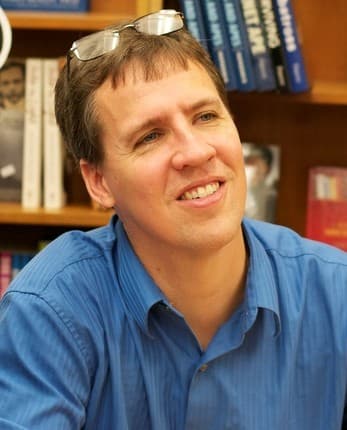
Jeffrey Patrick Kinney is an American author and cartoonist, best known as the creator of the children's book series Diary of a Wimpy Kid. He also created the child-oriented website Poptropica.
Similar books
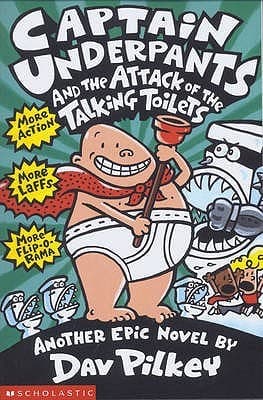
- Captain Underpants and the Attack of the Talking Toilets
Dav Pilkey
4.1 (44k) average on GoodreadsFantasyOffers a similar blend of simple language, comic-book style illustrations, and silly, kid-friendly humor.
- Wonder
R.J. Palacio
4.4 (733k) average on GoodreadsChildren'sWhile both books address themes of social acceptance and navigating difficult peer relationships, Wonder delves much deeper into empathy, kindness, and understanding diverse perspectives, featuring a protagonist with a significant physical difference. The Third Wheel focuses more on superficial social struggles and comedic misadventures, offering less profound character development or thematic exploration of empathy compared to Wonder.
- Harry Potter and the Sorcerer's Stone
J.K. Rowling
4.5 (7M) average on GoodreadsFantasyRescued from a miserable life under the stairs, an orphaned boy discovers he's a wizard destined for a magical school, where he uncovers a dangerous secret tied to the dark wizard who murdered his parents.
- The Hobbit, or There and Back Again
J.R.R. Tolkien
4.3 (2.9M) average on GoodreadsFantasyA comfort-loving hobbit named Bilbo Baggins is whisked away by a mischievous wizard and a band of dwarves on an unexpected journey to reclaim stolen treasure from a fearsome dragon, discovering courage and a magical ring along the way.
- Harry Potter and the Goblet of Fire
J.K. Rowling
4.6 (2.6M) average on GoodreadsFantasyA bewildered Harry Potter, underage and thrust into a deadly Triwizard Tournament, must brave dragons, mermaids, and a resurgent dark magic to survive a year that will forever alter the wizarding world.
- Harry Potter and the Order of the Phoenix
J.K. Rowling
4.5 (2.5M) average on GoodreadsFantasyIn a year of oppressive secrets and the threat of Voldemort, Harry Potter and Dumbledore's Army secretly train for war, shown through Jim Kay and Neil Packer's dark illustrations.





Enjoyed the summary?
A summary gives you the shape of the book. The book itself has the detail, the examples and the voice.
Find The Third Wheel on AmazonAs an Amazon Associate, BookBrief earns from qualifying purchases. How we're funded