
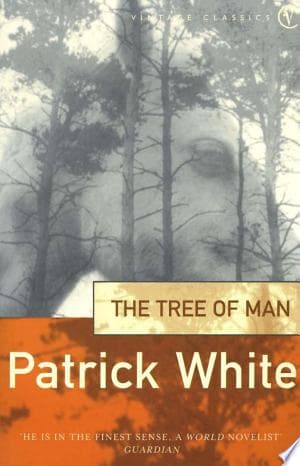
Synopsis
Covers the whole plot, including the ending.
- Difficulty
- Medium
- Pacing
- Slow
- Mood
- Atmospheric, Reflective, Profound, Melancholy
- Read it if
- You appreciate deep character studies, explore themes of faith and the human condition, and enjoy a slow, reflective narrative set against the backdrop of early 20th-century Australia.
- Skip it if
- You prefer fast-paced plots, clear-cut resolutions, or find detailed descriptions of mundane life unengaging.
The Tree of Man Plot Summary
Covers the whole plot, including the ending.
Stan Parker Establishes His Homestead
Around 1900, a young Stan Parker rides his horse into the Australian bush, wanting to settle. He picks a spot near a creek with gum trees and starts the hard work of clearing land and building a small shack. His lonely life changes when Amy Fibbens, a shy but determined young woman from a nearby property, arrives after a short meeting. Despite little talk and an awkward courtship, Stan proposes, and Amy accepts. Their marriage is quiet, starting their shared life on the new farm, a life of hard work and silent understanding.
The Arrival of Children and Early Struggles
Stan and Amy's marriage grows with the birth of their son, Ray, then their daughter, Thelma. Farm life is constant work: clearing land, planting crops, caring for animals, and turning their shack into a larger home. They face the harsh Australian weather, with droughts threatening their farm and floods testing their strength. They often speak little, their days marked by shared work and the demands of raising children alone. Stan finds peace and purpose in his connection to the land and physical work, while Amy deals with the routine and occasional loneliness of her home life.
The Growth of the Farm and Social Connections
As years pass, the Parker farm, 'Durilgai,' slowly does better. Stan's hard work turns the wilderness into a productive farm, though it is still at the mercy of nature. The isolation of their early years lessens as other settlers arrive, forming a small community. The Parkers go to local dances, church, and farm shows, slowly becoming part of a wider social group. These events, often awkward for the quiet Stan and Amy, offer glimpses of connection. They meet different people, like the wealthy O'Dowds, who show a different kind of ambition, and the quiet, religious Mrs. Gage, who becomes a source of spiritual thought for Amy.
Ray's Rebellions and Thelma's Ambitions
Ray and Thelma grow up, each with a distinct personality different from their parents' quiet, grounded lives. Ray, restless, dislikes farm life and his father's silent nature. He looks for adventure and excitement, often getting into trouble and not caring for the land. Thelma, in contrast, is ambitious and social, wanting a life away from the bush. She is drawn to the city, wanting refinement and intellectual stimulation. Their different paths create a growing distance between them and their parents, showing the generational gap and the changing face of Australian society. Stan and Amy struggle to understand their children's desires, often withdrawing into their own silent worlds of work and thought.
Stan's Spiritual Awakening and the Flood
A bad flood covers the area, threatening to destroy everything the Parkers built. During the worst of the flood, Stan has a deep, almost spiritual awakening. Stranded on a small hill with his dog, surrounded by nature's destructive power, he feels a strong sense of unity with creation and a brief moment of divine presence. This experience, hard to explain, deeply affects him, making his connection to the land stronger and giving his quiet life a new, spiritual meaning. He tries, without success, to share this feeling with Amy, who, while strong, remains more practical in her faith. The flood, despite its damage, becomes an important moment in Stan's inner life.
The City and Ray's Downfall
After the flood, the Parkers briefly move to the city, hoping for a new start and a better life for their children. However, the city is confusing and isolating for Stan and Amy. Ray, already prone to bad behavior, falls in with a bad group and gets involved in crime. His life ends badly when he is linked to a murder and dies in a police shootout. This news devastates the family, especially Amy, who struggles to understand her son's fate. Stan, though deeply sad, becomes more stoic, dealing with the meaninglessness and suffering he sees, yet still holding onto the moments of grace he has experienced.
Thelma's Marriage and Amy's Affair
Thelma, having followed her ambitions, eventually marries Mervyn, a respectable but uninspiring lawyer. Her city life shows her desire for social standing and intellectual engagement, moving her further from her parents' country life. Meanwhile, back at Durilgai, Amy, feeling the weight of years and the unspoken distances in her marriage to Stan, is drawn to a traveling salesman named Mr. Gage (not related to Mrs. Gage). Their short, secret affair comes more from a longing for connection and emotional closeness than passion. It is a quiet act of rebellion and shows her deep loneliness, but it ultimately leaves her feeling empty and guilty, increasing her sense of isolation.
Stan's Illness and Renewed Faith
As Stan gets older, he has a stroke that leaves him partly paralyzed and unable to work the land he loves. This forced inactivity makes him think deeply. Confined to his bed, he considers life, death, and the meaning of his existence. He revisits the deep spiritual experiences he had during the flood and in other solitary moments, trying to explain the strong sense of divine presence he has felt. His illness, though physically limiting, makes his spiritual awareness deeper, bringing him closer to a quiet, personal faith that goes beyond traditional religion. Amy, always practical, cares for him with devotion, though she mostly does not know the depths of his inner journey.
Thelma's Return and Stan's Last Days
Thelma, now a sophisticated city woman, sometimes returns to Durilgai to visit her sick father. She finds the farm and her parents older and set in their simple, country ways, which she struggles to understand. Despite her efforts to connect, a gap remains between her city life and their earthy existence. Stan, weak but inwardly strong, continues his quiet thoughts. His last days are marked by a calm acceptance, a feeling of having lived a full, though often unspoken, life. He finds comfort in the familiar sights and sounds of his land, often looking at the 'tree of man' he planted years ago, a silent sign of his lasting connection to the earth.
Stan's Death and Amy's Legacy
One day, sitting under the large gum tree, Stan Parker quietly dies. His death is not dramatic but a natural end to his life's journey, a return to the earth he had worked and loved. Amy, though sad, continues with daily life, showing her lasting strength. She becomes the keeper of their shared history, the silent witness to their life's work. The novel ends with Amy watching a young boy, perhaps a grandchild, urinating on the tree Stan planted, an act that symbolizes the cycle of life, death, and renewal, and the ongoing, messy, but sacred connection between people and the land. The 'tree of man' is a monument to Stan's life and the lasting human spirit.
The Tree of Man Characters
Stan Parker
Protagonist
A taciturn farmer who builds a life from the Australian wilderness, seeking spiritual meaning.
Stan Parker is the stoic, introspective protagonist. Driven by an innate urge to settle and create, he carves a farm out of the bush. His connection to the land is profound, almost spiritual, and he finds meaning in physical labor and the rhythms of nature. He is a man of few words, often struggling to articulate his deepest thoughts and feelings, especially to his wife, Amy. Throughout his life, he experiences moments of profound spiritual awakening, particularly during the flood, which shape his understanding of existence. He is resilient, enduring hardship with quiet determination, and his journey is one of continuous internal searching for truth and connection.
Relationships: Amy Parker (Wife, partner in pioneering life, shared a deep unspoken bond but also significant emotional distance); Ray Parker (Son, whose rebellious nature and tragic end deeply affects Stan but is not fully understood); Thelma Parker (Daughter, whose urban ambitions create a generational and cultural divide with Stan); The Land (A central, almost spiritual, relationship; source of meaning and connection)
Amy Parker (née Fibbens)
Protagonist/Supporting
Stan's wife, a resilient and practical woman who endures the hardships of pioneering life.
Amy Parker is Stan's wife, a woman defined by her quiet strength, resilience, and practicality. She comes from a more conventional background than Stan, and initially struggles with the isolation of the bush. She is a devoted mother and a tireless worker, managing the domestic sphere and contributing significantly to the farm's success. While she shares a deep, unspoken bond with Stan, there is also a significant emotional distance between them, leading her to moments of loneliness and a brief, unfulfilling affair. Her faith is more conventional than Stan's spiritual quest, but she possesses an enduring spirit that allows her to face life's challenges, including the loss of her son and the decline of her husband.
Relationships: Stan Parker (Husband, shared a life of labor and quiet understanding, but also emotional distance); Ray Parker (Son, whose tragic death causes her immense grief and challenges her faith); Thelma Parker (Daughter, whose aspirations she supports, despite the growing distance between them); Mr. Gage (salesman) (Brief, unfulfilling extramarital affair born of loneliness)
Ray Parker
Supporting
Stan and Amy's rebellious son, who rejects farm life and meets a tragic end.
Ray is the firstborn child of Stan and Amy. From a young age, he exhibits a restless, rebellious spirit that chafes against the quiet, laborious life of the farm. He is drawn to excitement and often falls into trouble, showing little interest in working the land. His actions bring disappointment and grief to his parents, particularly after his involvement in criminal activities in the city. His eventual death in a shootout is a devastating blow to the family, symbolizing the tragic consequences of his inability to find his place within or outside the world his parents built. Ray represents the struggle of the second generation to define themselves against their pioneering heritage.
Relationships: Stan Parker (Father, with whom he has a strained and largely uncommunicative relationship); Amy Parker (Mother, whose love he tests but who grieves deeply for him); Thelma Parker (Sister, with whom he shares a complex sibling bond)
Thelma Parker
Supporting
Stan and Amy's ambitious daughter, who seeks a refined life in the city.
Thelma is Stan and Amy's daughter, a character who embodies the changing aspirations of a new generation. Unlike Ray, her rebellion is not overt but rather a quiet determination to escape the perceived limitations of farm life. She is ambitious, intelligent, and socially conscious, drawn to the refinement and intellectual opportunities of the city. She pursues education and a career, eventually marrying a lawyer, Mervyn. While she loves her parents, she struggles to understand their simple existence and the profound connection they have to the land. Her visits to Durilgai highlight the growing cultural and experiential chasm between her and her parents.
Relationships: Stan Parker (Father, with whom she shares a loving but distant relationship); Amy Parker (Mother, whose practical strength she respects but whose life she does not wish to emulate); Ray Parker (Brother, whose wildness contrasts with her own ambition); Mervyn (Husband, a respectable but somewhat dull lawyer)
Mrs. Gage
Supporting
A devout, elderly neighbor who offers spiritual guidance to Amy.
Mrs. Gage is an elderly, devout neighbor who lives near the Parker farm. She is a woman of deep, if somewhat conventional, Christian faith. She becomes a source of spiritual conversation and comfort for Amy, offering an ear and a perspective on life's hardships through the lens of religion. Her presence highlights Amy's more traditional spiritual leanings compared to Stan's more abstract, personal quest. Mrs. Gage represents the established religious community and the comfort it can offer in a harsh pioneering environment, though her advice often falls short of addressing the deeper existential questions that trouble Stan.
Relationships: Amy Parker (Confidante and spiritual mentor); Stan Parker (Acquaintance, with whom she has little direct interaction)
Mr. O'Dowd
Supporting
A wealthy, ostentatious neighbor who symbolizes material ambition.
Mr. O'Dowd is a more prosperous and outwardly ambitious neighbor of the Parkers. He is characterized by his flamboyance, his love for horses, and his desire for material success and social recognition. He represents a different strain of settler, one more focused on accumulation and outward display than Stan's quiet, internal quest. His interactions with Stan are often marked by a friendly rivalry or a lack of true understanding, as their values diverge significantly. O'Dowd's presence in the narrative helps to highlight Stan's unique, almost ascetic, approach to life and his deeper connection to the land beyond mere ownership.
Relationships: Stan Parker (Neighbor and acquaintance, with a friendly but superficial rivalry)
Mervyn
Mentioned
Thelma Parker's husband, a respectable but somewhat dull city lawyer.
Mervyn is Thelma Parker's husband, a lawyer she meets and marries in the city. He represents the kind of stable, respectable, middle-class life that Thelma aspires to, a stark contrast to her rural upbringing. While he provides Thelma with social standing and security, he is depicted as somewhat uninspiring and conventional, lacking the deep connection to the earth or the profound inner life that characterizes Stan. His interactions with the Parker family are limited, underscoring the divide between the urban and rural worlds and the different values they embody.
Relationships: Thelma Parker (Husband); Stan Parker (Father-in-law, with whom he has little in common)
Mr. Gage (salesman)
Mentioned
A traveling salesman with whom Amy has a brief affair.
Mr. Gage is a traveling salesman who briefly enters Amy Parker's life and becomes her lover during a period of intense loneliness and emotional disconnect from Stan. He is a fleeting figure, representing a momentary escape and a yearning for intimacy that Amy feels is lacking in her marriage. His character is not deeply explored, as his primary function is to serve as a catalyst for Amy's brief, unfulfilling act of infidelity, highlighting her internal struggles and the emotional cost of her isolated pioneering life. The affair ultimately leaves Amy feeling more isolated and guilty.
Relationships: Amy Parker (Brief lover during her affair)
The Tree of Man Themes
The Search for Meaning and Spiritual Truth
This theme is central to Stan Parker's life. From his first decision to settle the land, he is driven by a quiet search for something beyond material things. His experience during the flood, where he feels united with creation and sees the divine, is an important moment. Throughout his life, he deals with the unexplainable, trying to understand suffering, love, and existence. This search is personal and often unspoken, different from Amy's more traditional faith. The 'tree of man' itself represents this ongoing search for roots and transcendence.
“He began to understand that man is an extension of the earth, and that if he understood the earth, he would understand himself.”
Humanity's Connection to the Land
The Australian bush is more than a setting; it is a living part of the Parkers' lives. Stan's identity is tied to the land he clears, farms, and lives on. He finds peace, purpose, and even spiritual insight in his interactions with nature—the gum trees, the creek, the cycles of drought and flood. The land shapes their daily lives, their struggles, and who they are. The 'tree of man' he plants represents this deep relationship, showing growth, endurance, and the cycle of life and death, constantly renewed by the earth.
“He knew that he was part of this earth, which was part of him. There was no division.”
Isolation and Communication Breakdown
Despite their shared life and strong bond, Stan and Amy often feel emotionally alone. They communicate little, relying on unspoken understandings and long silences. This inability to express their deepest thoughts creates a distance, leading to loneliness, especially for Amy, and a sense of isolation for Stan regarding his spiritual experiences. This theme also applies to their children, Ray and Thelma, who struggle to connect with their parents' world, showing the generational and experience gaps from their pioneering life.
“They had lived so long in the country of their thoughts that words were not necessary, or even possible.”
The Cycle of Life, Death, and Renewal
The novel carefully follows the full course of life, from Stan's youth in starting his farm to his old age and death. It includes the birth of his children, their growing up, their problems, and the passing of the older generation. This cycle is mirrored in nature: clearing land, planting seeds, seasons of growth and harvest, and the destructive forces of drought and flood, followed by renewal. The 'tree of man' itself is a strong symbol of this theme, representing the continuous, changing nature of life and the lasting human spirit across generations.
“He had seen the tree of man, which was himself, and it was a living tree, growing in the earth, and reaching for the sky.”
The Nature of Love and Marriage
Stan and Amy's marriage is not one of obvious passion or grand declarations, but a deep, lasting partnership built through shared work and hardship. Their love is often shown in practical acts of care and strength rather than words. However, the novel also explores the problems in this bond, including Amy's loneliness and brief affair, and Stan's inability to fully share his inner world. Their relationship changes from necessity to a deep, often unspoken understanding that goes beyond individual desires, showing the lasting power of a shared life, even with its inherent distances.
“Their love was not a thing of words, but of silences, and shared endurance.”
Plot Devices & Literary Techniques
The 'Tree of Man' Symbol
A recurring symbol representing human life, growth, and connection to the earth.
The title 'The Tree of Man' refers to a specific gum tree that Stan plants on his property, but it also functions as a pervasive metaphor throughout the novel. The tree symbolizes Stan's own life, his growth from a solitary seed to a deeply rooted individual. It represents the enduring human spirit, constantly reaching towards the divine while firmly grounded in the earth. The tree witnesses the family's joys and sorrows, endures the elements, and stands as a silent monument to their existence. Its cyclical nature—growth, endurance, and eventual decay—mirrors the human experience and the continuous cycle of life, death, and renewal on the land.
Naturalistic Detail
The use of vivid, unsentimental descriptions of the Australian landscape and its harsh realities.
White employs extensive naturalistic detail to immerse the reader in the Australian bush, portraying its beauty, its indifference, and its brutal challenges. Descriptions of droughts, floods, the scorching sun, and the relentless labor of clearing land are not merely background but integral to the characters' struggles and development. This device emphasizes the profound influence of the environment on human life and the theme of humanity's connection to the land. It creates a stark, authentic backdrop against which the internal lives of Stan and Amy unfold, highlighting their resilience and the raw, unvarnished quality of their pioneering existence.
Interior Monologue and Stream of Consciousness
Narrative technique used to reveal characters' unspoken thoughts and spiritual quests.
While dialogue is often sparse, especially between Stan and Amy, White frequently delves into the characters' inner lives through interior monologue and a stream-of-consciousness style. This allows the reader access to Stan's profound, often inarticulate, spiritual searching and Amy's quiet loneliness and practical concerns. This device is crucial for understanding Stan's mystical experiences during the flood and his later illness, as these moments defy simple verbal expression. It highlights the theme of communication breakdown while simultaneously providing deep insight into the individual consciousness of the characters, particularly Stan's complex relationship with the divine.
Cyclical Structure
The narrative mirrors the cycles of nature and human life, emphasizing continuity and renewal.
The novel's structure is cyclical, beginning with Stan's arrival and the establishment of his farm, and concluding with his death and the perpetuation of life on the land, symbolized by the tree and the presence of a child. This mirrors the natural cycles of seasons, growth, decay, and renewal inherent in the Australian landscape. Events like droughts and floods recur, testing and shaping the characters, but life always continues. This device underscores the theme of the enduring human spirit and the continuous flow of existence, suggesting that individual lives are part of a larger, ongoing process rather than isolated events.
The Tree of Man Quotes
“There were the trees. There was the ploughed earth. There was the sound of the axe, and the smell of the split wood. There was the taste of the bread. There was the feel of the sun on the skin. There was the wind that went through the trees. There was the rain that fell on the roof. There was the fire that burnt in the grate. There was the woman. There was the man. There was the child.”
“Man is a spirit, and his body is a cage. He is always trying to get out.”
“It was the silence that was terrible, not the words. For the words were only the froth on the top of the silence.”
“He knew that he would never be able to tell her what he felt, because what he felt was too big for words.”
“Life, he had discovered, was a succession of moments, each one flowing into the next, and each one, when you looked back, seeming to have been inevitable.”
“They were two people, and they were alone, and they were together, and it was a mystery.”
“The earth was a living thing, and he was part of it, and it was part of him.”
“Perhaps all life was a series of mistakes, and the trick was to make them as interesting as possible.”
“There was a stillness in him, a great quiet, that was not peace, but something deeper than peace, something that was the essence of himself.”
“He saw that the world was beautiful, and terrible, and that it was all one thing.”
“They had built their lives out of nothing, out of the raw earth and the empty sky.”
“The wind was always there, shaping the trees, shaping the lives of men.”
“He knew that he was dying, but it was not a frightening knowledge. It was only a knowledge.”
“And the tree stood, and the house stood, and the man and the woman stood, and the children stood, and the sun rose, and the sun set, and the moon shone, and the stars came out, and it was all a part of it.”
Quiz
10 questions on the plot and the characters. Each answer comes with a short explanation.
Question 1
What is the primary motivation for Stan Parker to leave his family and establish a farm in the Australian wilderness?
- He inherited a large tract of land and felt obligated to develop it.
- He felt an innate urge to settle and create something of his own, away from others.
- He was fleeing a scandal in his previous life and sought anonymity.
- He was hired by a wealthy landowner to manage a new agricultural venture.
Show answer
B. He felt an innate urge to settle and create something of his own, away from others. Stan's decision to settle in the wilderness is driven by an internal, almost instinctual need to establish his own life and connection to the land, rather than external circumstances or obligations.
Question 2
What significant event marks a turning point in Stan and Amy's relationship, causing a temporary estrangement and a period of individual reflection?
- The death of their first child shortly after birth.
- Stan's brief affair with a travelling woman, Mrs. Gage.
- A devastating bushfire that destroys their home and livelihood.
- Amy's decision to leave the farm and work in the city for a period.
Show answer
C. A devastating bushfire that destroys their home and livelihood. The bushfire is a pivotal event that forces both Stan and Amy to confront their individual existences and their bond, leading to a period of separation and introspection before they eventually rebuild.
Question 3
Which of the following best describes the central theme explored through Stan Parker's life in 'The Tree of Man'?
- The triumph of human ingenuity over the harshness of nature.
- The search for spiritual meaning and transcendence in ordinary existence.
- The corruption of innocence by the pressures of modern society.
- The cyclical nature of ambition and failure in pioneering life.
Show answer
B. The search for spiritual meaning and transcendence in ordinary existence. The novel deeply explores Stan's internal journey, his inarticulate yearning for understanding, and his profound connection to the divine in the mundane details of his simple life, embodying a search for spiritual truth.
Question 4
How does the character of Ray, Stan and Amy's son, primarily differ from his father, Stan?
- Ray is deeply religious, while Stan is an atheist.
- Ray embraces urban life and materialism, rejecting his rural roots.
- Ray is an intellectual and a scholar, unlike his practical father.
- Ray is a devoted family man, whereas Stan is often distant.
Show answer
B. Ray embraces urban life and materialism, rejecting his rural roots. Ray represents a departure from his parents' simple, rural existence, drawn to the superficiality and distractions of city life, often finding himself in trouble and embodying a contrast to Stan's grounded nature.
Question 5
What recurring natural element often serves as a metaphor for Stan Parker's spiritual experiences and his connection to the land?
- The constant threat of drought.
- The vast, indifferent sky.
- The presence of a particular tree on his property.
- The floods of the local river.
Show answer
C. The presence of a particular tree on his property. The tree, especially the one on his property, is a profound symbol throughout the novel, representing life, growth, endurance, and Stan's often inarticulate spiritual insights and connection to the earth.
Question 6
Which character serves as a foil to Amy Parker's domesticity and conventional desires, offering her a glimpse into a different, perhaps more exciting, way of life?
- Mrs. Gage, the traveling woman Stan has an encounter with.
- Maddie, the local prostitute.
- The wealthy Mrs. O'Dowd from the nearby town.
- Their daughter, Thelma, as she grows up and moves away.
Show answer
B. Maddie, the local prostitute. Maddie, the local prostitute, represents a life of freedom and sensuality that both attracts and repels Amy, highlighting Amy's own desires and the constraints of her domestic existence.
Question 7
What is the significance of the recurring motif of rain and water in the novel?
- It symbolizes the unpredictable nature of the Australian climate.
- It represents periods of spiritual cleansing, renewal, and divine presence.
- It foreshadows inevitable disasters and hardships for the family.
- It signifies the cyclical patterns of agricultural life.
Show answer
B. It represents periods of spiritual cleansing, renewal, and divine presence. Rain and water frequently appear in moments of profound spiritual experience for Stan, particularly in his later years, symbolizing a connection to something larger than himself, a sense of grace or divine presence.
Question 8
Towards the end of his life, what does Stan Parker's ultimate realization or vision entail?
- He regrets his isolated life and wishes he had pursued more worldly success.
- He achieves a clear, articulate understanding of God and the afterlife.
- He experiences a moment of profound, inarticulate spiritual unity with the world.
- He realizes that his life was ultimately meaningless and without purpose.
Show answer
C. He experiences a moment of profound, inarticulate spiritual unity with the world. In his final moments, Stan experiences a profound, almost mystical epiphany of unity and connection with all of existence, a wordless understanding that transcends logic and language.
Question 9
What is the primary role of the 'ordinary events' mentioned in the book's description, such as achievements, disappointments, sorrows, and dreams?
- To highlight the author's detailed historical research into early Australian settlement.
- To show how these mundane experiences accumulate to shape a profound inner life.
- To demonstrate the futility of human endeavor against the vastness of nature.
- To contrast the simple lives of farmers with the complex lives of city dwellers.
Show answer
B. To show how these mundane experiences accumulate to shape a profound inner life. The novel focuses intensely on the internal significance of these ordinary events, showing how they contribute to Stan's slow, often inarticulate spiritual growth and his search for meaning within the everyday.
Question 10
What happens to Stan Parker's farm and property as he and Amy age and their children leave?
- It is sold to a large agricultural corporation.
- It slowly declines and becomes overgrown, reflecting the passing of their era.
- It is transformed into a successful commercial enterprise by their children.
- It is donated to the local community as a park.
Show answer
B. It slowly declines and becomes overgrown, reflecting the passing of their era. As Stan and Amy age and their children pursue lives elsewhere, the farm, once a vibrant center of their existence, gradually deteriorates and becomes neglected, symbolizing the transient nature of their pioneering efforts and the inevitable march of time.
The Tree of Man FAQ
What is 'The Tree of Man' about?
'The Tree of Man' chronicles the lives of Stan and Amy Parker, a pioneering couple who settle in the Australian wilderness at the turn of the 20th century. It explores their ordinary existence as they build a farm, raise children, and navigate the profound yet often unarticulated experiences of marriage, faith, and the search for meaning amidst the vast, indifferent landscape.
Why should I read 'The Tree of Man'?
You should read 'The Tree of Man' for its profound exploration of the human condition, the quiet dignity of ordinary lives, and its masterful portrayal of the Australian landscape as both a harsh reality and a spiritual presence. White's prose delves deep into the inner lives of Stan and Amy, revealing the complexities and unspoken truths of a long marriage and the search for transcendence in the mundane.
What is the background/setting of 'The Tree of Man'?
The novel is set in the Australian bush at the turn of the 20th century, specifically in the fictional area of Durilgai. Stan Parker establishes his farm in a remote, untamed wilderness, which gradually gives way to a small town. The setting is crucial, reflecting the characters' isolation, resilience, and their deep, often spiritual, connection to the land.
What are the most memorable quotes?
Memorable quotes often center on the characters' profound yet inarticulate understanding of life, such as Stan's recurring sense of 'something' just beyond his grasp, or descriptions of the land's overwhelming presence. The prose itself is rich with poetic observations on the passage of time and the quiet revelations of existence.
What writing style does the author use?
Patrick White employs a dense, poetic, and often stream-of-consciousness style, characterized by long sentences, rich symbolism, and a deep psychological penetration into his characters' inner thoughts. His language is both lyrical and stark, mirroring the Australian landscape and the profound, often unexpressed, emotions of Stan and Amy.
What minor details add significant meaning?
Minor details like the constant presence of the gum trees, the changing weather patterns, or the specific sounds of the bush often symbolize Stan and Amy's evolving relationship with their environment and their inner selves. The small, often wordless, gestures between them convey volumes about their long-standing intimacy and unspoken understanding.
What are some subtle foreshadowing moments?
Subtle foreshadowing appears in the early descriptions of the land's untamed nature, hinting at the eventual challenges and losses Stan and Amy will face. Stan's recurring, almost mystical experiences with 'something' just out of reach hint at his eventual spiritual epiphany at the end of the novel.
What unexpected character connections exist?
While the primary focus is on Stan and Amy, their children, Ray and Thelma, form complex and often strained connections with their parents, highlighting generational differences and the changing nature of Australian society. The fleeting encounters with characters like Mrs. O'Dowd or the flood victims also reveal unexpected human connections and dependencies.
What are unspoken character motivations?
Stan's unspoken motivation is a deep, almost primal need to connect with the land and find a spiritual truth within his physical existence, often expressed through his work and solitary moments. Amy's unspoken desire is for a more fulfilling emotional and social life, leading to her brief affair and her longing for connection beyond Stan's quiet presence.
What psychological complexities do characters exhibit?
Stan exhibits a profound interiority and a struggle to articulate his deepest spiritual experiences, leading to a perceived simplicity that belies his complex inner world. Amy grapples with loneliness, resentment, and a desire for passion, often masking her vulnerabilities with practicality and occasional bitterness, making her a deeply human and flawed character.
What are the major emotional turning points?
Major emotional turning points include the birth of their children, the devastating flood that tests their resilience, Amy's brief affair which profoundly impacts their marriage, and Stan's solitary spiritual revelations, particularly towards the end of his life, which bring him a sense of peace.
How do relationship dynamics evolve?
Stan and Amy's relationship evolves from a passionate, almost animalistic bond in their youth to a silent, enduring partnership marked by unspoken understanding, occasional resentment, and profound mutual dependence. Their love transforms, becoming less about grand gestures and more about shared history, quiet companionship, and a deep, often painful, acceptance of each other's limitations.
Which parts remain ambiguous or open-ended?
The precise nature of Stan's spiritual experiences often remains ambiguous, described through symbolic imagery rather than clear explanations, inviting readers to interpret his connection to the divine or the universal. The ultimate 'meaning' of their lives, while explored, is left open to personal reflection, emphasizing the inherent mystery of existence.
What are controversial scenes or decisions?
Amy's affair with the commercial traveler, while brief, is a controversial decision that challenges the idealized image of the pioneering wife and introduces a stark reality of human longing and marital strain. The portrayal of their children, Ray and Thelma, as somewhat estranged from their parents' values, can also be seen as a critical commentary on societal change.
'The Tree of Man' ending explained: how it ends & what it means
The novel ends with Stan Parker's death, occurring quietly in his yard after a profound, almost mystical experience where he sees a 'shiver of light' and hears a dog bark, signifying a moment of spiritual clarity and connection to the divine or the universal. This ending suggests that meaning and transcendence can be found not in grand events, but in the ordinary, often unarticulated, moments of a lived life, culminating in a peaceful acceptance of mortality.
About the author
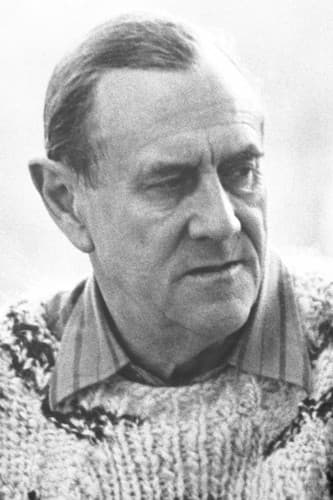
Patrick Victor Martindale White was a British-born Australian writer who published 12 novels, three short-story collections, and eight plays, from 1935 to 1987.
Similar books
- Cloudstreet
Tim Winton
4.0 (20k) average on GoodreadsLiterary FictionExplores the lives of two working-class families in Australia, focusing on their struggles, spiritual journeys, and the passage of time.
- The Grapes of Wrath
John Steinbeck
4.0 (750k) average on GoodreadsHistorical FictionChronicles a family's endurance through hardship, their connection to the land, and the search for meaning in a changing world.
- Independent People
Halldór Laxness
4.2 (9k) average on GoodreadsLiterary FictionDepicts a man's relentless struggle against nature and poverty to maintain his independence and land, with a focus on his inner life.
- Nineteen Eighty-Four
George Orwell
4.2 (5.5M) average on GoodreadsFictionWinston Smith dreams of truth and rebellion in a world where Big Brother watches all, but he confronts the terrifying power of a regime that controls not just actions, but thoughts.
- The Frozen River
Ariel Lawhon
4.4 (600k) average on GoodreadsFictionIn 1789 Maine, a heroic midwife's diary helps her expose a murder and get justice in a town that wants to silence her.
- A Man Called Ove
Fredrik Backman
4.4 (569k) average on GoodreadsFictionA stubborn widower, who lives by strict rules, finds his quiet world changed by a lively new family next door, making him face his past and find happiness in human connection.




Enjoyed the summary?
A summary gives you the shape of the book. The book itself has the detail, the examples and the voice.
Find The Tree of Man on AmazonAs an Amazon Associate, BookBrief earns from qualifying purchases. How we're funded