
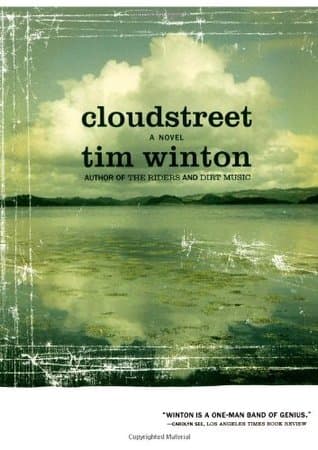
Synopsis
Covers the whole plot, including the ending.
- Difficulty
- Medium
- Pacing
- Moderate
- Mood
- Atmospheric, Poignant, Humorous, Melancholy, Hopeful
- Read it if
- You enjoy rich, character-driven sagas about Australian life, family dynamics, and the search for meaning amidst hardship.
- Skip it if
- You prefer fast-paced plots, clear-cut resolutions, or are put off by a blend of gritty realism and magical realism.
Cloudstreet Plot Summary
Covers the whole plot, including the ending.
The Pickles' Misfortune and Cloudstreet's Inheritance
The story begins with the Pickles, a family prone to bad luck, living in rural Australia. The father, Sam Pickle, gambles and dreams. His wife, Dolly, is sharp-tongued and wants a better life. Their son, Fish, has a terrible accident when a tree falls on him, leaving him with severe brain damage and in a permanent childlike state. This event breaks the family. Soon after, Sam unexpectedly inherits a large, run-down house in Perth, called Cloudstreet, from an unknown relative. Despite its eerie feel and the family's first hesitation, they decide to move to the city, hoping for a fresh start and a chance to escape their past troubles, especially Fish's accident.
The Lambs' Tragedy and Divine Intervention
In contrast to the Pickles, the Lambs are a religious, hardworking family with a strong sense of community and faith. Lester Lamb, the father, is a quiet and kind man, while Oriel, his wife, is a very practical and spiritual woman. Their son, Fish Lamb (who shares a name with the Pickle boy), nearly drowns in a river but is brought back to life by Oriel after what she believes is a divine act. This traumatic event deeply affects Oriel, making her question her faith and the direction of their lives. Believing it is a sign to leave their country life, the Lambs decide to move to Perth, seeking a new beginning and a way to understand the miracle.
Two Families Under One Roof
The Lambs, upon arriving in Perth, need a place to live and a way to earn money. By chance, they find the large, empty Cloudstreet house, now owned by the Pickles. Sam Pickle, always looking for an easy solution, agrees to rent half of the house to the Lambs. The Lambs, always busy, decide to open a grocery store in their half of the ground floor. This arrangement brings the two very different families together under one roof, creating a unique living situation that will define their lives for the next twenty years. The house, a character itself, begins to witness their shared history.
Early Years and Growing Pains
Life at Cloudstreet is a constant give-and-take between the two families. The Lambs run their successful grocery, showing hard work and good morals, while the Pickles mostly live off Sam's gambling winnings and Dolly's occasional efforts, often falling into disorder and drunkenness. Despite the clear differences in their lives and values, a strange cooperation develops. The children of both families grow up together, forming complicated relationships. Fish Lamb (the Lambs' son) remains childlike, a constant, gentle presence. Dolly resents the Lambs' piety and success, while Oriel struggles with the Pickles' perceived lack of ambition and morals, creating underlying tensions.
Rose Pickle's Struggle for Identity
Rose Pickle, smart and observant, is deeply ashamed of her family's untidiness and her mother's alcoholism and affairs. She longs for a life beyond Cloudstreet and its messy embrace. She is particularly affected by her mother's affairs and her father's gambling, which make her feel ignored and unloved. Rose focuses on her studies and works hard to become independent, finding comfort in books and dreams of a different future. She tries to distance herself from the family's reputation and Cloudstreet's perceived bad luck, determined to make her own way away from the house's influence.
Quick Lamb's Wanderlust and Return
Quick Lamb, one of the Lamb sons, grows up with a strong sense of duty but also a restless spirit. He feels the weight of his family's goodness and the expectations placed on him, especially after his brother, Fish, almost drowned. He struggles with his attraction to Rose Pickle, which he sees as going against his family's values. Unable to sort out his feelings and his desire for a different life, Quick eventually leaves Cloudstreet, seeking adventure and escape in the bush. However, the pull of his family, the house, and especially Rose, is too strong, and he eventually returns, changed but still searching for his place.
Oriel's Departure and Solitude
Oriel Lamb, the mother, finds the constant presence of the Pickles and the general atmosphere of Cloudstreet increasingly difficult. She struggles with the moral decline she sees in the house and the spiritual stagnation she feels in her own life. Despite her deep love for her family and her commitment to the grocery store, the weight of their shared life and her internal struggles with faith become too much. In a dramatic act of seeking quiet and spiritual clarity, Oriel moves out of Cloudstreet and sets up a tent in the backyard, living separately from her family for a long time. This shows her deep need for personal space and spiritual renewal.
Rose and Quick's Tumultuous Romance
Rose Pickle and Quick Lamb, despite their different upbringings and the ongoing tension between their families, are strongly drawn to each other. Their relationship is full of difficulties, marked by Rose's fear of repeating her mother's mistakes and Quick's struggle with his sense of duty and his own desires. They have a passionate but often painful courtship, dealing with social expectations, family disapproval, and their own inner conflicts. Their eventual marriage shows their lasting love, but it does not erase the complexities of their past or the differences between their families, bringing them closer to the heart of Cloudstreet's story across generations.
The Next Generation and New Life
After much difficulty and a time apart, Rose and Quick eventually marry and settle back into Cloudstreet. Their marriage connects the two families, though with lingering hints of their distinct histories. They have children, bringing a new generation into the chaotic, lively life of the house. This new life represents hope and continuity, but also the continuation of Cloudstreet's complex legacy. The birth of their children further intertwines the destinies of the Pickles and the Lambs, deepening their shared history within the walls of the old house, creating a delicate sense of unity and a shared future.
Fish Lamb's Final Journey
Through the years, the Lambs' son, Fish, remains in his childlike state, a loved and central figure in both families' lives. He has a unique way of seeing the world, often speaking in riddles and experiencing moments of deep connection to the house and its spirits. As he gets older, his condition seems to change, and he is increasingly drawn to the river where he almost drowned as a child. In a moving and mystical end, Fish finally walks into the river, seemingly returning to the water that once almost took him, and is absorbed into it, finding a peaceful end. His 'death' is both a sad loss and a spiritual release, deeply affecting both families.
Dolly's Redemption and Sam's Acceptance
Dolly Pickle, after years of alcoholism, affairs, and bitterness, finds a type of healing. The loss of Fish, whom she secretly loved, deeply affects her. She begins to face her past choices and the pain she has caused. Sam, for his part, slowly comes to terms with his gambling problem and the results of his actions. While never completely changed, both Dolly and Sam show signs of growth and a deeper understanding of their family and their impact. Their acceptance of their shared history and their place within the Cloudstreet family marks a quiet but important change in their characters.
Oriel's Return and Reconciliation
After her long time living in the tent, Oriel Lamb eventually moves back into Cloudstreet. Her time alone allowed her to process her spiritual struggles and accept the complexities of life, faith, and family. She reconnects with her family, especially Lester, and finds a renewed sense of purpose and peace within the busy house. Her return symbolizes healing and reconciliation, not just with her family, but also with the house itself, accepting its flaws and its role in their lives. She embodies a matured faith and a deeper understanding of love.
The House's Transformation
Over the decades, Cloudstreet changes from a run-down, old house into a lively, living home, filled with the memories and experiences of both families. Its 'ghosts' and oddities become part of its charm and identity. The house, initially a symbol of misfortune for the Pickles and a test of faith for the Lambs, slowly becomes a safe place, a witness to their joys and sorrows. It represents the shared history, strength, and eventual unity of the two families, becoming a loved, almost sentient entity that has shaped and been shaped by their lives. Its change mirrors the growth of its inhabitants.
A Shared Future
By the novel's end, the Pickles and the Lambs, once separate families, are deeply linked by their shared history at Cloudstreet. The marriages, births, deaths, and countless everyday moments have created an unbreakable bond between them. They have learned to live together, to support each other, and to love despite their differences. The house, full of their collective memories, shows their resilience and the power of family, however unusual. They have created a unique, sprawling family unit that goes beyond bloodlines, finding a deep sense of belonging and a shared future within the walls of Cloudstreet.
Principal Figures
Sam Pickle
Protagonist
The unlucky, gambling patriarch of the Pickle family.
Sam Pickle is a charming but irresponsible man, prone to gambling and dreaming big, often at the expense of his family. He has a hopeful, almost childlike optimism that often blinds him to reality. Despite his flaws, he possesses a deep, if sometimes misguided, love for his family and a certain easygoing nature. He inherits Cloudstreet, seeing it as both a burden and a potential source of future wealth. He struggles with providing stability and often relies on his wife, Dolly, to manage the family's affairs.
Relationships: Dolly Pickle (Wife, often strained by his gambling and her resentment.); Rose Pickle (Daughter, whom he loves but often neglects.); Fish Pickle (Son, whose accident deeply affects him.)
Dolly Pickle
Protagonist
The sharp-tongued, resentful matriarch of the Pickle family.
Dolly Pickle is a complex woman, scarred by her past and burdened by her family's misfortunes. She is sharp-witted, often bitter, and struggles with alcoholism and infidelity. She resents Sam's gambling and her perceived lack of a better life. Despite her harsh exterior, she possesses a deep, often unexpressed, capacity for love and a yearning for stability. She has a complicated relationship with Cloudstreet, seeing it as both a trap and a home, eventually finding a strange comfort in its chaos.
Relationships: Sam Pickle (Husband, a source of both frustration and affection.); Rose Pickle (Daughter, a difficult and often distant relationship, marked by Dolly's jealousy and Rose's shame.); Fish Pickle (Son, whom she deeply loves and protects.)
Rose Pickle
Protagonist
The intelligent, ambitious daughter of the Pickle family.
Rose Pickle is intelligent, observant, and deeply ashamed of her family's chaotic lifestyle. She yearns for respectability and a life beyond Cloudstreet's influence. She is a survivor, driven by a desire for independence and a fear of repeating her mother's mistakes. She finds solace in books and education, determined to forge her own path. Her journey is one of self-discovery, learning to reconcile her past with her future and to embrace love despite her fears.
Relationships: Dolly Pickle (Mother, a strained and often resentful relationship.); Sam Pickle (Father, a source of disappointment but also affection.); Quick Lamb (Husband, a complex and passionate love interest.)
Lester Lamb
Protagonist
The kind, stoic, and hardworking patriarch of the Lamb family.
Lester Lamb is a man of quiet strength and unwavering goodness. He is deeply religious, hardworking, and devoted to his family. He embodies traditional values and provides a steady, moral compass for the Lambs. He is patient and understanding, often serving as a calming presence amidst the chaos of Cloudstreet. His faith is central to his identity, and he strives to live a life of integrity and service, always putting his family first and maintaining a gentle, forgiving nature.
Relationships: Oriel Lamb (Wife, a loving but sometimes challenging partnership.); Quick Lamb (Son, a supportive and understanding father-son bond.); Fish Lamb (Son, whom he cares for with profound tenderness.)
Oriel Lamb
Protagonist
The pragmatic, spiritual, and fiercely independent matriarch of the Lamb family.
Oriel Lamb is a formidable woman, fiercely protective of her family and deeply spiritual, though her faith is often tested. She is pragmatic, hardworking, and possesses a strong moral compass. The near-drowning of her son, Fish, profoundly impacts her, leading her to question her place in the world and eventually to her self-imposed exile in the tent. She struggles with the perceived moral laxity of the Pickles and the weight of her own responsibilities. She is a woman of deep conviction and emotional intensity.
Relationships: Lester Lamb (Husband, a devoted but sometimes strained relationship due to her independence.); Quick Lamb (Son, a loving but sometimes challenging mother-son bond.); Fish Lamb (Son, for whom she feels immense love and guilt over his accident.)
Quick Lamb
Protagonist
The restless, duty-bound son of the Lamb family.
Quick Lamb is a sensitive and somewhat brooding young man, torn between his sense of duty to his family and his own desires. He feels the weight of his family's goodness and the expectations placed upon him, especially after his brother Fish's accident. He struggles with his attraction to Rose Pickle, which he initially perceives as a betrayal of his family's values. His journey involves seeking independence and understanding his place in the world, eventually finding his way back to Cloudstreet and to Rose.
Relationships: Oriel Lamb (Mother, a close but sometimes conflicted relationship.); Lester Lamb (Father, a supportive and guiding figure.); Rose Pickle (Wife, a complex and passionate love interest.); Fish Lamb (Lamb) (Brother, for whom he feels immense protectiveness and guilt.)
Fish Lamb (Lamb Family)
Supporting
The ethereal, childlike son of the Lamb family, touched by tragedy.
Fish Lamb, the Lambs' son, is a character of profound innocence and spiritual depth. After nearly drowning as a child, he remains in a permanent childlike state, perceiving the world through a unique, often mystical lens. He is a gentle, beloved presence in both families, a catalyst for much of Oriel's spiritual questioning, and a source of both sorrow and wonder. He is deeply connected to the house and the natural world, often speaking in riddles or profound, simple truths. His journey is one of transcendence, eventually returning to the water that once almost claimed him.
Relationships: Oriel Lamb (Mother, for whom he is a source of both profound love and spiritual torment.); Lester Lamb (Father, who loves him unconditionally.); Quick Lamb (Brother, who feels immense protectiveness and guilt towards him.)
Fish Pickle (Pickle Family)
Mentioned
The Pickle son whose accident sets off the family's move to Cloudstreet.
Fish Pickle is Sam and Dolly's son who suffers a severe head injury when a tree falls on him. This accident leaves him with profound brain damage, permanently altering his life and deeply affecting his family. While he is not a central, active character in the narrative, his accident is the catalyst for the Pickles' move to Cloudstreet and remains a constant, painful memory for his parents, particularly Dolly. He represents the initial tragedy that shapes the Pickle family's trajectory and their inherent bad luck.
Relationships: Sam Pickle (Father, whose life is impacted by his son's accident.); Dolly Pickle (Mother, who carries deep guilt and love for her injured son.)
Themes & Insights
Family and Belonging
The novel explores family, not just through blood ties but through shared experiences and chosen connections. The two families, initially very different, are forced to live together, causing friction but eventually forming a strong bond. Scenes of shared meals, mourning, and support show how a sense of belonging is built over decades of living side-by-side, overcoming differences, and accepting each other's faults. Cloudstreet itself becomes a symbol of this unique, large family unit, a safe place for the outsider and the strong, where love is often shown imperfectly but deeply.
“We're all one big family now, like it or not.”
Fate vs. Free Will
Cloudstreet looks at the tension between a set destiny and individual choice. The Pickles often blame their problems on 'bad luck' or a family curse, suggesting they have no control. The Lambs, especially Oriel, deal with the idea of divine will versus their own desires, particularly after Fish's near-drowning. Characters like Rose and Quick actively fight against what they see as their fates, trying to escape their families and Cloudstreet. The novel suggests that while outside forces and past events clearly shape lives, individual choices and strength play a big part in making one's path and finding meaning, even within a seemingly fated existence.
“It was as if the house had a will of its own, a way of drawing them in and holding them fast.”
The Power of Place and Home
The house, Cloudstreet, is arguably the most important character in the novel. It is a living entity, with its own history, quirks, and even ghosts, deeply affecting its residents. Initially a source of fear and burden, it gradually becomes a loved home, a place of memories, joys, and sorrows. The physical space shapes the families' interactions, forcing them to be close and helping their unique bond grow. Oriel's departure to the tent and eventual return shows the strong pull and symbolic importance of the house as a central home and a witness to their lives, eventually becoming the same as their collective identity and strength.
“Cloudstreet was alive, a heart beating in a chest, a great, old, rambling heart.”
Loss, Grief, and Resilience
Tragedy affects both families early on, with Fish Pickle's accident and Fish Lamb's near-drowning. These events cast a long shadow, shaping the characters' lives and inner struggles. The novel explores the various ways people cope with deep loss and sadness—Dolly's alcoholism, Oriel's spiritual crisis, Rose's shame, Quick's desire to travel. Yet, among the sorrow, there is a lasting spirit of resilience. The families' ability to rebuild, adapt, and find joy despite their difficulties speaks to the human capacity for survival. The gradual healing and acceptance of their past pains show a powerful, collective resilience that defines their shared journey.
“You could drown in it, the past. Or you could learn to swim.”
Spirituality and the Mundane
Cloudstreet mixes the sacred and the everyday, exploring how spirituality appears in daily life, often in unexpected ways. The Lambs' open religiosity contrasts with the Pickles' more secular, chaotic life, yet both families experience moments of deep spiritual meaning. Fish Lamb's unique perception and eventual spiritual journey, Oriel's spiritual struggle and ultimate peace, and the house's own 'haunted' quality give the ordinary a mystical dimension. The novel suggests that divinity can be found not just in church, but in miraculous survival, lasting love, the beauty of nature, and the shared humanity within the ordinary, flawed lives at Cloudstreet.
“There was a sacredness to life, even in the muck and the mess of it.”
Plot Devices & Literary Techniques
The Haunted House (Cloudstreet)
The dilapidated house as a living, sentient character.
Cloudstreet is not merely a setting but a character itself, imbued with its own history, personality, and even a mystical presence. It serves as a crucible where the two families are forged together. Its dilapidated state, the 'ghosts' of previous inhabitants, and its eccentricities reflect the families' own brokenness and resilience. The house witnesses, absorbs, and even influences the events, becoming a repository of memories and a symbol of their shared destiny. It forces interaction, symbolizes the past, and ultimately becomes a beloved home, embodying the spirit of community and belonging.
Foil Characters
The contrasting Lamb and Pickle families highlighting each other's traits.
The Lamb and Pickle families serve as foils to each other, highlighting their respective strengths and weaknesses through contrast. The Lambs are depicted as hardworking, religious, and morally upright, while the Pickles are chaotic, prone to gambling and infidelity, and less conventionally moral. This stark contrast creates initial tension and conflict but also allows for a deeper exploration of human nature, showing how different approaches to life can lead to shared humanity and love. Their differences ultimately enrich the narrative, demonstrating that family can be found in unexpected places, transcending conventional notions of morality and order.
Magical Realism
Subtle integration of supernatural elements into a realistic setting.
The novel subtly employs magical realism, particularly through the character of Fish Lamb and the mystical qualities of Cloudstreet itself. Fish's unique perception of the world, his spiritual connection to the river, and his transcendent 'death' blur the line between reality and the supernatural. The 'ghosts' and the palpable presence of past inhabitants within the house also contribute to this. These elements are not overtly fantastical but are woven into the fabric of the realistic narrative, suggesting a deeper, more mystical layer to existence and adding a sense of wonder and spiritual depth to the everyday lives of the characters.
Symbolism of Water and the River
Water as a symbol of life, death, cleansing, and spiritual transformation.
Water, particularly the river, is a powerful recurring symbol. It is the site of Fish Lamb's near-drowning and subsequent miraculous revival, marking a pivotal moment for the Lamb family and Oriel's spiritual journey. It represents both danger and salvation, death and rebirth. Fish's eventual return to the river signifies a spiritual transcendence and a completion of his unique life cycle. Water also appears in everyday acts of cleansing and renewal, subtly reinforcing themes of purity, redemption, and the cyclical nature of life and death, linking the physical world to a deeper spiritual dimension.
Cloudstreet Quotes
“The past is a country the young can’t visit. It’s all foreign to them.”
“Nobody owns the land. The land owns nobody. The land just is.”
“Life was a thing you lived, a thing you ate and drank and shat out, and if you were lucky, you got to love someone along the way.”
“There was a time when all the world was new and all the trees were green, and all the fish were silver in the sea.”
“We were all just trying to make a go of it, trying to keep our heads above water, trying to make sense of the mess we’d made.”
“You can’t run away from home. You carry it with you.”
“The world was full of good and bad, and sometimes you just had to take what was given.”
“Love was a funny business. It came and went like the tide, sometimes gentle, sometimes crashing.”
“Sometimes you had to make your own luck, even if it meant getting your hands dirty.”
“The house was alive, breathing, sighing, full of secrets and stories.”
“It was a good life, a hard life, but a good life all the same.”
“Grief was a thing that sat in your bones, waiting for its moment.”
“There was always another day, another chance to get it right.”
“The world kept turning, no matter what you did or didn’t do.”
“Family was a mess, a beautiful, horrible, inescapable mess.”
Quiz
10 questions on the plot and the characters. Each answer comes with a short explanation.
Question 1
What is the name of the house inherited by the Pickles, which they subsequently share with the Lambs?
- The Big House
- Riverside Manor
- Cloudstreet
- Pickle Palace
Show answer
C. Cloudstreet The house that the Pickle family inherits and shares with the Lambs is famously called Cloudstreet, which is also the title of the novel.
Question 2
What business do the Lambs establish on the ground floor of Cloudstreet?
- A butcher shop
- A grocery store
- A dry cleaning service
- A bakery
Show answer
B. A grocery store After moving into Cloudstreet, the Lamb family opens a grocery store on the ground floor to make a living.
Question 3
Which character from the Lamb family suffers a near-fatal drowning accident in the river, leading to a profound spiritual experience?
- Oriel Lamb
- Sam Lamb
- Fish Lamb
- Rose Pickles
Show answer
C. Fish Lamb Fish Lamb, one of the Lamb children, suffers a tragic drowning accident that leaves him permanently brain-damaged but also imbued with a unique connection to the spiritual world.
Question 4
What significant event causes the Lamb family to move to Perth and eventually Cloudstreet?
- A house fire destroyed their previous home.
- The drowning accident of Fish Lamb and their subsequent need for a new start.
- Sam Lamb inherited money and decided to relocate.
- They were evicted from their farm.
Show answer
B. The drowning accident of Fish Lamb and their subsequent need for a new start. The Lambs' move to Perth and Cloudstreet is directly precipitated by the devastating drowning accident of Fish Lamb, which profoundly impacts the family and their desire for a new beginning.
Question 5
What is the primary coping mechanism used by Lester Pickles throughout his life, often to the detriment of his family?
- Excessive gambling
- Obsessive cleanliness
- Religious fanaticism
- Constant travel
Show answer
A. Excessive gambling Lester Pickles is characterized by his persistent gambling habit, which frequently causes financial hardship and stress for his family.
Question 6
What is the general timeframe covered by the events in 'Cloudstreet'?
- 1920s to 1940s
- 1944 to 1964
- 1950s to 1970s
- 1939 to 1959
Show answer
B. 1944 to 1964 The narrative of 'Cloudstreet' spans two decades, from 1944 to 1964, detailing the lives of the two families during this period.
Question 7
How does the house, Cloudstreet, itself contribute to the novel's themes and atmosphere?
- It serves merely as a backdrop for the families' lives.
- It is a symbol of decay and the families' inability to escape their past.
- It acts as a sentient, almost spiritual entity that witnesses and influences the families' fates, embodying their shared history and haunted nature.
- It represents the unattainable dream of prosperity and social climbing.
Show answer
C. It acts as a sentient, almost spiritual entity that witnesses and influences the families' fates, embodying their shared history and haunted nature. Cloudstreet is more than just a house; it's depicted as a living, breathing entity, haunted by past events and actively participating in the families' lives, reflecting themes of home, belonging, and the spiritual.
Question 8
What is the nature of the relationship that develops between Rose Pickles and Quick Lamb?
- They are bitter rivals throughout the novel.
- They share a platonic friendship that never evolves.
- They eventually fall in love, marry, and become a central couple uniting the two families.
- They have a brief, unrequited infatuation.
Show answer
C. They eventually fall in love, marry, and become a central couple uniting the two families. Rose Pickles and Quick Lamb's relationship is a cornerstone of the novel, evolving from childhood interactions to a deep love that culminates in their marriage, symbolizing the ultimate merging of the two families.
Question 9
The novel explores the tension between two contrasting worldviews, often embodied by the two families. What are these generally?
- Urban sophistication versus rural simplicity.
- A pragmatic, often chaotic approach to life (Pickles) versus a more spiritual, hardworking, and duty-bound perspective (Lambs).
- Wealthy landowners versus impoverished tenants.
- Strict traditionalism versus radical modernism.
Show answer
B. A pragmatic, often chaotic approach to life (Pickles) versus a more spiritual, hardworking, and duty-bound perspective (Lambs). The Pickles often represent a more hedonistic, chaotic, and 'lucky' approach to life, while the Lambs embody hard work, duty, and a strong, if sometimes conflicted, spirituality.
Question 10
What is the ultimate fate of Cloudstreet, the house, at the end of the novel?
- It is sold and demolished to make way for new development.
- It is inherited by the next generation, with the families finally owning it together.
- It is abandoned as both families move away.
- It is converted into a historical museum.
Show answer
B. It is inherited by the next generation, with the families finally owning it together. By the novel's end, after years of shared living and intertwined fates, the Lambs and Pickles finally collectively own Cloudstreet, symbolizing their enduring bond and shared history.
Cloudstreet FAQ
What is the central premise of 'Cloudstreet'?
The novel centers on two working-class families, the Pickles and the Lambs, who are forced to share a large, dilapidated house called Cloudstreet in Perth, Australia, after both experience significant tragedies. Over two decades, from 1944 to 1964, their lives intertwine through shared joys, sorrows, and daily struggles, transforming the house into a symbol of their collective history and resilience.
Who are the key members of the Pickle family and what defines them?
The Pickle family is headed by Sam and Dolly. Sam is a charming but irresponsible gambler, while Dolly is a sharp-tongued, often bitter woman prone to drinking. Their son, Fish, suffers brain damage in a boating accident, fundamentally altering the family's trajectory and introducing a spiritual dimension to their story.
Who are the key members of the Lamb family and what defines them?
The Lamb family is led by Oriel and Lester. Oriel is a devout, hardworking woman who runs a successful grocery business from Cloudstreet, driven by a fierce sense of duty and faith. Lester is a gentle, good-natured man who supports his wife. Their children, particularly Quick and Rose, experience significant personal journeys within the house.
How does the house, Cloudstreet, function as more than just a setting?
Cloudstreet itself is a character, imbued with a palpable presence and a history of its own, including the ghosts of its previous inhabitants. It acts as a crucible for the families' experiences, absorbing their joys and sorrows, and ultimately becoming a place of both confinement and profound belonging, reflecting the families' evolving spirits.
What is the significance of the 'black fella' who periodically appears to Fish?
The 'black fella' is a spiritual guide and a representation of the Aboriginal presence and connection to the land, offering comfort and understanding to Fish after his accident. This figure underscores the novel's themes of spiritual awakening and the deep, often unseen, history embedded in the Australian landscape.
What is the meaning behind Fish Lamb's repeated desire to 'go back to the water'?
Fish's longing for the water symbolizes a spiritual return to a state of pre-consciousness and oneness, particularly after his near-drowning accident. It represents his soul's journey and his ultimate transcendence, suggesting a spiritual rebirth and a connection to something larger than earthly life, fulfilling a prophecy of his eventual return to the river.
How does the shared lottery win impact both families, beyond just financial gain?
The lottery win initially brings a sense of liberation and the possibility of separate lives, allowing the Lambs to consider moving and the Pickles to indulge. However, it ultimately highlights their interconnectedness and the house's pull, revealing that their shared history and bonds are more significant than material wealth, leading to a deeper commitment to Cloudstreet and each other.
Discuss Oriel Lamb's internal struggle with her faith and her decision to leave Cloudstreet.
Oriel's unwavering faith is severely tested by the hardships and tragedies at Cloudstreet, particularly Fish's condition and the general chaos. Her decision to live in a tent by the river is an attempt to escape the house's oppressive energy and reconnect with a simpler, purer form of spirituality, seeking solace and clarity away from the families' complexities.
Analyze Dolly Pickle's coping mechanisms and their psychological impact on her family.
Dolly copes with her traumatic past and the burden of Fish's accident through heavy drinking, bitter sarcasm, and a cynical worldview. While these behaviors provide a temporary escape for her, they create emotional distance and instability within the Pickle family, contributing to Sam's gambling and Rose's feelings of neglect and resentment.
How does Quick Lamb's journey reflect a search for identity and belonging?
Quick struggles with feelings of inadequacy, guilt, and the weight of his family's expectations, particularly after Fish's accident. He leaves Cloudstreet multiple times, seeking independence and a sense of self away from the house's confines. His eventual return and marriage to Rose signify his acceptance of his past and his place within the Cloudstreet family.
Explore Rose Pickles' psychological evolution from childhood neglect to self-assured womanhood.
Rose endures a challenging childhood marked by Dolly's neglect and the family's instability. She develops a strong sense of self-preservation and a desire for order and cleanliness. Her journey involves breaking free from her mother's influence, finding love and stability with Quick, and ultimately creating her own healthy family unit, demonstrating remarkable resilience and growth.
Is 'Cloudstreet' ultimately a story of fate or free will?
The novel suggests a complex interplay of both. While characters like Fish seem destined for a particular spiritual journey, and the families' initial arrival at Cloudstreet feels fated, their choices and reactions to tragedy, such as Oriel's resilience or Quick's decisions, demonstrate significant free will. The house itself seems to guide, but not entirely dictate, their paths.
How does the novel explore the concept of home and belonging?
'Cloudstreet' posits that 'home' is not merely a physical structure but a living entity shaped by shared experiences, grief, joy, and the people within it. Despite its initial dilapidation and haunted nature, Cloudstreet becomes a profound symbol of belonging for both families, a place where their disparate lives are woven into a rich, complex tapestry.
What is the significance of the novel's cyclical narrative structure and the constant return to the river?
The cyclical nature, with its recurring imagery of the river and the passage of time, reinforces themes of life, death, rebirth, and the enduring flow of generations. The river, particularly its connection to Fish, symbolizes both an origin and an end, suggesting a continuous spiritual journey and the timelessness of human experience.
How does Winton use magical realism in 'Cloudstreet' and what is its effect?
Winton subtly weaves elements of magical realism, such as the talking pig, the ghosts in the house, and Fish's unique perception of reality, into the otherwise grounded narrative. This enhances the spiritual and mythical dimensions of the story, allowing for deeper exploration of themes like fate, the interconnectedness of life and death, and the extraordinary within the ordinary.
Discuss the symbolic role of the pig in the novel.
The pig, which talks to the Lamb children, particularly Fish, serves as a symbol of the uncanny and the spiritual presence within Cloudstreet. It represents a connection to the natural world and a form of innocent wisdom, blurring the lines between the mundane and the magical, and hinting at the house's deeper, unseen life.
What is the ultimate message about family and resilience conveyed by the ending of 'Cloudstreet'?
The ending, with Quick and Rose establishing their own family within Cloudstreet, signifies the triumph of love, resilience, and continuity over tragedy and discord. It conveys that true family is forged not just by blood but by shared history, forgiveness, and an enduring commitment to one another, even amidst life's greatest challenges.
How does the historical setting of post-war Australia influence the story?
The post-WWII setting provides a backdrop of rebuilding and societal change, mirroring the families' own efforts to reconstruct their lives after personal disasters. The era's working-class struggles, limited opportunities, and evolving social norms subtly shape the characters' choices and the community's interactions, grounding the fantastical elements in a tangible historical reality.
About the author

Tim Winton is an Australian author known for his fiction that often explores themes of nature and human connection. His notable works include "Cloudstreet," a multi-generational saga, "Breath," which delves into the world of surfing and personal growth, "Dirt Music," a story of love and loss in the Australian landscape, and "Blueback," a tale of a boy and his bond with the sea.
Similar books
- Dirt Music
Tim Winton
3.9 (12k) average on GoodreadsLiterary FictionExplores Australian landscapes and complex character relationships with a similar lyrical prose.
- One Hundred Years of Solitude
Gabriel García Márquez
4.1 (753k) average on GoodreadsLiterary FictionFeatures multi-generational family sagas and a strong sense of magical realism within a specific house/setting.
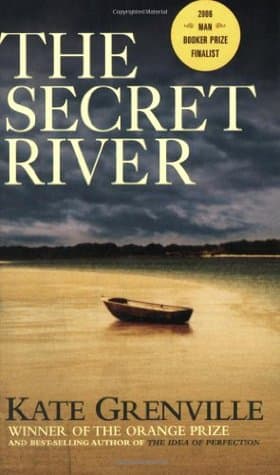
- The Secret River
Kate Grenville
3.8 (18k) average on GoodreadsLiterary FictionWhile both Cloudstreet and Kate Grenville's The Secret River are Australian historical fiction, they diverge significantly in their thematic focus and narrative approach. The Secret River is a stark and unsparing examination of Australia's colonial past, specifically the brutal dispossession of Aboriginal peoples and the moral compromises made by early settlers. It is a politically charged novel, deeply concerned with historical injustice and national identity through a lens of guilt and reckoning. Cloudstreet, by contrast, while set against a historical backdrop, is more inwardly focused on the domestic lives and spiritual journeys of two white working-class families. Winton's novel explores themes of trauma, resilience, and the search for belonging within a specific house and community, with historical events serving more as atmospheric context rather than the central ethical dilemma. Grenville's prose is often sharp and direct, serving a clear historical-political agenda, whereas Winton's is more lyrical, emotive, and imbued with a sense of myth and destiny.
- The Old Man and the Sea
Ernest Hemingway
3.8 (831k) average on GoodreadsLiterary FictionA Cuban fisherman's long struggle with a giant marlin becomes a story of endurance and dignity, now retold for young adults with illustrations, phonetic guides, and writing prompts in Traditional Chinese.
- The Goldfinch
Donna Tartt
3.9 (720k) average on GoodreadsLiterary FictionHaunted by a tragic explosion and clutching a stolen Dutch masterpiece, a young orphan navigates the opulent drawing rooms of New York and the gritty underbelly of the art world, desperately seeking connection and redemption amidst a life spiraling into crime and obsession.
- Little Fires Everywhere
Celeste Ng
4.1 (713k) average on GoodreadsLiterary FictionIn Shaker Heights, an artist and her daughter move in, and their free-spirited lives clash with a rule-bound matriarch, revealing hidden conflicts beneath a perfect surface.





Enjoyed the summary?
A summary gives you the shape of the book. The book itself has the detail, the examples and the voice.
Find Cloudstreet on AmazonAs an Amazon Associate, BookBrief earns from qualifying purchases. How we're funded