

Synopsis
Covers the whole plot, including the ending.
- Difficulty
- Easy
- Pacing
- Moderate
- Mood
- Heartwarming, charming, hopeful, innocent, adventurous
- Read it if
- you enjoy charming animal stories, tales of overcoming challenges, and a sweet, determined protagonist. Ideal for readers who appreciate themes of friendship, love, and the power of perseverance.
- Skip it if
- you prefer complex human-centric narratives, dark themes, or fast-paced thrillers. This is a gentle, somewhat whimsical story.
The Trumpet of the Swan Plot Summary
Covers the whole plot, including the ending.
Sam Beaver Discovers the Swans
Eleven-year-old Sam Beaver finds a secluded pond during a summer trip with his father in the Canadian wilderness. He watches a pair of trumpeter swans, observing their nesting habits. He sees the female swan lay five eggs, and later, he watches them hatch. One cygnet, however, is born without a voice. This is a big problem for a trumpeter swan, as their identity and communication rely on their call. Sam feels a special connection to this voiceless cygnet, seeing its struggle from the start. He keeps visiting the pond secretly to watch the swan family.
Louis's Silent Struggle
As the cygnets grow, Louis's inability to trumpet becomes clear and causes problems. His siblings can call, communicate, and attract mates, but Louis stays silent. His parents, especially his father, worry about his future. They know that without a voice, Louis will have trouble finding a mate and living a normal swan life. Louis himself notices his difference, feeling alone and frustrated because he cannot express himself like other swans. This early part of the story shows his main problem: a trumpeter swan who cannot trumpet.
The Swan Father's Desperate Act
Louis's father sees his deep sadness and inability to communicate. In a desperate attempt to help his son, he flies to a music store in Billings, Montana. There, he steals a brass trumpet, believing that if Louis can play an instrument, he will have a voice. This act comes from great love and pain, but it is also a theft. He brings the trumpet back to Louis, offering it as a solution. Louis, at first confused, starts to understand what his father means.
Louis Goes to School
Even with the trumpet, Louis still struggles to communicate. He meets Sam Beaver again, and Sam understands Louis's problem. Sam suggests an unusual idea: Louis should learn to read and write. Sam takes Louis to his school in Montana, where Louis is first met with surprise and some fear. With Sam's help and the understanding of the kind teacher, Miss Finch, Louis learns to write on a chalkboard, using a slate and chalk tied around his neck. This lets him express his thoughts and feelings, including his love for Serena, which he could not say otherwise.
Learning to Play the Trumpet
To truly get a voice, Louis realizes he must learn to play the stolen trumpet well. He enrolls in a summer camp for boys, Camp Kookooskoos, pretending to be a human camper. There, a bugler teaches him, and Louis practices hard. His natural musical talent and determination show, and he quickly becomes good at playing. This time is important for Louis's growth; he not only learns to play an instrument but also gains confidence and a way to express himself with music, overcoming his physical limitation.
Performing for a Living
After he can play the trumpet well, Louis knows he must earn money to pay back the music store for the stolen instrument. He takes various performing jobs: playing 'Taps' at Camp Kookooskoos, becoming a bugler for a swan boat in Boston Public Garden, and later, a trumpeter in a Philadelphia nightclub. Each job gives him money and lets him travel, see the human world, and improve his unique skill. He sends the money he earns to his father, who keeps it for the debt.
Serena's Arrival and Louis's Declaration
While working at the swan boat in Boston, Louis sees Serena, the beautiful swan he fell in love with back in Canada. She does not know who he is at first, but his trumpet playing gets her attention. Louis, now confident in his music, plays a serenade for her, showing his deep affection and longing. His music crosses the barrier of his voicelessness, telling her his feelings more deeply than any natural call could. Serena is touched by his performance, starting to see how special this swan is.
The Repayment of the Debt
With enough money saved, Louis, with Sam, returns to the music store in Billings, Montana, where his father stole the trumpet. He gives the money to the store owner, explaining how the theft happened. The store owner, surprised at first, is deeply moved by Louis's honesty and the extraordinary story behind the repayment. This act not only clears his father's conscience but also shows Louis's strong sense of right and wrong and his commitment to doing what is fair.
Winning Serena's Heart
After paying his debt, Louis returns to the wilderness, now a respected swan. His ability to play the trumpet, along with his kindness, determination, and honesty, truly wins Serena's heart. She looks past his early disability and sees the remarkable individual he has become. Their love grows, based on mutual respect and admiration for Louis's journey and his unique way of expressing himself. His voicelessness is no longer a problem but shows his resilience and creativity.
A Life of Music and Family
Louis and Serena mate and start their own family, going back to the pond where Louis was born. Louis keeps playing his trumpet, not just for Serena, but for his cygnets and for the pure joy of it. His music becomes a part of their life, a symbol of his victory over hardship. Sam Beaver, now an adult, sometimes visits the pond, listening to Louis's beautiful music. The story ends with Louis having found his place, showing that real communication and love can overcome physical limits through cleverness and heart.
The Trumpet of the Swan Characters
Louis
Protagonist
A trumpeter swan born without a voice, determined to communicate and find love.
Louis is a trumpeter swan born with a significant disability: he cannot trumpet. This makes him an outcast among his kind, deeply affecting his self-esteem and ability to attract a mate. Despite his initial despair, Louis is characterized by his immense determination, intelligence, and resourcefulness. He is willing to learn, adapt, and work tirelessly to overcome his challenge, demonstrating remarkable courage by venturing into the human world. He possesses a strong moral compass, insisting on repaying the debt for the stolen trumpet, showcasing his integrity and sense of justice.
Relationships: Serena (Love interest); Sam Beaver (Human friend and mentor); Louis's Father (Devoted and protective parent); Louis's Mother (Supportive parent)
Sam Beaver
Supporting
A kind and understanding boy who befriends Louis and helps him navigate the human world.
Sam Beaver is an observant and empathetic eleven-year-old boy who first discovers Louis and his family. He possesses a deep respect for nature and a keen understanding of animal behavior. Sam is instrumental in Louis's journey, acting as his first human friend, mentor, and advocate. He is patient, resourceful, and open-minded, taking Louis to school and helping him learn to read and write. His friendship with Louis is unconditional, demonstrating a rare cross-species bond built on mutual trust and understanding. He represents humanity's potential for kindness and compassion.
Relationships: Louis (Close friend); Miss Finch (Teacher)
Serena
Supporting
A beautiful trumpeter swan, Louis's love interest.
Serena is a beautiful and graceful trumpeter swan, initially drawn to the traditional qualities of a mate, including a strong voice. She represents the conventional expectations within the swan world. However, she is also open to recognizing unique qualities beyond the surface. Her initial interactions with Louis are marked by her unawareness of his true identity, but she is ultimately captivated by his extraordinary musical talent, courage, and integrity. Her love for Louis is a testament to his journey and the power of individual expression over societal norms.
Relationships: Louis (Love interest)
Louis's Father
Supporting
A devoted swan father who goes to extreme lengths to help his voiceless son.
Louis's Father is a powerful and traditional trumpeter swan who deeply loves his son. He is distraught by Louis's inability to trumpet, seeing it as a fundamental flaw that will prevent Louis from leading a fulfilling life. His love drives him to an extraordinary and morally ambiguous act: stealing a brass trumpet from a human store. This action, while illegal, is portrayed as a desperate, loving gesture, highlighting the lengths a parent will go to for their child. He carries the burden of this theft until Louis is able to repay it.
Relationships: Louis (Son); Louis's Mother (Mate)
Miss Finch
Supporting
Sam's understanding and unconventional school teacher.
Miss Finch is Sam Beaver's school teacher, characterized by her open-mindedness, patience, and compassion. When Sam brings Louis to her classroom, she doesn't dismiss the idea as absurd but rather embraces the opportunity to teach Louis. She provides the necessary tools and encouragement for Louis to learn to read and write, demonstrating a remarkable ability to adapt her teaching methods to an unprecedented student. Her acceptance of Louis highlights the theme of inclusivity and the power of education to overcome barriers.
Relationships: Sam Beaver (Student); Louis (Student)
The Music Store Owner
Supporting
The owner of the music store where Louis's father steals the trumpet.
The music store owner in Billings, Montana, is initially an unwitting victim of Louis's father's theft. He represents the human world's property rights and the consequences of breaking them. However, when Louis returns years later to repay the debt, the owner demonstrates remarkable understanding, forgiveness, and even admiration for Louis's integrity and the extraordinary story behind the repayment. He embodies the capacity for human empathy and the willingness to look beyond the letter of the law when faced with a compelling moral narrative.
Relationships: Louis (Debtor); Louis's Father (Thief (initially))
The Bugler at Camp Kookooskoos
Supporting
Louis's trumpet instructor at summer camp.
This unnamed bugler at the summer camp is a patient and effective teacher. He takes Louis under his wing, recognizing the swan's potential despite his unusual circumstances. He teaches Louis the fundamentals of playing the trumpet, helping him transform from a silent bird into a proficient musician. His role is crucial in Louis's development, providing the technical skills necessary for Louis to achieve his goal of communication through music. He represents the human mentors who guide Louis on his journey.
Relationships: Louis (Student)
The Trumpet of the Swan Themes
Overcoming Adversity and Disability
The main theme is Louis's struggle to overcome his physical disability: his inability to trumpet. The story shows that limits do not define a person, and with determination, cleverness, and help, one can find other ways to reach their goals. Louis's journey from sadness to success by learning to read, write, and play the trumpet is a strong example of resilience and the ability of a spirit to adapt and succeed despite challenges, creating a unique identity.
“Louis had a strong heart, but he had no voice. This was a terrible thing for a trumpeter swan.”
The Power of Communication
Communication, in many forms, is an important theme. Louis's early voicelessness highlights the basic need to express oneself and connect with others. The story explores how he finds other ways to communicate, first through writing, then through the universal language of music. It shows that true communication is more than just words or natural calls; it involves sharing feelings, intentions, and who you are. His ability to charm Serena with his trumpet, and to explain his story to the music store owner, shows the strong effect of clear and sincere communication.
“A bird without a voice is a bird without a soul.”
Love, Devotion, and Sacrifice
The novel explores different kinds of love and devotion. The deep love of Louis's father for his son causes him to steal, an act born from parental pain and a desire to help. Louis's steady love for Serena drives his entire journey of self-improvement and earning money. The strong friendship between Louis and Sam Beaver shows unconditional love and support between different species. These acts of devotion, often involving big sacrifices, highlight how love can inspire extraordinary actions and overcome great difficulties.
“His father loved him so much that he couldn't bear to see his son unhappy.”
Morality and Redemption
The theme of morality appears when the father steals the trumpet, creating a moral problem. Louis's later decision to pay back the debt introduces the idea of making things right. The story emphasizes the importance of honesty and correcting wrongs. Louis's journey to earn money and his eventual return to the music store to settle the debt show a strong moral compass and the belief that fairness and honor are essential, even for an animal. This act of making amends strengthens Louis's character and noble spirit.
“No swan should ever owe money to a man.”
The Blending of Human and Animal Worlds
The story blends the natural world of animals with the organized world of humans. Louis easily moves between both, attending human school, working human jobs, and interacting with human characters. This mix shows the possibility of understanding and connection between species, while also exploring the challenges and changes needed. It suggests that intelligence, emotion, and morality are not only for humans, and that animals can have complex inner lives and add to the human experience in meaningful ways, bridging the gap between nature and civilization.
“It was a strange thing, a swan in a schoolroom, but Miss Finch was a strange teacher.”
Plot Devices & Literary Techniques
Anthropomorphism
Attributing human characteristics to animals.
Anthropomorphism is a primary device, granting swans like Louis the ability to understand complex human concepts, learn to read and write, play musical instruments, and hold jobs. This allows the narrative to explore themes of disability, communication, and morality through an animal protagonist, making the story relatable and emotionally resonant. By giving the swans human-like thoughts and motivations, White creates a rich internal world for Louis and allows him to interact meaningfully with humans and their societal structures, transcending species barriers.
Symbolism (The Trumpet)
The trumpet symbolizes Louis's voice, identity, and triumph.
The brass trumpet is the central symbolic object in the story. Initially, it represents Louis's desperate need for a voice and his father's love. As Louis learns to play it, the trumpet transforms into a symbol of his unique identity, his ability to communicate, and his artistic expression. It becomes his 'voice,' allowing him to overcome his disability, earn a living, and ultimately win Serena's heart. The trumpet also symbolizes the ingenuity and creativity required to overcome adversity and find alternative paths to fulfillment.
Journey/Quest Narrative
Louis embarks on a physical and emotional quest for a voice and love.
The entire plot follows a classic journey or quest structure. Louis's quest begins with his physical disability (no voice) and his desire to find a mate. This propels him on a series of literal journeys – to school, to summer camp, to various cities for work, and finally back to repay his debt. Each stage of the journey involves learning, overcoming obstacles, and personal growth, leading him closer to his ultimate goals of communication, love, and self-acceptance. The physical journey mirrors his internal transformation.
Foil Character (Serena's initial expectations)
Serena's initial desire for a traditional swan call highlights Louis's uniqueness.
Serena, in her initial expectations of a mate who can trumpet, serves as a subtle foil to Louis's unique situation. Her initial preference for a traditional 'voice' underscores the severity of Louis's disability within his own species. However, her eventual acceptance and love for Louis, based on his trumpet playing and character, demonstrate that true value lies beyond conventional expectations. Her character arc validates Louis's unconventional path, showing that love can transcend perceived flaws and embrace individuality.
The Trumpet of the Swan Quotes
“The world is a dangerous place, and if you are not careful, you will be destroyed.”
“It is a great thing to be a boy, and a great thing to be a boy's father.”
“The only thing that matters is the truth.”
“It is not the place that makes the man, but the man that makes the place.”
“Love is a hard thing to find, and it is even harder to keep.”
“A swan is a swan, and you cannot make it something else.”
“The most important thing a father can do for his children is to love their mother.”
“Courage is the price that life asks of us to pay for all other virtues.”
“It is better to be feared than loved, if you cannot have both.”
“The world is full of wonders, if only you have eyes to see them.”
“A good life is a life lived with purpose.”
“It is a lonely thing to be a genius.”
“The sound of the trumpet is the voice of the soul.”
“You can't control the wind, but you can control your sails.”
Quiz
10 questions on the plot and the characters. Each answer comes with a short explanation.
Question 1
What is the name of the main swan character in "The Trumpet of the Swan"?
- Serena
- Sam Beaver
- Louis
- The Trumpet
Show answer
C. Louis Louis is the name of the swan who is the protagonist of the story.
Question 2
What is the primary reason Louis cannot express his feelings to Serena?
- He is too shy.
- He has no voice.
- Serena doesn't like him.
- He can't write.
Show answer
B. He has no voice. Louis is born without a voice, which prevents him from communicating his love for Serena.
Question 3
Who is the human friend that Louis meets and goes to school with?
- The music shop owner
- Louis' father
- Serena
- Sam Beaver
Show answer
D. Sam Beaver Sam Beaver is the eleven-year-old boy who befriends Louis and helps him learn to read and write.
Question 4
What musical instrument does Louis' father steal for him?
- A piano
- A violin
- A trumpet
- A flute
Show answer
C. A trumpet Louis' father steals a brass trumpet from a music shop for Louis.
Question 5
What does Louis learn to do at school with Sam Beaver?
- To swim better
- To sing
- To read and write
- To fly south for the winter
Show answer
C. To read and write Louis attends school with Sam Beaver to learn the human skills of reading and writing.
Question 6
What is the ultimate outcome for Louis in his pursuit of Serena?
- He gives up and finds another mate.
- He learns to play the trumpet and wins her heart.
- He teaches her to read and write.
- He never sees her again.
Show answer
B. He learns to play the trumpet and wins her heart. By learning to play the trumpet, Louis is able to communicate his love and ultimately wins Serena's heart.
Question 7
What does Louis do to repay the music shop owner?
- He steals another trumpet to replace it.
- He writes an apology note.
- He pays him back with money earned from performances.
- He never repays him.
Show answer
C. He pays him back with money earned from performances. Louis repays the music shop owner for the stolen trumpet, implying he uses his musical talents to earn the money.
Question 8
The story is described as a wonderful story of romance, friendship, and what other quality?
- Patience
- Determination
- Bravery
- Honesty
Show answer
B. Determination The provided summary explicitly states the story is about romance, friendship, and determination.
Question 9
What is ironic about Louis's father stealing a trumpet for his son?
- Swans don't play musical instruments.
- The trumpet is too heavy for a swan.
- Louis is born without a voice, but the trumpet gives him a way to 'speak'.
- The music shop owner is also a swan.
Show answer
C. Louis is born without a voice, but the trumpet gives him a way to 'speak'. The irony lies in Louis, who lacks a natural voice, being given a trumpet, an instrument that produces sound, as a means of expression.
Question 10
Which character is described as 'angelic'?
- Louis
- Sam Beaver
- Louis' father
- Serena
Show answer
D. Serena The summary states that Louis is in love with the 'angelic' Serena.
The Trumpet of the Swan FAQ
What is The Trumpet of the Swan about?
The Trumpet of the Swan tells the story of Louis, a trumpeter swan who cannot make a sound. He falls in love with Serena but cannot express his feelings. With the help of a human boy named Sam Beaver and his own determination, Louis learns to read, write, and eventually play a trumpet to win Serena's heart.
Who are the main characters in The Trumpet of the Swan?
The main characters are Louis, a young trumpeter swan who is mute; Serena, the swan Louis loves; Sam Beaver, an eleven-year-old boy who befriends Louis; and Louis' father, who helps him acquire a trumpet.
Why can't Louis the swan talk?
Louis is born without a voice, meaning he is unable to make any sounds. This is a central conflict in the story, as it prevents him from communicating his love for Serena.
How does Louis learn to communicate?
Louis learns to communicate through reading and writing. He attends school with his human friend Sam Beaver and learns these skills, which allow him to express himself to Serena.
What is the role of the trumpet in the story?
The trumpet is a crucial element as it becomes Louis' voice. After learning to read and write, Louis' father steals a brass trumpet for him, enabling Louis to play music and express his emotions, ultimately winning Serena's love.
Is The Trumpet of the Swan a sad story?
While Louis faces challenges due to his muteness, the story is ultimately uplifting and hopeful. It focuses on themes of love, friendship, perseverance, and finding your unique voice, even if it's not a conventional one.
What lessons can children learn from The Trumpet of the Swan?
The book teaches valuable lessons about overcoming obstacles, the importance of friendship and family support, the power of determination, and celebrating individual talents and differences. It shows that even when faced with limitations, one can find a way to succeed.
Does E.B. White write other animal stories?
Yes, E.B. White is famous for other beloved children's books featuring animals, most notably Charlotte's Web and Stuart Little, which also explore themes of friendship and adventure.
What is the main theme of The Trumpet of the Swan?
The main themes revolve around love, communication, overcoming adversity, and finding one's unique talent or voice. It's a story about how determination and support can help individuals achieve their dreams.
How does Louis repay the music shop owner?
After Louis becomes a famous musician and earns money, he and his father return to the music shop. They repay the owner for the stolen trumpet, demonstrating Louis' integrity and gratitude.
Similar books
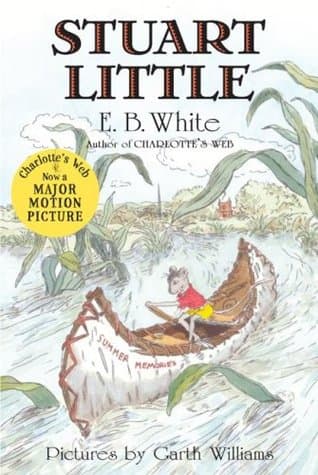
- Stuart Little
E.B. White
3.9 (110k) average on GoodreadsFantasyAnother E. B. White classic with an animal protagonist navigating the human world and embarking on adventures.
- Harry Potter and the Sorcerer's Stone
J.K. Rowling
4.5 (7M) average on GoodreadsFantasyRescued from a miserable life under the stairs, an orphaned boy discovers he's a wizard destined for a magical school, where he uncovers a dangerous secret tied to the dark wizard who murdered his parents.
- The Hunger Games
Suzanne Collins
4.3 (6.4M) average on GoodreadsFantasyIn a future where children fight to the death on live television, Katniss Everdeen volunteers for the arena, turning a death sentence into a fight for survival and a spark of rebellion.
- Nineteen Eighty-Four
George Orwell
4.2 (5.5M) average on GoodreadsFictionWinston Smith dreams of truth and rebellion in a world where Big Brother watches all, but he confronts the terrifying power of a regime that controls not just actions, but thoughts.
- Pride & Prejudice
Jane Austen
4.3 (4.9M) average on GoodreadsElizabeth Bennet and Mr. Darcy navigate love and misunderstanding, learning that first impressions can be wrong.
- To Kill a Mockingbird
Harper Lee
4.3 (4.5M) average on GoodreadsHistorical FictionIn the 1930s Jim Crow South, Harper Lee writes about racial injustice, moral growth, and the quiet courage of a lawyer father, Atticus Finch, as seen through his young daughter's eyes.





Enjoyed the summary?
A summary gives you the shape of the book. The book itself has the detail, the examples and the voice.
Find The Trumpet of the Swan on AmazonAs an Amazon Associate, BookBrief earns from qualifying purchases. How we're funded