

Synopsis
Covers the whole plot, including the ending.
- Difficulty
- Medium
- Pacing
- Moderate
- Mood
- Introspective, Thought-provoking, Melancholy, Hopeful
- Read it if
- You enjoy intellectually stimulating literary fiction with a strong emotional core, featuring themes of identity, memory, and the early days of AI.
- Skip it if
- You prefer fast-paced thrillers or straightforward narratives without complex scientific or philosophical undertones.
The Unseen World Plot Summary
Covers the whole plot, including the ending.
A Childhood in the Lab
Ada Sibelius spends her early childhood in the 1980s, home-schooled and with her brilliant but socially awkward single father, David Sibelius. David directs a computer science lab in Boston, and Ada becomes a fixture there, absorbing information and developing an understanding of technology. She learns to program at a young age, often helping her father with tasks in the lab. David's research focuses on creating an advanced artificial intelligence capable of learning and interacting, which he names 'Eliza'. Despite her isolation from peers, Ada finds belonging and purpose within the intellectual world of the lab, forming close bonds with the adult researchers who become her extended family.
David's Decline and Growing Mystery
As Ada enters her pre-teen years, David's lab, particularly the 'Eliza' project, begins to attract attention and funding. However, David's behavior becomes erratic and forgetful, signaling a decline in his cognitive abilities. He starts to lose track of conversations, repeat himself, and show signs of dementia, despite being relatively young. This decline coincides with growing scrutiny from the university and the public regarding David's personal history, which he has always kept vague. Ada, only twelve, struggles to comprehend the changes in her father while trying to protect him and continue his work.
The Intervention and David's Confession
David's condition worsens to the point where he can no longer effectively lead the lab. A university intervention happens, and David is removed from his position and his home at the lab. In a moment of clarity and desperation, David confesses to Ada that his real name is not David Sibelius, but Jonathan de Groot. He reveals he assumed David's identity after David's accidental death years ago, fearing his own past would prevent him from pursuing his scientific work. He gives Ada a coded message, hinting at the true nature of his identity and the 'Eliza' project, before he is institutionalized, leaving Ada an orphan.
Ada's New Life and Lingering Questions
Following David's institutionalization, twelve-year-old Ada is taken in by one of David's loyal colleagues, Melissa. Melissa gives Ada a stable home and a more conventional upbringing, enrolling her in school for the first time. Ada struggles to adjust to a normal life, feeling like an outsider among her peers and constantly wanting the intellectual stimulation of the lab and the presence of her father. She clings to the coded message David gave her, believing it holds the key to understanding his true identity and the secrets he hinted at, fueling her determination to one day uncover the full truth.
The Search for Answers Begins
As Ada grows into adulthood, she pursues a career in computer science, driven by her father's legacy and the unresolved mysteries of his life. She studies the coded message David left her, as well as his research papers and the data related to 'Eliza'. Her dedication leads her to understand that 'Eliza' is not just an AI, but a virtual world, a digital recreation of a real place or person. She realizes that the key to unlocking her father's secrets lies within this program, and she dedicates her professional life to understanding and accessing it.
Reconnecting with the Past
Ada begins to systematically track down and interview the former members of David's lab, including figures like Bob, who worked closely with David. Through these conversations, she gathers fragmented memories and anecdotes about David's eccentricities, his brilliance, and the subtle hints he occasionally dropped about a hidden past. These interactions help Ada paint a clearer picture of her father's life, both before and during his time at the lab, and provide context for the cryptic clues he left behind. She learns about the care David put into the 'Eliza' project, sensing a deeper personal significance to it.
Unveiling the Virtual World
After years of work, Ada cracks the complex algorithms and security protocols of 'Eliza'. She discovers that 'Eliza' is not merely an AI conversationalist but a fully immersive, detailed virtual reality environment. It is a digital replica of a specific house and its surroundings. Ada explores this virtual world, realizing it must be a place of immense personal significance to her father. The level of detail and emotional investment in its creation moves her, solidifying her belief that this virtual space holds the answers to his true identity and past.
The True Story of Jonathan de Groot
By cross-referencing details from the virtual house in 'Eliza' with historical records and the clues David left, Ada uncovers the full, tragic story of Jonathan de Groot. She learns that Jonathan was a child prodigy who grew up in a wealthy but emotionally distant family. He had a beloved younger sister, Elara, who suffered from an illness. The virtual house is their childhood home. Jonathan poured his grief and love for Elara into creating 'Eliza' as a memorial and a way to preserve her memory and their shared world, after Elara's untimely death and the breakdown of his family.
The Accident and the Identity Swap
Ada further discovers that after Elara's death, Jonathan de Groot, consumed by grief and a desire to escape his past and his family's expectations, engineered his disappearance. He met the real David Sibelius, a fellow brilliant but reclusive scientist, and they became friends. One day, during an experimental procedure or accident, the real David Sibelius died. Jonathan, seeing an opportunity for a fresh start and a way to pursue his research unburdened by his past, assumed David's identity. This explains his secrecy and his later cognitive decline, which was likely made worse by the psychological burden of maintaining a false identity.
Reconciliation and Legacy
Armed with the complete truth, Ada visits her father, Jonathan de Groot, in the care facility. Although his mind is far gone, she feels a profound sense of understanding and connection. She realizes that 'Eliza' was not just an AI project, but a personal act of love and remembrance, a digital sanctuary for his lost sister and his own fractured identity. Ada embraces her dual heritage, understanding the brilliance and the pain that shaped her father. She dedicates herself to preserving his work and story, carrying forward his legacy as a daughter who finally understands the unseen world he tried to create and protect.
The Unseen World Characters
Ada Sibelius
Protagonist
Brilliant and determined daughter, seeking the truth about her father's past.
Ada is introduced as a precocious, home-schooled child, growing up in her father David's computer science lab. She is exceptionally intelligent, analytical, and initially socially awkward due to her isolated upbringing. As an adult, she becomes a dedicated computer scientist, driven by a deep love for her father and an insatiable curiosity to unravel the mysteries surrounding his identity and the 'Eliza' project. Her journey is one of intellectual pursuit intertwined with emotional discovery, as she pieces together a complex family history. She is resilient and persistent, never giving up on her quest for understanding.
Relationships: David Sibelius (Jonathan de Groot) (father-daughter, deeply bonded, later a quest for understanding); Melissa (adoptive mother figure, mentor); Bob (father's colleague, later a source of information)
David Sibelius (Jonathan de Groot)
Protagonist (past)
Ada's brilliant, eccentric father, living under an assumed identity.
David Sibelius is initially presented as Ada's loving but socially inept single father, a pioneering computer scientist obsessed with his 'Eliza' project. He is a genius, but also deeply secretive and emotionally guarded. His rapid cognitive decline reveals the stress of maintaining a false identity. His true self, Jonathan de Groot, is a man haunted by a tragic past – the loss of his sister, Elara – which drove him to create a virtual world as a memorial. His life is a testament to both profound love and immense psychological burden, leading him to choose a path of scientific reclusiveness and deception.
Relationships: Ada Sibelius (father-daughter, deeply loving but secretive); Elara de Groot (beloved younger sister, his motivation for 'Eliza'); Melissa (colleague, friend, entrusted with Ada's care)
Melissa
Supporting
David's loyal colleague and Ada's adoptive mother.
Melissa is a kind and pragmatic member of David's lab, initially a colleague and friend. After David's institutionalization, she steps in to adopt Ada, providing her with a stable home and a more conventional upbringing. She is a grounding force for Ada, offering emotional support and a sense of normalcy after Ada's unconventional childhood. While she doesn't fully understand the depths of David's secrets, she respects his brilliance and cares deeply for Ada, acting as a bridge between Ada's past and her future, and encouraging her to pursue her own path.
Relationships: Ada Sibelius (adoptive mother-daughter, mentor); David Sibelius (Jonathan de Groot) (colleague, friend)
Bob
Supporting
Former member of David's lab, providing Ada with insights.
Bob is one of the key former lab members Ada tracks down in her adult life. He worked closely with David Sibelius during the 'Eliza' project's early days and offers Ada valuable anecdotes and perspectives on her father's character and work habits. He remembers David's brilliance and eccentricities, and while he doesn't hold all the answers, his memories provide crucial pieces of the puzzle for Ada. He represents the broader scientific community that admired David's genius but remained unaware of his personal deceptions.
Relationships: Ada Sibelius (informant-seeker); David Sibelius (Jonathan de Groot) (colleague)
Elara de Groot
Mentioned
Jonathan de Groot's beloved younger sister, the inspiration for 'Eliza'.
Elara is Jonathan de Groot's younger sister, who died tragically young from a debilitating illness. Though never appearing directly in the narrative, her memory and her impact on Jonathan are central to the entire plot. She represents the profound emotional catalyst behind the 'Eliza' project and Jonathan's subsequent identity change. Her virtual recreation within 'Eliza' is the ultimate revelation of the book, demonstrating Jonathan's deep love and grief. She embodies the 'unseen world' that her brother sought to preserve.
Relationships: Jonathan de Groot (beloved younger sister)
The Real David Sibelius
Mentioned
The scientist whose identity Jonathan de Groot assumed.
The real David Sibelius is a brilliant but reclusive scientist whom Jonathan de Groot befriended. He is the unwitting victim whose identity Jonathan assumes after his accidental death. He represents the path Jonathan could have taken had he not been burdened by his past, and his existence highlights the profound lengths Jonathan went to in order to escape his true self. His story is revealed through Ada's investigation, providing the crucial link in understanding how 'Jonathan de Groot' became 'David Sibelius'.
Relationships: Jonathan de Groot (acquaintance, whose identity was assumed)
Dr. Miller
Supporting
Head of the university department overseeing David's lab.
Dr. Miller represents the institutional authority and the growing scrutiny David's lab faces as his health declines. He is concerned with the lab's funding, reputation, and the ethical implications of David's deteriorating condition. He is the one who ultimately orchestrates David's removal from the lab and his care facility placement. While his actions are driven by professional responsibility, he also shows a degree of compassion for David and Ada, ensuring Ada's well-being after her father's departure.
Relationships: David Sibelius (Jonathan de Groot) (superior, overseeing his work); Ada Sibelius (indirectly responsible for her welfare)
The Virtual Elara (Eliza)
Supporting/Plot Device
The AI project that is revealed to be a digital recreation of Elara.
Eliza is initially presented as a groundbreaking artificial intelligence program, the focus of David Sibelius's life's work. However, Ada's investigations reveal that Eliza is far more than just an AI; it is a meticulously crafted, immersive virtual world, a digital replica of Jonathan de Groot's childhood home and, by extension, a memorial to his lost sister, Elara. Eliza functions as both a scientific marvel and a profound act of personal grief and love, containing the core of David's hidden past and providing the ultimate key to Ada's understanding.
Relationships: Jonathan de Groot (creator, a memorial to his sister); Ada Sibelius (the key to unlocking her father's past)
The Unseen World Themes
Identity and Self-Discovery
The novel explores identity, both personal and inherited. Jonathan de Groot lives under an assumed identity for decades, showing how trauma and ambition can lead one to shed their past. Ada's journey is a quest for self-discovery through understanding her father's true identity. By uncovering his secrets, she learns who he was and comes to terms with her own place in his complex legacy, shaping her understanding of herself as a daughter and a scientist. The 'unseen world' her father created is a reflection of his hidden self.
“Perhaps all lives are like this, a series of rooms, and we are forever walking through them, leaving one for the next, only to find the next one is just the same as the last.”
Grief and Memory
Grief is an undercurrent throughout the narrative, particularly in Jonathan de Groot's motivation for creating 'Eliza'. His inability to process the loss of his sister, Elara, leads him to construct an elaborate digital memorial, attempting to preserve her memory and their shared world. This act of digital preservation is a manifestation of prolonged grief. Ada, in turn, processes her own grief for her 'lost' father by reconstructing his past, using her scientific skills to understand and honor his memory and the sorrow that shaped his life choices.
“He had built a world for her, a place where she could still exist, even if only in code.”
The Nature of Reality and Artificial Intelligence
The novel considers philosophical questions about what is 'real' and 'unreal' through the 'Eliza' project. Initially appearing as a simple AI, it is revealed to be an immersive virtual reality, a 'unseen world'. This challenges characters and readers to consider if a digitally replicated environment, imbued with emotional significance, can hold a form of reality. It explores technology's potential not just for communication or data processing, but for creating personal, almost sacred, spaces of memory and existence, blurring the lines between the physical and the virtual.
“What if the unseen world was the real one, and this, the world of flesh and bone, was merely a shadow?”
Love and Family
At its core, The Unseen World is a story about the power of familial love. David's (Jonathan's) life's work, the creation of 'Eliza', is an elaborate, technologically advanced expression of his love and grief for his lost sister, Elara. This love drives his deception and his scientific pursuit. Similarly, Ada's quest to uncover her father's past is fueled by her love for him and her desire to truly know and understand the man who raised her. The novel shows how love, even when complicated by secrecy and tragedy, remains a powerful, shaping force across generations.
“Love, she thought, was the ultimate algorithm, the most complex and beautiful code.”
Plot Devices & Literary Techniques
The 'Eliza' Project
A groundbreaking AI that serves as the central mystery and a digital memorial.
The 'Eliza' project is the primary plot device, functioning initially as a scientific pursuit for David Sibelius and later as the key to unlocking his hidden past for Ada. It appears to be an advanced AI chatbot, but is ultimately revealed to be a sophisticated virtual reality environment – a digital recreation of Jonathan de Groot's childhood home, built as a memorial to his deceased sister, Elara. 'Eliza' drives the narrative, providing both the scientific context and the deeply personal motivation behind David's life, and its deciphering forms the climax of Ada's investigative journey.
The Coded Message
A cryptic clue left by David, guiding Ada's future investigation.
Before his complete cognitive decline, David Sibelius (Jonathan de Groot) entrusts a young Ada with a coded message. This message is a crucial plot device, serving as the initial catalyst for Ada's adult quest. It symbolizes the unresolved questions of her father's past and provides her with a tangible, intellectual challenge that aligns with her scientific aptitude. The deciphering of this message, though not fully detailed, is implied to be a critical step in her understanding of 'Eliza' and the subsequent revelations about Jonathan's true identity.
Dual Identity
The central mystery of the protagonist's father living under an assumed name.
The revelation that David Sibelius is actually Jonathan de Groot, living under an assumed identity, is the core mystery around which the entire plot revolves. This dual identity creates suspense and drives Ada's investigation. It highlights themes of secrecy, reinvention, and the lasting impact of personal tragedy. The complexity of maintaining this deception also contributes to David's later cognitive decline, making it a tragic and central element of his character and the narrative's resolution.
Flashbacks and Retrospective Narration
The story unfolds through Ada's adult perspective, recalling her childhood and piecing together the past.
The novel primarily uses a retrospective narrative structure. While Ada's childhood experiences with her father are presented in chronological order, the overarching story is told from Ada's adult perspective as she actively investigates her father's past. This allows for a gradual unveiling of secrets, with Ada's present-day research informing and recontextualizing her childhood memories. This structure builds suspense and emphasizes Ada's intellectual and emotional journey of discovery, as she pieces together fragments of information over time.
The Unseen World Quotes
“The world is not what it seems, but what we make of it.”
“In the silence of the lab, I found the answers that eluded me in the noise of the world.”
“Memory is a ghost that haunts the present, shaping our future.”
“We are all detectives in our own lives, piecing together clues from the fragments left behind.”
“The unseen world is not hidden; it is simply waiting for those who dare to look.”
“Love is the most unpredictable algorithm, defying all logic and code.”
“In the labyrinth of data, I lost myself to find a greater truth.”
“The past is a puzzle with missing pieces, but we must still try to solve it.”
“Sometimes, the most profound discoveries are not in the stars, but in the spaces between words.”
“Fear is the shadow cast by the unknown, but courage is the light we carry into it.”
“We build walls to protect ourselves, only to realize they are the very things that imprison us.”
“In the echo of a whisper, I heard the universe speaking.”
“Truth is not a destination, but a journey through layers of deception.”
“The heart has its own science, one that cannot be measured or quantified.”
Quiz
10 questions on the plot and the characters. Each answer comes with a short explanation.
Question 1
What is the primary setting for Ada's childhood in the 1980s?
- A public school in New York City
- A computer science lab in Boston
- A research facility in Silicon Valley
- A university campus in Chicago
Show answer
B. A computer science lab in Boston Ada is homeschooled and accompanies her father David to work every day at his computer science lab in Boston, which is central to her upbringing and the story's early development.
Question 2
What triggers Ada's quest to uncover her father's secrets?
- David winning a prestigious award
- Ada discovering old letters in their home
- David's mind beginning to falter
- A colleague accusing David of fraud
Show answer
C. David's mind beginning to falter When David's mind starts to deteriorate, Ada is left virtually orphaned and taken in by a colleague, which propels her into investigating his mysterious past.
Question 3
How is Ada described as a child in terms of her social abilities?
- Outgoing and popular among peers
- Painfully shy and socially inept
- Assertive and confident in groups
- Indifferent to social interactions
Show answer
B. Painfully shy and socially inept Ada is portrayed as a painfully shy prodigy, largely due to her isolated homeschooling and close relationship with her eccentric father.
Question 4
What role does the virtual universe play in Ada's journey?
- It serves as a recreational escape from her problems
- It is where she discovers key truths about her father's past
- It is a tool for her to communicate with David after his death
- It is used primarily for scientific research unrelated to the plot
Show answer
B. It is where she discovers key truths about her father's past Ada's exploration into a virtual universe is crucial to uncovering her father's secrets, leading to the novel's riveting conclusion.
Question 5
Why does David's history become a subject of question in the lab?
- Because he refuses to publish his research
- As the lab gains acclaim, inconsistencies in his background emerge
- Due to a rivalry with another scientist
- Because Ada starts asking too many questions
Show answer
B. As the lab gains acclaim, inconsistencies in his background emerge The lab's growing fame brings scrutiny that reveals mysterious aspects of David's past, setting the stage for Ada's investigation.
Question 6
Which theme is most central to Ada's character development?
- The conflict between tradition and modernity
- The pursuit of scientific discovery at all costs
- The search for identity through uncovering family secrets
- The importance of formal education over homeschooling
Show answer
C. The search for identity through uncovering family secrets Ada's journey from childhood to adulthood is driven by her mission to discover her father's hidden past, which shapes her own identity and understanding of family.
Question 7
How does Ada's relationship with David influence her prodigious abilities?
- It stifles her creativity due to his strictness
- It provides a nurturing environment that fosters her intellect
- It causes her to rebel against academic pursuits
- It limits her exposure to real-world problems
Show answer
B. It provides a nurturing environment that fosters her intellect David's eccentric but brilliant guidance in homeschooling and involving her in his work helps develop Ada into a prodigy, though it also contributes to her social shyness.
Question 8
What is a key mystery surrounding David's past that Ada investigates?
- Whether he was involved in corporate espionage
- The truth about his identity and possible hidden affiliations
- If he plagiarized his scientific work
- Why he abandoned a previous family
Show answer
B. The truth about his identity and possible hidden affiliations Ada's quest focuses on unraveling the enigma of David's true identity and history, which becomes increasingly questionable as the lab gains attention.
Question 9
In what way does the novel blend literary fiction with science fiction elements?
- Through futuristic technology that dominates the plot
- By using virtual reality as a metaphor for exploring human memory and truth
- With alien encounters that explain David's eccentricity
- Through time travel that allows Ada to revisit the past
Show answer
B. By using virtual reality as a metaphor for exploring human memory and truth The science fiction aspect is subtly integrated through the virtual universe, which serves as a literary device to delve into themes of reality, secrecy, and personal discovery.
Question 10
What does Ada's transition from being 'virtually an orphan' to being taken in by a colleague symbolize?
- The failure of the education system to support gifted children
- Her shift from dependence on David to forging her own path in the world
- The collapse of the scientific community's ethics
- A critique of single-parent households
Show answer
B. Her shift from dependence on David to forging her own path in the world This event marks a turning point where Ada must navigate adulthood independently, catalyzing her quest and highlighting themes of resilience and self-discovery.
The Unseen World FAQ
What is 'The Unseen World' about?
The novel follows Ada Sibelius, a home-schooled prodigy raised by her brilliant but socially awkward father David in 1980s Boston. When David's mind deteriorates and his mysterious past surfaces, Ada embarks on a lifelong quest to uncover his secrets, leading her into virtual worlds and forcing her to reconcile her childhood perceptions with adult realities.
Why should I read 'The Unseen World'?
It's a beautifully layered literary mystery that combines emotional depth with intellectual curiosity. The novel explores themes of memory, identity, and artificial intelligence through Ada's poignant journey from sheltered child to independent adult, while maintaining suspense about David's past until its satisfying conclusion.
What is the background/setting of 'The Unseen World'?
The story begins in 1980s Boston, primarily in David's computer science lab where Ada spends her childhood. The setting evolves through the decades as Ada grows up, contrasting the emerging digital world with the physical spaces of her past, including the lab's transition from academic curiosity to technological breakthrough.
What are the most memorable quotes?
Key quotes include David telling Ada 'The world is made of patterns, and patterns can be broken' reflecting his analytical worldview, and Ada's realization that 'My father's mind was a room I could never fully enter' capturing her emotional distance from the man she thought she knew completely.
What writing style does the author use?
Liz Moore employs a dual narrative structure alternating between Ada's childhood perspective and her adult investigation. The prose is precise and emotionally restrained, mirroring Ada's analytical mind while gradually revealing deeper emotional currents as she uncovers her father's secrets.
What minor details add significant meaning?
David's meticulous organization of his office versus the chaos of his personal history reveals his compartmentalization. The recurring motif of locked doors and passwords—both physical and digital—symbolizes the barriers Ada must overcome to access the truth about her father's life.
What are some subtle foreshadowing moments?
Early scenes where David struggles with simple social interactions hint at deeper psychological issues. His obsession with creating 'perfect memory' in computers foreshadows his own deteriorating memory and the artificial preservation of his past that Ada later discovers in digital form.
What unexpected character connections exist?
Ada discovers that David's colleague who takes her in, Liston, knew more about David's past than she revealed. More surprisingly, David's work in artificial intelligence connects to people from his pre-Boston life whom Ada encounters during her investigation, revealing a network of relationships he had concealed.
What are unspoken character motivations?
David's drive to create artificial intelligence stems from his desire to preserve consciousness beyond human limitations, reflecting his fear of being forgotten. Ada's quest isn't just about facts—she's seeking emotional connection to the father who remained emotionally distant even as he was physically present.
What psychological complexities do characters exhibit?
David displays classic Asperger's traits but his social ineptitude also serves as a shield against intimacy. Ada develops a paradoxical relationship with technology: it's both the language her father taught her and the medium through which she discovers his deceptions, creating internal conflict about her own identity.
What are the major emotional turning points?
The moment David fails to recognize Ada marks her transition from daughter to caregiver. Discovering that David had another family before hers shatters her understanding of their relationship. Finally, accessing his digital legacy forces her to reconcile the brilliant mentor she admired with the flawed man he was.
How do relationship dynamics evolve?
Ada and David's relationship transforms from idolization to investigation—she moves from seeing him as infallible genius to understanding him as a complex, secretive man. Her relationship with Liston evolves from reluctant dependency to genuine maternal connection as Liston helps Ada process difficult truths.
Which parts remain ambiguous or open-ended?
The exact nature of David's pre-Boston life is never fully revealed, leaving questions about why he abandoned his previous identity. The ethical implications of his AI work—particularly what constitutes consciousness—remain philosophically open, mirroring Ada's unresolved feelings about her father's choices.
What are controversial scenes or decisions?
David's decision to essentially experiment on his daughter by raising her in isolation with computers raises ethical questions about parenting. His creation of a digital version of himself without Ada's knowledge challenges boundaries of consent and legacy, forcing readers to question his motivations.
'The Unseen World' ending explained: how it ends & what it means
Ada discovers David created an AI version of himself containing his memories and secrets. The ending suggests she must decide whether to engage with this digital ghost—symbolizing her choice to either preserve her idealized father or accept the complicated reality. Her final decision to interface with the program represents accepting all aspects of her inheritance.
What does the virtual universe represent thematically?
The virtual world David creates represents both his attempt at immortality and the emotional distance he maintained in real life. For Ada, navigating this digital space becomes a metaphor for piecing together fragmented memories and understanding that some truths can only be approached indirectly, through patterns and code.
How does the novel explore the theme of memory?
Memory is portrayed as both fragile (David's deteriorating mind) and artificially preservable (his digital legacy). Ada's investigation shows how personal and historical memory intersect—she must decode both her childhood recollections and the technological records David left behind to construct a complete picture of their life together.
About the author

Liz Moore is a contemporary author known for her fiction. Her notable work, The Unseen World, explores themes of memory and identity. Moore's writing often delves into complex human relationships and the intricacies of personal history.
Similar books
- A Little Life
Hanya Yanagihara
4.3 (212k) average on GoodreadsLiterary FictionExplores complex relationships and the long-term impact of a traumatic past on an individual's life.
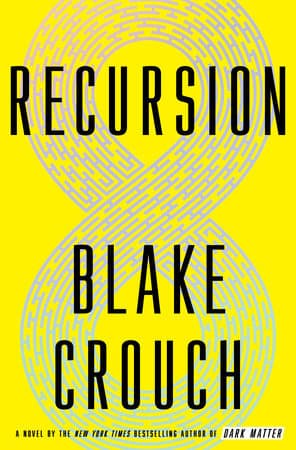
- Recursion
Blake Crouch
4.2 (109k) average on GoodreadsThrillerBlends scientific concepts with a compelling human story, though "The Unseen World" is more literary.
- The Goldfinch
Donna Tartt
3.9 (720k) average on GoodreadsLiterary FictionFeatures a protagonist's journey from a traumatic childhood into adulthood, grappling with secrets and identity.
- Never Let Me Go
Kazuo Ishiguro
3.8 (471k) average on GoodreadsLiterary FictionWhile both novels explore themes of identity and humanity through a speculative lens, Moore's novel grounds its philosophical inquiries more directly in artificial intelligence and digital immortality, whereas Ishiguro's focuses on the ethics of cloning and organ donation. Moore's narrative offers a more direct engagement with the 'creation' aspect of life.
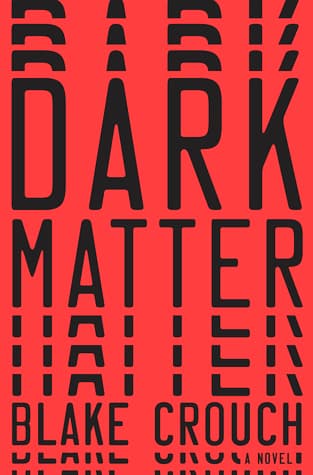
- Dark Matter
Blake Crouch
4.0 (11k) average on GoodreadsFantasyCrouch's Dark Matter is a high-stakes, fast-paced thriller driven by scientific concepts (multiverse theory). Moore's The Unseen World adopts a more contemplative and emotionally resonant approach, focusing on intimate human drama and psychological depth against a backdrop of scientific innovation, rather than the science itself as the primary source of suspense.
- The Old Man and the Sea
Ernest Hemingway
3.8 (831k) average on GoodreadsLiterary FictionA Cuban fisherman's long struggle with a giant marlin becomes a story of endurance and dignity, now retold for young adults with illustrations, phonetic guides, and writing prompts in Traditional Chinese.




Enjoyed the summary?
A summary gives you the shape of the book. The book itself has the detail, the examples and the voice.
Find The Unseen World on AmazonAs an Amazon Associate, BookBrief earns from qualifying purchases. How we're funded