
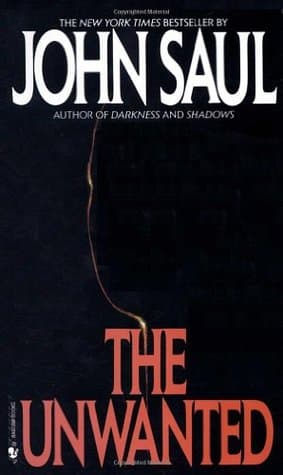
Synopsis
Covers the whole plot, including the ending.
- Difficulty
- Medium
- Pacing
- Moderate
- Mood
- Atmospheric, Suspenseful, Dark, Mysterious
- Read it if
- You enjoy supernatural thrillers with a strong sense of place, a focus on inherited powers, and a dark, mysterious atmosphere.
- Skip it if
- You prefer fast-paced action over slow-burn suspense or are sensitive to themes of isolation and psychological dread.
The Unwanted Plot Summary
Covers the whole plot, including the ending.
Arrival in False Harbor
Sixteen-year-old Cassie Winslow arrives in False Harbor, Cape Cod, to live with her estranged father, Mark, his new wife, Deborah, and their two children, Kevin and Amy. Her mother, Janice, recently died in a car accident, leaving Cassie feeling alone and grieving. The house, a grand old Victorian, feels cold, especially Deborah, who is openly hostile toward Cassie. Mark, an artist struggling with his work, seems distant, while Kevin, a few years older than Cassie, is openly resentful. Only young Amy shows any initial kindness. Cassie immediately feels like an outsider and a burden on her new family, struggling to adjust to the unfamiliar place and the tension in the house.
The First Dreams and Whispers
Soon after she arrives, Cassie begins to have vivid and unsettling dreams. These dreams are not just typical nightmares; they feel intensely real, involving shadowy figures, cold sensations, and an unseen presence. She also starts hearing faint whispers when alone in her room, especially at night. These events make her question her sanity and her emotional state after her mother's death. She tries to dismiss them as grief-induced visions, but the dreams become more frequent and detailed. The house itself, with its old, creaky floors and isolated location, seems to increase her unease, making her wonder if it holds its own secrets.
Unexplained Accidents and Hostility
As Cassie tries to settle in, a series of strange accidents begins to happen around the house. Objects fall, doors slam, and minor mishaps create a sense of dread. These incidents often happen when Deborah or Kevin are hostile toward Cassie. For instance, a heavy vase nearly falls on Deborah during an argument, and Kevin trips down the stairs after a cruel remark. While no one is seriously hurt, the incidents are unsettling. Deborah openly blames Cassie, increasing the animosity and making Cassie feel more isolated and wrongly accused, despite her confusion.
Friendship with Peter and the Town's History
Cassie finds a kind ear in Peter, a local boy her age who works at the town's small library. Peter is kind and understanding, and their friendship gives Cassie much-needed comfort. Through Peter, Cassie learns about False Harbor's strange history. She discovers old tales and local stories about a group of 'unwanted' children who were mistreated and died tragically in the town centuries ago. These children, it is said, were outcast and left alone, and their spirits are rumored to still linger, especially in the older parts of town. This history connects deeply with Cassie's own feelings of being unwanted.
The Manifestation of Powers
During an intense argument with Deborah, in which her stepmother cruelly dismisses Cassie's grief, Cassie feels a powerful surge of emotion. Suddenly, a heavy chandelier in the living room begins to sway violently, and a window shatters. Cassie is terrified but also realizes, with growing horror, that she might be responsible. This event is a turning point, as Cassie starts to understand that the strange occurrences are not just accidents but signs of her own hidden telekinetic powers. These powers seem to be triggered by strong emotions, especially anger, fear, and a sense of unfairness, and they are growing in strength and frequency.
The Old House's Secrets
Driven by her unsettling experiences and Peter's research, Cassie begins to explore the old Victorian house more closely. She finds hidden spots, discovering old diaries and faded photographs. These items hint at a previous family that lived in the house generations ago, a family that also seemed to have an 'unwanted' child, a young girl named Sarah. The diaries speak of loneliness and strange events, mirroring Cassie's own experiences. Cassie feels a strong connection to Sarah, sensing that the spirits of the 'unwanted' children, especially Sarah's, are somehow linked to her and the house, seeking recognition or perhaps revenge.
Escalating Attacks and Family Fear
The telekinetic events become more violent and harder to control. Objects fly across rooms, lights flicker, and cold drafts sweep through the house. Deborah and Kevin are increasingly terrified, convinced that Cassie is either possessed or deliberately tormenting them. Mark, however, struggles to believe it, torn between his family's fear and his daughter's distress. The family is in constant fear, unable to explain the growing phenomena. Young Amy, though scared, seems less targeted and sometimes speaks of 'invisible friends,' hinting at the spirits' presence. The house becomes a place of fear, suspicion, and supernatural activity.
Peter's Discovery and the Ritual
Peter, continuing his research in the library, discovers an old, obscure book detailing local stories and rituals. He finds a section that describes a specific ritual believed to either calm the spirits of the 'unwanted' children or banish them from False Harbor. The ritual involves a gathering at a significant local spot, an offering, and a specific chant. Peter believes this might be the key to helping Cassie and bringing peace to the house. He carefully shares his findings with Cassie, who, desperate for a solution, agrees to try the ritual, despite the dangers and the skepticism of others.
The Confrontation and the Ritual's Failure
Mark, Deborah, and Kevin, pushed to their limit by the supernatural attacks, confront Cassie, accusing her of witchcraft or mental instability. Desperate to prove her innocence and stop the terror, Cassie reveals Peter's findings and insists on performing the ritual. Against their better judgment, and out of sheer desperation, the family agrees to participate. They gather at the old abandoned lighthouse, the site mentioned in the book. As Peter begins the chant, the spirits, far from being calmed, react with violent fury. The lighthouse is plunged into chaos, with objects flying and spectral figures appearing, overwhelming them all. The ritual fails badly.
The Truth Revealed: A Legacy of Power
After the failed ritual, a traumatized Mark tells Cassie a shocking truth. He confesses that her mother, Janice, also had similar psychic abilities, which she had kept hidden, fearing judgment. Janice had suppressed her powers, but they had reappeared in Cassie, perhaps even stronger. This explains why Cassie's mother had been so protective and why she had been so quick to move them around. Cassie realizes her powers are not a curse but an inheritance, passed down through generations, connecting her directly to the 'unwanted' line of False Harbor. The spirits are not just random entities; they are drawn to her, recognizing a similar spirit.
Mastering the Powers
Understanding her abilities and her connection to the spirits, Cassie begins to accept her gift rather than fear it. The spirits of the 'unwanted' children, especially Sarah, seem to communicate with her, guiding her and helping her understand her telekinetic powers. She learns to focus her emotions, to channel her energy, and to direct her abilities with purpose. This time is challenging, as she deals with immense power, but with the subtle help of the benevolent spirits, she starts to gain control. She realizes the spirits do not want to harm her; they want to be acknowledged and perhaps find peace through her.
Reconciliation and Resolution
Cassie, now in control, arranges a new, more effective ritual, one that acknowledges and honors the 'unwanted' children. With her new strength and the support of a now-understanding Mark and a humbled Deborah, she performs a powerful act of empathy and acceptance. The spirits, finally acknowledged, find peace and leave the house and False Harbor. The supernatural disturbances stop. The Winslow family begins to heal, with Deborah and Kevin finally accepting Cassie. Cassie, no longer an outsider, finds her place in False Harbor, embracing her unique identity and the powerful legacy she carries, forever changed by her experiences.
The Unwanted Characters
Cassie Winslow
Protagonist
A grieving teenager who discovers she possesses powerful telekinetic abilities.
Cassie is a sixteen-year-old girl, initially shy, withdrawn, and burdened by grief after her mother's death. She feels like an outsider and struggles with her new family's hostility. Her vulnerability makes her relatable, but her inner strength and resilience emerge as she confronts the supernatural. She is observant and empathetic, which allows her to connect with the spirits of the 'unwanted' children. Her journey is one of self-discovery and acceptance of a terrifying, yet ultimately empowering, gift.
Relationships: Mark Winslow (Estranged father, later supportive); Deborah Winslow (Hostile stepmother, later begrudgingly accepting); Kevin Winslow (Resentful stepbrother, later fearful and accepting); Amy Winslow (Younger stepsister, initially warm, later scared); Peter (Supportive friend and confidante); Janice Winslow (Deceased mother, whose hidden powers are revealed to Cassie)
Mark Winslow
Supporting
Cassie's estranged father, a struggling artist torn between his daughters and his new family.
Mark is an artist who, while not malicious, is largely absent and emotionally distant, struggling with his career and the dynamics of his blended family. He feels guilt over his past neglect of Cassie and is initially skeptical of her claims, trying to rationalize the strange events. He wants to believe his daughter but is also influenced by Deborah's accusations. His revelation about Janice's powers is a pivotal moment, showing his underlying love and concern for Cassie, despite his flaws.
Relationships: Cassie Winslow (Daughter, strained relationship that improves); Deborah Winslow (Wife, relationship strained by family tensions); Janice Winslow (Deceased ex-wife, holds secrets about her powers)
Deborah Winslow
Antagonist
Cassie's hostile and resentful stepmother, who sees Cassie as an unwelcome intruder.
Deborah is the primary human antagonist, characterized by her deep-seated resentment and jealousy towards Cassie. She views Cassie as an intruder who threatens her family's stability and Mark's attention. Her hostility is palpable, and she is quick to blame Cassie for everything, including the supernatural occurrences. She is initially dismissive of Cassie's grief and struggles. Her fear of the unknown turns into outright terror and accusations, but ultimately, she is forced to confront her own prejudices when the supernatural becomes undeniable.
Relationships: Cassie Winslow (Stepmother, highly adversarial relationship); Mark Winslow (Husband, her influence often dictates family dynamics); Kevin Winslow (Son, shares her resentment towards Cassie)
Peter
Supporting
A kind and intelligent local boy who befriends Cassie and helps her research False Harbor's history.
Peter is Cassie's first and only friend in False Harbor. He is intelligent, empathetic, and curious, working part-time at the local library. His knowledge of local history and folklore proves invaluable to Cassie, as he helps her uncover the truth about the 'unwanted' children and possible rituals. He believes Cassie when others doubt her, offering unwavering support and practical assistance. Peter represents understanding and acceptance in a town full of skepticism and fear, embodying a positive force against the darkness.
Relationships: Cassie Winslow (Close friend and confidante)
Kevin Winslow
Supporting
Cassie's older stepbrother, who is openly hostile and resentful towards her.
Kevin is initially portrayed as a typical resentful stepchild, mirroring his mother Deborah's hostility towards Cassie. He views Cassie as an unwanted addition to the family, stealing attention and disrupting their lives. He often makes cruel remarks and contributes to Cassie's isolation. As the supernatural events escalate, his animosity turns into fear and terror, making him a victim of Cassie's uncontrolled powers. His character highlights the family's initial resistance to Cassie and the supernatural, before being forced into a fearful submission.
Relationships: Cassie Winslow (Stepbrother, highly adversarial relationship); Deborah Winslow (Mother, shares her resentment)
Amy Winslow
Supporting
Cassie's young stepsister, who is initially the only one to show Cassie kindness.
Amy is the youngest of the Winslow children and initially the only member of Cassie's new family to show her any warmth or kindness. Her innocence and lack of prejudice stand in stark contrast to Deborah and Kevin's hostility. She is too young to fully understand the complexities of the family dynamics or the supernatural events, but she sometimes speaks of 'invisible friends,' hinting at her own subconscious awareness of the spirits. She represents vulnerability and the potential for a new, healthier family bond.
Relationships: Cassie Winslow (Younger stepsister, warm relationship); Deborah Winslow (Mother); Mark Winslow (Father)
Sarah
Mentioned
The spirit of an 'unwanted' child from generations past, connected to Cassie and the house.
Sarah is the spectral presence of a young girl who lived in the Winslow house generations ago and was also an 'unwanted' child, likely possessing similar abilities to Cassie. She is one of the primary spirits of the 'unwanted' children haunting False Harbor. Her story is uncovered through old diaries and local legends, revealing a parallel to Cassie's own experience of isolation and mistreatment. Sarah's spirit is not inherently malevolent but seeks recognition and peace, acting as a guide and kindred spirit to Cassie as she learns to control her powers.
Relationships: Cassie Winslow (Spiritual connection, kindred spirit)
The Unwanted Themes
The Burden of Being 'Unwanted'
This theme explores the deep emotional impact of feeling rejected. Cassie, grieving and placed into a hostile new family, shows this feeling. The historical 'unwanted' children of False Harbor, especially Sarah, emphasize this theme, showing how such feelings can become restless spirits and powerful, uncontrolled abilities. The story suggests that neglect and cruelty create deep wounds that can last through time, leading to a desire for recognition and justice, as seen in the spirits' actions and Cassie's struggles with her family.
“She felt like a ghost in her own life, unseen and unheard by the very people who were supposed to be her family.”
The Power of Grief and Emotion
Cassie's telekinetic abilities are tied to her intense emotional state, especially her grief, anger, and fear. Her powers first appear during moments of extreme emotional distress, like her arguments with Deborah or her feelings of isolation. This theme highlights how powerful, unaddressed emotions can have real, even destructive, results. The book suggests that grief, when ignored, can become a volatile force, and that understanding these emotions is important for control and healing, for both Cassie and the lingering spirits.
“Every surge of anger, every tear of frustration, felt like a current running through her veins, a power she couldn't contain.”
Acceptance vs. Rejection
The novel examines the difference between acceptance and rejection, both personally and socially. Cassie's initial rejection by her stepfamily increases her isolation and the uncontrolled appearance of her powers. In contrast, Peter's acceptance and understanding give her crucial support. The 'unwanted' children represent historical social rejection, leading to their tragic fates and restless spirits. The story's resolution depends on Cassie's family, and by extension the town, accepting her and the spirits. This shows that acceptance is key to finding peace and belonging.
“It was not just the house that was haunted; it was the very idea of being an outsider, a ghost in their midst.”
The Legacy of the Past
The history of False Harbor, especially the story of the 'unwanted' children, greatly affects the present. Cassie discovers her own family's connection to this past through her mother's hidden powers and the house's history. The past is not just background; it is an active force, with the spirits of the 'unwanted' children directly influencing current events. This theme emphasizes how unresolved historical wrongs and hidden family secrets can affect generations, needing attention and resolution in the present. It suggests that understanding and honoring the past is important for moving forward.
“The past wasn't just stories in old books; it was a living, breathing presence in False Harbor, waiting to be acknowledged.”
Plot Devices & Literary Techniques
Telekinesis
The ability to move or manipulate objects with the mind, a central element of Cassie's powers.
Telekinesis serves as the primary manifestation of Cassie's supernatural abilities. Initially uncontrolled and fueled by her emotional distress, it causes the strange accidents and escalating terror within the Winslow household. It's a direct link between Cassie's internal state and the external world, making her emotional turmoil visible and dangerous. As the story progresses, telekinesis becomes a tool she learns to master, representing her growing control over her emotions and her destiny, and ultimately, a means to bring peace to the spirits.
Haunted House Trope
The old Victorian house acts as a catalyst and focal point for the supernatural activity.
The Winslow family's Victorian house is more than just a setting; it's a character in itself, embodying the haunted house trope. Its age, isolated location, and hidden secrets (like Sarah's diaries) provide a tangible connection to the past and the 'unwanted' spirits. The house amplifies Cassie's feelings of isolation and becomes the primary stage for the escalating supernatural events. It serves as a physical manifestation of the unresolved historical and personal traumas, making the psychological horror more immediate and impactful.
Local Legends and Folklore
The town's dark history and tales of 'unwanted' children provide context and a pathway to understanding.
The legends of False Harbor, particularly those concerning the 'unwanted' children and their tragic fates, are crucial to the plot. These stories, researched by Peter, provide the historical context for the supernatural occurrences and help Cassie understand her connection to the spirits. The folklore offers not only an explanation for the haunting but also a potential solution (the ritual). It grounds the fantastical elements in a sense of place and historical continuity, making the supernatural feel more believable within the narrative world.
The Estranged Father
Mark Winslow's distant relationship with Cassie creates initial conflict and heightens her isolation.
Mark's estranged relationship with Cassie is a significant plot device that immediately establishes Cassie's vulnerability and isolation. His initial emotional distance and skepticism contribute to her feeling 'unwanted' and exacerbate her emotional turmoil, which in turn fuels her uncontrolled powers. This dynamic creates a barrier that Cassie must overcome, both in her personal life and in her struggle with the supernatural. His eventual confession about Janice's powers serves as a crucial turning point, revealing a hidden truth and shifting the family dynamic towards understanding and support.
The Unwanted Quotes
“The house was old, very old, and it had secrets. Secrets that whispered in the shadows, waiting to be found.”
“Sometimes, the past isn't just a memory. Sometimes, it's a living thing, waiting to claim you.”
“Fear was a smell, a taste, a cold hand reaching out from the dark.”
“They said the woods were haunted, but the real ghosts were in the house.”
“In every old house, there's a whisper of those who lived there before.”
“Children see things adults choose to ignore.”
“The silence wasn't empty; it was full of unspoken threats.”
“Some evil isn't born; it's made, slowly, over generations.”
“The past was a labyrinth, and they were trapped inside it.”
“It wasn't just a house; it was a living entity, feeding on their fear.”
“The line between sanity and madness was thinner than she'd ever imagined.”
“What you don't know can hurt you, but what you refuse to believe can destroy you.”
“They had moved into a dream, and it was quickly turning into a nightmare.”
“The eyes in the darkness weren't just watching; they were waiting.”
Quiz
10 questions on the plot and the characters. Each answer comes with a short explanation.
Question 1
What is the name of the town on Cape Cod where Cassie goes to live with her father?
- True Harbor
- False Harbor
- Newport
- Provincetown
Show answer
B. False Harbor The book explicitly states that Cassie moves to 'tiny False Harbor on Cape Cod'.
Question 2
How old is Cassie Winslow at the beginning of the story?
- Fourteen
- Fifteen
- Sixteen
- Seventeen
Show answer
C. Sixteen The provided synopsis states, 'Cassie Winslow is sixteen.'
Question 3
What significant event precedes Cassie's move to False Harbor?
- Her parents' divorce
- Her mother's death in an accident
- Her father's new job
- A severe illness
Show answer
B. Her mother's death in an accident The synopsis clearly states, 'She has just lost her mother in a terrible accident.'
Question 4
What is the initial manifestation of Cassie's 'terrifying powers'?
- Visions during the day
- Strange, unsettling dreams at night
- Sudden urges to harm others
- Objects moving on their own
Show answer
B. Strange, unsettling dreams at night The text mentions, 'For Cassie, the strange, unsettling dreams that come to her suddenly in the dead of night are merely the beginning.'
Question 5
How well does Cassie know her father before moving in with him?
- They were very close
- She barely knows him
- They had a strained but regular relationship
- She had never met him
Show answer
B. She barely knows him The synopsis states she is going to live 'with the father she barely knows'.
Question 6
What is Cassie's emotional state when she arrives in False Harbor?
- Excited and optimistic
- Angry and rebellious
- Lonely and frightened
- Indifferent and bored
Show answer
C. Lonely and frightened The text describes her as 'lonely and frightened' after her mother's death.
Question 7
What genre does 'The Unwanted' primarily fall under, according to the description?
- Romance, Drama, Comedy
- Thriller, Fantasy, Mystery
- Science Fiction, Historical Fiction, Biography
- Young Adult, Contemporary, Literary Fiction
Show answer
B. Thriller, Fantasy, Mystery The prompt explicitly states the genres as 'Thriller, Fantasy, Mystery'.
Question 8
What is the ultimate consequence of Cassie's developing powers for False Harbor?
- The town experiences a new era of prosperity.
- The town returns to its peaceful, quiet ways.
- Nothing will ever be the same in the village.
- The townspeople embrace her powers with enthusiasm.
Show answer
C. Nothing will ever be the same in the village. The final sentence of the synopsis warns, 'And in the village of False Harbor, nothing will ever be the same.'
Question 9
The phrase 'terrifying powers that are her gift' suggests what about the nature of Cassie's abilities?
- They are inherently benevolent and helpful.
- They are a curse that will destroy her.
- They are powerful and innate, but potentially dangerous or frightening.
- They are only illusions caused by her grief.
Show answer
C. They are powerful and innate, but potentially dangerous or frightening. The juxtaposition of 'terrifying' with 'gift' implies that while the powers are inherent ('her gift'), they are also frightening or dangerous, indicating a complex and potentially destructive nature.
Question 10
The description implies Cassie's powers are connected to her arrival in False Harbor and her personal circumstances. What theme does this best suggest?
- The power of community over the individual.
- The transformative and potentially disruptive nature of grief and change.
- The mundane struggles of adapting to a new environment.
- The importance of family reconciliation.
Show answer
B. The transformative and potentially disruptive nature of grief and change. Cassie's powers emerge after her mother's death and her move, suggesting that these profound personal changes and her grief are catalysts for her abilities, transforming not only her but also her new home.
The Unwanted FAQ
What is the central premise of 'The Unwanted'?
The Unwanted follows sixteen-year-old Cassie Winslow as she moves to False Harbor on Cape Cod to live with her estranged father and his new family after her mother's death. She soon discovers she possesses terrifying psychic powers, which begin to manifest and disrupt the seemingly quiet village.
Who is Cassie Winslow, and what significant event triggers the story?
Cassie Winslow is the protagonist, a lonely and frightened sixteen-year-old girl. The inciting event is the tragic death of her mother in an accident, which forces her to relocate to False Harbor and live with her father, whom she barely knows, and his new wife and stepchildren.
Where does the story take place, and how does the setting influence the atmosphere?
The story is set in the small, isolated village of False Harbor on Cape Cod. This coastal setting, with its inherent sense of old secrets and close-knit community, creates an eerie, claustrophobic atmosphere that amplifies Cassie's feelings of alienation and the growing supernatural dread.
What kind of 'terrifying powers' does Cassie discover she possesses?
Cassie discovers she has potent psychic abilities, including precognition through vivid dreams and possibly psychokinesis or the ability to influence events and people around her. These powers are initially uncontrollable and manifest as unsettling and destructive phenomena.
How does Cassie's relationship with her father evolve throughout the narrative?
Cassie's relationship with her father begins with significant estrangement and discomfort. As her powers manifest and the town reacts, their bond is tested, forcing her father to confront his past and the mysterious circumstances surrounding Cassie's mother, ultimately leading to a complex and strained reconciliation.
Are there any clues early in the book that hint at the origin of Cassie's powers?
Yes, subtle hints often appear in descriptions of Cassie's mother or unexplained family history, suggesting a lineage of psychic ability. The unusual circumstances of her mother's death and her father's distant behavior also subtly foreshadow a hidden past connected to these gifts.
What role do the 'strange, unsettling dreams' play beyond mere premonitions?
Cassie's dreams are not just premonitions; they are a direct conduit to her burgeoning powers and often serve as the initial, uncontrolled manifestations. They also connect her to the town's history and its darker secrets, acting as a bridge between her subconscious and the supernatural events unfolding.
Is there a specific historical or local legend in False Harbor that ties into Cassie's abilities?
The narrative often implies or directly reveals a local legend or a dark past involving similar 'gifts' or unusual occurrences within False Harbor. This history is usually tied to a specific family line or an event that explains why the town is so susceptible to or wary of Cassie's powers.
How does Cassie's grief over her mother's death influence the manifestation and control of her powers?
Cassie's intense grief and emotional turmoil act as a catalyst, making her powers more volatile and difficult to control. Her sorrow and anger are often directly linked to the destructive outbursts, highlighting the psychological connection between her emotional state and her abilities.
Discuss the psychological impact of being an 'unwanted' individual on Cassie's self-perception.
Being 'unwanted' deeply affects Cassie's self-perception, fostering feelings of isolation, inadequacy, and fear. This feeling is exacerbated by her father's initial distance and the town's reaction to her powers, pushing her further into a sense of being an outsider and a danger.
How do the townspeople's reactions to Cassie's powers reflect their own psychological biases and fears?
The townspeople's reactions, ranging from fear and suspicion to outright hostility, reflect their deep-seated biases against anything perceived as 'other' or supernatural. Their fear is often rooted in past traumas or superstitions, projecting their anxieties onto Cassie as a scapegoat for unexplained misfortunes.
What psychological journey does Cassie undertake from being 'frightened' to understanding her 'gift'?
Cassie's journey is one of profound psychological transformation, moving from initial terror and confusion to a gradual, albeit reluctant, acceptance and understanding of her powers. This involves confronting her fears, processing her grief, and ultimately learning to assert some control over her abilities and her destiny.
Is Cassie's 'gift' ultimately a blessing or a curse, and why?
The interpretation of Cassie's 'gift' is ambiguous; it can be seen as both a blessing and a curse. It's a curse due to the pain, fear, and destruction it brings, but also a potential blessing as it grants her power, self-discovery, and the ability to confront injustices or protect herself, depending on her control and choices.
How does the book explore themes of family secrets and the legacy of the past?
The book deeply explores family secrets by revealing the hidden truths about Cassie's mother, her father's past, and the mysterious origins of her powers. It demonstrates how the legacy of past choices and suppressed information profoundly impacts the present generation, shaping Cassie's identity and fate.
What is the author's commentary on societal fear of the unknown through the reactions of False Harbor residents?
John Saul uses the residents of False Harbor to comment on society's inherent fear of the unknown and the 'other.' Their immediate suspicion and hostility towards Cassie's unexplained abilities highlight how communities can quickly turn against individuals who deviate from the norm, often leading to prejudice and irrational behavior.
Does the ending offer a definitive resolution for Cassie's powers, or does it leave room for future development?
The ending typically offers a partial resolution, with Cassie gaining some measure of control or understanding of her powers, but often leaves room for future development. It suggests that her journey of mastering her 'gift' is ongoing, implying that her abilities will continue to evolve and challenge her.
How does the novel balance the thriller, fantasy, and mystery elements?
The novel expertly balances these elements: the thriller aspect comes from the escalating tension and danger Cassie faces, the fantasy from her psychic powers, and the mystery from uncovering the truth about her family, her mother's death, and the dark history of False Harbor. These threads are interwoven to create a cohesive and suspenseful narrative.
What is the significance of the title 'The Unwanted' in relation to Cassie's character arc?
The title 'The Unwanted' directly reflects Cassie's initial state of being, feeling abandoned and unwelcomed by her father and his new family, and later by the fearful town. Her arc involves confronting this feeling, understanding the true nature of why she might have been 'unwanted' (due to her powers), and ultimately finding a place or purpose despite it.
About the author
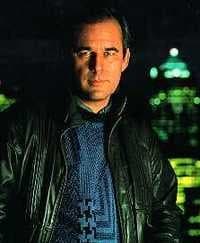
John Saul is an American author known for his contributions to the horror and suspense genres. His notable works include "The God Project," which explores themes of morality and science, "Nathaniel," a tale of supernatural intrigue, and "The Unwanted," which delves into psychological horror. Saul's fiction often combines elements of the uncanny with deep character exploration.
Similar books
- Carrie
Stephen King
4.0 (520k) average on GoodreadsThrillerFeatures a young woman with developing psychic powers facing hostility and supernatural events.
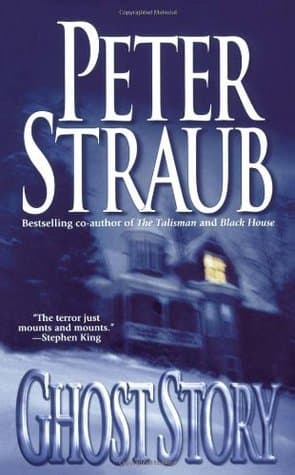
- Ghost Story
Peter Straub
4.3 (83k) average on GoodreadsFantasySmall town with deep, dark secrets and supernatural occurrences affecting its inhabitants.
- The Haunting of Hill House
Shirley Jackson
3.8 (162k) average on GoodreadsThrillerFocuses on psychological horror and a house with a powerful, malevolent presence.
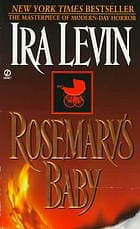
- Rosemary's Baby
Ira Levin
4.0 (112k) average on GoodreadsThrillerLevin's novel excels in psychological depth and a slow-burn, internal paranoia that 'The Unwanted' only superficially explores. Levin masterfully makes the horror deeply personal and insidious, whereas Saul's threats often remain more external and conventional.
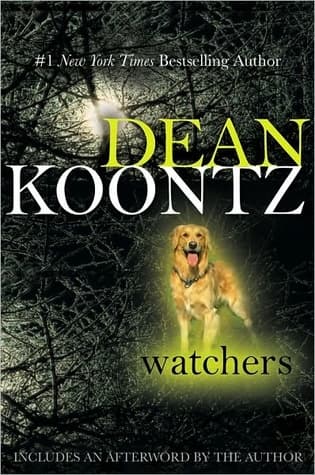
- Watchers
Dean Koontz
4.2 (153k) average on GoodreadsThrillerKoontz blends supernatural elements with more complex character development and philosophical undertones. 'The Unwanted' lacks the intricate plotting and emotional arcs found in 'Watchers,' which elevates its genre elements with greater depth and sophistication.
- Angels & Demons
Dan Brown
3.9 (2.7M) average on GoodreadsThrillerA Harvard symbologist races through Rome's ancient sites, deciphering cryptic clues to unmask the Illuminati and stop a vengeful plot to destroy the Vatican with a stolen antimatter weapon.



Enjoyed the summary?
A summary gives you the shape of the book. The book itself has the detail, the examples and the voice.
Find The Unwanted on AmazonAs an Amazon Associate, BookBrief earns from qualifying purchases. How we're funded