

Synopsis
Covers the whole plot, including the ending.
- Difficulty
- Medium
- Pacing
- Variable
- Mood
- Mysterious, Suspenseful, Historical, Intricate
- Read it if
- You enjoy classic Sherlock Holmes mysteries with a blend of historical context, intricate plotting, and a significant flashback narrative.
- Skip it if
- You dislike stories with long, embedded flashbacks that interrupt the main mystery, or prefer a more straightforward detective narrative.
The Valley of Fear Plot Summary
Covers the whole plot, including the ending.
The Cipher and the Warning
The novel begins with Sherlock Holmes receiving a coded message from Porlock, a trusted informant in Professor Moriarty's criminal network. Holmes and Dr. Watson decode the message, which warns that 'Douglas of Birlstone' is in danger. Holmes recognizes the seriousness of the situation, given Porlock's directness and the link to Moriarty's large organization. Before Holmes can act, Inspector MacDonald from Scotland Yard arrives with news of a murder at Birlstone House, the estate mentioned in the cipher. This coincidence confirms Holmes's fears and prompts their immediate travel to the crime scene.
The Birlstone Tragedy
Holmes, Watson, and Inspector MacDonald arrive at Birlstone House, a moated country manor, where they find a puzzling crime scene. John Douglas, the owner, is dead in his study from a shotgun wound to the head. The weapon, a sawed-off shotgun, lies beside him. The room is locked from the inside, and Douglas's wedding ring is missing, though other valuables are untouched. Mrs. Douglas, his young American wife, and Cecil Barker, a close friend and guest, claim they were woken by the shot. Local police, led by Sergeant Fuller, have secured the scene, but the locked room mystery immediately interests Holmes, suggesting a more complex situation than a simple murder or suicide.
Unraveling the Locked Room
Examining the study, Holmes quickly finds several inconsistencies that challenge initial conclusions of suicide or a simple murder. The shotgun wound is close-range, but the weapon is unusually short. He notes the missing wedding ring and a strange bloodstain on the window sill. Most importantly, Holmes observes that the body's position and wound do not entirely match a self-inflicted shot, and the locked room, while seemingly secure, has subtle clues suggesting someone else was there. He also finds American playing cards and a small, American-made revolver in a hidden compartment, hinting at a foreign link to the deceased. These details lead Holmes to suspect a carefully planned deception.
The Identity of the Victim
Through his observations, especially the missing wedding ring and the body's condition, Holmes concludes that the deceased is not John Douglas. Instead, it is another man, likely a visitor, who was murdered and disguised to look like Douglas. The real John Douglas, Holmes believes, faked his own death. This revelation shocks MacDonald and Watson. Holmes explains that the body was too disfigured for positive identification by anyone unfamiliar with Douglas's subtle features. The reason for this elaborate deception remains unclear, but it shifts the investigation from a simple murder to a complex scheme involving hidden identity and a secret past.
Douglas's Confession and Hidden Past
After Holmes confronts Mrs. Douglas and Cecil Barker with his theory, the 'real' John Douglas appears from his hiding place in Birlstone House. He admits to staging his death, revealing that the deceased was his enemy, Ted Baldwin, a man from his past in America. Douglas explains he recognized Baldwin lurking around the estate and, fearing for his life and his wife's safety, confronted him. During the struggle, Baldwin was killed. Douglas, with help from Barker and his wife, then set up the scene to make it look like he had been murdered, hoping to escape his past. He recounts a history of violence and a secret organization he once belonged to in America.
The Vermissa Valley: A Flashback to America
The story then shifts to a long flashback about Douglas's life in America, specifically the Vermissa Valley (the 'Valley of Fear'). Here, he was John McMurdo, an undercover Pinkerton detective sent to infiltrate the 'Scowrers' (a fictional version of the Molly Maguires). The Scowrers, led by the ruthless Boss McGinty and the sinister Bodymaster Ettie Shafter, terrorized the mining community, extorting, assaulting, and murdering those who defied them. McMurdo, a seemingly rough man with a mysterious past, quickly gains their trust through his apparent ruthlessness and willingness to join their violence, all while secretly gathering evidence. He falls in love with Ettie Shafter's daughter, Ettie, further complicating his mission.
Infiltrating the Scowrers
McMurdo's infiltration of the Scowrers is dangerous. He must participate in violent acts, including beatings and an assassination attempt on an official, to maintain his cover. He sees firsthand the Scowrers' terrifying control over the community, operating freely due to fear and corruption. His internal conflict grows as he becomes more embedded, struggling with the moral compromises needed to keep his disguise. He develops a complex relationship with Ettie, torn between duty and growing affection. The Scowrers' rituals, secret handshakes, and brutal enforcement of their 'laws' are detailed, showing a lawless land ruled by fear, as McMurdo secretly collects evidence.
The Trial and Its Aftermath
McMurdo's true identity as a Pinkerton agent is revealed during the Scowrers' trial. His testimony and collected evidence lead to the conviction and execution of many gang leaders, including Boss McGinty. The Vermissa Valley is freed from their control. However, McMurdo, now a hero, is also a target. Surviving Scowrers, especially Baldwin, vow revenge. Realizing his life is in constant danger in America, McMurdo, with his Pinkerton superiors' help, fakes his death and escapes to England, becoming John Douglas and hoping to find peace with his new wife, Ettie, the former Ettie Shafter. This explains his elaborate plan at Birlstone.
The Verdict and Holmes's Warning
Back in the present, Douglas's confession poses a legal problem for Inspector MacDonald. While Douglas acted in self-defense against Baldwin, a clear threat from his past, he also obstructed justice by staging his death. Douglas is acquitted of murder but faces potential charges for his deception. Holmes, however, remains concerned. He knows the criminal network Douglas escaped from is vast and relentless. He warns Douglas that despite the legal outcome, the 'Valley of Fear' — the vengeful Scowrers — will never truly let him go. Holmes believes Douglas's life will always be in danger as long as his former enemies and larger evil forces like Professor Moriarty are active.
The Shadow of Moriarty
Despite Holmes's warnings, John Douglas, now free, tries to start a new life. However, his past catches up to him. Months later, Holmes learns that Douglas's ship, sailing to South Africa, was lost at sea with no survivors. While officially an accident, Holmes, knowing Professor Moriarty's widespread influence, is certain Douglas's death was not accidental. He believes Moriarty, having learned of Douglas's past and his connection to the Vermissa Valley, orchestrated his death. Holmes recognizes that the threat to Douglas was not just the surviving Scowrers, but the larger criminal web controlled by his enemy, proving that no one truly escapes the 'Valley of Fear' when such powerful forces are against them.
Principal Figures
Sherlock Holmes
Protagonist
The brilliant consulting detective with unparalleled deductive reasoning.
Sherlock Holmes is presented as a master of observation and deduction, whose intellect allows him to unravel the most complex mysteries. He is driven by a profound sense of justice and an insatiable curiosity for the intricacies of human nature and crime. Holmes possesses an almost scientific detachment, yet he is deeply committed to his friends and to bringing criminals to justice. His methods involve meticulous examination of details, a vast knowledge base, and a unique ability to connect seemingly disparate facts. In 'The Valley of Fear', he demonstrates his characteristic ability to see beyond the obvious and expose the truth behind elaborate deceptions.
Relationships: Dr. John Watson (Best friend, chronicler, and intellectual foil.); Professor Moriarty (Arch-nemesis, the 'Napoleon of Crime'.); Inspector MacDonald (Law enforcement colleague, respects Holmes's abilities.)
Dr. John Watson
Supporting
Holmes's loyal friend, chronicler, and occasional assistant.
Dr. Watson serves as the narrator and Holmes's loyal companion. He is a pragmatic and brave man, often providing a human perspective to Holmes's more cerebral approach. While not possessing Holmes's deductive genius, Watson is intelligent, a skilled doctor, and a keen observer in his own right. He often voices the confusion of the average person, allowing Holmes to explain his reasoning and further illuminate the case for the reader. His unwavering friendship and admiration for Holmes are central to their dynamic. In this novel, he accompanies Holmes to Birlstone and records the details of both the immediate crime and Douglas's past.
Relationships: Sherlock Holmes (Best friend and intellectual partner.); Mrs. Hudson (Landlady at 221B Baker Street.)
John Douglas / John McMurdo
Protagonist
A man haunted by a violent past, seeking peace in England.
John Douglas is a complex character whose past defines his present. Initially appearing as a respectable country gentleman, he is revealed to be John McMurdo, a former Pinkerton detective who infiltrated the brutal 'Scowrers' in America. He is a man of courage and resourcefulness, capable of great deception to protect himself and his loved ones. Douglas is driven by a desire to escape the vengeance of his former enemies and build a peaceful life with his wife, Ettie. His experiences in the Vermissa Valley have left him deeply scarred, making him wary and quick to resort to extreme measures when threatened. He embodies the theme of inescapable pasts.
Relationships: Ettie Douglas (Ettie Shafter) (Wife, loyal and complicit in his deceptions.); Cecil Barker (Close friend, helps him stage his death.); Ted Baldwin (Bitter enemy from his past, victim of his self-defense.); Boss McGinty (Leader of the Scowrers, whom he helped bring down.)
Ettie Douglas (Ettie Shafter)
Supporting
John Douglas's devoted wife, complicit in his schemes.
Ettie Douglas, originally Ettie Shafter from the Vermissa Valley, is John Douglas's loyal and loving wife. She is a strong-willed woman who has endured a difficult past, being the daughter of the ruthless Bodymaster Ettie Shafter and falling in love with McMurdo while he was undercover. Her devotion to Douglas is absolute, leading her to actively participate in his elaborate plan to fake his death and conceal his true identity. She is perceptive and protective, showing great courage in the face of danger. Her love for Douglas is a central motivation for her actions, highlighting the sacrifices made for love and survival.
Relationships: John Douglas (Husband, whom she deeply loves and protects.); Cecil Barker (Acquaintance, fellow conspirator in the deception.)
Cecil Barker
Supporting
A close friend of John Douglas, involved in the deception.
Cecil Barker is a friend and frequent guest at Birlstone House. He is depicted as a man of good standing in society, yet he is deeply entangled in John Douglas's secrets. He aids Douglas and Ettie in staging the fake death, demonstrating a strong sense of loyalty to his friend, even if it means breaking the law. Barker's involvement highlights the theme of friendship and the lengths people will go to protect those they care about. He is initially suspicious in Holmes's eyes due to his close relationship with the 'deceased' and his strange behavior, but his true role is eventually revealed as an accomplice motivated by loyalty.
Relationships: John Douglas (Close friend, helps him stage his death.); Ettie Douglas (Acquaintance, fellow conspirator in the deception.)
Inspector MacDonald
Supporting
A sharp but conventional Scotland Yard detective.
Inspector Alec MacDonald is a capable and intelligent detective from Scotland Yard, described as having a 'Scotch shrewdness.' He respects Holmes's abilities but initially struggles to grasp the detective's unconventional methods and leaps of logic. MacDonald represents the more traditional approach to policing, relying on established procedures and evidence. He is thorough and earnest in his investigation of the Birlstone murder, but he eventually defers to Holmes's superior insights. His role is to provide a foil for Holmes's genius and to represent the official arm of the law that Holmes often collaborates with, and occasionally outmaneuvers.
Relationships: Sherlock Holmes (Professional colleague, respects Holmes's abilities.); Dr. John Watson (Acquaintance, works alongside him during the investigation.)
Professor Moriarty
Antagonist
The shadowy 'Napoleon of Crime' and Holmes's arch-nemesis.
Professor Moriarty is the overarching antagonist, though he only appears indirectly. He is depicted as a criminal mastermind who controls a vast and sophisticated network of illicit activities across Europe. Holmes considers him his intellectual equal and the most dangerous man in London, a 'spider at the centre of his web.' Moriarty's influence extends far beyond mere thievery, encompassing murder and extortion. In 'The Valley of Fear', his connection to Porlock and the eventual fate of John Douglas solidify his role as a pervasive and inescapable force of evil, symbolizing the ultimate threat to order and justice that Holmes constantly battles.
Relationships: Sherlock Holmes (Arch-nemesis, intellectual rival.); Porlock (Informant within Moriarty's network.)
Ted Baldwin
Mentioned
A vengeful former member of the Scowrers.
Ted Baldwin is a key figure from John Douglas's past in America and the actual victim of the Birlstone 'murder.' He was a ruthless member of the Scowrers, known for his violent temper and unwavering loyalty to the criminal organization. Baldwin harbored a deep grudge against McMurdo (Douglas) for his role in bringing down the Scowrers and swore vengeance. His appearance at Birlstone House signals the inescapable nature of Douglas's past and triggers the events of the present-day mystery. He represents the direct threat from Douglas's previous life.
Relationships: John Douglas (Bitter enemy from his past, whom he sought to kill.)
Boss McGinty
Mentioned
The tyrannical leader of the Scowrers in America.
Boss McGinty is the formidable and cruel leader of the Scowrers in the Vermissa Valley flashback. He rules with an iron fist, instigating violence, extortion, and murder to maintain his power over the mining community. McGinty embodies the corrupt and brutal nature of the criminal organization. He is powerful, feared, and seemingly untouchable, representing the oppressive force that John McMurdo (Douglas) is sent to dismantle. His downfall, largely due to McMurdo's efforts, marks a temporary victory for justice in the valley.
Relationships: John Douglas (as McMurdo) (Unwittingly accepts him into the Scowrers, later exposed by him.)
Porlock
Mentioned
An informant within Moriarty's network.
Porlock is a minor character but crucial to the plot's initiation. He is a member of Professor Moriarty's vast criminal organization who secretly acts as an informant for Sherlock Holmes. He provides the initial coded message warning Holmes of the danger to John Douglas. Porlock is depicted as a cautious and fearful man, constantly aware of the risks of betraying Moriarty, which underscores the professor's pervasive power. His role highlights Holmes's extensive network of contacts and his ability to glean information from unexpected sources within the criminal underworld.
Relationships: Sherlock Holmes (Secret informant.); Professor Moriarty (Leader of the organization he is part of.)
Themes & Insights
The Inescapable Past
This theme is central to the story, especially through John Douglas's character. Despite his efforts to escape his violent past as John McMurdo in the Vermissa Valley, taking a new name and moving to England, his old enemies pursue him. Ted Baldwin's arrival at Birlstone House forces Douglas to confront the life he tried to leave, leading to the murder and cover-up. Even after seemingly escaping justice, Douglas's death at sea, orchestrated by Moriarty, shows that some pasts, especially those involving powerful criminal groups, are impossible to truly escape. The 'Valley of Fear' symbolizes this persistent shadow.
“'The past is like a dead man's hand upon you, and there is no shaking it off.'”
Justice vs. Law
The novel explores the tension between formal legal justice and a more personal, perhaps morally justified, form of justice. John Douglas, as McMurdo, works undercover to bring down the Scowrers, a group that operates outside the law and terrorizes a community. His actions, while sometimes technically illegal, ultimately serve a greater good. In the present, Douglas kills Ted Baldwin in self-defense, a morally defensible act given Baldwin's intent to harm him. However, his subsequent deception to stage his own death conflicts with the law. Holmes and MacDonald struggle with applying the law to a man whose past actions, both heroic and criminal, are tied to a desperate fight for survival. This highlights the complexities of morality when legal structures sometimes fail to address deeper injustices.
“'The law is not always justice. When the law fails, men must make their own justice.'”
The Pervasiveness of Evil
This theme is shown through the two main criminal organizations: the Scowrers and Professor Moriarty's network. The Scowrers demonstrate how local evil can terrorize a community, operating freely through fear and corruption. Their reach, even across continents and years, shows how deeply rooted such malice can become. Moriarty, however, represents a more insidious and widespread evil, a 'Napoleon of Crime' whose influence is global and systematic. His ability to orchestrate Douglas's death years later, without appearing directly, illustrates the pervasive and inescapable nature of truly organized crime. Holmes's struggle against Moriarty is a constant battle against a force that threatens society, showing that even when one part of the hydra is cut off, others remain or new ones emerge.
“'It is not the individual criminal, Watson, but the organization, the system, that is the real danger. And the greatest system of all is that which has its roots in the very heart of London, and its branches reaching to the ends of the earth.'”
Identity and Deception
The novel relies heavily on the theme of changing identities and elaborate deceptions. John Douglas's entire life in England is a carefully built lie, a new identity (John Douglas) created to escape his former self (John McMurdo) and its dangers. The central Birlstone murder mystery depends on the deception that the deceased is Douglas, when it is actually Ted Baldwin. This identity switch is crucial to Douglas's plan to disappear. Holmes's brilliance lies in seeing through these layers of deception to uncover the true identities and motives. The theme shows how people can reinvent themselves, but also how fragile such assumed identities are when confronted by a past that refuses to stay buried.
“'You have been a man of many names, Mr. Douglas. But a man cannot change his skin as easily as his coat.'”
Plot Devices & Literary Techniques
The Locked Room Mystery
A classic mystery setup where a murder occurs in an apparently sealed room.
The Birlstone murder initially presents as a locked room mystery, with John Douglas found dead in his study, the door locked from the inside. This device immediately creates an intriguing puzzle, challenging the initial assumptions of suicide or a straightforward murder. Holmes meticulously investigates the room for any hidden entry points or mechanisms of deception, ultimately revealing that the room was locked from the outside after the fact, and the victim was not who he appeared to be. The locked room serves as a powerful initial hook, drawing the reader into the complex web of deceit and misdirection.
The Cipher
A coded message that initiates the investigation and foreshadows danger.
The novel opens with Sherlock Holmes receiving a complex coded message from Porlock, an informant within Moriarty's network. This cipher, a seemingly random string of numbers and letters, must be painstakingly deciphered by Holmes and Watson. Its content, warning of danger to 'Douglas of Birlstone,' immediately sets the plot in motion and creates a sense of urgency and impending doom. The cipher serves as a classic Holmesian device, showcasing his intellectual prowess and hinting at the shadowy forces at play before the actual crime is even discovered by the authorities.
The Flashback Narrative
A lengthy interruption of the present-day plot to recount a character's past.
Approximately half of the novel is dedicated to a lengthy flashback, detailing John Douglas's (as John McMurdo) experiences infiltrating the Scowrers in the Vermissa Valley. This narrative device completely halts the present-day investigation at Birlstone, providing a deep dive into Douglas's backstory. It explains his motivations, the nature of his enemies, and the events that led to his desperate measures. The flashback is crucial for understanding the 'why' behind the Birlstone murder and the inescapable nature of Douglas's past, effectively creating a 'story within a story' that enriches the main plot and provides necessary context for the characters' actions and fates.
The Doppelgänger/Mistaken Identity
The use of a body disguised to appear as someone else.
A pivotal plot device is the mistaken identity of the victim. Holmes deduces that the deceased found in the study is not John Douglas, but another man (Ted Baldwin) who was murdered and then dressed and positioned to resemble Douglas. This elaborate deception is central to Douglas's plan to fake his own death and escape his past. The device creates an initial layer of confusion and misdirection for the police and the reader, only to be dramatically peeled back by Holmes's superior observational skills, revealing the true nature of the crime and the intricate scheme behind it.
The Valley of Fear Quotes
“The world is full of obvious things which nobody by any chance ever observes.”
“Data! Data! Data! I can't make bricks without clay.”
“What is the meaning of it all, Watson? What object is served by this circle of misery and violence and fear? It must tend to some end, or else our universe is ruled by chance, which is unthinkable.”
“There is a certain piquancy in crime, Watson. It is the only thing which ever gives a spice to life.”
“The lowest and vilest alleys in London do not present a more dreadful record of sin than does the smiling and beautiful countryside.”
“The pressure of public opinion is a terrible thing. It is to be deplored that any man should have to live under it.”
“It is a dangerous thing to guess, unless you have all the facts.”
“Violence does not always come to him who seeks it.”
“Crime is common. Logic is rare. Therefore, it is upon the logic rather than upon the crime that you should dwell.”
“There are points in the best of lives when we would rather not have a visit from a detective.”
“The greatest crimes are not always the most difficult to detect.”
“One should always look for a possible alternative, and provide against it.”
“The shadow of a man's past, Watson, is not so easily shaken off.”
“It is not my business to think what might be. It is my business to know what is.”
Quiz
10 questions on the plot and the characters. Each answer comes with a short explanation.
Question 1
Who is the victim found murdered at Birlstone Manor House at the beginning of 'The Valley of Fear'?
- Cecil Barker
- John Douglas
- Bodymaster McGinty
- Ted Baldwin
Show answer
B. John Douglas The initial victim discovered at Birlstone Manor is John Douglas, the owner of the house.
Question 2
What is the name of the secret society that plays a central role in the second part of the novel?
- The Black Hand
- The Scowrers
- The Pinkertons
- The Molly Maguires
Show answer
B. The Scowrers The secret society terrorizing the Vermissa Valley, and the focus of the second part of the book, is known as The Scowrers.
Question 3
What object is found next to the victim's body that initially confuses the police?
- A missing wedding ring
- A note signed by the killer
- A bicycle
- A brand mark on the arm
Show answer
D. A brand mark on the arm The police are perplexed by a peculiar brand mark, resembling a triangle within a circle, found on the victim's arm.
Question 4
Who is the Pinkerton detective who infiltrates The Scowrers in the Vermissa Valley?
- Sherlock Holmes
- Dr. Watson
- Birdy Edwards
- Inspector MacDonald
Show answer
C. Birdy Edwards Birdy Edwards is the alias used by the Pinkerton detective, Fred Porlock, who infiltrates The Scowrers.
Question 5
What is the true identity of John Douglas, the victim at Birlstone Manor?
- An innocent country squire
- A former leader of The Scowrers
- The Pinkerton agent who infiltrated The Scowrers
- A rival of Professor Moriarty
Show answer
C. The Pinkerton agent who infiltrated The Scowrers John Douglas is revealed to be the former Pinkerton agent, Birdy Edwards, who successfully infiltrated and helped dismantle The Scowrers.
Question 6
What is the primary motivation behind the murder of John Douglas?
- Revenge for his past actions against The Scowrers
- A robbery gone wrong at Birlstone Manor
- A personal dispute with Cecil Barker
- An attempt to extort money from his wife
Show answer
A. Revenge for his past actions against The Scowrers The murder of John Douglas is an act of vengeance by members of The Scowrers seeking retribution for his role in their downfall.
Question 7
Who is Professor Moriarty's agent that attempts to warn Holmes about the impending danger related to the case?
- Colonel Sebastian Moran
- Fred Porlock
- Count Von Kramm
- Irene Adler
Show answer
B. Fred Porlock Fred Porlock, one of Moriarty's agents, attempts to send a coded message to Holmes regarding the Birlstone case, though it is intercepted.
Question 8
What is the significance of the two parts of the novel, one set in England and the other in America?
- They represent two separate, unrelated mysteries that Holmes solves concurrently.
- The American part provides the backstory and motive for the crime committed in England.
- The English part serves as a red herring, while the real mystery is in America.
- They illustrate the global reach of Professor Moriarty's criminal network.
Show answer
B. The American part provides the backstory and motive for the crime committed in England. The American section of the novel details the history of John Douglas (Birdy Edwards) and The Scowrers, providing the crucial context and motive for the murder at Birlstone Manor.
Question 9
How does Sherlock Holmes deduce that the initial 'murder' of John Douglas was a staged event?
- He finds a hidden confession letter from John Douglas.
- He observes inconsistencies in the wound and the missing dumbbell, suggesting a body switch.
- He interviews a witness who saw Douglas alive after the reported time of death.
- He discovers that Mrs. Douglas had an affair and staged the murder.
Show answer
B. He observes inconsistencies in the wound and the missing dumbbell, suggesting a body switch. Holmes notes the nature of the head wound, the missing dumbbell, and the overall improbable circumstances, leading him to conclude that the body found was not John Douglas but another man, with Douglas having staged his own 'death'.
Question 10
What is the ultimate fate of John Douglas after the Birlstone Manor events?
- He lives a peaceful life in retirement with his wife.
- He is captured by the police and imprisoned.
- He is murdered at sea by agents of Professor Moriarty.
- He flees to America to rejoin the Pinkerton agency.
Show answer
C. He is murdered at sea by agents of Professor Moriarty. Despite escaping England, John Douglas is eventually murdered at sea by agents working for Professor Moriarty, demonstrating the far reach of his criminal network.
The Valley of Fear FAQ
What is the central mystery that brings Sherlock Holmes to Birlstone Manor?
The central mystery revolves around the death of John Douglas, the master of Birlstone Manor, who is found in his study with a shotgun wound to the head. The initial scene suggests suicide, but Holmes quickly deduces it is a murder due to various inconsistencies, particularly the unusual state of the victim's face and the presence of a wedding ring.
Who are the primary suspects in John Douglas's death at Birlstone Manor?
The immediate suspects include Cecil Barker, a long-time friend and frequent guest, and Mrs. Douglas, the victim's wife, who exhibits an unusual calmness. Later, the investigation considers the possibility of an external killer connected to John Douglas's mysterious past, leading Holmes to look beyond the manor's immediate inhabitants.
What role does Inspector McDonald play in the investigation?
Inspector McDonald is a competent but initially conventional Scotland Yard detective who is brought in to handle the Birlstone case. While he respects Holmes, he initially follows more traditional lines of inquiry, clashing with Holmes's more intuitive and detail-oriented deductions. He represents the official police perspective, eventually cooperating with Holmes.
What is the significance of the missing wedding ring and the peculiar shotgun wound?
The missing wedding ring, which is later found on the body of another man, is a crucial clue indicating that the victim found was not truly John Douglas. The peculiar shotgun wound, described as a 'horrible mutilation,' was deliberately inflicted to obscure the victim's true identity, suggesting a complex plot of mistaken identity.
How does the second part of the novel, set in America, connect to the Birlstone murder?
The second part, titled 'The Scowrers,' serves as a lengthy flashback explaining John Douglas's past as Birdy Edwards, an Pinkerton detective who infiltrated a dangerous secret society in America. This backstory reveals the motive for the Birlstone murder: revenge from members of the organization Douglas helped bring down, explaining why he faked his own death.
Who are the 'Scowrers' and what is their historical basis?
The 'Scowrers' are a violent, secret society operating in the Vermissa Valley coal region of America, intimidating and murdering union workers and mine owners. They are a fictionalized version of the Molly Maguires, a real-life 19th-century Irish secret society in Pennsylvania's coal fields known for their violent resistance to industrial exploitation.
What is the true identity of the victim found at Birlstone Manor?
The true victim found at Birlstone Manor is Ted Baldwin, an old enemy of John Douglas (alias Birdy Edwards) from his days with the Scowrers. Baldwin had tracked Douglas to England, intending to kill him, but was instead murdered by Douglas and Cecil Barker in a pre-emptive strike, allowing Douglas to fake his own death.
How does John Douglas's past as Birdy Edwards influence his actions and psychological state?
John Douglas, as Birdy Edwards, lived a life of constant danger and deception, infiltrating a deadly organization. This past forged him into a resourceful but perpetually wary individual, always looking over his shoulder. His decision to fake his death at Birlstone Manor reflects his ingrained survival instincts and his deep-seated fear of retribution.
Analyze Mrs. Douglas's psychological response to her husband's 'death.'
Mrs. Douglas exhibits an unusual composure immediately after the 'murder,' which strikes Holmes as suspicious. Her calmness stems from her full knowledge of the plan to fake John Douglas's death and her complicity in it. She is a strong, loyal partner, willing to support her husband through extreme measures to protect their future.
What psychological toll does living under a false identity take on John Douglas?
Living under a false identity as John Douglas, after his dangerous past as Birdy Edwards, creates a persistent state of paranoia and vigilance. He is unable to fully escape his past, constantly fearing discovery and revenge. This psychological burden ultimately forces him to take drastic measures, such as faking his own death, rather than live in perpetual dread.
How does Professor Moriarty's involvement elevate the stakes of the Birlstone case?
Professor Moriarty's involvement, revealed towards the end, signifies that the Scowrers' revenge plot is part of a larger, more organized criminal network. His intervention in Douglas's escape and subsequent death underscores Moriarty's far-reaching influence and his ability to manipulate events even across continents, solidifying his role as Holmes's ultimate nemesis.
Is John Douglas's ultimate fate truly a 'valley of fear' he could not escape?
Yes, John Douglas's ultimate fate, drowning at sea after being recognized by Moriarty's agents, confirms that he could not escape the 'valley of fear' he had created. Despite his elaborate plan to disappear, the long arm of his past, orchestrated by Moriarty, finally caught up with him, illustrating the inescapable nature of his earlier actions.
How does this novel contribute to the overall character development of Sherlock Holmes?
This novel showcases Holmes's intellectual prowess and his ability to see through complex deceptions, even when faced with a meticulously planned 'murder.' It also highlights his growing awareness of Moriarty's pervasive influence, setting the stage for their final confrontation in 'The Final Problem,' making this a crucial precursor to Holmes's greatest challenge.
What themes are explored regarding justice and revenge in 'The Valley of Fear'?
'The Valley of Fear' explores the blurred lines between justice and revenge, particularly through John Douglas's actions as Birdy Edwards and the subsequent pursuit by the Scowrers. While Douglas brought criminals to justice, his past actions lead to a relentless quest for retribution, questioning whether true escape from a violent past is ever possible.
Does the structure of the novel, with its long American flashback, enhance or detract from the mystery?
The novel's structure, with its extensive American flashback, is often debated. While it provides crucial context and depth to John Douglas's character and the motives behind the Birlstone plot, some argue it interrupts the flow of the primary mystery. However, it ultimately enriches the narrative by offering a comprehensive understanding of the forces at play.
How does Cecil Barker's loyalty to John Douglas manifest throughout the Birlstone affair?
Cecil Barker demonstrates unwavering loyalty to John Douglas, actively participating in the plan to fake his death and covering up the true circumstances of Ted Baldwin's murder. He acts as Douglas's confidant and accomplice, showing deep commitment born from their shared experiences and trust, highlighting the strong bonds forged in dangerous circumstances.
What is the significance of the coded message that initially brings Holmes into the case?
The coded message, sent to Holmes by Porlock, one of Moriarty's lieutenants, is crucial as it provides the initial warning of a plot against John Douglas. While Porlock's intentions are unclear, the message itself, despite its cryptic nature, allows Holmes to anticipate and begin investigating the danger before the 'murder' is even discovered.
How does the setting of Birlstone Manor contribute to the novel's atmosphere?
Birlstone Manor, a secluded country house, creates an isolated and claustrophobic atmosphere, enhancing the sense of mystery and danger. Its remote location allows for the intricate plot of a faked death to unfold with minimal immediate outside interference, making the manor itself a stage for deception and hidden secrets.
About the author
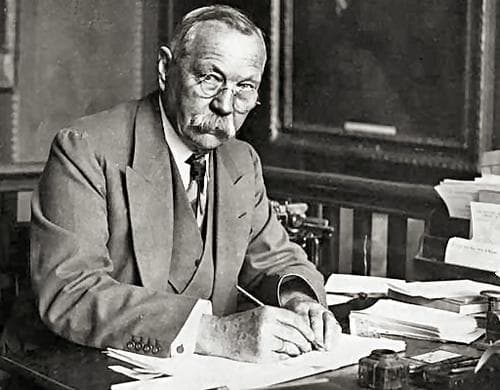
Sir Arthur Ignatius Conan Doyle was a British writer and physician. He created the character Sherlock Holmes in 1887 for A Study in Scarlet, the first of four novels and fifty-six short stories about Holmes and Dr. Watson. The Sherlock Holmes stories are milestones in the field of crime fiction.
Similar books
- A Study in Scarlet
Arthur Conan Doyle
4.2 (324k) average on GoodreadsHistorical FictionFeatures a similar structure with a modern mystery followed by a lengthy flashback explaining its origins.
- The Hound of the Baskervilles
Arthur Conan Doyle, Sir Arthur Conan Doyle
4.1 (254k) average on GoodreadsThrillerAnother classic Holmes novel set in a country manor with an atmospheric and dangerous mystery.
- The Maltese Falcon
Dashiell Hammett
3.9 (89k) average on GoodreadsThrillerA hard-boiled detective story involving a mysterious past, secret societies, and a complex web of deceit, though with a different tone.
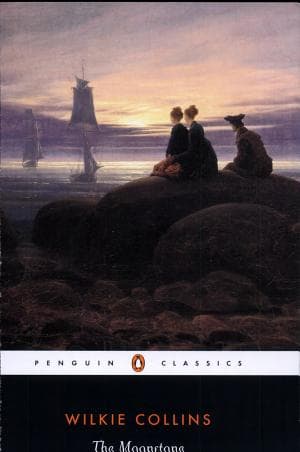
- The Moonstone
Wilkie Collins
3.9 (79k) average on GoodreadsHistorical FictionWhile both are foundational mysteries, Collins's 'The Moonstone' maintains a singular, focused narrative through multiple perspectives to unravel a central theft. 'The Valley of Fear' deviates with a lengthy historical flashback, which, while rich, disrupts the primary mystery's flow in a way Collins avoids.
- Angels & Demons
Dan Brown
3.9 (2.7M) average on GoodreadsThrillerA Harvard symbologist races through Rome's ancient sites, deciphering cryptic clues to unmask the Illuminati and stop a vengeful plot to destroy the Vatican with a stolen antimatter weapon.
- Gone Girl
Gillian Flynn
4.1 (2.3M) average on GoodreadsThrillerA wife's sudden disappearance on her fifth anniversary reveals a web of lies and psychological warfare, exposing the secrets within a seemingly perfect marriage.





Enjoyed the summary?
A summary gives you the shape of the book. The book itself has the detail, the examples and the voice.
Find The Valley of Fear on AmazonAs an Amazon Associate, BookBrief earns from qualifying purchases. How we're funded