
Synopsis
Covers the whole plot, including the ending.
- Difficulty
- Easy
- Pacing
- Moderate
- Mood
- Whimsical, Educational, Gentle, Simple
- Read it if
- You want a classic, gentle introduction to counting, days of the week, and the life cycle of a butterfly for very young children.
- Skip it if
- You are looking for complex plotlines, deep character development, or books for older readers.
The Very Hungry Caterpillar Plot Summary
Covers the whole plot, including the ending.
A Tiny Egg on a Leaf
On a Sunday morning, a small egg sits on a green leaf. As the sun rises, the egg cracks open, and a very small, very hungry caterpillar comes out. The caterpillar immediately starts looking for food, driven by its hunger. This starts its journey, a simple life focused on eating and growing, setting up its change.
Monday: The Apple Feast
On Monday, the hungry caterpillar finds one red apple. It eats through the apple, making a neat hole. Even after eating a whole apple, the caterpillar is still hungry. This first meal sets a pattern for the week: the caterpillar will keep eating more and more, but always seems to need more food to calm its growing hunger.
Tuesday: Two Pears
The next day, Tuesday, the caterpillar finds two green pears. It eats through both pears, leaving two holes. Even after these two pears, the caterpillar is still hungry. This shows its increasing need for food, as it moves from one fruit to two, but its basic hunger continues, pushing it to find more to eat.
Wednesday: Three Plums
By Wednesday, the hungry caterpillar finds three purple plums. It eats all three plums, making a hole through each one. Still, after eating three fruits, the caterpillar is not full. The increasing amount of food shows the caterpillar's fast growth and rising need for energy. Hunger remains the main reason for its daily actions.
Thursday: Four Strawberries
On Thursday, the caterpillar sees four red strawberries. It eats through all four, leaving holes. Even after this meal, the hungry caterpillar is still not full. This further shows its constant hunger, proving that even more varied fruit is not enough to satisfy its growing needs, moving it toward an even bigger meal.
Friday: Five Oranges
Friday brings five juicy oranges for the hungry caterpillar. It eats through all five, making five holes. Even after eating five oranges, the caterpillar is still hungry. This is the most fruit it eats, showing a huge appetite and a strong drive to eat, which highlights its fast development and the high energy needed for its upcoming change.
Saturday: A Feast of Junk Food
On Saturday, the caterpillar eats many different foods: one piece of chocolate cake, one ice cream cone, one pickle, one slice of Swiss cheese, one slice of salami, one lollipop, one piece of cherry pie, one sausage, one cupcake, and one slice of watermelon. This large, unhealthy meal finally makes the caterpillar feel full, but it also gives it a bad stomach ache, a result of eating too much.
Sunday: A Green Leaf and Relief
The next Sunday, feeling sick from its Saturday meal, the caterpillar eats just one green leaf. This simple, natural meal immediately makes the caterpillar feel much better. The green leaf helps its digestion and makes it healthy again, showing a return to a more natural and balanced diet after eating too much.
Building a Cocoon
No longer small or hungry, the caterpillar is now big. It builds a small house, called a cocoon (or chrysalis in science, though the book says 'cocoon'), around itself. This means its eating phase is over, and its time of rest and change begins. The cocoon is its safe shell for the next part of its life.
Two Weeks in the Cocoon
The big caterpillar stays inside its cocoon for more than two weeks. During this time, it changes. The cocoon gives it a safe, quiet place for this change, where the caterpillar's body transforms, getting ready to become a totally different creature. This time shows patience and nature's hidden processes.
Emergence of a Beautiful Butterfly
Finally, after more than two weeks, the caterpillar makes a hole in the cocoon, pushes its way out, and becomes a beautiful butterfly. It has large, colorful wings—red, yellow, blue, and green—a big change from how it looked before. This emergence finishes its life cycle, showing the wonder of nature's changes.
The Very Hungry Caterpillar Characters
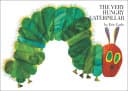
The Very Hungry Caterpillar
Protagonist
A tiny, insatiable larva who undergoes a miraculous transformation.
The Very Hungry Caterpillar is the central character, starting as a tiny, newly hatched larva with an enormous appetite. Its primary motivation throughout the early part of the story is to eat, driven by an instinct to grow. It consumes vast quantities of various foods, from fruits to an assortment of unhealthy snacks, which leads to it becoming big and fat. This creature symbolizes growth, change, and the natural life cycle.
The Sun
Supporting
A silent facilitator of life and growth.
The Sun plays a subtle but crucial role, appearing at the beginning to warm the egg and help the caterpillar hatch. It symbolizes the life-giving force of nature and the passage of time, marking the start of the caterpillar's journey. While not an active character, its presence is essential for the natural processes depicted in the story, initiating the caterpillar's existence and the cycle of days.
The Very Hungry Caterpillar Themes
Growth and Transformation
The main theme is the caterpillar's growth and its change into a butterfly. This is shown by the caterpillar getting bigger as it eats more, and by the entire life cycle. It teaches children about how things change and grow in nature, from a small egg to a larva, pupa, and then an adult insect. The story shows that big changes take time and food.
“He was a big, fat caterpillar.”
The Life Cycle
The book is a simple way to introduce the life cycle of a butterfly. It clearly shows the stages from egg to caterpillar (larva), to cocoon (pupa), and finally to butterfly (adult). This theme helps children understand biology and the natural world, showing how living things grow and go through different stages.
“He was a beautiful butterfly.”
Moderation and Healthy Eating
Through the caterpillar's eating, the book gently talks about moderation. The caterpillar's too much eating of different, often unhealthy, foods on Saturday leads to a stomach ache. It only feels better after eating one healthy green leaf. This part suggests the importance of eating a balanced diet and what happens when you eat too much, teaching a simple lesson about health.
“He had a terrible stomach ache!”
Patience and Anticipation
The time the caterpillar spends inside its cocoon for 'more than two weeks' introduces the idea of patience. It shows that big changes do not happen right away but need a time of waiting and growing. This builds excitement for the butterfly's appearance, teaching children that good things often take time, and that natural events happen over time.
“He stayed inside for more than two weeks.”
Plot Devices & Literary Techniques
Repetition and Cumulative Structure
Builds anticipation and reinforces learning through repeated patterns.
The story employs a cumulative structure where the caterpillar eats one apple, then two pears, then three plums, and so on. This repetition, especially of the phrase 'but he was still hungry,' builds anticipation and helps young readers learn numbers and days of the week. The increasing quantity of food each day reinforces the caterpillar's growing appetite and the passage of time, making the narrative predictable yet engaging for children.
Die-Cut Holes
Interactive physical holes representing the caterpillar's eating.
The book famously uses die-cut holes on each page, illustrating where the caterpillar has eaten through the food. This interactive element allows children to physically trace the caterpillar's journey and visualize its actions. It's a tactile plot device that enhances engagement, makes the eating process concrete, and provides a sensory experience, bringing the story to life beyond just the words and pictures.
Personification
Giving human-like qualities to the caterpillar to make it relatable.
The caterpillar is personified through its 'hunger,' 'stomach ache,' and the explicit desire to eat. While it remains an animal, these human-like experiences make its journey relatable and understandable for young readers. This device helps children connect emotionally with the protagonist and understand the narrative's simple lessons about eating and growth, despite the character being an insect.
Symbolism of the Butterfly
Represents hope, transformation, and new beginnings.
The butterfly at the story's end is a powerful symbol. It represents the culmination of the caterpillar's journey, embodying themes of transformation, beauty, and new beginnings. The vibrant colors and ability to fly after being a slow, ground-dwelling creature symbolize freedom and the wondrous possibilities of change, leaving readers with a sense of awe and optimism about natural cycles and personal growth.
The Very Hungry Caterpillar Quotes
“In the light of the moon a little egg lay on a leaf.”
“He started to look for some food.”
“On Monday he ate through one apple. But he was still hungry.”
“On Saturday he ate through one piece of chocolate cake, one ice-cream cone, one pickle, one slice of Swiss cheese, one slice of salami, one lollipop, one piece of cherry pie, one sausage, one cupcake, and one slice of watermelon.”
“That night he had a stomachache!”
“The next day was Sunday again. The caterpillar ate through one nice green leaf, and after that he felt much better.”
“He built a small house, called a cocoon, around himself.”
“He stayed inside for more than two weeks.”
“Then he nibbled a hole in the cocoon, pushed his way out and...”
“he was a beautiful butterfly!”
“One Sunday morning the warm sun came up and - pop! - out of the egg came a tiny and very hungry caterpillar.”
“Now he wasn't hungry anymore - and he wasn't a little caterpillar anymore.”
“He was a big, fat caterpillar.”
Quiz
10 questions on the plot and the characters. Each answer comes with a short explanation.
Question 1
What does the caterpillar eat on Saturday that makes him feel sick?
- One apple, two pears, three plums, four strawberries, and five oranges
- A piece of chocolate cake, an ice cream cone, a pickle, a slice of Swiss cheese, a slice of salami, a lollipop, a piece of cherry pie, a sausage, a cupcake, and a slice of watermelon
- A nice green leaf
- Nothing, he rests on Saturday
Show answer
B. A piece of chocolate cake, an ice cream cone, a pickle, a slice of Swiss cheese, a slice of salami, a lollipop, a piece of cherry pie, a sausage, a cupcake, and a slice of watermelon On Saturday, the caterpillar eats a large variety of human foods including cake, ice cream, and other treats, which causes his stomachache, leading him to eat a green leaf on Sunday to feel better.
Question 2
What does the caterpillar build around himself after eating the green leaf?
- A nest
- A cocoon
- A chrysalis
- A small house called a cocoon
Show answer
D. A small house called a cocoon In the book, the caterpillar builds 'a small house called a cocoon' around himself, which is a simplified term for children, though scientifically it's a chrysalis for butterflies.
Question 3
How many plums does the caterpillar eat on Wednesday?
- One
- Two
- Three
- Four
Show answer
C. Three On Wednesday, the caterpillar eats three plums, as part of the cumulative count of fruits he consumes from Monday to Friday.
Question 4
What is the main theme of 'The Very Hungry Caterpillar'?
- The importance of eating healthy foods
- Transformation and growth
- The dangers of overeating
- Learning the days of the week
Show answer
B. Transformation and growth While the book teaches counting, days of the week, and healthy eating, its central theme is the caterpillar's transformation into a beautiful butterfly, symbolizing growth and change.
Question 5
Why does the caterpillar eat a nice green leaf on Sunday?
- Because he is still hungry after Saturday's feast
- Because it is the only food available on Sunday
- Because it makes him feel better after his stomachache
- Because his mother tells him to eat it
Show answer
C. Because it makes him feel better after his stomachache After overeating on Saturday and feeling sick, the caterpillar eats a green leaf on Sunday, which helps him feel better, emphasizing the contrast between unhealthy and healthy foods.
Question 6
What is unique about the holes in the pages of the book?
- They are shaped like the foods the caterpillar eats
- They show the caterpillar's path through the foods
- They are randomly placed for decoration
- They represent the days of the week
Show answer
B. They show the caterpillar's path through the foods The book features die-cut holes that the caterpillar appears to have eaten through the foods, creating an interactive and visual representation of his journey.
Question 7
Which of these foods does the caterpillar NOT eat on Saturday?
- A slice of salami
- A piece of cherry pie
- A banana
- A lollipop
Show answer
C. A banana On Saturday, the caterpillar eats many foods, but a banana is not listed; he eats fruits like apples and strawberries earlier in the week, but banana is not mentioned in the Saturday feast.
Question 8
How does the caterpillar's appearance change throughout the book?
- He starts small and green, grows larger and colorful, then becomes a butterfly
- He stays the same size but changes color
- He shrinks after overeating
- He turns into a moth instead of a butterfly
Show answer
A. He starts small and green, grows larger and colorful, then becomes a butterfly The caterpillar hatches from an egg as a tiny, hungry creature, grows bigger as he eats, builds a cocoon, and emerges as a beautiful butterfly, illustrating his full life cycle.
Question 9
What educational concepts does the book primarily teach to children?
- Counting, days of the week, and healthy eating
- The life cycle of a butterfly
- Both A and B
- Only the names of different foods
Show answer
C. Both A and B 'The Very Hungry Caterpillar' is designed to teach multiple concepts: counting (e.g., one apple, two pears), days of the week, healthy vs. unhealthy eating, and the transformation from caterpillar to butterfly.
Question 10
In what way does the book's design enhance the storytelling for children?
- Through colorful illustrations and interactive holes
- By using complex vocabulary
- With long paragraphs of text
- By including scientific diagrams
Show answer
A. Through colorful illustrations and interactive holes Eric Carle's distinctive collage illustrations and the die-cut holes that simulate the caterpillar eating through pages make the book visually engaging and tactile, helping young readers connect with the story.
The Very Hungry Caterpillar FAQ
What is 'The Very Hungry Caterpillar' about?
The book follows a tiny caterpillar who hatches from an egg and spends a week eating increasingly large quantities of food, including fruits and various human foods, before building a cocoon and transforming into a beautiful butterfly. It's a simple story about growth, transformation, and the natural life cycle.
Why should I read 'The Very Hungry Caterpillar'?
It's an engaging educational tool that teaches counting, days of the week, healthy eating (with a subtle message about overindulgence), and metamorphosis through vibrant collage illustrations and interactive die-cut pages. The repetitive structure and predictable progression make it perfect for young children's cognitive development.
What is the background/setting of 'The Very Hungry Caterpillar'?
The story unfolds over seven days in a bright, natural setting with green leaves, a red sun, and various food items. Eric Carle's distinctive hand-painted tissue paper collage creates a timeless, visually stimulating environment that feels both organic and whimsical.
What are the most memorable quotes?
Key phrases include the repetitive 'But he was still hungry' after each day's eating, the climactic 'He built a small house, called a cocoon, around himself,' and the final transformation revelation: 'He was a beautiful butterfly!' These simple lines drive the narrative's rhythm.
What writing style does the author use?
Eric Carle employs minimal, repetitive text with a clear cause-and-effect structure ('On Monday he ate through one apple. But he was still hungry.'). The language is deliberately simple and rhythmic, paired with bold, textured illustrations that tell much of the story visually.
What minor details add significant meaning?
The tiny egg on a leaf in the moonlight opening page symbolizes fragile new life. The caterpillar's 'stomachache' after Saturday's junk food feast subtly teaches moderation. The precisely eaten holes in the food pages physically engage children in the caterpillar's journey.
What are some subtle foreshadowing moments?
The caterpillar eating 'one nice green leaf' on Sunday after his unhealthy binge hints at returning to natural, nourishing food before transformation. The increasing food quantities each day foreshadow the energy needed for metamorphosis. The cocoon's introduction as a 'small house' subtly prepares for the butterfly reveal.
What unexpected character connections exist?
While there are no other characters, the caterpillar's connection to the moon (present at his hatching) and sun (shown throughout) ties him to natural cycles. The foods he eats—from fruits to cake—represent both nature and human culture, bridging two worlds.
What are unspoken character motivations?
The caterpillar's relentless hunger is driven by an instinctual need to store energy for metamorphosis, though this isn't stated until the end. His shift from fruits to processed foods on Saturday suggests curiosity or temptation, while returning to a leaf shows innate wisdom.
What psychological complexities do characters exhibit?
The caterpillar demonstrates persistence (continuing to eat despite fullness), self-regulation (overcoming a stomachache to eat healthy again), and patience (staying in the cocoon for over two weeks). These traits model resilience and growth for young readers.
What are the major emotional turning points?
Key moments include the caterpillar's hatching (wonder), the Saturday stomachache (consequence), the cocoon-building (determination), and the butterfly emergence (triumph and beauty). Each stage evokes different feelings that mirror a child's own developmental experiences.
How do relationship dynamics evolve?
The caterpillar's relationship with food changes from nourishing (fruits) to indulgent (junk food) to restorative (green leaf), mirroring human experiences with consumption. His connection to his environment deepens as he uses natural elements (leaf, cocoon) to complete his transformation.
Which parts remain ambiguous or open-ended?
It's never explained why the caterpillar hatches at night or why he specifically chooses the foods he does. The exact time spent in the cocoon ('more than two weeks') is vague, leaving room for discussion about patience and natural timing. The butterfly's future after flying away is untold.
What are controversial scenes or decisions?
Some modern readers debate the Saturday food binge (cake, ice cream, etc.) as promoting unhealthy eating, though others see it as a lesson in consequences. The transformation from caterpillar to butterfly simplifies metamorphosis (technically a chrysalis, not a cocoon), which purists occasionally note.
'The Very Hungry Caterpillar' ending explained: how it ends & what it means
The caterpillar emerges from his cocoon as a vibrant, multi-colored butterfly, symbolizing complete transformation and rebirth. This ending reinforces themes of growth, patience, and the beauty of natural cycles, suggesting that even small, hungry beginnings can lead to magnificent outcomes.
About the author

Eric Carle was an American author, designer and illustrator of children's books. His picture book The Very Hungry Caterpillar, first published in 1969, has been translated into more than 66 languages and sold more than 50 million copies. His career as an illustrator and children's book author took off after he collaborated on Brown Bear, Brown Bear, What Do You See?. He illustrated more than 70 books, most of which he also wrote, and more than 145 million copies of his books have been sold around the world.
Similar books
- Harry Potter and the Sorcerer's Stone
J.K. Rowling
4.5 (7M) average on GoodreadsFantasyRescued from a miserable life under the stairs, an orphaned boy discovers he's a wizard destined for a magical school, where he uncovers a dangerous secret tied to the dark wizard who murdered his parents.
- The Hobbit, or There and Back Again
J.R.R. Tolkien
4.3 (2.9M) average on GoodreadsFantasyA comfort-loving hobbit named Bilbo Baggins is whisked away by a mischievous wizard and a band of dwarves on an unexpected journey to reclaim stolen treasure from a fearsome dragon, discovering courage and a magical ring along the way.
- Harry Potter and the Goblet of Fire
J.K. Rowling
4.6 (2.6M) average on GoodreadsFantasyA bewildered Harry Potter, underage and thrust into a deadly Triwizard Tournament, must brave dragons, mermaids, and a resurgent dark magic to survive a year that will forever alter the wizarding world.
- Harry Potter and the Order of the Phoenix
J.K. Rowling
4.5 (2.5M) average on GoodreadsFantasyIn a year of oppressive secrets and the threat of Voldemort, Harry Potter and Dumbledore's Army secretly train for war, shown through Jim Kay and Neil Packer's dark illustrations.
- The Lightning Thief
Rick Riordan
4.3 (2M) average on GoodreadsFantasyThrust into a world of mythological monsters and divine treachery, an ordinary boy discovers he's the son of Poseidon and must embark on a perilous quest across modern America to prevent an Olympian war.
- The Giver
Lois Lowry
4.1 (1.8M) average on GoodreadsFantasyIn a world where everyone is the same, a young boy named Jonas learns about true memory, forcing him to see the cost of his community's peaceful ignorance.






Enjoyed the summary?
A summary gives you the shape of the book. The book itself has the detail, the examples and the voice.
Find The Very Hungry Caterpillar on AmazonAs an Amazon Associate, BookBrief earns from qualifying purchases. How we're funded