
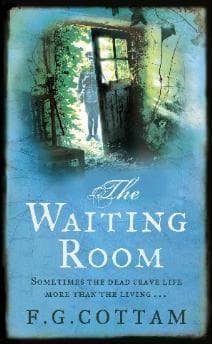
Synopsis
Covers the whole plot, including the ending.
- Difficulty
- Medium
- Pacing
- Moderate
- Mood
- Suspenseful, Eerie, Historical, Melancholy
- Read it if
- You enjoy supernatural thrillers with a historical mystery, a skeptical protagonist who becomes a believer, and a focus on resolving past tragedies.
- Skip it if
- You dislike ghost stories, prefer purely rational explanations, or are sensitive to themes of historical trauma.
The Waiting Room Plot Summary
Covers the whole plot, including the ending.
The Stride Estate and the Ominous Waiting Room
Martin Stride, a former rock star, lives a quiet life on his Edwardian estate with his wife, Sarah, and their children, Leo and Lily. The estate has an old Edwardian railway waiting room from World War I, which the children once played in. However, the children have recently become afraid of the building, refusing to go near it. Martin himself starts to notice strange things around the waiting room: cold spots, whispers, and a feeling of unease. He first dismisses these as imagination or the building's age, but the events' persistence and intensity make him consider a supernatural explanation.
Julian Creed: The Skeptical Ghost Hunter
Because of his children's fear and his own growing worry, Martin decides to get help. He contacts Julian Creed, a famous television ghost hunter known for his investigations. Unknown to the public, Creed is a skeptic and a fraud, faking evidence and using people's beliefs for ratings and money. He sees his work as a show, a planned illusion. Initially, Creed dismisses Martin's claims, seeing it as another easy case to make dramatic for his show. He agrees to visit the Stride estate, expecting a simple, profitable production, unprepared for what he will find.
The First Night in the Waiting Room
Julian Creed, with his cynical crew, sets up his equipment in the waiting room, intending to stage a convincing 'haunting' for his show. But as night comes, the atmosphere in the waiting room changes. Doors slam, objects move, and the temperature drops. Creed, at first thinking it's his crew's pranks, quickly realizes these events are beyond his control. He feels real terror as he hears voices, feels unseen presences, and sees things that defy logic. His skepticism breaks down, replaced by the realization that the supernatural is real.
Uncovering the Waiting Room's History
Shaken by his experience, Julian Creed stops his usual tricks and genuinely tries to understand the waiting room's secrets. He and Martin research the building's history, finding its origins as a temporary casualty station and embarkation point for soldiers during World War I. They learn that many young men, wounded or facing death, passed through its doors. The waiting room was a place of suffering, fear, and final goodbyes. This history explains the intense spiritual activity, suggesting the building holds the despair and trauma of those who were there.
Visions and Echoes of the Past
As Julian and Martin continue their investigation, they experience stronger and more disturbing visions in the waiting room. They see spectral soldiers, hear their cries, and even smell blood and mud. These are not just quick glimpses but immersive experiences that blur past and present. They see frantic nurses, stoic officers, and terrified recruits. The waiting room acts as a channel, making them relive its wartime past, especially the anguish of those waiting for transport to or from the front.
The Entity's Focus on Martin's Family
The spiritual disturbances are no longer only in the waiting room. Martin's children, Leo and Lily, start having frightening encounters in their home. They report seeing shadowy figures and hearing whispers, similar to what Martin experienced earlier. The entity's focus on the children grows, suggesting a more malevolent intent. Martin and Sarah worry more about their family's safety, realizing the waiting room's influence is spreading and directly threatens their loved ones. This forces them to consider that the spirits are not just residual but intelligent and actively seeking to interact, or worse, harm them.
The Journal of Nurse Eleanor
During one of their searches in local archives, Julian finds a hidden journal belonging to a nurse named Eleanor, who worked in the waiting room during the war. Her entries describe life and death in that makeshift hospital. She details the horrors she saw, her despair at the constant flow of dying men, and her personal struggles. The journal reveals a tragic love story with a young soldier named Thomas. His death, witnessed by Eleanor in the waiting room, left her heartbroken and consumed by grief. This discovery adds a personal layer to the haunting.
Eleanor and Thomas: A Love Lost
Nurse Eleanor's journal entries show a love affair with a soldier named Thomas, who passed through the waiting room. Their secret meetings and hopes for a future are described. The journal ends with the entry detailing Thomas's return, severely wounded, and his death in the waiting room where their love began. Eleanor's grief is clear, her entries filled with anguish and injustice. It becomes clear that Eleanor's spirit, with Thomas's, is among those trapped, her unresolved grief and love keeping her tied to the place of their final moments.
The Plan: Reconciling the Past
Seeing the emotional core of the haunting, Julian proposes a plan: to help Eleanor and Thomas's spirits find peace. He believes that by acknowledging their tragic love and helping a moment of resolution, they might move on. The plan involves recreating parts of their last encounter in the waiting room, hoping to give closure to their anguish. Martin, though skeptical, agrees, knowing his family's safety depends on resolving the spiritual unrest. They gather historical items and prepare the waiting room for a final attempt to communicate with the beyond.
The Climax: A Final Confrontation and Resolution
Julian and Martin carry out their plan, recreating the scene of Thomas's death as best they can, using items from the era. The waiting room becomes a storm of spiritual energy. Eleanor and Thomas's spirits appear powerfully, their anguish nearly overwhelming. Julian, now a true believer, speaks words of comfort and acknowledgment to the spectral couple. In an emotional moment, he helps them to 'reconnect' and express their love. The intense energy slowly calms, replaced by peace. The visions fade, and the cold disappears, suggesting that Eleanor and Thomas, and perhaps other trapped souls, have found peace and moved on from the waiting room.
Aftermath and New Beginnings
After the confrontation, the waiting room is quiet. The heavy atmosphere is gone, replaced by stillness and peace. Martin's children no longer fear the building, and the strange events stop throughout the estate. The Stride family can finally enjoy their home without the threat of the paranormal. Julian Creed, changed by his experiences, leaves his television career. He is no longer a skeptic but a believer, helping others understand and resolve similar supernatural events, driven by a new purpose and respect for the unseen world.
The Waiting Room Characters
Martin Stride
Protagonist
A retired rock star and family man haunted by a derelict waiting room.
Martin Stride is a former rock star who now values a quiet, stable life with his wife, Sarah, and their children, Leo and Lily, on their grand Edwardian estate. He is initially a loving, somewhat complacent father, enjoying his wealth and domesticity. He is rational and grounded, initially dismissing the strange occurrences around the waiting room. However, his protectiveness over his family, especially his children's fear, forces him to confront the supernatural and seek help. He proves to be brave and determined, willing to face the unknown to safeguard his loved ones.
Relationships: Sarah Stride (Wife, loving and supportive); Leo Stride (Son, target of the haunting); Lily Stride (Daughter, target of the haunting); Julian Creed (Initial professional contact, later a partner in solving the mystery)
Julian Creed
Co-Protagonist
A cynical, fraudulent TV ghost hunter whose beliefs are shattered by genuine paranormal activity.
Julian Creed is a charismatic television personality, famous for his ghost-hunting show. Beneath the polished exterior, he is a deeply cynical and jaded individual, a con artist who doesn't believe in the paranormal, viewing it as a means to gain fame and fortune. His early life experiences and a desire for recognition likely shaped his manipulative nature. He is initially dismissive and arrogant, but his encounter with the genuine haunting in the waiting room profoundly shakes him. He possesses a sharp intellect and an ability to research and connect disparate pieces of information, which proves invaluable once he sheds his skepticism.
Relationships: Martin Stride (Client, later a partner and friend); His TV Crew (Employees, initially collaborators in his deception)
Sarah Stride
Supporting
Martin's supportive wife, equally concerned for their children's safety.
Sarah Stride is Martin's loving and supportive wife, a devoted mother to Leo and Lily. She shares Martin's initial skepticism regarding the waiting room but quickly becomes convinced of the paranormal threat as her children are affected. Her primary drive is the safety and well-being of her family. She provides emotional support to Martin and is a steady presence throughout the escalating crisis, advocating for solutions and offering practical assistance where she can. She represents the grounded, maternal concern that underpins the family's struggle.
Relationships: Martin Stride (Husband, loving and supportive); Leo Stride (Son, protective mother); Lily Stride (Daughter, protective mother)
Leo Stride
Supporting
Martin and Sarah's young son, one of the first to be affected by the waiting room's presence.
Leo is Martin and Sarah's young son, an innocent child who, along with his sister Lily, initially enjoys playing in the old waiting room. He is sensitive to the supernatural energies emanating from the building and is one of the first to express fear and refuse to go near it. His terror and subsequent experiences with the entity are a primary catalyst for Martin's involvement and drive to resolve the haunting. He represents the vulnerable innocence that the malevolent presence targets, raising the stakes for the Stride family.
Relationships: Martin Stride (Father); Sarah Stride (Mother); Lily Stride (Sister)
Lily Stride
Supporting
Martin and Sarah's young daughter, also affected by the haunting.
Lily is Martin and Sarah's young daughter, equally innocent and sensitive to the waiting room's supernatural influence as her brother, Leo. She shares his fear and experiences unsettling phenomena, further solidifying the reality of the haunting for her parents. Her vulnerability and the direct threat to her well-being underscore the urgency and danger of the situation. Her experiences highlight the pervasive nature of the haunting, demonstrating its ability to reach beyond the waiting room itself into the family's home.
Relationships: Martin Stride (Father); Sarah Stride (Mother); Leo Stride (Brother)
Nurse Eleanor
Antagonist/Supporting
A spirit trapped in the waiting room, whose tragic love story fuels the haunting.
Nurse Eleanor is one of the primary spirits haunting the waiting room, though her presence is more sorrowful than purely malevolent. She was a nurse during World War I, working tirelessly in the waiting room, which served as a casualty station. She fell deeply in love with a soldier named Thomas, only for him to die tragically in her care within the very room. Her journal, discovered by Julian, reveals her immense grief, despair, and unresolved longing, which have anchored her spirit to the location. Her haunting is an expression of profound, eternal heartbreak.
Relationships: Thomas (Lover, fellow trapped spirit); Martin Stride (Unwitting host for her haunting); Julian Creed (Instrumental in helping her find peace)
Thomas
Antagonist/Supporting
A soldier whose tragic death in the waiting room, and his love for Eleanor, keeps his spirit trapped.
Thomas is the spirit of a young soldier from World War I, the tragic lover of Nurse Eleanor. He passed through the waiting room multiple times, eventually returning severely wounded and dying there. His spirit, along with Eleanor's, is deeply connected to the building, a testament to their powerful, albeit brief, love story and his untimely demise. While less vocal than Eleanor's presence, his lingering energy contributes significantly to the waiting room's oppressive atmosphere and the visions experienced by Martin and Julian. His unresolved journey and love are key to understanding the haunting.
Relationships: Nurse Eleanor (Lover, fellow trapped spirit); Martin Stride (Unwitting host for his haunting); Julian Creed (Instrumental in helping him find peace)
The TV Crew
Mentioned
Julian Creed's skeptical, behind-the-scenes team.
Julian Creed's television crew consists of various technicians and producers who are initially complicit in his fraudulent ghost-hunting endeavors. They are cynical and professional, accustomed to staging paranormal events for entertainment. They share Creed's initial disbelief in the supernatural. Their presence underscores Julian's early charlatanism, but they quickly become unnerved and frightened by the genuine occurrences in the waiting room, serving as a collective witness to Julian's transformation and the undeniable reality of the haunting.
Relationships: Julian Creed (Employer-employee relationship, later strained by genuine events)
The Waiting Room Themes
The Lingering Trauma of War
The waiting room symbolizes the lasting psychological and emotional scars of conflict. The spirits of soldiers and nurses, especially Eleanor and Thomas, show the suffering, fear, and loss of World War I. The visions and sensations Martin and Julian experience are not just spooky events but echoes of the human cost of war, showing how trauma can affect a place and future generations. The book shows that war's impact goes beyond the battlefield, staying with places and people long after the fighting ends.
“The waiting room was a vessel, not just for men, but for their fear, their pain, their last desperate hopes.”
Skepticism vs. Belief
This theme is mainly seen through Julian Creed. Initially a skeptic and a fraud, Julian's journey from disbelief to conviction is key to this theme. The novel challenges the reader's skepticism, showing evidence of the supernatural. It suggests that some truths are beyond rational explanation and that a closed mind can prevent understanding. Martin also changes, though less dramatically. The story argues that sometimes, one must set aside disbelief to truly understand the world's deeper, more mysterious realities.
“He'd spent a lifetime faking it, only to find the real thing was far more terrifying than anything he could conjure.”
The Power of Unresolved Grief and Love
The haunting is caused by Nurse Eleanor's unresolved grief and her tragic love story with Thomas. Their spirits are tied to the waiting room by the strong emotions around Thomas's death and their unfulfilled future. The novel shows how powerful emotions, especially love and loss, can cross death and influence the living. Resolving the haunting depends on acknowledging these emotions, allowing the spirits to find peace. This theme highlights the lasting nature of human connection and the need for closure.
“Their love, a fragile bloom in the shadow of war, had become the anchor of their eternal sorrow.”
The Sanctity of Home and Family
Martin Stride's main reason throughout the ordeal is to protect his family. The waiting room, part of his estate, becomes a direct threat to his home's safety and peace. The haunting's escalation to affect his children shows the violation of this sanctity. The theme explores how far a parent will go to defend loved ones from unseen dangers, turning a family life into a battle against the supernatural. Ultimately, the haunting's resolution restores peace and safety to the Stride home.
“His children's fear was a weapon, sharper and more potent than any ghost could wield.”
Plot Devices & Literary Techniques
The Haunted Location
A derelict Edwardian railway waiting room serves as the epicenter of paranormal activity.
The waiting room itself is the primary plot device, acting as a focal point and catalyst for all the supernatural occurrences. Its specific historical context as a World War I casualty station imbues it with a deep sense of tragedy and unresolved trauma. The building isn't just a backdrop; it's a character in itself, actively generating the haunting and influencing the living. Its decaying state symbolizes the forgotten past, and its inherent liminality (a place of transition) makes it a perfect conduit for lingering spirits. The waiting room's physical presence grounds the fantastical elements in a tangible, historical reality.
The Skeptic-Turned-Believer
Julian Creed's dramatic character arc from fraud to genuine believer.
This device is embodied by Julian Creed's transformation. It serves several narrative functions: it provides an initial voice of reason and doubt that the audience can relate to, allowing the supernatural to be gradually revealed and validated through his experience. His initial cynicism makes his eventual belief more impactful and convincing. This arc also allows for exposition on the mechanics of 'ghost hunting' (both fraudulent and genuine) and provides a strong character development journey, adding depth beyond mere horror.
The Historical Document (Journal)
Nurse Eleanor's journal provides crucial backstory and emotional context for the haunting.
The discovery of Nurse Eleanor's journal is a classic literary device. It allows for the unfolding of critical backstory (the love story with Thomas, the wartime experiences) in an intimate, personal voice. This not only explains the 'why' behind the haunting but also humanizes the spirits, transforming them from generic scary ghosts into tragic figures deserving of empathy. The journal provides the emotional core needed for Martin and Julian to devise a plan for resolution, moving beyond mere confrontation to understanding and healing.
Escalating Phenomena
The increasing intensity and spread of the paranormal activity.
The haunting begins subtly (cold spots, whispers) and gradually escalates to terrifying visions, physical manifestations, and eventually, the direct targeting of Martin's children. This escalating pattern builds suspense and fear, continuously raising the stakes for the characters. It demonstrates the growing power and malevolence of the entity (or entities) and forces the protagonists to take increasingly desperate measures. This device keeps the narrative dynamic and ensures that the threat never becomes stagnant, pushing the characters towards a final confrontation.
The Waiting Room Quotes
“The past is a foreign country; they do things differently there.”
“Some doors, once opened, can never truly be closed again.”
“Fear has a way of making even the most rational mind see ghosts.”
“The truth, like a buried secret, always finds a way to surface.”
“There are shadows in history that refuse to be forgotten.”
“Sometimes the greatest monster is the one you cannot see.”
“Belief is a powerful weapon, for good or ill.”
“The line between sanity and madness is often thinner than we dare to admit.”
“Every old house has its stories, but some whisper them louder than others.”
“What we don't know can hurt us far more than what we do.”
“Time has a way of eroding everything but the deepest scars.”
“The world is full of things that defy explanation, if only we are brave enough to look.”
“Silence can be the most terrifying sound of all.”
“Some questions are better left unanswered, for the sake of one's peace of mind.”
Quiz
10 questions on the plot and the characters. Each answer comes with a short explanation.
Question 1
What is Martin Stride's former profession?
- A famous actor
- A retired rock star
- A renowned historian
- A successful businessman
Show answer
B. A retired rock star Martin Stride is introduced as a retired rock star enjoying a quiet life.
Question 2
What type of building is 'The Waiting Room' on Martin Stride's estate?
- An old church
- A derelict Edwardian railway station waiting room
- A disused factory
- A forgotten military bunker
Show answer
B. A derelict Edwardian railway station waiting room The book description explicitly states 'The Waiting Room' is a derelict Edwardian railway station waiting room.
Question 3
Who is Julian Creed, the person Martin Stride seeks help from?
- A detective specializing in cold cases
- A local historian
- TV's favourite ghost-hunter
- A building renovator
Show answer
C. TV's favourite ghost-hunter Julian Creed is described as 'TV's favourite ghost-hunter' whom Martin seeks out.
Question 4
What historical event is mentioned as a past use for 'The Waiting Room'?
- The Second World War
- The Crimean War
- The Great War
- The English Civil War
Show answer
C. The Great War The waiting room was 'once used to transport troops in The Great War'.
Question 5
What is Julian Creed's initial stance on the paranormal before visiting 'The Waiting Room'?
- He is a genuine psychic with strong beliefs.
- He fabricates his psychic ability and doesn't believe in the paranormal.
- He is open-minded but skeptical.
- He actively tries to debunk all paranormal claims.
Show answer
B. He fabricates his psychic ability and doesn't believe in the paranormal. The description states, 'Creed's psychic ability is a fabrication to gain viewers. He doesn't believe in the paranormal.'
Question 6
What prompts Martin Stride to seek help for 'The Waiting Room'?
- He wants to renovate it into a guest house.
- His children have stopped playing in it due to strange occurrences.
- He discovered ancient artifacts inside it.
- He heard rumors from local villagers about its history.
Show answer
B. His children have stopped playing in it due to strange occurrences. The text mentions 'Strange occurrences in the waiting room lead Martin to seek the help' and that his children 'won't go near it'.
Question 7
How does Julian Creed's belief system change regarding the paranormal?
- He remains a skeptic throughout the story.
- He starts to believe after spending a night in The Waiting Room.
- He realizes his own psychic abilities are genuine.
- He finds a logical explanation for everything.
Show answer
B. He starts to believe after spending a night in The Waiting Room. The synopsis states: 'He doesn't believe in the paranormal. Until he spends a night in The Waiting Room.'
Question 8
What role did 'The Waiting Room' play during The Great War?
- It was a hospital for injured soldiers.
- It was used to transport troops.
- It served as a command center.
- It was a supply depot.
Show answer
B. It was used to transport troops. The waiting room was 'once used to transport troops in The Great War'.
Question 9
What is implied about the current state of 'The Waiting Room' before Martin seeks help?
- It's a well-maintained historical landmark.
- It's a source of unexplained, unsettling phenomena.
- It's a quiet, peaceful place for contemplation.
- It's a popular local attraction.
Show answer
B. It's a source of unexplained, unsettling phenomena. The text mentions 'Strange occurrences' and that Martin's children 'won't go near it', implying an unsettling, unexplained nature.
Question 10
What is the primary genre conflict introduced by Julian Creed's character arc?
- The conflict between historical fact and modern interpretation.
- The clash between skepticism and genuine supernatural experience.
- The tension between family life and professional demands.
- The struggle of a retired celebrity to find purpose.
Show answer
B. The clash between skepticism and genuine supernatural experience. Creed's initial disbelief in the paranormal, despite being a 'ghost-hunter', and his subsequent change of heart after spending a night in the waiting room directly sets up a conflict between skepticism and the supernatural.
The Waiting Room FAQ
What is the central premise of 'The Waiting Room' and who is the main protagonist?
'The Waiting Room' centers on Martin Stride, a retired rock star living a quiet life with his family. He becomes entangled in supernatural events originating from a derelict Edwardian railway waiting room on his estate, which was once used for troop transport during The Great War.
Who is Julian Creed, and what is his initial role in the story?
Julian Creed is a famous TV ghost-hunter, known for his fabricated psychic abilities used to entertain viewers. Martin Stride initially enlists Creed's help to investigate the strange occurrences in the waiting room, believing Creed can provide answers to the paranormal activity.
What prompts Martin Stride to seek external help for the waiting room's mysteries?
Martin is prompted to seek help because his children, who once used the derelict waiting room as a playground, now refuse to go near it due to unsettling experiences. This shift, combined with other strange occurrences, convinces Martin that something genuinely supernatural is at play.
How does Julian Creed's perspective on the paranormal change throughout the narrative?
Julian Creed initially dismisses the paranormal, viewing his 'psychic' abilities as a mere fabrication for entertainment. However, after spending a night in Martin Stride's Waiting Room, he experiences genuine supernatural phenomena that shatter his skepticism and force him to confront the reality of ghosts.
What historical period is significant to the waiting room's past, and how does it connect to the present events?
The Edwardian era and The Great War are significant to the waiting room's past, as it was used to transport troops. This historical context is crucial because the lingering energies and spirits of those soldiers are intrinsically linked to the strange occurrences Martin and Julian encounter, blurring the lines between past and present.
Are there any subtle clues early in the book that hint at the true nature of the waiting room's haunting?
Yes, subtle clues include the specific details of the children's fear, which go beyond typical childhood anxieties, and the lingering sense of melancholy or coldness Martin experiences even before Julian's arrival. Descriptions of the waiting room's decrepit state often evoke a sense of forgotten history and past suffering.
Beyond the obvious, what might be the symbolic significance of the waiting room itself?
The waiting room likely symbolizes a liminal space, a threshold between worlds or states of being, reflecting its original purpose of holding those 'waiting' to depart for war. It could also represent unresolved grief or a pause in time where past traumas are perpetually replayed, trapping the spirits within its walls.
Is there a specific historical event or type of soldier's experience from The Great War that the haunting seems to echo?
The haunting strongly echoes the anxieties, fears, and ultimate sacrifice of soldiers departing for the front during The Great War. The specific nature of the apparitions and sounds, such as distant train whistles or spectral uniforms, suggests a focus on the profound emotional trauma and sense of finality experienced by those who left from that very station.
How does Martin Stride's past as a rock star subtly influence his interaction with the supernatural?
Martin's past as a rock star, accustomed to theatricality and public performance, might initially make him more open to unusual experiences, yet also prone to seeking logical explanations. His exposure to intense emotions and 'crowd energy' in his career might also make him subtly more attuned to the powerful emotional residue left by the spirits in the waiting room.
What psychological impact does Julian Creed's transformation from skeptic to believer have on his character?
Julian Creed's transformation profoundly impacts his character, forcing him to confront the moral implications of his past deceptions. He likely experiences a crisis of identity and purpose, as his entire professional persona was built on a lie, leading to potential guilt, fear, and a re-evaluation of his own sanity and beliefs.
How do the children's initial experiences in the waiting room reflect their developing psychological understanding of fear and the unknown?
The children's initial experiences, such as refusing to play there, suggest an innate, pre-rational understanding of danger or malevolence. Their fear is primal and not easily dismissed, highlighting how children often perceive subtle shifts in atmosphere or unseen presences more acutely than adults, before logic attempts to explain it away.
What is the psychological toll on Martin Stride as he tries to protect his family from the escalating supernatural events?
Martin experiences significant psychological toll, including heightened anxiety, sleeplessness, and a sense of helplessness as he struggles to protect his family. His struggle to reconcile his peaceful life with the terrifying intrusions would likely lead to feelings of guilt and inadequacy, pushing him to desperate measures.
Is 'The Waiting Room' primarily a ghost story, or does it delve into deeper themes of historical trauma and memory?
'The Waiting Room' transcends a simple ghost story, delving deeply into themes of historical trauma and collective memory. The spirits are not just specters, but echoes of profound suffering from The Great War, suggesting that unresolved past events can leave indelible marks on places, influencing the present.
Could the haunting in the waiting room be interpreted as a metaphor for lingering societal guilt or forgotten sacrifices?
Absolutely. The haunting can be interpreted as a powerful metaphor for lingering societal guilt over the immense sacrifices made during The Great War, or for the collective amnesia regarding such profound historical trauma. The waiting room acts as a conduit for these forgotten voices to demand remembrance.
Does the book suggest that some places inherently retain emotional imprints, or is the haunting triggered by specific events or individuals?
The book suggests that the waiting room inherently retains strong emotional imprints due to its specific historical function during wartime, acting as a natural amplifier for residual energy. While individuals like Martin and Julian might 'activate' or perceive these imprints, the foundational haunting seems to be a deeply embedded feature of the location itself.
What is the author's likely intention in pairing a retired rock star with a fake ghost hunter to confront genuine paranormal activity?
The author likely intends to explore themes of authenticity versus performance, and belief versus skepticism. Pairing Martin, a figure from a world of staged spectacle, with Julian, a 'fake' psychic, creates a dynamic contrast when they encounter genuine supernatural phenomena, forcing both characters to confront their perceptions of reality and truth.
Is there an underlying message about the power of belief (or lack thereof) in the narrative?
Yes, there is a strong underlying message about the power of belief. Julian Creed's journey from staunch disbelief to terrified conviction highlights how confronting undeniable evidence can shatter preconceived notions. It suggests that while skepticism can protect, absolute denial can also blind one to profound truths and dangers.
About the author

F.G. Cottam is a fiction author known for his engaging storytelling and exploration of suspenseful themes. His notable work, The Waiting Room, delves into the complexities of human emotions and the supernatural. Cottam's writing often combines elements of horror and psychological drama, appealing to readers who enjoy thought-provoking narratives.
Similar books
- The Woman in Black
Susan Hill
3.7 (48k) average on GoodreadsHistorical FictionFeatures a classic, atmospheric ghost story with a strong sense of place and historical tragedy.
- Ghost Story
Peter Straub
4.3 (83k) average on GoodreadsFantasyExplores a deep, complex haunting with a historical backstory and characters grappling with supernatural forces.
- Heart-Shaped Box
Joe Hill
3.8 (108k) average on GoodreadsThrillerInvolves a rock star protagonist encountering a powerful and malevolent spirit tied to an antique object.
- The Haunting of Hill House
Shirley Jackson
3.8 (162k) average on GoodreadsThrillerJackson's novel (1959) excels in psychological horror and ambiguity, leaving the true nature of the haunting open to interpretation. "The Waiting Room" provides a more definitive supernatural explanation and resolution, which might offer less lingering unease for readers who prefer psychological ambiguity over overt supernatural fantasy.
- The Little Stranger
Sarah Waters
3.5 (44k) average on GoodreadsHistorical FictionWaters' novel (2009) masterfully uses historical context and decaying grandeur to build psychological unease without definitively confirming supernatural events, often attributing phenomena to psychological distress or social anxieties. "The Waiting Room" fully embraces its fantasy elements, featuring a clear supernatural entity and a historical wrong that requires a supernatural resolution, contrasting with Waters' more ambiguous approach.
- Angels & Demons
Dan Brown
3.9 (2.7M) average on GoodreadsThrillerA Harvard symbologist races through Rome's ancient sites, deciphering cryptic clues to unmask the Illuminati and stop a vengeful plot to destroy the Vatican with a stolen antimatter weapon.




Enjoyed the summary?
A summary gives you the shape of the book. The book itself has the detail, the examples and the voice.
Find The Waiting Room on AmazonAs an Amazon Associate, BookBrief earns from qualifying purchases. How we're funded