

Synopsis
Covers the whole plot, including the ending.
- Difficulty
- Medium
- Pacing
- Slow
- Mood
- Atmospheric, Suspenseful, Melancholy, Unnerving, Gothic
- Read it if
- You enjoy atmospheric, slow-burn gothic mysteries with psychological depth and a pervasive sense of unease, particularly those with ambiguous supernatural elements.
- Skip it if
- You prefer fast-paced horror, clear-cut supernatural explanations, or stories with definitive, happy resolutions.
The Little Stranger Plot Summary
Covers the whole plot, including the ending.
A House in Decline
In the summer of 1947, Dr. Faraday, a country doctor, is called to Hundreds Hall, the ancestral home of the Ayres family, to see a maid, Betty, who claims to be sick. Faraday, whose mother once worked at the hall, is fascinated by the house. He remembers it from his childhood as grand, but now finds it in a state of advanced decay. He meets Mrs. Ayres, the mother, her quiet daughter Caroline, and her son Roderick, who was affected by the war. The family struggles to maintain the crumbling mansion and its overgrown grounds, a sharp contrast to the luxury Faraday remembers. He observes their quiet despair and the oppressive atmosphere in the house, which seems to reflect their fading status.
The First Disturbances
During a garden party hosted by the Ayreses, an unsettling incident occurs when Caroline Ayres's Labrador, Gyp, uncharacteristically bites a young girl. The incident, while blamed on the dog's age and the party's stress, deeply disturbs the family and guests. Dr. Faraday, present at the party, sees the growing tension and the family's embarrassment. This event is the first in a series of strange and increasingly malevolent occurrences that begin at Hundreds Hall, suggesting a presence beyond the ordinary. The Ayreses, especially Caroline, are left confused and upset by Gyp's sudden aggression.
Roderick's Descent
Roderick Ayres, already suffering from war trauma, begins to decline mentally and physically. He complains of being watched and tormented by an unseen presence, describing strange noises, moving objects, and a feeling of suffocation. His sleep is disturbed, and he becomes increasingly paranoid and prone to violent outbursts. Dr. Faraday, initially skeptical, attributes Roderick's decline to his war injuries and mental fragility, prescribing sedatives. However, the intensity and specificity of Roderick's experiences, combined with the family's growing unease, make it difficult to dismiss them as only psychological. Roderick becomes convinced the house itself is hostile.
The Fire in Roderick's Room
One night, a fire breaks out in Roderick's bedroom, severely burning his arm and speeding up his mental breakdown. Roderick claims he was trapped in his room, unable to open the door, and insists the fire was started by the malevolent presence tormenting him. Dr. Faraday treats his injuries and tries to explain the event, suggesting a faulty wire or a discarded cigarette. However, the circumstances are suspicious, and no clear cause is found. This incident strengthens Roderick's belief that an evil entity is actively trying to harm him, leading to his eventual institutionalization. The fire leaves a lasting mark on Roderick and the house, increasing the fear within Hundreds Hall.
Caroline's Growing Burden
With Roderick institutionalized, Caroline Ayres takes on the full burden of managing the decaying Hundreds Hall and caring for her increasingly frail mother. She tries to maintain a sense of normalcy, but the house's decline and the lingering dread weigh heavily on her. Dr. Faraday, drawn to Caroline, visits often, offering support. He observes her quiet strength but also her deep loneliness and the pressure she endures. Caroline becomes the main witness to the subsequent strange events, finding herself isolated in her struggle against the intangible forces within their home.
The Bell Incident and Mrs. Ayres's Decline
Mrs. Ayres, already fragile, begins to experience increasingly disturbing phenomena. Bells ring without explanation, seemingly from an empty room, and she reports hearing voices and strange sounds. Her mental state quickly worsens, and she becomes convinced that her deceased first daughter, Susan, is trying to communicate with her. Dr. Faraday dismisses these as hallucinations, but Caroline is deeply troubled. Mrs. Ayres's health declines, and she suffers a series of strokes, becoming partially paralyzed and more dependent. The family's belief in a haunting grows, even as Faraday continues to seek rational explanations.
The Writing on the Wall
One morning, a disturbing message, seemingly written by a child, appears scratched into the painted wood of Mrs. Ayres's bedroom wall: 'HUNDREDS DONT WANT YOU'. The family is horrified. Caroline and Dr. Faraday investigate, finding no logical explanation for how it appeared. Mrs. Ayres is deeply distressed by the message, believing it to be from Susan, but also feeling targeted. Faraday tries to dismiss it as a prank or a symptom of Mrs. Ayres's declining mental state, but the physical evidence is undeniable. This incident marks a clear escalation, moving from general disturbances to direct, malevolent communication aimed at a specific family member.
Mrs. Ayres's Death
Shortly after the writing incident, Mrs. Ayres dies alone in her bedroom. The circumstances are suspicious: a piece of glass, seemingly from a broken photograph frame, is found in her mouth, and she appears to have suffocated. Dr. Faraday, though he performs the autopsy, cannot definitively rule out foul play or attribute it solely to natural causes. The family is devastated, and Caroline is left alone with the crushing weight of grief and fear. The death, along with the preceding events, convinces Caroline that a malevolent force is indeed responsible, and she begins to feel its presence closing in on her.
Faraday's Proposal
Driven by his growing affection for Caroline and a desire to 'save' her and Hundreds Hall, Dr. Faraday proposes marriage. He sees himself as the rational, stable person who can bring order back to her life and restore the decaying estate. Caroline hesitates, feeling overwhelmed by her grief and the lingering dread in the house. She does not return his romantic feelings with the same intensity, seeing him more as a friend and a source of stability. Her reluctance and the pervasive atmosphere of the house complicate Faraday's hopes for a new life with her, showing their different views on the unfolding tragedy.
The Final Tragedy
Overwhelmed by the malevolent presence she believes is haunting Hundreds Hall, Caroline Ayres becomes increasingly desperate. She tries to leave the house, seeking refuge elsewhere, but finds herself inexplicably drawn back. One night, she is found dead at the bottom of the main staircase, her neck broken. The circumstances are ambiguous: it could be an accident, suicide, or the result of a direct intervention by the unseen force. Dr. Faraday, who was present at the house, is deeply affected and struggles to understand the tragedy. Her death is the final, devastating blow to the Ayres family and leaves Hundreds Hall entirely deserted, its secrets still unknown.
Hundreds Hall Abandoned
Following Caroline's death, Hundreds Hall is finally abandoned. Roderick remains institutionalized, and there are no other Ayres heirs. The grand, decaying mansion stands empty and desolate, a monument to the family's tragic end. Dr. Faraday, now without the Ayreses, continues to visit the house occasionally, drawn by an inexplicable fascination. He reflects on the events, still unable to fully reconcile rational explanations with the overwhelming sense of an active, malevolent force. The novel ends with the house's fate uncertain, its secrets intact, and Faraday left to ponder the nature of the 'little stranger' that seemingly destroyed the Ayres family and their home.
The Little Stranger Characters
Dr. Faraday
Protagonist
A country doctor fascinated by the decaying Hundreds Hall and its aristocratic owners.
Dr. Faraday is the narrator and a local physician from a working-class background. Intelligent and observant, he is deeply drawn to Hundreds Hall, a place he remembers from his childhood, and the Ayres family. He prides himself on his rationality and scientific approach but becomes increasingly entangled in the mysterious events at the house. He develops a complex, often possessive, affection for Caroline Ayres, seeing himself as her rescuer. His perspective shapes the entire narrative, making him an unreliable narrator whose own desires and biases influence his interpretations of events.
Relationships: Caroline Ayres (Unrequited romantic interest, platonic friend, object of his possessive affection); Mrs. Ayres (Patient, object of his professional curiosity); Roderick Ayres (Patient, rival for Caroline's attention, source of frustration); Susan Ayres (Deceased older sister of Caroline and Roderick, a recurring spectral presence)
Caroline Ayres
Supporting/Deuteragonist
The practical, long-suffering daughter of the Ayres family, burdened by the decaying estate.
Caroline is a strong, pragmatic woman in her thirties, burdened by the responsibility of caring for her mother, her war-damaged brother, and the crumbling Hundreds Hall. She is intelligent and resilient, often putting her family's needs before her own. Despite her efforts, she is increasingly isolated and overwhelmed by the house's decline and the terrifying events within it. She forms a friendship with Dr. Faraday but does not fully reciprocate his romantic feelings, remaining wary and independent. Her gradual descent into fear and despair is central to the novel's tragedy.
Relationships: Dr. Faraday (Friend, recipient of his romantic advances); Mrs. Ayres (Mother, object of her care and concern); Roderick Ayres (Brother, object of her care and concern); Susan Ayres (Deceased older sister, a source of childhood memories and later, fear)
Mrs. Ayres
Supporting
The frail, aristocratic matriarch of Hundreds Hall, haunted by past glories and present tragedies.
Mrs. Ayres is the elderly, aristocratic matriarch of Hundreds Hall, clinging to the fading grandeur of her family's past. She is deeply affected by the loss of her first daughter, Susan, and the decline of her estate. Initially a figure of quiet dignity, she becomes increasingly fragile and susceptible to the house's unsettling influence. She eventually succumbs to a combination of physical and mental deterioration, believing herself to be communicating with her deceased daughter. Her decline is a poignant reflection of the crumbling aristocratic class and the house itself.
Relationships: Dr. Faraday (Patient); Caroline Ayres (Daughter, caregiver); Roderick Ayres (Son); Susan Ayres (Deceased daughter, focus of her spectral experiences)
Roderick Ayres
Supporting
The war-damaged son of the Ayres family, the first to truly suffer from the house's malevolence.
Roderick is the son of Mrs. Ayres and brother to Caroline. He returned from World War II with severe physical and psychological trauma, making him particularly vulnerable to the strange occurrences at Hundreds Hall. He is the first to explicitly articulate being tormented by an unseen, malevolent presence within the house. His mental state deteriorates rapidly, leading to violent outbursts and eventual institutionalization. His suffering provides the initial, most dramatic evidence of the haunting, acting as a catalyst for the family's fears.
Relationships: Dr. Faraday (Patient, object of his professional concern and later, suspicion); Caroline Ayres (Sister, caregiver); Mrs. Ayres (Mother); Susan Ayres (Deceased sister)
Betty
Supporting
The young, superstitious maid at Hundreds Hall, whose illness brings Dr. Faraday to the house.
Betty is a young maid working at Hundreds Hall. Her initial, seemingly minor, illness is the reason Dr. Faraday first visits the Ayres family, thus setting the entire narrative in motion. She is superstitious and easily frightened by the strange occurrences in the house, often attributing them to supernatural causes. Her fear and gossip contribute to the unsettling atmosphere and give voice to the local rumors about the house being haunted. She represents the working-class perspective on the Ayres family and their decaying aristocratic world.
Relationships: Dr. Faraday (Patient); Caroline Ayres (Employer); Mrs. Ayres (Employer)
Susan Ayres
Mentioned/Spectral
The deceased elder daughter of the Ayres family, whose memory and presence haunt the house.
Susan Ayres is the Ayres's first daughter, who died in childhood many years before the main events of the novel. Her memory is a constant presence in the house, particularly for Mrs. Ayres, who grieves her deeply. As the haunting intensifies, Susan's name becomes associated with the malevolent entity, with Mrs. Ayres believing the ghost to be her daughter, and others fearing it to be Susan's angry spirit. She serves as a focal point for the supernatural explanations and the family's unresolved grief, though her actual role in the haunting remains ambiguous.
Relationships: Mrs. Ayres (Deceased daughter, object of maternal grief and spectral connection); Caroline Ayres (Deceased sister, a childhood memory); Roderick Ayres (Deceased sister)
The Little Stranger Themes
The Decline of the English Aristocracy
The decaying Hundreds Hall is a strong symbol for the crumbling English aristocracy in post-war Britain. The Ayres family, once grand, now struggles to maintain their ancestral home and way of life, representing a class unable to adapt to changing times. Their financial struggles, the crumbling masonry, and the overgrown gardens reflect their fading power. Dr. Faraday, from a lower-class background, observes this decline with a mix of fascination, pity, and a subtle sense of satisfaction, highlighting the social shifts of the era. The Ayres's inability to escape the house's grip mirrors the aristocracy's struggle to let go of their past.
“It was a house, in short, that had been made to be grand, and then to decline, and was now just holding on.”
The Nature of Haunting and Psychological Deterioration
The novel skillfully blurs the lines between a genuine supernatural haunting and the psychological decline of its characters. While increasingly terrifying events occur – dog bites, fires, mysterious messages, deaths – Dr. Faraday consistently seeks rational explanations, often blaming stress, mental illness, or coincidence. However, the sheer number and evil nature of these events challenge his scientific view. The haunting can be seen as a manifestation of the Ayres family's collective grief, trauma (especially Roderick's war experience), and the oppressive weight of their decaying home, or as a literal malevolent entity. The ambiguity makes the reader question reality and sanity.
“It was a house, I suppose, that had been waiting for its moment to turn.”
Social Class and Obsession
Dr. Faraday's character shows the complexities of social class and obsession. As a working-class man who grew up near Hundreds Hall, he has a deep fascination with the aristocratic Ayres family and their grand home. This fascination borders on obsession, driving his frequent visits and his desire to 'save' Caroline and the house. His ambition and desire for upward mobility are subtly tied to his affection for Caroline, blurring the lines between true care and a possessive longing to join their world. His class consciousness influences his perception of the Ayreses and the events around them, suggesting that his own psychological state might be as much a 'little stranger' as any supernatural entity.
“I had been coming to Hundreds all my life, in one capacity or another. But I had never been an Ayres.”
Memory and the Past
Memory plays a key role in the novel, both individually and collectively. Dr. Faraday's childhood memories of a glorious Hundreds Hall contrast sharply with its current decay, fueling his fascination. For the Ayres family, the past—specifically the memory of Susan and their former prosperity—is a heavy burden. Mrs. Ayres lives in the past, believing she is communicating with her deceased daughter. The house itself holds many memories, both pleasant and traumatic, and its 'haunting' can be seen as the past refusing to die, actively influencing the present. The inability to escape or come to terms with the past ultimately contributes to the family's downfall.
“The past is a foreign country; they do things differently there.”
Plot Devices & Literary Techniques
Unreliable Narrator
Dr. Faraday's perspective shapes the entire narrative, raising questions about objectivity.
Dr. Faraday narrates the entire story, providing an intimate but potentially biased account of events. His rational, scientific mind struggles to accept supernatural explanations, often offering plausible but ultimately unconvincing alternatives. His deep-seated fascination with the Ayres family, his romantic longing for Caroline, and his class anxieties subtly color his observations and interpretations. The reader is left to question whether the 'little stranger' is a literal ghost, a manifestation of the Ayres's collective trauma, or even a projection of Faraday's own suppressed desires and psychological issues, making his reliability a key element of the mystery.
Gothic Setting
Hundreds Hall, a decaying Georgian mansion, serves as a classic gothic backdrop.
Hundreds Hall itself is a central character and a quintessential gothic setting. Its isolated location, crumbling facade, dark corridors, and vast, overgrown grounds create an oppressive and foreboding atmosphere. The house's physical decay mirrors the psychological and social decline of the Ayres family. Its labyrinthine layout and hidden spaces contribute to the sense of claustrophobia and unseen presences. The house is not merely a backdrop but an active participant in the story, seemingly exerting a malevolent will over its inhabitants and intensifying the sense of dread and entrapment.
Ambiguity
The novel deliberately leaves the true nature of the haunting unresolved.
A core plot device is the pervasive ambiguity surrounding the source of the disturbances at Hundreds Hall. Sarah Waters never definitively confirms whether the house is haunted by a genuine supernatural entity, if the events are products of the characters' psychological breakdowns (exacerbated by trauma and isolation), or a combination of both. Each incident, from the dog bite to Caroline's death, is presented with enough suggestive detail to support a ghostly explanation, yet also with enough rational possibility to allow for skepticism. This ambiguity forces the reader to confront their own beliefs about the supernatural and adds layers of psychological depth to the narrative.
Foreshadowing
Subtle hints and recurring motifs subtly predict future tragedies.
The novel employs extensive foreshadowing to build suspense and a sense of impending doom. Early descriptions of Hundreds Hall's decay and oppressive atmosphere hint at the tragedies to come. Roderick's initial, seemingly minor, complaints about unseen presences escalate into full-blown torment. The mention of Susan's early death and Mrs. Ayres's grief sets the stage for the later spectral manifestations. Dr. Faraday's often possessive observations of Caroline and his desire to 'save' her subtly foreshadow the tragic outcome of their relationship and his own unfulfilled desires, creating a pervasive sense of inevitability.
The Little Stranger Quotes
“I was late, as usual. But then I always was, for Mrs. Ayres. She had a knack of making me feel as though I were running behind before I'd even begun.”
“It was just a house. A big, decaying house. And yet, I felt its pull, its queer, insistent tug.”
“The air in the room was thick with it – the dust, the damp, the ghosts, the memories.”
“She was like the house itself: beautiful, but with a deep, unsettling stillness.”
“We were all, in our way, trying to keep something alive that was already dead.”
“There was a faint, sour smell about the place, like old tea-leaves and forgotten things.”
“It was as if the house were feeding on them, drawing their life, their warmth, into its own vast, cold emptiness.”
“What was it that made a house haunted? Not the things that happened within its walls, surely, but the things that refused to leave them.”
“The past, I thought, is a terrible thing. It clings to you, it pulls you back, it won't let go.”
“She had the air of someone who had been beautiful once, and still carried the memory of it, like a faint perfume.”
“The silence of the house was not empty, but full. Full of echoes, full of whispers, full of things that had never been said.”
“Perhaps that was the true horror of it: not the things that were seen, but the things that were only imagined.”
“It was a strange, cold comfort, to be needed. Even by a family that was falling apart.”
“The house was a body, and it was dying. Slowly, painfully, but irrevocably.”
Quiz
10 questions on the plot and the characters. Each answer comes with a short explanation.
Question 1
What is the name of the doctor who becomes entwined with the Ayres family?
- Dr. Allingham
- Dr. Faraday
- Dr. Reynolds
- Dr. Thorne
Show answer
B. Dr. Faraday The protagonist and narrator of 'The Little Stranger' is Dr. Faraday, who is called to Hundreds Hall.
Question 2
In what specific condition is Hundreds Hall described at the beginning of the novel?
- Recently renovated and grand
- Undergoing a modern extension
- In decline, with crumbling masonry and choked gardens
- Standing empty and abandoned
Show answer
C. In decline, with crumbling masonry and choked gardens The novel vividly describes Hundreds Hall as being in a state of decay, reflecting the decline of the Ayres family and their social standing.
Question 3
Which member of the Ayres family initially calls Dr. Faraday to Hundreds Hall for a patient?
- Mrs. Ayres
- Caroline Ayres
- Roderick Ayres
- The housemaid, Betty
Show answer
D. The housemaid, Betty Betty, the housemaid, is the one who initially summons Dr. Faraday to attend to a patient at Hundreds Hall, though the patient is not immediately clear to him.
Question 4
What significant event involving the Ayres' dog, Gyp, marks an early sign of the strange occurrences at Hundreds Hall?
- Gyp winning a local dog show
- Gyp being poisoned by an unknown assailant
- Gyp attacking a local villager without provocation
- Gyp biting a young girl at a garden party, leading to a severe injury
Show answer
D. Gyp biting a young girl at a garden party, leading to a severe injury At a garden party hosted by the Ayreses, Gyp, their normally docile Labrador, violently bites a young girl, marking one of the first unsettling events.
Question 5
What is Roderick Ayres' primary struggle or affliction throughout much of the novel?
- A severe gambling addiction
- A physical injury sustained during the war and subsequent mental deterioration
- A chronic heart condition
- Financial ruin due to failed investments
Show answer
B. A physical injury sustained during the war and subsequent mental deterioration Roderick suffers from a debilitating leg injury from the war, which is compounded by his increasing mental distress and belief that the house is tormenting him.
Question 6
What is the name of the Ayres' deceased older sister, whose presence is felt throughout the house?
- Beatrice
- Susan
- Suki
- Susan (Suki) Ayres
Show answer
. The ghost or lingering presence is often associated with the deceased child, Susan, also known as Suki, who died young.
Question 7
Dr. Faraday feels a deep connection to Hundreds Hall from his childhood. What specific memory does he recall?
- Attending a grand ball there as a teenager
- Being treated for an illness by the previous family doctor in the house
- Visiting as a boy with his mother, who was a servant, and breaking off an ornamental acorn
- Playing hide-and-seek in its vast gardens with local children
Show answer
C. Visiting as a boy with his mother, who was a servant, and breaking off an ornamental acorn Faraday recalls visiting Hundreds Hall as a child with his mother, who worked there, and breaking off an acorn from a carving, a detail that foreshadows his later entanglement.
Question 8
What is the primary psychological theme explored through the 'haunting' of Hundreds Hall?
- The lingering guilt of past crimes committed by the Ayres ancestors
- The destructive nature of social ambition and class envy
- The power of forgiveness and redemption
- The impact of war on rural communities
Show answer
B. The destructive nature of social ambition and class envy The novel subtly suggests that the 'haunting' is a manifestation of Dr. Faraday's subconscious desire to possess or destroy the gentry, fueled by class resentment and ambition.
Question 9
Which character is the last surviving member of the Ayres family to die at Hundreds Hall?
- Mrs. Ayres
- Roderick Ayres
- Caroline Ayres
- Betty, the housemaid
Show answer
C. Caroline Ayres Caroline Ayres is the last of the immediate Ayres family to die at Hundreds Hall, falling from the top of the house, leaving Dr. Faraday as the sole witness.
Question 10
What is the ultimate fate of Hundreds Hall by the end of the novel?
- It is purchased by Dr. Faraday and restored to its former glory.
- It is demolished to make way for modern housing.
- It stands empty and abandoned, slowly decaying further.
- It is converted into a museum dedicated to Georgian architecture.
Show answer
C. It stands empty and abandoned, slowly decaying further. After the deaths of the Ayres family, Hundreds Hall is left empty and falls into further disrepair, becoming a desolate monument to its past.
The Little Stranger FAQ
What is the central premise of 'The Little Stranger'?
The novel follows Dr. Faraday, a country doctor, as he becomes increasingly involved with the declining Ayres family and their ancestral home, Hundreds Hall, in post-World War II Warwickshire. He initially treats a maid, but soon finds himself drawn into the family's struggles with financial ruin, social decay, and a series of disturbing, seemingly supernatural events plaguing their once-grand estate.
Who are the main members of the Ayres family and what are their initial struggles?
The Ayres family consists of Mrs. Ayres, the aging matriarch burdened by the house's upkeep; Caroline Ayres, the practical but weary daughter who tries to manage the estate; and Roderick Ayres, the war-scarred son struggling with trauma and the pressure of maintaining the family legacy. They are primarily struggling with the decaying state of Hundreds Hall, their dwindling finances, and their fading social standing in post-war Britain.
What kind of 'supernatural' occurrences begin to plague Hundreds Hall?
The disturbances begin subtly, with strange noises and objects moving, escalating to more violent incidents like fires, a dog attack, and a fall down a flight of stairs. These events are often centered around Roderick and later Mrs. Ayres, leading the family to believe a malevolent presence or 'the house' itself is targeting them, deepening their distress and isolation.
How does Dr. Faraday's relationship with the Ayres family evolve throughout the book?
Dr. Faraday, initially a detached observer, becomes deeply entwined with the Ayres family, particularly developing an attraction to Caroline. He becomes a confidant and a regular presence at Hundreds Hall, moving from a medical professional to an almost familial figure, despite his lower social standing. His increasing involvement ultimately leads to a proposal of marriage to Caroline.
What is the significance of Hundreds Hall itself to the narrative?
Hundreds Hall is more than just a setting; it's a character itself, embodying the decay of the English landed gentry and the lingering past. Its crumbling grandeur mirrors the Ayres family's decline, and its oppressive atmosphere seems to fuel or manifest the mysterious events, making it a central antagonist or a reflection of the characters' internal states.
What is the 'little stranger' referred to in the title, and how is it revealed?
The 'little stranger' is never explicitly identified as a traditional ghost or spirit. It's an ambiguous force, implied to be either a malevolent entity, a manifestation of the Ayres' psychological distress, or even Dr. Faraday's own subconscious desires and manipulations. The climax involving Caroline's death suggests it might be linked to Faraday himself, or a dark aspect of the house's history.
How does Dr. Faraday's childhood memory of Hundreds Hall influence his adult actions?
As a child, Faraday visited Hundreds Hall with his mother and was deeply impressed by its grandeur, even taking a small acorn from the estate. This early fascination instills in him a longing for the upper-class world the Ayres represent, fueling his ambition and his desire to become part of their decaying aristocratic life, even unconsciously.
What is the significance of the recurring motif of mirrors and reflections?
Mirrors frequently appear throughout the novel, often showing distorted reflections or breaking, symbolizing the characters' fractured identities and the blurring of reality. They can represent Dr. Faraday's self-deception, the Ayres' inability to confront their true circumstances, or the elusive, intangible nature of the 'little stranger' itself, which is never directly seen.
How does the ending, particularly Caroline's death, provide a clue to the 'stranger's' identity?
Caroline's death, by falling from the same landing where Mrs. Ayres died and Roderick was attacked, strongly implicates Dr. Faraday. Her final moments, where she sees a 'little stranger' before falling, suggest that the entity might be Faraday himself, or a projection of his suffocating desire to possess the house and its inhabitants, which she was resisting by breaking off their engagement.
How does the novel explore themes of class and social mobility in post-war Britain?
The novel vividly portrays the decline of the landed gentry (the Ayres) and the rise of the professional class (Dr. Faraday) in a changing society. Faraday's ambition to marry into the Ayres family symbolizes a desire for upward mobility and an attempt to claim a piece of the decaying aristocratic world, highlighting the tensions and shifts in the British class system after the war.
Analyze Dr. Faraday's psychological state and his motivations for becoming involved with the Ayres family.
Dr. Faraday is presented as a seemingly rational, observant man, but beneath the surface lies a deep-seated longing for social status and a possessive desire for Hundreds Hall and Caroline. His motivations appear to stem from a childhood fascination with the house, leading him to unconsciously manipulate events or project his desires onto the 'supernatural' occurrences, perhaps even becoming the 'stranger' himself through his suffocating presence.
How does the novel depict the psychological impact of war trauma on Roderick Ayres?
Roderick Ayres is deeply scarred by his experiences in World War II, manifesting in severe anxiety, paranoia, and a sense of being haunted. His initial belief that a malevolent presence is targeting him can be interpreted as a projection of his PTSD and mental anguish, making him particularly vulnerable to the house's atmosphere and the perceived supernatural attacks.
Discuss Caroline Ayres's internal conflict and her struggle for agency.
Caroline is pragmatic and longs for a life beyond the decaying Hundreds Hall and the demands of her family. She is torn between her duty to her family and her desire for independence. Her internal conflict intensifies as she rejects Faraday's marriage proposal, demonstrating her struggle for agency against the suffocating expectations and the malevolent forces, both real and imagined, that surround her.
Is 'The Little Stranger' a ghost story, a psychological thriller, or something else entirely?
The novel masterfully blends elements of a ghost story with a psychological thriller, but ultimately defies easy categorization. While it features supernatural occurrences, the ambiguity surrounding the 'little stranger' strongly suggests a psychological interpretation, where the haunting may be a manifestation of the characters' repressed desires, mental illness, or the oppressive atmosphere of the house itself, possibly driven by Dr. Faraday's subconscious.
What is the novel's stance on the nature of 'hauntings' – are they external or internal?
The novel deliberately leaves the nature of the haunting ambiguous, suggesting it could be both external and internal. The events are presented as genuinely disturbing, but the narrative perspective of Dr. Faraday, combined with the characters' psychological vulnerabilities, allows for a strong interpretation that the 'haunting' is a manifestation of collective anxieties, individual madness, or even a projection of Faraday's own dark influence.
How does the unreliable narration of Dr. Faraday contribute to the novel's ambiguity and suspense?
Dr. Faraday is the sole narrator, yet his perspective is subtly biased by his desires and social aspirations. His seemingly objective medical observations are filtered through his own longing for Hundreds Hall and Caroline, making the reader question the reality of the events. This unreliability creates deep ambiguity, leading the reader to doubt whether the 'stranger' is supernatural, a product of the Ayres' minds, or even Faraday's own doing.
Could the 'little stranger' be interpreted as a symbol of the lingering British class system or the past itself?
Yes, the 'little stranger' can be interpreted symbolically as the oppressive weight of the past and the rigid class system that suffocates the Ayres family. It represents the forces resisting change, clinging to tradition, and ultimately destroying those who cannot escape its grip. Dr. Faraday, in his desire to assimilate into this dying world, paradoxically becomes an embodiment of this suffocating past.
What is the significance of the final image of the empty landing and the sound of the 'little stranger'?
The final image of the empty landing, where all three Ayres family members met their end, and Dr. Faraday's continued presence at Hundreds Hall, coupled with his hearing the 'little stranger' still, reinforces the idea that the haunting persists, perhaps even after its 'victims' are gone. It suggests that the 'stranger' is either an inherent part of the house or deeply intertwined with Faraday himself, now the sole 'owner' of the tragedy and the house's legacy.
About the author

Sarah Ann Waters is a Welsh novelist. She is best known for her novels set in Victorian society and featuring lesbian protagonists, such as Tipping the Velvet and Fingersmith.
Similar books
- Rebecca
Daphne du Maurier
4.2 (450k) average on GoodreadsThrillerShares a strong sense of place, psychological tension, and a decaying estate at its heart, with an unreliable narrator.
- The Haunting of Hill House
Shirley Jackson
3.8 (162k) average on GoodreadsThrillerExplores a haunted house where the line between psychological torment and supernatural activity is blurred.
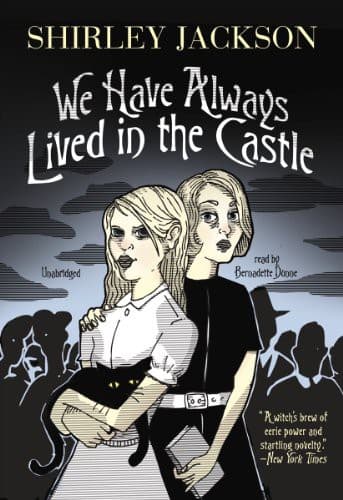
- We Have Always Lived in the Castle
Shirley Jackson
4.0 (118k) average on GoodreadsThrillerFeatures an isolated, eccentric family in a decaying house, with a focus on psychological creepiness and an unsettling atmosphere.
- To Kill a Mockingbird
Harper Lee
4.3 (4.5M) average on GoodreadsHistorical FictionIn the 1930s Jim Crow South, Harper Lee writes about racial injustice, moral growth, and the quiet courage of a lawyer father, Atticus Finch, as seen through his young daughter's eyes.
- The Great Gatsby
F. Scott Fitzgerald
3.9 (3.8M) average on GoodreadsHistorical FictionIn the opulent Roaring Twenties, a mysterious millionaire's lavish parties hide his desperate, tragic pursuit of a lost love, exposing the emptiness within the American Dream.
- Pride and Prejudice
Jane Austen
4.3 (3M) average on GoodreadsHistorical FictionIn a society focused on status and money, Elizabeth Bennet navigates love and pride, challenging Mr. Darcy and social expectations to find true affection.





Enjoyed the summary?
A summary gives you the shape of the book. The book itself has the detail, the examples and the voice.
Find The Little Stranger on AmazonAs an Amazon Associate, BookBrief earns from qualifying purchases. How we're funded