

Synopsis
Covers the whole plot, including the ending.
- Difficulty
- Medium
- Pacing
- Moderate
- Mood
- Epic, Adventurous, Romantic, Intriguing, Dangerous
- Read it if
- You love sprawling historical epics with a single protagonist's journey of revenge and self-discovery, packed with adventure, romance, and diverse historical settings.
- Skip it if
- You prefer tightly focused plots, dislike extensive travelogues, or are not interested in medieval historical fiction.
The Walking Drum Plot Summary
Covers the whole plot, including the ending.
The Destruction of the Kerbouchard Estate and Young Mathurin's Escape
The story begins in twelfth-century Brittany. Young Mathurin Kerbouchard's peaceful life ends when his family's estate is attacked by raiders led by Baron de Tournemine. Mathurin's mother is killed, and his father, a scholar and warrior, is captured. Mathurin, trained by his father, escapes the burning estate. He sees the violence and, holding a hidden pouch of gold and a small dagger, promises to find his father and get revenge. His journey starts as a lone wanderer, driven by grief and a desire for justice.
Enslavement and the Mediterranean Journey
After months of wandering and learning to survive, Mathurin is captured by Barbary pirates while trying to sail the Mediterranean. He is sold into slavery and rows in galleys, enduring harsh conditions. As a slave, he sees the different cultures and languages of his fellow captives and captors, gaining knowledge and building his physical strength. He also learns about seamanship and naval warfare. His time in the galley hardens him, but his spirit stays strong, fueled by his family's memory and his search for his father. He plans his escape carefully, waiting for the right moment.
Escape and the Path to Scholarship
Mathurin escapes the galley during a storm and a battle. He finds himself in North Africa, where his skills and intelligence quickly get him noticed. He takes the name 'Kerbouchard' and starts to learn in the intellectual centers of the Islamic world, especially in places like Cordoba and Cairo. He studies philosophy, medicine, mathematics, and military strategy, becoming good at many languages and martial arts. His sharp mind and desire for knowledge lead him to seek out scholars and teachers, improving his abilities and understanding of the world, all while remembering his main goal.
Adventures in the Desert and the Princess
Kerbouchard travels across deserts, meeting tribes and learning their ways of survival and fighting. He gets involved in local conflicts, often using his strategic mind and fighting skills to gain favor and information. During this time, he meets Princess Zarah, a beautiful and smart woman caught in her family's politics. Their paths cross, leading to a romance and a complex alliance. Zarah sees Kerbouchard's talents and spirit, becoming important in his life by offering love and strategic help, and showing him the high stakes of royal courts.
Constantinople and the Byzantine Court
Kerbouchard's search eventually brings him to Constantinople, the capital of the Byzantine Empire. Here, he navigates the politics of the imperial court, where plots, betrayal, and power struggles are common. He uses his intellect and combat skills to survive assassination attempts and political schemes, often caught between groups. He earns a reputation as a warrior and a diplomat, gaining allies and powerful enemies. His time in Constantinople gives him insights into broader politics and refines his understanding of human nature and power.
The Steppes and the Mongol Threat
Guided by rumors and his search for his father, Kerbouchard goes into the vast Russian steppes. He meets nomadic tribes, learning their customs, languages, and fighting methods. He sees the beginning of the Mongol Empire's expansion, observing their cavalry and strategy. He often finds himself in fights and battles, improving his leadership and combat skills. This part of his journey has harsh survival conditions and constant watchfulness, as he moves through a world about to change greatly, all while gathering information that might lead him closer to his father.
The Valley of the Assassins
Following clues, Kerbouchard's journey ends in the Valley of the Assassins, the stronghold of the Nizari Ismaili order led by the Old Man of the Mountain. This fortress, Alamut, is said to hold secrets and important prisoners. Kerbouchard knows infiltrating this fortress will be his most dangerous challenge. He plans his approach carefully, using all the skills and knowledge he has gained, from disguise and stealth to combat and psychological manipulation, in his search for his father and the truth behind his family's destruction.
Infiltration and Confrontation
Kerbouchard infiltrates Alamut, moving through its defenses and the devotion of its people. He uncovers secrets within the fortress, including the identity of some captives. He confronts the Old Man of the Mountain, a powerful figure. During this confrontation, Kerbouchard's father is revealed to be alive, though imprisoned. The encounter is a battle of wits, where Kerbouchard must use his intelligence and courage to outsmart the leader and free his father, while facing the Assassin order.
Reunion and Revelation
Kerbouchard frees his father, who tells him about the conspiracy behind the attack on their estate. The attack was a calculated move by powerful figures to eliminate his father and take his knowledge. The Old Man of the Mountain, though a strong foe, was a tool in a larger plan. The reunion is emotional, as Mathurin learns about his father's past and the alliances that defined their family's place in the world. With his father safe, Kerbouchard's immediate rescue quest is done, but the larger quest for justice remains.
Justice and New Beginnings
With his father safe, Kerbouchard and his father start to uncover the conspiracy, identifying the person behind the attack on their home. This person is a powerful European figure, connected to Baron de Tournemine. Kerbouchard, now a warrior, scholar, and diplomat, aims to bring this person to justice, not just with force, but through strategy and evidence. The story ends with Kerbouchard, having achieved revenge and a deeper understanding of himself and the world, looking to a future where his knowledge and experience will be used for broader purposes, possibly creating a new legacy for the Kerbouchard name.
The Walking Drum Characters
Mathurin Kerbouchard
Protagonist
A Breton nobleman, scholar, and warrior seeking his father and revenge.
Mathurin is the central figure, a young man of noble birth from Brittany. Initially naive but well-educated by his scholar father, he is thrust into a brutal world after his family's estate is destroyed. He is highly intelligent, a quick learner, and possesses a remarkable aptitude for languages, combat, and strategy. His journey transforms him from a grieving boy into a formidable warrior, scholar, and diplomat who traverses the known world. Driven by an unwavering loyalty to his family and a burning desire for justice, he constantly seeks knowledge and hones his skills to survive and achieve his goals.
Relationships: His Father (Deeply loving and respectful, driven to rescue him); Princess Zarah (Passionate romantic and strategic alliance); Baron de Tournemine (Sworn enemy, target of revenge)
Mathurin's Father (Jean-Claude Kerbouchard)
Supporting/Catalyst
A renowned scholar and warrior, whose capture drives Mathurin's quest.
Mathurin's father is a brilliant scholar, alchemist, and warrior, whose vast knowledge and independent spirit make him a target for powerful enemies. He instilled in Mathurin a love for learning and trained him in various skills. Though largely absent from the narrative as a physical presence for much of the book, his memory and the quest to find him are the primary motivators for Mathurin. His eventual rescue reveals him to be a man of great wisdom and resilience, who understands the complex political and intellectual currents of their age. His past actions and connections are crucial to understanding the conspiracy against their family.
Relationships: Mathurin Kerbouchard (Beloved son, recipient of his knowledge and training); Baron de Tournemine (Captor and instrument of his enemies)
Princess Zarah
Supporting
An intelligent and resourceful princess who becomes Mathurin's lover and ally.
Zarah is a beautiful, intelligent, and strong-willed princess from an Islamic realm. She is well-educated, politically astute, and capable of navigating the treacherous courts of her world. She recognizes Mathurin's unique qualities and becomes a significant romantic interest and a valuable ally. Her connections and insights often prove crucial to Mathurin's survival and progress, providing him with strategic information and assistance. She is a woman of agency and power in her own right, not merely a damsel in distress, and her relationship with Mathurin is one of mutual respect and passion.
Relationships: Mathurin Kerbouchard (Passionate lover and trusted ally); Her family/rivals (Political adversaries and allies within her court)
Baron de Tournemine
Antagonist
The cruel leader of the raid on Mathurin's home, a primary target for revenge.
Baron de Tournemine is a brutal and ruthless nobleman, responsible for leading the attack on the Kerbouchard estate, killing Mathurin's mother, and capturing his father. He embodies the feudal violence and arbitrary power that Mathurin despises. While initially appearing as the main antagonist, he is later revealed to be a pawn in a larger scheme. His cruelty and greed make him a clear and personal target for Mathurin's vengeance, representing the immediate injustice Mathurin seeks to rectify.
Relationships: Mathurin Kerbouchard (Sworn enemy, target of revenge); Unnamed Mastermind (Subservient to a higher power orchestrating the attack)
The Old Man of the Mountain (Hassan-i Sabbah)
Antagonist/Supporting
The enigmatic and formidable leader of the Nizari Assassins at Alamut.
The Old Man of the Mountain is the legendary and feared leader of the Nizari Ismaili sect, based in the impregnable fortress of Alamut. He is a master of manipulation, espionage, and psychological warfare, commanding fanatical loyalty from his followers. He is a highly intelligent and dangerous figure, whose influence extends across the Middle East. While an adversary Mathurin must overcome to reach his father, he is not the ultimate architect of Mathurin's family's downfall, but rather a powerful figure Mathurin must outwit and defeat within his own domain.
Relationships: Mathurin Kerbouchard (Opponent in a battle of wits and force); Mathurin's Father (Captor)
Omar Khayyam
Mentioned/Supporting
A renowned Persian polymath, a source of inspiration and knowledge for Mathurin.
Omar Khayyam is a historical figure, a Persian polymath who was a mathematician, astronomer, philosopher, and poet. Though he does not directly interact with Mathurin, his presence and influence are felt through the intellectual circles Mathurin frequents. Mathurin studies his works and is inspired by his broad pursuit of knowledge. Khayyam represents the pinnacle of Islamic scholarship and the rich intellectual environment that shapes Mathurin's education and worldview, demonstrating the depth of Mathurin's intellectual pursuits beyond mere survival.
Relationships: Mathurin Kerbouchard (Intellectual inspiration and teacher (indirectly))
Various Mentors/Teachers
Supporting
Numerous anonymous scholars, warriors, and sailors who impart skills to Mathurin.
Throughout his travels, Mathurin encounters a multitude of individuals who, wittingly or unwittingly, become his teachers. These include galley slaves who teach him languages, desert tribesmen who instruct him in survival and combat, scholars in Cordoba and Cairo who expand his intellectual horizons, and Byzantine strategists. These characters represent the vast array of knowledge and skills Mathurin acquires, highlighting his insatiable curiosity and adaptability. They are crucial in shaping him into the formidable individual he becomes, each contributing a piece to his comprehensive education.
Relationships: Mathurin Kerbouchard (Teachers and students, sharing knowledge)
The Grand Master
Antagonist
The true, powerful mastermind behind the attack on the Kerbouchard family.
The Grand Master is the ultimate, shadowy antagonist, a powerful and influential figure whose identity is revealed towards the end of the book. This individual is the true orchestrator of the attack on the Kerbouchard estate, using Baron de Tournemine as a tool. Their motivation stems from a desire to neutralize Mathurin's father due to his knowledge, influence, or some perceived threat. This character represents the deeper, more insidious political and power struggles at play, elevating the conflict beyond simple revenge to a grander scale of justice.
Relationships: Mathurin Kerbouchard (Ultimate enemy); Mathurin's Father (Target of his machinations); Baron de Tournemine (Subordinate/pawn)
The Walking Drum Themes
Identity and Self-Discovery
Mathurin's journey is one of self-discovery. Without his home and family, he must create a new identity. He takes on new names, learns many skills, and adapts to different cultures, always changing who he is. His experiences as a slave, scholar, warrior, and diplomat all shape his evolving self, moving beyond his noble birthright to become a man defined by his intellect, courage, and wisdom. This theme is central as he loses his innocence and takes on his new roles in the world.
“He was Mathurin, a name given by his father, but he was also Kerbouchard, the name he would make his own, forged in the fires of adversity and knowledge.”
The Pursuit of Knowledge and Wisdom
A main theme is Mathurin's desire for knowledge. From his early education by his father to his studies in Islamic centers, and his observations of different cultures, he always tries to learn about the world. This pursuit is not just academic; it is a tool for survival, strategy, and justice. His skill in languages, sciences, and martial arts, all gained through study and experience, shows how knowledge is the most powerful weapon and guide in his journey, setting him apart from many enemies.
“Knowledge was not merely power; it was the very air he breathed, the sword in his hand, the shield against his enemies.”
Revenge and Justice
Mathurin's journey starts with a desire for revenge against those who destroyed his family. As the story goes on, his quest becomes a broader search for justice. While he wants to punish Baron de Tournemine, he also uncovers a larger plot, turning his personal vendetta into a quest to correct a greater wrong. The story explores the complexities of justice, showing that it often needs not just force, but also cleverness, diplomacy, and a deep understanding of the world's power structures.
“Revenge was a cold dish, but justice, he realized, was a tapestry woven with patience, cunning, and an unyielding will.”
Adaptability and Resilience
Mathurin's survival in hostile places—slave galleys, deserts, treacherous courts, and battlefields—shows his adaptability and resilience. He moves between different cultures, languages, and social levels, always finding a way to survive, thrive, and learn. This theme highlights the human ability to overcome great difficulty with wit, physical skill, and a strong spirit, showing that true strength is being able to bend without breaking.
“He was a reed in the wind, but a reed that could become a spear, or a flute, or a pen, whatever the moment demanded.”
The Clash and Fusion of Cultures
The novel shows the diverse cultures of the twelfth century, especially the interaction between Christian Europe and the Islamic world. Mathurin's journey takes him through these different but often connected civilizations. He observes their differences, learns their languages and customs, and often acts as a link between them. The book shows both the conflicts and the intellectual exchange between these worlds, especially in the advancements of Islamic scholarship that Mathurin embraces, suggesting a mix of knowledge rather than just a clash of civilizations.
“He had seen the grandeur of East and West, and knew that wisdom was not confined by creed or continent.”
Plot Devices & Literary Techniques
The Walking Drum (Metaphor)
Symbolizes Mathurin's restless, wandering nature and the spread of knowledge.
The 'walking drum' is a powerful metaphor for Mathurin himself. A drum is a tool of communication, calling people to action or conveying messages. 'Walking' signifies his constant movement, his journey across vast landscapes, and his refusal to settle. It symbolizes his role as a carrier of knowledge, a harbinger of change, and a man whose very existence creates ripples wherever he goes. It encapsulates his destiny as a wanderer who gathers and disseminates wisdom, much like a drum's rhythm travels far and wide.
The Lost Father/Quest Motif
The primary driving force behind Mathurin's epic journey.
The quest to find his captured father is the central plot device that propels Mathurin's entire adventure. This classic motif provides a clear, compelling goal that justifies his extensive travels, his encounters with diverse cultures, and his acquisition of myriad skills. It allows the narrative to explore various settings and introduce a wide cast of characters, all while maintaining a strong emotional core. The father's identity and past are gradually revealed, adding layers of intrigue to the overarching conspiracy.
Bildungsroman (Coming-of-Age Story)
The narrative structure detailing Mathurin's psychological and moral growth.
The entire novel functions as a Bildungsroman, chronicling Mathurin's transformation from a naive, sheltered youth into a seasoned, world-wise adult. His journey is not just physical but also intellectual, emotional, and moral. Each challenge, each new skill learned, and each cultural immersion contributes to his development. This device allows the author to explore themes of identity, resilience, and the acquisition of wisdom through lived experience, making Mathurin's personal growth as significant as the external plot events.
Polyglotism and Multidisciplinary Mastery
Mathurin's ability to learn multiple languages and diverse skills as a key to his survival and success.
Mathurin's extraordinary aptitude for learning and mastering multiple languages, combat forms, sciences, and diplomatic skills is a crucial plot device. His ability to speak and understand various tongues allows him to infiltrate different societies, gather intelligence, and communicate effectively across cultures. His diverse skill set, ranging from medicine and navigation to swordsmanship and strategy, consistently gets him out of perilous situations and earns him respect and opportunities, making him an almost superhuman figure of adaptability and intelligence.
The Walking Drum Quotes
“A man must make his own opportunities, and, if they do not come, then he must make them.”
“The world is a hard school, and experience is the only master.”
“Knowledge is power, but only if you know how to use it.”
“Fear is a poor companion on any journey.”
“There are no friends like old friends, and no loyalty like that which has been tested by time.”
“A man who does not know where he is going will usually end up somewhere else.”
“Life is a gamble, and the only way to win is to play.”
“The greatest weapon a man can carry is a quick mind and a ready wit.”
“Every man has his price, but some men are not for sale.”
“To be truly free, one must be able to walk away from anything at any time.”
“The past is a road already traveled; the future is a road yet to be built.”
“It is not the size of the dog in the fight, but the size of the fight in the dog.”
“There is always something to be learned, even from your enemies.”
Quiz
10 questions on the plot and the characters. Each answer comes with a short explanation.
Question 1
What is the primary motivation for Mathurin Kerbouchard's journey across Europe and beyond?
- To escape a forced marriage to a local lord's daughter.
- To seek out legendary lost treasure hidden in the Russian steppes.
- To find his father, who was taken captive by raiders.
- To become a renowned scholar in Constantinople.
Show answer
C. To find his father, who was taken captive by raiders. Kerbouchard's main quest throughout the book is to locate and rescue his father, who was captured by Vikings and sold into slavery, a journey that takes him across vast distances and through many perils.
Question 2
Which of the following skills is Kerbouchard NOT noted for possessing?
- Martial arts and swordsmanship
- Navigation and seamanship
- Advanced alchemical practices
- Proficiency in multiple languages
Show answer
C. Advanced alchemical practices Kerbouchard is depicted as a polymath, skilled in combat, languages, navigation, and scholarship, but not specifically advanced alchemy. While he has a thirst for knowledge, alchemy isn't a stated primary skill.
Question 3
What is the significance of the 'Valley of Assassins' in Kerbouchard's journey?
- It is where he finally settles down and starts a family.
- It is the final destination and a major confrontation point in his quest.
- It is a place of refuge where he trains for a year.
- It is where he discovers a map leading to his father.
Show answer
B. It is the final destination and a major confrontation point in his quest. The 'Valley of Assassins' refers to the impregnable fortress of the Nizari Isma'ili, a powerful and feared sect. It represents a major challenge and a critical stage in Kerbouchard's ultimate goal, often connected to the fate of his father.
Question 4
Which major historical city does Kerbouchard spend a significant amount of time in, encountering its wonders and treachery?
- Paris
- Rome
- Constantinople
- Baghdad
Show answer
C. Constantinople The synopsis explicitly mentions 'the Byzantine wonders of Constantinople,' and Kerbouchard's journey includes extensive interactions within this powerful and culturally rich city, facing both its splendor and its dangers.
Question 5
How does Kerbouchard typically acquire new knowledge or skills during his travels?
- He relies solely on ancient texts found in monasteries.
- He seeks out and learns from various masters, scholars, and individuals he encounters.
- He possesses an innate, almost magical, ability to understand new concepts.
- He primarily learns through observation and mimicking others.
Show answer
B. He seeks out and learns from various masters, scholars, and individuals he encounters. Kerbouchard's character is defined by his active pursuit of knowledge. He is always learning from those around him, whether it's a ship's captain, a scholar, or a warrior, constantly expanding his practical and intellectual abilities.
Question 6
What role do women often play in Kerbouchard's adventures?
- They are primarily damsels in distress requiring constant rescue.
- They often serve as antagonists trying to hinder his progress.
- They are often powerful, intelligent, and sometimes dangerous allies or lovers.
- They are mostly background figures with little impact on the plot.
Show answer
C. They are often powerful, intelligent, and sometimes dangerous allies or lovers. The book, like many L'Amour novels, features strong female characters who are not merely passive. They are often intelligent, capable, and play significant roles as allies, romantic interests, or even formidable opponents, adding 'passions' to his journey.
Question 7
Kerbouchard's journey takes him through various terrains. Which of these is explicitly mentioned as a setting for his adventures?
- The jungles of North Africa
- The deserts of Arabia
- The Russian steppes
- The fjords of Scandinavia
Show answer
C. The Russian steppes The book description specifically states 'Across Europe, over the Russian steppes,' indicating that this vast grassland region is a significant part of his travels, distinct from other mentioned locations.
Question 8
What is a central theme explored through Kerbouchard's character and experiences?
- The futility of knowledge in a violent world.
- The importance of loyalty to one's feudal lord above all else.
- The power of self-reliance, adaptability, and the pursuit of knowledge in overcoming adversity.
- The inherent corruption of all political systems.
Show answer
C. The power of self-reliance, adaptability, and the pursuit of knowledge in overcoming adversity. Kerbouchard embodies the L'Amour hero archetype: highly capable, self-sufficient, and constantly learning. His journey is a testament to how these qualities allow him to survive and even thrive in a dangerous, unpredictable world.
Question 9
How does Kerbouchard's mixed heritage (Norman and Basque) influence his character and interactions?
- It makes him an outcast, unable to truly fit in anywhere.
- It provides him with a unique blend of skills and perspectives, aiding his adaptability.
- It creates constant internal conflict, hindering his decision-making.
- It primarily serves as a plot device to introduce him to different regions.
Show answer
B. It provides him with a unique blend of skills and perspectives, aiding his adaptability. His mixed heritage gives him a broader understanding of different cultures and fighting styles, often allowing him to navigate diverse societies and challenges with greater ease than someone from a single background. It's a source of strength and versatility.
Question 10
What kind of 'drum' does the title 'The Walking Drum' most likely refer to in the context of Kerbouchard's journey?
- A literal musical instrument he carries to signal allies.
- A symbolic representation of his constant, relentless movement and the spread of his reputation.
- A secret code name for a network of spies he works with.
- A specific type of weapon he masters in the East.
Show answer
B. A symbolic representation of his constant, relentless movement and the spread of his reputation. The 'Walking Drum' is a metaphor for Kerbouchard himself – a man constantly on the move, his reputation preceding him, stirring events and drawing attention wherever he goes, much like a drum's beat travels.
The Walking Drum FAQ
What is 'The Walking Drum' about?
'The Walking Drum' is a historical adventure novel following Mathurin Kerbouchard, a young man from Brittany in the 12th century. His quest begins with the search for his enslaved mother, leading him across Europe, the Russian steppes, and the Byzantine Empire, where he encounters various cultures, dangers, and opportunities for learning and revenge.
Why should I read 'The Walking Drum'?
You should read 'The Walking Drum' for its sprawling epic adventure, rich historical detail, and the compelling journey of Mathurin Kerbouchard. It offers a fascinating glimpse into 12th-century Europe and beyond, filled with sword fights, political intrigue, philosophical discussions, and a relentless pursuit of knowledge and justice, showcasing Louis L'Amour's versatility beyond Westerns.
What is the background/setting of 'The Walking Drum'?
The novel is set in the 12th century, spanning a vast geographical area from Brittany, France, across the Mediterranean, through various European kingdoms, the Russian steppes, and ultimately to the Middle East, including Constantinople and the Valley of Assassins. It meticulously portrays the diverse cultures, political landscapes, and technological advancements of the era.
What are the most memorable quotes?
While L'Amour's style is more about narrative flow than isolated quotes, memorable lines often reflect Kerbouchard's philosophy: 'A man must learn to stand alone' or observations on knowledge like, 'The more a man knows, the more he is a man.' His internal monologues about observation and survival are particularly impactful.
What writing style does the author use?
Louis L'Amour employs a direct, descriptive, and fast-paced narrative style, characteristic of his adventure novels. He integrates extensive historical research seamlessly into the plot, creating vivid settings and believable characters, while maintaining a sense of urgency and constant forward momentum for Kerbouchard's journey.
What minor details add significant meaning?
Kerbouchard's consistent practice of observing and learning from every encounter, whether a blacksmith or a philosopher, underscores the novel's theme that knowledge is the ultimate weapon and survival tool. His mastery of languages and various trades, not just combat, highlights the importance of adaptability in the diverse 12th-century world.
What are some subtle foreshadowing moments?
Early mentions of the vast network of slave traders and the ruthlessness of certain religious orders subtly hint at the immense challenges and powerful enemies Kerbouchard will face. His father's cryptic warnings about the dangers of the world beyond Brittany also foreshadow the treachery and violence awaiting him.
What unexpected character connections exist?
Kerbouchard's journey reveals a surprising web of connections, such as his encounter with a former acquaintance of his father in a distant land, or how seemingly random allies he makes along the way prove crucial later in his quest for his mother. These connections often highlight the interconnectedness of the medieval world despite vast distances.
What are unspoken character motivations?
Beyond finding his mother, Kerbouchard is driven by an unspoken desire for self-mastery and proving his worth, stemming from his humble origins and the challenges he faces. Many characters he encounters also harbor hidden ambitions for power, wealth, or revenge, often masked by their outward roles.
What psychological complexities do characters exhibit?
Kerbouchard grapples with moral dilemmas, choosing between vengeance and justice, and maintaining his humanity amidst brutality. Characters like the various scholars and leaders he meets often exhibit complex motivations, balancing religious fervor with political pragmatism, and personal gain with societal roles, reflecting the turbulent era.
What are the major emotional turning points?
A major turning point is Kerbouchard's escape from the slave galley, which solidifies his resolve and forces him to rely entirely on his wits. His first major victory against a powerful enemy, and later, the reunion with his mother, are profound emotional moments that shape his understanding of his journey's purpose.
How do relationship dynamics evolve?
Kerbouchard's relationships evolve from distrust and necessity to loyalty and affection. His dynamic with various mentors shifts from student to peer, while his romantic entanglements, such as with the Princess, evolve from fleeting encounters to deeper connections that challenge his solitary path and commitment to his quest.
Which parts remain ambiguous or open-ended?
While Kerbouchard achieves his primary goal, the novel leaves open the exact nature of his future. His vast knowledge and skills position him for many paths, but his ultimate destiny or whether he truly settles down remains somewhat ambiguous, suggesting his journey of learning and adventure is far from over.
What are controversial scenes or decisions?
Some readers might find Kerbouchard's pragmatic approach to violence and revenge, or his multiple romantic entanglements, controversial. His willingness to adapt to different cultures, sometimes adopting their customs or even religions temporarily for survival, could also be debated as opportunistic versus truly adaptive.
'The Walking Drum' ending explained: how it ends & what it means
The novel concludes with Kerbouchard successfully locating and rescuing his mother from the Valley of Assassins, fulfilling his primary quest. He has also amassed significant wealth, knowledge, and respect. The ending signifies the triumph of perseverance, intellect, and courage, but also implies that a man of Kerbouchard's capabilities and restless spirit will continue to seek new horizons and challenges.
About the author

Louis L'Amour was an American author known for his Western novels and adventure fiction. His notable works include "Last of the Breed," "The Walking Drum," "To the Far Blue Mountains," "Jubal Sackett," "The Daybreakers," and "The Sackett Brand," which often explore themes of frontier life and rugged individualism. L'Amour's storytelling has made a significant impact on the genre of Western literature.
Similar books
- The Physician
Noah Gordon
4.4 (39k) average on GoodreadsHistorical FictionFollows a young man's journey across continents to learn medicine and find his purpose in the medieval world.
- The Name of the Rose
Umberto Eco
4.1 (301k) average on GoodreadsHistorical FictionWhile both are historical novels, Eco's work deeply embeds its characters and plot within the intellectual, theological, and social complexities of its 14th-century setting, using history to drive mystery and philosophical inquiry. L'Amour's "The Walking Drum" uses history more as an exotic stage for a personal adventure, with less emphasis on the profound impact of the era's intellectual currents on the protagonist or plot. Eco demands a more engaged reader in deciphering historical context, whereas L'Amour prioritizes accessible adventure.
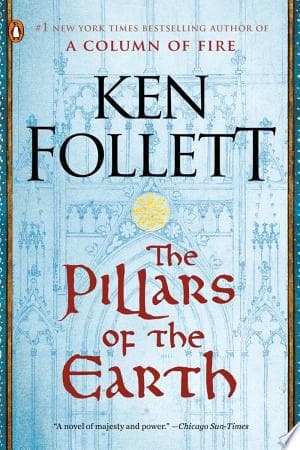
- The Pillars of the Earth
Ken Follett
4.3 (649k) average on GoodreadsFantasyFollett's novel, also set in the medieval period, excels in building a rich, multi-generational tapestry where historical events, societal structures, and the daily lives of numerous characters are intricately woven into a cohesive narrative. The historical context profoundly shapes the characters' fates and motivations. "The Walking Drum," by contrast, is more focused on the individual exploits of a single, extraordinary hero, with historical detail often serving as flavor rather than the fundamental driving force of the narrative or the characters' internal struggles. Follett provides a macro-level view of an era, while L'Amour offers a micro-level, hero-centric adventure.
- Harry Potter and the Sorcerer's Stone
J.K. Rowling
4.5 (7M) average on GoodreadsFantasyRescued from a miserable life under the stairs, an orphaned boy discovers he's a wizard destined for a magical school, where he uncovers a dangerous secret tied to the dark wizard who murdered his parents.
- The Hunger Games
Suzanne Collins
4.3 (6.4M) average on GoodreadsFantasyIn a future where children fight to the death on live television, Katniss Everdeen volunteers for the arena, turning a death sentence into a fight for survival and a spark of rebellion.
- 1984
George Orwell
4.2 (3.1M) average on GoodreadsPoliticsIn a future where surveillance and thought control are absolute, a man's search for truth clashes with the Party, showing that hope can be a form of rebellion.





Enjoyed the summary?
A summary gives you the shape of the book. The book itself has the detail, the examples and the voice.
Find The Walking Drum on AmazonAs an Amazon Associate, BookBrief earns from qualifying purchases. How we're funded