
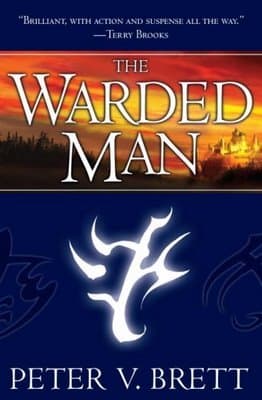
Synopsis
Covers the whole plot, including the ending.
- Difficulty
- Medium
- Pacing
- Moderate
- Mood
- Dark, Desperate, Hopeful, Action-packed, Gritty
- Read it if
- You enjoy epic fantasy with a strong focus on world-building, character development, and a desperate fight for survival against a terrifying, existential threat.
- Skip it if
- You dislike dark fantasy themes, graphic violence, or stories that involve significant character suffering and loss.
The Warded Man Plot Summary
Covers the whole plot, including the ending.
Abban's Attack and the Warder's Inaction
Ten-year-old Arlen Bales lives with his parents, Elona and John, in Tibbet's Brook. One night, while his mother gives birth, a wood demon attacks their farm. John Bales, the warder meant to protect the family, freezes in fear and fails to activate the wards. Elona, weakened, tries to fight the demon but is fatally wounded. Arlen, terrified and disgusted by his father's inaction, activates a ward and scares the demon away. This event shatters Arlen's trust in his father and the old warding system, making him want to find a better way to fight demons.
Arlen's Departure from Tibbet's Brook
After his mother's death and his father's continued emotional distance and drinking, Arlen cannot stay in Tibbet's Brook. He feels stifled by the fear and complacency in the hamlet. At thirteen, after a hard winter and another close call with demons, Arlen decides to leave. He argues with his father, who wants him to stay and learn farming and warding. Arlen, however, is determined to fight the demons rather than just hide. He leaves alone, seeking knowledge and power beyond the wards.
Leesha's Apprenticeship and the Herb Gatherer's Wisdom
In Cutter's Hollow, young Leesha Paper, smart and observant, is mentored by Bruna, the local herb gatherer and healer. Leesha's mother, vain and shallow, dislikes her daughter's interest in 'dirty' work, wanting her to find a husband. But Leesha is drawn to Bruna's knowledge of herbs, healing, and the natural world, which often includes insights into the demons and old ways. Bruna teaches Leesha about medicine, self-reliance, observation, and understanding the world beyond society's surface concerns. Leesha proves to be a dedicated and talented apprentice, quickly learning Bruna's wisdom.
Rojer's Orphanage and Minstrel Training
Rojer Inn is a boy from the Hollow, an isolated valley. His family, traveling minstrels, are killed by a demon attack when he is an infant. He is the only survivor, found holding his mother's mandolin. Traveling minstrels take him in, raise him, and teach him their art. Rojer develops a great talent for the mandolin, finding comfort in music. He learns that music can sometimes affect demons, a secret passed down through generations of minstrels. Despite his playful nature, Rojer carries the trauma of his past, shown in his fear of the night and loyalty to his adopted family.
Arlen's Journey and Encounters with Deliverers
After leaving Tibbet's Brook, Arlen begins a long journey across the Known World. He meets various Deliverers, professional warders who protect caravans and travelers between warded cities. Arlen apprentices himself to several of them, including the tough but skilled Ragen and the experienced Cob. He learns different fighting styles, warding techniques, and life on the road. He finds that many Deliverers are cynical, but also have a strong sense of duty. Arlen's experiences broaden his understanding of the world and the demons, strengthening his belief that humanity needs to do more than just hide.
Leesha's Rise as a Healer
Bruna, Leesha's mentor, eventually dies from old age and illness. Before her death, she gives Leesha her final advice, entrusting her with the care of Cutter's Hollow. Despite her youth and some initial doubt from villagers, Leesha takes on Bruna's role as the town's herb gatherer and healer. She proves competent and compassionate, earning the community's respect through her skill and dedication, especially during a plague. Leesha's position gives her a unique view of the human condition and the constant threat of the demons.
Rojer's Minstrel Life and the Green Man
Rojer travels with his minstrel group, performing in towns and cities. He improves his musical skills, learning to use his mandolin not just for entertainment but also as a weapon against demons. During his travels, he meets the mysterious Green Man, a legendary, powerful warder and fighter. The Green Man, who is Arlen in disguise, tests Rojer's skills and offers vague advice. Rojer is fascinated by the Green Man's power and how his music affects demons, suggesting a deeper link between music and magic that Rojer has yet to understand.
Arlen's Transformation into the Warded Man
After years of travel and fighting, Arlen grows frustrated with the limits of existing wards. He seeks out the legendary city of Anoch Sun, believed to hold ancient knowledge. There, he finds old texts and items that reveal a forgotten form of warding, where wards are permanently etched onto a person's skin. Driven by his desire for ultimate protection and power, Arlen decides to cover his entire body with these protective wards. This painful process turns him into the Warded Man, a fearsome and effective fighter, but also an outcast, feared by the people he wants to protect.
Return to Cutter's Hollow and the Deliverer's Challenge
The Warded Man (Arlen) returns to Cutter's Hollow, a city he protected as a Deliverer years ago. His appearance causes a stir, as his warded skin is both impressive and frightening. He immediately clashes with the city's Duke and the established Deliverers, who are complacent and corrupt. The Warded Man shows his superior fighting skills and knowledge, single-handedly repelling a major demon attack. He challenges the city's leaders, urging them to fight the demons rather than just survive. His presence forces the people of Cutter's Hollow, including Leesha, to face their fears and rethink their strategies.
Leesha and the Warded Man's Alliance
Leesha, now a respected healer, is initially cautious of the Warded Man, but she recognizes his power and the truth in his words. She sees his radical approach as possibly the only way to save humanity. They form an uneasy alliance. Leesha provides her medical knowledge and understanding of the community; the Warded Man shares his insights into demon behavior and ancient warding. Their relationship is complex, with both tension and mutual respect, as they both work to improve humanity's chances against the demons. Leesha becomes an important ally, helping him understand the human side of his mission.
Rojer Joins the Warded Man
Rojer, having met the Green Man before, recognizes him as the Warded Man. Intrigued by the Warded Man's power and radical approach, and sensing a deeper connection to the fight against demons through his music, Rojer leaves his minstrel group and joins the Warded Man and Leesha. He brings his unique musical abilities, which have a strange and powerful effect on the demons, often disorienting them. His addition provides a key element to their group, as he represents a different kind of power and a lighter spirit amidst the grim struggle.
Confrontation and the Battle for Cutter's Hollow
The Warded Man's presence in Cutter's Hollow leads to a massive demon attack, much larger and more organized than anything the city has seen in generations. The Warded Man, Leesha, and Rojer, along with a few brave citizens, lead the defense. The battle is fierce, pushing humanity to its limits. The Warded Man's body wards are effective, Leesha's healing is vital, and Rojer's music disorients the demons. They repel the attack, but at a great cost. This proves humanity can fight back, but also shows the immense power of the demons.
The Journey to the Desert and the Painted Man
After the attack on Cutter's Hollow, the Warded Man, Leesha, and Rojer realize that staying in the warded cities offers only temporary safety. The Warded Man believes that true knowledge and a lasting solution are in the desert city of Krasia, home to a warrior culture that fights demons without traditional wards. They decide to begin a dangerous journey across the desert, leaving the relative safety of the Northern cities. This journey represents a commitment to a new way of life and a deeper search for the origins of the demons and the power to defeat them.
The Warded Man Characters
Arlen Bales / The Warded Man / The Painted Man
Protagonist
A man driven to fight corelings through radical means, becoming covered in wards.
Arlen is a complex and determined individual, initially a fearful boy who witnesses his mother's death due to his father's cowardice. This trauma fuels a lifelong quest to understand and defeat corelings, rejecting the complacent reliance on fragile wards. He is intelligent, resourceful, and possesses an iron will, pushing himself to extreme lengths. His journey transforms him from a disillusioned farm boy into the legendary Warded Man, covered in protective wards, making him a formidable warrior but also an outcast. He is often stoic and solitary, driven by a singular purpose, but beneath his hardened exterior lies a deep desire to protect humanity.
Relationships: John Bales (Estranged father, source of initial trauma); Elona Bales (Deceased mother, whose bravery inspires him); Leesha Paper (Reluctant ally and intellectual partner); Rojer Inn (Loyal companion and fellow fighter); Ragen (Mentor, Deliverer); Cob (Mentor, Deliverer)
Leesha Paper
Protagonist/Supporting
A pragmatic and intelligent healer who uses her knowledge to aid in the fight against corelings.
Leesha is a sharp-witted and compassionate young woman from Cutter's Hollow. Despite her mother's superficial desires for her, Leesha is drawn to the practical and vital work of healing. She apprentices under Bruna, becoming a highly skilled herb gatherer and healer. Leesha is pragmatic, observant, and possesses a strong moral compass. She is not easily swayed by fear or tradition, making her open to Arlen's radical ideas, even while maintaining a healthy skepticism. She represents the intellectual and nurturing side of humanity's fight, using knowledge and care as her weapons.
Relationships: Bruna (Mentor and surrogate grandmother); Arlen Bales (Reluctant ally, intellectual partner, and potential romantic interest); Rojer Inn (Friend and fellow traveler); Mersilla Paper (Shallow and critical mother)
Rojer Inn
Protagonist/Supporting
A charismatic minstrel whose music holds a unique power over corelings.
Rojer is a lively and charming young minstrel, orphaned at a young age by a coreling attack. He finds solace and purpose in his music, becoming an exceptionally talented mandolin player. Rojer carries a deep-seated trauma from his past, manifesting in a fear of the night, but he is also brave and loyal. His music has a mysterious and potent effect on corelings, a secret passed down through generations of minstrels, making him an invaluable asset in battle. Despite his playful demeanor, Rojer is keenly observant and possesses an innate understanding of human nature.
Relationships: Arlen Bales (Mentor figure and leader of his new 'family'); Leesha Paper (Friend and fellow traveler); Jardir (Future rival/ally (in later books, but established here))
John Bales
Supporting
Arlen's father, whose cowardice in the face of corelings leaves a lasting scar.
John Bales is Arlen's father, a warder and farmer in Tibbet's Brook. He is a man paralyzed by fear, especially when confronted by corelings. His inaction during his wife's death profoundly impacts Arlen, creating a deep rift between them. John embodies the complacency and fear that Arlen despises in humanity, preferring to hide behind wards rather than fight. He is a tragic figure, consumed by his own inadequacies and unable to connect with his son after the trauma.
Relationships: Arlen Bales (Estranged son, source of disappointment); Elona Bales (Deceased wife, whose death he feels responsible for)
Elona Bales
Supporting
Arlen's brave mother, whose death inspires his quest.
Elona Bales is Arlen's mother, a strong and courageous woman. During a coreling attack, despite being in labor, she bravely attempts to defend her family when her husband freezes. Her ultimate sacrifice and fearless struggle against the demon leave an indelible mark on young Arlen, inspiring his lifelong quest to fight corelings. She represents the inherent strength and potential bravery within humanity, contrasting sharply with her husband's cowardice.
Relationships: Arlen Bales (Beloved son, her death is his driving force); John Bales (Husband)
Bruna
Supporting
Leesha's wise and experienced mentor, the herb gatherer of Cutter's Hollow.
Bruna is the elderly herb gatherer and healer of Cutter's Hollow, and Leesha's mentor. She is a fount of knowledge, not only in medicine but also in the old ways and the realities of life in a demon-haunted world. Bruna is pragmatic, kind, and possesses a quiet strength. She sees Leesha's potential and guides her with wisdom and encouragement, teaching her the importance of self-reliance and observation. Bruna represents the traditional, yet effective, knowledge that still exists within humanity, albeit often overlooked.
Relationships: Leesha Paper (Apprentice and surrogate granddaughter)
Ragen
Supporting
A gruff but skilled Deliverer who mentors young Arlen.
Ragen is one of the Deliverers who takes Arlen under his wing during his travels. He is a hardened and practical man, accustomed to the dangers of the road and the constant threat of corelings. Ragen teaches Arlen valuable fighting skills and the realities of being a Deliverer, instilling in him a sense of discipline and self-reliance. Despite his gruff exterior, he cares for Arlen and helps shape him into a capable warrior.
Relationships: Arlen Bales (Mentor and employer)
Cob
Supporting
A wise and experienced Deliverer who further guides Arlen.
Cob is another Deliverer who mentors Arlen, offering a different perspective than Ragen. He is older and more philosophical, possessing a deeper understanding of the world and the nature of the corelings. Cob helps Arlen refine his fighting techniques and encourages him to think beyond simple survival, hinting at the deeper mysteries of the wards and the demons. He represents the wisdom and experience that Arlen seeks, pushing him towards his ultimate transformation.
Relationships: Arlen Bales (Mentor and fellow traveler)
The Warded Man Themes
The Nature of Fear and Courage
The novel explores how fear paralyzes humanity, leading to inaction against the demons. John Bales's cowardice during the demon attack on his family directly causes his wife's death and Arlen's frustration. Arlen's journey is a search for courage, both in fighting and in challenging old norms. Leesha and Rojer also show courage – Leesha's dedication to healing despite danger, and Rojer's bravery in using his music, despite his past trauma. The Warded Man's act of covering himself in wards shows his radical courage, but also the fear he creates in others.
“Fear is a seed that, once planted, never dies. It grows, twisting and turning, until it is a part of you. But it is not you. It is a choice.”
The Search for Knowledge and Lost Arts
A main theme is the search for forgotten knowledge and old ways to fight the demons. Humanity has fallen into passive survival, relying on incomplete warding knowledge. Arlen's entire journey is driven by his desire to find better methods, leading him to seek Deliverers, old texts, and the lost art of body warding. Leesha, through her apprenticeship with Bruna, also seeks and preserves important knowledge of healing and nature. The novel suggests that humanity's salvation lies not just in fighting, but in remembering and understanding the past.
“We hide behind wards and forget that once, men fought the night. We've lost our knowledge, and with it, our courage.”
Individuality vs. Community
The story looks at the conflict between an individual's radical actions and the group's desire for safety and tradition. Arlen, as the Warded Man, becomes an outcast because his methods are too extreme for the fearful communities. He gives up his 'normalcy' for the greater good, but his appearance often frightens those he wants to protect. Leesha, too, challenges society's expectations by pursuing healing instead of marriage. While the protagonists form a small, dedicated group, their individual paths often put them at odds with wider society, showing how hard it is to make changes when fear rules.
“The people don't want a hero, boy. They want to be safe. And they'll hate anyone who reminds them they're not.”
The Price of Power and Transformation
Arlen's transformation into the Warded Man comes with a high cost. While gaining great power to fight demons, he loses his human appearance, becoming feared and isolated. His body wards are a permanent, painful change that marks him as different. The novel questions whether the ends justify the means and the personal sacrifices needed to gain true power. This theme also appears in Rojer's use of music, which, though powerful, is linked to a traumatic past. The characters constantly deal with the burdens and duties that come with their unique abilities.
“There are some choices that, once made, cannot be unmade. They change you, forever.”
Plot Devices & Literary Techniques
The Wards
Magical symbols providing protection against corelings.
Wards are ancient, magical symbols etched onto objects, buildings, or the ground, which repel corelings. They are humanity's primary defense against the demons of the night. Their power is often misunderstood and their true origins lost. The effectiveness of wards varies, and their proper application is crucial. Arlen's quest involves rediscovering more powerful, forgotten warding techniques, culminating in his radical decision to cover his body in them, transforming him into the Warded Man. They serve as both a symbol of humanity's fragile survival and Arlen's revolutionary approach to fighting back.
Corelings
Demonic entities that emerge at night, preying on humanity.
Corelings are the primary antagonists of the story, sentient and malevolent demons composed of rock, wood, fire, mind, and other elements. They rise from the earth after sunset, possessing supernatural strength and abilities, and burn with hatred for humanity. They are intelligent and learn from their encounters, constantly evolving their tactics. The corelings represent the existential threat humanity faces, driving the narrative and forcing characters to confront their deepest fears and challenge their complacency. Their diverse forms and powers require different strategies to combat.
The Deliverers
Traveling warders who protect caravans and trade routes.
Deliverers are skilled, professional warders who brave the night to protect travelers and goods between the warded cities. They are typically hardened, cynical individuals who understand the true dangers of the world beyond the safety of city wards. Arlen apprentices with several Deliverers, learning practical fighting skills, survival techniques, and the realities of life on the road. They represent a pragmatic but often complacent approach to fighting corelings, relying on traditional wards and simply surviving rather than actively seeking to defeat the demons. Their role highlights the fragmented and often self-serving nature of human society.
Lost Knowledge/Ancient Texts
Forgotten wisdom and techniques crucial to humanity's survival.
Throughout the story, the concept of lost knowledge is a powerful driving force. Humanity has forgotten much of the ancient wisdom and techniques that once allowed them to fight corelings effectively. Arlen's journey is fundamentally a quest to rediscover these lost arts, leading him to ancient cities and hidden texts. This device emphasizes humanity's decline and the need to look beyond current understanding. The rediscovery of body warding is a prime example, showing that the answers to present problems often lie in understanding a forgotten past.
The Warded Man Quotes
“Fear is a weapon. Always has been. The strongest one.”
“A man's worth isn't in what he owns, but in what he does. What he makes. What he builds.”
“The night belongs to the demons.”
“It is not the wards that protect us, but our will to fight.”
“Every hero has a choice: to be remembered for his deeds, or his death.”
“Sometimes, the only way to save yourself is to stop trying to save everyone else.”
“Hope is a dangerous thing. It can make you do foolish things.”
“What is courage, if not the will to act in the face of fear?”
“The world is not as it should be. But it is the only world we have.”
“A man who gives up on himself has already lost.”
“Even the strongest walls can crumble without someone to defend them.”
“There are some things worse than death. Living in fear is one of them.”
“Magic is not good or evil. It is merely a tool.”
“The greatest ward is the one you draw on your own skin.”
Quiz
10 questions on the plot and the characters. Each answer comes with a short explanation.
Question 1
What is the primary defense humanity uses against the corelings at night?
- Iron weapons
- Magical wards
- Sunlight
- Fortified castles
Show answer
B. Magical wards The book explicitly states that humanity shelters behind magical wards to protect themselves from the corelings.
Question 2
What happens to the corelings when the sun rises?
- They become stronger
- They retreat underground
- They transform into humans
- They are instantly destroyed
Show answer
B. They retreat underground Corelings are creatures of the night and retreat when the sun rises, allowing humans to move freely during the day.
Question 3
Which of the following is NOT described as a characteristic of the corelings?
- Supernatural powers
- Consuming hatred of humanity
- Vulnerability to fire
- Terrorize the night
Show answer
C. Vulnerability to fire The provided text describes corelings as having supernatural powers and a hatred of humanity, but it does not mention any specific vulnerability to fire. Their 'burning' is an internal characteristic, not a weakness.
Question 4
What is the current state of humanity's fight against the corelings?
- Humanity is winning and thriving.
- Humanity is slowly being culled and dwindling.
- Humanity has reached a stalemate with the corelings.
- Humanity has forgotten about the corelings.
Show answer
B. Humanity is slowly being culled and dwindling. The text states that the corelings are 'slowly culling the human herd' and 'human numbers dwindle under their relentless assault'.
Question 5
What is the 'impossible' quest that the three young survivors undertake?
- To destroy all existing wards.
- To make peace with the corelings.
- To regain the secrets of the past.
- To build a new, unwarded city.
Show answer
C. To regain the secrets of the past. The synopsis states they will 'risk everything in a desperate quest to regain the secrets of the past'.
Question 6
What has happened to the knowledge of how to battle corelings on equal terms?
- It is still widely known and practiced.
- It was never known in the first place.
- The knowledge has been lost over time.
- It is held by a secret society.
Show answer
C. The knowledge has been lost over time. The text mentions that 'Once, men and women battled the corelings on equal terms, but those days are gone,' implying the knowledge or ability has been lost.
Question 7
What is the primary motivation for the three young survivors to venture beyond the wards?
- To find new land for expansion.
- To escape the tyranny of their village elders.
- To find a way to fight back and reverse humanity's decline.
- To gather rare magical artifacts.
Show answer
C. To find a way to fight back and reverse humanity's decline. They embark on a 'desperate quest to regain the secrets of the past' because 'hope for the future is fading,' indicating a desire to find a way to combat the corelings effectively.
Question 8
What is implied about the origins of the magical wards?
- They were recently discovered by a scholar.
- Their origins are lost in myth.
- They were created by the corelings themselves.
- They are a natural phenomenon of the world.
Show answer
B. Their origins are lost in myth. The text explicitly states that the wards are 'symbols of power whose origins are lost in myth'.
Question 9
What is the main theme suggested by the phrase 'Night by night the demons grow stronger, while human numbers dwindle under their relentless assault'?
- The cyclical nature of conflict.
- The inevitable decline and potential extinction of humanity.
- The power of individual strength over collective weakness.
- The importance of adapting to environmental changes.
Show answer
B. The inevitable decline and potential extinction of humanity. This phrase highlights the dire situation humanity is in, facing a stronger enemy and dwindling numbers, suggesting a path towards extinction if nothing changes.
Question 10
What specific characteristic makes the wards 'terrifyingly fragile'?
- They require constant human maintenance.
- They can be easily broken by coreling attacks.
- Their effectiveness depends on the user's faith.
- They only work for a limited time each night.
Show answer
B. They can be easily broken by coreling attacks. The text mentions that humanity 'shelters behind magical wards—symbols of power... whose protection is terrifyingly fragile,' and that the young survivors step 'beyond the crumbling safety of the wards,' implying that the wards themselves are susceptible to damage or decay from the corelings' relentless assault.
The Warded Man FAQ
What is the central conflict in 'The Warded Man'?
The central conflict revolves around humanity's struggle for survival against the corelings, powerful demons that emerge nightly to hunt humans. Humans are confined to small settlements protected by ancient, often forgotten, wards, but these defenses are slowly failing, pushing humanity towards extinction.
Who are the three main protagonists and what motivates them?
The three main protagonists are Arlen Bales, Leesha Paper, and Rojer Inn. Arlen is driven by a desire to fight back against the demons and rediscover lost knowledge, refusing to be confined by the wards. Leesha is motivated to heal and protect her community, stepping into the role of a powerful herb gatherer and healer. Rojer, a jongleur, seeks to find his own place and purpose after a tragic demon attack, eventually using music as a weapon.
What are 'wards' and how do they function in the story?
Wards are magical symbols etched onto objects, buildings, or even skin, that provide protection against corelings. They function by creating a barrier that demons cannot cross or by repelling them, but their power diminishes over time, and many people have forgotten how to properly maintain or create new ones, making them a fragile defense.
What is the significance of the 'Warded Man' title?
The title refers primarily to Arlen Bales, who, through his journey, extensively wards his own body with intricate demon-warding tattoos. This makes him uniquely capable of fighting corelings directly and embodies his defiance against the demons, becoming a living weapon and symbol of hope.
Where does the story primarily take place?
The story takes place across several villages and regions in a world ravaged by corelings. Key locations include Tibbet's Brook, where Arlen grows up; Cutter's Hollow, Leesha's home; and the various towns and wilderness Arlen travels through on his quest, eventually leading to the dangerous city of Angiers.
What is the origin of the corelings, hinted at in the first book?
While not fully revealed in 'The Warded Man,' it is hinted that corelings are not merely natural predators but possibly a result of ancient magic or a forgotten war. Their intelligence and varied forms suggest a more complex origin than simple monsters, with whispers of them being a previous dominant species or a consequence of human hubris.
Are there any characters in the first book who possess unique knowledge or abilities beyond the common folk?
Yes, Brom and the Deliverer are two such characters. Brom, Arlen's father, possesses a deep, albeit flawed, understanding of warding and demon behavior. The Deliverer, a legendary figure, is revealed to be a powerful warded individual who travels between settlements, offering protection and carrying lost knowledge, though his true identity is a mystery for much of the book.
What is the significance of the 'Lost City' mentioned by some characters?
The 'Lost City' refers to Angiers, a once-great city that is now largely abandoned and overrun by corelings, particularly Mind Demons. It is significant because it is believed to hold ancient knowledge about wards and how to fight the demons, making it a dangerous but crucial destination for those seeking to turn the tide of the war.
How does Arlen's childhood trauma influence his adult personality and choices?
Arlen's childhood trauma, specifically witnessing his mother's death due to his father's inaction during a demon attack, profoundly shapes him. It instills in him a deep-seated anger, a fierce independence, and an unyielding resolve to never be helpless, driving his quest to fight the demons rather than hide.
Discuss Leesha Paper's transformation from a simple farm girl to a powerful healer.
Leesha's transformation is driven by necessity and her innate compassion. After her mother's death and the village's lack of a proper healer, she studies under the herb gatherer, Bruna, quickly mastering the art. Her intelligence and dedication allow her to not only heal physical wounds but also provide emotional support and leadership, solidifying her role as a vital figure in Cutter's Hollow.
How does Rojer's artistic talent as a jongleur relate to his coping mechanisms?
Rojer's jongleur skills are deeply intertwined with his coping mechanisms. After losing his family to a demon attack, music becomes his solace and his way of connecting with others. His ability to play the mandolin, particularly his unique 'demon-song,' allows him to express his grief and fear, but also to find purpose and even a weapon against the corelings.
What psychological impact do the constant nightly demon attacks have on the general human population?
The constant nightly attacks instill widespread fear, paranoia, and a profound sense of helplessness and resignation among the human population. It fosters a culture of hiding behind wards, discourages innovation, and leads to a decline in population and knowledge, with many living in constant dread and accepting their fate.
Is Arlen's path of becoming the Warded Man truly heroic, or does it carry a significant personal cost that could be seen as tragic?
Arlen's path is undeniably heroic in its intent and impact, as he offers hope and a new way to fight. However, it carries immense personal cost, isolating him from human connection and forcing him to endure extreme physical and emotional pain. Some might view it as tragic, as he sacrifices much of his humanity and personal happiness for the greater good.
The book explores different philosophies on how to deal with the corelings (hiding vs. fighting). Which approach does the narrative ultimately endorse or criticize?
The narrative strongly endorses the 'fighting back' approach, primarily through Arlen's journey. It criticizes the passive 'hiding' philosophy, showing how it leads to stagnation, fear, and slow decline. While acknowledging the necessity of wards, the book argues that true survival lies in understanding and actively confronting the threat, not merely enduring it.
What is the thematic significance of 'lost knowledge' in 'The Warded Man'?
Lost knowledge is a central theme, highlighting humanity's regression and vulnerability. The loss of ancient warding techniques, demon lore, and even basic societal skills underscores how far humanity has fallen. Arlen's quest to rediscover this knowledge is presented as the key to reversing their decline and reclaiming their past strength.
How does the book portray the concept of fear and courage in its characters?
The book portrays fear as a pervasive, debilitating force that dictates human existence, often leading to paralysis and desperation. Courage is depicted not as the absence of fear, but as the willingness to act despite it. Arlen, Leesha, and Rojer all experience fear, but their courage lies in their defiance, their willingness to challenge the status quo, and their determination to protect others.
Does 'The Warded Man' offer a clear message about the nature of good and evil?
While the corelings are clearly depicted as an existential evil threatening humanity, the book also explores the shades of gray within human morality. Characters like Arlen's father, Brom, or even Arlen himself, make questionable choices driven by fear or personal conviction. It suggests that evil can manifest in human inaction and selfishness, not just monstrous forms.
About the author

Peter V. Brett is an American author known for his contributions to the fantasy genre. His notable works include The Warded Man, The Desert Spear, The Daylight War, The Skull Throne, and The Core, which together form the Demon Cycle series. Brett's writing often explores themes of survival and the human spirit in a world threatened by dark forces.
Similar books
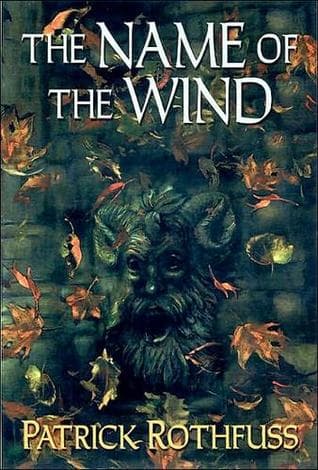
- The Name of the Wind
Patrick Rothfuss
4.5 (716k) average on GoodreadsFantasyFeatures a detailed magical system and a protagonist driven by a quest for knowledge and power.
- A Game of Thrones
George R.R. Martin
4.5 (2M) average on GoodreadsFantasyThe Warded Man shares with A Game of Thrones a grimdark sensibility, multi-perspective narrative, and a willingness to depict the harsh realities of its world, including violence and moral ambiguity. Both authors build intricate worlds with complex political and social structures. However, Brett's magic system is more central and active from the outset, directly impacting daily survival, whereas magic in Martin's Westeros is more subtle and slowly re-emerging. Brett's focus is more on humanity's fight against an external, monstrous threat, while Martin's primary conflict is internal, between human factions.
- Harry Potter and the Sorcerer's Stone
J.K. Rowling
4.5 (7M) average on GoodreadsFantasyRescued from a miserable life under the stairs, an orphaned boy discovers he's a wizard destined for a magical school, where he uncovers a dangerous secret tied to the dark wizard who murdered his parents.
- The Hunger Games
Suzanne Collins
4.3 (6.4M) average on GoodreadsFantasyIn a future where children fight to the death on live television, Katniss Everdeen volunteers for the arena, turning a death sentence into a fight for survival and a spark of rebellion.
- 1984
George Orwell
4.2 (3.1M) average on GoodreadsPoliticsIn a future where surveillance and thought control are absolute, a man's search for truth clashes with the Party, showing that hope can be a form of rebellion.
- Divergent
Veronica Roth
4.2 (2.9M) average on GoodreadsFantasyIn a society divided by virtues, a sixteen-year-old's difference from the norm starts a rebellion that threatens her world.





Enjoyed the summary?
A summary gives you the shape of the book. The book itself has the detail, the examples and the voice.
Find The Warded Man on AmazonAs an Amazon Associate, BookBrief earns from qualifying purchases. How we're funded