

Synopsis
Covers the whole plot, including the ending.
- Difficulty
- Medium
- Pacing
- Slow
- Mood
- Satirical, Reflective, Cynical, Philosophical
- Read it if
- You are interested in a biting satire of Victorian society, family dynamics, and religious hypocrisy, told through the lens of a character's lifelong struggle for self-discovery.
- Skip it if
- You prefer fast-paced plots with clear heroes and villains, or if you are sensitive to critiques of religious institutions and traditional family structures.
The Way of All Flesh Plot Summary
Covers the whole plot, including the ending.
The Pontifex Lineage and Origins
The story begins by tracing the Pontifex family's history, starting with the hardworking but rigid carpenter, John Pontifex, and his son George. George Pontifex, driven by ambition, becomes a successful publisher of religious books, showing the Victorian ideal of respectability. He marries and has several children, including Theobald Pontifex, the protagonist's future father. Edward Overton, a family friend who narrates the story, often adds his cynical thoughts on inherited traits and societal expectations. This first part sets up the generational patterns of control, religious zeal, and suppressed individuality that will define Ernest's struggles.
The Birth and Early Childhood of Ernest Pontifex
The story then focuses on Theobald Pontifex, George's son, who his father pressures into becoming a clergyman despite having no real calling. Theobald marries Christina, a similarly pious and somewhat hypocritical woman, and they have Ernest Pontifex. Ernest's childhood is marked by extreme parental strictness and a suffocating religious atmosphere. His parents, especially Theobald, use harsh discipline and moral lectures, believing they are shaping him into a good person. This repressive environment stifles Ernest's natural curiosity and individuality, leading to a deep sense of fear and guilt that will stay with him for years.
School Days and Early Rebellion
Ernest is sent to a preparatory school and later to public school, where he continues to deal with his upbringing. He is awkward and socially inept, often bullied and misunderstood. His attempts to be pious are often met with ridicule or exploitation by his peers. He begins to notice the difference between the religious teachings he received and the actual behavior of those around him, including his teachers and students. These early school experiences plant seeds of doubt about the sincerity of the Victorian moral code, though Ernest cannot yet express these feelings.
Cambridge and Theological Doubts
At Cambridge University, Ernest first tries to keep his parents' strict religious principles, but his intellect starts to awaken. He studies theology, but his close examination of religious texts and ideas, along with exposure to new thoughts, begins to weaken his unquestioning faith. He becomes increasingly bothered by inconsistencies and logical flaws in Christian dogma. This period is marked by strong internal conflict as Ernest tries to make sense of his ingrained beliefs and his growing rationalism. His theological studies, meant to strengthen his faith, instead lead him to deep skepticism and a growing feeling of separation from his family's values.
The Curacy and a Failed Marriage
Despite his doubts, Ernest, under family pressure, becomes a curate in a London parish. His inexperience makes him vulnerable. He tries to help a young woman named Ellen, whom he believes is a repentant fallen woman, and impulsively marries her, hoping to 'save' her. However, Ellen turns out to be an alcoholic and former prostitute who quickly returns to her old habits, creating scandal and misery for Ernest. This terrible marriage shows Ernest's impractical idealism and his inability to handle the complexities of the real world outside his sheltered upbringing.
Imprisonment and Financial Ruin
The scandalous discovery of Ellen's past, along with her continued bad behavior, leads to a public fight where Ernest, in a moment of extreme frustration, physically assaults Ellen. He is arrested and sentenced to six months in prison. During his imprisonment, Ernest is completely disowned by his family, who see him as a disgrace. He loses all his money and leaves prison destitute and socially ruined. This time of intense suffering and isolation, however, becomes a key turning point, forcing Ernest to face the illusions of his past and begin to create an independent identity.
Reinvention and Intellectual Growth
After his release, Ernest, now using the name 'Mr. Pontifex,' deliberately cuts ties with his past life and family. He takes on humble work and starts to educate himself, reading widely and critically. He develops an interest in science, particularly Darwinian evolution, and begins to form his own philosophy of life, rejecting the rigid moral and religious frameworks of his upbringing. This period marks a deep intellectual and personal freedom. He learns to value practical skills and self-reliance, finding satisfaction in his new, independent life, free from society's expectations.
The Inheritance and Financial Freedom
Through a series of unexpected deaths in his family, particularly that of his aunt, Ernest inherits a large fortune. This inheritance gives him complete financial independence, freeing him from the need to work and allowing him to pursue his intellectual interests without limits. The money, which arrives after he has already learned to live simply and independently, secures his new life. It allows him to plan his future without compromising his hard-won philosophical beliefs or dealing with the hypocritical society he has rejected. This financial freedom is the ultimate symbol of his escape from the 'way of all flesh' that trapped his ancestors.
Reflections and Philosophical Maturity
With his new wealth, Ernest continues to live a modest and independent life. He writes and pursues intellectual interests, developing his theories on inherited traits, education, and societal hypocrisy. He lives a quiet life, avoiding the social circles that once troubled him. The narrator, Edward Overton, observes Ernest's change with approval, noting his calm manner and clear thinking. Ernest's journey ends in a state of philosophical maturity, where he has shed the false values of his youth and found a true sense of self and purpose, living authentically by his own rules.
The Narrator's Concluding Thoughts
The novel ends with Edward Overton, the narrator, reflecting on Ernest's life and the book's themes. Overton highlights life's cyclical nature, the importance of breaking free from harmful generational patterns, and the dangers of strict adherence to conventional morality. He points out Ernest's ultimate success in finding personal freedom and intellectual honesty, contrasting it with the wasted lives of his parents and grandparents. The ending reinforces the novel's criticism of Victorian society and its focus on the individual's journey toward self-discovery and authenticity, even if it means defying societal expectations.
Principal Figures
Ernest Pontifex
Protagonist
A well-meaning but naive young man who struggles against the oppressive Victorian values of his family.
Ernest is the central figure, born into a family steeped in Victorian piety and hypocrisy. He is initially timid, impressionable, and prone to guilt, a direct result of his parents' harsh upbringing. He tries desperately to be good and pious but is constantly plagued by doubts and missteps. Intellectually curious, he eventually sheds his inherited beliefs, becoming a rationalist and a skeptic. He is a symbol of the individual's struggle for authenticity against societal pressures.
Relationships: Theobald Pontifex (Son of, victim of oppressive father); Christina Pontifex (Son of, victim of oppressive mother); George Pontifex (Grandson of, inherits family traits); Edward Overton (Protégé, subject of narrator's observations); Ellen (Husband of, disastrous marriage)
Edward Overton
Narrator/Supporting
A cynical, observant family friend who chronicles Ernest's life and offers philosophical commentary.
Edward Overton is the primary narrator, a distant cousin and family friend of the Pontifexes. He is a retired, independently wealthy man who observes the family's dynamics with a detached, often cynical, but ultimately sympathetic eye. He is highly intelligent, philosophical, and critical of Victorian hypocrisy, serving as Butler's mouthpiece for many of the novel's satirical observations. He acts as a mentor figure to Ernest, eventually managing his inheritance and supporting his independence.
Relationships: Ernest Pontifex (Mentor, chronicler, guardian of inheritance); Pontifex Family (Distant relative, observer, critic)
Theobald Pontifex
Antagonist
Ernest's overbearing and hypocritical father, a clergyman who embodies Victorian repression.
Theobald is Ernest's father, forced into the Church by his own father, George. He is a stern, dogmatic, and emotionally distant man who believes in strict discipline and unquestioning obedience. He is deeply insecure but projects an image of moral rectitude. His piety is largely superficial, and he is more concerned with appearances and social standing than genuine spiritual conviction. He represents the oppressive paternal authority of the Victorian era.
Relationships: Ernest Pontifex (Oppressive father of); Christina Pontifex (Husband of, shares a mutually repressive relationship); George Pontifex (Son of, victim of similar paternal pressure)
Christina Pontifex
Antagonist
Ernest's equally pious and manipulative mother, who uses emotional blackmail to control her children.
Christina is Ernest's mother, a woman who outwardly displays fervent religious devotion but is inwardly manipulative and self-serving. She uses emotional appeals and feigned illness to control her family, particularly Ernest. Like Theobald, she is more concerned with maintaining appearances and ensuring her children conform to societal expectations than with their true well-being. Her 'love' for Ernest is possessive and stifling.
Relationships: Ernest Pontifex (Oppressive mother of); Theobald Pontifex (Wife of, shares a mutually repressive relationship)
George Pontifex
Supporting/Mentioned
Ernest's grandfather, an ambitious and successful publisher who establishes the family's reputation.
George Pontifex is Ernest's paternal grandfather, a carpenter's son who rises to become a prosperous and respected publisher of religious books. He is a self-made man who embodies the Victorian ideal of industry and piety, but also the rigid, authoritarian mindset that passes down through the generations. He pressures his son, Theobald, into the Church, setting a precedent for familial control.
Relationships: Theobald Pontifex (Father of, forces him into the Church); Ernest Pontifex (Grandfather of, sets the tone for his upbringing)
Ellen
Supporting
Ernest's ill-fated wife, a former prostitute and alcoholic whose past brings scandal.
Ellen is a young woman whom Ernest impulsively marries while he is a curate, believing he can 'save' her. She is revealed to be an alcoholic and a former prostitute who quickly reverts to her old habits, bringing shame and ruin upon Ernest. She represents the harsh realities of Victorian society's underbelly and Ernest's naive idealism.
Relationships: Ernest Pontifex (Wife of, disastrous marriage)
Alethea Pontifex
Supporting/Mentioned
Ernest's aunt, whose eventual death provides him with a crucial inheritance.
Alethea is Ernest's aunt, a kind and somewhat eccentric figure who, unlike other family members, shows some understanding and compassion towards Ernest. She plays a pivotal role in the plot by leaving Ernest a substantial inheritance upon her death. This inheritance is crucial for Ernest's financial independence and his ability to pursue his own path, free from societal constraints.
Relationships: Ernest Pontifex (Aunt of, benefactor)
Themes & Insights
Hypocrisy of Victorian Society
The novel exposes the widespread hypocrisy of Victorian England, especially in religious institutions and family life. Characters like Theobald and Christina Pontifex appear outwardly pious, but their actions are driven by self-interest, social climbing, and a wish for control. Their 'love' for Ernest is stifling and damaging, hidden as moral guidance. The church itself is shown as an institution more concerned with rules and appearances than true spirituality. For example, Theobald, forced into the clergy, preaches sermons he does not believe, while his wife uses illness to get her way. This theme is central to Ernest's disappointment and his eventual rejection of his upbringing.
“Parents are the last people on earth who ought to have the bringing up of children.”
Rebellion Against Authority and Tradition
Ernest's life is a constant struggle against the oppressive authority of his parents, the Church, and social rules. From his childhood punishments to his forced entry into the clergy and his bad marriage, Ernest constantly battles the 'way' set out for him by tradition. His ultimate success comes from rejecting these imposed norms, breaking free from his family, changing his name, and creating his own independent path. His intellectual journey at Cambridge and his later acceptance of scientific thought are acts of rebellion against inherited dogma. This theme shows the individual's need to find personal truth and freedom, even at great cost.
“It is not the eye that sees the eye, but the mind that sees the eye.”
Heredity vs. Environment
A main theme shown through the Pontifex family's generations is how inherited traits and environment interact. The narrator, Edward Overton, often considers how certain traits—like the family's artistic talent, stubbornness, or self-deception—are passed down. However, the novel also shows how a repressive environment, especially in childhood, can harm a person's development. Ernest's struggle is to overcome the negative environmental conditioning of his youth and assert his unique personality, suggesting that while heredity might provide a tendency, environment and individual will ultimately shape one's future. His ability to break the cycle shows the power of self-determination.
“It is all very well to say that a man is what he is because he is what he is; but a man is what he is because of what he has been.”
The Nature of True Education and Self-Discovery
The novel criticizes formal Victorian education, which often taught rote learning and conformity, and promotes a more practical, self-directed form of learning. Ernest's early schooling and theological studies do not truly educate him; instead, they deepen his confusion and stifle his natural intellect. His real education begins after his imprisonment, when he must rely on himself, read widely, and critically engage with ideas outside the established curriculum. This self-discovery through independent study and experience leads him to a more authentic understanding of himself and the world, contrasting sharply with the 'education' provided by his parents and institutions.
“The truest education is that which is least noticed by the pupil.”
Plot Devices & Literary Techniques
Omniscient, Opinionated Narrator (Edward Overton)
A family friend who tells the story with frequent interjections of personal philosophy and cynicism.
Edward Overton serves as the primary narrator, offering a detailed account of the Pontifex family's history and Ernest's life. He is not merely a storyteller but an active commentator, frequently pausing the narrative to offer his own philosophical insights, satirical remarks, and criticisms of Victorian society. This device allows Butler to directly convey his own views on heredity, education, religion, and hypocrisy, giving the novel a strong authorial voice and shaping the reader's interpretation of events and characters.
Semi-Autobiographical Elements
The novel draws heavily from Samuel Butler's own experiences and critiques of his Victorian upbringing.
Many aspects of Ernest Pontifex's life, particularly his oppressive clerical upbringing, his struggles with religious doubt, his experiences at Cambridge, and his eventual rejection of conventional paths, mirror Samuel Butler's own biography. This device lends a powerful sense of authenticity and personal conviction to the novel's critique of Victorian values, making the narrative resonate with Butler's lived experience and deep-seated grievances against the societal norms of his time.
Bildungsroman (Coming-of-Age Story)
The narrative traces the psychological and moral development of the protagonist from childhood to maturity.
The novel is structured as a Bildungsroman, chronicling Ernest Pontifex's journey from a repressed and naive child to an independent, self-aware adult. It meticulously details his intellectual, emotional, and social development, focusing on his internal struggles, his education (both formal and informal), and his gradual realization of self. This structure allows the novel to demonstrate how early experiences and societal pressures shape an individual, and how one can ultimately break free to achieve personal autonomy.
Irony and Satire
The use of humor and exaggeration to criticize Victorian social and religious norms.
Butler employs biting irony and satire throughout the novel to underscore the absurdities and hypocrisies of Victorian society. The piety of characters like Theobald and Christina is often presented with a detached, almost mocking tone, highlighting the disconnect between their professed beliefs and their actual behavior. The narrator's cynical observations frequently expose the illogical nature of conventional thinking. This device allows the novel to deliver its social critique with both intellectual sharpness and comedic effect, making its points memorable and impactful.
The Way of All Flesh Quotes
“All progress is the substitution of a better inconvenience for a worse.”
“Life is the art of drawing sufficient conclusions from insufficient premises.”
“An honest God is the noblest work of man.”
“To be good is to be in harmony with oneself.”
“The greatest pleasure of life is love.”
“Don't learn to do, but learn to be.”
“A man's got to know his limitations.”
“The public is an old woman. Let her alone, and she will get over it.”
“The truest wisdom is a resolute determination.”
“It is not the eye that sees, but the soul.”
“There are some things which cannot be learned quickly, and time, which is all we have, must be paid.”
“Every man's work, whether it be literature or music or pictures or architecture or anything else, is always a portrait of himself.”
“The world is not a stage, but a school.”
“If a man does not go to the root of a thing, he will never understand it.”
Quiz
10 questions on the plot and the characters. Each answer comes with a short explanation.
Question 1
Which character serves as the narrator and provides commentary on the Pontifex family's history and Victorian society?
- Ernest Pontifex
- Theobald Pontifex
- Edward Overton
- George Pontifex
Show answer
C. Edward Overton Edward Overton is the family friend and the novel's narrator, offering an external, often critical, perspective on the events and characters.
Question 2
What is the primary profession that Theobald Pontifex, Ernest's father, is forced into against his will?
- Lawyer
- Clergyman
- Doctor
- Merchant
Show answer
B. Clergyman Theobald is pressured by his father, George Pontifex, into becoming a clergyman, despite his lack of genuine vocation.
Question 3
What significant event leads to Ernest's imprisonment and further disillusionment?
- Embezzlement from his father's church funds
- Bigamy, having married a woman while already married
- Publicly denouncing the Church of England
- Failing to pay his debts after a bad investment
Show answer
B. Bigamy, having married a woman while already married Ernest is imprisoned for bigamy after marrying Ellen, a former servant, while he is still legally married to his first wife, Alethea.
Question 4
Which of the following best describes the novel's central theme regarding Victorian society?
- The celebration of religious piety and moral uprightness.
- The endorsement of strict patriarchal family structures.
- The critique of hypocrisy, conventional morality, and parental tyranny.
- The promotion of social reform through charitable works.
Show answer
C. The critique of hypocrisy, conventional morality, and parental tyranny. The novel is a scathing critique of Victorian hypocrisy, the stifling nature of conventional morality, and the destructive influence of overbearing parents.
Question 5
How does Ernest eventually gain financial independence and escape his family's influence?
- He inherits a large sum from his father, Theobald.
- He makes a successful career in business after his release from prison.
- He receives an inheritance from his deceased godmother, Alethea.
- He publishes a successful book that brings him wealth and fame.
Show answer
C. He receives an inheritance from his deceased godmother, Alethea. Ernest's financial freedom comes from an inheritance left to him by his godmother, Alethea, who had a strong influence on his intellectual development.
Question 6
What is the primary characteristic of Christina Pontifex, Ernest's mother, as depicted in the novel?
- She is a kind and nurturing figure who protects her children.
- She is an intellectual and independent woman who defies societal norms.
- She is pious, self-deceiving, and exercises a subtle but firm tyranny over her children.
- She is a rebellious spirit who encourages Ernest's unconventional ideas.
Show answer
C. She is pious, self-deceiving, and exercises a subtle but firm tyranny over her children. Christina is portrayed as deeply pious but also self-deluded and manipulative, contributing significantly to Ernest's difficult upbringing through her 'moral' tyranny.
Question 7
The novel suggests that the 'way of all flesh' refers to what cyclical pattern observed across generations?
- The inevitable decline of aristocratic families.
- The natural human tendency to rebel against parental authority and then impose similar authority on their own children.
- The predestined path of individuals towards religious salvation.
- The constant struggle between scientific progress and religious dogma.
Show answer
B. The natural human tendency to rebel against parental authority and then impose similar authority on their own children. The 'way of all flesh' implies a recurring pattern where each generation suffers under the tyranny of the previous one, only to potentially inflict similar suffering on the next, though Ernest eventually breaks this cycle.
Question 8
What specific academic field does Ernest initially pursue at Cambridge, before his spiritual and intellectual crises?
- Classics
- Mathematics
- Theology
- Law
Show answer
C. Theology Ernest, like his father, is pushed towards a career in the Church and thus studies theology at Cambridge, although he later abandons this path.
Question 9
How does the character of Alethea Pontifex (Ernest's godmother) differ significantly from his biological parents?
- She is equally pious but more overtly cruel.
- She is a free-thinking, independent woman who encourages Ernest's individuality and provides him with intellectual and financial support.
- She represents the ultimate Victorian ideal of womanhood and domesticity.
- She is a distant relative who has no direct impact on Ernest's life.
Show answer
B. She is a free-thinking, independent woman who encourages Ernest's individuality and provides him with intellectual and financial support. Alethea is a crucial figure who offers Ernest a counter-narrative to his parents' oppressive influence, providing intellectual stimulation and, ultimately, the financial means for his independence.
Question 10
The novel's publication in 1903, after Butler's death, contributed to what broader cultural movement?
- The Pre-Raphaelite Brotherhood's artistic revival.
- The rise of British Imperialism and jingoism.
- The general reaction against Victorianism and its perceived hypocrisies.
- The advancement of scientific naturalism and positivism.
Show answer
C. The general reaction against Victorianism and its perceived hypocrisies. As stated in the provided context, the novel's posthumous publication was 'accepted as part of the general reaction against Victorianism,' due to its biting satire of the era's conventions.
The Way of All Flesh FAQ
What is the central conflict in 'The Way of All Flesh' and how does it manifest through Ernest Pontifex?
The central conflict revolves around the clash between individual autonomy and the oppressive Victorian societal norms, particularly as enforced by familial and religious institutions. Ernest Pontifex experiences this acutely through his parents' rigid, hypocritical upbringing and his forced entry into the church, leading to a profound struggle for self-discovery and freedom from their influence.
Who are Theobald and Christina Pontifex, and what role do they play in Ernest's early life?
Theobald and Christina Pontifex are Ernest's parents, caricatures of Victorian piety and repression. Theobald, a clergyman, is domineering and unloving, while Christina is manipulative and emotionally suffocating. Their combined influence creates a stifling, fear-based environment that severely stunts Ernest's emotional and intellectual development, shaping his initial rebellion.
How does Ernest's experience at Cambridge and his subsequent ordination reflect the novel's critique of Victorian institutions?
Ernest's time at Cambridge and his ordination into the church highlight the superficiality and hypocrisy of Victorian education and religious life. He is ill-prepared for real-world interactions and blindly accepts dogma, only to find himself deeply unhappy and unsuited for the clerical life, which he perceives as a performative facade rather much like his upbringing.
What is the significance of Ernest's imprisonment in the narrative?
Ernest's imprisonment for attempted assault, though scandalous by Victorian standards, paradoxically becomes a catalyst for his liberation. It removes him from the direct control of his family and the church, forcing him to confront his past and begin a process of genuine self-reflection and intellectual growth, leading to his eventual financial independence and philosophical awakening.
How does the character of Overton contribute to the narrative structure and thematic development?
Overton, the narrator and Ernest's godfather, provides an omniscient, often cynical, and philosophical commentary on Ernest's life and the Pontifex family history. His detached yet insightful observations allow Butler to present his critiques of Victorian society and human nature directly, guiding the reader's interpretation of events and characters.
What parallels can be drawn between Ernest's journey and Samuel Butler's own life experiences?
Ernest's rebellion against his clergyman father and his eventual rejection of the church strongly mirror Butler's own strained relationship with his father, Rev. Thomas Butler, and his decision to abandon a clerical career. The novel serves as a semi-autobiographical outlet for Butler to process and critique the oppressive aspects of his Victorian upbringing and family.
How does the concept of 'unconscious memory' or inherited traits manifest in the Pontifex family across generations?
The novel subtly suggests an inheritance of certain traits, such as artistic inclination (from George Pontifex to Ernest) and a tendency towards hypocrisy or rigidity (from Theobald). While not explicitly genetic, the narrative implies a cyclical pattern of behavior and mentalities passed down, influencing each generation's struggles and choices, particularly in their interactions with authority.
What is the significance of Ernest's eventual financial independence through his inheritance from Miss Pontifex?
The inheritance from his aunt, Miss Pontifex, is crucial as it provides Ernest with the material means to escape societal and familial pressures entirely. This financial freedom allows him to pursue his own intellectual interests, live authentically, and truly detach from the 'way of all flesh' – the conventional, often hypocritical, path of Victorian life – without needing to conform.
How does Butler use satire and irony to critique Victorian society, particularly through the portrayal of religious figures?
Butler employs biting satire and irony to expose the hypocrisy and superficiality of Victorian piety. Characters like Theobald and Christina Pontifex are caricatures whose actions contradict their professed Christian values, while the church itself is depicted as an institution more concerned with social status and dogma than genuine spiritual well-being, highlighting the disconnect between appearance and reality.
Analyze the psychological impact of Theobald and Christina's parenting style on Ernest's development.
Theobald's authoritarianism and Christina's manipulative 'love' instilled deep-seated fear, guilt, and a lack of self-worth in Ernest. This led to his initial passivity, inability to form healthy relationships, and a tendency towards self-deception and misplaced rebellion, as he struggled to differentiate his own desires from the expectations imposed upon him by his parents.
How does Ernest's journey reflect a psychological shift from conformity to self-actualization?
Ernest's journey is a gradual psychological unburdening. Initially a product of his upbringing, he undergoes a series of traumatic experiences – his failed marriage, imprisonment, and public disgrace – that strip away his false self. These events, combined with his intellectual pursuits, lead him to shed societal expectations and embrace a more authentic, independent identity, culminating in his self-actualization.
Discuss the psychological concept of 'nature vs. nurture' as explored through Ernest's character.
The novel strongly emphasizes the 'nurture' aspect, showing how Ernest's repressive upbringing profoundly shapes his early personality and struggles. However, his eventual liberation suggests an inherent 'nature' or spirit that, once freed from oppressive influences, allows him to develop into a more authentic individual, demonstrating the resilience of the human spirit despite adverse conditioning.
What is the psychological significance of Ernest's failed marriage to Ellen?
Ernest's marriage to Ellen, a former prostitute, is psychologically significant as it represents his attempt to break free from conventional morality and find connection, albeit through unconventional means. Its failure, and the revelation of Ellen's past, further highlight his naiveté and the deep-seated societal prejudices he still carried, ultimately pushing him towards a more solitary and intellectual path to self-discovery.
Is 'The Way of All Flesh' ultimately a pessimistic or optimistic novel about human nature and society?
While the novel offers a scathing critique of Victorian hypocrisy and the damaging effects of certain societal structures, it ultimately leans towards a cautious optimism. Ernest's eventual liberation and intellectual peace, despite his tumultuous past, suggest the possibility of individual triumph over adversity and the potential for genuine self-discovery and happiness, even if achieved outside conventional paths.
How does Butler's depiction of religion challenge or reinforce traditional views of faith?
Butler's depiction profoundly challenges traditional views of faith by portraying it as often hypocritical, dogmatic, and a tool for social control rather than genuine spiritual enlightenment. Through characters like Theobald and Christina, he suggests that rigid adherence to religious forms can stifle individual growth and moral integrity, advocating instead for a more personal, rational, and humane approach to life's meaning.
To what extent can Ernest Pontifex be considered a 'hero' or an 'anti-hero'?
Ernest is best seen as an anti-hero. He is flawed, often passive, makes poor decisions, and lacks conventional heroic qualities. His journey is not one of grand achievements but of internal struggle and gradual self-emancipation from societal and familial oppression. His 'heroism' lies in his eventual refusal to conform and his pursuit of an authentic, if unconventional, existence.
What is the overarching philosophical message about 'the way of all flesh' that Butler conveys?
The phrase 'the way of all flesh' refers to the conventional, often unexamined path of life dictated by societal expectations, inherited beliefs, and biological imperatives. Butler's message is that this path is often fraught with hypocrisy, repression, and unhappiness. He advocates for individuals to question these conventions, break free from inherited burdens, and forge their own authentic existence, even if it means challenging the status quo.
How does the novel's ending, with Ernest living a comfortable, solitary life, contribute to its overall message?
Ernest's solitary, comfortable ending reinforces the novel's message that true happiness and authenticity might lie outside traditional family structures and societal expectations. His peace and intellectual pursuits, achieved through detachment and financial independence, suggest that liberation from the 'way of all flesh' can lead to a fulfilling, if unconventional, personal freedom, rather than a reintegration into the very society he escaped.
About the author
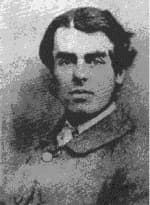
Samuel Butler may refer to:Samuel Butler (poet) (1613–1680), English poet and satirist Samuel Butler (schoolmaster) (1774–1839), English classical scholar Samuel Butler (politician) (1825–1891), American politician Samuel Butler (novelist) (1835–1902), English author of Erewhon Samuel Butler (cricketer) (1850–1903), English cricketer Sam Butler, Australian rules footballer Sam Butler, Australian rules footballer Bo Weavil Jackson, blues singer and guitarist also known as Sam Butler
Similar books
- A Portrait of the Artist as a Young Man
James Joyce
3.6 (128k) average on GoodreadsLiterary FictionBoth explore a young man's intellectual and spiritual rebellion against the strictures of family, religion, and society.
- Great Expectations
Charles Dickens
3.8 (652k) average on GoodreadsHistorical FictionFeatures a protagonist's journey of self-discovery and social mobility, though 'The Way of All Flesh' is far more critical of societal norms.
- Vanity Fair
William Makepeace Thackeray
3.8 (118k) average on GoodreadsHistorical FictionOffers a broad, satirical look at Victorian society and its hypocrisies, though with a different narrative focus.
- The Mill on the Floss
George Eliot
3.8 (48k) average on GoodreadsHistorical FictionEliot's novel, like Butler's, examines the powerful constraints of family and society on an individual's development, particularly Maggie Tulliver's intellectual and emotional life. However, Maggie's story ends tragically, highlighting the often insurmountable power of those constraints. Butler's novel, while depicting immense suffering, ultimately offers a path to individual liberation and intellectual freedom, even if achieved through unconventional means and a touch of narrative convenience.
- The Diary of a Young Girl
Anne Frank
4.2 (2.7M) average on GoodreadsBiographyDuring the Nazi occupation, a teenage girl's diary, written from a secret annex, shares observations on humanity, hope, and the wait for freedom.
- Night
Elie Wiesel
4.3 (970k) average on GoodreadsBiographyIn the darkness of Auschwitz and Buchenwald, a teenage Elie Wiesel faces the extermination of his family, the loss of his faith, and the lasting scars of humanity's deepest cruelty.



Enjoyed the summary?
A summary gives you the shape of the book. The book itself has the detail, the examples and the voice.
Find The Way of All Flesh on AmazonAs an Amazon Associate, BookBrief earns from qualifying purchases. How we're funded