

Synopsis
Covers the whole plot, including the ending.
- Difficulty
- Easy
- Pacing
- Slow
- Mood
- Contemplative, hopeful, peaceful, heartwarming
- Read it if
- you enjoy gentle, reflective stories about nature, quiet wonder, and the innocence of childhood dreams.
- Skip it if
- you prefer fast-paced plots, complex character arcs, or high-stakes adventure.
The Whale Plot Summary
Covers the whole plot, including the ending.
The Arrival of the Whale
The story begins with a large whale arriving in a small seaside town's quiet bay. Its size and graceful movements immediately attract the townspeople, who gather daily to watch it. The whale becomes important in their lives, a source of wonder and constant talk. Children are especially fascinated, drawing pictures and imitating its spout. The adults, at first careful, soon feel drawn to its calm presence, finding a sense of peace and connection to nature they had missed. The whale's arrival changes the town's rhythm, bringing everyone together in shared admiration.
Lilly's Connection
Among the townspeople, a young girl named Lilly forms a deep connection with the whale. She spends hours by the water, watching its every move, feeling as if the whale speaks to her through its calm presence. Lilly sees sadness in the whale's eyes, a longing that matches her own quiet nature. She believes the whale understands her unspoken thoughts and feelings, and she feels strong empathy for it. This bond is more than just admiration; it is a mutual understanding that goes beyond words, making Lilly feel less alone and more connected to the ocean's vastness and its mysteries.
The Fisherman's Concern
While most of the town enjoys the whale's presence, an old fisherman, Silas, views its long stay with unease. He knows ocean patterns and whale migration routes, understanding that staying in a shallow bay is not normal. Silas worries the whale might be lost, sick, or in some hidden distress. He tries to tell his concerns to others, but they are too caught up in the moment's magic to listen. Silas feels a growing responsibility and a feeling that the whale's unusual visit might not end well.
The Town's Celebration
As the whale stays in their bay, the town decides to hold a festival in its honor. This celebration shows their collective joy and thanks for the creature that has brought so much wonder. Preparations include decorating streets, making whale crafts, and planning special songs and stories about the whale. The festival is a way to show their appreciation, bringing the community together. Everyone participates with excitement, eager to show their love for their visitor, making the whale a beloved symbol of their town.
Lilly's Secret Offerings
Because of her deep bond, Lilly starts leaving small, personal gifts for the whale. These are not grand gestures but quiet acts of affection: a smooth stone from the beach, a carefully drawn picture, a tiny seashell. She places them at the water's edge, hoping the whale will sense her devotion. These secret gifts are Lilly's way of showing her love and understanding, a private ritual that deepens her connection to the creature. She believes these tokens convey her wish for the whale's health, a silent prayer for its happiness and safe journey, whenever it may leave.
The Storm Approaches
The peaceful atmosphere around the whale's visit suddenly changes with the weather. Dark clouds appear, the wind picks up, and the sea grows rough. A powerful storm is coming, threatening the small coastal town and, more importantly, the whale in the bay. The townspeople's happy mood turns to worry and anxiety. Silas, the old fisherman, becomes even more concerned, knowing the dangers a storm poses to a large creature in a shallow bay. The coming storm casts a shadow over the town, turning their wonder into fear.
The Town's Helplessness
As the storm hits, nature's full force is unleashed. Rain pours, winds howl, and waves crash violently against the shore. The townspeople watch from their homes, helpless as the bay becomes a dangerous, churning area. Their concern for the whale grows, but they are powerless against the storm. The whale's once-graceful movements are now lost in the storm's power, making it hard to even see it. A feeling of deep helplessness settles over the town; they can only wait and hope for the whale's survival, their earlier joy replaced by despair.
Lilly's Desperate Plea
Despite the storm and her parents' warnings, Lilly is overcome with worry for the whale. She feels an urgent need to be near it, to offer some comfort. Slipping away from home, she goes to the storm-beaten shore, calling out to the whale, her voice barely heard over the wind and waves. Her desperate plea shows her love and fear, a child's strong belief in connection. Though her actions are useless against the storm, they show the depth of her bond and her deep empathy for the creature caught in the storm.
The Morning After
When the storm finally ends, leaving a damaged but quiet morning, the townspeople carefully come out of their homes. The bay is calm again, but a heavy silence hangs in the air as everyone looks at the water. The question on every mind is whether the whale survived the night. Anxious eyes scan the bay, hoping to see its familiar spout or dorsal fin. The initial relief that the storm has passed is quickly replaced by a shared fear as they search for any sign of their visitor, dreading what they might or might not find.
The Whale's Departure
After a tense search, it becomes clear the whale is gone. There is no sign of it in the bay, no trace of its presence. The townspeople are left with sadness and a quiet understanding. While they mourn its absence, they also accept the natural order of things. The whale, having brought so much wonder and connection, has moved on. Its departure leaves a lasting mark on the town, changing its people forever. They carry the memory of its visit, a shared experience that has brought them closer and deepened their appreciation for nature, even in its absence.
Principal Figures
The Whale
Central Figure
A majestic and mysterious creature that visits the bay.
The whale is not a character in the traditional sense, but rather the catalyst for all events and emotions in the story. It is a symbol of natural wonder, mystery, and the profound connection possible between humans and the wild. Its immense size and graceful movements evoke awe and reverence from the townspeople. The whale's presence is serene and silent, yet it communicates deep emotions, particularly to Lilly, through its eyes and demeanor. Its unexplained arrival and departure underscore its enigmatic nature, leaving a lasting impact on the community it touches.
Relationships: Lilly (profound, empathetic bond); The Townspeople (object of awe and fascination); Silas (object of concern and respect)
Lilly
Protagonist
A quiet, empathetic young girl who forms a deep bond with the whale.
Lilly is a sensitive and observant child, often more attuned to the subtle rhythms of nature than the bustling activities of the town. She possesses a unique empathy, allowing her to perceive a deeper meaning in the whale's presence. Her connection to the whale is almost spiritual, providing her with a sense of understanding and companionship that she might not find elsewhere. She is courageous in her quiet devotion, willing to brave a storm to express her concern. Lilly represents innocence, deep feeling, and the unadulterated wonder of childhood.
Relationships: The Whale (profound, empathetic bond); Her Parents (caring but sometimes oblivious)
Silas
Supporting
An old, experienced fisherman who understands the sea's dangers.
Silas is a seasoned fisherman, wise in the ways of the ocean and its creatures. He carries the weight of experience, allowing him to see beyond the initial wonder of the whale's visit to the potential dangers. He is pragmatic and cautious, often voicing concerns that the other, more emotionally swept-up townspeople overlook. Silas represents a grounded perspective, respect for nature's power, and a quiet sense of responsibility. His role is to provide a voice of reason and a subtle foreshadowing of the challenges to come, highlighting the unpredictable nature of the wild.
Relationships: The Whale (object of professional concern and respect); The Townspeople (respected but often unheeded)
The Townspeople
Collective Supporting
The community united by the whale's presence.
The townspeople represent the collective human response to natural wonder. Initially, they are filled with awe and excitement, their lives enriched by the whale's presence. They embody community spirit, coming together to celebrate and cherish their unique visitor. However, they also demonstrate a degree of naivety, often overlooking the practical concerns that Silas raises. Their journey reflects a shift from pure joy and celebration to shared anxiety and ultimately, a quiet acceptance of nature's course. They learn a collective lesson about respect for the wild and the transient nature of beauty.
Relationships: The Whale (object of collective awe and fascination); Lilly (part of the community); Silas (respected elder, sometimes dismissed)
Lilly's Parents
Minor Supporting
Caring but sometimes oblivious to the depth of Lilly's connection.
Lilly's parents are loving and protective, typical adults who are also caught up in the general excitement of the whale's visit. They are supportive of Lilly's interest but do not fully grasp the profound, almost spiritual, bond she forms with the creature. Their role is to provide a grounding presence for Lilly and to represent the adult perspective that, while caring, can sometimes miss the subtle emotional depths experienced by a child. They prioritize her safety, especially during the storm, demonstrating parental concern.
Relationships: Lilly (parent-child, loving and protective); The Whale (object of general interest)
Themes & Insights
The Wonder of Nature
The book shows the deep awe and inspiration nature can bring. The whale's arrival changes the town's ordinary life into one filled with magic and shared wonder. It shows how seeing something truly magnificent in nature can unite a community, bring peace, and remind people of the beauty and mystery beyond their daily lives. The whale becomes a living symbol of nature's majesty, showing its power to captivate and enrich human experience, even for a short time.
“Its immense size and graceful movements immediately capture the attention of the town's inhabitants, who gather daily on the shore to watch it.”
Connection and Empathy
A main theme is the deep, often unspoken, connection that can form between people and animals, especially between Lilly and the whale. It explores the idea that empathy crosses species, allowing for a deep understanding that does not need words. The book suggests that by being open to nature, we can find comfort, companionship, and a sense of belonging. This theme also extends to the community, as the whale's presence creates a shared connection among the townspeople, bringing them closer through a common experience of wonder and concern.
“She perceives a sadness in the whale's eyes, a longing that resonates with her own quiet nature. She believes the whale understands her unspoken thoughts and feelings.”
The Transient Nature of Beauty and Experience
The story gently suggests that even the most beautiful and impactful experiences are often temporary. The whale's visit, though magical, is not permanent, and its eventual departure teaches the townspeople about acceptance and life's cycles. This theme encourages an appreciation for moments as they happen, recognizing that their fleeting quality can make them even more special. It is a gentle lesson in letting go and finding lasting meaning not in owning something, but in the memory and impact of what has been experienced.
“While they mourn its absence, they also acknowledge the natural order of things. The whale, having brought so much wonder and connection, has moved on.”
Respect for Nature's Power and Mystery
The book shows that while nature can bring wonder, it is also powerful, unpredictable, and beyond human control. Silas's concerns and the eventual storm remind us of this power. The whale's mysterious arrival and departure reinforce the idea that much of nature remains unknown and operates on its own terms. This theme advocates for humility and respect for nature, recognizing its majesty while also acknowledging its capacity for both beauty and destruction, and the limits of human action.
“He understands the ocean's patterns and the natural migratory routes of whales, knowing that staying in the shallow bay is not typical behavior.”
Plot Devices & Literary Techniques
Symbolism
The whale symbolizes wonder, mystery, and connection to nature.
The whale itself is a powerful symbol in the story. It represents the majestic and awe-inspiring aspects of the natural world, a creature of immense beauty and mystery. For the townspeople, it symbolizes a break from routine and a source of collective joy. For Lilly, it symbolizes a deep, empathetic connection and understanding. Its unexplained arrival and departure further enhance its symbolic role as a transient, almost spiritual, presence that leaves an indelible mark. The whale embodies the idea that profound experiences can emerge from unexpected encounters with the wild.
Foreshadowing
Silas's concerns and the changing weather hint at future challenges.
The character of Silas, the old fisherman, serves as a key device for foreshadowing. His initial unease about the whale's prolonged stay and his knowledge of the ocean's dangers subtly prepare the reader for potential trouble. When the weather begins to change, the brewing storm acts as a more direct foreshadowing of the crisis that will threaten the whale and the town's peace. These elements create a sense of mounting tension and underscore the unpredictable nature of the sea, making the eventual storm's impact more significant.
Pathetic Fallacy
The storm reflects the town's emotional turmoil and the whale's struggle.
The severe storm that engulfs the bay functions as an example of pathetic fallacy. Initially, the town's mood is one of joy and celebration, mirroring the peaceful presence of the whale. As the storm gathers and rages, it reflects the growing anxiety and helplessness of the townspeople, particularly Lilly, who fears for the whale's safety. The tumultuous weather externalizes the internal emotional turmoil and the struggle for survival faced by the whale, intensifying the dramatic stakes and mirroring the shift from wonder to despair.
The Whale Quotes
“It was a good day. It was a good day.”
“Sometimes, when you're feeling small, you have to be brave.”
“You can't always get what you want. But if you try sometimes, you might find you get what you need.”
“Loneliness is a kind of quiet. It is the quiet that happens when the world is too much.”
“And sometimes, the smallest things are the biggest things.”
“She knew that love was a dangerous thing. It was a dangerous thing to give away.”
“Sometimes, people just need to be seen.”
“The whale is the biggest thing in the sea. It is a creature of immense size and power.”
“He walked on the beach, the sand soft beneath his feet, the waves whispering secrets to the shore.”
“Grief is a heavy coat. You wear it for a long time.”
“The world is a beautiful, terrible place.”
“He felt a quiet joy, the kind that settles deep in your bones.”
“It is okay to be sad. It is okay to be angry. It is okay to be afraid.”
“And in the end, it is the connections we make that matter the most.”
Quiz
10 questions on the plot and the characters. Each answer comes with a short explanation.
Question 1
What is the name of the main character, the young girl who finds the whale?
- Lily
- Grace
- Daisy
- Willow
Show answer
C. Daisy The young girl who discovers the whale is named Daisy.
Question 2
Where does Daisy find the whale?
- In a river
- In the ocean
- On the beach
- In a lake
Show answer
C. On the beach Daisy finds the stranded whale on the beach.
Question 3
What is the main conflict or problem in the story?
- Daisy is trying to find her lost dog.
- The whale is stranded and needs help to get back to the sea.
- Daisy is lost and trying to find her way home.
- A storm is approaching and threatens the town.
Show answer
B. The whale is stranded and needs help to get back to the sea. The central problem is that a large whale has washed ashore and is in danger.
Question 4
What does Daisy do to try and help the whale?
- She calls the zoo.
- She sings to it.
- She tries to keep it wet with buckets of water.
- She tries to push it back into the ocean by herself.
Show answer
C. She tries to keep it wet with buckets of water. Daisy uses buckets to pour water on the whale, trying to keep its skin moist.
Question 5
Who eventually helps Daisy rescue the whale?
- Her parents
- A group of fishermen and townspeople
- The lifeguards
- Scientists from a marine biology institute
Show answer
B. A group of fishermen and townspeople A group of concerned fishermen and other townspeople arrive to assist in the rescue.
Question 6
What is the overall tone of the story?
- Suspenseful and frightening
- Humorous and lighthearted
- Hopeful and compassionate
- Sad and melancholic
Show answer
C. Hopeful and compassionate Despite the initial sadness of the stranded whale, the story focuses on the kindness and effort to save it, creating a hopeful and compassionate tone.
Question 7
What does Daisy's action of helping the whale symbolize?
- Her desire for attention
- The power of nature
- Empathy and the importance of helping those in need
- A child's misunderstanding of the ocean
Show answer
C. Empathy and the importance of helping those in need Daisy's selfless act of trying to save the whale represents compassion and the moral imperative to help vulnerable creatures.
Question 8
What is the significance of the whale's size in the story?
- It makes the rescue physically impossible.
- It highlights the magnitude of the problem and the challenge of the rescue.
- It is a metaphor for Daisy's own loneliness.
- It signifies the whale's age and wisdom.
Show answer
B. It highlights the magnitude of the problem and the challenge of the rescue. The immense size of the whale underscores the difficulty of the situation and the collective effort required for its rescue.
Question 9
How does the community's reaction to the whale's plight evolve throughout the story?
- They are initially indifferent but become angry.
- They are initially scared but become supportive.
- They are initially overwhelmed but eventually unite to help.
- They are consistently focused only on the tourism aspect.
Show answer
C. They are initially overwhelmed but eventually unite to help. The townspeople, initially perhaps unsure or overwhelmed, come together as a community to solve the problem and help the stranded animal.
Question 10
What underlying theme does Cynthia Rylant often explore in her works, which is also evident in 'The Whale'?
- The complexities of urban life
- The power of connection, compassion, and the natural world
- The historical significance of maritime trade
- The challenges of technological advancement
Show answer
B. The power of connection, compassion, and the natural world Cynthia Rylant's writing frequently emphasizes themes of empathy, the bonds between people and nature, and the quiet strength found in compassion.
The Whale FAQ
What is 'The Whale' by Cynthia Rylant about?
'The Whale' is a poignant children's book that tells the story of a young girl named Callie who finds solace and friendship with a gentle, enormous whale. It explores themes of loneliness, connection, and the beauty of nature.
Who are the main characters in 'The Whale'?
The main characters are Callie, a lonely young girl, and the large, friendly whale she befriends. Their unique bond forms the heart of the story.
What are the main themes in 'The Whale'?
Key themes include overcoming loneliness, the power of friendship across differences, the importance of nature, and finding comfort in unexpected places. The story emphasizes empathy and connection.
What is the tone of 'The Whale'?
The book has a gentle, lyrical, and somewhat melancholic tone. It is tender and heartfelt, capturing the emotional journey of the protagonist.
Is 'The Whale' a sad book?
While 'The Whale' touches on themes of loneliness and sadness, it ultimately offers a message of hope and connection. It's more emotionally resonant than purely sad, focusing on finding joy and companionship.
What age group is 'The Whale' recommended for?
'The Whale' is generally recommended for young children, typically ages 4-8. Its simple language and emotional depth also make it suitable for read-alouds with younger preschoolers.
What is the message of 'The Whale' by Cynthia Rylant?
The central message is that friendship can be found in surprising ways and places, and that connecting with others, even those vastly different from ourselves, can alleviate loneliness and bring happiness.
What makes 'The Whale' special compared to other children's books?
Its unique premise of a girl befriending a whale, combined with Rylant's signature lyrical prose and emotional depth, sets it apart. The book offers a quiet, profound exploration of connection that resonates with both children and adults.
How does Callie's relationship with the whale develop?
Callie initially observes the whale from afar, feeling a kinship with its perceived solitude. Their relationship grows through quiet observation and a shared sense of understanding, leading to a deep, unspoken bond.
Can I use 'The Whale' for teaching empathy?
Yes, 'The Whale' is an excellent book for teaching empathy. It allows children to explore the feelings of loneliness and the joy of companionship through Callie's experiences and her connection with the whale.
About the author

Cynthia Rylant is a celebrated American author known for her poignant and often heartwarming children's and young adult literature. Her notable works include the Newbery Medal-winning 'Missing May' and the acclaimed novel 'A Fine White Dust.' Rylant's writing is characterized by its lyrical prose and deep empathy for her characters, often exploring themes of family, loss, and resilience.
Similar books
- The Old Man and the Sea
Ernest Hemingway
3.8 (831k) average on GoodreadsLiterary FictionBoth explore a deep human connection to the ocean and its creatures, focusing on quiet observation and profound encounters.
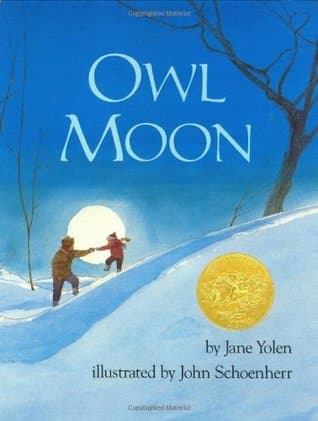
- Owl Moon
Jane Yolen
4.2 (41k) average on GoodreadsChildren'sFeatures a child's quiet, patient quest in nature leading to a magical, memorable encounter.
- Harry Potter and the Sorcerer's Stone
J.K. Rowling
4.5 (7M) average on GoodreadsFantasyRescued from a miserable life under the stairs, an orphaned boy discovers he's a wizard destined for a magical school, where he uncovers a dangerous secret tied to the dark wizard who murdered his parents.
- The Hunger Games
Suzanne Collins
4.3 (6.4M) average on GoodreadsFantasyIn a future where children fight to the death on live television, Katniss Everdeen volunteers for the arena, turning a death sentence into a fight for survival and a spark of rebellion.
- Nineteen Eighty-Four
George Orwell
4.2 (5.5M) average on GoodreadsFictionWinston Smith dreams of truth and rebellion in a world where Big Brother watches all, but he confronts the terrifying power of a regime that controls not just actions, but thoughts.
- Pride & Prejudice
Jane Austen
4.3 (4.9M) average on GoodreadsElizabeth Bennet and Mr. Darcy navigate love and misunderstanding, learning that first impressions can be wrong.





Enjoyed the summary?
A summary gives you the shape of the book. The book itself has the detail, the examples and the voice.
Find The Whale on AmazonAs an Amazon Associate, BookBrief earns from qualifying purchases. How we're funded