

Synopsis
Covers the whole plot, including the ending.
- Difficulty
- Medium
- Pacing
- Moderate
- Mood
- Dark, Thought-provoking, Tragic, Intense
- Read it if
- You enjoy classic plays exploring complex moral dilemmas, the destructive nature of idealism, and the consequences of revealing uncomfortable truths.
- Skip it if
- You prefer lighthearted stories with clear heroes and villains, or find themes of domestic tragedy and psychological realism too heavy.
The Wild Duck Plot Summary
Covers the whole plot, including the ending.
A Dinner Party and Old Acquaintances
The play opens with a dinner party at the home of Hakon Werle, a wealthy merchant. Hjalmar Ekdal, a photographer and old friend of Werle's son, Gregers, is among the guests. Gregers Werle, recently returned from a long stay in the mountains, is bothered by the wealth and superficiality he sees. He confronts his father, Hakon, about his past wrongs, especially concerning Old Ekdal (Hjalmar's father), who was wrongly imprisoned as Werle's business partner. Gregers also observes the seemingly content Hjalmar, unaware of the deep lies that support his home life. This meeting sets the stage for Gregers's misguided plan to 'enlighten' Hjalmar.
Gregers's Return and Mission
Disgusted by his father's actions and the moral decay he sees, Gregers Werle decides to leave his comfortable life and pursue a higher goal: revealing the truth. He moves into the Ekdal family's apartment, which is in the attic of his father's building. Gregers plans to show Hjalmar the deception he believes surrounds him. He sees Hjalmar's life as built on a lie, especially regarding his marriage to Gina and Hedvig's paternity. Gregers believes that by revealing the 'truth,' he can free Hjalmar and guide him to true happiness, a concept he calls an 'ideal demand.'
Life in the Ekdal Attic
The Ekdal family lives in a small but comfortable attic apartment. Hjalmar Ekdal, a somewhat lazy and self-absorbed photographer, dreams of inventing something great but mostly procrastinates. His practical wife, Gina, runs the photography business and manages the house. Their fourteen-year-old daughter, Hedvig, is sensitive and imaginative; her eyesight is failing, a hereditary condition. The attic also holds various animals, including chickens, rabbits, pigeons, and the 'wild duck.' Old Ekdal, Hjalmar's father, treats the duck as a precious pet. This attic sanctuary represents a world of comforting illusion for the family.
Old Ekdal's Past and the Wild Duck
Old Ekdal, Hjalmar's father, is a broken man, shamed by a past scandal where he was imprisoned for illegal timber felling, a crime arranged by Hakon Werle. He spends his days in the attic, dressed in his old lieutenant's uniform, hunting imaginary bears and other game among the rafters and in the attic's 'forest.' The wild duck, a wounded bird that Hakon Werle once shot, becomes a strong symbol for Old Ekdal, representing his own brokenness and resilience. He and Hedvig share a special bond over caring for these animals, finding refuge from the harsh realities outside.
Gregers's Interrogation of Gina
Driven by his 'ideal demand,' Gregers begins to question Gina Ekdal about her past. He learns that Gina was once a housekeeper for Hakon Werle before marrying Hjalmar. Through subtle questions and direct accusations, Gregers uncovers the truth: Gina had a relationship with Hakon Werle, and it is strongly suggested that Hedvig is Hakon's daughter, not Hjalmar's. Gina, always practical and protective of her family's peace, tries to avoid Gregers's questions, understanding how destructive such revelations could be. Gregers, however, sees this as more proof of the lies in the Ekdal household.
The Revelation to Hjalmar
Against Gina's wishes and in his misguided pursuit of truth, Gregers tells Hjalmar the devastating news about Gina's past with Hakon Werle and the strong possibility that Hedvig is not his biological daughter. Hjalmar, a man who values his self-image as a loving father and an ingenious inventor, is shattered by this news. His world, built on what he believed were pure and noble foundations, collapses. He feels betrayed by Gina and views Hedvig, whom he previously adored, with suspicion and resentment, believing his 'sacred calling' as a father has been made a mockery.
Hjalmar's Betrayal and Hedvig's Distress
Overwhelmed by the 'truth' Gregers has revealed, Hjalmar withdraws into self-pity and anger. He distances himself from Gina and, most cruelly, from Hedvig. He treats Hedvig with coldness and suspicion, questioning her paternity and rejecting her affection. Hedvig, who idolizes her father, is deeply hurt by his sudden change. She struggles to understand why her father, who once cherished her, now pushes her away. Her fragile world begins to fall apart, mirroring the fate of the wild duck, which is also a creature of the attic, vulnerable to outside forces.
Hedvig's Sacrifice
Distraught by her father's rejection and desperate to win back his love, Hedvig seeks advice from Gregers. Gregers, still holding to his 'ideal demand' and believing in the purifying power of sacrifice, suggests that Hedvig make a grand gesture to prove her devotion to Hjalmar. He subtly implies that if she were to sacrifice the wild duck, her most cherished possession, it would show her love for her father and perhaps reconcile them. Hedvig, misunderstanding his intentions as a way to restore her father's affection, takes his advice seriously.
The Tragic Outcome
In a desperate attempt to win back her father's love, Hedvig goes to the attic with the wild duck and her grandfather's pistol. She intends to shoot the wild duck as a sacrifice, believing it will prove her loyalty and restore her father's affection. However, a gunshot rings out, and Hedvig is found dead, having shot herself in the chest. Her death is a tragic result of Gregers's misguided idealism and Hjalmar's self-absorbed despair. The family is left shattered, dealing with the irreversible consequences of the 'truth' Gregers so relentlessly pursued.
Aftermath and Unresolved Guilt
Hedvig's death leaves the Ekdal family and Gregers in shock and despair. Hjalmar is consumed by guilt and regret, realizing too late the depth of his daughter's love and his own cruel rejection. Gina, ever the stoic pragmatist, is heartbroken but firm in her grief. Gregers, finally facing the devastating outcome of his 'ideal demand,' must acknowledge the destructive power of his relentless pursuit of truth. Dr. Relling, the cynical and realistic doctor, condemns Gregers's actions, emphasizing the necessity of 'life-lies' for human happiness. The play ends with the characters left to rebuild their shattered lives, with no easy answers or solutions.
The Wild Duck Characters
Hjalmar Ekdal
Protagonist
A self-deluded photographer who prides himself on being an inventor and a loving father.
Hjalmar is a man of grand but unfulfilled ambitions. He dreams of inventing something magnificent but spends his days procrastinating and indulging in self-pity. He relies heavily on his wife, Gina, to manage their photography business and household. Hjalmar is deeply invested in his self-image as a noble, suffering genius and a devoted father, often exaggerating his own struggles and importance. He craves admiration and avoids facing unpleasant truths about himself or his life, preferring to live in a comforting illusion.
Relationships: Gina Ekdal (Wife; she is the practical backbone of their marriage, managing the business and household while Hjalmar dreams.); Hedvig Ekdal (Daughter; he initially adores her but cruelly rejects her after learning about her possible paternity.); Old Ekdal (Father; Hjalmar feels a mix of pity and resentment towards his disgraced father.); Gregers Werle (Childhood friend and later, his tormentor, who forces him to confront uncomfortable truths.)
Gregers Werle
Antagonist/Catalyst
An idealistic and zealous man determined to expose the 'truth' and liberate Hjalmar.
Gregers is driven by a fervent, almost fanatical, idealism. He believes in the absolute necessity of truth and an 'ideal demand' for moral purity. Disgusted by his father's perceived corruption and the superficiality of society, he embarks on a mission to 'save' Hjalmar by revealing the lies he believes underpin the Ekdal family's happiness. Gregers is well-intentioned but utterly lacking in practical wisdom and empathy, failing to understand the destructive power of his relentless pursuit of truth. He represents a dangerous form of moral absolutism.
Relationships: Hakon Werle (Father; he deeply resents his father for past misdeeds and perceived moral failings.); Hjalmar Ekdal (Childhood friend; he sees Hjalmar as a victim of lies whom he must 'rescue'.); Hedvig Ekdal (He inadvertently influences her tragic sacrifice through his 'ideal demand' rhetoric.); Dr. Relling (His philosophical adversary, who critiques his idealism.)
Gina Ekdal
Supporting
Hjalmar's practical, hardworking wife who holds the family together.
Gina is the pragmatic and grounded force in the Ekdal household. She is hardworking, sensible, and manages the photography business with efficiency, providing the financial stability Hjalmar lacks. She possesses a quiet strength and a deep, protective love for her family, especially Hedvig. Gina is aware of the 'life-lie' that sustains their happiness but chooses to maintain it, prioritizing peace and stability over brutal honesty. She is a survivor, having had a difficult past, and her focus is always on the present and the well-being of her loved ones.
Relationships: Hjalmar Ekdal (Husband; she supports him financially and emotionally, tolerating his self-absorption.); Hedvig Ekdal (Daughter; she is a loving and protective mother, deeply devoted to Hedvig.); Hakon Werle (Former lover/employer; her past relationship with him is the source of the play's central secret.)
Hedvig Ekdal
Supporting/Tragic Victim
The sensitive, imaginative daughter of Hjalmar and Gina, deeply attached to her father and the wild duck.
Hedvig is a sensitive, imaginative, and deeply affectionate fourteen-year-old girl. She adores her father, Hjalmar, and finds solace and wonder in the attic with her grandfather and the wild duck. Her eyesight is failing, a hereditary condition that links her to Hakon Werle. Hedvig is innocent and vulnerable, caught between the conflicting truths and illusions of the adults around her. She yearns for her father's love and approval above all else, making her susceptible to Gregers's manipulative idealism.
Relationships: Hjalmar Ekdal (Father; she idolizes him and desperately seeks his love and approval.); Gina Ekdal (Mother; she loves her mother but her emotional bond is stronger with Hjalmar.); Old Ekdal (Grandfather; they share a special bond over the attic animals, especially the wild duck.); Gregers Werle (He becomes a misguided confidant, leading to her tragic decision.)
Old Ekdal
Supporting
Hjalmar's disgraced father, who finds solace in his attic 'forest'.
Old Ekdal is a former lieutenant and businessman who was disgraced and imprisoned due to a scandal orchestrated by Hakon Werle. He is a broken man, emotionally fragile and often drunk, but he finds comfort and dignity in his attic sanctuary. There, he relives his past glory as a hunter, tending to the wild duck and other animals, creating a 'forest' of illusion. He represents the victims of Hakon Werle's ruthlessness and embodies the theme of finding solace in comforting lies.
Relationships: Hjalmar Ekdal (Son; Hjalmar feels a mixture of pity and shame for him.); Hedvig Ekdal (Granddaughter; they share a close bond over their shared love for the attic animals.); Hakon Werle (Former business partner and the man responsible for his downfall.)
Dr. Relling
Supporting
A cynical and pragmatic doctor who advocates for 'life-lies' and criticizes Gregers's idealism.
Dr. Relling is a doctor and a boarder in the Ekdal's building. He is cynical, realistic, and highly intelligent, serving as a foil to Gregers's idealism. Relling believes that most people need 'life-lies' – comforting illusions or self-deceptions – to function and find happiness. He views Gregers's relentless pursuit of truth as destructive and dangerous, foreseeing the tragic consequences of stripping people of their illusions. He acts as a voice of pragmatic wisdom, though his own life suggests a degree of resigned disillusionment.
Relationships: Gregers Werle (Philosophical adversary; he frequently debates and criticizes Gregers's idealism.); Hjalmar Ekdal (He has diagnosed Hjalmar with a 'sick soul' and understands his need for self-delusion.)
Hakon Werle
Supporting/Antagonist (off-stage influence)
A wealthy, powerful merchant with a morally ambiguous past.
Hakon Werle is a rich and influential businessman, Gregers's father. He is a shrewd and ruthless individual who built his fortune through questionable means, including the exploitation of his former business partner, Old Ekdal. He is also implicated in Gina's past, and likely Hedvig's biological father. Werle represents the corrupting influence of wealth and power, and the hidden truths that society often chooses to ignore. Though he doesn't actively participate in the Ekdal's daily life, his past actions cast a long shadow over their present.
Relationships: Gregers Werle (Son; their strained relationship and Gregers's resentment are central to the plot.); Old Ekdal (Former business partner; he was responsible for Old Ekdal's downfall.); Gina Ekdal (Former lover/housekeeper; his past relationship with her is a key secret.); Hedvig Ekdal (Possibly her biological father, a fact that remains unconfirmed but strongly implied.)
The Wild Duck Themes
The Dangers of Idealism vs. The Necessity of Illusion (Life-Lies)
This is the main conflict. Gregers Werle's rigid idealism, his 'ideal demand' for absolute truth, is shown to be destructive. He believes that removing comforting illusions will lead to freedom and true happiness. However, Dr. Relling argues passionately for the necessity of 'life-lies' – the self-deceptions and comforting fantasies that allow people like Hjalmar and Old Ekdal to endure and find meaning. Hedvig's tragic death, a direct result of Gregers's actions, powerfully condemns absolute idealism and highlights the fragile but vital role of illusion in human well-being. The Ekdal attic, with its wild duck and imaginary forest, is a perfect metaphor for this necessary illusion.
“If you take away the life-lie from an average person, you take away his happiness as well.”
The Corrupting Influence of the Past
The past affects the present for all characters. Hakon Werle's past wrongs – his exploitation of Old Ekdal and his relationship with Gina – are the root cause of the Ekdal family's 'life-lie.' Old Ekdal is permanently scarred by his imprisonment, living in a fantasy world. Hjalmar's comfortable existence is built on the consequences of these past events, which he largely ignores. Gregers himself is shaped by his resentment of his father's past. The play shows how secrets and unaddressed injustices from the past inevitably resurface, often with devastating consequences, especially when forcibly revealed.
“There are some things that should never be spoken, no matter how true they are.”
Paternity and Identity
The question of Hedvig's paternity is a key element, driving much of the conflict. The revelation that she might be Hakon Werle's daughter, not Hjalmar's, shatters Hjalmar's sense of identity as a loving father and undermines his entire self-perception. This theme explores how biological lineage can affect one's sense of self and belonging within a family. Hedvig's identity is tied to her father's love, and when that love is questioned due to paternity doubts, her very existence feels invalidated, leading to her desperate act. The play suggests that emotional bonds can be more defining than biological ones, yet the biological 'truth' has destructive power.
“My child! I have no child!”
Sacrifice and Redemption
The theme of sacrifice, especially Hedvig's, is central to the play's tragic end. Gregers's 'ideal demand' subtly pushes Hedvig towards a sacrificial act, suggesting that a grand gesture of devotion could redeem her in her father's eyes. Hedvig's desire to sacrifice the wild duck, her most cherished possession, is a desperate attempt to win back Hjalmar's love and 'redeem' herself from the perceived burden of her questionable paternity. Her ultimate self-sacrifice, however, is not redemptive but tragically pointless, highlighting the futility of such acts when driven by misguided idealism and self-interest rather than true understanding.
“I want to save my father. I want to save him and his honour.”
Plot Devices & Literary Techniques
The Wild Duck
A central symbol representing the characters' woundedness and their need for illusion.
The wild duck, a wounded bird living in the Ekdal's attic, is a powerful and multi-layered symbol. It represents Old Ekdal's own brokenness and resilience, having been shot by Hakon Werle but finding refuge. For Hedvig, it symbolizes her special bond with her grandfather and a cherished part of her innocent world. More broadly, the wild duck symbolizes all the characters who have been 'wounded' by life or by others (like Old Ekdal and Hedvig) and who find solace in the comforting 'attic' of illusion. Its eventual death, intended as a sacrifice, tragically mirrors Hedvig's own fate, signifying the destruction of innocence and the impossibility of true escape from harsh realities.
The Attic 'Forest'
A physical and symbolic refuge where characters escape reality through fantasy.
The Ekdal's attic, transformed into a miniature 'forest' with animals, serves as a crucial plot device and symbol. It is a physical space where Old Ekdal can relive his hunting days and where Hedvig finds wonder and solace. Symbolically, it represents a sanctuary, a 'life-lie' in microcosm, where characters can escape the harsh realities of the outside world and indulge in comforting illusions. It is a place of imagination and refuge, but also a fragile one, vulnerable to the intrusion of 'truth' from the outside. The attic's existence highlights the human need for escape and fantasy.
Hereditary Blindness
A symbolic physical ailment that underscores themes of truth, illusion, and lineage.
Hedvig's progressively failing eyesight, a hereditary condition, serves as a potent plot device and symbol. Physically, it links her to Hakon Werle, as the condition runs in his family, subtly hinting at her true paternity. Symbolically, the blindness represents the characters' inability or unwillingness to see the truth, both about themselves and their circumstances. Hjalmar is 'blind' to his own self-delusions, and Gregers is 'blind' to the destructive potential of his idealism. Hedvig's failing sight highlights the vulnerability of those who are most innocent and exposed to the 'truth' that others prefer to ignore.
The Pistol
A recurring prop that foreshadows the play's tragic climax.
Old Ekdal's old pistol is introduced early in the play as a prop for his imaginary hunting games in the attic. Its presence serves as a subtle but persistent element of foreshadowing. It's a loaded weapon in a literal and metaphorical sense, hinting at potential violence or tragedy within the confined and emotionally charged space of the Ekdal home. When Hedvig takes the pistol with the intention of sacrificing the wild duck, the audience is prepared for a tragic outcome, though the specific nature of her self-sacrifice remains a shocking climax. The pistol represents the dangerous reality lurking beneath the surface of the Ekdal's illusions.
The Wild Duck Quotes
“If you shut me out, I shall stand outside and knock.”
“What does it profit a man if he gains the whole world and loses his own soul?”
“Take the life-lie away from the average man, and you take away his happiness as well.”
“I will not let you go until you have made it all good again!”
“It's a strange thing, but I always feel so much better when I have a secret.”
“The wild duck has dived to the bottom. But it will come up again.”
“There are certain things in this world that are best left undisturbed.”
“My home is here, in the attic, with the wild duck.”
“The ideal demands payment.”
“It's all over with me now. I don't care about anything anymore.”
“I am not a man who runs away from his responsibilities.”
“Happiness is a kind of intoxication. It's best not to overdo it.”
“I shall be a great inventor. I shall devote my life to it.”
“The truth is a terrible thing when it's not softened by illusion.”
Quiz
10 questions on the plot and the characters. Each answer comes with a short explanation.
Question 1
Which character is the idealistic son of a wealthy businessman who seeks to expose his father's duplicity?
- Hjalmar Ekdal
- Gregers Werle
- Old Ekdal
- Haakon Werle
Show answer
B. Gregers Werle Gregers Werle is the character who returns with a mission to reveal the 'truth' and free those he believes are living in a lie, particularly his childhood friend Hjalmar.
Question 2
What is the central ethical question explored in 'The Wild Duck' regarding the pursuit of truth?
- Is it always better to conceal unpleasant truths to maintain peace?
- Should the truth be pursued whatever the cost, even if it destroys happiness?
- Is truth subjective and therefore not worth pursuing?
- Can happiness only be found through complete honesty?
Show answer
B. Should the truth be pursued whatever the cost, even if it destroys happiness? The play directly poses the question 'Should the truth be pursued whatever the cost?', as Gregers' actions demonstrate the destructive potential of an uncompromising pursuit of truth.
Question 3
What kind of animal is kept in the attic of the Ekdal household, symbolizing their shared fantasy and escape?
- A domestic cat
- A wild duck
- A hunting dog
- A caged bird
Show answer
B. A wild duck The wild duck is a central symbol in the play, representing the wounded and trapped individuals in the Ekdal family, and the 'life-lie' they share.
Question 4
What is the 'life-lie' that Hjalmar Ekdal and his family are living, which Gregers Werle seeks to expose?
- Hjalmar is not the biological father of Hedvig, and his wife Gina had an affair with Gregers' father, Haakon Werle.
- Old Ekdal was falsely imprisoned for a crime committed by Haakon Werle.
- Hjalmar is secretly a wealthy man pretending to be poor.
- Hedvig is secretly planning to run away from home.
Show answer
A. Hjalmar is not the biological father of Hedvig, and his wife Gina had an affair with Gregers' father, Haakon Werle. The core 'life-lie' that Gregers reveals is that Hedvig is Haakon Werle's daughter, not Hjalmar's, and that Gina was Haakon's mistress.
Question 5
What is Hjalmar Ekdal's profession, which he often exaggerates and fails to genuinely pursue?
- Photographer
- Doctor
- Writer
- Merchant
Show answer
A. Photographer Hjalmar is a photographer, though he spends more time dreaming about his 'great invention' than actually working or providing for his family.
Question 6
What is the ultimate tragic consequence of Gregers Werle's insistence on revealing the 'truth' to the Ekdal family?
- Hjalmar leaves his family and divorces Gina.
- Hedvig, heartbroken and trying to prove her love, commits suicide.
- Old Ekdal is sent back to prison.
- The family loses their home and all their possessions.
Show answer
B. Hedvig, heartbroken and trying to prove her love, commits suicide. The most devastating consequence of Gregers' actions is Hedvig's suicide, which she carries out in a desperate attempt to regain her father's love and prove her worth.
Question 7
How does Dr. Relling's philosophy contrast with Gregers Werle's idealism regarding truth and happiness?
- Relling believes that everyone should confront harsh truths, regardless of the pain.
- Relling advocates for sustaining 'life-lies' or illusions if they provide comfort and allow people to function happily.
- Relling is indifferent to the truth and happiness of others.
- Relling believes truth is only important for the wealthy.
Show answer
B. Relling advocates for sustaining 'life-lies' or illusions if they provide comfort and allow people to function happily. Dr. Relling is the voice of pragmatism, arguing that most people need 'life-lies' or comforting illusions to cope with reality, directly opposing Gregers' destructive 'claim of the ideal'.
Question 8
What specific physical ailment does Hedvig suffer from, which is linked to her paternity?
- Asthma
- Progressive blindness
- Deafness
- A limp
Show answer
B. Progressive blindness Hedvig is gradually losing her eyesight, a condition that is revealed to be hereditary and linked to Haakon Werle's family, thus hinting at her true parentage.
Question 9
How does the attic, with its menagerie of animals and discarded items, function symbolically within the play?
- It represents the Ekdals' ambition to become wealthy landowners.
- It serves as a literal and metaphorical refuge, a fantasy world where the characters can escape the harsh realities of their lives.
- It symbolizes the hidden secrets and dark past of the Werle family.
- It is a practical workspace for Hjalmar's photography business.
Show answer
B. It serves as a literal and metaphorical refuge, a fantasy world where the characters can escape the harsh realities of their lives. The attic is a crucial symbolic space, a 'kingdom' where Old Ekdal and Hedvig can retreat into a comforting illusion, representing the 'life-lie' that sustains the family.
Question 10
What is the primary motivation behind Gregers Werle's actions in exposing the 'truth' to the Ekdal family?
- He genuinely wants to help Hjalmar achieve financial independence.
- He is seeking revenge against his father, Haakon Werle, by disrupting the lives connected to him.
- He is in love with Gina and wants to break up her marriage to Hjalmar.
- He believes that only through complete and painful truth can true happiness be achieved for all.
Show answer
B. He is seeking revenge against his father, Haakon Werle, by disrupting the lives connected to him. While Gregers frames his actions as a quest for 'the ideal' and 'truth', a strong underlying motivation is his deep-seated resentment and desire to punish his father, Haakon Werle, by exposing his past misdeeds and those who benefited from them.
The Wild Duck FAQ
What is the central conflict of 'The Wild Duck'?
The central conflict revolves around the pursuit of an 'ideal truth' by Gregers Werle, who believes he must expose the lies upon which the Ekdal family's happiness is built. This clashes with the existing, albeit fabricated, contentment of Hjalmar Ekdal and his family, ultimately leading to tragic consequences when the truth shatters their illusions.
Who is Hjalmar Ekdal and what is his role in the play?
Hjalmar Ekdal is a photographer, the son of the disgraced Old Ekdal, and the husband of Gina. He lives in a self-delusional state, believing himself to be a great inventor and an intellectual, largely supported by the convenient 'truths' manufactured by his wife and the financial backing of Håkon Werle.
Who is Gregers Werle and what are his motivations?
Gregers Werle is the idealistic, moralistic son of the wealthy Håkon Werle. Driven by a desire to atone for his father's past misdeeds and to 'liberate' his childhood friend Hjalmar from what he perceives as a life built on lies, Gregers champions the 'claim of the ideal' and believes in the absolute necessity of truth, regardless of the consequences.
What is the significance of the 'wild duck' itself?
The wild duck symbolizes those who have been 'wounded' by life and society, particularly by Håkon Werle, and have sought refuge in a fabricated reality. Just as the duck dives to the bottom of the lake to escape, Hedvig and the Ekdal family have created an illusory world in their attic to cope with harsh truths.
How does Hedvig Ekdal fit into the family dynamic?
Hedvig is Hjalmar and Gina's fourteen-year-old daughter, who is gradually losing her eyesight. She is deeply devoted to her father and finds solace and identity in the attic, particularly with the wild duck. Her innocence and vulnerability make her the ultimate victim of Gregers's pursuit of truth.
What is the secret that Gina Ekdal has kept from Hjalmar?
Gina Ekdal was previously Håkon Werle's housekeeper and had a relationship with him, resulting in her pregnancy with Hedvig before she married Hjalmar. She has meticulously hidden this fact, allowing Hjalmar to believe Hedvig is his biological daughter, thus preserving his fragile ego and their family's peace.
What is the connection between Håkon Werle and Old Ekdal?
Håkon Werle and Old Ekdal were former business partners who engaged in illegal timber dealings. When the scandal broke, Håkon manipulated the situation so that Old Ekdal took the full blame and served a prison sentence, while Håkon escaped punishment and prospered, later providing financial support to the Ekdals out of guilt.
How does the attic and its inhabitants serve as a metaphor?
The attic, with its collection of animals, including the wounded wild duck, serves as a metaphorical sanctuary and a representation of the Ekdals' carefully constructed illusions. It's a place where reality is suspended, and they can retreat from the harshness of the outside world, much like the wounded duck seeks refuge in the depths.
What role does Dr. Relling play in exposing or concealing truths?
Dr. Relling is a cynical but pragmatic character who believes that people need 'life-lies' or illusions to survive and be happy. He actively works to maintain Hjalmar's delusions and challenges Gregers's destructive idealism, arguing that stripping away these protective falsehoods only leads to misery and despair, not genuine freedom.
Analyze Gregers Werle's 'messianic complex'.
Gregers exhibits a strong messianic complex, believing it is his duty to 'redeem' others by forcing them to confront absolute truth, particularly Hjalmar. He sees himself as a liberator, but his actions are driven by a rigid, unyielding idealism that fails to consider the fragility of human happiness and the potential for destruction.
How does Hjalmar Ekdal's narcissism contribute to the tragedy?
Hjalmar's profound narcissism makes him deeply dependent on the admiration and illusions provided by his family, especially Gina and Hedvig. When Gregers shatters these illusions by revealing the truth about Hedvig's parentage, Hjalmar's ego is so wounded that he cruelly rejects Hedvig, unable to see beyond his own perceived betrayal, which directly precipitates her suicide.
Discuss Gina Ekdal's coping mechanisms and psychological resilience.
Gina is incredibly resilient and pragmatic, having built a stable, if illusory, life for her family through hard work and by carefully managing Hjalmar's fragile ego. Her coping mechanisms involve protecting Hjalmar from harsh realities and maintaining the 'life-lie' that ensures their domestic peace, demonstrating a deep, albeit unconventional, form of love and survival instinct.
What psychological impact does the revelation of Hedvig's parentage have on her?
The revelation of her parentage, and Hjalmar's subsequent rejection, shatters Hedvig's sense of identity and belonging. She idolizes her father, and his sudden withdrawal of affection, coupled with the implication that she might not truly be his daughter, plunges her into despair, leading her to believe that sacrificing herself (like the wild duck) is the only way to regain his love.
Is Gregers Werle a villain or a misguided idealist?
Gregers is best understood as a misguided idealist. While his intentions are rooted in a genuine desire for truth and justice, his rigid adherence to an absolute ideal, without empathy for human weakness or consideration for consequences, makes him an unwitting catalyst for tragedy. He lacks the wisdom to understand that some truths are too destructive to bear.
Does Ibsen ultimately condemn or endorse the 'life-lie'?
Ibsen doesn't explicitly endorse or condemn the 'life-lie' but rather explores its complex necessity and potential consequences. Through Dr. Relling, he suggests that for many, illusions are essential for happiness and survival, while Gregers's tragic idealism demonstrates the destructive power of absolute truth. The play implies a nuanced view: truth at all costs can be devastating.
What is the play's commentary on the nature of truth?
The play profoundly questions the nature of truth, suggesting it is not always a benevolent force. It distinguishes between an 'ideal truth' and a 'practical truth,' highlighting that absolute, unvarnished truth can be destructive to human happiness and relationships, while carefully constructed illusions (life-lies) can sometimes be essential for survival and contentment.
How does the play challenge traditional notions of heroism?
The play challenges traditional notions of heroism by presenting Gregers, the supposed 'hero' seeking to liberate others with truth, as the ultimate bringer of destruction. Conversely, characters like Gina and Dr. Relling, who maintain illusions, are shown to be more pragmatic and, in some ways, more protective of human well-being, subverting the idea that only truth-tellers are heroic.
Could Hedvig's death have been avoided?
Hedvig's death could arguably have been avoided if Gregers had not relentlessly pursued and revealed the truth about her parentage, and if Hjalmar had possessed the emotional maturity to accept and love her regardless. Dr. Relling's warnings against Gregers's idealism highlight the preventable nature of the tragedy caused by the shattering of Hedvig's protective illusions.
What enduring relevance does 'The Wild Duck' hold for contemporary audiences?
'The Wild Duck' remains profoundly relevant by exploring timeless themes such as the destructive power of idealism, the necessity of illusions for human happiness, the complexities of family secrets, and the fragile nature of identity. It prompts audiences to consider whether truth is always beneficial and at what cost it should be pursued, questions that resonate deeply in any era.
About the author
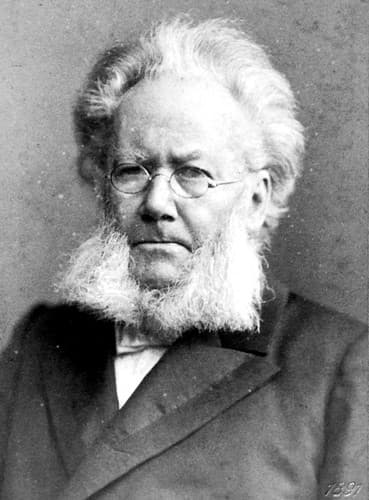
Henrik Johan Ibsen was a Norwegian playwright and theatre director. As one of the founders of modernism in theatre, Ibsen is often referred to as "the father of realism" and one of the most influential playwrights of his time. His major works include Brand, Peer Gynt, An Enemy of the People, Emperor and Galilean, A Doll's House, Hedda Gabler, Ghosts, The Wild Duck, When We Dead Awaken, Rosmersholm, and The Master Builder. Ibsen is the most frequently performed dramatist in the world after Shakespeare, and A Doll's House was the world's most performed play in 2006.
Similar books
- A Doll's House
Henrik Ibsen
3.7 (106k) average on GoodreadsFictionExplores societal expectations, marriage, and personal truth within a domestic setting.
- Death of a Salesman
Arthur Miller
3.5 (186k) average on GoodreadsFictionFocuses on a family's struggles, the 'American Dream,' and the unraveling of illusions.
- Oedipus Rex
Sophocles
3.7 (171k) average on GoodreadsFictionA classical tragedy where the relentless pursuit of truth leads to devastating consequences.
- Miss Julie
August Strindberg
3.5 (11k) average on GoodreadsFiction'Miss Julie', a contemporary naturalistic play, shares Ibsen's focus on psychological depth and the influence of environment and heredity. However, Strindberg's play is far more deterministic and explicitly explores class and gender conflict through a brutal, almost clinical lens, culminating in a violent, inevitable end. 'The Wild Duck' offers more moral ambiguity and a symbolic richness that transcends the purely naturalistic, focusing on the internal struggle with illusions rather than purely external, biological, or social forces.
- Harry Potter and the Sorcerer's Stone
J.K. Rowling
4.5 (7M) average on GoodreadsFantasyRescued from a miserable life under the stairs, an orphaned boy discovers he's a wizard destined for a magical school, where he uncovers a dangerous secret tied to the dark wizard who murdered his parents.
- The Hunger Games
Suzanne Collins
4.3 (6.4M) average on GoodreadsFantasyIn a future where children fight to the death on live television, Katniss Everdeen volunteers for the arena, turning a death sentence into a fight for survival and a spark of rebellion.




Enjoyed the summary?
A summary gives you the shape of the book. The book itself has the detail, the examples and the voice.
Find The Wild Duck on AmazonAs an Amazon Associate, BookBrief earns from qualifying purchases. How we're funded