

Synopsis
Covers the whole plot, including the ending.
- Difficulty
- Medium
- Pacing
- Variable
- Mood
- Atmospheric, Epic, Melancholy, Magical, Romantic
- Read it if
- You love richly atmospheric historical fantasy with deep folklore, a strong female protagonist, and a touch of dark romance.
- Skip it if
- You prefer fast-paced action over detailed world-building and character development, or dislike stories with significant magical and historical conflict.
The Winter of the Witch Plot Summary
Covers the whole plot, including the ending.
The Ashes of Moscow
After the Moscow fire, Prince Dmitri Ivanovich's men arrest Vasya, accusing her of witchcraft and arson. They blame her for his brother Sergei's death and the city's ruin. Dmitri, grieving and angry, listens to the priest Konstantin, who uses people's fear of paganism. Vasya faces a public trial, where Konstantin turns the crowd against her, demanding her death. Morozko, the frost-demon, is weak from the fire and cannot help. Vasya faces her accusers alone, with only her quick thinking and subtle magic.
Escape to the Woods
At the trial, Vasya escapes execution when her brother Sasha, now a monk, and her friend Olga create a distraction. She flees into the forest, a familiar refuge. There, she recovers her strength and reconnects with wild magic. She still feels the pain of Moscow's destruction and Morozko's near-death, knowing she is now an outcast in the human world.
The Awakening of Medvyed
Deep in the forest, Vasya senses a growing evil. She discovers that Medvyed, the ancient Bear-demon and Morozko's brother, has grown stronger from Russia's fear and chaos. He wants to absorb all old gods and spirits, taking their power to rule both worlds. Medvyed plans to manipulate Dmitri into war with the Tatars, using the bloodshed to increase his power and bring a dark age to Russia. Vasya realizes she must confront him, despite her own weakness and Morozko's fragile state.
Journey to the Midnight Realm
To understand Medvyed's power and find a way to defeat him, Vasya decides to go to the Midnight Realm, the land of ancient spirits and the dead. This dangerous journey pushes her magic to its limits. There, she meets powerful beings, including the ancient sorceress Lesnaya, who gives her cryptic advice. Vasya learns about the cosmos, the balance of creation and destruction, and her own connection to both worlds as a child of mortal and magical heritage.
Morozko's Recovery and the Pact
During Vasya's journey, Morozko slowly regains strength, though he is still weak. Their bond deepens as they share their fears. Morozko reveals more about his past, his rivalry with Medvyed, and ancient pacts that hold the world together. He recognizes Vasya's unique power and her role as a bridge between worlds. Together, they plan to counter Medvyed's growing power and protect Russia, knowing their combined, though diminished, strength is their only hope.
The Battle for Dmitri's Soul
Vasya knows Medvyed is pushing Prince Dmitri into war with the Tatars, so she tries to return to Moscow to warn him. She faces much resistance and disbelief, as Konstantin continues to turn Dmitri against her and paganism. Despite the danger, Vasya uses her magic to subtly influence events, trying to expose Konstantin's corrupt nature and Medvyed's influence. She wants to show Dmitri the real threat, hoping to prevent the battle Medvyed wants for its destructive energy. Her efforts meet suspicion and fear, making it hard to earn his trust.
The Gathering Storm at Kulikovo
Despite Vasya's efforts, Prince Dmitri, influenced by Konstantin and Medvyed, marches his army toward the Don River to fight the Tatar horde. The stage is set for the Battle of Kulikovo, a historical conflict Medvyed plans to use for power. Vasya, with Morozko, Sasha, and Olga, follows the armies, knowing Russia's fate rests on this battle. The air is tense as the human world prepares for war, unaware of the ancient, dark forces at play.
The Battle of Kulikovo and Medvyed's Ascendance
The Battle of Kulikovo begins in a brutal, bloody fight. As people die, Medvyed's power grows, feeding on fear, pain, and death. He appears in a terrifying, huge form, trying to absorb all of Russia's spirits, old and new. Vasya, with Morozko, confronts Medvyed on the battlefield. She uses all her magic, drawing on the strength of the land, spirits, and her heritage. The fight is not just for the soldiers' lives, but for Russia's soul and the cosmos' balance.
The Sacrifice and the Choice
In a final fight, Vasya realizes Medvyed cannot simply be killed, but must be contained. She understands that her unique nature, a mix of mortal and magical, makes her the only one who can truly confront him. She makes a great sacrifice, using her life force and connection to the magical world to bind Medvyed, stopping him from consuming Russia's magic. This act costs her much, changing her forever, and forcing Morozko to make a heartbreaking choice to save her.
The Aftermath and New Beginnings
With Medvyed defeated, the land slowly heals, and the balance between the seen and unseen worlds is restored, though changed. Prince Dmitri, sobered by war and Konstantin's deceit, begins to lead more wisely. Vasya, changed by her sacrifice, finds herself in a new state, more connected to the magical world, yet still tied to humanity. She and Morozko, their bond strong from shared trials, must navigate their new reality. Vasya chooses to be a guardian of Russia's magic, a true witch, always watching over her land.
The Winter of the Witch Characters
Vasya Petrovna
Protagonist
A wild witch-girl, a bridge between the mortal and magical worlds.
Vasya is a young woman born with the gift of seeing and interacting with the chyerti (house spirits and nature spirits). She is fiercely independent, deeply connected to the natural world, and possesses immense magical potential, though she often struggles to understand and control it. Her journey is defined by her refusal to conform to societal expectations for women, her love for her family and her homeland, and her growing acceptance of her unique, powerful nature. She is driven by a desire to protect Russia and the balance between its worlds.
Relationships: Morozko (Deeply romantic, fated, and interdependent magical bond); Sasha (Loving and protective brother, though often at odds due to his faith); Olga (Supportive and loyal sister, a pragmatic anchor in the human world); Konstantin (Bitter adversary, representing the oppressive forces of the Church); Medvyed (Ancient, powerful antagonist, Morozko's brother and her ultimate foe)
Morozko
Supporting/Love Interest
The ancient frost-demon, Lord of Winter and Death, bound to Vasya.
Morozko is an ancient and powerful winter demon, lord of frost, death, and the unseen world. He is enigmatic, often cold and aloof, but possesses a deep, protective love for Vasya. He represents the wild, untamed aspects of nature and magic. He is bound by ancient rules and pacts, making his direct intervention in mortal affairs difficult. Despite his immense power, he is vulnerable to the changing beliefs of humanity and the machinations of his brother, Medvyed. His existence is intertwined with the balance of the world.
Relationships: Vasya Petrovna (Deeply romantic, fated, and interdependent magical bond); Medvyed (Ancient, bitter brother and rival)
Medvyed
Antagonist
The ancient Bear-demon, Lord of Chaos and Destruction, Morozko's brother.
Medvyed is Morozko's elder brother, an ancient and immensely powerful demon representing chaos, destruction, and untamed nature. He feeds on fear, anger, and bloodshed, seeking to dominate both the mortal and magical worlds. He is manipulative and cunning, working through proxies like Konstantin to incite war and suffering. His ultimate goal is to absorb all the other spirits and become the sole, undisputed master of Russia. He views humanity as mere pawns and seeks to re-establish the dominance of the old gods through force and terror.
Relationships: Morozko (Ancient, bitter brother and rival); Konstantin (Unwitting pawn and instrument of his will)
Konstantin Nikonovich
Antagonist
A zealous and manipulative priest, obsessed with power and suppressing paganism.
Konstantin is a deeply troubled and manipulative priest, driven by a twisted religious zeal and a profound lust for power. He genuinely believes he is fighting for God, but his methods are cruel and his heart is filled with hatred for anything he deems pagan or unholy. He is easily swayed by Medvyed's influence, becoming an unwitting instrument of the demon's will. He uses fear, superstition, and the Church's authority to consolidate his power and persecute those who defy him, particularly Vasya. His actions directly contribute to Moscow's destruction and the ensuing war.
Relationships: Vasya Petrovna (Bitter enemy, whom he persecutes relentlessly); Prince Dmitri (Confidant and advisor, whom he manipulates)
Prince Dmitri Ivanovich
Supporting
The Grand Prince of Moscow, a complex leader driven by duty and grief.
Dmitri is the Grand Prince of Moscow, a powerful but flawed leader. He is initially portrayed as a strong, dutiful ruler, but he is deeply affected by the loss of his brother Sergei and the burning of Moscow. This grief makes him vulnerable to manipulation, particularly by Konstantin. He struggles to balance his duty to his people with his personal emotions and religious beliefs. Despite his initial distrust and anger towards Vasya, he ultimately seeks to do what is right for Russia, even if he doesn't fully understand the magical forces at play.
Relationships: Vasya Petrovna (Initially distrustful and adversarial, later a reluctant ally); Konstantin (Trusted advisor, though ultimately a manipulative influence)
Sasha (Aleksandr Petrovich)
Supporting
Vasya's older brother, a devout monk torn between faith and family.
Sasha is Vasya's older brother, a devout monk who loves his sister deeply but is conflicted by her pagan nature. He represents the struggle between the old ways and the new Christian faith. He is brave, loyal, and often acts as Vasya's protector within the human world. Despite his faith, he cannot fully abandon his sister or deny the existence of the chyerti. He is a man of deep conviction, but his love for Vasya often forces him to question his rigid beliefs and make difficult choices.
Relationships: Vasya Petrovna (Loving and protective brother); Olga (Supportive brother-in-law)
Olga Dmitrievna
Supporting
Vasya's pragmatic and strong-willed sister, Sasha's wife.
Olga is Vasya's older sister, a practical and strong-willed woman who provides a grounding force for her family. She is initially fearful of Vasya's magical abilities but ultimately loves and protects her. She is intelligent and resourceful, often using her wit and social standing to help her siblings. Olga represents the enduring strength of family and the resilience of ordinary people in extraordinary times. She is a voice of reason and a source of unwavering loyalty, even when she doesn't fully comprehend the magical world.
Relationships: Vasya Petrovna (Loving and protective sister); Sasha (Devoted wife)
Lesnaya
Mentioned/Supporting
An ancient sorceress, a powerful and enigmatic figure of the magical world.
Lesnaya is an ancient and powerful sorceress, a figure of legend in the magical world. She resides in the Midnight Realm and possesses vast knowledge of the cosmos, the spirits, and the balance of power. She is enigmatic and offers cryptic advice, testing Vasya's resolve and understanding rather than directly intervening. Lesnaya serves as a guide and a source of ancient wisdom, helping Vasya to understand her own unique place in the world and the true nature of her adversaries.
Relationships: Vasya Petrovna (Mentor and source of ancient wisdom)
The Winter of the Witch Themes
The Clash of Old and New Beliefs
The novel shows the conflict between old pagan ways and rising Christianity in medieval Russia. Vasya, a witch, represents the old, while Konstantin shows the strong, often violent, push of the new faith. This clash is not just religious but also cultural and political, as changing beliefs affect the chyerti's power and the world's balance. Moscow's burning and Vasya's persecution result from this conflict, showing intolerance's destructive power when old gods are forgotten and new ones are not fully understood.
“They are not devils, Vasya. They are only spirits. They are as old as the world.”
Sacrifice and Self-Discovery
A main theme is that true power and love often need great sacrifice. Vasya often risks her life and freedom to protect others, ending with her sacrifice to bind Medvyed. Through these actions, she saves Russia and fully understands her identity as a powerful witch, moving past limits set by society and her own fears. Morozko also makes a big sacrifice, choosing to bind himself to Vasya to save her, showing that love can demand an eternal commitment that changes one's being.
“There is no good without evil, no light without shadows, and no life without death.”
The Interconnectedness of Worlds
The trilogy always highlights the clear link between the mortal, 'seen' world and the magical, 'unseen' world. In 'The Winter of the Witch,' this theme is key as Medvyed's attempt to control both realms shows the delicate balance needed. Vasya, as a 'bridge' between these worlds, is essential to their salvation. The health of one affects the other; human fear and hate strengthen destructive magic, while faith and love can empower protective forces. Russia's well-being depends not just on human actions, but on recognizing and respecting the spirits in the land.
“The unseen world is not separate from the seen, little bear. It is woven into it.”
Freedom vs. Destiny
Vasya struggles with fate throughout the book – whether her path is set or if she has real choice. She constantly defies expectations and even prophecies, choosing her own way. Her choice to become a wandering guardian of Russia, instead of settling or following an expected fate, shows her strong independence and the power of individual will. Even Morozko, an ancient being, chooses to change his own fate by binding himself to Vasya, showing that even powerful, fated beings can choose their own paths through love and sacrifice.
“Let them call me witch. Let them call me monster. I am what I am.”
The Nature of Power
The novel explores different types of power: the obvious political and military power of princes, the Church's spiritual power, and the ancient, primal power of the magical world. It shows how power can corrupt (Konstantin, Medvyed) but also how it can be used for protection and good (Vasya, Morozko). The story suggests that true, lasting power is not about control, but about balance, understanding, and willingness to sacrifice for the greater good. Vasya's power is unique because it comes from empathy and connection, not from control.
“Power is a hungry thing. It eats all it can find, until only it remains.”
Plot Devices & Literary Techniques
The Burning of Moscow
A catastrophic event that ignites the central conflict and sets the plot in motion.
The fire that devastates Moscow serves as the inciting incident, immediately placing Vasya in mortal danger and exposing the deep-seated fears and superstitions of the populace. It directly leads to her accusation as a witch, forcing her to flee and setting her on a path to confront Medvyed. The destruction also weakens Morozko and strengthens Medvyed, dramatically shifting the balance of power in the magical world and raising the stakes for the entire narrative.
The Midnight Realm
An ethereal, magical dimension that serves as a source of ancient knowledge and power.
The Midnight Realm functions as a mystical setting that Vasya must visit to gain crucial understanding and power. It is a place where time and space are fluid, inhabited by ancient spirits and powerful entities like Lesnaya. Her journey there allows her to delve deeper into the lore of the world, understand Medvyed's true nature, and learn more about her own unique magical heritage. It is a place of profound revelation, essential for her growth and ability to confront the ultimate antagonist.
The Battle of Kulikovo
A historical battle serving as the climax where mortal and magical conflicts converge.
The Battle of Kulikovo is a pivotal plot device, serving as the physical and magical climax of the story. It is a real historical event, which grounds the fantasy elements in a tangible reality. In the narrative, this battle is not merely a human conflict but is actively orchestrated by Medvyed to feed on the resulting fear, chaos, and death. It is the stage upon which Vasya must make her ultimate stand against the Bear-demon, where the fate of both the seen and unseen Russias hangs in the balance.
Vasya's Firebird Heart
A unique magical attribute symbolizing her destiny and connection to life and death.
Vasya's 'firebird heart' is a symbolic and literal magical attribute that sets her apart. It represents her unique connection to both life and death, creation and destruction, and her ability to bridge the mortal and magical worlds. It is a source of immense power, but also a vulnerability. This device highlights her fated role and is crucial to her ultimate sacrifice, as she uses its unique properties to bind Medvyed, demonstrating that her power is not just destructive but capable of profound, life-altering creation and containment.
The Winter of the Witch Quotes
“When your mother is a witch, you are a witch. It is in the blood.”
“To be brave, you must have something to lose.”
“Love is not a cage, little bird. It is a flight.”
“The world is not always kind to girls who are not afraid.”
“A human life is a river, always flowing, always changing.”
“Power is not given. It is taken.”
“Fire purifies. It burns away the old to make way for the new.”
“To live is to choose. To choose is to lose.”
“Grief is a heavy cloak. It can smother you if you let it.”
“The forest remembers. The stones remember. The earth remembers.”
“Even a witch can be lonely.”
“True strength is not in never falling, but in rising every time you fall.”
“Some things, once broken, can never be mended, only rebuilt.”
“Magic is not good or evil. It is merely a tool.”
Quiz
10 questions on the plot and the characters. Each answer comes with a short explanation.
Question 1
What major disaster strikes Moscow at the beginning of 'The Winter of the Witch'?
- A devastating flood
- A massive fire
- A widespread plague
- An invading army
Show answer
B. A massive fire The book opens with Moscow being struck by a devastating fire, leading to panic and a search for someone to blame.
Question 2
Which character is described as a 'wicked demon' who returns stronger than ever and determined to spread chaos?
- The Bear (Medved)
- Morozko
- Kasyan
- The Grand Prince
Show answer
A. The Bear (Medved) The synopsis explicitly mentions a 'wicked demon' returning stronger than ever. This refers to Medved, also known as The Bear, who is Vasya's ancient antagonist.
Question 3
What is Vasya's primary goal in 'The Winter of the Witch'?
- To marry a powerful prince
- To escape Russia and live a normal life
- To save Russia, Morozko, and the magical world
- To become the new ruler of Moscow
Show answer
C. To save Russia, Morozko, and the magical world The synopsis states Vasya 'desperately tries to save Russia, Morozko, and the magical world she treasures.'
Question 4
What is the relationship between Vasya and Morozko?
- They are siblings
- They are sworn enemies
- They are lovers and allies
- He is her magical mentor
Show answer
C. They are lovers and allies The synopsis mentions Vasya trying to save Morozko, and previous books establish their deep romantic and allied relationship.
Question 5
What is the central conflict Vasya finds herself caught in?
- A struggle between two rival noble families
- A war between Russia and a neighboring empire
- The clash between the seen and unseen Russias, and mortal and magical enemies
- A quest to find a lost magical artifact
Show answer
C. The clash between the seen and unseen Russias, and mortal and magical enemies The text states Vasya battles 'enemies mortal and magical to save both Russias, the seen and the unseen' and is 'caught at the center of the conflict' concerning the fate of two worlds.
Question 6
What is the Grand Prince's reaction to the disaster in Moscow?
- He seeks Vasya's magical assistance
- He falls into a rage and chooses allies leading to war
- He abdicates his throne in despair
- He blames the boyars for the misfortune
Show answer
B. He falls into a rage and chooses allies leading to war The synopsis explicitly states, 'The Grand Prince is in a rage, choosing allies that will lead him on a path to war and ruin.'
Question 7
What does Vasya discover about herself in this book?
- She is destined to rule a kingdom
- She has surprising truths about herself and her history
- She lacks the power to face her enemies
- She is an ordinary mortal with no magical abilities
Show answer
B. She has surprising truths about herself and her history The synopsis states, 'Vasya will uncover surprising truths about herself and her history.'
Question 8
What is the overall tone or feeling Laini Taylor's advance praise suggests for 'The Winter of the Witch'?
- Lighthearted and whimsical
- Dark, magical, and emotionally intense
- A gentle historical romance
- A straightforward tale of good versus evil
Show answer
B. Dark, magical, and emotionally intense Laini Taylor's praise uses phrases like 'heart ripped out,' 'full of snow and magic,' and 'plunges us back to fourteenth-century Moscow, where old gods and new vie for the soul of Russia,' indicating a dark, magical, and emotionally intense experience.
Question 9
What is the primary historical setting for 'The Winter of the Witch'?
- Twelfth-century Novgorod
- Fifteenth-century Kyiv
- Fourteenth-century Moscow
- Thirteenth-century Pskov
Show answer
C. Fourteenth-century Moscow Laini Taylor's praise explicitly mentions 'fourteenth-century Moscow' as the setting.
Question 10
What is the ultimate uncertainty Vasya faces regarding her efforts to save Russia, Morozko, and the magical world?
- She may not be able to save them all
- She might lose her own magic in the process
- She could be exiled from Russia forever
- She might be forced to marry the Grand Prince
Show answer
A. She may not be able to save them all The final sentence of the synopsis states, 'But she may not be able to save them all,' highlighting the high stakes and potential for tragic loss.
The Winter of the Witch FAQ
What is the central conflict Vasya faces at the beginning of 'The Winter of the Witch'?
At the outset, Vasya is accused of witchcraft by the Grand Prince Dmitry and the Church after the fire in Moscow. She is seen as a scapegoat for the city's misfortunes, leading to her being imprisoned and facing the threat of execution, which forces her to flee Moscow and embark on her journey.
How does Morozko's power change or evolve in this final installment?
Morozko's power is significantly diminished and fractured after his sacrifice at the end of 'The Girl in the Tower' and the subsequent imprisonment in the underworld. He exists in a weakened state, often appearing as a shadow or a ghost, and Vasya must actively work to restore his strength and help him regain his full wintry essence, making him vulnerable to other magical entities.
Who is Medved, and what role does he play in the narrative?
Medved, the Bear, is the ancient brother of Morozko and a powerful, chaotic chervil who desires to return Russia to a primal, wild state. He manipulates events and people, including Dmitry, to sow discord and weaken the balance between worlds, ultimately seeking to destroy the order and reassert his own dominion over the land.
What is the significance of Vasya's unique heritage as a child of both mortal and magical worlds?
Vasya's heritage, being the daughter of a mortal mother and a frost-demon father (Morozko's brother, the Bear), grants her unparalleled magical abilities and a deep connection to both the seen and unseen Russias. This dual nature allows her to bridge the two worlds, understand the chervili, and ultimately become the powerful protector and guardian that Russia needs to survive the encroaching chaos.
How does the political tension between Moscow and the Golden Horde influence the magical conflict?
The political tension, particularly Grand Prince Dmitry's defiance of the Golden Horde, mirrors and fuels the magical conflict. The instability and fear among the mortals provide fertile ground for Medved's chaotic magic to take root and spread. The human war becomes a manifestation of the deeper magical struggle, with both sides vying for control over Russia's destiny.
What is the true identity of the 'wicked demon' mentioned in the synopsis, and how does it connect to Vasya's past?
The 'wicked demon' is Medved, the Bear, who is not only Morozko's brother but also Vasya's biological father. This hidden detail reveals a profound, unsettling connection to her lineage, explaining the depth of her innate magical power and making her confrontation with him a deeply personal and familial struggle for control over Russia's fate.
How does the ancient story of the 'Winter of the Witch' prophecy relate to Vasya's journey?
The prophecy of the 'Winter of the Witch' foretells a powerful witch who will rise to either save or doom Russia during a time of great upheaval. Vasya's journey directly fulfills this, as she embodies the witch figure, navigating the difficult choices and immense power to determine the fate of both the mortal and magical realms, ultimately becoming the guardian.
What is the significance of the fire in Moscow, and how does it act as a catalyst for deeper events?
The fire in Moscow, orchestrated by Medved through his manipulation of human fears and desires, serves as a major catalyst. It not only leads to Vasya's immediate persecution but also weakens the spiritual and physical defenses of the city, opening it up to further magical incursions and accelerating the confrontation between Morozko, Vasya, and Medved.
Are there any subtle connections between the chervili and the mortal characters that readers might miss?
Yes, many mortal characters unknowingly embody aspects or are subtly influenced by the chervili. For instance, Dmitry's ambition and rage are amplified by Medved's influence, making him a pawn in the Bear's game. Similarly, the common people's superstitions and fears directly feed the power of lesser chervili, showing a symbiotic, often unseen, relationship.
How does Vasya's journey reflect a coming-of-age story beyond just magical powers?
Vasya's journey is a profound coming-of-age, moving beyond her initial recklessness to embrace responsibility and leadership. She learns to temper her wild nature with wisdom, makes difficult sacrifices for the greater good, and ultimately defines her own identity and purpose, not as a pawn of fate, but as an active shaper of it, accepting her true power and destiny.
Discuss the psychological impact of Vasya's constant struggle between her love for Morozko and her duty to Russia.
Vasya experiences immense psychological strain torn between her deeply personal love for Morozko and her growing, overwhelming duty to protect Russia. This conflict forces her to confront the nature of sacrifice and selflessness, often leading to painful choices where she must prioritize the fate of a nation over her own desires and happiness, causing significant emotional turmoil.
How does the fear and superstition of the mortal world psychologically affect the chervili and their actions?
The fear and superstition of mortals are potent food for the chervili, directly influencing their power and behavior. Medved thrives on chaos and despair, while even benevolent chervili like the domovoi are weakened or strengthened by the belief and respect (or lack thereof) from humans. This dynamic shows a profound psychological interdependence between the two worlds.
Explore the psychological complexities of Grand Prince Dmitry's character arc.
Grand Prince Dmitry's arc is marked by increasing paranoia, ambition, and a desperate need for control, fueled by both political pressures and Medved's subtle manipulations. His initial desire to protect Russia devolves into tyranny and rash decisions, showcasing how fear and external influence can corrupt even well-intentioned leaders, leading him to betray those who could help him.
What is the ultimate message about the balance between old pagan beliefs and new Christianity in Russia?
The book ultimately argues for a harmonious balance between the old pagan beliefs, represented by the chervili, and the new Christian faith. It suggests that neither can truly eradicate the other without dire consequences, and that Russia's true strength lies in embracing both its ancient magical heritage and its evolving spiritual landscape, recognizing the value in each.
How does the ending challenge traditional notions of 'happily ever after' in fantasy romance?
The ending significantly challenges traditional 'happily ever after' by having Vasya and Morozko choose different paths, prioritizing their respective duties over their personal desires for a conventional life together. While their love remains, their destinies diverge, suggesting that true love can involve sacrifice and a recognition of individual purpose, rather than simply a shared domestic future.
Is Vasya truly a 'witch' in the villainous sense, or does the book redefine the term?
The book fundamentally redefines 'witch.' Initially, Vasya is branded a 'witch' in the villainous, superstitious sense by the Church and fearful mortals. However, the narrative portrays her as a powerful protector, a guardian of balance, and a woman fiercely connected to nature and magic. She embodies a positive, essential force, reclaiming the term from its negative connotations.
What is the symbolic significance of the 'two Russias' – the seen and unseen – and their eventual fate?
The 'two Russias' symbolize the tangible, mortal world and the hidden, magical world, both integral to the nation's identity. The book emphasizes that the health and survival of one directly impact the other. Their eventual fate, bound together by Vasya's actions, suggests that true strength comes from recognizing and integrating both aspects, rather than denying or separating them.
Could Morozko have chosen a different path to regain his power, or was his sacrifice inevitable?
Morozko's sacrifice, particularly his choice to become the winter itself, seems largely inevitable given the escalating threats and his nature as a primordial force. His power is intrinsically tied to the season and the land. While other paths might have offered temporary solutions, his ultimate destiny was to embody the winter, ensuring its natural cycle and protecting Russia.
About the author

Katherine Arden is an American author known for her works of fiction that blend elements of fantasy and folklore. Her notable books include "The Bear and the Nightingale," "The Winter of the Witch," and "Small Spaces," which showcase her talent for creating immersive, atmospheric narratives. Arden's writing often draws on historical settings and rich cultural traditions.
Similar books
- Uprooted
Naomi Novik
4.1 (167k) average on GoodreadsFantasyFeatures a powerful witch protagonist, deep folklore, and a dark, magical forest.
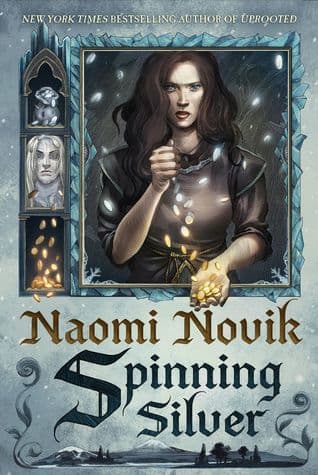
- Spinning Silver
Naomi Novik
4.2 (75k) average on GoodreadsFantasyRetells a classic fairy tale with a focus on Slavic folklore and strong female characters.
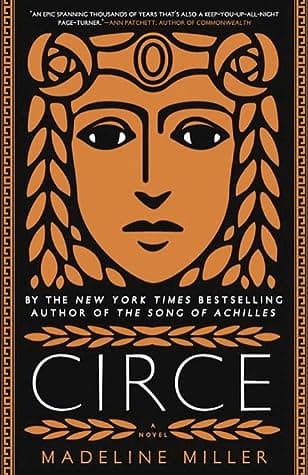
- Circe
Madeline Miller
4.3 (343k) average on GoodreadsFantasyExplores the life of a powerful mythological woman, her struggles, and her ultimate agency.
- Harry Potter and the Sorcerer's Stone
J.K. Rowling
4.5 (7M) average on GoodreadsFantasyRescued from a miserable life under the stairs, an orphaned boy discovers he's a wizard destined for a magical school, where he uncovers a dangerous secret tied to the dark wizard who murdered his parents.
- The Hunger Games
Suzanne Collins
4.3 (6.4M) average on GoodreadsFantasyIn a future where children fight to the death on live television, Katniss Everdeen volunteers for the arena, turning a death sentence into a fight for survival and a spark of rebellion.
- 1984
George Orwell
4.2 (3.1M) average on GoodreadsPoliticsIn a future where surveillance and thought control are absolute, a man's search for truth clashes with the Party, showing that hope can be a form of rebellion.




Enjoyed the summary?
A summary gives you the shape of the book. The book itself has the detail, the examples and the voice.
Find The Winter of the Witch on AmazonAs an Amazon Associate, BookBrief earns from qualifying purchases. How we're funded