
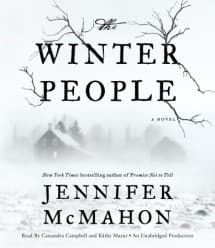
Synopsis
Covers the whole plot, including the ending.
- Difficulty
- Medium
- Pacing
- Moderate
- Mood
- Atmospheric, Suspenseful, Dark, Melancholy
- Read it if
- You enjoy dual-timeline mysteries, gothic atmosphere, and stories where ancient folklore bleeds into modern-day horror.
- Skip it if
- You prefer hard science fiction or dislike supernatural elements and ambiguous endings.
The Winter People Plot Summary
Covers the whole plot, including the ending.
Alice's Disappearance and the Discovery of the Diary
Nineteen-year-old Ruthie lives a quiet life in West Hall, Vermont, with her mother, Alice, and younger sister, Fawn. Their off-grid life changes when Ruthie wakes one morning to find Alice gone, leaving only a note about a walk. Ruthie searches for clues and finds a hidden space under the floorboards in Alice's room. Inside, she finds an old diary belonging to Sara Harrison Shea, who lived in their farmhouse in 1908 and was found dead in the field behind the house months after her daughter's death. This discovery starts Ruthie's search to understand her mother's disappearance and their home's history.
Sara's Grief and the Legend of the Winter People
The diary entries take Ruthie back to 1908, where Sara Harrison Shea writes about her life in West Hall. The first entries show a happy home with her husband, Martin, and their young daughter, Gertie. But the story changes when Gertie dies suddenly from a fever. Sara is very sad, consumed by sorrow. Her entries become darker, hinting at local stories and beliefs about 'the winter people' and bringing back the dead. Sara's desperation grows, and she starts looking for forbidden knowledge and practices, wanting to see her daughter again.
Ruthie's Search and the Arrival of New Neighbors
As Ruthie deals with Sara's sad story, she keeps looking for Alice. She tries to keep things normal for Fawn, but the isolation and uncertainty are hard. A new family, the Davidsons—Owen, his wife Jenny, and their son, Caleb—rent the cabin next door, which has been empty for years. Ruthie finds Owen Davidson unsettling; he seems too interested in their property and Alice's disappearance. His questions feel nosy, and Ruthie thinks he might know more than he says, adding to her worry. The house's history and the diary entries make her more suspicious.
Sara's Pact with the 'Winter People'
Sara's diary shows her growing focus on the stories of the 'winter people' – shadowy figures in the woods who can bring back the dead. Because of her grief for Gertie, Sara finds a local woman named Mrs. Stanton, who is said to have old knowledge. Mrs. Stanton, a mysterious woman, guides Sara through a dark ritual using specific herbs, a piece of Gertie's hair, and a sacrifice. Sara, desperate, agrees, believing she can bring her daughter back. The ritual has a strange, unsettling feeling, marking a point of no return for Sara as she uses forbidden magic.
Gertie's Return and the Growing Horror
After the ritual, Gertie reappears, seeming alive. Sara is happy, but it doesn't last. Gertie is not quite herself; she is cold, quiet, and has an unsettling stillness. Her skin is pale, her eyes are empty, and she speaks in a strange, flat voice, often repeating things. Sara soon realizes that what she brought back is not truly her daughter but something else, something scary. The returned Gertie starts acting strangely, including being violent and having a strong hunger for warmth and life, scaring Sara and her husband, Martin. The child they once loved has become a source of fear.
Ruthie's Investigation and Owen's Secrets
Ruthie's search for Alice leads her to ask Owen Davidson more directly. She finds out that Owen's family has a long connection to West Hall and its dark stories. He says that his own mother went missing years ago, and he thinks it's connected to the same forces that affected Sara Harrison Shea. Ruthie also finds old photos and papers in Alice's things that suggest Alice had a deeper, more personal connection to the house's history than Ruthie knew. This makes Ruthie wonder if Alice had been looking into the 'winter people' and Sara's story for more than just interest, perhaps expecting her own disappearance.
Martin's Desperation and Sara's Sacrifice
The horror of the returned Gertie gets worse, threatening Sara and Martin's lives. Martin, unable to deal with the strange child, tries to stop Gertie's unnatural existence. But Gertie's powers are too strong. To protect her husband and end the nightmare, Sara makes a sacrifice. She takes Gertie to the field behind their house, where Gertie first died, and performs a final, sad ritual, seemingly sacrificing herself to end the 'winter people's' hold and ensure Gertie's unnatural life cannot continue. This ends with Sara's body being found in the field, months after Gertie's death.
Owen's Confession and the Truth About His Mother
Owen tells Ruthie the full truth: his mother, Katherine, went missing years ago after becoming a 'sleeper' – someone brought back by the 'winter people' but not fully alive, needing to feed on others' life force. He explains that his mother, like Gertie, was a victim of the same dark magic. Owen believes Alice's disappearance is linked to a 'sleeper' returning and that Alice was trying to stop it. He warns Ruthie that the 'winter people' want to keep existing by finding new people, and that Fawn, being young, might be a target, making Ruthie more scared and urgent.
Alice's Return and the Revelation of Her Identity
Alice eventually returns, but she is different. Her skin is cold, her eyes are empty, and her movements are stiff, like Sara's description of Gertie. Ruthie and Owen realize that Alice has become a 'sleeper.' Alice says, in her calm voice, that she had been trying to protect them from the 'winter people,' but she gave in. She explains that the 'winter people' are now looking for Fawn, wanting to use her. This makes Ruthie face the fact that her mother is no longer truly her mother, and her sister is in danger from the same forces that ruined Sara Harrison Shea's family.
The Confrontation and Ruthie's Choice
Ruthie, with what she learned from Sara's diary and Owen's warnings, gets ready to face the 'sleeper' Alice and the 'winter people' to save Fawn. The climax happens in the woods behind their farmhouse, a place with the dark history of the 'winter people.' Ruthie knows she must end the connection to the 'winter people' forever, even if it means losing Alice. She uses what she learned from the diary, especially about herbs and a final sacrifice, to try and break the cycle. The fight is tense and emotional, as Ruthie fights the spirits and her mother's chilling presence, wanting to protect Fawn and stop history from repeating in her family.
Principal Figures
Ruthie
Protagonist
Nineteen-year-old girl searching for her vanished mother and uncovering dark family secrets.
Ruthie is a resilient and fiercely protective nineteen-year-old. She lives a secluded, off-grid life with her mother, Alice, and younger sister, Fawn, in a remote Vermont farmhouse. When Alice vanishes, Ruthie is thrust into the role of caregiver for Fawn and investigator, driven by a desperate love for her family. She is initially skeptical of the supernatural but becomes a determined believer as she uncovers Sara Harrison Shea's diary and the chilling history of the 'winter people.' Her journey is one of immense courage as she confronts ancient evil and makes difficult choices to save her sister.
Relationships: Alice (mother, later a 'sleeper'); Fawn (younger sister, whom she protects); Owen Davidson (ally and romantic interest)
Alice
Supporting/Antagonist
Ruthie's mother, who mysteriously vanishes and has a hidden past connected to the 'winter people'.
Alice is Ruthie and Fawn's mother, a fiercely independent woman who chose to live off the grid in the isolated farmhouse. She is initially presented as a loving but enigmatic figure. Her sudden disappearance triggers the main plot. As the story unfolds, it's revealed that Alice has a deep, personal connection to the 'winter people' and the house's history, having researched and perhaps even tried to combat them. Her return as a 'sleeper' transforms her into a tragic antagonist, still driven by a desire to protect her daughters but ultimately controlled by the dark forces she tried to fight.
Fawn
Supporting
Ruthie's younger sister, vulnerable and central to the 'winter people's' plot.
Fawn is Ruthie's younger sister, a sweet and innocent child who relies on Ruthie after their mother's disappearance. She represents the pure, untainted life force that the 'winter people' seek. Her vulnerability and the threat she faces are the primary motivators for Ruthie's actions. Fawn's presence highlights the stakes of the supernatural conflict, as she is the ultimate target for the malevolent entities. Her innocence contrasts sharply with the dark forces at play, making her survival paramount to the story's resolution.
Relationships: Ruthie (older sister, protector); Alice (mother)
Sara Harrison Shea
Protagonist (Past Timeline)
Woman from 1908 whose diary reveals her tragic descent into dark magic after her daughter's death.
Sara Harrison Shea is the protagonist of the historical timeline, whose diary entries Ruthie discovers. Living in the same farmhouse in 1908, Sara is initially a loving wife and mother. Her life is shattered by the sudden death of her young daughter, Gertie, from a fever. Consumed by inconsolable grief, Sara becomes desperate to bring Gertie back, leading her to explore the dark legends of the 'winter people' and engage in forbidden rituals. Her story is a cautionary tale of love, loss, and the horrifying consequences of tampering with life and death, mirroring and foreshadowing Ruthie's present-day struggles.
Relationships: Martin Shea (husband); Gertie Shea (daughter, resurrected as a 'sleeper')
Owen Davidson
Supporting
New neighbor with a family history tied to the 'winter people' and an ally to Ruthie.
Owen Davidson is a new arrival in West Hall, renting the cabin next to Ruthie's farmhouse with his wife and son. He initially appears suspicious but quickly becomes Ruthie's most crucial ally. Owen's family has a long and tragic history with the 'winter people'; his own mother vanished years ago, believed to have become a 'sleeper.' This personal experience makes him knowledgeable about the local legends and the dangers they pose. He is protective and insightful, helping Ruthie understand the supernatural threat and guiding her in her quest to save Fawn, developing a romantic connection with her.
Relationships: Ruthie (ally and romantic interest); Jenny Davidson (wife); Caleb Davidson (son)
Gertie Shea
Supporting/Antagonist
Sara's young daughter, tragically dies and is resurrected as a monstrous 'sleeper'.
Gertie is Sara Harrison Shea's young daughter, whose death from a fever in 1908 plunges Sara into despair. After Sara performs a dark ritual, Gertie is brought back to life, but she is not the same. The resurrected Gertie is a 'sleeper' – cold, unnaturally silent, and possessed by a malevolent hunger for warmth and life. She embodies the horrifying consequences of tampering with death, becoming a source of terror for her parents. Her unnatural existence drives the tragic events of Sara's timeline, ultimately leading to Sara's sacrifice.
Relationships: Sara Harrison Shea (mother); Martin Shea (father)
Martin Shea
Supporting
Sara's husband, who struggles to cope with his grief and the horror of his resurrected daughter.
Martin Shea is Sara's loving husband in the 1908 timeline. He shares Sara's grief over Gertie's death but is horrified by Sara's descent into dark magic and the monstrous child she brings back. He represents the voice of reason and fear against Sara's desperate obsession. Martin tries to protect his family from the resurrected Gertie, but his efforts are ultimately futile against the supernatural forces. His despair and fear contribute to the tragic atmosphere of Sara's story, highlighting the destructive power of the 'winter people's' influence on a family.
Relationships: Sara Harrison Shea (wife); Gertie Shea (daughter)
Mrs. Stanton
Mentioned/Supporting
Reclusive local woman in 1908 who possesses knowledge of the 'winter people' and dark rituals.
Mrs. Stanton is a mysterious and reclusive older woman in West Hall during Sara's time. She is known for her knowledge of local folklore, herbs, and dark rituals associated with the 'winter people.' Sara seeks her out in her desperation to bring Gertie back. Mrs. Stanton acts as a guide, albeit a dangerous one, to the forbidden practices, initiating Sara into the world of resurrection magic. Her role is to facilitate Sara's tragic pact, representing the gateway to the supernatural dangers of the town.
Relationships: Sara Harrison Shea (client/student of dark arts)
Katherine Davidson
Mentioned
Owen's mother, who also became a 'sleeper' and vanished years prior.
Katherine Davidson is Owen's mother, whose disappearance years ago is a driving force for Owen's understanding and fear of the 'winter people.' She became a 'sleeper' after being brought back from the dead, much like Gertie and later Alice. Her story serves as a precedent and a chilling warning, confirming the recurring nature of the supernatural threat in West Hall and providing Owen with the knowledge he uses to help Ruthie. Her fate underscores the pervasive and cyclical nature of the dark magic.
Relationships: Owen Davidson (son)
Themes & Insights
Grief and Desperation
Grief's power is a main theme, especially in Sara's story. Her sorrow over Gertie's death makes her take extreme and dangerous actions, showing how desperation can make people go against natural laws and use forbidden things. Ruthie also feels great grief and fear for her missing mother, which drives her search. The novel looks at the bad results of unchecked grief and the human desire to undo loss, showing how it can lead to terrible things.
“Grief is a house where the walls are made of mirrors, and every reflection is your own broken heart.”
The Supernatural and Folklore
The novel is full of supernatural elements, using local Vermont stories about 'the winter people' and bringing back the dead. This theme looks at the thin line between the natural and supernatural worlds, where old stories are real. The 'winter people' are a strong, bad force connected to the land, affecting generations. The book looks at these beings, how they bring people back, and the bad outcomes for those who deal with them, making the supernatural a real and constant threat.
“They say the winter people can bring back the dead, but they don't bring back what you lost. They bring back something else.”
Family Bonds and Protection
Family bonds are a strong force for both Sara and Ruthie. Sara's love for Gertie leads to her sad actions, while Ruthie's dedication to her sister, Fawn, makes her face the 'winter people.' The theme looks at how far mothers and sisters will go to protect loved ones, even at great cost. It also shows the pain of seeing family members changed or lost to dark forces, making characters make hard choices for the family's good.
“A mother's love is a dangerous thing, a force that can move mountains or shatter worlds.”
The Cycle of History and Repetition
The novel shows how history repeats itself, especially with the 'winter people' and their effect on West Hall. Sara's diary is a scary guide for what happens in Ruthie's present, showing how grief, desperate rituals, and sad outcomes happen again over generations. The constant threat of history repeating, with Fawn possibly being the next victim, creates urgency and fear. Ruthie's goal is to break this cycle and stop her family from having the same fate as Sara's.
“The past isn't dead. It's not even past. It's right here, breathing down your neck.”
Plot Devices & Literary Techniques
Dual Timeline Narrative
Interweaving two stories from different eras to reveal a connected mystery.
The novel employs a dual timeline narrative, alternating between Ruthie's present-day search for her mother in 2011 and Sara Harrison Shea's diary entries from 1908. This device allows for a gradual revelation of the historical context and the supernatural threat that directly impacts Ruthie's story. The parallels between Sara's grief-driven actions and Alice's disappearance create suspense and foreshadowing, building tension as Ruthie uncovers how the past is actively informing her present. It effectively links the two narratives into a cohesive, escalating mystery.
The Diary as a MacGuffin/Exposition Device
Sara's diary acts as the primary source of historical information and a catalyst for Ruthie's investigation.
Sara Harrison Shea's hidden diary functions as both a MacGuffin and a crucial exposition device. It is the object that Ruthie discovers, directly propelling her into the historical mystery and providing her with the necessary background on the 'winter people' and the consequences of their magic. The diary entries are not just passive historical records but active clues, guiding Ruthie's understanding of her mother's disappearance and the true nature of the threat to Fawn, detailing rituals, warnings, and the horrifying realities of resurrection.
'The Winter People' as a Supernatural Entity
A malevolent, ancient entity that grants resurrection with horrifying consequences.
The 'winter people' serve as the central supernatural entity and antagonist of the story. They are not explicitly defined as individuals but rather as a pervasive, ancient force or collective tied to the land of West Hall, capable of resurrecting the dead. However, those brought back ('sleepers') are not truly alive but cold, emotionless, and parasitic, needing to feed on the life force of others. This device creates a terrifying and relentless antagonist that is both tangible in its effects and elusive in its true form, driving the fear and horror throughout the narrative.
The Farmhouse as a Locus of Evil
The physical setting acts as a recurring site of supernatural activity and tragedy.
The farmhouse itself is a significant plot device, acting as a recurring locus of evil and tragedy across both timelines. It is the site where Sara's family experienced their horror and where Ruthie's family faces a similar threat. The house is not just a backdrop but seems to hold the lingering energy of past events, making it a confined and oppressive setting. Its isolation and history enhance the sense of dread, suggesting that the house itself is connected to the 'winter people' and destined to draw in those susceptible to their influence, becoming a character in its own right.
The Winter People Quotes
“Some secrets are like that. They don't want to stay buried. They find ways to come back to the surface.”
“The past is never really gone. It's just waiting for you to find it again.”
“Sometimes the people you think you know best are the ones keeping the biggest secrets.”
“There are things in the woods that don't want to be found. And things that do.”
“Fear is a funny thing. It can make you do things you never thought you were capable of.”
“The dead don't always stay dead, not in this town. Some of them just go to sleep for a while.”
“Love is a powerful thing, stronger than death, stronger than time. It can bring people back.”
“Sometimes the only way to move forward is to look back, to understand what happened before you.”
“The truth is rarely simple. It's usually tangled up with desires and fears, with things people want to believe.”
“Grief has a way of twisting things, making you see what isn't there, or ignore what is.”
“Small towns have long memories. They remember everything, even the things people try to forget.”
“There's a fine line between a miracle and a curse. Sometimes, they're the same thing.”
“The greatest stories are the ones that never really end, just change who's telling them.”
“Some things are meant to stay hidden. And some things are meant to be found, no matter how much they scare you.”
Quiz
10 questions on the plot and the characters. Each answer comes with a short explanation.
Question 1
What significant item does Ruthie find hidden beneath the floorboards of her mother's bedroom after Alice disappears?
- A large sum of money
- Sara Harrison Shea's diary
- Old love letters from her father
- A map of secret tunnels
Show answer
B. Sara Harrison Shea's diary Ruthie discovers Sara Harrison Shea's diary, which becomes a crucial link to the historical mystery and her mother's disappearance.
Question 2
In what year was Sara Harrison Shea found dead in the field behind her house?
- 1918
- 1908
- 1898
- 1928
Show answer
B. 1908 The book states that Sara Harrison Shea was found dead in 1908, just months after her daughter's tragic death.
Question 3
What is the primary reason Alice insists on living off the grid with Ruthie and her sister?
- To avoid paying taxes
- She has a deep distrust of modern society and technology
- They are hiding from a dangerous person
- It's a family tradition passed down for generations
Show answer
B. She has a deep distrust of modern society and technology Alice's decision to live off the grid stems from a deep-seated distrust of modern society and technology, impacting their lives significantly.
Question 4
What connection does Ruthie's family have to Sara Harrison Shea?
- They are distant relatives through marriage
- Ruthie and her family live in Sara Harrison Shea's old farmhouse
- Sara was a friend of Ruthie's grandmother
- Ruthie's mother, Alice, owned the diary before Sara
Show answer
B. Ruthie and her family live in Sara Harrison Shea's old farmhouse Ruthie and her family reside in the very farmhouse that once belonged to Sara Harrison Shea, directly linking them to the historical mystery.
Question 5
The town of West Hall, Vermont, is known for what recurring phenomena?
- Unusually harsh winters
- Strange disappearances and old legends
- A history of unexplained electrical outages
- Frequent sightings of rare wildlife
Show answer
B. Strange disappearances and old legends West Hall, Vermont, is introduced as a town with a history of strange disappearances and old legends, setting the mysterious tone of the novel.
Question 6
What 'weighty consequences' are hinted at regarding Alice's decision to live off the grid?
- They often lack basic supplies and food
- It makes her disappearance harder to track and investigate
- They are frequently targeted by local authorities
- It isolates them from medical care during emergencies
Show answer
B. It makes her disappearance harder to track and investigate Living off the grid has weighty consequences, specifically making Alice's disappearance more difficult to trace and investigate due to their lack of digital footprint and reliance on conventional systems.
Question 7
A central theme of the novel is the idea that Ruthie may be the only one who can stop history from repeating itself. What specific aspect of history is she trying to prevent from recurring?
- Another natural disaster affecting West Hall
- The tragic deaths and disappearances linked to the farmhouse and its inhabitants
- The decline of the town's economy
- A family feud that has plagued the town for generations
Show answer
B. The tragic deaths and disappearances linked to the farmhouse and its inhabitants The narrative emphasizes Ruthie's role in preventing the recurrence of the tragic deaths and disappearances, particularly those mirroring Sara Harrison Shea's story, that seem to haunt the farmhouse.
Question 8
What emotional state is Ruthie in when she discovers Alice has vanished?
- Relieved and independent
- Indifferent and unconcerned
- Startled and desperate to find clues
- Angry and resentful
Show answer
C. Startled and desperate to find clues Ruthie is 'startled' when she wakes to find Alice gone and immediately begins searching for clues, indicating a state of concern and urgency.
Question 9
Beyond Ruthie, who else in the story is implied to be 'looking for someone that they've lost'?
- Local police investigating unrelated cases
- Characters connected to Sara Harrison Shea's past, or modern-day figures with similar experiences
- Tourists who have lost their way in West Hall
- Ruthie's younger sister, searching for a lost toy
Show answer
B. Characters connected to Sara Harrison Shea's past, or modern-day figures with similar experiences The book explicitly states that Ruthie 'may be the only one who can stop history from repeating itself,' but she's 'not the only person looking for someone that they've lost,' implying other characters, likely connected to the historical mystery, are also searching.
Question 10
What tragic event preceded Sara Harrison Shea's death in 1908?
- A devastating house fire
- The death of her husband
- The tragic death of her daughter
- A severe winter storm
Show answer
C. The tragic death of her daughter The synopsis clearly states Sara Harrison Shea was found dead 'just months after the tragic death of her daughter,' linking these two events.
The Winter People FAQ
What is "The Winter People" about?
"The Winter People" weaves together two timelines: 1908, following Sara Harrison Shea's grief after her daughter Gertie's death and her discovery of a dark folk magic to bring back the dead; and present day, where Ruthie searches for her vanished mother, Alice, and uncovers Sara's hidden diary, revealing a dangerous history connected to their farmhouse and the town of West Hall, Vermont.
Why should I read "The Winter People"?
You should read "The Winter People" for its chilling blend of historical mystery, supernatural horror, and emotional depth. It offers a gripping dual narrative, compelling characters like the desperate Sara and the determined Ruthie, and a unique exploration of grief, motherhood, and the dark allure of bringing back the dead, all set against a richly atmospheric Vermont backdrop.
What is the background/setting of "The Winter People"?
The story is primarily set in the isolated, rural town of West Hall, Vermont, a place steeped in local legends of disappearances and a dark, ancient magic. The central location is Sara Harrison Shea's old farmhouse, which Ruthie and her family inhabit in the present day, serving as a physical link between the two timelines and the source of the supernatural occurrences.
What are the most memorable quotes?
While specific quotes aren't provided in the summary, the book's themes suggest memorable lines would revolve around the desperation of grief, the allure of forbidden magic, and the cyclical nature of loss and love. For example, a quote about 'the sleepers' or the cost of bringing someone back would likely resonate with readers.
What writing style does the author use?
Jennifer McMahon employs a dual narrative structure, alternating between Sara's diary entries in 1908 and Ruthie's present-day investigation. The writing is atmospheric, suspenseful, and often chilling, building tension through historical secrets and supernatural elements, while also delving into the emotional landscapes of her characters.
What minor details add significant meaning?
Alice's insistence on living off the grid isn't just a quirk; it isolates Ruthie and her sister, making Alice's disappearance more profound and forcing Ruthie to rely on her own ingenuity and Sara's diary. The recurring motif of the 'sleepers' and the specific rituals detailed in Sara's diary provide the core mechanics of the magic, adding a tangible, terrifying depth to the supernatural elements.
What are some subtle foreshadowing moments?
The town's history of 'strange disappearances' subtly foreshadows Alice's vanishing and the deeper, supernatural reasons behind it. Sara's initial grief over Gertie's death, coupled with the mention of her later mysterious death, hints at the dangerous path she will take with the 'winter people' magic, suggesting a tragic consequence for dabbling with the dead.
What unexpected character connections exist?
The most significant unexpected connection is between Ruthie's family and Sara Harrison Shea's tragic past, particularly through the farmhouse and the diary. Alice's knowledge of the 'winter people' lore and her own actions are directly influenced by Sara's history, revealing a direct, familial or spiritual lineage to the dark magic that links the two women across generations.
What are unspoken character motivations?
Sara's unspoken motivation, beyond bringing Gertie back, is likely a profound inability to cope with loss, driving her to extreme, forbidden measures. Alice's unspoken motivation for living off the grid and her later disappearance is her deep, perhaps desperate, involvement with the 'winter people' magic, possibly to protect her daughters or to bring someone else back, echoing Sara's own desperation.
What psychological complexities do characters exhibit?
Sara exhibits intense psychological complexity through her grief-fueled descent into forbidden magic, blurring the lines between love and obsession. Her actions demonstrate how trauma can warp perception and morality. Ruthie, on the other hand, navigates the complexities of abandonment and the fear of the unknown, showing resilience and a growing understanding of her family's dark legacy.
What are the major emotional turning points?
For Sara, the death of her daughter Gertie is the primary emotional turning point, propelling her into the world of the 'winter people'. For Ruthie, finding Sara's diary beneath the floorboards is a major emotional catalyst, shifting her search from a simple missing person case to a terrifying encounter with her family's supernatural history and a race against time.
How do relationship dynamics evolve?
The mother-daughter relationship between Ruthie and Alice evolves from one of quiet acceptance of Alice's eccentricities to a desperate search fueled by Ruthie's love and fear. The relationship between Sara and her deceased daughter Gertie drives the entire historical narrative, showing how grief can distort and sustain a relationship beyond death, ultimately impacting future generations like Ruthie's.
Which parts remain ambiguous or open-ended?
The precise nature of the 'winter people' and the full extent of their power, as well as the long-term consequences of disturbing the dead, often remain shrouded in ambiguity. While the immediate plot threads are resolved, the ongoing presence of such dark magic in West Hall and the potential for its re-emergence in the future can leave readers with lingering questions.
What are controversial scenes or decisions?
Sara's decision to use the forbidden magic to bring Gertie back, despite the clear warnings and the disturbing nature of the 'sleepers', is a highly controversial choice. Similarly, Alice's actions leading to her disappearance, which likely involve her own engagement with the same dangerous magic, present a morally ambiguous and potentially controversial decision driven by desperation.
"The Winter People" ending explained: how it ends & what it means
The ending typically sees Ruthie confronting the dark magic of the 'winter people' that has plagued her family for generations. She must make a choice to either continue the cycle of bringing back the dead or break it, often at great personal cost, to save herself or her sister. It means understanding that some losses must be accepted, and that true love sometimes means letting go rather than clinging to a dangerous, unnatural existence.
Similar books
- Rebecca
Daphne du Maurier
4.2 (450k) average on GoodreadsThrillerExplores a house with a dark past and a pervasive sense of mystery and dread.
- The Silent Patient
Alex Michaelides
4.1 (507k) average on GoodreadsThrillerInvolves a central mystery surrounding a woman's unexplained disappearance/silence and a twisting plot.
- The House at Riverton
Kate Morton
3.9 (103k) average on GoodreadsHistorical FictionBoth novels utilize a dual-timeline structure to unravel a historical mystery and family secrets. McMahon's focus is more on supernatural horror and personal grief, while Morton leans into social class and historical drama.
- The Little Stranger
Sarah Waters
3.5 (44k) average on GoodreadsHistorical FictionBoth explore haunted houses and psychological unease. McMahon's supernatural elements are more explicit, whereas Waters masterfully maintains ambiguity, leaving the reader to question whether the haunting is real or psychological.
- Angels & Demons
Dan Brown
3.9 (2.7M) average on GoodreadsThrillerA Harvard symbologist races through Rome's ancient sites, deciphering cryptic clues to unmask the Illuminati and stop a vengeful plot to destroy the Vatican with a stolen antimatter weapon.
- Gone Girl
Gillian Flynn
4.1 (2.3M) average on GoodreadsThrillerA wife's sudden disappearance on her fifth anniversary reveals a web of lies and psychological warfare, exposing the secrets within a seemingly perfect marriage.





Enjoyed the summary?
A summary gives you the shape of the book. The book itself has the detail, the examples and the voice.
Find The Winter People on AmazonAs an Amazon Associate, BookBrief earns from qualifying purchases. How we're funded