
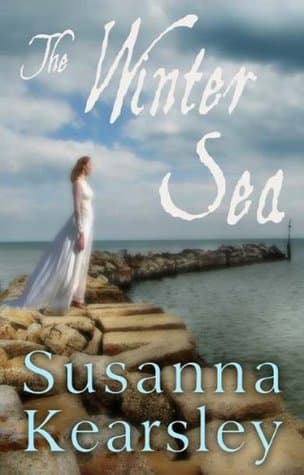
Synopsis
Covers the whole plot, including the ending.
- Difficulty
- Medium
- Pacing
- Moderate
- Mood
- Atmospheric, Romantic, Melancholy, Intriguing
- Read it if
- You enjoy sweeping historical romances with a touch of the supernatural, dual timelines, and a strong sense of place. Perfect for fans of Outlander.
- Skip it if
- You prefer fast-paced thrillers or purely historical narratives without a speculative element. The dual timeline might feel slow to some.
The Winter Sea Plot Summary
Covers the whole plot, including the ending.
Carrie's Arrival and the Genesis of Her Novel
Carrie McClelland, a historical novelist, arrives in Cruden Bay, Scotland, to research her next book. She rents a cottage near Slains Castle, the former home of the Earls of Erroll. Her new novel will focus on the failed 1708 Jacobite invasion, an attempt to put James Francis Edward Stuart on the throne. Carrie names her main character Sophia Paterson, an ancestor she feels a strong connection to. As she starts writing, the story unfolds with unusual clarity, almost as if she is remembering events rather than making them up, especially regarding Sophia and the local Jacobite families.
Sophia's Introduction and the Jacobite Cause
In 1708, Sophia Paterson lives in Slains, working as a companion to Lady Erroll at Slains Castle. Sophia is a young woman of unknown parents, with a silver locket and a knack for languages. She quickly notices the strong Jacobite feelings of the local gentry, including the Hay family and the Laird of Slains. Sophia gets drawn into their secret world, acting as a scribe and messenger because she can read and write and is discreet. She watches the preparations for the French fleet, carrying James Stuart, and begins a close, though complicated, bond with John Moray, a key Jacobite agent.
The Uncanny Parallels and Dr. Graham's Interest
As Carrie writes, the events she describes, especially details of Sophia's life, become very accurate to historical records she later checks. She describes specific talks, feelings, and minor historical figures with unusual precision. Her work gets the attention of Dr. Graham, a local historian and archeologist digging at a nearby Jacobite camp. Graham is interested in how specific Carrie's 'fictional' details are, especially those that match new evidence. He suggests Carrie might be experiencing ancestral memory, an idea she first dismisses but finds harder to ignore as the story continues.
Sophia's Deepening Involvement and John Moray's Mission
Sophia's role in the Jacobite network grows. She learns important information about James Stuart's planned landing. John Moray, a charming and dedicated Jacobite, trusts Sophia with coded messages and sensitive papers. Their relationship deepens amid the danger, moving from professional respect to a strong personal connection. Sophia's loyalty is tested as she navigates the tricky political situation, always aware of spies and government agents nearby. She learns about the planned meeting points and the hopes riding on the invasion's success.
The Failed Invasion and Its Aftermath
The French fleet, carrying James Stuart, arrives off the coast of Scotland. However, bad weather, naval fights with the British fleet, and a key misunderstanding cause the landing at Slains to be called off. The fleet sails north and then retreats, leaving the Scottish Jacobites defeated and open to attack. The failure leads to a harsh crackdown by the British government, with many Jacobite supporters, including Lady Erroll and members of the Hay family, arrested. Sophia and John Moray must go into hiding, their lives in danger as government forces hunt them.
Sophia and John's Flight and Growing Love
After the invasion fails, Sophia and John Moray must flee. They travel across Scotland, seeking safety and trying to avoid capture. During their flight, their strong connection becomes a deep and passionate love. They share intimate moments, strengthening their bond despite the danger and uncertainty. John reveals more about his past and his dedication to the Stuart cause, while Sophia deals with her feelings and the growing understanding of the sacrifices their loyalty demands. Their journey has many close calls and near-discoveries.
The Betrayal and Sophia's Desperation
Sophia learns a terrible truth: John Moray is not who he says he is. He is Lieutenant John Graham, a government spy who has joined the Jacobite ranks. The man she loves, the man she trusted with her life, has been playing a long game. This news crushes Sophia, making her feel despair and betrayal. She realizes that her knowledge of Jacobite plans and her closeness to John made her a tool in his spying. This betrayal is the 'ultimate betrayal' that Carrie feels in her writing, causing her great emotional pain.
Sophia's Reckoning and a Desperate Choice
With the truth, Sophia confronts John Moray/Graham. The confrontation is emotional and painful. John, though a spy, truly fell in love with Sophia, creating an impossible problem for him. To protect the Jacobites and possibly save John from more deceit, Sophia makes a drastic choice. She stages a scene, making it seem like she has killed John, using a planned trick to ensure his escape from the authorities who would execute him for his double-crossing. This act is a great sacrifice, leaving her heartbroken but believing it was the only way to protect him and the remaining Jacobite network.
Carrie's Emotional Breakdown and the Truth Revealed
Carrie's writing ends with Sophia's betrayal and sacrifice. The emotional power of these scenes overwhelms Carrie, causing an emotional breakdown, mirroring Sophia's grief. The lines between her own identity and Sophia's blur, and she understands the full impact of the ancestral memory. Dr. Graham, who has been present, helps her process these feelings. Through more research and continued digging of historical records, Carrie and Graham piece together the true story, confirming Sophia's existence and the accuracy of Carrie's 'fictional' story. Carrie also learns Sophia's parents, revealing a surprising link to the Hay family.
Sophia's Later Life and Carrie's Resolution
Carrie finds out that Sophia, after her dramatic act, lived a quiet life, eventually marrying and having children, keeping her secret. The silver locket she carried was a hint to her true identity as the illegitimate daughter of the Earl of Erroll. Carrie also learns that John Moray/Graham, after his 'death,' did escape and continued his life, always affected by his love for Sophia and his choices. With the full story revealed, Carrie finds closure. The experience has given her an extraordinary novel and opened her heart to a new relationship with Dr. Graham, who has supported her, reflecting the historical connection and shared purpose between Sophia and John.
The Winter Sea Characters
Carrie McClelland
Protagonist
A historical novelist who channels her ancestor's memories.
Carrie is a successful historical novelist with a talent for bringing the past to life. She is initially skeptical of the idea of ancestral memory but finds herself increasingly drawn into the vivid, detailed narrative of her protagonist, Sophia Paterson. Carrie is intelligent, analytical, and deeply empathetic, allowing her to connect profoundly with Sophia's experiences. Her journey is one of self-discovery and understanding her own lineage, as the past she writes about begins to merge with her present reality. She is driven by a desire to tell an authentic story and unravel the mysteries of her own heritage.
Relationships: Sophia Paterson (ancestor; Carrie experiences her memories and life as her own); Dr. Graham (colleague and later romantic interest); Lady Erroll (past) (ancestor's employer and protector)
Sophia Paterson
Protagonist (past timeline)
A young woman of mysterious origins, embroiled in the 1708 Jacobite rising.
Sophia is the fictionalized (but historically real) ancestor of Carrie McClelland. She is intelligent, observant, and resourceful, possessing a strong sense of loyalty. Orphaned and of unknown parentage, she serves as a companion to Lady Erroll, placing her at the heart of Jacobite intrigue. Sophia's journey is one of love, betrayal, and immense sacrifice. She is defined by her discretion, her skill with languages, and her profound emotional depth, which allows her to fall deeply in love despite the dangers surrounding her. Her silver locket is a crucial clue to her true identity.
Relationships: John Moray/Graham (lover and ultimately, betrayer); Lady Erroll (employer, protector, and surrogate mother figure); James Stuart (the exiled king she serves)
John Moray / Lieutenant John Graham
Love interest/Antagonist (past timeline)
A charismatic Jacobite agent who is secretly a government spy.
John Moray is presented as a dedicated and charming Jacobite agent, deeply committed to the cause of James Stuart. He is intelligent, resourceful, and capable of inspiring trust and loyalty, particularly in Sophia. However, he is secretly Lieutenant John Graham, a government spy tasked with infiltrating the Jacobite network. His internal conflict arises from genuinely falling in love with Sophia while maintaining his deception. He is a complex character, whose actions, though initially betrayals, are driven by a sense of duty, yet he experiences profound regret and love for Sophia.
Relationships: Sophia Paterson (lover and target of his espionage); Lord Mar (Jacobite leader he 'serves'); British Government (his true employer)
Dr. Graham
Supporting/Love interest (present timeline)
A local historian and archeologist who aids Carrie's research and becomes her confidant.
Dr. Graham is a knowledgeable and insightful local historian and archeologist working on an excavation related to the 1708 Jacobite rising. He is initially intrigued by Carrie's uncanny historical accuracy and quickly becomes a crucial ally and confidant as she grapples with the concept of ancestral memory. He is patient, understanding, and provides valuable historical context and emotional support to Carrie. His calm demeanor and intellectual curiosity make him a perfect foil and eventual romantic partner for Carrie, mirroring the intense connection between Sophia and John Moray.
Relationships: Carrie McClelland (colleague, confidant, and later romantic interest)
Lady Erroll
Supporting (past timeline)
An elderly, powerful Jacobite noblewoman who employs Sophia Paterson.
Lady Erroll is an elderly but formidable noblewoman, a staunch Jacobite sympathizer, and the mistress of Slains Castle. She employs Sophia Paterson as her companion and treats her with a degree of kindness and trust. Lady Erroll is deeply involved in the Jacobite cause, providing a hub for conspirators and offering her home as a safe haven. She is a woman of strong convictions and considerable influence, embodying the fierce loyalty of many Scottish nobles to the Stuart line. Her arrest after the failed invasion highlights the severe consequences faced by the Jacobites.
Relationships: Sophia Paterson (employer and protector); Hay family (fellow Jacobite sympathizers and allies)
James Francis Edward Stuart (The Old Pretender)
Mentioned/Catalyst (past timeline)
The exiled Stuart claimant to the British throne, whose attempted invasion drives the plot.
James Stuart is the son of the deposed James II and the rightful claimant to the British throne in the eyes of the Jacobites. Though he appears only briefly in person during the attempted invasion, his presence and claim are the central motivation for all Jacobite actions in the novel. He represents hope for his supporters and a threat to the Hanoverian succession. His failure to land in Scotland in 1708 is the pivotal event that shatters the Jacobite dreams and sets in motion the tragic events for Sophia and John.
Relationships: Sophia Paterson (object of her loyalty); John Moray (object of his supposed loyalty)
The Hay Family
Supporting (past timeline)
Prominent Jacobite sympathizers and allies to Lady Erroll.
The Hays are a powerful and influential family in the Slains area, deeply committed to the Jacobite cause. They are close allies of Lady Erroll and are actively involved in the preparations for the 1708 invasion. Their home serves as a meeting place for conspirators, and they are among those who face severe repercussions, including imprisonment, after the failure of the invasion. The Hays represent the broader network of Scottish gentry who risked everything for the Stuart cause. Sophia's later discovery of her true parentage links her directly to this family.
Relationships: Lady Erroll (allies and fellow Jacobites); Sophia Paterson (Sophia later discovers a familial connection to them)
The Winter Sea Themes
Identity and Ancestral Memory
The novel explores how personal identity is shaped by ancestral memory. Carrie McClelland's writing of Sophia Paterson's story with accuracy suggests a deep, genetic link to the past. This theme questions the limits of self and memory, implying that echoes of ancestors' lives can live within us. Carrie's initial doubt turns into an understanding that her own identity is linked to Sophia's, leading her to discover her own family line and a deeper sense of self through this inherited memory.
“Perhaps all writers are magpies, I thought, taking bright scraps of other people's memories and making them our own.”
Love and Betrayal
At the core of Sophia's story is a romance combined with a betrayal. Sophia's love for John Moray makes his revelation as a government spy especially painful. This theme explores the challenges of human relationships, where love can grow even amid deceit and political schemes. The betrayal is not simple evil, but a tragic result of conflicting loyalties and duties, affecting both Sophia and John deeply. Carrie's strong experience of this betrayal shows its lasting emotional impact across centuries.
“He was a spy, a liar, a man who had betrayed everything I held dear. And I loved him.”
Loyalty and Sacrifice
The Jacobite cause itself is built on loyalty to the exiled Stuart king, and the characters in the 1708 timeline show this. Sophia's loyalty to Lady Erroll and the cause, and her sacrifice to protect John Moray and the Jacobite network, are central. John Moray's conflicting loyalties—to his government handlers and his love for Sophia—drive much of the story's tension. The theme explores the moral problems and personal costs of strong allegiance, whether to a cause or a person, often requiring great personal sacrifice.
“Loyalty, I had learned, was a double-edged sword, capable of both protecting and destroying.”
The Enduring Power of History
The novel shows how history is not just facts but a force that still affects the present. Carrie's ability to 'remember' historical events in detail shows history's deep and personal impact. The story shows that even small historical events, like the failed 1708 invasion, can have big and lasting results, shaping individual lives and future generations. Archeological finds combined with Carrie's story further show the real and verifiable nature of the past.
“Sometimes, history wasn't just in the books. Sometimes, it was in the blood.”
Plot Devices & Literary Techniques
Dual Timeline Narrative
Alternating chapters between Carrie's present-day writing and Sophia's 1708 experiences.
The novel employs a dual timeline structure, alternating between Carrie McClelland's contemporary narrative as she writes her book and Sophia Paterson's experiences in 1708. This device allows for a gradual unfolding of both stories, creating suspense as Carrie's 'fictional' details increasingly align with historical fact. It also allows the reader to experience the ancestral memory alongside Carrie, blurring the lines between past and present and enhancing the emotional impact of Sophia's story as Carrie viscerally feels her ancestor's joys and sorrows.
Ancestral Memory
Carrie's ability to recall and write her ancestor's life as if it were her own memory.
The central speculative element and plot device is Carrie McClelland's experience of ancestral memory. This is not simply research or imagination; Carrie 'remembers' specific conversations, emotions, and sensory details from Sophia's life. This device serves to drive the plot, as the accuracy of Carrie's writing attracts the attention of historians, and to deepen the emotional connection, allowing Carrie (and the reader) to fully inhabit Sophia's world. It's the mechanism by which the past becomes intensely personal and immediate for the protagonist.
The Silver Locket
A recurring symbolic object that holds clues to Sophia's true identity.
Sophia's silver locket is a significant symbolic object that appears throughout the 1708 narrative. It is a tangible link to her unknown past and her true parentage. The locket serves as a recurring mystery and a key plot point, holding the clues that eventually reveal Sophia's connection to the powerful Hay family. For Carrie, discovering the locket and its significance in her research further validates the reality of her ancestral memories, bridging the gap between her fictional narrative and historical fact.
Slains Castle Ruins
The physical setting that anchors both timelines and symbolizes enduring history.
The ruins of Slains Castle serve as a powerful physical anchor for both timelines. In 1708, it is the vibrant home of Lady Erroll and a hub for Jacobite activity. In the present, its ruins are a constant reminder of the past's enduring presence, visible from Carrie's cottage. The castle symbolizes the passage of time, the rise and fall of power, and the secrets buried within history. Its evocative atmosphere helps ground Carrie's writing and provides a tangible link to the events she is recounting, reinforcing the theme of history's lasting impact.
The Winter Sea Quotes
“The past is a foreign country; they do things differently there.”
“There are some things you can't outrun, no matter how fast you go.”
“Sometimes the greatest love stories are the ones that are never fully told.”
“It was as if the house itself held memories, whispering them to anyone who would listen.”
“Every generation thinks it invented love, but the heart knows no new tricks.”
“The sea, she thought, was a great keeper of secrets, swallowing them whole.”
“There's a fine line between inspiration and obsession, and sometimes it's hard to tell which side you're on.”
“Some stories aren't meant to be neat and tidy. Some are wild and untamed, like the land they come from.”
“The past isn't dead. It's not even past.”
“You can't change the past, but you can understand it, and understanding can sometimes set you free.”
“Sometimes the strongest bonds are forged in the most unexpected fires.”
“Truth, like the tide, has a way of coming in, no matter how much you try to hold it back.”
“Every person leaves a trace, a whisper in the wind, a shadow on the stone.”
“Love doesn't always choose the easy path. Sometimes it thrives on obstacles, on the very things that try to tear it apart.”
Quiz
10 questions on the plot and the characters. Each answer comes with a short explanation.
Question 1
What is the primary historical event that Carrie McClelland is researching for her novel?
- The Battle of Culloden
- The 1708 Jacobite invasion attempt of Scotland
- The Glencoe Massacre
- The Darien Scheme
Show answer
B. The 1708 Jacobite invasion attempt of Scotland The book explicitly states that Carrie is writing about the 1708 Jacobite fleet's attempt to land James Stewart in Scotland.
Question 2
Where does Carrie McClelland choose to settle while writing her novel?
- Edinburgh Castle
- A remote cottage on the Isle of Skye
- In the shadow of Slains Castle
- A flat in London
Show answer
C. In the shadow of Slains Castle The synopsis mentions Carrie settling 'in the shadow of Slains Castle' to write her book.
Question 3
What unique phenomenon does Carrie experience that blurs the lines between her fiction and historical fact?
- She finds a hidden diary written by her ancestor.
- She travels back in time to witness the events.
- She believes she is experiencing ancestral memory.
- She consults a psychic who reveals the past.
Show answer
C. She believes she is experiencing ancestral memory. The description states Carrie wonders if she's 'dealing with ancestral memory' as her novel becomes more fact than fiction.
Question 4
Who is the protagonist of Carrie's historical novel, and what is her connection to Carrie?
- A fictional character she invented entirely.
- A historical figure whose name Carrie liked.
- A heroine named for one of Carrie's own ancestors.
- A character based on a local legend.
Show answer
C. A heroine named for one of Carrie's own ancestors. Carrie 'creates a heroine named for one of her own ancestors' for her historical novel.
Question 5
What is the central conflict or danger Carrie faces as she uncovers the truth of the past?
- Her book sales plummet because of the controversial subject.
- The knowledge of 'the ultimate betrayal' from the past threatens to destroy her.
- She is hunted by modern-day Jacobite sympathizers.
- She loses her ability to write due to writer's block.
Show answer
B. The knowledge of 'the ultimate betrayal' from the past threatens to destroy her. The synopsis explicitly states that the knowledge of 'the ultimate betrayal' from the past 'comes very close to destroying her.'
Question 6
What is the primary genre combination of 'The Winter Sea'?
- Science Fiction, Thriller, Mystery
- Fantasy, Historical Fiction, Romance
- Contemporary Drama, Biography, Action
- Literary Fiction, Satire, Comedy
Show answer
B. Fantasy, Historical Fiction, Romance The genres provided for the book are 'Fantasy, Historical Fiction, Romance'.
Question 7
What is the significance of the year 1708 in the historical plotline of the book?
- It marks the signing of the Act of Union between Scotland and England.
- It is the year a major Jacobite invasion attempt nearly succeeded in landing James Stewart in Scotland.
- It is the birth year of the main historical character.
- It is when Slains Castle was first built.
Show answer
B. It is the year a major Jacobite invasion attempt nearly succeeded in landing James Stewart in Scotland. The book description clearly states, 'In the spring of 1708, an invading Jacobite fleet... nearly succeeded in landing the exiled James Stewart in Scotland.'
Question 8
How does Carrie's personal experience of writing her novel intertwine with the historical events?
- She discovers that her fictional story is eerily similar to a well-known historical account.
- Her novel starts to become fact, suggesting she is accessing forgotten ancestral memories, making her privy to a hidden truth.
- She finds artifacts that directly contradict her fictional plot, forcing her to rewrite it.
- She meets descendants of the historical figures who inform her about their ancestors' lives.
Show answer
B. Her novel starts to become fact, suggesting she is accessing forgotten ancestral memories, making her privy to a hidden truth. The novel's premise is that Carrie's story becomes 'more fact than fiction' and she questions if she's 'dealing with ancestral memory,' making her 'the only living person who knows the truth.'
Question 9
What is the 'ultimate betrayal' that Carrie uncovers, and why is it so significant?
- It refers to a betrayal of a personal relationship in her present-day life, mirroring the past.
- It is a historical act of treachery related to the Jacobite invasion that only Carrie, through ancestral memory, now knows, threatening her peace of mind.
- It is the betrayal of her trust by a publishing house that tries to steal her story.
- It's a metaphor for the general hardship faced by people during the 18th century.
Show answer
B. It is a historical act of treachery related to the Jacobite invasion that only Carrie, through ancestral memory, now knows, threatening her peace of mind. The description states this knowledge of 'the ultimate betrayal' is specific to the past events and that Carrie is 'the only living person who knows the truth,' suggesting a hidden historical treachery that profoundly affects her.
Question 10
How does the element of 'romance' likely manifest in 'The Winter Sea' given its premise?
- Carrie has a modern-day romance that distracts her from her writing.
- The romance primarily occurs within the historical narrative, possibly involving Carrie's ancestor and a key historical figure.
- The book focuses on the political romance between Scotland and France.
- Carrie falls in love with the exiled James Stewart in a time-travel scenario.
Show answer
B. The romance primarily occurs within the historical narrative, possibly involving Carrie's ancestor and a key historical figure. Given the blend of historical fiction, fantasy (ancestral memory), and romance, it's highly probable the romance element is tied to the historical narrative, likely involving Carrie's ancestor and the events she is reliving/writing about. The 'ancestral memory' aspect suggests she is experiencing her ancestor's life, including potential romantic entanglements.
The Winter Sea FAQ
What is 'The Winter Sea' about?
'The Winter Sea' weaves together two timelines: the present day, where author Carrie McClelland researches and writes a historical novel about the 1708 Jacobite rising, and the past, where her ancestor Sophia Paterson experiences the events of that rebellion firsthand. As Carrie writes, she finds her fictional narrative aligning uncannily with historical fact, leading her to believe she is experiencing ancestral memories and uncovering a long-buried secret.
Why should I read 'The Winter Sea'?
You should read 'The Winter Sea' for its compelling blend of historical accuracy, romantic intrigue, and a touch of the supernatural through ancestral memory. It offers a deeply immersive experience into 18th-century Scotland and France during a pivotal Jacobite uprising, while also exploring the emotional journey of a modern author grappling with a past that feels intensely personal.
What is the background/setting of 'The Winter Sea'?
The book is primarily set in the Scottish Highlands, particularly around Slains Castle and the fishing village of Cruden Bay, both in the present day and in 1708. The historical narrative also takes readers to Edinburgh and across the sea to France, detailing the political climate and personal lives intertwined with the Jacobite attempt to restore James Stewart to the British throne.
What are the most memorable quotes?
One memorable quote is, 'The past is a foreign country; they do things differently there.' While not original to the book, its spirit perfectly encapsulates Carrie's journey. Another is Sophia's internal thought about betrayal, reflecting the deep emotional scars of the 1708 plot, which resonates profoundly with Carrie's discoveries.
What writing style does the author use?
Susanna Kearsley employs a lush, evocative writing style rich in historical detail and sensory descriptions. She seamlessly transitions between Carrie's contemporary first-person narrative and Sophia's historical third-person perspective, often blurring the lines between the two. Her prose is romantic and atmospheric, drawing readers deeply into both timelines.
What minor details add significant meaning?
The recurring motif of the 'winter sea' itself, often described as turbulent and unpredictable, mirrors the tumultuous political landscape and the emotional storms faced by both Carrie and Sophia. The specific historical figures, even minor ones, are meticulously researched, lending authenticity and weight to Sophia's experiences and Carrie's revelations.
What are some subtle foreshadowing moments?
Early in the book, Carrie's unusual vividness in imagining her characters and their conversations, often feeling like they are 'speaking' to her, subtly foreshadows the later revelation that she is tapping into ancestral memories. Also, the immediate, inexplicable connection she feels to Slains Castle hints at her deeper, inherited ties to the location and its past.
What unexpected character connections exist?
The most significant unexpected connection is between Carrie McClelland and Sophia Paterson, revealed to be ancestor and descendant. This link transcends time, allowing Carrie to not just write Sophia's story but to experience it. Additionally, the modern-day characters, particularly Graham, often mirror the roles and relationships of their historical counterparts, adding layers of connection.
What are unspoken character motivations?
Sophia Paterson's unspoken motivation often revolves around a deep-seated desire for belonging and stability, having been orphaned and somewhat adrift. This makes her vulnerable to the affections and causes of those she trusts. In the present, Carrie's drive to write her novel is fueled by an unspoken longing for a connection to something larger than herself, which the ancestral memories ultimately provide.
What psychological complexities do characters exhibit?
Sophia exhibits a complex mix of loyalty, naivety, and a fierce will to survive, grappling with betrayal from those she loves and trusts. Carrie, in the present, struggles with the psychological burden of distinguishing her own creative imagination from what feels like genuine, inherited memory, leading to an identity crisis as her past and present selves blur.
What are the major emotional turning points?
A major turning point for Sophia is the realization of the ultimate betrayal by one she held dear, leading to profound heartbreak and a shift in her understanding of loyalty and trust. For Carrie, the emotional climax occurs when she fully accepts the reality of her ancestral memories, confronting the painful truth of Sophia's past and integrating it into her own identity, which is both liberating and devastating.
How do relationship dynamics evolve?
In the past, Sophia's relationships, particularly with the men in her life, evolve from initial trust and affection to a devastating realization of deceit and manipulation within the Jacobite cause. In the present, Carrie's relationship with Graham starts as a professional collaboration but deepens into a romantic bond, mirroring the intensity and loyalty of Sophia's true love, providing a sense of healing and completion across timelines.
Which parts remain ambiguous or open-ended?
While the core historical mystery is resolved, the precise mechanism of Carrie's ancestral memory remains somewhat ambiguous, leaning into the mystical rather than scientific explanation. The exact future of Carrie's writing career and her personal life, beyond the immediate resolution, is also left to the reader's imagination, though with a sense of hopeful closure.
What are controversial scenes or decisions?
One potentially controversial aspect is the 'ultimate betrayal' that Sophia experiences, which involves a deep personal hurt intertwined with political maneuvering. The decision by certain characters to prioritize their cause over personal loyalties and the well-being of others, leading to tragic consequences, can be debated regarding its moral justification and historical necessity.
'The Winter Sea' ending explained: how it ends & what it means
The book ends with Carrie completing her novel, having fully embraced and processed the ancestral memories of Sophia Paterson, including the devastating truth of the 1708 betrayal and Sophia's eventual peace. Carrie's relationship with Graham is solidified, suggesting a future where she can live fully in her present while honoring her past. The ending signifies healing and closure, not just for Carrie, but metaphorically for Sophia's unresolved history, as the truth is finally brought to light through Carrie's work.
Similar books
- Outlander
Diana Gabaldon
4.2 (824k) average on GoodreadsFantasyFeatures a strong female protagonist, historical setting, romance, and a touch of time travel/supernatural connection to the past.
- The House on the Strand
Daphne du Maurier
3.8 (10k) average on GoodreadsFantasyExplores a protagonist experiencing visions of the past, blurring the lines between present and history with a psychological edge.
- A Discovery of Witches
Deborah Harkness
4.0 (369k) average on GoodreadsFantasyBlends historical research with romance, magic, and a deep sense of uncovering ancient secrets through a modern protagonist.
- The Other Boleyn Girl
Philippa Gregory
4.1 (456k) average on GoodreadsHistorical FictionBoth are rich in historical detail and character-driven. Gregory's work, however, typically lacks the romantic and supernatural dimensions of Kearsley's, focusing more purely on political intrigue and biographical narratives within a historical setting.
- Harry Potter and the Sorcerer's Stone
J.K. Rowling
4.5 (7M) average on GoodreadsFantasyRescued from a miserable life under the stairs, an orphaned boy discovers he's a wizard destined for a magical school, where he uncovers a dangerous secret tied to the dark wizard who murdered his parents.
- The Hunger Games
Suzanne Collins
4.3 (6.4M) average on GoodreadsFantasyIn a future where children fight to the death on live television, Katniss Everdeen volunteers for the arena, turning a death sentence into a fight for survival and a spark of rebellion.




Enjoyed the summary?
A summary gives you the shape of the book. The book itself has the detail, the examples and the voice.
Find The Winter Sea on AmazonAs an Amazon Associate, BookBrief earns from qualifying purchases. How we're funded