
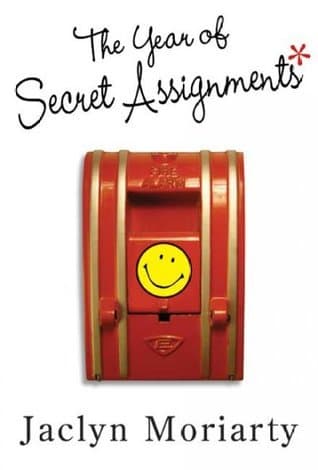
Synopsis
Covers the whole plot, including the ending.
- Difficulty
- Easy
- Pacing
- Moderate
- Mood
- Humorous, Lighthearted, Romantic, Mysterious, Charming
- Read it if
- You enjoy epistolary novels with multiple perspectives, high school romance, and a lighthearted mystery.
- Skip it if
- You prefer traditional narrative structures or stories without a strong focus on letter writing and teenage drama.
The Year of Secret Assignments Plot Summary
Covers the whole plot, including the ending.
The Pen Pal Project Begins
The story begins with a pen pal project between Ashbury High and Brookfield High. Emily, Lydia, and Cassie, best friends at Ashbury, are assigned pen pals. Emily is paired with Sebastian (Seb) Barnes, Lydia with Charlie, and Cassie with Matthew. Early letters are formal. Emily finds Seb's letters interesting, and Lydia likes Charlie's humor. Cassie, however, receives a strange, almost threatening letter from Matthew, which makes her pen pal experience different from her friends'.
Unsettling Introductions and Budding Friendships
As the letters continue, Emily and Seb's correspondence grows into a real connection, with shared interests and playful talk. Lydia and Charlie's letters are equally engaging, showing humor and a growing attraction. Cassie's experience with Matthew becomes more unsettling. His letters go from vague threats to clear menaces, implying he knows secrets about her and her friends. Despite her friends' concerns, Cassie keeps writing, driven by fear and a strange curiosity about Matthew's motives.
The Mystery of Matthew
Emily and Lydia, along with Seb and Charlie, worry more about Cassie's interactions with Matthew. They try to convince her to stop writing, but she hesitates. Matthew's letters become more manipulative, sometimes sweet and apologetic, then quickly menacing again. This erratic behavior makes it hard for Cassie to disengage. The friends start to suspect Matthew is not who he claims, or that there is a deeper reason for his strange messages, leading them to investigate discreetly.
The First Meeting and Heartbreak
Cassie finally arranges to meet Matthew. The meeting is a disaster. Matthew is an older, cruel man who admits he was pretending to be a student. He mocks Cassie, revealing he used the pen pal project for some unknown, malicious purpose. Cassie is devastated and humiliated, feeling betrayed and foolish. She tells Emily and Lydia, who are furious and determined to help her get justice.
The Revelation of the Imposter
After Cassie's terrible meeting, the group, including Seb and Charlie, works together to find the truth. They discover that the 'Matthew' Cassie corresponded with was an imposter. The real Matthew is a shy student at Brookfield High who was also targeted and whose identity was stolen. This adds another layer to the situation; the real Matthew is also a victim, and the imposter's motives remain unclear but clearly malicious.
Charlie's Revenge and School Vandalism
Angry about the imposter's actions and Cassie's distress, Charlie decides to get revenge. He plans a prank that goes wrong, causing significant vandalism at Brookfield High. This act, meant to punish the imposter and defend Cassie, creates a major scandal and puts the pen pal project at risk. The schools get involved, threatening to cancel the program, which worries Emily, Lydia, Seb, and Charlie, who value their connections.
United for Justice
Facing the possible cancellation of the pen pal project and the ongoing threat of the imposter, the group decides to work together to find and expose the true culprit. Emily, Lydia, Cassie, Seb, and Charlie combine their resources, using clues from letters and their investigative skills. They are determined to clear Charlie's name from the vandalism and ensure the imposter faces consequences for his manipulation and the emotional harm he caused Cassie and the real Matthew.
The Investigation Deepens
Through careful detective work, including analyzing handwriting, cross-referencing information from letters, and discreet inquiries, the friends identify the imposter. He is a former student with a grudge against Brookfield High and a history of manipulative behavior. His goal was to disrupt the pen pal project and cause chaos, using Cassie and the real Matthew as pawns. This revelation confirms the group's suspicions about his malicious intent.
Confrontation and Resolution
The friends present their evidence to the school authorities, leading to the imposter's exposure and punishment. The truth about the fake Matthew is revealed, clearing Charlie's name regarding the vandalism and vindicating Cassie. The pen pal project, initially in danger, is saved due to the students' courage and teamwork. This resolution brings closure and justice, strengthening their bonds.
New Beginnings and Lasting Connections
With the crisis resolved, Emily and Seb, and Lydia and Charlie, continue their relationships, which have deepened through shared challenges. Cassie, though hurt, begins to heal and forms a real friendship with the true Matthew. The experience strengthens the bonds between all the students, showing the power of communication, trust, and mutual support. The pen pal project, despite its dramatic start, ultimately leads to meaningful connections and personal growth for everyone.
Principal Figures
Emily
Protagonist
A thoughtful and observant Ashbury High student, pen pal to Seb.
Emily is one of the three main protagonists from Ashbury High. She is intelligent, analytical, and possesses a keen sense of observation, often acting as the group's quiet leader and moral compass. Her letters to Sebastian are detailed and reflective, revealing her inner thoughts and a growing attraction to him. She is fiercely loyal to her friends, especially Cassie, and is determined to uncover the truth behind Matthew's identity.
Relationships: Lydia (Best friend); Cassie (Best friend); Sebastian (Seb) (Pen pal, romantic interest, eventual boyfriend)
Lydia
Protagonist
A witty and charming Ashbury High student, pen pal to Charlie.
Lydia is the most outgoing and vivacious of the three friends. Her letters are full of humor, sarcasm, and a playful flirtatiousness that immediately captivates Charlie. She is impulsive and passionate, quick to defend her friends, and not afraid to speak her mind. Lydia's energy often drives the group's actions, and her loyalty to Cassie is unwavering, leading her to push for justice against the imposter.
Relationships: Emily (Best friend); Cassie (Best friend); Charlie (Pen pal, romantic interest, eventual boyfriend)
Cassie
Protagonist
A sensitive Ashbury High student, initially pen pal to the imposter 'Matthew'.
Cassie is the most vulnerable of the three friends, initially appearing somewhat naive and easily manipulated. Her experience with the imposter 'Matthew' is central to the plot's conflict. Despite the increasingly threatening nature of his letters, she struggles to disengage, driven by a mix of fear, curiosity, and a desire to understand. Her journey is one of profound betrayal and subsequent healing, demonstrating her resilience.
Relationships: Emily (Best friend); Lydia (Best friend); Matthew (Imposter) (Pen pal, victim of manipulation); Matthew (Real) (Pen pal, victim of identity theft, eventual friend)
Sebastian (Seb) Barnes
Supporting
A thoughtful and supportive Brookfield High student, pen pal to Emily.
Seb is Emily's pen pal from Brookfield High. He is intelligent, kind, and observant, mirroring many of Emily's qualities. His letters are genuine and thoughtful, quickly developing a strong connection with Emily. He becomes a crucial ally in uncovering the truth about the imposter, offering practical help and emotional support. Seb is reliable and committed, forming a strong bond with Emily and the rest of the group.
Relationships: Emily (Pen pal, romantic interest, eventual boyfriend); Charlie (Friend); Matthew (Real) (Acquaintance/friend)
Charlie
Supporting
A charismatic and impulsive Brookfield High student, pen pal to Lydia.
Charlie is Lydia's pen pal and shares her witty and energetic personality. He is charming, confident, and fiercely protective of his friends. His impulsiveness, though well-intentioned, leads to the vandalism incident at Brookfield High, highlighting his strong sense of loyalty and justice. Charlie's quick thinking and daring nature are instrumental in the group's efforts to expose the imposter, even if he sometimes acts before thinking.
Relationships: Lydia (Pen pal, romantic interest, eventual boyfriend); Sebastian (Seb) (Friend); Matthew (Real) (Acquaintance/friend)
Matthew (Imposter)
Antagonist
The manipulative individual who impersonates a Brookfield High student.
This character is the primary antagonist, though his true identity is concealed for much of the story. He is a former student with a vendetta, driven by a desire to cause chaos and disrupt the pen pal project. His letters to Cassie are a masterclass in psychological manipulation, shifting between threats and feigned sweetness. He is cruel, cunning, and takes pleasure in the distress he causes, representing the darker side of human nature and the dangers of online anonymity.
Relationships: Cassie (Victim of manipulation); Matthew (Real) (Victim of identity theft)
Matthew (Real)
Supporting
The shy, genuine Brookfield High student whose identity is stolen.
The real Matthew is a quiet and somewhat introverted student at Brookfield High. He is an innocent victim of the imposter's scheme, having his identity stolen and his reputation potentially tarnished. His initial interactions are minimal, but once his true situation is revealed, he becomes a sympathetic figure. He eventually forms a genuine friendship with Cassie, showing his gentle and kind nature, and representing the true positive potential of the pen pal project.
Relationships: Cassie (Victim of identity theft, eventual friend); Sebastian (Seb) (Acquaintance/friend); Charlie (Acquaintance/friend)
Themes & Insights
Identity and Deception
The novel explores identity, especially how it can be hidden or changed through written communication. The imposter 'Matthew' creates a false identity to deceive Cassie, showing the risks of anonymity and how easily one can create a fake self. This deception makes characters question who people truly are, not just who they appear to be, and highlights the need for honesty in relationships. Cassie's journey, in particular, involves dealing with the false identity she interacted with and accepting the truth.
“It's amazing how much you can hide behind a piece of paper, isn't it? You can be anyone you want to be.”
The Power of Communication
Told through letters, emails, and diary entries, the book champions written communication. It shows how words can create deep connections, build trust, and reveal private thoughts (Emily and Seb, Lydia and Charlie). Conversely, it also shows how communication can be used for manipulation and harm (Cassie and the imposter). Writing drives character development and plot, emphasizing its dual potential to connect and deceive. The entire pen pal project relies on the belief that written communication can bridge distances.
“A letter is a wonderful thing. It's like a little piece of you, sent across the world to someone else.”
Friendship and Loyalty
The strong bond between Emily, Lydia, and Cassie is central to the novel. Their loyalty is tested by Cassie's experience with 'Matthew', but it ultimately strengthens their friendship. The girls' determination to protect Cassie and seek justice, along with support from Seb and Charlie, shows the importance of solidarity. This theme extends to the growing friendships between the Ashbury and Brookfield students, showing how shared experiences and challenges can create strong, lasting connections.
“You don't just abandon your friends when things get difficult. That's when they need you most.”
Justice and Retribution
The pursuit of justice drives the latter half of the story. After Cassie's betrayal and the vandalism at Brookfield, characters are motivated to expose the imposter and correct wrongs. Charlie's initial act of revenge, though misguided, shows a strong desire for payback. However, the story ultimately promotes a more collaborative, evidence-based approach to justice, emphasizing that true resolution comes from finding the truth and holding wrongdoers accountable through proper channels, rather than through impulsive acts.
“It wasn't just about getting even. It was about making things right.”
Plot Devices & Literary Techniques
Epistolary Format
The entire novel is told through letters, emails, and diary entries.
This device is fundamental to the book's structure and charm. By presenting the story solely through written correspondence, the author allows readers direct access to the characters' inner thoughts, personalities, and developing relationships. It creates a sense of intimacy and immediacy, as the reader piece together the plot from various perspectives. The different writing styles of each character are highlighted, enhancing their individuality and making the narrative feel authentic and engaging.
The Unreliable Narrator (or Partial Narrators)
Each character's perspective is limited, creating suspense and mystery.
Because the story is told through individual letters and diary entries, each character acts as a partial, and at times, unreliable narrator. No single character possesses full knowledge of the situation, especially regarding the imposter 'Matthew'. This creates suspense and forces the reader to actively synthesize information, mirroring the characters' own investigative process. It also emphasizes the subjective nature of perception and how different individuals interpret events.
Misdirection and Red Herrings
Clues and character actions are used to mislead the reader about the imposter's identity.
Throughout Cassie's correspondence with the imposter 'Matthew', the author employs misdirection to keep his true identity and motives a mystery. Letters contain vague threats, sudden shifts in tone, and hints that could point to various individuals. This device builds suspense and allows the eventual revelation of the imposter to be surprising and impactful, challenging the reader's assumptions and keeping them guessing about the true nature of the threat.
Symbolism of the Pen Pal Project
The project represents connection, trust, and the unknown.
The pen pal project itself serves as a significant symbol. Initially, it represents the potential for new friendships and broadening horizons. As the plot unfolds, it symbolizes the fragility of trust and the hidden dangers that can exist in seemingly innocent interactions. Ultimately, its preservation after the crisis signifies the triumph of genuine connection and honesty over deception, and the enduring power of human relationships.
The Year of Secret Assignments Quotes
“Every time I think I'm going to be able to make a sensible decision, my heart just sort of leaps out of my chest and starts doing a crazy dance.”
“I think the best way to get over someone is to get under someone else. Or, you know, just eat a lot of chocolate.”
“It's a strange thing, falling in love. It's like your brain just decides to pack up and go on holiday, and your heart takes over the steering wheel.”
“Sometimes I think the whole world is just one big secret assignment, and we're all trying to figure out what our mission is.”
“Being a teenager is like being stuck in a really long, really complicated pop song. You know all the words, but you don't always understand what they mean.”
“There are some things you just know, deep down, without anyone ever having to tell you. Like how much you love a certain book, or how much you hate Mondays.”
“Love isn't about being perfect. It's about being perfect for someone, even if you're a complete mess.”
“The best kind of secrets are the ones you share with someone who understands exactly what you mean, without you having to say a single word.”
“Sometimes you just have to trust that things will work out, even when they look completely impossible. That's what hope is for, I guess.”
“It's funny how you can spend your whole life thinking you know someone, and then one day they do something that completely surprises you.”
“Being brave isn't about not being scared. It's about being scared, and doing it anyway.”
“I think maybe the whole point of growing up is to realize that not everything has a neat little answer. Some things are just messy, and that's okay.”
“You can't force someone to feel something they don't, no matter how much you want them to. Love is a choice, and it has to be theirs.”
“The world is full of amazing things if you just bother to look, and sometimes, the most amazing things are right in front of you.”
Quiz
10 questions on the plot and the characters. Each answer comes with a short explanation.
Question 1
Which three girls from Ashbury High are the main protagonists in the story?
- Rachel, Shana, and Celia
- Emily, Lydia, and Cassie
- Meg, Jaclyn, and Emily
- Lydia, Rachel, and Cassie
Show answer
B. Emily, Lydia, and Cassie The review explicitly states that Moriarty's novel introduces Emily, Lydia, and Cassie from Ashbury High.
Question 2
What format is 'The Year of Secret Assignments' primarily told through?
- Traditional third-person narration
- First-person perspective from a single narrator
- Letters, diary entries, emails, and other writings
- Dialogue-only script format
Show answer
C. Letters, diary entries, emails, and other writings The review states, 'Told entirely through letters, diary entries, emails, and other writing, Moriarty's novel introduces us to Emily, Lydia, and Cassie.'
Question 3
Which of the Brookfield boys initially sends Cassie short, threatening letters?
- Seb
- Charlie
- Matthew
- David
Show answer
C. Matthew The review specifies, 'The only trouble is Cassie's pen pal, Matthew, a shady character who first sends her short, threatening letters.'
Question 4
What is the primary reason the group comes together to deliver justice and save the pen pal project?
- To organize a school dance
- After Brookfield High gets mysteriously vandalized following Charlie's revenge
- To plan a surprise party for one of the teachers
- Because they want to win a writing competition
Show answer
B. After Brookfield High gets mysteriously vandalized following Charlie's revenge The review states, 'when Charlie helps take revenge and Brookfield High gets mysteriously vandalized, the group comes together to deliver justice and save the endangered pen pal project.'
Question 5
What is the key revelation Cassie makes about her pen pal Matthew after a crushing meet-up?
- He is moving to another country.
- He has been dishonest about his identity.
- He is secretly a published author.
- He wants to end the pen pal project.
Show answer
B. He has been dishonest about his identity. The review mentions, 'after she has a crushing meet-up with Matthew, Cassie discovers -- with the help of her friends and the Brookfield guys -- that he hasn't been honest about his identity.'
Question 6
Which two Brookfield boys are mentioned as being 'smitten' with Lydia and Emily?
- Matthew and Charlie
- Seb and Matthew
- Seb and Charlie
- Charlie and David
Show answer
C. Seb and Charlie The review states, 'at two of the Brookfield boys (Seb and Charlie) seem to be smitten with Lydia and Emily.'
Question 7
What is a notable skill of the author, Jaclyn Moriarty, highlighted by the review?
- Her ability to write complex fantasy worlds.
- Her knack for capturing different writing styles.
- Her talent for composing poetry.
- Her expertise in historical fiction.
Show answer
B. Her knack for capturing different writing styles. The review praises, 'In particular, her knack for capturing different writing styles shines the spotlight on her own talent.'
Question 8
Despite Matthew's initial threatening letters, why does Cassie continue to write to him?
- She is forced to by her teachers.
- Nobody can figure out why, as stated in the review.
- She finds his threats amusing.
- He sends her money to continue writing.
Show answer
B. Nobody can figure out why, as stated in the review. The review explicitly states, 'Nobody can figure out why Cassie keeps writing to him, but after she has a crushing meet-up with Matthew, Cassie discovers -- with the help of her friends and the Brookfield guys -- that he hasn't been honest about his identity.'
Question 9
How does the author's writing style, specifically her use of different formats, contribute to the reader's understanding of the characters?
- It makes all characters sound identical, promoting unity.
- It highlights the author's personal diary entries.
- It allows readers to learn quickly that each girl has her own writing style, revealing their personalities.
- It primarily serves to confuse the reader about who is speaking.
Show answer
C. It allows readers to learn quickly that each girl has her own writing style, revealing their personalities. The review notes, 'Readers learn quickly that each girl has her own writing style,' implying this format choice directly reveals character individuality and personality.
Question 10
Which authors are mentioned as similar to Jaclyn Moriarty, suggesting a target audience for 'The Year of Secret Assignments'?
- Stephen King and J.K. Rowling
- Rachel Cohn and Meg Cabot
- Jane Austen and Charles Dickens
- Suzanne Collins and Veronica Roth
Show answer
B. Rachel Cohn and Meg Cabot The review concludes by stating, 'Rachel Cohn and Meg Cabot fans will eat this up,' indicating a similar style and target audience.
The Year of Secret Assignments FAQ
What is the central premise of 'The Year of Secret Assignments'?
The book follows three Ashbury High students—Emily, Lydia, and Cassie—who become pen pals with three Brookfield High boys—Seb, Charlie, and Matthew—through a school project. The story unfolds entirely through their written communications, detailing their budding romances, friendships, and a central mystery surrounding Cassie's pen pal.
How does the unique narrative structure contribute to the story?
The novel is told through various written formats like letters, diary entries, and emails, which allows readers to experience each character's distinct voice and perspective directly. This structure not only reveals plot developments but also highlights the characters' personalities and emotional states through their individual writing styles.
Who are the main female protagonists and what are their initial romantic interests?
The main female protagonists are Emily, Lydia, and Cassie from Ashbury High. Emily's pen pal is Charlie, Lydia's is Seb, and Cassie's is Matthew. While Emily and Lydia develop clear romantic connections with their respective pen pals, Cassie's relationship with Matthew is initially fraught with mystery and threats.
What is the primary conflict involving Cassie and Matthew?
Cassie's pen pal, Matthew, initially sends her short, threatening letters before becoming strangely sweet, confusing everyone. The central conflict arises when Cassie has a crushing meet-up with Matthew and discovers, with her friends' help, that he hasn't been honest about his identity, leading to a significant betrayal.
How do the 'secret assignments' tie into the plot, beyond just the pen pal project?
The 'secret assignments' likely refer not only to the initial pen pal pairings but also to the clandestine investigations and plans the characters undertake to uncover Matthew's true identity and seek justice. It encompasses the hidden motives and collaborative efforts to resolve the central mystery and its aftermath.
What role does Charlie play in resolving the conflict after Matthew's deception is revealed?
After Matthew's deception is exposed, Charlie helps take revenge, leading to Brookfield High being mysteriously vandalized. This action, while initially problematic, brings the entire group together to deliver justice and ultimately save the endangered pen pal project by uniting them against a common cause.
Are there any subtle clues about Matthew's true identity or intentions before the big reveal?
The narrative drops hints through Matthew's inconsistent letter style – shifting from threatening to sweet – and the girls' inability to understand his motivations. These inconsistencies serve as subtle foreshadowing that his identity or intentions are not what they seem, prompting suspicion from the readers and characters alike.
How does the book explore the theme of trust and betrayal through Cassie's storyline?
Cassie's storyline is central to exploring trust and betrayal. She initially trusts the pen pal project, then grapples with Matthew's threatening letters, and finally experiences profound betrayal when his true identity is revealed. This arc forces her to re-evaluate who she can trust and how to process deceit.
What psychological impact does Matthew's deception have on Cassie?
Matthew's deception has a significant psychological impact on Cassie, likely causing feelings of confusion, hurt, and self-doubt after their 'crushing meet-up.' This betrayal would challenge her perceptions of honesty and relationships, requiring her to rely on her friends for emotional support and validation.
How do Emily and Lydia's relationships with Charlie and Seb differ psychologically from Cassie's initial experience with Matthew?
Emily and Lydia's relationships with Charlie and Seb develop with a foundation of genuine connection and mutual interest, fostering positive emotional growth. In contrast, Cassie's experience with Matthew is marked by manipulation and deception, creating psychological distress rather than romantic development, highlighting the contrast between healthy and unhealthy communication.
In what ways do the individual writing styles reflect the characters' inner psychology?
Each character's writing style—be it Emily's thoughtful letters, Lydia's more direct emails, or Cassie's initially confused entries—reflects their inner psychology. These styles reveal their personalities, emotional states, and how they process events, offering a deeper insight into their individual minds beyond just their actions.
Is the vandalism at Brookfield High justifiable as an act of revenge, or does it complicate the group's moral standing?
The vandalism at Brookfield High by Charlie, while an act of revenge for Cassie, complicates the group's moral standing. It blurs the line between justice and vigilante action, sparking debate on whether such methods are acceptable, even when driven by a desire to right a wrong. This event forces the characters to consider the consequences of their actions.
How does the book ultimately define 'justice' in the context of Matthew's actions and the group's response?
The book defines 'justice' not merely as revenge, but as a collective effort to expose deceit and protect the integrity of the pen pal project. While Charlie's initial act of revenge is impulsive, the group's subsequent coming together to deliver justice implies a more communal and perhaps more structured approach to rectifying the wrong Matthew committed.
What message does the novel convey about the importance of communication, both written and in-person?
The novel highlights the dual importance of both written and in-person communication. While written communication allows for initial connection and self-expression, it also exposes vulnerabilities to misinterpretation and deception, as seen with Matthew. The need for in-person meet-ups underscores that true understanding and trust often require direct interaction.
Could Matthew's initial threatening letters be interpreted in any way other than malicious intent?
While initially appearing malicious, Matthew's threatening letters could be interpreted as a misguided attempt to create drama, test Cassie's boundaries, or even as a peculiar form of attention-seeking, especially if he was struggling with his own identity or social anxieties. However, the subsequent deception confirms a more problematic intent.
How does the resolution of the pen pal project reflect the overall themes of the book?
The resolution, where the group comes together to save the endangered pen pal project, reflects themes of resilience, community, and the triumph of genuine connection over deceit. It emphasizes that despite challenges and betrayals, positive communication and collaboration can ultimately prevail and strengthen relationships.
What is the significance of the book being told entirely through written correspondence?
The exclusive use of written correspondence emphasizes the power and limitations of text-based communication, particularly in forming relationships. It highlights how identity can be crafted or concealed through writing, and how emotional nuances can be both amplified and obscured, making the reader actively interpret between the lines.
How do the friendships between Emily, Lydia, and Cassie evolve throughout their shared ordeal?
The friendships between Emily, Lydia, and Cassie are significantly strengthened through their shared ordeal with Matthew. They rely on each other for support, advice, and collaboration in uncovering the truth and seeking justice, solidifying their bond and showcasing the power of female solidarity in navigating difficult situations.
Similar books
- Feeling Sorry for Celia
Jaclyn Moriarty
3.8 (10k) average on GoodreadsYoung AdultAlso an epistolary novel by the same author, featuring quirky teenage friendships and humor.
- The Princess Diaries
Meg Cabot
4.0 (624) average on GoodreadsYoung AdultKnown for its engaging, humorous, and relatable teenage female protagonists and diary-entry format.
- To All the Boys I've Loved Before
Jenny Han
4.2 (490k) average on GoodreadsYoung AdultWhile both utilize letters, Han's novel is more focused on the individual romantic journey and familial relationships of a single protagonist. Moriarty's work expands to an ensemble cast, school politics, and collective action, using the epistolary format for broader social commentary and mystery.
- Eleanor & Park
Rainbow Rowell
4.0 (860k) average on GoodreadsYoung AdultRowell's novel is a more traditional, introspective narrative focusing intensely on the development of first love and individual struggles. Moriarty's book, by contrast, is structurally experimental and explores a wider range of themes, including group dynamics, deception, and justice, through its multi-vocal epistolary format.
- Harry Potter and the Sorcerer's Stone
J.K. Rowling
4.5 (7M) average on GoodreadsFantasyRescued from a miserable life under the stairs, an orphaned boy discovers he's a wizard destined for a magical school, where he uncovers a dangerous secret tied to the dark wizard who murdered his parents.
- The Hunger Games
Suzanne Collins
4.3 (6.4M) average on GoodreadsFantasyIn a future where children fight to the death on live television, Katniss Everdeen volunteers for the arena, turning a death sentence into a fight for survival and a spark of rebellion.



Enjoyed the summary?
A summary gives you the shape of the book. The book itself has the detail, the examples and the voice.
Find The Year of Secret Assignments on AmazonAs an Amazon Associate, BookBrief earns from qualifying purchases. How we're funded