

Synopsis
Covers the whole plot, including the ending.
- Difficulty
- Easy
- Pacing
- Moderate
- Mood
- Heartwarming, Reflective, Humorous, Cultural
- Read it if
- You enjoy heartwarming stories about friendship, family, and cultural identity, particularly for middle-grade readers.
- Skip it if
- You prefer high-stakes adventure or fantasy over slice-of-life narratives.
The Year of the Rat Plot Summary
Covers the whole plot, including the ending.
A New Year and New Worries
As Chinese New Year nears, Pacy Lin feels worried. The previous year, the Year of the Dog, brought her a best friend, Melody, and a love for writing and illustrating. However, the coming Year of the Rat is said to be a year of change and bad luck, which makes Pacy uneasy. Her biggest worry is Melody's family moving, a possibility that becomes clearer as Melody's parents talk about job transfers. Pacy tries to ignore the move, focusing on New Year celebrations, but the idea of losing her best friend overshadows everything.
Melody's Departure and Pacy's Isolation
Despite Pacy's hopes, Melody's family moves to California. Pacy feels terrible. School is lonely without Melody. She feels alone during lunch and recess, struggling to connect with other classmates. Her attempts to join friend groups are met with polite rejections, making her feel like an outsider. Pacy misses Melody greatly, often thinking about their jokes and creative projects. Her best friend's absence makes the school year feel long and hard, confirming her fears about the 'unlucky' Year of the Rat.
A New Friend, A New Perspective
A new boy named Lincoln moves into Melody's old house and starts at Pacy's school. Pacy is at first hesitant to befriend him, connecting him with Melody's absence. However, during a school project where they are paired, Pacy finds that Lincoln shares her love for stories and drawing. He is quiet and observant, like Pacy, and they bond over making a comic book. This unexpected friendship starts to fill the emptiness Melody left, showing Pacy that new connections are possible even when things change.
Family Dynamics and Cultural Differences
Pacy continues to learn about her family's Chinese heritage, often through her Ba-ba's stories. She learns about the zodiac animals and Chinese traditions. Her family life is busy, with her two older sisters, Lissy and Ki-Ki, often arguing or doing their own things. Pacy sometimes feels caught in the middle or unnoticed. Her parents support her art but also stress good grades, creating a gentle tension for Pacy as she tries to balance her interests with their expectations. She also sees cultural differences when Lincoln, who is not Chinese, observes her family's traditions.
The Art of Storytelling and Perseverance
Inspired by her work with Lincoln on their comic book, Pacy focuses again on her love for writing and illustrating. She spends hours drawing and developing stories, finding comfort and happiness in her creative world. Lincoln's quiet support and shared interest help Pacy overcome her shyness about her work. She learns that making stories is not just a personal thing but something that can be shared and enjoyed by others. This new focus on her art helps Pacy process her feelings about Melody and her place in the world.
A Letter from Melody
Pacy gets a letter from Melody, describing her new life in California. While happy to hear from her, Pacy realizes that Melody is making new friends and having new experiences that Pacy is not part of. The letter, though loving, also shows the growing distance between them, not just physically but in their daily lives. Pacy feels a pang of sadness and a bit of jealousy, understanding that keeping their friendship across states will be harder than she thought. She struggles with how to respond, wanting to share her own new experiences but also fearing more separation.
The School Art Contest
The school announces an art contest, and Pacy, encouraged by Lincoln, decides to enter. She initially feels nervous about sharing her work, especially after feeling unnoticed at school. She puts her heart into her submission, creating a piece that shows her experiences and feelings during the Year of the Rat. This decision is a big step for Pacy, as she moves beyond her comfort zone and takes on the challenge of public recognition for her art. The contest becomes a personal goal, a way to prove her abilities to herself and others.
A Visit from Melody
To Pacy's delight, Melody visits during a school break. Pacy is thrilled to have her best friend back, but she also feels a change in their relationship. Melody has changed, bringing new stories and interests from California. Pacy introduces Melody to Lincoln, and while they get along, Pacy feels a slight awkwardness, sensing the differences that have grown between her and Melody. The visit is a mix of joy and a subtle understanding that their friendship, though still strong, is changing and needs effort to maintain across the distance and new experiences.
The Art Contest Results
The school art contest results are announced, and Pacy is happy to learn that she has won. This win is a big moment for her, confirming her art talent and hard work. It boosts her confidence and strengthens her love for drawing and storytelling. The win helps Pacy see that even though the Year of the Rat brought difficult changes, it also brought chances for growth and recognition. It makes her identity as an artist stronger and encourages her to keep pursuing her creative dreams.
Embracing Change and New Beginnings
As the Year of the Rat ends, Pacy thinks about the many changes it brought. While she still misses Melody, she has accepted the changing nature of their friendship and has built a new, strong friendship with Lincoln. She has become more confident in her art and has learned to adapt to new situations. Pacy realizes that while change can be hard, it also opens doors to new experiences, new friendships, and new chances for self-discovery. She looks forward to the Year of the Ox with new optimism and resilience.
The Year of the Rat Characters
Pacy Lin
Protagonist
A young Chinese-American girl navigating friendship, family, and her artistic passion.
Pacy is a sensitive, imaginative, and observant young girl who loves to draw and write stories. She is a loyal friend, deeply affected by Melody's departure, and initially struggles with loneliness and adapting to change. Pacy is also a middle child, sometimes feeling overlooked but finding her voice through her art. She is curious about her Chinese heritage and often reflects on the stories and traditions her Ba-ba shares. Her passion for creativity is a core part of her identity, providing her with an outlet for her emotions and a way to connect with others.
Relationships: Melody (Best friend who moves away); Lincoln (New best friend and creative partner); Lissy (Older sister); Ki-Ki (Older sister); Ba-ba (Pacy's father) (Supportive father, storyteller, and cultural guide); Ma-ma (Pacy's mother) (Supportive mother, practical and encouraging)
Melody
Supporting
Pacy's best friend who moves away, creating a void in Pacy's life.
Melody is Pacy's outgoing and adventurous best friend from the previous year. Her family's move to California is the central catalyst for Pacy's emotional journey. Melody is depicted as kind and understanding, and her letters and visits show her adapting to her new life while still valuing her friendship with Pacy. Her presence, even from a distance, reminds Pacy of their shared past but also highlights the natural evolution of friendships over time and distance. She represents the challenge of maintaining long-distance relationships.
Relationships: Pacy Lin (Best friend)
Lincoln
Supporting
A quiet new student who becomes Pacy's new friend and creative collaborator.
Lincoln moves into Melody's old house and initially represents the emptiness left by Melody. However, he quickly becomes a significant new friend for Pacy. He is quiet, observant, and shares Pacy's love for drawing and storytelling, particularly comic books. Lincoln's calm demeanor and shared interests provide Pacy with a new sense of connection and understanding. He is supportive and encouraging of Pacy's artistic endeavors, helping her to build confidence and overcome her shyness about her work. His friendship helps Pacy to see that new connections are possible and valuable.
Relationships: Pacy Lin (New best friend and creative partner)
Ba-ba (Pacy's father)
Supporting
Pacy's father, who shares stories and imparts wisdom about Chinese culture.
Ba-ba is a loving and supportive father who acts as a storyteller and a link to Pacy's Chinese heritage. He often shares tales and explanations about Chinese traditions, the zodiac, and life lessons, providing Pacy with cultural context and a sense of identity. He encourages Pacy's interests and offers gentle guidance, often through analogies and anecdotes. His stories help Pacy to understand the world around her and to process her feelings about change and luck.
Relationships: Pacy Lin (Daughter); Ma-ma (Wife); Lissy (Daughter); Ki-Ki (Daughter)
Ma-ma (Pacy's mother)
Supporting
Pacy's practical and encouraging mother.
Ma-ma is a practical and loving mother who balances her husband's storytelling with a more grounded approach to family life. She is supportive of her daughters' endeavors, including Pacy's art, but also emphasizes responsibility and academic success. She provides a stable and nurturing home environment, often managing the daily routines and offering comfort. Her encouragement, though sometimes subtle, helps Pacy to persevere and pursue her passions.
Relationships: Pacy Lin (Daughter); Ba-ba (Husband); Lissy (Daughter); Ki-Ki (Daughter)
Lissy Lin
Supporting
Pacy's oldest sister, often focused on her own interests and sometimes bickering.
Lissy is Pacy's older sister, often portrayed as being a typical older sibling – sometimes bossy, sometimes aloof, and focused on her own teenage interests. She provides a realistic portrayal of sibling dynamics, with occasional squabbles but also underlying family affection. While not directly involved in Pacy's main emotional arc, her presence contributes to the bustling and authentic family atmosphere.
Relationships: Pacy Lin (Younger sister); Ki-Ki (Sister); Ba-ba (Father); Ma-ma (Mother)
Ki-Ki Lin
Supporting
Pacy's middle sister, often caught between Lissy and Pacy.
Ki-Ki is Pacy's other older sister, forming part of the trio of siblings. She often interacts with both Lissy and Pacy, sometimes mediating, sometimes participating in their squabbles. Like Lissy, her character adds to the authentic family dynamics and the lively household environment. She represents another perspective within the family, contributing to the feeling of a full and busy home.
Relationships: Pacy Lin (Younger sister); Lissy (Sister); Ba-ba (Father); Ma-ma (Mother)
Mrs. Nelson
Mentioned
Pacy's encouraging teacher.
Mrs. Nelson is Pacy's teacher who recognizes and encourages Pacy's artistic talent. She provides opportunities for Pacy to showcase her work, such as the school art contest. Her support helps Pacy to gain confidence in her abilities and to see her art as something valuable and worthy of sharing.
Relationships: Pacy Lin (Student)
The Year of the Rat Themes
Friendship and Loss
This theme is about the challenges of friendship, especially the pain of losing a best friend and the effort needed to keep long-distance relationships. Pacy's sadness over Melody's move shows how strong childhood friendships are. The story explores Pacy's initial loneliness and her eventual understanding that friendships change. It shows that while some connections may change, new ones can form, as seen with Lincoln. It teaches readers about resilience when facing emotional loss and the ability to form new bonds.
“I didn’t want to be the new kid again. I wanted Melody back. I wanted everything to be the way it was before.”
Identity and Self-Discovery Through Art
Pacy's love for drawing and storytelling is a part of who she is. Her art helps her express emotions, deal with change, and show herself. Through her work with Lincoln and her part in the art contest, Pacy gains confidence in her talents and finds her voice. Her art journey helps her understand who she is beyond her friendships and family roles, confirming her as an individual with creative abilities. The book stresses the importance of following one's interests.
“I wasn't just Pacy, Melody's best friend. I was Pacy, the one who drew stories.”
Coping with Change and Uncertainty
The 'Year of the Rat' is a year of change, and Pacy at first fears it will bring bad luck. The story shows how a child deals with big life changes, such as a best friend moving away and adjusting to new social situations at school. Pacy's journey shows how to accept the unavoidable, find new ways to cope, and eventually discover that change, though hard, can lead to growth and new chances. She learns that not all change is 'bad luck.'
“Maybe the Year of the Rat wasn't just about bad luck. Maybe it was about new beginnings too.”
Family and Cultural Heritage
The Lin family's Chinese-American heritage is in the story, especially through Ba-ba's tales about the Chinese zodiac and traditions. Pacy's understanding of her culture grows, giving her a sense of belonging and a unique view of the world. The family life, including sibling arguments and parental advice, creates a warm and real background to Pacy's personal struggles. The book explores how cultural background shapes individual experiences and helps understand life events.
“Ba-ba always said that every year had its own special character, just like every person.”
Plot Devices & Literary Techniques
The Chinese Zodiac (Year of the Rat)
A cultural framework that foreshadows and interprets events.
The concept of the 'Year of the Rat' serves as a significant plot device. It introduces an element of cultural superstition and foreshadowing, as Pacy initially fears it will be a year of bad luck and change. This belief frames Pacy's initial anxiety about Melody's move and other challenges. As the story progresses, Pacy's understanding of the year evolves, demonstrating how cultural beliefs can be reinterpreted to find meaning and hope in difficult circumstances. It provides a thematic structure for Pacy's journey through change and adaptation.
Letters and Communication
A device highlighting the challenges and evolution of long-distance friendship.
Letters between Pacy and Melody are a key plot device for maintaining their connection despite physical distance. These letters highlight the challenges of long-distance friendship, as they reveal the different experiences and new friends each girl is making. They underscore the growing emotional and experiential gap between them, forcing Pacy to confront the reality that their friendship, while still important, is changing. The act of writing and receiving letters also emphasizes the effort required to sustain such a bond.
Art and Storytelling
A device for character development, emotional expression, and connection.
Pacy's love for drawing and storytelling is not just a character trait but a crucial plot device. Her creative endeavors, including her comic book project with Lincoln and her entry into the school art contest, drive her personal growth and provide a means for her to express and process her emotions. Her art allows her to connect with Lincoln, find her confidence, and receive validation for her unique talents. It is through her creative pursuits that Pacy ultimately finds her sense of self and purpose amidst the changes in her life.
The New Kid/Neighbor (Lincoln)
A character who represents new beginnings and the possibility of new connections.
Lincoln's arrival in Melody's old house is a significant plot device. Initially, he represents the void left by Melody, a painful reminder of her absence. However, his presence quickly transforms into an opportunity for Pacy to form a new, meaningful friendship. Lincoln's quiet, artistic nature and shared interests with Pacy allow her to heal from her loneliness and discover that new connections can be just as fulfilling as old ones. He symbolizes the idea that even in loss, there is room for new growth and happiness.
The Year of the Rat Quotes
“Pacy, you're the oldest. You have to be a good example for your sisters.”
“It was the Year of the Rat, and I was going to be twelve. It was supposed to be a lucky year.”
“Sometimes being the oldest meant you got to do things first, but it also meant you had to do things first, even if you didn't want to.”
“A true artist doesn't just copy. A true artist creates something new.”
“It was a good thing I had my sisters. Even when they were annoying, they were still my sisters.”
“Maybe luck wasn't something you waited for. Maybe it was something you made.”
“I wondered if growing up meant you just kept having more and more things to worry about.”
“The hardest part about saying goodbye was knowing that things would never be exactly the same again.”
“Even if you made a mistake, you could always try again. That's what art was about, and that's what life was about too.”
“Sometimes the things you were most afraid of turned out to be not so bad after all.”
“Our family was like a patchwork quilt. All different pieces, but all sewn together.”
“It wasn't about being perfect. It was about trying your best.”
“Home wasn't just a place. It was the people who were there with you.”
“Having a best friend was like having a secret keeper, a laugh sharer, and a problem solver all rolled into one.”
Quiz
10 questions on the plot and the characters. Each answer comes with a short explanation.
Question 1
What significant event marks the beginning of the Year of the Rat for Pacy Lin?
- Her best friend Melody moves away.
- Her family gets a new pet.
- She starts a new school.
- Her older sister leaves for college.
Show answer
A. Her best friend Melody moves away. The Year of the Rat begins with a major change for Pacy: her best friend, Melody, moves away to California, leaving Pacy feeling lonely and adrift.
Question 2
What is the primary reason Pacy decides to try and find a new best friend?
- Her mother encourages her to be more outgoing.
- She feels lonely and misses having a close companion.
- She wants to impress a new student at school.
- Melody tells her she should move on and find someone new.
Show answer
B. She feels lonely and misses having a close companion. After Melody moves, Pacy experiences a deep sense of loneliness and misses the constant companionship, prompting her quest to find a new best friend.
Question 3
Which of the following activities does Pacy NOT try in her search for a new best friend?
- Joining the school newspaper.
- Trying out for the school play.
- Attending a birthday party.
- Spending time with a classmate interested in drawing.
Show answer
B. Trying out for the school play. Pacy tries various ways to connect with new people, including joining the school newspaper and attending parties, but she does not try out for the school play.
Question 4
What unique project does Pacy undertake to send to Melody?
- A series of letters detailing her daily life.
- A 'Best Friend Box' filled with shared memories.
- A collection of drawings and stories about their friendship.
- A video diary of her attempts to make new friends.
Show answer
C. A collection of drawings and stories about their friendship. Pacy creates a special collection of drawings and stories, a 'Book of Memories,' to send to Melody, reflecting their shared past and her longing for their friendship.
Question 5
How does Pacy's family's Chinese heritage influence her experience during the Year of the Rat?
- It dictates her school activities and social circle.
- It provides a framework for understanding luck and new beginnings.
- It causes conflict with her non-Chinese friends.
- It leads to her family moving to a new neighborhood.
Show answer
B. It provides a framework for understanding luck and new beginnings. The concept of the Chinese Zodiac, particularly the Year of the Rat symbolizing new beginnings and prosperity, offers Pacy a cultural lens through which to view her challenges and hopes for the future.
Question 6
What is one of the main lessons Pacy learns about friendship throughout the book?
- It's impossible to have more than one true best friend.
- Friendships can change and evolve, and new connections are possible.
- Making friends is only about finding people exactly like you.
- Adults are always the best source for advice on making friends.
Show answer
B. Friendships can change and evolve, and new connections are possible. Pacy learns that while old friendships are precious, it's okay for them to change, and that she is capable of forming new, meaningful connections with different people.
Question 7
How does Pacy's relationship with her sisters, Lissy and Ki-Ki, evolve during this year?
- They become more distant as Pacy focuses on new friends.
- They argue more frequently due to increased tension at home.
- They become a stronger source of support and companionship for Pacy.
- Pacy largely ignores them, preferring to spend time alone.
Show answer
C. They become a stronger source of support and companionship for Pacy. With Melody gone, Pacy finds herself relying more on her sisters, Lissy and Ki-Ki, and discovers a deeper bond and source of companionship within her family.
Question 8
What is the significance of the book's title, 'The Year of the Rat,' beyond simply the time period?
- It foreshadows a year of bad luck and challenges.
- It highlights a period of new beginnings, adaptation, and resourcefulness for Pacy.
- It refers to a specific family tradition involving rats.
- It symbolizes Pacy's desire to be small and unnoticed.
Show answer
B. It highlights a period of new beginnings, adaptation, and resourcefulness for Pacy. In the Chinese Zodiac, the Rat signifies a year of new beginnings, prosperity, and resourcefulness. For Pacy, it represents a period where she must adapt to change, find new ways to connect, and discover her own strengths.
Question 9
At the end of the book, what is Pacy's understanding of her friendship with Melody?
- She has completely moved on and rarely thinks of Melody.
- She realizes their friendship is over and can't be rekindled.
- She understands that their friendship has changed but is still important, and she can also make new friends.
- She is still desperately trying to convince Melody to move back.
Show answer
C. She understands that their friendship has changed but is still important, and she can also make new friends. By the end, Pacy has a more mature understanding that friendships can evolve. She cherishes her bond with Melody but also embraces the possibility and reality of forming new, meaningful connections.
Question 10
What is the primary message about cultural identity conveyed through Pacy's experiences?
- Being Asian American creates insurmountable barriers to making friends.
- Cultural heritage is a source of unique traditions and understanding that enriches her life.
- Pacy wishes she could shed her Asian American identity to fit in better.
- Her cultural background is entirely separate from her everyday American life.
Show answer
B. Cultural heritage is a source of unique traditions and understanding that enriches her life. The book subtly weaves Pacy's Asian American identity into her daily life, showing how her family's traditions, food, and cultural beliefs (like the Zodiac) are an integral part of who she is and provide her with unique perspectives and comforts.
The Year of the Rat FAQ
What is 'The Year of the Rat' about?
'The Year of the Rat' continues the story of Pacy Lin, a young Taiwanese American girl, as she navigates the challenges and joys of the Chinese zodiac's Year of the Rat. Pacy faces her best friend Melody's impending move, struggles with her identity, and experiences new family dynamics with the arrival of a new baby sister, all while learning about the traditions and superstitions associated with the Year of the Rat.
Why should I read 'The Year of the Rat'?
You should read 'The Year of the Rat' for its heartwarming exploration of friendship, family, and cultural identity through the eyes of a relatable young protagonist. It offers a gentle yet profound look at the anxieties of change, the beauty of cultural traditions, and the universal experience of growing up, all delivered with Grace Lin's signature blend of humor and poignancy.
What is the background/setting of 'The Year of the Rat'?
The book is set in a contemporary American suburb, primarily focusing on Pacy Lin's home life, school experiences, and interactions within her Taiwanese American community. The narrative is framed by the Chinese zodiac's Year of the Rat, with various events and Pacy's reflections often connecting back to the characteristics and superstitions of this zodiac year.
What are the most memorable quotes?
While 'The Year of the Rat' is not heavily reliant on direct quotable lines, its memorable moments often come from Pacy's internal reflections, such as her thoughts on the bittersweet nature of change or the comfort she finds in her family's traditions, particularly when she learns the stories behind Chinese New Year customs from her mother.
What writing style does the author use?
Grace Lin employs a clear, accessible, and engaging first-person narrative style from Pacy's perspective, making it highly relatable for young readers. Her writing is characterized by its warmth, gentle humor, and ability to weave cultural details seamlessly into the everyday life of her characters, creating a rich yet easy-to-read experience.
What minor details add significant meaning?
Minor details like the specific Chinese New Year traditions Pacy's family observes, such as the giving of red envelopes or the symbolism of certain foods, add significant meaning by grounding Pacy's personal journey in her cultural heritage. Her mother's stories about the zodiac animals also serve as allegories that subtly guide Pacy's understanding of her own challenges.
What are some subtle foreshadowing moments?
Subtle foreshadowing occurs early on with Pacy's anxieties about Melody moving away, which are initially dismissed but gradually intensify, building emotional weight. Also, the discussions about the characteristics of the Year of the Rat subtly hint at the challenges and new beginnings Pacy will face, particularly with the arrival of her baby sister.
What unexpected character connections exist?
While not 'unexpected' in a plot-twist sense, the deepening connection between Pacy and her new baby sister, even before her birth, represents a significant development. Pacy's initial ambivalence transforms into a protective and loving bond, revealing a new dimension to her character and her capacity for familial love.
What are unspoken character motivations?
An unspoken motivation for Pacy's sometimes dramatic reactions to Melody's move is her fear of loneliness and her struggle with change, which she finds difficult to articulate directly. Her parents' quiet encouragement of Chinese traditions is motivated by a desire to instill a strong cultural identity in their children amidst their American upbringing.
What psychological complexities do characters exhibit?
Pacy exhibits the psychological complexity of navigating identity during a period of significant change. She grapples with feelings of inadequacy, jealousy towards her 'perfect' friend Melody, and the internal conflict between wanting to be a 'typical American' and embracing her Taiwanese heritage, all common struggles for children her age.
What are the major emotional turning points?
A major emotional turning point is when Melody actually moves away, forcing Pacy to confront her grief and the reality of their separation, rather than just the anticipation. Another is Pacy's first interaction with her newborn baby sister, which shifts her perspective from feeling displaced to embracing her new role as a big sister.
How do relationship dynamics evolve?
The core relationship dynamic, Pacy and Melody's friendship, evolves from an inseparable bond to one tested by distance, requiring Pacy to learn resilience and find new ways to connect. The family dynamic also evolves with the arrival of the baby, shifting Pacy's role within the family and introducing a new sibling relationship.
Which parts remain ambiguous or open-ended?
The long-term nature of Pacy and Melody's friendship remains somewhat open-ended, as the book concludes with the beginning of their long-distance communication rather than a definitive resolution of how their bond will endure. Pacy's future struggles with cultural identity are also implied to be ongoing, a continuous journey rather than a resolved conflict.
What are controversial scenes or decisions?
Given that 'The Year of the Rat' is a children's book, there are no overtly controversial scenes. Any 'controversy' might arise from Pacy's internal struggles with jealousy or her occasional resentment towards her parents for focusing on the new baby, but these are portrayed as normal, relatable childhood emotions rather than problematic decisions.
'The Year of the Rat' ending explained: how it ends & what it means
The book ends with Pacy accepting the changes in her life: Melody has moved but they are finding ways to stay connected, and Pacy has embraced her role as a big sister to her new baby sibling. The ending signifies Pacy's growth and resilience, showing that while change is difficult, it also brings new opportunities for love, connection, and self-discovery, all within the comforting framework of her family and cultural identity.
About the author

Grace Lin is an author and illustrator known for her children's fiction that often draws on Chinese folklore and culture. Her notable works include "Where the Mountain Meets the Moon," "Starry River of the Sky," "When the Sea Turned to Silver," and "The Year of the Rat." Lin's storytelling combines rich narratives with vibrant illustrations, appealing to young readers and fostering cultural appreciation.
Similar books
- Where the Mountain Meets the Moon
Grace Lin
4.3 (37k) average on GoodreadsFantasyShares a similar blend of cultural storytelling and family themes from the same author.
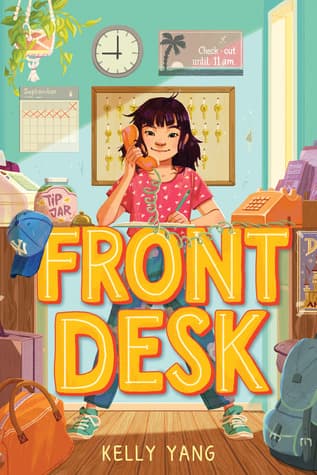
- Front Desk
Kelly Yang
4.4 (15k) average on GoodreadsChildren'sExplores the experiences of a young Chinese American girl navigating challenges and cultural differences.
- Harry Potter and the Sorcerer's Stone
J.K. Rowling
4.5 (7M) average on GoodreadsFantasyRescued from a miserable life under the stairs, an orphaned boy discovers he's a wizard destined for a magical school, where he uncovers a dangerous secret tied to the dark wizard who murdered his parents.
- The Hobbit, or There and Back Again
J.R.R. Tolkien
4.3 (2.9M) average on GoodreadsFantasyA comfort-loving hobbit named Bilbo Baggins is whisked away by a mischievous wizard and a band of dwarves on an unexpected journey to reclaim stolen treasure from a fearsome dragon, discovering courage and a magical ring along the way.
- Harry Potter and the Goblet of Fire
J.K. Rowling
4.6 (2.6M) average on GoodreadsFantasyA bewildered Harry Potter, underage and thrust into a deadly Triwizard Tournament, must brave dragons, mermaids, and a resurgent dark magic to survive a year that will forever alter the wizarding world.
- Harry Potter and the Order of the Phoenix
J.K. Rowling
4.5 (2.5M) average on GoodreadsFantasyIn a year of oppressive secrets and the threat of Voldemort, Harry Potter and Dumbledore's Army secretly train for war, shown through Jim Kay and Neil Packer's dark illustrations.





Enjoyed the summary?
A summary gives you the shape of the book. The book itself has the detail, the examples and the voice.
Find The Year of the Rat on AmazonAs an Amazon Associate, BookBrief earns from qualifying purchases. How we're funded