

Synopsis
Covers the whole plot, including the ending.
- Difficulty
- Easy
- Pacing
- Fast
- Mood
- Dark, Desperate, Horrifying, Relentless
- Read it if
- You enjoy dark, visceral thrillers about comeuppance and the horrific consequences of one's actions, with a supernatural twist.
- Skip it if
- You are sensitive to body horror, graphic violence, or a bleak, nihilistic ending.
Thinner Plot Summary
Covers the whole plot, including the ending.
The Accident and the Curse
Billy Halleck, an obese and successful lawyer in Fairview, Connecticut, drives home with his wife, Heidi, after a dinner party. Distracted by Heidi, Billy runs over and kills an elderly Romani woman named Suzanne Lempke, who was crossing the street. Because of his connections, local police chief Duncan Hopley and Judge Cary Rossington ensure Billy is acquitted. As Billy leaves the courthouse, Suzanne's ancient father, Taduz Lemke, approaches him, touching his cheek and whispering, 'Thinner.' This cryptic utterance starts Billy's terrifying ordeal, as he immediately begins to lose weight at an alarming and uncontrollable rate.
Uncontrollable Weight Loss
Initially, Billy is thrilled by his rapid weight loss, thinking it is due to a new diet and exercise. However, as the pounds continue to melt away unnaturally—sometimes several pounds a day—he becomes increasingly alarmed. Doctors are baffled, finding no medical explanation for his condition. His wife, Heidi, and daughter, Linda, grow worried, while Billy's own health worsens, leaving him weak and gaunt. He begins to suspect that Taduz Lemke's whispered word was not a coincidence but a curse, remembering the Romani family's presence at the courthouse and their ominous stares.
Seeking Answers and Confrontation
Desperate, Billy seeks out the Romani encampment. He finds Taduz Lemke, who is now surrounded by his family. Lemke, a wizened old man, confirms that Billy is cursed with the 'white man's burden,' a slow, agonizing death by wasting away, as revenge for Suzanne's death and Billy's legal freedom. Lemke reveals that he also cursed Judge Rossington with 'Lizard' (scales) and Chief Hopley with 'Leper' (skin lesions), showing Billy is not the only victim. Billy pleads for the curse to be lifted, but Lemke is unmoved, explaining that the curse is a form of justice.
The Dying Men
Billy visits Judge Rossington, who is now covered in grotesque, scaly growths, his skin flaking off and his body contorting in pain. Rossington, driven mad by his affliction, eventually commits suicide. Billy then visits Chief Hopley, who suffers from a horrifying skin disease, his face and body covered in festering sores. Hopley too is quickly deteriorating, a living corpse. Witnessing the gruesome fates of the other men confirms Billy's belief in the curse's power and intensifies his fear. He realizes his own condition is just as deadly, a slow, torturous descent into nothingness.
Turning to Ginelli
With his body now alarmingly thin, Billy remembers Richard Ginelli, a ruthless mobster and former client whom Billy once helped escape a murder charge. Desperate and seeing no other option, Billy contacts Ginelli and explains his unbelievable predicament, including the Romani curse. Ginelli, intrigued by the supernatural aspect and indebted to Billy, agrees to help. He promises to use his brutal methods to force Taduz Lemke into lifting the curse, vowing to make the Romani suffer until they give in. This alliance marks a dark turn for Billy, as he takes a morally wrong path to save his own life.
Ginelli's Campaign of Terror
Ginelli begins his campaign against the Romani. He starts by destroying their vehicles, then kills their dogs, and eventually shoots and injures one of the Romani men. Each act is carefully planned to inflict maximum psychological pressure and fear, without directly killing Taduz Lemke or his immediate family. Ginelli's methods are brutal and effective, causing panic and disarray within the Romani community. He reports back to Billy, who, despite his disgust at Ginelli's tactics, feels a glimmer of hope that the mobster's ruthlessness might finally break Lemke's resolve and force him to lift the curse.
Lemke's Offer
Ginelli's relentless attacks finally force Taduz Lemke to yield. He contacts Billy and offers a solution: a strawberry pie, baked with a drop of Billy's blood and infused with the curse. The person who eats the pie will take on the curse, lifting it from Billy. Lemke warns Billy that if he does not eat the pie himself, he must ensure someone else does, and that the curse will be transferred to the first person to take a bite. Billy, now a skeletal figure, is both relieved and horrified by this proposition, understanding the terrible moral dilemma he now faces.
The Pie of Transference
Billy takes the pie home, intending to give it to his wife, Heidi, whom he blames for the initial accident due to her distraction. He carefully places the pie in the refrigerator, planning to offer it to her during their anniversary celebration. His internal struggle is immense, torn between the desire to save himself and the horrific act of knowingly condemning another. He justifies his decision by focusing on Heidi's culpability and his own suffering, convincing himself that she deserves to bear the burden of the curse for her part in the accident and for her lack of support during his ordeal.
The Anniversary Dinner
During their anniversary dinner, Billy presents the strawberry pie. Heidi, unaware of its true nature, enthusiastically takes the first slice and eats it. Almost immediately, Billy feels the curse lift from him; his weight loss stops, and he feels a surge of strength and hunger. However, his relief is short-lived. He watches in horror as Heidi's eyes glaze over, and she begins to rapidly waste away, the curse now transferred to her. The scene is a chilling reversal of his own suffering, confirming the brutal effectiveness of Lemke's magic and the devastating price of his survival.
Linda's Fate
The next morning, Billy finds Heidi's emaciated corpse. His daughter, Linda, wakes up and, seeing the leftover pie, takes a bite before Billy can stop her. The curse transfers again, and Linda immediately begins to waste away. Billy is consumed by grief and despair, realizing the horrific extent of his actions. He has sacrificed his wife and now his daughter to save himself. The curse, once a personal torment, has now become a family tragedy, a clear example of the Romani's unyielding justice and Billy's own moral failure. He is left alone, healthy but utterly broken.
The Final Bite
Devastated and with nothing left to lose, Billy takes a piece of the pie for himself. He sits alone, watching his daughter suffer the curse, and then, in a final act of despair or perhaps a twisted form of atonement, he eats a piece of the pie. The curse transfers back to him, as he intended. He is now once again on the path of rapid, uncontrollable weight loss, but this time, he is utterly alone, stripped of his family and any semblance of his former life. The cycle of the curse has come full circle, leaving Billy to face his original fate, but with an even greater burden of guilt and loss.
Principal Figures
Billy Halleck
Protagonist
An obese, complacent lawyer cursed to waste away after a hit-and-run.
Billy Halleck is a successful but morally compromised lawyer in Fairview, Connecticut. Initially portrayed as a typical suburbanite, enjoying the 'good life' and his indulgent habits, he is fifty pounds overweight. His complacency and reliance on his connections lead him to escape justice after accidentally killing a Romani woman. This act triggers his transformation from a self-satisfied man into a terrified, desperate individual, willing to employ extreme measures, including sacrificing his family, to save himself from the curse. He is driven by self-preservation, which ultimately leads to his moral decay.
Relationships: Heidi Halleck (Wife, initially complicit in his distraction, later his first victim of the curse.); Linda Halleck (Daughter, an innocent victim of the transferred curse.); Taduz Lemke (The Romani elder who curses Billy.); Richard Ginelli (Mobster and former client who helps Billy terrorize the Romani.); Duncan Hopley (Police Chief who helps Billy avoid prosecution, also cursed.); Cary Rossington (Judge who helps Billy avoid prosecution, also cursed.)
Taduz Lemke
Antagonist
The ancient Romani patriarch who curses Billy Halleck and others.
Taduz Lemke is the ancient, stoic patriarch of the Romani family, deeply committed to his people's traditions and justice. After his daughter, Suzanne, is killed by Billy Halleck and the legal system fails to hold Billy accountable, Lemke uses a powerful Romani curse to exact his own form of retribution. He is unyielding and unwavering in his pursuit of justice, even when faced with Ginelli's brutal tactics. His quiet power and refusal to be intimidated make him a formidable and terrifying antagonist, representing a force of ancient law against modern corruption.
Relationships: Billy Halleck (The target of his curse.); Suzanne Lempke (His deceased daughter, whose death prompts the curse.); Richard Ginelli (His tormentor, whom he eventually outwits by offering the pie.)
Richard Ginelli
Supporting
A ruthless mobster hired by Billy to pressure Taduz Lemke.
Richard Ginelli is a cold, calculating, and utterly ruthless mobster whom Billy Halleck had previously defended. When Billy explains his supernatural predicament, Ginelli finds the challenge intriguing and agrees to help, seeing it as a debt owed. He is pragmatic and unsentimental, employing escalating acts of violence and intimidation against the Romani encampment without hesitation. Ginelli represents the dark, criminal underbelly that Billy is forced to engage with, highlighting Billy's moral descent. His effectiveness in terrorizing the Romani is a testament to his dangerous nature.
Relationships: Billy Halleck (Former client turned employer, with a complicated debt/favor dynamic.); Taduz Lemke (His target for intimidation and violence.)
Heidi Halleck
Supporting
Billy's wife, whose distraction leads to the accident, and who becomes the first victim of the transferred curse.
Heidi Halleck is Billy's wife, initially portrayed as somewhat frivolous and self-absorbed. Her distraction of Billy while driving directly leads to the accident that kills Suzanne Lempke. She initially expresses concern for Billy's rapid weight loss but eventually grows distant and somewhat resentful of his obsession. Billy, in his desperation, blames her for the initial incident and targets her with the cursed pie. She becomes the first unwitting victim of the transferred curse, dying a horrific, emaciated death, a tragic consequence of Billy's choices and her own initial culpability.
Relationships: Billy Halleck (Husband, whom she distracts, and who later sacrifices her with the cursed pie.); Linda Halleck (Mother.)
Linda Halleck
Supporting
Billy's innocent daughter, who inadvertently becomes a victim of the curse.
Linda Halleck is Billy and Heidi's daughter, a typical teenager. She is an innocent party in the initial accident and Billy's subsequent legal maneuvering. She expresses genuine concern and love for her father as he wastes away. Her tragic role comes when she unknowingly eats the cursed pie after her mother has succumbed to it, becoming the second victim. Linda's suffering highlights the indiscriminate and devastating nature of the curse and the moral depths to which Billy sinks, as he is unable to prevent her fate after causing his wife's.
Relationships: Billy Halleck (Father, who inadvertently causes her demise.); Heidi Halleck (Mother, who dies from the curse before her.)
Duncan Hopley
Supporting
The Police Chief who helps Billy avoid justice, and is cursed with leprosy-like symptoms.
Duncan Hopley is the police chief of Fairview, a man who abuses his authority and connections to ensure Billy Halleck avoids prosecution for the hit-and-run. He is portrayed as corrupt and complicit in the cover-up. As a result, he is also cursed by Taduz Lemke, afflicted with a horrifying, leprosy-like skin disease that causes his body to rot away. Hopley's gruesome deterioration serves as a parallel to Billy's own suffering and a testament to the Romani's far-reaching justice, demonstrating that those who aided Billy are not immune from retribution.
Relationships: Billy Halleck (Accomplice in the cover-up, fellow victim of Lemke's curses.); Taduz Lemke (The one who curses him.)
Cary Rossington
Supporting
The Judge who helps Billy avoid justice, and is cursed with a lizard-like skin condition.
Cary Rossington is the judge presiding over Billy Halleck's case. Like Hopley, he uses his position and influence to ensure Billy is acquitted, demonstrating the corruption within the local legal system. For his complicity, Taduz Lemke curses him with a horrifying 'Lizard' curse, causing his skin to become scaly and his body to contort. Rossington's descent into madness and eventual suicide underscores the terrifying power of the Romani curse and the severe consequences for those who pervert justice. His fate serves as another grim warning to Billy.
Relationships: Billy Halleck (Accomplice in the cover-up, fellow victim of Lemke's curses.); Taduz Lemke (The one who curses him.)
Suzanne Lempke
Mentioned
The elderly Romani woman killed by Billy Halleck.
Suzanne Lempke is the elderly Romani woman who is tragically killed by Billy Halleck in a hit-and-run accident. Although she appears only briefly in the initial scene, her death is the catalyst for the entire plot. Her murder, and the subsequent lack of legal justice, deeply offend her family, particularly her father, Taduz Lemke, who then unleashes the curse on Billy and his accomplices. She represents the innocent victim whose life is summarily dismissed by a corrupt system, prompting a supernatural intervention for retribution.
Relationships: Taduz Lemke (Her father, who avenges her death.)
Themes & Insights
Justice vs. Law
The novel clearly contrasts the formal legal system with an older, more primal form of justice. Billy Halleck, a lawyer, uses his connections to manipulate the law and escape punishment for killing Suzanne Lempke. However, Taduz Lemke's Romani curse bypasses legal loopholes, delivering a brutal, undeniable form of retribution. The fates of Billy, Hopley, and Rossington show that while the law can be bent, true justice, in Lemke's eyes, cannot be avoided. The story questions how effective and moral a legal system is when it favors the powerful over the innocent.
“'Thinner,' Lemke said. His voice was a dry rustle. 'Yes. Thinner.”
Consequence and Retribution
A main theme is that actions have consequences, especially moral wrongs. Billy's hit-and-run and his later escape from legal accountability lead directly to the curse. The suffering of Billy, Hopley, and Rossington are direct punishments for their involvement. Even when Billy tries to transfer the curse, the consequences multiply, engulfing his innocent family. The story emphasizes that avoiding responsibility through legal maneuvering does not erase the moral debt, which is ultimately collected through supernatural means.
“You killed my daughter, fat man. And you got away with it. This is justice.”
Moral Decay and Self-Preservation
The novel explores how morally corrupt a person can become when driven by extreme self-preservation. Billy Halleck, initially a somewhat complacent but not openly evil man, steadily loses his morality as his body wastes away. His willingness to hire a mobster to terrorize an innocent community, and eventually to sacrifice his own wife and daughter to save himself, shows a complete abandonment of ethical principles. His journey highlights how fear and desperation can corrupt even seemingly ordinary individuals, turning them into monsters to survive.
“He had killed Heidi. He had killed Linda. He had killed them both. And he was still alive. He was still himself.”
The Corrupting Nature of Privilege
Billy Halleck's initial privilege and social standing allow him to avoid justice. His wealth, connections, and status as a lawyer enable him to manipulate the legal system, with the help of equally privileged figures like Police Chief Hopley and Judge Rossington. This theme highlights how privilege can create a sense of immunity, leading individuals to believe they are above the consequences of their actions. The Romani curse acts as a leveling force, stripping away Billy's privilege and forcing him to confront a form of justice that cannot be bought or influenced, showing how fragile such societal advantages are.
“He had gotten away with murder. The thought was a cold, hard knot in his stomach. But he had gotten away.”
The Supernatural as a Force of Balance
The supernatural elements in 'Thinner' are not just for horror; they are a cosmic force to restore balance when human systems fail. The Romani curse is a powerful, ancient magic that steps in where modern law is corrupt or insufficient. It acts as an equalizer, ensuring that justice is served, even if brutally, when the powerful avoid accountability. The curse's relentless nature and its ability to transfer suggest a deep, unforgiving logic that goes beyond human understanding, highlighting a world where unseen forces actively maintain a moral order.
“The gypsy's curse,' Ginelli said. 'It's real. You're living proof.”
Plot Devices & Literary Techniques
The Romani Curse
A supernatural affliction causing rapid, uncontrollable weight loss or other physical deterioration.
The Romani curse is the central plot device, initiated by Taduz Lemke as retribution for his daughter's death. It manifests differently for each of its targets: Billy receives 'Thinner' (rapid weight loss), Rossington 'Lizard' (scaly skin), and Hopley 'Leper' (skin lesions). Its power is absolute and irreversible by conventional means, driving the entire narrative. The curse not only serves as a horror element but also as a symbolic representation of inescapable justice, forcing the characters to confront the consequences of their actions in a visceral, terrifying way. Its transferability through the pie adds a layer of moral horror.
The Cursed Pie
A strawberry pie used to transfer the Romani curse from one person to another.
The cursed pie is a pivotal plot device, introduced by Taduz Lemke as the only means to transfer Billy's 'Thinner' curse. Baked with a drop of Billy's blood, it embodies the horrifying moral dilemma at the story's climax. The pie represents the ultimate test of Billy's humanity, forcing him to choose between his own life and the lives of others. Its innocuous appearance belies its deadly power, making its consumption by Heidi and Linda all the more tragic and emphasizing the insidious nature of the curse and Billy's desperation.
Rapid Physical Deterioration
The visible and accelerating decline of the cursed characters' bodies.
This device is the primary manifestation of the curse, creating intense body horror and urgency. Billy's rapid weight loss, Rossington's lizard-like scales, and Hopley's leprosy-like sores are all described in gruesome detail, serving to externalize the internal corruption of the characters. This physical deterioration is relentless and medically inexplicable, constantly reminding the characters and reader of the curse's power and the ticking clock. It forces Billy to confront his mortality and drives his increasingly desperate actions, making the horror tangible and visceral.
Moral Compromise
The protagonist's escalating willingness to abandon ethical principles to survive.
Moral compromise is a crucial plot device that shapes Billy Halleck's character arc. From initially using his connections to avoid legal consequences, he progresses to hiring a brutal mobster to terrorize an innocent community, and finally, to knowingly sacrificing his wife and daughter. Each step down this path is a direct consequence of the curse's pressure, highlighting how extreme circumstances can erode one's moral compass. This device is not just a character trait but a driving force, pushing the narrative towards its tragic and morally devastating conclusion.
Thinner Quotes
“Fat man. You killed her. She was my daughter. Now you are thin.”
“Thinner.”
“It was like watching a ghost move through a world of solids.”
“The weight was falling off him like leaves in an autumn storm.”
“He understood what it meant to be an outsider, to be looked at askance, to be feared.”
“There are things you can't buy back. Like time. Like health. Like a little girl's life.”
“You can't pay for what you did, white man. But you can pay for what you are.”
“He was a walking skeleton, a cadaver in expensive clothes.”
“Sometimes you have to do bad things to bad people.”
“He had traded one kind of prison for another.”
“The world was full of small, sharp pains that had nothing to do with knives.”
“What do you say, fat man? You like pie?”
“It was the ultimate diet, and it was killing him.”
“He had been judged, and found wanting. And now, he was being consumed.”
Quiz
10 questions on the plot and the characters. Each answer comes with a short explanation.
Question 1
What is the name of the gypsy elder who places the curse on Billy Halleck?
- Mamie Remmer
- Taduz Lemke
- Gina Lempke
- Stefan Ginelli
Show answer
B. Taduz Lemke The gypsy elder who places the 'Thinner' curse on Billy Halleck after his car accident is Taduz Lemke.
Question 2
What phrase does the gypsy elder utter when he touches Billy Halleck's cheek, initiating the curse?
- Go now, and be thin.
- Thinner.
- The weight will fall.
- Be gone, fat man.
Show answer
B. Thinner. Taduz Lemke simply says the word 'Thinner' as he touches Billy's cheek, which is the immediate cause of his rapid weight loss.
Question 3
What is the initial cause of the car accident that leads to the gypsy woman's death?
- Billy was distracted by a phone call.
- Billy fell asleep at the wheel.
- Billy's wife, Heidi, was performing oral sex on him.
- Billy was drunk driving.
Show answer
C. Billy's wife, Heidi, was performing oral sex on him. The book explicitly states that Billy's wife, Heidi, was giving him oral sex while he was driving, causing him to lose control and hit the gypsy woman.
Question 4
Which of Billy's friends, also involved in the cover-up, experiences a different, equally horrific curse?
- Judge Cary Rossington
- Sheriff Duncan Hopley
- Dr. Houston
- Frank Machen
Show answer
B. Sheriff Duncan Hopley Sheriff Duncan Hopley, who helped cover up the accident, is cursed with a severe, reptilian skin condition.
Question 5
What is the first drastic measure Billy takes to try and stop his weight loss, before realizing it's a curse?
- He consults a nutritionist.
- He starts an intense workout regimen.
- He visits multiple doctors for medical tests.
- He tries to gain weight by eating constantly.
Show answer
C. He visits multiple doctors for medical tests. Initially, Billy believes his weight loss is a medical condition and undergoes numerous tests and consultations with doctors who can find no explanation.
Question 6
Who is the mob enforcer Billy Halleck hires to intimidate the gypsies?
- Richie Ginelli
- Tony De Salvo
- Vinnie Bellini
- Paulie Bleeker
Show answer
A. Richie Ginelli Billy hires Richie Ginelli, a ruthless mobster and old client, to deal with the gypsies after his attempts to reason with them fail.
Question 7
What is the specific item that Taduz Lemke offers Billy to transfer the curse?
- A piece of his hair.
- A piece of pie.
- A lock of his wife's hair.
- A cursed amulet.
Show answer
B. A piece of pie. Lemke offers Billy a strawberry pie, explaining that whoever eats a piece of it will inherit the curse.
Question 8
What is the ultimate irony of Billy's attempt to rid himself of the 'Thinner' curse at the end of the novel?
- He successfully transfers it to Taduz Lemke.
- He dies before he can transfer it.
- He transfers it to his own family, ensuring they will suffer.
- The curse inexplicably lifts on its own.
Show answer
C. He transfers it to his own family, ensuring they will suffer. In a horrifying twist, Billy gives the cursed pie to his wife, Heidi, who eats it. His daughter, Linda, then eats a piece as well, extending the curse to his family, thus destroying the very people he claimed to love and protect.
Question 9
What is the primary theme explored through Billy Halleck's journey and the 'Thinner' curse?
- The power of love and forgiveness.
- The corrupting influence of wealth.
- Justice, karma, and the consequences of one's actions.
- The struggle against addiction.
Show answer
C. Justice, karma, and the consequences of one's actions. The novel heavily emphasizes themes of poetic justice and karma, as Billy and his accomplices face supernatural retribution for their role in the gypsy woman's death and the subsequent cover-up.
Question 10
Beyond the physical 'thinner' effect, what psychological toll does the curse take on Billy Halleck?
- He develops extreme paranoia and hallucinations.
- He becomes increasingly desperate, ruthless, and self-serving.
- He finds inner peace and spiritual enlightenment.
- He becomes catatonic and unresponsive.
Show answer
B. He becomes increasingly desperate, ruthless, and self-serving. As the curse progresses, Billy devolves from a complacent, overweight lawyer into a gaunt, desperate, and morally compromised individual, willing to sacrifice others to save himself.
Thinner FAQ
What is the central premise of 'Thinner' and what triggers the main conflict for Billy Halleck?
The central premise of 'Thinner' revolves around a curse placed upon Billy Halleck, a morbidly obese lawyer, causing him to lose weight uncontrollably. The conflict is triggered when Billy, distracted while driving, accidentally runs over and kills an old Romani woman, triggering her father, Taduz Lemke, to place a 'thinner' curse on him, along with his co-conspirators.
Who are the key characters involved in Billy Halleck's initial predicament, besides Billy himself?
Besides Billy Halleck, key characters include his wife Heidi, who is initially concerned about his weight loss but later grows suspicious; his daughter Linda; and the Romani patriarch Taduz Lemke, who places the curse. Lemke's daughter, the victim of the accident, and Billy's friends, Judge Cary Rossington and Police Chief Duncan Hopley, are also central to the initial cover-up.
How does Billy Halleck's physical transformation progress throughout the story, and what are its psychological impacts?
Billy's physical transformation begins with rapid, seemingly miraculous weight loss, which initially delights him. However, it quickly escalates into a horrifying emaciation, leaving him skeletal and weak. Psychologically, this causes immense paranoia, desperation, and a complete breakdown of his previous confident, entitled demeanor, replacing it with a primal struggle for survival.
What role do Billy's friends, Judge Cary Rossington and Police Chief Duncan Hopley, play in the story's development?
Judge Rossington and Chief Hopley initially use their positions to ensure Billy avoids serious legal repercussions for the Romani woman's death, effectively orchestrating a cover-up. They are also cursed by Lemke for their complicity, experiencing their own unique, horrifying afflictions – Rossington with scales and Hopley with boils. Their fates serve as a parallel to Billy's and underscore the Romani's powerful revenge.
How does the 'thinner' curse ultimately manifest in Billy's life, beyond just physical weight loss?
Beyond physical weight loss, the 'thinner' curse manifests as a complete unraveling of Billy's life. It destroys his health, his marriage, his career, and his peace of mind. He becomes a social outcast, shunned by his family and friends, and is consumed by an obsessive quest to reverse the curse, highlighting the profound and pervasive nature of Lemke's revenge.
What is the significance of the pie in the story's climax, and what does it represent metaphorically?
The pie in the climax is the means by which the 'thinner' curse is transferred, a dark ritual object imbued with Lemke's magic. It represents the inescapable nature of karma and the cyclical violence of revenge. Metaphorically, it is a poisoned chalice, offering a temporary reprieve for Billy while ensuring the curse's continuation and the suffering of another innocent.
Are there any subtle clues about the Romani community's power or their history before the curse is explicitly revealed?
Subtle clues include the Romani's stoic, unyielding presence in the courtroom and their immediate, quiet departure after the verdict, suggesting a deeper, self-contained justice system beyond the conventional legal one. Lemke's piercing gaze and the Romani's collective silence hint at an ancient, formidable power that operates outside modern societal norms, foreshadowing their magical retaliation.
How does the author use food and eating habits to highlight Billy's character flaws before the curse?
Before the curse, Billy's constant overeating and indulgence in rich foods highlight his gluttony, self-entitlement, and lack of self-control. His dismissive attitude towards his wife's concerns about his health underscores his arrogance and disregard for consequences, setting the stage for the curse to directly target his most apparent vice.
What is the implied fate of Ginelli, the mobster Billy enlists, and how does it connect to the Romani's power?
Ginelli, after successfully coercing Lemke into lifting the curse, is implied to escape the Romani's immediate wrath, but his future is left ambiguous. His success, however, is temporary, as the curse is merely transferred, not broken. This emphasizes that while individual Romani can be threatened, their ancient magic and collective will are ultimately unyielding and not easily circumvented.
Analyze Billy Halleck's initial psychological state as an entitled, privileged lawyer.
Billy Halleck begins as a psychologically entitled and privileged individual, accustomed to his social status and the ability to manipulate the legal system to his advantage. He exhibits a profound lack of empathy, particularly towards the Romani victim, viewing the accident as an inconvenience rather than a tragedy. His initial complacency and belief in his own invincibility are central to his character.
How does the curse psychologically strip away Billy's identity and sense of self-worth?
The curse psychologically strips away Billy's identity by attacking his physical form, which was intrinsically linked to his privileged self-image. As he wastes away, his confidence, charm, and sense of control erode, replaced by fear, desperation, and self-loathing. He becomes a shadow of his former self, his external decay mirroring his internal collapse and the loss of everything he valued.
Discuss the psychological impact of the curse on Heidi Halleck and her relationship with Billy.
Heidi initially experiences concern for Billy's health, but as his weight loss becomes extreme and his behavior erratic, her concern turns to revulsion and fear. Psychologically, she becomes alienated from him, unable to cope with his monstrous transformation and increasing paranoia. The curse effectively destroys their marriage, highlighting the devastating ripple effects of Billy's actions.
How does Billy's desperation manifest psychologically, leading him to extreme measures?
Billy's desperation manifests psychologically as an obsessive, single-minded focus on reversing the curse, overriding all other moral considerations. He becomes increasingly paranoid, distrustful, and ruthless, eventually resorting to hiring a dangerous mobster, Ginelli, to threaten and coerce the Romani. This demonstrates a complete moral deterioration, where self-preservation eclipses any sense of justice or humanity.
What is the psychological significance of Billy's final act with the pie, and what does it reveal about his character?
Billy's final act of giving the pie to his wife, Heidi, reveals a profound and chilling psychological shift: his complete surrender to the curse's logic and his ultimate moral depravity. Rather than break the cycle, he perpetuates it, choosing to save himself at the expense of someone he supposedly loved. It shows he has become as vengeful and ruthless as those who cursed him.
Is 'Thinner' an indictment of privilege and a warning against taking justice into one's own hands, or something more complex?
'Thinner' can be interpreted as an indictment of privilege, showing how Billy's social standing initially protects him from legal consequences, only for a more ancient form of justice to prevail. It warns against the arrogance of power and the dangers of a corrupt system. However, its complexity lies in the brutal nature of the Romani's revenge, which also escalates to horrifying proportions, questioning the morality of all parties involved.
How does the novel explore themes of justice, revenge, and karma?
The novel explores justice through the lens of retribution, contrasting the flawed legal system with the Romani's swift, supernatural justice. Revenge is central, as Lemke's curse is a direct response to the injustice against his daughter. Karma is a dominant theme, as Billy, Rossington, and Hopley all suffer consequences directly related to their complicity, emphasizing that actions have inescapable repercussions, even if delayed.
What is the moral ambiguity surrounding Taduz Lemke's actions? Is he a villain or an avenger?
Taduz Lemke's actions present significant moral ambiguity. While he is an avenger seeking justice for his murdered daughter, his methods are extreme and indiscriminate, extending the curse to innocent parties like Heidi. He can be seen as a villain for his relentless cruelty, yet also as a symbol of righteous anger against a corrupt system that denied his family justice, making him a complex antagonist.
Does the ending offer any hope or a clear moral resolution, or is it purely bleak?
The ending of 'Thinner' is overwhelmingly bleak, offering no hope or clear moral resolution. Billy escapes the immediate threat of the curse, but only by transferring it to his innocent wife, Heidi, and then presumably his daughter. This perpetuates the cycle of suffering and injustice, suggesting that once unleashed, such dark forces are almost impossible to contain, leaving a deeply pessimistic outlook on human nature and the nature of revenge.
How does the 'Bachman' pseudonym affect the reader's perception of 'Thinner' compared to King's other works?
The 'Bachman' pseudonym often leads readers to expect a darker, more cynical, and less supernatural-focused narrative compared to Stephen King's typical works. For 'Thinner,' it frames the story as a brutal, relentless descent into horror with little sentimentality or moral redemption, aligning with the grittier, more nihilistic tone often associated with the Bachman novels, thus enhancing its impact as a pure horror thriller.
About the author

Richard Bachman is a pseudonym used by Stephen King, primarily for his works of fiction. Among his notable books are "Thinner," a horror novel about a curse leading to rapid weight loss; "The Long Walk," a dystopian tale of survival; "The Running Man," a commentary on media and society; and "The Regulators," a parallel narrative to King's "Desperation."
Similar books
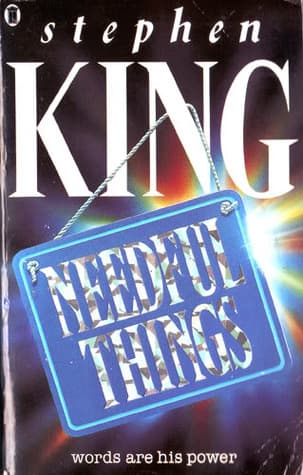
- Needful Things
Stephen King
3.9 (210k) average on GoodreadsThrillerFeatures a supernatural entity preying on human flaws and a small town's descent into chaos.
- The Green Mile
Stephen King
4.5 (249k) average on GoodreadsThrillerExplores themes of justice, injustice, and supernatural curses within a confined setting.
- Pet Sematary
Stephen King
4.0 (425k) average on GoodreadsThrillerDeals with the horrific consequences of tampering with the natural order and the desperation of a father.
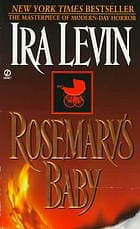
- Rosemary's Baby
Ira Levin
4.0 (112k) average on GoodreadsThrillerRosemary's Baby builds dread through psychological manipulation and subtle satanic conspiracy, whereas Thinner offers a more overt and physically destructive form of supernatural curse and immediate body horror.
- The Haunting of Hill House
Shirley Jackson
3.8 (162k) average on GoodreadsThrillerThe Haunting of Hill House explores psychological disintegration through an ambiguous haunted house and internal character struggles. In contrast, Thinner's horror is explicitly tied to a tangible, irreversible physical affliction, making the threat more visceral and less ambiguous.
- Angels & Demons
Dan Brown
3.9 (2.7M) average on GoodreadsThrillerA Harvard symbologist races through Rome's ancient sites, deciphering cryptic clues to unmask the Illuminati and stop a vengeful plot to destroy the Vatican with a stolen antimatter weapon.




Enjoyed the summary?
A summary gives you the shape of the book. The book itself has the detail, the examples and the voice.
Find Thinner on AmazonAs an Amazon Associate, BookBrief earns from qualifying purchases. How we're funded