
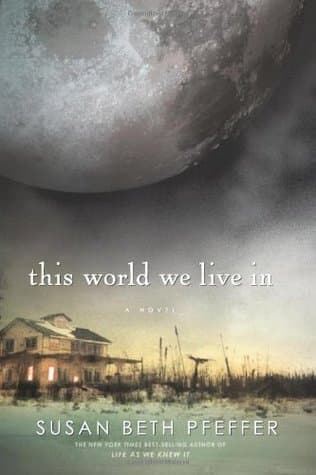
Synopsis
Covers the whole plot, including the ending.
- Difficulty
- Easy
- Pacing
- Moderate
- Mood
- Hopeful, Somber, Resilient, Romantic
- Read it if
- You enjoyed the first two books in the 'Life As We Knew It' series and want to see how Miranda's story continues, especially if you're interested in post-apocalyptic survival with a focus on family dynamics and budding romance.
- Skip it if
- You prefer fast-paced action over introspective, character-driven survival stories, or if you're looking for a standalone novel as this is the third book in a series.
This World We Live In Plot Summary
Covers the whole plot, including the ending.
A Year Later: New Realities
One year after a meteor hit the moon and changed Earth, sixteen-year-old Miranda Evans lives with her mother, Laura, and younger brother, Matt, in their fortified Pennsylvania home. Their lives center on survival, rationing food, and dealing with extreme cold. Miranda writes in her diary about lost friends and the constant threat of hunger and sickness. Her mother, a former doctor, helps the community with medical needs, and Matt contributes to chores. Their initial shock has settled into a hard routine, but hope remains fragile.
Unexpected Arrivals
One cold afternoon, Miranda's father, Hal, and her stepmother, Lisa, arrive at their house. They haven't seen them since before the meteor. To Miranda's surprise, they also bring a baby, Julie, and three other survivors: an elderly woman, Mrs. Nesbitt, and two teenage boys, Alex Morales and Brandon. Hal explains they barely made it from New York, using hoarded gasoline. Six new people in their already strained household immediately create tension and challenges with food and space, threatening the balance the Evans family had found.
Adjusting to New Company
The Evans family quickly works to make room for their guests. Hal and Lisa share stories of their difficult journey and the losses they suffered. Miranda becomes more aware of Alex, a quiet but strong and helpful boy. Despite initial awkwardness and the added strain on resources, the household begins to find a rhythm. Alex and Brandon help with chores like chopping wood and melting snow. Miranda notices Alex's kindness toward baby Julie and his respectful manner, stirring feelings she hasn't had since before the moon incident.
Growing Connections
As weeks pass, Miranda and Alex spend more time together, often on tasks like foraging or clearing snow. They share their experiences and fears, finding comfort in each other. Miranda learns about Alex's past, his dreams of becoming a doctor, and his strong morals. Their conversations deepen their connection, and Miranda realizes her feelings for him are growing. Alex also seems to feel the same, showing subtle affection and care. Their developing romance offers a bit of warmth and hope in their otherwise difficult lives.
The Proposal
One evening, Alex tells Miranda about his future plans. He wants to travel south, specifically to Florida, hoping for a milder climate where he can eventually study medicine. He explains that his father, also a doctor, always stressed the importance of education. Miranda is upset by this news, realizing Alex's goals mean he will eventually leave her and her family. This revelation casts a shadow over their new relationship, as Miranda struggles to accept his firm decision to leave.
A Difficult Decision
Miranda feels heartbroken and torn. She loves Alex and wants to be with him, but she also feels a strong bond to her mother and Matt, especially given their difficult situation. Leaving her family, who have already been through so much, seems impossible. She tries to convince Alex to stay and build a future with her in Pennsylvania, but he remains committed to finding a better life and pursuing his medical dreams. The tension between them grows as Miranda faces the painful choice of either following her heart and leaving her family or staying and losing Alex.
The Tornado Strikes
As Miranda and Alex's emotional struggle peaks, a new danger appears. A powerful tornado, unusual for their region in winter, sweeps through Howell. The family and their guests rush to the basement as the storm rages. The sounds of destruction are loud, and they emerge to find their home damaged and the surrounding area devastated. The tornado adds another difficulty to their already hard lives, destroying valuable resources and further isolating them.
Aftermath and Resolution
After the tornado, the family assesses the damage and begins the hard work of recovery. The destruction, while terrible, also brings clarity for Miranda. Seeing how fragile life is and how important family is, she makes a decision: she will not leave her family. However, she also realizes she cannot let Alex go. Instead, she suggests a compromise: she will go south with Alex, but only if her whole family comes too. This bold move changes things, and after much thought, her mother, Laura, agrees to consider the journey, understanding Miranda's love and the chance for a better life.
The Journey Begins
With a renewed sense of purpose, the Evans family, along with Hal, Lisa, baby Julie, Mrs. Nesbitt, Alex, and Brandon, starts preparing for their big journey south. They combine their remaining resources, repair their vehicle as best they can, and carefully plan their route, knowing the trip will be dangerous. The decision to move south is a shared one, driven by the hope of finding a warmer climate, more food, and a chance to rebuild their lives. Miranda and Alex, now united, support each other, their love strengthened by their shared commitment to the future.
Challenges on the Road
The journey south is as challenging as expected. They find abandoned towns, dangerous weather, and the constant threat of hunger and sickness. Gasoline is scarce, forcing them to walk long distances. They face moral dilemmas, like whether to take supplies from empty homes, and meet other desperate survivors, some hostile, some needing help they can't always give. Miranda and Alex work together, supporting young Matt and caring for baby Julie. The hardships test their resolve, but their shared goal of finding a new home keeps them moving, making their bonds as a makeshift family stronger.
Principal Figures
Miranda Evans
Protagonist
A resilient teenager navigating survival and first love in a post-apocalyptic world.
Miranda is the thoughtful and observant protagonist, chronicling her family's struggles in her diary. She is fiercely protective of her younger brother, Matt, and deeply loyal to her mother, Laura. Initially, she is focused solely on survival, but the arrival of Alex reawakens her capacity for hope and love. She is intelligent, resourceful, and often burdened by the weight of their new reality, yet she finds strength in her relationships and her ability to adapt.
Relationships: Laura Evans (Daughter-mother; deeply loyal and supportive); Matt Evans (Older sister-younger brother; protective and caring); Hal Evans (Daughter-father; initially strained but reconciles); Lisa Evans (Stepmother-stepdaughter; initially distant but grows closer); Alex Morales (Romantic interest; deep, complicated love)
Alex Morales
Supporting/Love Interest
A determined and kind young man with medical aspirations, who falls in love with Miranda.
Alex is introduced as one of the strangers accompanying Miranda's father. He is quiet, resourceful, and possesses a strong moral compass. Driven by his late father's legacy as a doctor, Alex is determined to pursue a medical career, even in the post-apocalyptic world. This ambition fuels his desire to move south to a more hospitable climate. He is kind, particularly towards baby Julie, and develops a deep, complicated love for Miranda, torn between his personal dreams and his growing affection for her.
Relationships: Miranda Evans (Romantic interest; deep, complicated love); Brandon (Friend/traveling companion); Julie (Caretaker/protective bond)
Laura Evans
Supporting
Miranda and Matt's mother, a resilient former doctor who provides strength and medical aid.
Laura is Miranda's mother, a strong and practical woman who was a doctor before the moon impact. She uses her medical skills to help her family and their community, often sacrificing her own well-being. She is the anchor of the family, providing emotional support and making difficult decisions with a calm demeanor. Her resilience and unwavering love for her children are central to their survival. She is initially hesitant about the journey south but ultimately agrees for the sake of her family's future.
Relationships: Miranda Evans (Mother-daughter; deeply loving and supportive); Matt Evans (Mother-son; protective and nurturing); Hal Evans (Ex-husband; co-parenting/shared responsibility)
Matt Evans
Supporting
Miranda's younger brother, who adapts to their harsh new reality with surprising resilience.
Matt is Miranda's younger brother, a boy who has grown up quickly in the aftermath of the disaster. He is resilient, helpful, and surprisingly mature for his age, contributing to daily chores and understanding the gravity of their situation. He looks up to Miranda and relies on his mother. His perspective often provides a simple, yet profound, view of their struggles and small triumphs. He forms a bond with the new arrivals, particularly baby Julie.
Relationships: Miranda Evans (Younger brother-older sister; admiring and close); Laura Evans (Son-mother; reliant and loved); Julie (Protective/caring older child to baby)
Hal Evans
Supporting
Miranda's father and Laura's ex-husband, who brings new challenges and hope to the family.
Hal is Miranda's father and Laura's ex-husband. He arrives unexpectedly with his new wife, Lisa, and baby Julie, along with two other survivors. He is well-meaning but sometimes lacks the practical skills needed for their new world, often relying on Laura's resourcefulness. He deeply loves his daughters, Miranda and Julie, and wants to provide for his family, though his initial arrival creates significant strain on resources. He contributes to the family's discussions and decisions, particularly regarding their move south.
Relationships: Miranda Evans (Father-daughter; loving but sometimes distant); Laura Evans (Ex-husband-ex-wife; co-parenting/shared responsibility); Lisa Evans (Husband-wife; supportive); Julie (Father-daughter; deeply loving and protective)
Lisa Evans
Supporting
Miranda's stepmother and mother of baby Julie, who adapts to the harsh realities with grace.
Lisa is Miranda's stepmother and Hal's wife, and the mother of baby Julie. She arrives with Hal and the other survivors, initially a quiet presence, but she quickly proves to be resilient and caring. She is devoted to her baby and supportive of Hal. She integrates into the Evans household and forms a working relationship with Laura. Despite the overwhelming challenges, she maintains a sense of grace and contributes to the family's efforts, showing strength in her quiet determination.
Relationships: Hal Evans (Wife-husband; supportive); Julie (Mother-daughter; deeply loving and protective); Miranda Evans (Stepmother-stepdaughter; grows closer)
Julie
Supporting
Hal and Lisa's baby, a symbol of innocence and hope in the desolate world.
Julie is Hal and Lisa's infant daughter. She represents innocence, vulnerability, and a powerful symbol of hope and the future. Her presence in the harsh world reminds the characters of what they are fighting for. Caring for her becomes a shared responsibility and a source of comfort and warmth amidst the desolation, particularly for Miranda and Alex, who find solace in her presence.
Relationships: Hal Evans (Daughter-father; loved and protected); Lisa Evans (Daughter-mother; loved and protected); Miranda Evans (Half-sister; protective and caring); Alex Morales (Caretaker/protective bond)
Mrs. Nesbitt
Supporting
An elderly woman who traveled with Hal and Lisa, representing the vulnerability of the older generation.
Mrs. Nesbitt is an elderly woman who joined Hal and Lisa's group during their journey from New York. She is frail and often quiet, serving as a reminder of the vulnerability of the elderly in this new, unforgiving world. Her presence highlights the moral imperative to care for the weakest among them, and she is treated with respect and kindness by the Evans family and the other survivors. She represents a connection to the past and the humanity they strive to preserve.
Relationships: Hal Evans (Traveling companion; cared for); Lisa Evans (Traveling companion; cared for)
Brandon
Mentioned
A young man who traveled with Hal and Lisa, a quiet but helpful member of the group.
Brandon is one of the two teenage boys who arrive with Hal and Lisa. He is less prominent than Alex but is consistently helpful with chores and contributes to the survival efforts of the group. He represents another young person trying to navigate the new world and adapt to its challenges, quietly supporting the collective effort.
Relationships: Alex Morales (Friend/traveling companion)
Themes & Insights
Survival and Adaptation
The main theme is the characters' ongoing struggle to survive in a world changed by the meteor strike. This appears in their daily routines: finding food, melting snow, and fortifying their home. Hal and his group's arrival forces more changes in how they manage resources and interact. The final decision to travel south is the biggest act of adaptation, seeking a new place to improve their chances of survival. This theme is clear in Miranda's detailed diary entries about their small meals and the constant threat of hunger and illness.
“It's a strange kind of normal, this life we live now. A normal that means always being hungry, always being cold, always being afraid.”
Love and Hope Amidst Despair
Despite their difficult situation, love and hope are strong forces. Miranda's growing relationship with Alex provides emotional comfort and future possibilities. The love within the Evans family—Laura's dedication to her children, Miranda's care for Matt—is a key part of their resilience. Baby Julie represents innocence and new beginnings, inspiring the adults to fight for a better future. This theme is especially touching when Miranda, despite the danger, chooses to fight for her love with Alex and for her family's chance at a new life.
“Even in the darkest times, there are flickers of light. Sometimes those flickers are enough to keep you going.”
Family and Community
The idea of family, both by blood and by choice, is very important. The initial Evans family unit—Miranda, Laura, and Matt—shows strong bonds formed through shared hardship. The arrival of Hal, Lisa, and the others expands this definition, making them integrate new members and redefine their community. The challenges of sharing scarce resources and making group decisions highlight the complexities and strengths of this expanded family. Ultimately, Miranda's decision to ensure her entire family joins her and Alex south emphasizes that survival is a collective effort supported by family ties.
“We are a family, even if we're not all blood. We survive together, or we don't survive at all.”
Loss and Grief
The characters live with the constant shadow of loss. Miranda often thinks about friends and neighbors who died, and the world they once knew. Hal and Lisa arrive having lost almost everything and everyone in New York. The meteor strike is a global disaster, and the story acknowledges the shared sadness for a lost way of life. This theme highlights how precious what remains is and the constant threat of further loss, making every small victory and moment of connection more meaningful. The tornado's destruction further shows the ongoing nature of loss in their world.
“The world before is a ghost that haunts us, a memory of warmth and plenty that makes the present even colder.”
Plot Devices & Literary Techniques
First-Person Diary Narration
Miranda's personal diary entries provide intimate insight into her thoughts and the unfolding events.
The story is primarily told through Miranda's diary entries, offering a deeply personal and immediate perspective on the post-apocalyptic world. This device allows the reader to experience Miranda's fears, hopes, observations, and emotional development firsthand. It also lends authenticity to the narrative, as Miranda records the daily struggles, the small triumphs, and her evolving feelings for Alex. The diary format emphasizes the isolation of their existence and the importance of documenting their lives in a world where history is being rewritten.
The Moon Incident
The catastrophic meteor collision with the moon serves as the inciting incident and ongoing environmental threat.
The meteor striking the moon is the foundational event that reshapes the entire world. It acts as the inciting incident, plunging humanity into a struggle for survival due to climate change, lack of sunlight, and resource scarcity. This event isn't just a backstory; its ongoing effects—extreme cold, food shortages, and unpredictable weather like the tornado—are constant antagonists, driving the plot and forcing characters into difficult decisions. It establishes the high stakes and the continuous pressure under which all the characters operate.
The Journey South
The planned migration to a warmer climate functions as a goal and a quest for a better future.
The decision to journey south, initially Alex's ambition and later a family endeavor, serves as a major plot device. It provides a clear objective for the characters, shifting the narrative from static survival to an active quest. This journey introduces new challenges, expands the scope of the world, and forces the characters to confront external threats beyond their home. It symbolizes hope for a future beyond mere existence and acts as a catalyst for Miranda's most significant character development and her ultimate choice.
This World We Live In Quotes
“The moon was always there, even when it was new, even when it was covered by clouds. It was there. It was just harder to see.”
“We were all survivors, but some of us were more broken than others. And some of us were just plain mean.”
“He said that every day was a gift, and we had to treat it like one, even if it was a gift we didn't want.”
“The past was a luxury we couldn't afford to live in. The future was a dream we couldn't afford to have. All we had was now.”
“Love didn't make the world stop turning, but it sure made it feel like it was worth turning for.”
“We were all living on borrowed time, but then, weren't we always?”
“Sometimes, the only way to keep going was to pretend you weren't scared.”
“Food was more than just sustenance; it was a connection to a world that was gone, a memory of comfort.”
“The hardest part wasn't doing without, it was remembering what it was like to have.”
“Even in the darkest times, there was always a flicker of light, if you knew where to look.”
“We were a family, not just by blood, but by choice, by shared experience, by the sheer will to survive together.”
“Nature didn't care about our plans, our hopes, our fears. It just was.”
“He taught me that sometimes the bravest thing you can do is just keep breathing.”
“The silence wasn't empty; it was full of everything we had lost, and everything we still had.”
Quiz
10 questions on the plot and the characters. Each answer comes with a short explanation.
Question 1
What catastrophic event occurred one year prior to the beginning of the story, fundamentally altering Earth's climate?
- A supervolcano erupted, causing a global winter.
- A massive earthquake shifted the Earth's axis.
- A meteor collided with the moon.
- Solar flares disrupted the Earth's atmosphere.
Show answer
C. A meteor collided with the moon. The premise of the book, 'This World We Live In,' is set one year after a meteor collided with the moon, causing devastating climate change.
Question 2
Who arrives at Miranda's house, bringing a baby and three strangers, including Alex Morales?
- Miranda's aunt and uncle
- Miranda's father and stepmother
- Miranda's older brother and his family
- A group of survivors from a nearby town
Show answer
B. Miranda's father and stepmother Miranda's struggle to survive intensifies when her father and stepmother arrive with a baby and three strangers in tow.
Question 3
What is the primary environmental challenge Miranda and her family face due to the meteor impact?
- Extreme heat and widespread droughts
- Constant volcanic eruptions and ash clouds
- A perpetually frozen landscape and food scarcity
- Frequent tsunamis and rising sea levels
Show answer
C. A perpetually frozen landscape and food scarcity The description explicitly states, 'the landscape is frozen, and food is increasingly scarce,' as a direct result of the climate alteration.
Question 4
What significant obstacle arises in Miranda's burgeoning relationship with Alex Morales?
- Alex is already married to one of the other strangers.
- Alex's plans for his future thwart their relationship.
- Miranda's father disapproves of Alex.
- They discover they are secretly related.
Show answer
B. Alex's plans for his future thwart their relationship. The summary states that 'as Miranda’s complicated feelings for him turn to love, his plans for his future thwart their relationship.'
Question 5
What devastating natural disaster strikes the town of Howell, prompting a major decision from Miranda?
- A massive flood
- A severe blizzard
- A devastating tornado
- A forest fire
Show answer
C. A devastating tornado The description mentions, 'Then a devastating tornado hits the town of Howell, and Miranda makes a decision that will change their lives forever.'
Question 6
What is the overarching theme explored in 'This World We Live In' regarding human existence after a global catastrophe?
- The rapid advancement of technology in crisis.
- The resilience of the human spirit and the struggle for survival and hope.
- The immediate collapse of all social structures and widespread anarchy.
- The ease with which new communities are formed and thrive.
Show answer
B. The resilience of the human spirit and the struggle for survival and hope. The story centers on Miranda's 'struggle to survive' and the profound changes in her life, indicating themes of resilience and the human fight for existence in dire circumstances.
Question 7
How does Miranda's perception of her life change from before the meteor impact to the beginning of the story?
- She feels life has improved with fewer distractions.
- Life as she knew it no longer exists, and she faces constant struggle.
- She views it as a temporary setback before things return to normal.
- She is indifferent to the changes, focusing only on the present.
Show answer
B. Life as she knew it no longer exists, and she faces constant struggle. The text explicitly states, 'For Miranda Evans, life as she knew it no longer exists,' highlighting the profound and negative shift in her reality.
Question 8
Considering the genre and plot, what is the most likely 'decision that will change their lives forever' that Miranda makes after the tornado?
- She decides to leave her family and venture out alone.
- She makes a choice regarding Alex's future plans and their relationship, possibly staying or leaving with him.
- She decides to dedicate herself to scientific research to reverse the climate change.
- She chooses to build a new, impenetrable bunker for her family.
Show answer
B. She makes a choice regarding Alex's future plans and their relationship, possibly staying or leaving with him. Given the preceding context about Alex's plans thwarting their relationship and the romance genre, the 'decision' is highly likely related to their future together or apart.
Question 9
What specific detail indicates the severity of the meteor's impact beyond just climate change?
- The complete absence of all animal life.
- Miranda's friends and neighbors are dead.
- All forms of communication technology have ceased to exist.
- The sun no longer rises, leaving Earth in perpetual darkness.
Show answer
B. Miranda's friends and neighbors are dead. The text states, 'Her friends and neighbors are dead,' which is a very specific and grim detail highlighting the direct human cost and devastation.
Question 10
How does the arrival of Miranda's father, stepmother, and the strangers complicate Miranda's already difficult life?
- They bring an abundance of food, creating new conflicts over distribution.
- They increase the number of people requiring scarce resources and introduce new interpersonal dynamics.
- They force Miranda to move to a new, more dangerous location.
- They demand that Miranda take on all the survival responsibilities.
Show answer
B. They increase the number of people requiring scarce resources and introduce new interpersonal dynamics. The text says, 'The struggle to survive intensifies when Miranda’s father and stepmother arrive with a baby and three strangers in tow,' implying increased pressure on already scarce resources and new social complexities.
This World We Live In FAQ
What is the central premise of 'This World We Live In'?
The novel is set a year after a meteor strike knocks the moon closer to Earth, causing catastrophic climate change, including volcanic eruptions, tsunamis, and a permanent winter. Miranda Evans and her family struggle to survive in this post-apocalyptic world, facing food scarcity, extreme cold, and the constant threat of natural disasters, all while navigating new relationships and the loss of their former lives.
Who are the main characters introduced at the beginning of the story?
The primary protagonist is Miranda Evans, a teenager trying to cope with the new reality. She lives with her mother and younger brother, Matt. Their struggle intensifies when her father, his pregnant second wife Lisa, and their baby arrive, accompanied by three strangers, including Alex Morales.
How does the arrival of Miranda's father and his group change the family dynamic and survival strategy?
The arrival of Miranda's father, Lisa, and the baby brings new mouths to feed and complex emotional baggage, but also additional resources and perspectives on survival. The three strangers, particularly Alex, introduce new relationships and conflicts, pushing Miranda to adapt to a larger, more complicated household dynamic in their already dire circumstances.
What is the nature of Miranda's relationship with Alex Morales?
Miranda's relationship with Alex starts as a complicated mix of attraction and distrust, evolving into a deep love amidst the harsh realities of their world. However, their burgeoning romance is challenged by Alex's predetermined plans to travel to Florida, creating a significant emotional conflict and uncertainty about their future together.
What significant natural disaster occurs in Howell, and how does it impact the characters?
A devastating tornado strikes the town of Howell, causing widespread destruction and further loss of life and resources. This event is a major turning point, forcing Miranda to make a critical decision that profoundly alters the trajectory of her family's and Alex's lives, highlighting the constant unpredictability of their new world.
How does this book connect to the previous novel, 'Life As We Knew It'?
'This World We Live In' is a direct sequel to 'Life As We Knew It,' continuing Miranda's story approximately a year after the initial meteor impact. It builds upon the established world and the survival struggles of Miranda's family, revisiting themes of loss, resilience, and the search for hope in a changed world, while introducing new characters and challenges.
Are there any subtle indications of the broader world beyond Howell, or is the focus solely on the immediate family?
While the narrative largely centers on Miranda's immediate family and their struggles in Howell, there are subtle mentions and implications of the wider devastation, such as the initial news reports of the meteor's impact and the desperate search for safer areas. Alex's plan to travel to Florida also hints at the varying conditions and potential for survival in other regions, expanding the scope beyond their isolated experience.
What is the significance of the baby born to Lisa in terms of symbolism or plot development?
The birth of the baby, Gabriel, represents new life and a fragile hope amidst the widespread death and despair. Symbolically, he embodies the future and the continuing cycle of life, but practically, he also adds a significant burden to the family's already stretched resources, forcing difficult decisions about survival and sacrifice.
How does Miranda's internal monologue evolve throughout the novel, reflecting her personal growth?
Miranda's internal monologue evolves from a focus on immediate survival and personal grief to a more mature understanding of responsibility, sacrifice, and the complexities of love. She grapples with difficult choices, navigates intricate relationships, and ultimately makes a decision that prioritizes the well-being of others over her own desires, showcasing significant emotional development.
What psychological impact does the constant threat of natural disasters have on the characters, particularly Miranda?
The constant threat of natural disasters, like the tornado, instills a pervasive sense of anxiety, helplessness, and hyper-vigilance in the characters, especially Miranda. This psychological burden forces them to confront their own mortality and the fragility of their existence, leading to both moments of despair and profound resilience as they adapt to an unpredictable world.
How do the characters cope with the psychological trauma of losing their old lives and loved ones?
The characters cope with profound psychological trauma through various mechanisms, including denial, grief, and a fierce determination to survive. Miranda often reflects on her past life and deceased friends, using her diary as an outlet, while the family unit provides mutual support and a sense of purpose, helping them to process their losses and find meaning in their new reality.
In what ways do Miranda's mother and father demonstrate different psychological approaches to survival?
Miranda's mother typically exhibits a stoic and pragmatic approach, prioritizing immediate needs and the protection of her children, often suppressing her own emotions for the family's sake. Her father, while also focused on survival, brings a more complicated emotional dynamic, grappling with guilt and the challenges of integrating a new family, demonstrating different coping mechanisms under extreme stress.
What is the ultimate 'decision that will change their lives forever' that Miranda makes at the end of the book?
Miranda's ultimate decision, made after the devastating tornado, is to choose to stay in Howell with her family rather than accompany Alex on his journey to Florida. This choice is a profound act of sacrifice and commitment, prioritizing her family's immediate needs and her sense of belonging over her romantic desires, demonstrating her maturity and fierce loyalty.
Does the ending offer a sense of hope or is it more ambiguous regarding the future of humanity?
The ending offers a nuanced sense of hope, not necessarily for a full return to the old world, but for the resilience of the human spirit and the strength of familial bonds. While the future remains uncertain and challenging, Miranda's decision and the family's continued struggle to survive together suggest that even in dire circumstances, life persists and can find meaning, leaving the broader fate of humanity open but focusing on the individual triumph of endurance.
How does the book explore the theme of love versus survival in a post-apocalyptic setting?
The book deeply explores the tension between love and survival, primarily through Miranda's relationship with Alex. Their love blossoms in a world where basic needs are paramount, forcing them to confront whether personal happiness can exist, or even be pursued, when survival is constantly at stake. Miranda's final decision exemplifies this conflict, showing that sometimes love manifests as sacrifice for the greater good of the family's survival.
What is the author's message about human nature and community in times of crisis?
The author suggests that in times of extreme crisis, human nature is capable of both profound selfishness and incredible altruism. While characters face desperate choices, the novel emphasizes the importance of community, family bonds, and mutual support as essential for survival and maintaining humanity. It highlights that even amidst scarcity, compassion and cooperation can emerge as powerful forces.
How does the portrayal of nature in 'This World We Live In' differ from typical post-apocalyptic settings?
Unlike many post-apocalyptic settings that feature barren wastes or mutated landscapes, 'This World We Live In' portrays nature as an immediate, active, and relentless antagonist. The constant cold, blizzards, volcanic ash, and the devastating tornado are not just backdrops but primary threats, emphasizing humanity's vulnerability to natural forces rather than just human-made destruction.
Is there a debate about whether Miranda made the 'right' decision by staying in Howell?
Yes, readers might debate whether Miranda made the 'right' decision. On one hand, staying prioritizes her family's immediate needs and her loyalty, demonstrating immense maturity. On the other hand, it means sacrificing a potential future with Alex and the possibility of finding better conditions elsewhere, leaving room for discussion about the balance between personal happiness and familial obligation in such extreme circumstances.
About the author

Susan Beth Pfeffer is an American author known for her works of young adult fiction, particularly in the dystopian genre. Her notable books include "Life As We Knew It," "The Dead and the Gone," and "This World We Live In," which explore themes of survival and the impact of catastrophic events on everyday life.
Similar books
- Life As We Knew It
Susan Beth Pfeffer
3.9 (113k) average on GoodreadsFantasyThe first book in the same series, establishing the core premise and characters.
- The Dead and the Gone
Susan Beth Pfeffer
3.8 (36k) average on GoodreadsFantasyThe second book in the series, continuing the post-apocalyptic narrative from a different character's perspective.
- The Road
Cormac McCarthy
4.0 (716k) average on GoodreadsScience FictionFeatures a bleak, post-apocalyptic landscape and a desperate journey for survival, though 'The Road' is much darker.
- The Hunger Games
Suzanne Collins
4.3 (6.4M) average on GoodreadsFantasyBoth feature strong female protagonists in broken worlds. Collins's series excels in high-stakes action and overt political commentary on oppressive regimes and revolutionary warfare. Pfeffer's 'This World We Live In' offers a quieter, more domestic portrayal of survival, focusing on resource management, community building, and the human-scale drama of adapting to collapse, rather than grand rebellion. Pfeffer's approach is less sensationalized and more grounded in the everyday struggles.
- Harry Potter and the Sorcerer's Stone
J.K. Rowling
4.5 (7M) average on GoodreadsFantasyRescued from a miserable life under the stairs, an orphaned boy discovers he's a wizard destined for a magical school, where he uncovers a dangerous secret tied to the dark wizard who murdered his parents.
- 1984
George Orwell
4.2 (3.1M) average on GoodreadsPoliticsIn a future where surveillance and thought control are absolute, a man's search for truth clashes with the Party, showing that hope can be a form of rebellion.




Enjoyed the summary?
A summary gives you the shape of the book. The book itself has the detail, the examples and the voice.
Find This World We Live In on AmazonAs an Amazon Associate, BookBrief earns from qualifying purchases. How we're funded