
Synopsis
Covers the whole plot, including the ending.
- Difficulty
- Easy
- Pacing
- Moderate
- Mood
- Atmospheric, Eerie, Suspenseful, Dark, Unsettling
- Read it if
- You enjoy atmospheric, unsettling horror graphic novels with unique art and ambiguous endings, or if you like classic fairy tales retold with a dark, modern twist.
- Skip it if
- You prefer clear-cut resolutions, explicit gore over psychological dread, or traditional narrative structures.
Through the Woods Plot Summary
Covers the whole plot, including the ending.
Introduction
The book begins with a short, unsettling poem, "It came from the woods. Most strange things do." This establishes the woods as a source of mystery and dread. The poem's simple, almost nursery-rhyme style hides its disturbing message, preparing the reader for the five tales that explore dangers and supernatural elements in forests and in-between places. It hints at the unknown, the monstrous, and the pull of the wilderness that appears in each story.
Our Neighbor's House
Three sisters, Elspeth, Margaret, and Anne, live in a remote cabin with their father. When he leaves to hunt, telling them to stay inside and away from the neighbor's house, the girls grow restless. Elspeth, the oldest, eventually goes to the neighbor's house, promising to return by sunset. She never does. Margaret follows, worried, and also disappears. Anne, left alone and afraid, eventually gives in to the same urge, finding the neighbor's house empty except for a disturbing, constant 'smile' that seems to follow her. She is caught in a repeating nightmare, unable to leave the house or the woods.
A Lady's Hands Are Cold
A young, unnamed woman marries a wealthy lord and moves into his grand, isolated manor. She quickly feels uneasy, especially when she hears a constant, sad singing from the walls. Her husband forbids her from entering the cellar. Driven by curiosity and growing dread, she disobeys him and finds a locked door in the cellar. Breaking it open, she finds the skeletal remains of her husband's previous wife, still wearing a ring and 'singing.' The ghost wife's hands are impossibly cold, and her husband, revealing his monstrous nature, appears and kills the new bride, adding her to his collection of 'cold-handed' wives.
The Nesting Place
Forest, a young man, returns home for his sister Rebecca's wedding to a mysterious man named Bellwether. Forest immediately distrusts Bellwether, finding him unsettling and too perfect. He notices odd things: Bellwether's unnatural stillness, his vague answers, and Rebecca's increasingly withdrawn behavior. Forest investigates Bellwether's past and discovers a truth: Bellwether is not human but a parasitic creature that sheds its skin and takes over its victims. He finds Bellwether's discarded skin and the real Bellwether's decaying body. He tries to warn Rebecca, but she is already too influenced by the imposter, having been 'nested' and transformed into a similar creature, leading to a confrontation.
My Friend Janna
Katie's friend Janna claims to be haunted by a ghost only she can see and hear. Janna's 'ghost' often makes her do strange or dangerous things, and Janna enjoys the attention and pity it brings her. Katie first thinks it's Janna being dramatic, but the incidents become more disturbing. The ghost begins to appear in ways that affect Katie, such as moving objects or leaving unsettling messages. Katie realizes Janna is not just pretending; the ghost is real and growing stronger, feeding on Janna's willingness to be its victim. The story ends with Katie fearing the ghost is now focusing on her, leaving her caught in Janna's created horror.
The Witch's Head
Two young sisters, Leanne and her younger sister, find a talking, disembodied witch's head on a stake in the woods. The head, still alive and evil, promises them a wish if they release it. Leanne, wary of the witch's tricks, refuses. Her younger sister, however, is drawn to the idea of a wish and secretly returns to the head. The head tricks the younger sister into releasing it, promising her beauty. When Leanne discovers this, she confronts the now-free witch. The witch, having regained its power, takes cruel revenge on the younger sister, turning her into a grotesque, bird-like creature. Leanne is left to deal with the horrifying results of her sister's choice.
The Witch's Head: The Bargain
After the younger sister releases the witch's head, the witch, now fully restored, shows its true, terrifying form. Instead of granting beauty, the witch twists the wish, transforming the younger sister into a hideous, bird-like creature with long limbs and a beak. The change is painful and permanent, a cruel punishment for her gullibility and disobedience. Leanne sees this horrifying change, realizing the true danger of interfering with the supernatural. The witch laughs, having taken revenge and shown its power, leaving Leanne to mourn her sister's grotesque fate and the permanent loss of her humanity.
The Witch's Head: Leanne's Resolve
Seeing her sister's monstrous transformation, Leanne feels both horror and strong resolve. She confronts the witch, demanding her sister be returned to normal. The witch, enjoying its cruelty, mocks Leanne, saying the bargain is done and the change is permanent. Leanne, however, refuses to give up. She uses her intelligence and knowledge of folklore, perhaps remembering how the witch was first defeated, to try and find a weakness. The confrontation is tense, showing Leanne's courage against great evil, even as her sister's chance of salvation fades.
The Witch's Head: The Aftermath
Despite Leanne's bravery, the witch is too powerful, and the younger sister remains in her monstrous form. The witch disappears back into the woods, its evil goal met. Leanne is left alone with her transformed sister, a reminder of the dangers of the supernatural and the permanent results of foolish choices. The story ends sadly, with Leanne burdened by grief, guilt, and the knowledge that she could not save her sister. The woods, again, claim a victim and leave a lasting mark on those who get too close to its hidden evils.
Conclusion
The book ends, leaving the reader with a lasting sense of unease and the echoes of the supernatural. There is no neat or comforting ending; instead, the stories reinforce the idea that the woods, and the unknown, are always present and dangerous. The last tale, "The Witch's Head," has a particularly grim and unresolved ending, cementing the collection's themes of permanent horror and human vulnerability against old, evil forces. The reader is left to think about the thin line between the ordinary and the monstrous, and the dangers of curiosity and breaking rules.
Principal Figures
Anne
Protagonist
The youngest sister who becomes trapped in a cyclical horror.
Anne is the youngest of the three sisters in 'Our Neighbor's House.' She is initially the most fearful and obedient, trying to adhere to her father's rules. However, her fear eventually gives way to a desperate curiosity and loneliness after her older sisters disappear. She is vulnerable and easily overwhelmed by the strange, unsettling atmosphere of the neighbor's house and the woods. Her youth emphasizes the innocence lost and the inescapable nature of the horror she encounters.
Relationships: Elspeth (older sister, initial protector); Margaret (older sister, companion in fear); Father (absent parent, source of initial safety)
The New Bride
Protagonist
A curious young woman who uncovers her husband's dark secret.
The unnamed new bride in 'A Lady's Hands Are Cold' is initially hopeful and somewhat naive, marrying a wealthy lord. She is observant and sensitive to the unsettling atmosphere of her new home. Her defining trait is her persistent curiosity, which, despite her husband's warnings and her own growing dread, compels her to uncover the source of the mournful singing. This curiosity ultimately leads to her tragic demise, as she becomes another victim of her monstrous husband.
Relationships: The Lord (husband, antagonist, murderer); The Previous Wife (victim, spectral warning)
The Lord
Antagonist
A wealthy nobleman who murders his wives and keeps their spectral remains.
The Lord from 'A Lady's Hands Are Cold' is a chilling antagonist. He appears charming and wealthy but harbors a monstrous secret: he murders his wives and keeps their spectral forms imprisoned in his cellar, where they eternally sing their laments. He is deceptive, controlling, and utterly devoid of empathy, viewing his wives as possessions to be collected and discarded. His calm demeanor when revealing his true nature makes him particularly terrifying.
Relationships: The New Bride (wife, victim); The Previous Wife (wife, victim)
Forest
Protagonist
A protective brother who uncovers a parasitic horror.
Forest is the protagonist of 'The Nesting Place.' He is a loving and protective brother to Rebecca, and his instincts are immediately alerted by the unsettling presence of her fiancé, Bellwether. He is observant, persistent, and courageous, driven by a deep concern for his sister's well-being. His skepticism and investigative nature lead him to uncover the horrifying truth about Bellwether, even when Rebecca herself is unwilling or unable to see it. He embodies the struggle against a subtle, insidious evil.
Relationships: Rebecca (sister, object of his protection); Bellwether (sister's fiancé, antagonist, parasitic entity)
Bellwether
Antagonist
A parasitic entity that preys on humans, disguising itself in their skin.
Bellwether, from 'The Nesting Place,' is a truly grotesque antagonist. He is not human but a parasitic creature that sheds its skin and inhabits human hosts, subtly transforming them as well. He is characterized by an unsettling 'perfection,' an unnatural stillness, and vague, evasive responses. His true form is hinted at through his discarded skin and the eerie 'nesting' process he inflicts upon Rebecca. He represents a subtle, insidious horror that infiltrates and corrupts from within.
Relationships: Rebecca (victim, host); Forest (opponent, who discovers his true nature)
Janna
Supporting
Katie's friend who claims to be haunted and thrives on the attention.
Janna, from 'My Friend Janna,' is Katie's friend who claims to be haunted by a ghost. She is initially portrayed as attention-seeking and theatrical, using her 'haunting' to gain sympathy and be the center of attention. However, as the story progresses, it becomes clear that the ghost is real and actively feeding on Janna's willingness to be its victim. Janna's character highlights the fine line between fabrication and genuine supernatural influence, and the dangers of inviting such forces.
Relationships: Katie (friend, observer, future victim); The Ghost (haunter, parasitic entity)
Katie
Protagonist
Janna's friend who slowly realizes the terrifying reality of Janna's haunting.
Katie is the narrator and protagonist of 'My Friend Janna.' Initially skeptical of Janna's claims of being haunted, Katie tries to rationalize the strange occurrences. She is observant and increasingly unnerved by the escalating incidents. Her journey is one of gradual realization and growing dread, as she comes to understand that Janna's ghost is not only real but also becoming more powerful and threatening her own safety. Katie represents the 'normal' person drawn into the supernatural by association.
Relationships: Janna (friend, catalyst for her fear); The Ghost (the growing threat)
Leanne
Protagonist
The elder sister who tries to protect her younger sister from a malevolent witch.
Leanne, from 'The Witch's Head,' is the older, more cautious, and responsible sister. She is wary of the talking witch's head and its promises, understanding the inherent danger of making deals with such entities. She tries to protect her younger sister from temptation and manipulation. When her sister disobeys, Leanne demonstrates courage and fierce loyalty, confronting the witch in a desperate attempt to undo the harm. She embodies the struggle against ancient evil and the pain of witnessing irreversible tragedy.
Relationships: Younger Sister (sister, object of her protection); The Witch (antagonist, source of the curse)
Younger Sister
Supporting
Leanne's sister, who is easily tempted by the witch's promises.
The unnamed younger sister in 'The Witch's Head' is characterized by her naivete, impulsiveness, and desire for beauty. Despite Leanne's warnings, she is easily swayed by the witch's promises of a wish, demonstrating a childlike disregard for consequences. Her actions directly lead to her grotesque transformation, serving as a cautionary tale about the dangers of greed and disobeying wisdom. She is a tragic figure, a victim of her own desires and the witch's malice.
Relationships: Leanne (older sister, who tries to protect her); The Witch (tempter, curse-giver)
The Witch (Head)
Antagonist
A malevolent, disembodied witch's head that grants wishes with cruel twists.
The Witch's Head is a powerful and ancient antagonist. Initially encountered as a disembodied, talking head, it is highly manipulative and malevolent. It preys on human desires, offering wishes with the sole intent of twisting them into cruel punishments. The witch is a master of deception and psychological manipulation, particularly targeting the vulnerable younger sister. Once freed, it regains its full terrifying power, embodying ancient, unforgiving evil and the irreversible nature of its curses.
Relationships: Leanne (opponent); Younger Sister (victim, instrument of its freedom)
Themes & Insights
The Perilous Wilderness
The woods are always shown as a dangerous, in-between place, a source of old, evil power. In 'Our Neighbor's House,' the woods literally trap the sisters in a nightmare. In 'The Witch's Head,' the witch is found in the woods and returns there after casting its curse. The wilderness is not a safe place but one of hidden horrors, a border between the known and the monstrous that, once crossed, often leads to permanent ruin. It represents humanity's untamed, basic fears.
“It came from the woods. Most strange things do.”
Curiosity and Disobedience
Many characters face bad consequences because they cannot resist forbidden knowledge or commands. Anne and her sisters in 'Our Neighbor's House' are warned not to go to the neighbor's house, yet their curiosity and loneliness draw them in. The new bride in 'A Lady's Hands Are Cold' is told not to go into the cellar but cannot resist finding its secrets. The younger sister in 'The Witch's Head' disobeys Leanne to make a bargain. This theme highlights the human tendency to break rules, often leading to tragic and permanent outcomes from supernatural forces.
“The forbidden door, the forbidden path, it always calls to those who listen.”
The Monstrous Feminine
Carroll often uses female characters as sources or victims of horror, sometimes changing traditional roles. The witch in 'The Witch's Head' is an old, powerful, and cruelly vengeful female entity. The ghost wives in 'A Lady's Hands Are Cold' are victims, but their endless singing is a haunting, powerful presence. Even Rebecca in 'The Nesting Place' becomes a monstrous host. This theme explores the darker parts of female power, vulnerability, and change, going beyond usual types to show complex, often terrifying, portrayals.
“Her hands were like ice, and the song never stopped.”
Body Horror and Transformation
Physical change into something grotesque is a repeated element, showing how fragile the human form and identity are. In 'The Nesting Place,' Bellwether sheds his skin, and Rebecca is 'nested' and subtly changed. The younger sister in 'The Witch's Head' is gruesomely turned into a bird-like creature. This theme uses vivid images to show a deep sense of violation and loss of self, highlighting the terrifying possibility of the human body becoming something alien and horrifying.
“Her skin was stretched thin, her fingers lengthening into claws, her mouth twisting into a beak.”
Plot Devices & Literary Techniques
Unreliable Narration / Ambiguity
The reader is often left to piece together the full horror, creating a deeper sense of dread.
Carroll frequently employs ambiguity, leaving certain details unexplained or allowing the reader to infer the full horror. In 'Our Neighbor's House,' the exact fate of the sisters is never explicitly shown, only implied by Anne's endless loop. In 'My Friend Janna,' the line between Janna's fabrication and genuine haunting is blurred until the very end. This device forces the reader to actively participate in constructing the horror, making it more personal and unsettling, and heightening the sense of pervasive dread and the unknown.
Folkloric Tropes
Familiar fairy tale elements are twisted into something dark and unsettling.
The stories draw heavily on classic folkloric and fairy tale tropes – the isolated cabin, the forbidden house, the wicked witch, the monstrous suitor, the talking head. However, Carroll subverts these familiar elements, twisting them into something much darker and more visceral. The 'neighbor's house' is not a place of help but a trap; the 'witch' grants wishes with cruel, irreversible curses. This device plays on the reader's pre-existing associations with these tales, making the subversion of expectations all the more impactful and chilling.
Visual Storytelling
The artwork and paneling are integral to conveying atmosphere and horror.
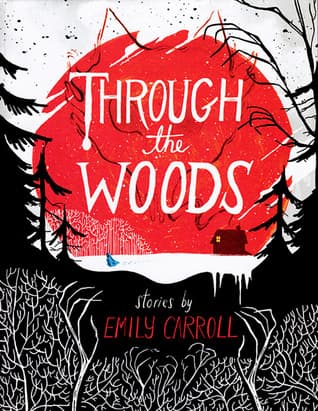
As a graphic novel, the visual elements are not merely illustrative but are a primary plot device. Carroll uses stark black and white, splashes of red, unsettling character designs (like the 'smile' in 'Our Neighbor's House' or Bellwether's unnatural perfection), and dynamic panel layouts to convey mood, tension, and jump scares. The artwork often shows what words cannot, creating a pervasive sense of dread, claustrophobia, or sudden shock. The visual language is as crucial to the narrative as the text itself.
The Cyclical Nightmare
Characters become trapped in repeating patterns of horror or consequence.
This device creates a sense of inescapable doom. In 'Our Neighbor's House,' Anne finds herself trapped in a perpetual loop within the house, unable to escape the 'smile.' In 'A Lady's Hands Are Cold,' the Lord repeatedly marries and murders, and his wives are perpetually singing. This cyclical nature emphasizes the futility of resistance against certain evils and the idea that some horrors are not singular events but ongoing, inescapable fates, creating a profound sense of despair and dread for the characters involved.
Through the Woods Quotes
“It was in the woods that I first felt it. A chill, not of the air, but of something watching.”
“My brother... he came back. But it wasn't him.”
“The thing about being lost in the woods is, sometimes you don't even know you are.”
“There are some houses that are just... waiting for someone to come inside, and never leave.”
“She had a feeling that the silence wasn't empty, but full of things she didn't want to hear.”
“The moon was so bright, it cast shadows that looked like they had teeth.”
“Be careful what you wish for, little girl. The woods have a way of granting them... in their own fashion.”
“He thought he was hunting, but he was the one being tracked.”
“The path seemed to stretch on forever, and with every step, the trees grew closer, darker.”
“Sometimes, the scariest monsters are the ones you invite in yourself.”
“The wind through the branches sounded like whispers, telling secrets no one should hear.”
“She looked into the mirror, and for a moment, saw someone else looking back.”
“It was a lovely day for a picnic, if you didn't mind the feeling of eyes on you from the trees.”
“Some things are better left buried. Especially in the woods.”
Quiz
10 questions on the plot and the characters. Each answer comes with a short explanation.
Question 1
In 'Our Neighbor's House,' what is the primary warning the mother gives her daughters about their neighbor?
- Not to accept food from him
- Not to go into his house after dark
- To never let him see them without their bonnets
- To always keep their doors locked when he is around
Show answer
C. To never let him see them without their bonnets The mother explicitly warns her daughters that the neighbor must never see them without their bonnets, adding to the story's unsettling atmosphere of hidden appearances.
Question 2
What distinguishing feature does the 'thing' from the woods possess in 'A Lady's Hands Are Cold' that makes it recognizable?
- Its glowing red eyes
- Its unusually long, sharp claws
- Its white, cold hands
- Its ability to mimic human voices
Show answer
C. Its white, cold hands The title itself, 'A Lady's Hands Are Cold,' alludes to the central identifying feature of the supernatural entity that marries the protagonist.
Question 3
In 'The Nesting Place,' what is the primary reason Bell decides to visit her sister, Anne?
- To help Anne prepare for her wedding
- To escape from her own troubled life in the city
- To investigate a strange family secret
- To introduce Anne to her new fiancé
Show answer
B. To escape from her own troubled life in the city Bell explicitly states she came to the countryside to get away from her problems and find peace, highlighting her initial motivation for the visit.
Question 4
What common theme connects 'Our Neighbor's House' and 'The Nesting Place' regarding the characters' perceptions of safety?
- The danger of strangers in isolated communities
- The illusion of safety within one's own home or family
- The threat posed by wild animals in the surrounding woods
- The idea that rituals can ward off evil
Show answer
B. The illusion of safety within one's own home or family Both stories feature characters who believe they are safe, either within their family home or with relatives, only for that sense of security to be terrifyingly undermined by a hidden horror.
Question 5
In 'My Friend Janna,' what is the recurring supernatural event that Janna experiences?
- She sees shadows moving in her periphery
- She hears whispers when no one is around
- She sees the ghost of a little girl
- She has prophetic dreams about future events
Show answer
C. She sees the ghost of a little girl Janna consistently reports seeing the ghost of a little girl, which becomes a central element of her friendship with the narrator and the story's unraveling.
Question 6
What is the significance of the repeating phrase, 'It came from the woods. Most strange things do,' which appears at the beginning of the collection?
- It implies that all the stories are set in the same specific forest.
- It establishes the woods as a recurring source of inexplicable horror and the unknown.
- It is a direct quote from one of the characters within the stories.
- It refers to the author's own childhood experiences with forests.
Show answer
B. It establishes the woods as a recurring source of inexplicable horror and the unknown. This phrase acts as an overarching theme, setting the tone for the entire collection and positioning the 'woods' as a symbolic origin for the various unsettling events.
Question 7
In 'The Witch's Tree,' what specific object is buried at the base of the tree that the protagonist is warned not to disturb?
- A small wooden box containing bones
- A necklace made of human teeth
- A doll with pins stuck in it
- A lock of hair wrapped in cloth
Show answer
D. A lock of hair wrapped in cloth The warning specifically mentions a lock of hair wrapped in cloth being buried at the base of the witch's tree, which the protagonist eventually unearths.
Question 8
How does the narrator's perception of Janna change throughout 'My Friend Janna,' leading to the story's chilling conclusion?
- She initially trusts Janna completely but grows to fear her manipulative nature.
- She starts by dismissing Janna's ghost stories but eventually realizes Janna herself is the ghost.
- She sees Janna as a troubled friend and then discovers Janna is a witch.
- She believes Janna is cursed, but then learns Janna is the one casting curses.
Show answer
B. She starts by dismissing Janna's ghost stories but eventually realizes Janna herself is the ghost. The core twist of 'My Friend Janna' is the slow, horrifying realization by the narrator that Janna, the friend she thought was seeing a ghost, is actually the ghost herself.
Question 9
The artwork in 'Through the Woods' often uses stark contrasts, limited color palettes, and unsettling imagery. How does this artistic style contribute to the overall thematic impact of the stories?
- It makes the stories feel more grounded in reality by avoiding fantastical colors.
- It creates a sense of dread and unease, emphasizing the psychological horror and vulnerability of the characters.
- It allows for a quicker reading experience by simplifying the visual information.
- It primarily serves to highlight the beauty of the natural settings in contrast to the horror.
Show answer
B. It creates a sense of dread and unease, emphasizing the psychological horror and vulnerability of the characters. Emily Carroll's distinctive art style, with its stark contrasts and often muted or unsettling colors, is crucial in building the pervasive atmosphere of dread, suspense, and psychological horror that defines the collection.
Question 10
Which of the following elements is a recurring motif across multiple stories in 'Through the Woods,' symbolizing vulnerability and hidden danger?
- Mirrors reflecting distorted images
- Doors and windows that offer false security or entry points for terror
- Ancient books containing forbidden knowledge
- Birds, particularly owls, as harbingers of doom
Show answer
B. Doors and windows that offer false security or entry points for terror Doors and windows frequently appear in the stories (e.g., 'Our Neighbor's House,' 'The Nesting Place,' 'A Lady's Hands Are Cold') as thresholds that are meant to protect but often fail, allowing horror to breach what should be safe spaces.
Through the Woods FAQ
What is the overarching theme connecting the seemingly disparate stories in 'Through the Woods'?
The overarching theme is the pervasive sense of dread and the unknown dangers lurking within liminal spaces, particularly the woods. Each story explores the vulnerability of individuals, often young women, when they venture into these wild, untamed environments, where the familiar rules of the world no longer apply and ancient, malevolent forces may reside.
In 'Our Neighbor's House,' what is the significance of the three sisters' unusual behavior and their mother's strict rules?
The three sisters' strange behavior, particularly their unnerving identicalness and synchronized movements, suggests they are not entirely human or are under some supernatural influence. Their mother's strict rules about not leaving the house hint at a protective measure against the very entity or force that has seemingly corrupted her other daughters, creating an isolated, unsettling domestic prison.
What role does the 'thing' in 'A Lady's Hands Are Cold' play in the protagonist's descent into madness?
The 'thing' in 'A Lady's Hands Are Cold' acts as a malevolent, parasitic entity that slowly possesses and replaces the protagonist's new bride. Its chilling presence and the gradual transformation of the bride erode the protagonist's sanity, making him question reality and ultimately leading to his violent, desperate attempt to reclaim what he has lost, only to be consumed by the horror.
How does 'The Nesting Place' utilize the concept of doppelgängers to explore themes of identity and fear?
'The Nesting Place' uses the doppelgänger motif through the protagonist, Bell, encountering a 'twin' of her deceased sister, who slowly begins to replace her. This creates a profound psychological horror, as Bell grapples with the terrifying possibility that her own identity can be usurped, reflecting a deep-seated fear of being forgotten or replaced by an uncanny, malevolent imitation.
What is the main conflict in 'His Face All Red' and how does it resolve?
The main conflict in 'His Face All Red' is the protagonist's intense envy and subsequent murder of his more charismatic brother, followed by the brother's inexplicable return. The resolution is horrifyingly ambiguous: the protagonist is driven to madness and possibly commits suicide or is consumed by his guilt and paranoia, as the 'returned' brother continues to live, seemingly oblivious to the protagonist's torment or perhaps actively tormenting him.
What is the significance of the recurring motif of hair throughout 'Through the Woods'?
Hair often symbolizes vitality, identity, and sometimes decay or the uncanny. In 'A Lady's Hands Are Cold,' the bride's long, dark hair is a key feature of her transformation and otherness. In 'His Face All Red,' the brother's distinct red hair is a marker of his identity and the source of the protagonist's envy, making its appearance post-murder deeply unsettling.
How does the art style of Emily Carroll contribute to the psychological impact of the stories?
Emily Carroll's distinctive art style, characterized by stark lines, limited color palettes (often reds, blacks, and whites), and unsettling use of shadows, significantly amplifies the psychological impact. The distorted figures, exaggerated expressions, and the way panels often break or bleed into each other create a sense of unease and disorientation, mirroring the characters' internal states of fear and madness.
Is there a definitive 'monster' in 'Through the Woods,' or is the horror more abstract?
The horror in 'Through the Woods' is largely abstract and atmospheric, rather than relying on a single, identifiable 'monster.' While some stories feature specific entities (like the 'thing' in 'A Lady's Hands Are Cold' or the sisters in 'Our Neighbor's House'), the true horror often stems from existential dread, psychological unraveling, and the violation of natural order, leaving much to the reader's imagination.
In 'The Nesting Place,' what is the significance of the birds and the 'nest'?
The birds and the 'nest' in 'The Nesting Place' symbolize the uncanny and the parasitic nature of the 'twin.' The twin's actions of collecting dead birds and creating a nest within the house represent her attempt to establish her own grotesque domain and slowly replace Bell, making the familiar home a place of alien occupation and horror.
What makes 'The Hands She Was Dealt' a unique entry in the collection?
'The Hands She Was Dealt' stands out for its more direct exploration of supernatural retribution and its focus on a game of cards that reveals dark truths and exacts a chilling price. Unlike some other stories, the horror here is explicitly tied to a magical pact and the consequences of breaking it, giving it a more folkloric, cautionary tale quality.
How do the protagonists' choices, particularly their curiosity or defiance, often lead to their downfall?
Many protagonists' downfalls are directly linked to their choices driven by curiosity or defiance. For instance, the narrator in 'His Face All Red' succumbs to envy, while the girl in 'Our Neighbor's House' disobeys her mother's warnings. These acts of transgression or venturing into forbidden knowledge/places often trigger the supernatural horrors that then consume them, serving as cautionary tales against hubris or ignoring intuition.
In 'Our Neighbor's House,' what is implied about the mother's past and her connection to the woods?
It is strongly implied that the mother in 'Our Neighbor's House' has a deeper, more tragic past connection to the woods and the entity within. Her extreme protectiveness and the chilling lullaby she sings suggest she either survived a similar encounter, is trying to ward off a recurring evil, or perhaps even made a pact that has already claimed her other daughters, making her rules a desperate, if ultimately futile, attempt to save her last child.
Discuss the ambiguity of the endings in 'Through the Woods' and its effect on the reader.
The ambiguity of the endings in 'Through the Woods' is a deliberate and crucial element of its horror. By leaving many fates uncertain, the stories deny the reader closure, forcing them to dwell on the unresolved terror and the lingering possibilities of the supernatural. This ambiguity enhances the psychological impact, making the horror more personal and persistent, as the reader is left to imagine the worst outcomes.
How does 'Through the Woods' subvert traditional fairy tale tropes?
'Through the Woods' subverts traditional fairy tale tropes by stripping away the comforting moral lessons and happy endings, instead focusing on the inherent terror and malevolence often hinted at in the original, darker versions. It takes familiar elements like journeys into the woods, warnings, and uncanny encounters, but twists them into nightmares where innocence is lost, and evil often prevails without clear resolution or justice.
What is the role of isolation in generating fear and psychological distress for the characters?
Isolation plays a crucial role in amplifying fear and psychological distress. Characters are often physically isolated in remote houses or deep within the woods, cutting them off from help and rational explanation. This physical isolation mirrors and intensifies their psychological isolation, making them more vulnerable to their own anxieties, paranoia, and the insidious influence of the supernatural, as seen with the protagonist in 'His Face All Red'.
Are there any connections or recurring elements between the stories that suggest a shared universe?
While not explicitly stated as a shared universe, the stories do feature recurring thematic elements and imagery that create a strong sense of interconnectedness. The pervasive presence of the ominous woods, the motif of uncanny doubles, the psychological unraveling of protagonists, and the general atmosphere of creeping dread suggest a shared landscape of fear, implying that these horrors exist within the same dark, folkloric realm.
How does the use of first-person narration contribute to the reader's immersion in the horror?
The frequent use of first-person narration in stories like 'His Face All Red' or 'The Nesting Place' deeply immerses the reader in the protagonist's subjective experience of horror. It allows the reader to directly access their fears, paranoia, and unreliable perceptions, making the psychological torment more immediate and visceral. This perspective blurs the line between reality and delusion, enhancing the unsettling nature of the narratives.
What statement does the collection make about the nature of evil?
The collection suggests that evil is often ancient, insidious, and not always easily defeated or understood. It can manifest as external supernatural forces, but also as internal human failings like envy ('His Face All Red') or unchecked curiosity. Carroll's stories imply that evil is an inherent part of the world, particularly in wild places, and often operates beyond human comprehension or control, leaving its victims to suffer its inexplicable whims.
About the author

Emily Carroll is a Canadian author and illustrator known for her work in the field of graphic novels and fiction. Her notable work, "Through the Woods," is a collection of eerie and atmospheric stories that explore themes of fear and the supernatural. Carroll's distinctive art style and storytelling have garnered attention in the literary community.
Similar books
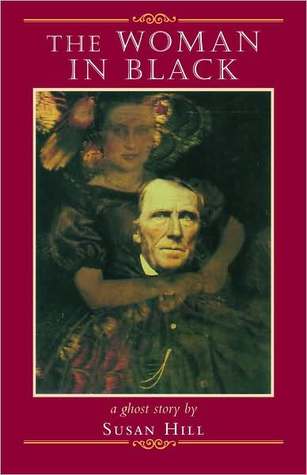
- The Woman in Black
Susan Hill
3.7 (48k) average on GoodreadsHistorical FictionShares a similar sense of creeping dread and atmospheric horror.
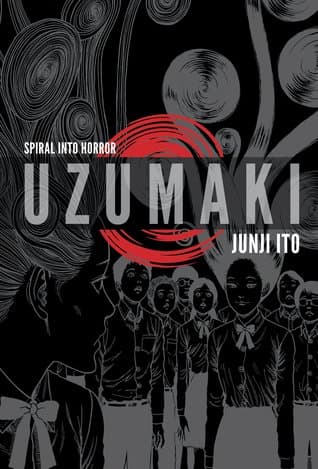
- Uzumaki
Junji Ito
4.4 (15k) average on GoodreadsFantasyFeatures unique and disturbing body horror art with a strong sense of pervasive dread.
- Harry Potter and the Sorcerer's Stone
J.K. Rowling
4.5 (7M) average on GoodreadsFantasyRescued from a miserable life under the stairs, an orphaned boy discovers he's a wizard destined for a magical school, where he uncovers a dangerous secret tied to the dark wizard who murdered his parents.
- The Hunger Games
Suzanne Collins
4.3 (6.4M) average on GoodreadsFantasyIn a future where children fight to the death on live television, Katniss Everdeen volunteers for the arena, turning a death sentence into a fight for survival and a spark of rebellion.
- 1984
George Orwell
4.2 (3.1M) average on GoodreadsPoliticsIn a future where surveillance and thought control are absolute, a man's search for truth clashes with the Party, showing that hope can be a form of rebellion.
- Divergent
Veronica Roth
4.2 (2.9M) average on GoodreadsFantasyIn a society divided by virtues, a sixteen-year-old's difference from the norm starts a rebellion that threatens her world.




Enjoyed the summary?
A summary gives you the shape of the book. The book itself has the detail, the examples and the voice.
Find Through the Woods on AmazonAs an Amazon Associate, BookBrief earns from qualifying purchases. How we're funded