
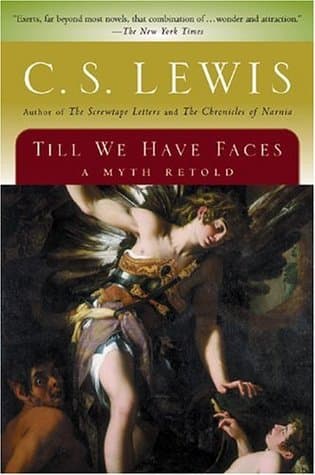
Synopsis
Covers the whole plot, including the ending.
- Difficulty
- Medium
- Pacing
- Moderate
- Mood
- Philosophical, Introspective, Melancholy, Spiritual
- Read it if
- You enjoy philosophical retellings of myths, deep character studies, and explorations of faith, love, and self-discovery.
- Skip it if
- You prefer fast-paced plots, clear-cut fantasy worlds, or avoid stories with strong spiritual and allegorical themes.
Till We Have Faces Plot Summary
Covers the whole plot, including the ending.
The Princess of Glome
Orual, the eldest princess of Glome, tells her life story, starting with her childhood in the brutal kingdom. She describes herself as ugly, overshadowed by her younger half-sister, Redival, and later by the beautiful Psyche, born from their father's third marriage. Orual's mother dies in childbirth, and her father, King Trom, is a harsh, often uncaring ruler. Orual finds comfort with Lysias, a Greek slave, who becomes her tutor and friend, teaching her philosophy and new ways of thinking. Psyche's arrival, a child of almost supernatural beauty and goodness, deeply affects Orual, who develops an intense, possessive love for her.
The Scapegoat
A plague strikes Glome, causing widespread suffering and death. The fearful and superstitious people, encouraged by the Fox and the priests of Ungit, believe the gods are angry and demand a sacrifice. The priests declare that Psyche, because of her unusual beauty and the widespread adoration she receives, has offended Ungit and must be offered to the Shadow Brute on the Mountain of the Skull. King Trom, despite his love for Psyche, is pressured by his people and the priests to agree. Orual is devastated and tries to change her father's mind and sway the people, but her efforts fail. Psyche, with a strange calm, accepts her fate.
The Mountain of the Skull
Orual, with the Fox, takes Psyche to the Mountain of the Skull for the sacrifice. The journey is full of emotional pain for Orual, who struggles with her grief and anger. Psyche remains remarkably calm, almost happy, believing she will meet a divine lover. Orual must bind Psyche to the sacrificial tree, a moment of deep agony for her. After leaving Psyche, Orual returns to Glome, filled with sorrow and a feeling of injustice. The Fox tries to comfort her with reason, but Orual's heart is set on revenge against the gods.
The Quest for Proof
Months later, unable to bear the thought of Psyche's fate, Orual defies her father and the priests, secretly returning to the Mountain of the Skull. She is determined to find Psyche's bones or proof of her death. Instead, she finds Psyche alive and well, living in a magnificent, invisible palace. Psyche describes her husband as a god and her life as one of pure happiness. However, Orual sees nothing but a desolate, rocky landscape and a crude hut. She believes Psyche is deluded, living in poverty, or worse, has become a prostitute, and that the 'god' is a common criminal.
The Lamp and the Blade
Convinced that Psyche is in mortal danger and being tricked, Orual desperately tries to persuade her sister to reveal her husband's face. Psyche, bound by a promise to her divine husband, refuses. Orual, driven by her possessive love and fear, manipulates Psyche, appealing to her love for Orual and threatening to kill herself if Psyche does not agree. Eventually, Psyche gives in. That night, Psyche takes a lamp to look at her husband, Cupid, and accidentally spills oil on him, revealing his divine form. Cupid awakens and, seeing Orual nearby, vanishes with the palace, cursing Psyche to wander as a mortal.
The Aftermath and the Fox's Departure
Orual returns to Glome, believing she has saved Psyche from a monstrous delusion, but is haunted by the brief glimpse of Cupid's divine beauty and the terrible results of her actions. She finds Glome still caught in superstition and her father's tyranny. The Fox, disappointed by Orual's actions and the perceived uselessness of reason against divine power, feels his life's work undone. He eventually asks for his freedom and leaves Glome, returning to his Greek homeland, leaving Orual feeling even more isolated and bitter. Orual vows to dedicate her life to ruling Glome fairly and writing a book of complaint against the gods.
Queen of Glome
Orual's father dies, and she becomes queen of Glome. She rules with a strong will and a firm sense of justice, changing the kingdom from a barbaric state into a more ordered society. She builds better roads, establishes fairer laws, and strengthens Glome's defenses. However, her heart grows increasingly cold and bitter, fueled by her grievance against the gods and her longing for Psyche. She becomes known as Queen Orual, the wise but distant ruler, feared more than loved. Her relationship with Redival remains tense, marked by resentment and unspoken issues.
The Journey to the Temple of Ungit
As Orual ages, her inner pain grows stronger. She decides to undertake a long and difficult pilgrimage to the Great Temple of Ungit, a journey she believes will allow her to present her formal complaint against the gods. She travels through various lands, seeing different cultures and religious practices. During her journey, she experiences a series of strange, dream-like visions and encounters. These experiences begin to subtly challenge her fixed worldview and her perception of the gods and herself, though she resists the change.
The Trial and the Mirror
At the temple, Orual experiences a deep, mystical trial. She is brought before a divine court, where her book of complaint is read. But as her words are spoken aloud, they are revealed not as a righteous accusation of the gods, but as a self-serving, possessive love that has harmed those she claimed to love most. She sees herself reflected in a clear, truthful mirror, not as the noble, suffering victim she believed herself to be, but as a monstrous, jealous figure. This vision shatters her self-deception and forces her to confront the ugliness of her own soul.
The Revelation and Transformation
In the midst of her self-revelation, Orual hears a divine voice, which she identifies as the voice of the god of the Mountain. She understands that her life-long struggle has been a misunderstanding of the divine, and that her 'love' for Psyche was deeply flawed. She realizes that she must truly know herself, 'till she has a face' that is her own, not a mask of grievance or self-pity. She sees a vision of Psyche and Cupid reunited, and understands the true nature of divine love. Orual dies shortly after this experience, but not before a final vision of divine acceptance, where she is told her complaint was accepted and changed into something beautiful.
Till We Have Faces Characters
Orual
Protagonist
The embittered, possessive, yet ultimately seeking elder sister
Orual is the narrator and central character, an 'ugly' princess of Glome who develops an intense, possessive love for her beautiful half-sister, Psyche. She is intelligent, pragmatic, and initially believes in a rational, human-centered world, heavily influenced by the Fox. Her actions are driven by a fierce, though flawed, love and a deep-seated sense of injustice against the gods. She struggles with her perceived ugliness and her inability to be loved for herself, leading to bitterness and a desire for control over those she cares for.
Relationships: Psyche (intensely possessive and ultimately flawed sisterly love); The Fox (mentor, father figure, intellectual companion); King Trom (strained, respectful, but distant father-daughter relationship); Redival (sibling rivalry, mutual resentment, distant sisterly bond); Batta (childhood nurse, source of superstitious fear and comfort)
Psyche
Supporting
The beautiful and innocent sister, beloved of the gods
Psyche is Orual's younger half-sister, famed for her extraordinary, almost divine beauty and innate goodness. She possesses a natural, unburdened spirituality and a capacity for pure, selfless love that sets her apart from the harsh world of Glome. She is initially sacrificed to the Shadow Brute but becomes the bride of Cupid. Her innocence and trusting nature make her vulnerable to Orual's manipulations, but also allow her to embrace divine love without question.
Relationships: Orual (deeply loved and trusted elder sister, despite Orual's flawed love); Cupid (divine husband and lover); King Trom (beloved daughter, sacrificed by her father); The people of Glome (adored, then feared and offered as a sacrifice)
The Fox (Lysias)
Supporting
Orual's Greek tutor, a voice of reason and philosophy
The Fox is a Greek slave who serves as Orual's tutor and the closest thing she has to a father figure. He embodies Greek philosophy and rational thought, attempting to instill logic and wisdom into Orual and counter the barbaric superstitions of Glome. He loves Orual deeply and tries to guide her with reason, but his worldview is ultimately limited by its exclusion of the divine. His departure marks a significant turning point for Orual, as she loses her anchor in pure rationality.
Relationships: Orual (mentor, father figure, intellectual companion); King Trom (slave and advisor, respected for his intellect)
King Trom
Supporting
The harsh, often indifferent King of Glome
King Trom is Orual's father and the ruler of Glome. He is a stern, often cruel, and ultimately weak king, easily swayed by the superstitions of his people and the demands of the priests. He is distant from his daughters, especially Orual, though he shows moments of gruff affection. His decision to sacrifice Psyche highlights his failings as a father and a ruler, prioritizing the stability of his kingdom over his daughter's life. He represents the barbaric, unthinking aspects of Glome's society.
Relationships: Orual (distant and often critical father); Psyche (initially beloved daughter, later sacrificed); Redival (father to Redival)
Redival
Supporting
Orual's younger, frivolous half-sister
Redival is Orual's younger half-sister, known for her frivolity, vanity, and occasional cruelty. She is jealous of Psyche's beauty and Orual's intellect, often making snide remarks. While not as central as Psyche, her character serves as a foil to Orual, highlighting Orual's greater depth and purpose, even in her bitterness. Her relationship with Orual is marked by typical sibling rivalry and a lack of true understanding.
Relationships: Orual (strained sisterly relationship, marked by jealousy and resentment); Psyche (jealous of Psyche's beauty)
Ungit
Antagonist/Divine Figure
The crude, bloodthirsty goddess of Glome
Ungit is the primary deity worshipped by the people of Glome, depicted as a crude, shapeless black stone. She is a goddess of fertility and sacrifice, demanding blood and fear. Orual initially despises Ungit as a barbaric idol, a symbol of everything she detests about Glome. However, through her spiritual journey, Orual comes to understand Ungit as a primitive, misunderstood aspect of the true divine, representing a raw, consuming love that must be refined.
Relationships: Orual (initial object of hatred and contempt, later understood as a facet of the divine); The people of Glome (worshipped through fear and sacrifice)
Cupid (the god of the Mountain)
Divine Figure
The invisible, divine husband of Psyche
Cupid is the unseen god who takes Psyche as his bride on the Mountain of the Skull. He is described as a being of immense beauty and divine power. He represents divine love and the spiritual realm, which is initially hidden from human sight and understanding. His curse upon Psyche, brought on by Orual's interference, sets in motion Psyche's wanderings and Orual's ultimate spiritual quest. He is the 'god of the Mountain' that Orual seeks to understand.
Relationships: Psyche (divine husband and lover); Orual (the object of Orual's resentment and later, her ultimate understanding)
Batta
Supporting
Orual's superstitious nurse
Batta is Orual's childhood nurse, a superstitious and gossipy woman who embodies the common fears and beliefs of the people of Glome. She frequently tells Orual and Psyche frightening tales of gods and monsters, reinforcing the dark, primitive atmosphere of the kingdom. Her character serves to highlight the pervasive influence of fear and superstition in Glome, contrasting with the Fox's rationalism and Psyche's natural faith.
Relationships: Orual (childhood nurse, source of fear and comfort); Psyche (childhood nurse)
Till We Have Faces Themes
The Nature of Love (Sacred vs. Profane)
This theme explores the destructive power of possessive, selfish love versus the freeing, selfless nature of divine love. Orual's initial 'love' for Psyche is revealed as a grasping, controlling force that ultimately harms Psyche and herself. She wants to own Psyche, to keep her safe on Orual's own terms, rather than letting Psyche follow her own divine path. This contrasts sharply with Cupid's pure, accepting love for Psyche, which allows for freedom and spiritual growth, even through suffering. The novel suggests that true love, whether human or divine, must be selfless and willing to let go. This mirrors the change of Ungit from a monstrous idol to a symbol of raw, consuming, yet ultimately transforming love. This is clearly shown when Orual forces Psyche to look at Cupid, believing she is saving her, but actually destroying Psyche's happiness.
“How can I love you, Lord, if I love you not enough to be willing to be damned for you?”
The Search for Truth and Self-Knowledge
Orual's entire journey is a search for truth, though she first believes she is seeking truth about the gods and their unfairness. The novel ultimately reveals that the deeper truth she needs to uncover is about herself. Her 'book of complaint' is exposed as proof of her own self-deception and the ugliness of her unexamined motives. The phrase 'till we have faces' means shedding masks of self-pity, grievance, and false virtue to confront one's true self, however flawed. Only through this radical self-knowledge can one truly see and understand the divine. Orual's visions and the divine trial force her to see her own motivations clearly, revealing the true face hidden beneath her perceived martyrdom.
“You are indeed he whom I have been seeking all my life. Why did you not reveal yourself before?”
The Problem of Suffering and Divine Justice
Orual struggles with the unfairness of the gods, especially in Psyche's sacrifice and the suffering that follows. She cannot reconcile the idea of good gods with the pain and cruelty she sees and experiences. Her complaint against the gods comes from her inability to understand their ways from a purely human, rational viewpoint. The novel suggests that divine justice works on a different level, one that includes suffering in a larger, ultimately good plan. Orual's eventual understanding comes from realizing that the gods are not 'just' in a human sense, but are Love itself, and that their ways, though mysterious, are always for ultimate good. Her suffering is not meaningless, but a path to deeper understanding and transformation.
“The gods are not just. But they are merciful. The gods are not just, but they are good.”
The Veil of Perception and Spiritual Blindness
A central theme is how human perception distorts reality, especially concerning the divine. Orual, at first, is spiritually blind, unable to see Psyche's palace or understand her divine marriage. She interprets all events through her own biases, fears, and rational framework, leading her to misunderstand Psyche's joy as delusion or degradation. This 'veil' of perception prevents her from seeing the true nature of reality, both human and divine. Her journey is about having this veil lifted, allowing her to see things as they truly are, rather than as she wishes or fears them to be. The moment she sees Cupid and the palace, however briefly, shatters her rational worldview and begins her spiritual awakening.
“Holy places are dark places. It is life and strength, not knowledge and words, that we get in them. Holy wisdom is not clear and thin like water, but thick and dark like blood.”
The Clash of Reason and Faith
The novel highlights the ongoing tension between the rational, philosophical approach represented by the Fox and the primitive, superstitious beliefs of Glome, particularly concerning Ungit. Orual is caught between these two worlds. The Fox's teachings give her intellectual tools but fail to address her deepest spiritual longings or the reality of the divine. The barbaric faith, while crude, at least acknowledges a greater power. Orual's journey ultimately goes beyond both, suggesting that a purely rational approach is not enough for understanding the divine, but also that blind superstition is equally flawed. A true faith must combine understanding with experience.
“The Fox had taught me to think, to use my reason. But now I saw that reason itself was a god, and a jealous god, who would not suffer me to look beyond his altars.”
Plot Devices & Literary Techniques
First-Person Narrative (Memoir)
Orual's personal account of her life and complaint against the gods
The entire novel is presented as Orual's memoir, her 'complaint' against the gods, written in her own voice. This device allows for deep immersion into Orual's psyche, revealing her biases, self-deceptions, and intense emotional landscape. It also creates dramatic irony, as the reader gradually perceives truths that Orual herself is initially blind to. The memoir structure is crucial to the climax, where Orual's written words are 'read back' to her in a divine court, revealing their true meaning and her own flawed perspective.
The Invisible Palace / Veil of Perception
A physical manifestation of spiritual blindness and the hidden divine
The invisible palace where Psyche lives with Cupid serves as a powerful symbol of Orual's spiritual blindness. Orual sees only a barren landscape and a hovel, while Psyche experiences a magnificent dwelling. This device literally illustrates the theme of perception – that the divine realm is present but inaccessible to those who lack the spiritual sight or are clouded by their own prejudices and rational limitations. It underscores the idea that belief and a receptive heart are necessary to perceive spiritual realities.
The Mirror / Self-Revelation
A symbolic tool for confronting one's true self
The mirror appears primarily in Orual's divine trial, where she is forced to see her true 'face' – her inner ugliness and the monstrous nature of her possessive love – reflected back at her. This device is pivotal for Orual's transformation, as it shatters her carefully constructed self-image as a wronged victim. It represents the painful but necessary process of self-knowledge and the stripping away of illusions, allowing her to ultimately accept her true self and thus, truly 'have a face' before the gods.
Mythological Allusion (Cupid and Psyche)
A re-telling and reinterpretation of a classical myth
C.S. Lewis reworks the ancient myth of Cupid and Psyche, using its framework to explore deeper theological and philosophical questions. By placing the story within the barbaric, pre-Christian setting of Glome and telling it from the perspective of Psyche's 'ugly' sister, Orual, Lewis provides a fresh, complex interpretation. The familiar elements of the myth (the divine marriage, the forbidden sight, the trials) are imbued with new meaning, allowing Lewis to explore themes of possessive love, divine justice, and spiritual transformation through a familiar narrative lens.
Till We Have Faces Quotes
“The gods, after all, are there, and in theelf-world, there are no atheists.”
“How can the gods love us, if they will not be known?”
“You are a goddess, Psyche, a true goddess. And I am a plain, ugly woman.”
“The sweetest thing in all my life has been the knowledge that you carry me in your heart.”
“Holy places are dark places. It is life and strength, not knowledge and words, that one must seek in them.”
“I saw well why the gods do not speak to us openly, nor show themselves. Not because they have no faces, but because we have no faces.”
“You are indeed he. For all your other names were but the names of the place where I found you.”
“The complaint was the answer.”
“Who can be good enough for the gods? No one.”
“I was to be a queen, and I must be a queen. I must be Orual.”
“You have a right to your own sorrow. And you have a right to your own way of bearing it.”
“The world is a dance, and when you dance, you are part of the dance.”
“To be loved, she must be beautiful. To be beautiful, she must be seen.”
“The highest good is not to live in truth, but to live in the love of truth.”
Quiz
10 questions on the plot and the characters. Each answer comes with a short explanation.
Question 1
What is the name of the kingdom where Orual and Psyche live?
- Pharsus
- Glome
- Thrace
- Macedon
Show answer
B. Glome The story is set in the barbaric, pre-Christian kingdom of Glome, ruled by Orual's father.
Question 2
Who is the Fox to Orual?
- Her biological father
- Her childhood friend and confidant
- Her Greek tutor and philosopher
- A wise old merchant
Show answer
C. Her Greek tutor and philosopher The Fox is Orual's Greek tutor, who introduces her to philosophical thought and provides a critical perspective on the gods and Glome's customs.
Question 3
Why is Psyche initially offered as a sacrifice to the Shadow Brute?
- She committed a crime against the king.
- The people believed her beauty angered the gods, causing a plague.
- It was a tradition for the youngest princess to be sacrificed.
- She volunteered to save her sister, Orual.
Show answer
B. The people believed her beauty angered the gods, causing a plague. The people of Glome, suffering from a plague, believed Psyche's extraordinary beauty had angered Ungit and demanded her sacrifice to the Shadow Brute.
Question 4
What does Orual initially believe Psyche's palace, given by Cupid, to be?
- A beautiful, visible structure in the valley.
- A magnificent but invisible palace, which Orual cannot see.
- A barren, rocky hillside where Psyche is suffering.
- A simple hut where Psyche is living in poverty.
Show answer
C. A barren, rocky hillside where Psyche is suffering. When Orual visits Psyche, she sees only a barren, rocky hillside, despite Psyche describing a magnificent palace. This inability to see is central to Orual's initial disbelief and accusation.
Question 5
What is the primary characteristic of Orual's love for Psyche, especially in the first part of the book?
- Selfless and protective.
- Possessive and demanding.
- Distant and indifferent.
- Envious but ultimately supportive.
Show answer
B. Possessive and demanding. Orual's love for Psyche is deeply possessive and, as she later realizes, ultimately harmful, as she seeks to control Psyche's life and happiness.
Question 6
What is the significance of the title 'Till We Have Faces'?
- It refers to the physical masks worn in religious rituals.
- It implies that humans must be beautiful to understand the gods.
- It means humans must achieve sincerity and true self-knowledge to truly see and understand the divine.
- It suggests that the gods are literally faceless and unknowable.
Show answer
C. It means humans must achieve sincerity and true self-knowledge to truly see and understand the divine. The title refers to the central theme that humans cannot truly understand the gods or their own experiences until they shed their false selves and achieve sincerity and self-knowledge, thus 'having faces' before the divine.
Question 7
Who does Orual eventually become, taking on the role after her father's death?
- The High Priestess of Ungit
- Queen of Glome
- A wandering philosopher
- A renowned warrior
Show answer
B. Queen of Glome After her father's death, Orual takes on the mantle of ruler, becoming Queen of Glome and governing effectively, though still deeply troubled internally.
Question 8
What is the ultimate realization Orual comes to about her 'complaint' against the gods?
- That the gods are truly unjust and cruel.
- That her own selfish and possessive love was the true barrier to understanding.
- That she should have fought harder against the sacrifice of Psyche.
- That the gods require absolute obedience without question.
Show answer
B. That her own selfish and possessive love was the true barrier to understanding. Through her journey and visions, Orual realizes that her 'complaint' against the gods was not truly about their injustice, but about her own possessive love and refusal to let go, which blinded her to their true nature and Psyche's happiness.
Question 9
What is the primary form of religious worship in Glome before Orual's spiritual awakening?
- Worship of the Greek pantheon.
- A sophisticated monotheistic religion.
- Primitive, fearful worship of the goddess Ungit, often involving sacrifice.
- Ancestor worship.
Show answer
C. Primitive, fearful worship of the goddess Ungit, often involving sacrifice. The people of Glome worship Ungit, a crude and terrifying goddess, characterized by fear, blood sacrifice, and a lack of clear form or compassion.
Question 10
What happens to Orual's 'book' – her written complaint against the gods – when she finally presents it?
- It is read aloud and accepted as a valid argument.
- It is revealed to be blank, or to contain only her own reflection.
- The gods commend her for her courage in writing it.
- It becomes a sacred text for the people of Glome.
Show answer
B. It is revealed to be blank, or to contain only her own reflection. In a climactic vision, Orual finds that her carefully crafted complaint is not what she thought it was; it either appears blank or reflects her own face, signifying that the problem was not with the gods, but with her own distorted perception and self-centeredness.
Till We Have Faces FAQ
What is the core premise of 'Till We Have Faces'?
The novel retells the myth of Cupid and Psyche from the perspective of Orual, Psyche's older, 'ugly' sister. It explores Orual's possessive love for Psyche, her bitter jealousy, and her decades-long journey of self-discovery and understanding of divine love, culminating in her confrontation with the gods.
Who are the main characters in the story?
The central characters are Orual (also known as Lisbeth and ultimately Psyche's true self), Psyche (the beautiful sister sacrificed to the god), and the Fox (Orual's Greek tutor and philosophical mentor). Other key figures include Bardia (the captain of the guard and Orual's loyal companion) and the Priest of Ungit.
What role does the setting of Glome play in the narrative?
Glome is depicted as a barbaric, pre-Christian kingdom, characterized by its worship of the monstrous goddess Ungit and its harsh customs. This primitive setting serves to highlight the raw, often cruel nature of human experience and provides a stark contrast to the divine beauty and order that Orual eventually glimpses.
How does Orual's initial understanding of love evolve throughout the book?
Initially, Orual conceives of love as a possessive, self-serving emotion, particularly evident in her love for Psyche. Over time, through suffering and reflection, she comes to understand a more selfless, divine form of love, realizing her own love was often a disguised form of hatred and control.
What is the significance of the title 'Till We Have Faces'?
The title refers to the idea that humans cannot truly understand or accuse the gods until they have developed their own authentic 'faces' or identities, characterized by sincerity and self-awareness. It implies a need for honesty and self-knowledge before one can truly perceive or relate to the divine.
What is the true identity of the Shadowbrute, and how does it relate to Cupid?
The Shadowbrute is the monstrous, unseen god to whom Psyche is sacrificed, perceived by Orual as a terrifying beast. It is later revealed to be Cupid, the god of love, whose true form is too glorious for mortal eyes to perceive directly, especially by those like Orual who are not yet prepared.
How does the character of Ungit represent a distorted form of divinity?
Ungit, the crude, faceless goddess worshipped in Glome, embodies a barbaric, demanding, and ultimately false conception of the divine. She represents a god created in humanity's own fallen image, reflecting their greed and fear, rather than true, benevolent divinity.
What is the symbolic meaning of Orual wearing a veil for most of her life?
Orual's veil symbolizes her hidden, unacknowledged self and her unwillingness to truly face herself or the world. It represents her self-deception, her perceived ugliness, and her inability to be transparent and sincere, both with others and with the gods.
How does the Fox's Greek philosophy clash with the native Gloman religion, and what is its ultimate limitation?
The Fox's rational, humanistic Greek philosophy provides Orual with intellectual tools and a moral framework, clashing with the superstitious, bloodthirsty Gloman religion. However, its limitation is its inability to grasp the supernatural and the divine, leaving Orual's spiritual yearnings unfulfilled until her direct encounters with the gods.
Analyze Orual's 'love' for Psyche in the early parts of the book.
Orual's early 'love' for Psyche is deeply pathological, marked by possessiveness, jealousy, and a desire for control. She sees Psyche as an extension of herself, and her actions, though seemingly driven by affection, often cause Psyche immense pain and prevent her from developing her own life.
How does Orual's physical 'ugliness' impact her psychological development?
Orual's perceived ugliness fosters deep insecurity, bitterness, and a sense of isolation. It fuels her jealousy of Psyche's beauty and contributes to her self-pity and inability to believe in her own worth, shaping her identity and her interactions with others.
Discuss the psychological concept of projection as it relates to Orual's view of the gods.
Orual initially projects her own human flaws, particularly her cruelty and demanding nature, onto the gods, seeing them as capricious and unjust. Her accusations are often reflections of her own unacknowledged sins, a psychological defense mechanism that prevents her from seeing her true self.
What is the significance of Orual's multiple names (Orual, Lisbeth, Psyche)?
Orual's journey involves shedding false identities and embracing her true self. 'Orual' is her earthly, flawed self; 'Lisbeth' is the name she takes as queen, a more hardened persona. Ultimately, she realizes she is 'Psyche' – the soul, symbolizing her spiritual transformation and union with the divine, embodying the suffering and redemption of the soul.
How does the novel reinterpret the classical Cupid and Psyche myth?
Lewis shifts the focus from Psyche's direct experience to Orual's perspective, emphasizing the journey of the 'unlovely' sister and her spiritual transformation. It explores themes of envy, sacrifice, and divine love through Orual's flawed humanity, offering a profound psychological and theological commentary on the original myth.
What is the novel's stance on the nature of divine love versus human love?
The book argues that true divine love is self-giving and ultimately demands the surrender of the self, even if it appears cruel from a human perspective. Human love, especially Orual's early love, is often possessive and self-serving, and only through purification can it become a reflection of divine love.
How does Lewis challenge the reader's perception of 'justice' through Orual's complaints against the gods?
Lewis presents Orual's heartfelt, yet ultimately misguided, accusations against the gods as a way to explore the limits of human understanding of divine justice. Her grievances, while emotionally valid, are shown to be rooted in her own limited perspective and unacknowledged faults, prompting the reader to question their own assumptions about fairness and divine will.
What is the final revelation Orual receives about her life and her love for Psyche?
In her final vision, Orual realizes that her own soul and Psyche's are inseparable, and that her 'complaint' against the gods was actually a complaint against herself. She understands that she was always Psyche, and that her 'love' for Psyche was often a destructive, veiled self-love, and that the gods' actions were ultimately for her purification and union with the divine.
What is the significance of the Priest of Ungit's statements about the gods 'eating' sacrifice?
The Priest's crude understanding reflects a primitive, fear-based theology where gods are seen as demanding and consuming. While seemingly barbaric, it hints at a deeper truth: that true devotion and surrender involve a 'sacrifice' of the self, which, when offered sincerely, is 'eaten' or accepted by the divine, leading to transformation.
About the author
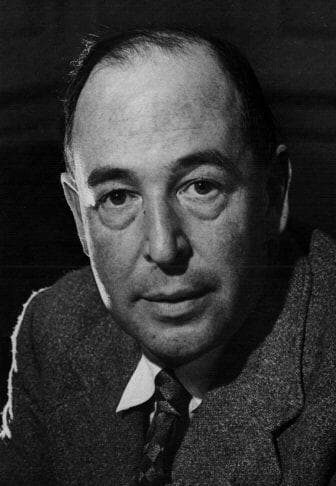
Clive Staples Lewis was a British writer, literary scholar, and Anglican lay theologian. He held academic positions in English literature at both Oxford University and Cambridge University. He is best known as the author of The Chronicles of Narnia, but he is also noted for his other works of fiction, such as The Screwtape Letters and The Space Trilogy, and for his non-fiction Christian apologetics, including Mere Christianity, Miracles, and The Problem of Pain.
Similar books
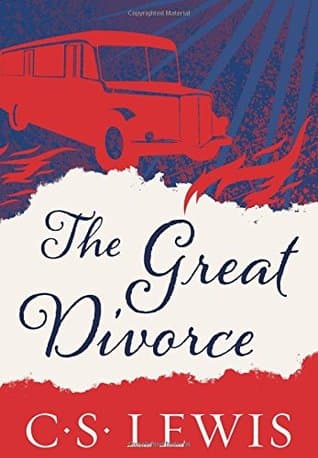
- The Great Divorce
C.S. Lewis
4.3 (109k) average on GoodreadsFantasyExplores theological concepts and the nature of good and evil through allegorical journeys.
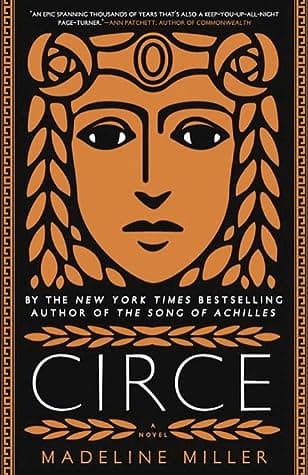
- Circe
Madeline Miller
4.3 (343k) average on GoodreadsFantasyMyth retelling from a female character's perspective, focusing on her inner life and struggles.
- A Wrinkle in Time
Madeleine L'Engle
4.0 (1.1M) average on GoodreadsFantasyBlends fantasy with profound spiritual and philosophical themes about love and sacrifice.
- Harry Potter and the Sorcerer's Stone
J.K. Rowling
4.5 (7M) average on GoodreadsFantasyRescued from a miserable life under the stairs, an orphaned boy discovers he's a wizard destined for a magical school, where he uncovers a dangerous secret tied to the dark wizard who murdered his parents.
- The Hunger Games
Suzanne Collins
4.3 (6.4M) average on GoodreadsFantasyIn a future where children fight to the death on live television, Katniss Everdeen volunteers for the arena, turning a death sentence into a fight for survival and a spark of rebellion.
- 1984
George Orwell
4.2 (3.1M) average on GoodreadsPoliticsIn a future where surveillance and thought control are absolute, a man's search for truth clashes with the Party, showing that hope can be a form of rebellion.




Enjoyed the summary?
A summary gives you the shape of the book. The book itself has the detail, the examples and the voice.
Find Till We Have Faces on AmazonAs an Amazon Associate, BookBrief earns from qualifying purchases. How we're funded