
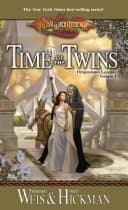
Synopsis
Covers the whole plot, including the ending.
- Difficulty
- Medium
- Pacing
- Moderate
- Mood
- Epic, Dark, Dramatic, Suspenseful, Melancholy
- Read it if
- You enjoy epic fantasy with time travel, moral dilemmas, and powerful mage characters, especially if you're a fan of the Dragonlance Chronicles.
- Skip it if
- You prefer standalone stories or dislike intricate plots involving gods, magic, and profound character betrayals.
Time of the Twins Plot Summary
Covers the whole plot, including the ending.
The Twin's Burden
Following the War of the Lance, Caramon Majere, the warrior twin, is in Palanthas, burdened by his brother Raistlin's increasing isolation and power. Raistlin, now an Archmage, has settled in the Tower of High Sorcery, surrounded by dark creatures and pursuing a sinister agenda. Caramon, despite his own physical and emotional decline from Raistlin's coldness and the perceived futility of his own life, remains loyal and concerned for his brother's soul. He observes Raistlin's growing obsession and the dark aura that now constantly surrounds him, fearing that Raistlin is lost to evil and will destroy himself and potentially the world.
Crysania's Crusade
Crysania, a devout and ambitious cleric of Paladine, arrives in Palanthas with a mission: to challenge and redeem the dark Archmage Raistlin. Believing that even Raistlin's soul can be saved through good, she confronts him in the Tower of High Sorcery. Raistlin sees her as a tool for his own plans. He manipulates her faith, subtly drawing her into his schemes with promises of understanding and power, while secretly planning to use her purity and connection to the gods for his own ends. Her presence further complicates Caramon's attempts to reach his brother, as Crysania's unwavering belief in her ability to save Raistlin blinds her to his true, darker intentions.
The Pact with Par-Salian
Desperate to save Raistlin, Caramon seeks advice from Par-Salian, the Head of the Conclave of Wizards. Par-Salian reveals that Raistlin plans to challenge Takhisis, the Queen of Darkness, and take her power by traveling back to the time of the Cataclysm in Istar. To prevent this event, Par-Salian agrees to send Caramon, along with the kender Tasslehoff Burrfoot, back in time. Their mission is to stop Raistlin from entering the Portal to the Abyss. This journey is dangerous, as changing history could have dire consequences, and Caramon struggles with the moral dilemma of potentially destroying his brother to save the world.
Journey to Istar
Caramon, Tasslehoff, and Crysania, who insists on accompanying them to continue her mission, are transported back in time to the bustling, decadent city of Istar, just days before the Cataclysm. The city is a morally corrupt place of religious fanaticism and self-indulgence, ruled by the Kingpriest. The trio must navigate this alien past, trying to blend in while searching for Raistlin. Tasslehoff's kender curiosity often leads them into comical, yet dangerous, situations, while Caramon struggles with the scale of the impending disaster and the knowledge of the city's doomed fate. Crysania continues her attempts to sway Raistlin, unaware of the true depth of his plans.
Raistlin's Deception in Istar
In Istar, Raistlin, disguised and using an alias, has already begun to subtly influence the Kingpriest and the city's inhabitants. He exploits their religious fervor and the Kingpriest's megalomania, feeding into the belief that the Kingpriest is destined to become a god. This manipulation creates the perfect conditions for his plan to enter the Portal to the Abyss. He uses his magic to gain trust and power, all while preparing for the moment of the Cataclysm, which he intends to use as a cover for his ultimate objective. His presence in Istar is a dark shadow, unseen by most, but felt by those with keen senses.
The Kingpriest's Hubris
The Kingpriest of Istar, driven by an insatiable hunger for power and a distorted interpretation of divine will, prepares for a grand ceremony where he intends to demand godhood from the true gods. Despite warnings from various sources, including subtle interventions orchestrated by Raistlin to serve his own ends, the Kingpriest remains unyielding in his ambition. His arrogance and the collective sin of Istar reach a critical point, leading directly to the gods' decision to unleash the Cataclysm. The city hums with a false sense of security and impending doom, a tension Caramon and Tasslehoff keenly feel.
The Cataclysm
The Cataclysm strikes Istar with devastating force. Mountains crumble, seas boil, and the land is reshaped in a display of divine wrath. Amidst the chaos and destruction, Raistlin makes his move. He uses the upheaval as a cover to access the ancient, hidden Portal to the Abyss, which is now weakened and exposed. Crysania, still believing in his redemption, attempts to follow him, while Caramon and Tasslehoff desperately try to intervene, understanding the true stakes involved. The world around them is literally falling apart as they confront Raistlin in the midst of the gods' fury.
Through the Portal
As Raistlin steps through the weakened Portal to the Abyss, Crysania, in her unwavering devotion, follows him, believing she can still save his soul within the realm of the Queen of Darkness. Caramon, in a desperate attempt to stop his brother, also plunges into the terrifying void. Tasslehoff, ever the curious kender, accidentally falls in behind them, unaware of the true nature of the realm they are entering. They find themselves in a distorted, nightmarish landscape, a reflection of Takhisis's dark will, where reality is warped and dangerous. Their journey into the Abyss has begun.
The Nightmare of the Abyss
Inside the Abyss, the companions immediately face the horrifying reality of Takhisis's domain. Raistlin, now seemingly more powerful than ever, begins to enact his plan to challenge the Queen of Darkness. Crysania, despite the terrifying surroundings, maintains her faith, though it is tested by the malevolent forces at play. Caramon struggles to protect both Crysania and Tasslehoff, while also trying to understand Raistlin's intricate and dangerous game. They encounter various demonic entities and illusions, each designed to test their resolve and tempt them towards despair or corruption, as Takhisis becomes aware of Raistlin's intrusion.
Crysania's Sacrifice
As Raistlin draws closer to Takhisis's throne, he uses Crysania's purity and divine connection as a shield and a source of power. In a confrontation with the forces of the Abyss, Crysania is gravely wounded, sacrificing herself to protect Raistlin or to further his path, depending on her perspective. Her injuries are severe and potentially fatal, highlighting the true cost of Raistlin's ambition and the danger of the Abyss. Caramon is devastated by her suffering, feeling a renewed sense of urgency to stop Raistlin, not just for the world, but for the lives his brother is carelessly destroying.
Caramon's Desperate Choice
With Crysania dying and Raistlin about to confront Takhisis, Caramon finally confronts his brother. He witnesses the full extent of Raistlin's cold ambition and the terrible price he is willing to pay for power. Caramon realizes that Raistlin's plan to take Takhisis's place would not save the world, but merely replace one evil with another, potentially worse one. Faced with the destruction of everything he holds dear, Caramon must make the ultimate choice: allow Raistlin to proceed and condemn the world, or betray his brother and attempt to stop him, knowing it may mean Raistlin's demise.
The False Victory and the True Horror
Raistlin finally confronts Takhisis, believing he can defeat her and become a god. However, the Abyss itself proves to be a more formidable opponent than he anticipated. He realizes, too late, the true horror of his plan: by defeating Takhisis, he would not become a benevolent god, but would inherit her role as the Queen of Darkness, perpetuating evil in a new form. This revelation is a crushing blow to his ambition, as he faces the prospect of an eternity of malevolence. Caramon, observing this, understands the depth of Raistlin's delusion and the catastrophic outcome he narrowly averted.
Raistlin's Retreat
Seeing the true, horrifying outcome of his ambition, Raistlin is momentarily shaken. Caramon, seizing this moment of vulnerability, appeals to the last vestiges of good and his brother's intelligence. He explains the futility of Raistlin's path, not through moral pleas, but by laying bare the logical and inevitable conclusion of his actions: eternal damnation as a replacement evil. With Crysania's life hanging in the balance, Raistlin, for the first time, truly understands the depth of his folly. He agrees to abandon his plan to conquer the Abyss, deciding to retreat.
Return from the Abyss
Raistlin, Caramon, and Tasslehoff, carrying the gravely wounded Crysania, escape the Abyss, though not without further peril. They are changed by their experiences within Takhisis's realm. Crysania is near death, her faith tested to its limits. Raistlin is humbled, his ambition tempered by the terrifying glimpse of his potential future. Caramon is exhausted but relieved, having saved his brother from an ultimate evil, even if Raistlin's soul remains shadowed. Tasslehoff, resilient, provides moments of levity despite the grim circumstances, as they return to their own time, forever marked by their journey.
The Aftermath and Lingering Shadows
Back in their own time, the immediate aftermath is somber. Crysania is brought to the healers, her fate uncertain. Raistlin, though he has retreated from the Abyss, is still a powerful and dangerous mage, but a subtle change is evident in him – a glimmer of understanding, if not outright remorse. Caramon, though triumphant in stopping his brother's world-ending plan, is left with the enduring burden of their complex relationship and the knowledge of the darkness Raistlin still harbors. The events of their journey through time and the Abyss will continue to shape their lives and the fate of Krynn.
Time of the Twins Characters
Raistlin Majere
Protagonist/Antagonist
A powerful, ambitious archmage seeking godhood.
Raistlin is a brilliant, sickly mage, marked by golden skin, an hourglass pupil, and a constant cough, a consequence of his test in the Tower of High Sorcery. Driven by an insatiable hunger for power and a desire to overcome his physical weakness and mortality, he is cold, calculating, and manipulative. He sees the world as a tool for his ambition, even those closest to him. Despite his dark path, a flicker of his past self and a complex relationship with his twin, Caramon, remain.
Relationships: Caramon Majere (Twin brother; Raistlin views Caramon as weak but also as a last anchor to his humanity, often manipulating him.); Crysania (A tool for his ambition, he manipulates her faith and power for his own ends, though her sacrifice affects him.); Tasslehoff Burrfoot (A nuisance he tolerates, often used as an unwitting distraction.)
Caramon Majere
Protagonist
Raistlin's strong, loyal, but often despairing warrior twin.
Caramon is Raistlin's physically imposing twin brother, a skilled warrior who is loyal to a fault. He is kind-hearted and emotional, often struggling with feelings of inadequacy compared to Raistlin's magical brilliance. His primary motivation is to save his brother's soul from the encroaching darkness. He is prone to despair and self-pity when he feels he is failing Raistlin, but his deep love and determination drive him to extraordinary lengths.
Relationships: Raistlin Majere (Twin brother; Caramon's deepest bond and greatest burden, he desperately tries to save Raistlin's soul.); Tasslehoff Burrfoot (Close friend and companion, often exasperated by Tasslehoff but relies on his loyalty.); Crysania (Initially wary, he becomes protective of her, especially in the Abyss.)
Crysania
Supporting
A beautiful, devout cleric of Paladine with a mission to redeem Raistlin.
Crysania is a young, exceptionally beautiful, and fiercely devout cleric of Paladine. She possesses unwavering faith and a strong sense of divine mission, believing she can redeem even the darkest souls, including Raistlin's. While pure of heart, she can be naive and easily manipulated, blinded by her own conviction and a desire for glory in the eyes of her god. She is courageous but lacks the worldly wisdom to fully comprehend Raistlin's true malevolence.
Relationships: Raistlin Majere (Her divine mission is to redeem him; she becomes a pawn in his schemes.); Caramon Majere (Initially dismissive, she grudgingly accepts his protection, and he becomes protective of her.)
Tasslehoff Burrfoot
Supporting
A curious and often oblivious kender companion.
Tasslehoff is a kender, a small, childlike race known for their insatiable curiosity, penchant for 'borrowing' (which they call 'finding'), and inability to understand fear or malice. He is loyal to his friends, particularly Caramon, and provides much-needed comic relief. Despite his apparent naivete, his unique kender logic and accidental heroism often prove invaluable in dire situations. He views time travel and the Abyss as exciting adventures.
Relationships: Caramon Majere (Close friend and companion, often exasperating but deeply loyal.); Raistlin Majere (A powerful wizard he tolerates, sometimes unintentionally hindering his plans.)
Par-Salian
Supporting
The Head of the Conclave of Wizards, who reveals Raistlin's true plan.
Par-Salian is the powerful and wise Head of the Conclave of Wizards, a master of White Robe magic. He is deeply concerned with the balance of magic and the welfare of Krynn. He possesses vast knowledge of history and magic, and it is he who understands the true, catastrophic nature of Raistlin's ambition to challenge Takhisis. He is pragmatic and decisive, willing to take extreme measures, like sending Caramon back in time, to prevent a greater evil.
Relationships: Caramon Majere (Gives Caramon his mission and the means to travel through time.)
Kingpriest of Istar
Antagonist
The megalomaniacal ruler of Istar whose hubris brings about the Cataclysm.
The Kingpriest is the absolute ruler of Istar, a figure consumed by religious zealotry and an insatiable lust for power. He believes himself to be the gods' chosen representative and, by the time of the Cataclysm, demands to be elevated to godhood himself. His arrogance, moral corruption, and insistence on punishing all who do not conform to his narrow worldview ultimately provoke the gods' wrath. He is a symbol of unchecked power and corrupted faith.
Relationships: Raistlin Majere (Unwittingly manipulated by Raistlin to further the mage's plans.)
Takhisis, the Queen of Darkness
Antagonist
The primary deity of evil and the ultimate target of Raistlin's ambition.
Takhisis is the five-headed dragon goddess, the ultimate evil deity in the world of Krynn. She embodies darkness, chaos, and destruction. Though not directly present for much of the narrative, her influence is pervasive, and her realm, the Abyss, is the ultimate destination and battleground for Raistlin's ambition. She is the source of all evil magic and the antithesis of good, representing the power Raistlin seeks to usurp.
Relationships: Raistlin Majere (Her would-be usurper; she is the ultimate enemy Raistlin seeks to overcome.)
Fizban (Paladine)
Mentioned
The absent, yet ever-present, god of good.
Fizban, later revealed to be an avatar of Paladine, the chief god of good, is not a direct character in this book but his presence is felt through Crysania's faith and the narrative's underlying themes of good versus evil. He represents the divine force that opposes Takhisis and whose intervention, through the Cataclysm, sets the stage for much of the story's historical context. His indirect influence serves as a moral counterpoint to Raistlin's dark ambition.
Relationships: Crysania (Her divine patron and source of her faith.)
Time of the Twins Themes
The Nature of Good and Evil
The novel explores the blurred lines and complexities of good and evil. Raistlin, despite his dark actions, believes he is acting for a greater good by seeking to control evil, showing how ambition can be twisted. Crysania embodies absolute good, yet her naivete makes her a pawn for evil. Caramon struggles with the evil in his brother while still clinging to hope for his redemption. The Cataclysm is presented as a divine act of justice, raising questions about the righteousness of such widespread destruction. The Abyss reveals that simply replacing one evil with another does not create good, forcing Raistlin to confront the true, unchanging nature of darkness.
“There are no easy answers in this world, Caramon. Only choices, and their consequences.”
Brotherly Love and Sacrifice
The core of the story revolves around the profound, often difficult, bond between Raistlin and Caramon. Caramon's entire motivation is driven by his deep, unconditional love for his twin, even when Raistlin is at his most cruel and manipulative. He is willing to sacrifice his own life, happiness, and even potentially his moral compass to save Raistlin's soul. Raistlin, in turn, harbors a complex, unspoken affection for Caramon, evident in moments where he protects his brother despite his overarching ambition. This theme highlights the enduring power of family ties, even in the face of overwhelming darkness, and the ultimate sacrifice required to truly save someone.
“I will not let you go, brother. Not even to hell itself.”
Ambition and Its Corrupting Influence
Raistlin's character is an example of unchecked ambition. His desire for power, stemming from a perceived weakness and a fear of mortality, drives him to challenge the Queen of Darkness herself. The novel illustrates how ambition, even when initially cloaked as 'controlling' evil, corrupts the individual, leading to manipulation, betrayal, and a disregard for life. The Kingpriest of Istar is a parallel, less powerful, example of ambition leading to hubris and destruction. Raistlin's ultimate realization in the Abyss is that his ambition would not lead to liberation, but to eternal enslavement as the new Queen of Darkness, a terrifying consequence.
“Power is a hungry beast, Caramon. It devours all who seek to master it.”
Faith and Redemption
Crysania embodies faith, believing wholeheartedly in the power of her god, Paladine, to redeem any soul, no matter how dark. Her journey tests her faith, as she is confronted with Raistlin's evil and the horrors of the Abyss. The novel questions whether faith alone is enough to save a soul or if personal choice and understanding are also required. While Crysania's faith is ultimately shattered and reformed, it is Caramon's unwavering love and Raistlin's self-realization that ultimately lead to his retreat, suggesting that redemption is a complex interplay of internal and external forces, not simply a divine decree.
“My faith is a shield, Raistlin. It will protect me, even in your darkness.”
The Weight of History and Prophecy
The novel is steeped in the history of Krynn, particularly the Cataclysm, an important historical event that the characters revisit and attempt to manipulate. Prophecy and destiny are important, as Raistlin attempts to fulfill or alter his own dark destiny. Caramon struggles with the knowledge of past events, knowing the inevitable doom of Istar while being unable to prevent it. This theme explores the idea of predetermined fate versus free will, and how knowledge of the past can be both a burden and a tool. The act of time travel highlights the fragility and interconnectedness of historical events.
“Some things are meant to be, Caramon. It is not always our place to change them.”
Plot Devices & Literary Techniques
Time Travel
A magical mechanism allowing characters to journey to the past.
Time travel is a central plot device, enabling Caramon, Tasslehoff, and Crysania to go back to the time of the Cataclysm in Istar. This device not only allows them to confront Raistlin at a critical juncture in his plan but also provides a vivid historical backdrop, immersing the reader in a pivotal moment of Krynn's history. It creates tension through the characters' knowledge of the impending doom and the moral dilemmas of altering the past, while also serving as the primary means to prevent Raistlin's world-ending ambition.
The Portal to the Abyss
A magical gateway to the realm of Takhisis, the Queen of Darkness.
The Portal to the Abyss serves as the ultimate objective for Raistlin and the gateway to the story's climax. It is a powerful, ancient magical construct that allows passage into the domain of Takhisis. Its weakening during the Cataclysm provides Raistlin with his window of opportunity. As a plot device, it represents the point of no return for Raistlin's ambition, a physical manifestation of his descent into ultimate evil, and the arena for the final confrontation between the brothers and the forces of darkness.
The Cataclysm
A divine catastrophe that reshaped the world of Krynn.
The Cataclysm, a historical event from Dragonlance lore, is brought to life as a plot device. It serves as the dramatic backdrop for Raistlin's time-traveling scheme, its chaos providing the perfect cover for his entry into the Abyss. The Kingpriest's hubris and the destruction of Istar are not just historical details but actively drive the narrative. It emphasizes the power of the gods, the consequences of mortal arrogance, and creates an environment of extreme peril and urgency for the protagonists as they race against time and divine wrath.
Raistlin's Illness and Curse
The physical and magical ailments that define Raistlin's existence.
Raistlin's persistent cough, golden skin, and hourglass pupils are not merely character traits but crucial plot devices. His physical weakness and the curse of his magic fuel his ambition and drive to transcend mortality, making him seek ultimate power. This ongoing struggle provides a sympathetic, albeit dark, motivation for his actions. It also serves as a constant reminder of the price of his magic and his mortality, making his pursuit of godhood a desperate, personal quest that shapes his decisions and interactions throughout the narrative.
Time of the Twins Quotes
“All things change. That is the first law of the universe.”
“The greatest gift a brother can give another is to let him be himself.”
“Power corrupts. Absolute power corrupts absolutely. Even a small taste of it can change a man.”
“Hope is a fragile thing, easily broken, but without it, we are truly lost.”
“Sometimes, the hardest battles are fought not with swords or spells, but within one's own heart.”
“To truly understand someone, you must walk a mile in their shoes, even if those shoes lead to darkness.”
“The past is never truly gone. It echoes in the present and shapes the future.”
“There are some choices from which there is no turning back, no matter how much you might wish for it.”
“Love can be a weakness, a vulnerability, but it can also be the greatest strength of all.”
“Even the most powerful magic has its limits, and often, those limits are defined by the mage himself.”
“Sometimes, the only way to save someone is to let them go.”
“The path to greatness is often paved with solitude and sacrifice.”
“What is life without purpose? A mere existence, a shadow of what could be.”
“Fear is a powerful weapon, but courage is its only true counter.”
Quiz
10 questions on the plot and the characters. Each answer comes with a short explanation.
Question 1
Which city is the dreaded Tower of High Sorcery located in, where Raistlin Majere is sequestered?
- Solace
- Palanthas
- Krynn
- Tarsis
Show answer
B. Palanthas The synopsis explicitly states that Raistlin is sequestered in the Tower of High Sorcery in Palanthas.
Question 2
What is Raistlin Majere's primary ambition as described in the synopsis?
- To restore the glory of Paladine
- To conquer the darkness and bring it under his control
- To escape the Tower of High Sorcery
- To reunite with his twin brother, Caramon
Show answer
B. To conquer the darkness and bring it under his control The synopsis states Raistlin 'weaves a plan to conquer the darkness—to bring it under his control.'
Question 3
Who is the cleric of Paladine who attempts to lead Raistlin from the darkness, but is blind to his designs?
- Laurana
- Kitiara
- Crysania
- Goldmoon
Show answer
C. Crysania Crysania is identified as 'a beautiful and devoted cleric of Paladine, who tries to use her faith to lead Raistlin from the darkness.'
Question 4
What is Caramon's initial motivation for traveling back in time?
- To prevent the War of the Lance
- To seek a powerful magical artifact
- To save Raistlin's soul
- To warn the people of Istar about the Cataclysm
Show answer
C. To save Raistlin's soul The synopsis states Caramon 'will make his stand to save Raistlin’s soul. Or so he believes.'
Question 5
To which historical event and location does Caramon travel back in time?
- The founding of Solace, before the Age of Despair
- The doomed city of Istar, in the days before the Cataclysm
- The early days of the War of the Lance, in Palanthas
- The time of the Graygem's creation, in Ergoth
Show answer
B. The doomed city of Istar, in the days before the Cataclysm Caramon 'travels back in time to the doomed city of Istar in the days before the Cataclysm.'
Question 6
Who accompanies Caramon on his journey back in time?
- Sturm Brightblade
- Tasslehoff Burrfoot
- Tanis Half-Elven
- Riverwind
Show answer
B. Tasslehoff Burrfoot The synopsis mentions Caramon, 'together with the ever-present kender Tasslehoff,' in Istar.
Question 7
What is the relationship between Raistlin and Caramon Majere?
- They are unrelated companions
- They are master and apprentice
- They are twin brothers
- They are sworn enemies
Show answer
C. They are twin brothers The synopsis refers to Caramon as 'Raistlin’s twin'.
Question 8
What is Crysania's main flaw or misconception regarding Raistlin's intentions?
- She underestimates his magical power.
- She believes he is truly seeking redemption, not control.
- She is unaware of his connection to Caramon.
- She fears the darkness more than she understands it.
Show answer
B. She believes he is truly seeking redemption, not control. The text states Crysania 'is blind to his shadowed designs, and he draws her slowly into his neatly woven trap.' This implies she misinterprets his intentions, believing she can lead him from darkness when he is actually seeking control.
Question 9
What significant historical event has just concluded, according to the opening of the synopsis?
- The Age of Dreams
- The Dragon Purge
- The War of the Lance
- The Cataclysm
Show answer
C. The War of the Lance The synopsis opens with, 'The War of the Lance has ended, and the darkness has passed. Or has it?'
Question 10
Based on the synopsis, what is the underlying thematic tension regarding 'darkness' in the story?
- Whether darkness can ever truly be defeated or merely contained.
- The conflict between confronting darkness and embracing it for power.
- The literal struggle against creatures of evil versus internal moral battles.
- The cyclical nature of darkness returning after periods of peace.
Show answer
B. The conflict between confronting darkness and embracing it for power. The synopsis highlights Raistlin's plan 'to conquer the darkness—to bring it under his control' and Caramon's desire to 'save Raistlin's soul' from this darkness, directly contrasting the idea of using darkness for power versus seeking redemption from it.
Time of the Twins FAQ
What is the central conflict driving the plot of 'Time of the Twins'?
The central conflict revolves around the archmage Raistlin Majere's ambitious plan to travel back in time to the Age of Despair, specifically the time before the Cataclysm, to challenge and defeat the dark goddess Takhisis. His ultimate goal is to usurp her power and become a god himself, a plan his brother Caramon and the cleric Crysania desperately try to thwart or understand.
Who are the main protagonists, and what are their primary motivations?
The main protagonists are Raistlin Majere, driven by an insatiable hunger for power and a desire to escape his mortal frailty; Caramon Majere, motivated by an unwavering love for his twin brother and a desperate hope to save Raistlin's soul; and Crysania, a devout cleric of Paladine, who believes she can redeem Raistlin through faith and lead him to the light, though she is tragically manipulated.
What significant historical event from Krynn's past does the story heavily feature?
The story heavily features the Cataclysm, specifically the period immediately preceding it and its devastating aftermath. Raistlin, Caramon, and Tasslehoff travel back to the doomed city of Istar just before the fiery meteor strikes, giving readers a firsthand look at the arrogance of the Kingpriest and the divine wrath that reshaped Krynn.
How does the relationship between Raistlin and Caramon evolve in this book?
Their relationship is pushed to its breaking point. Caramon's long-standing role as Raistlin's protector and anchor is challenged as he confronts the full extent of his brother's ambition and ruthlessness. Raistlin, in turn, exploits Caramon's love, constantly testing his loyalty and resolve, ultimately pushing Caramon towards a realization of Raistlin's true, unyielding path.
What role does the kender Tasslehoff Burrfoot play in the narrative?
Tasslehoff serves as both comic relief and an unexpected catalyst for events. His innate curiosity and inability to grasp the gravity of situations often lead to humorous escapades, but also inadvertently provide crucial information or create unexpected diversions that sometimes aid, and other times hinder, Caramon's efforts to save Raistlin.
What is the significance of the Tower of High Sorcery in Palanthas to Raistlin's plans?
The Tower of High Sorcery in Palanthas is Raistlin's base of operations and a focal point for his dark magic. It's where he studies ancient texts, conducts forbidden rituals, and ultimately prepares his temporal spell to travel to the past. Its dark reputation and the nameless creatures within reflect Raistlin's own descent into powerful, dangerous magic.
How does Raistlin manipulate Crysania, and what is her ultimate fate in this book?
Raistlin manipulates Crysania by feigning spiritual openness and allowing her to believe her faith can save him, even as he exploits her devotion for his own ends. He uses her healing magic to sustain his fragile body and her presence to gain access to the past. Tragically, Crysania is severely injured and blinded by the magical energies of the Cataclysm, becoming a pawn in Raistlin's grand scheme.
What specific magical artifact is crucial for Raistlin's time travel, and what are its origins?
The magical artifact crucial for Raistlin's time travel is the Device of Time Journeying, created by the eccentric gnome wizard Par-Salian. It is a complex and dangerous contraption that allows passage through different eras of Krynn's history, and Raistlin uses his vast magical knowledge to master its operation for his own nefarious purposes.
Beyond the Cataclysm, what other historical event or character from Krynn's past does Raistlin seek to interact with?
Raistlin primarily seeks to interact with the Kingpriest of Istar, whose hubris and attempts to force the world into his vision of purity ultimately provoked the Cataclysm. By observing the Kingpriest and the events leading to the Cataclysm, Raistlin gains crucial insights for his own plan to challenge the gods.
Analyze Raistlin's psychological motivations for seeking godhood, beyond simple power.
Raistlin's quest for godhood stems from a deep-seated fear of his own mortality and physical frailty, exacerbated by his magical consumption and chronic illness. He views godhood as the ultimate escape from the limitations of his body and the perceived weakness of his human existence, driven by an intellectual arrogance that believes he can wield divine power more effectively than the current gods.
How does Caramon's identity and self-worth tie into his relationship with Raistlin?
Caramon's identity is heavily intertwined with his role as Raistlin's protector and the stronger twin. He often defines himself by his ability to care for Raistlin. This dependence makes it incredibly difficult for him to confront Raistlin's malevolence, as doing so threatens to dismantle his core sense of purpose and self-worth.
Discuss Crysania's psychological blind spots regarding Raistlin and her unwavering faith.
Crysania's unwavering faith, while admirable, creates a significant psychological blind spot. She projects her ideals of redemption onto Raistlin, seeing him as a lost soul rather than an inherently ambitious and manipulative individual. Her conviction that faith can overcome any darkness prevents her from truly recognizing Raistlin's true intentions until it is tragically too late.
In what ways does Raistlin exhibit traits of a narcissist or megalomaniac?
Raistlin exhibits strong traits of both narcissism and megalomania. He possesses an inflated sense of self-importance, believing himself superior to others and destined for greatness. His disregard for the well-being of others, including his own brother and Crysania, and his unwavering pursuit of ultimate power at any cost, are hallmark signs of these psychological disorders.
Is Raistlin truly evil, or is he a tragic figure driven by circumstance and ambition?
This is a central debate. While Raistlin commits undeniably evil acts and causes immense suffering, some argue he is a tragic figure, cursed by his physical weakness and seduced by the temptations of power offered by the Staff of Magius and the Black Robes. His ambition, while destructive, is born from a desire to overcome his own limitations, making him a complex character rather than purely villainous.
Does Caramon's attempt to save Raistlin's soul ultimately succeed or fail in 'Time of the Twins'?
In 'Time of the Twins,' Caramon's attempt to save Raistlin's soul ultimately fails in its immediate goal. Despite Caramon's desperate efforts and sacrifices, Raistlin remains committed to his path of challenging the gods, leaving Caramon heartbroken and Raistlin firmly on his dark trajectory towards godhood. However, Caramon's presence does subtly influence Raistlin's choices later.
How does the concept of free will versus destiny play out in the novel, particularly concerning Raistlin?
The novel strongly explores this theme. Raistlin believes he is exercising free will by defying the gods and attempting to forge his own destiny, yet his actions often seem to align with prophecies or predetermined outcomes. Caramon and Crysania, in their attempts to change his path, also test the boundaries of whether individual choices can truly alter a grander, perhaps fated, design.
What is the broader philosophical message about the nature of power conveyed through Raistlin's journey?
The novel suggests that unchecked ambition and the pursuit of ultimate power, even with seemingly noble intentions (like escaping personal suffering), inevitably lead to corruption, isolation, and destructive consequences. Raistlin's journey illustrates that true power often comes at the cost of one's humanity and connection to others.
How does the depiction of the Kingpriest and Istar serve as a cautionary tale within the narrative?
The depiction of the Kingpriest and Istar serves as a stark cautionary tale about religious fundamentalism, hubris, and the dangers of attempting to impose a singular moral code through force. The Kingpriest's belief in his own divine righteousness and his persecution of non-believers directly led to the Cataclysm, mirroring Raistlin's own dangerous ambition to dictate the world's order.
About the author
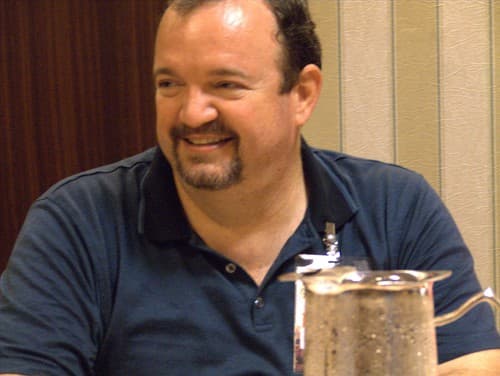
Tracy Hickman is an American author known for his contributions to the fantasy genre. He is particularly recognized for his work on the Dragonlance series, including "Time of the Twins," which explores complex characters and intricate plots within a richly developed world. Hickman's writing often collaborates with other authors, enhancing the depth of the narratives he creates.
Similar books
- The Name of the Wind
Patrick Rothfuss
4.5 (716k) average on GoodreadsFantasyFocuses on a powerful, morally ambiguous magic-user and their intricate backstory.
- The Eye of the World
Robert Jordan
4.2 (392k) average on GoodreadsFantasyWhile both 'Time of the Twins' and 'The Eye of the World' explore themes of destiny and a chosen one's burden, Hickman's novel focuses more intently on the individual's struggle against a predetermined, often self-imposed, fate and the tragic consequences of unchecked ambition. Jordan's series, by contrast, is a sprawling, multi-character epic with a more traditional 'light versus dark' conflict, though it does introduce moral complexities over its long run. Hickman's narrative is more concentrated on the psychological and moral decay of a central figure.
- The Fellowship of the Ring
J.R.R. Tolkien
4.4 (2.4M) average on GoodreadsFantasy'Time of the Twins' presents a darker, more morally ambiguous take on heroism and power compared to Tolkien's more clear-cut good versus evil dichotomy in 'The Fellowship of the Ring'. While both feature epic quests, Hickman's novel delves into the internal corruption of its protagonist (Raistlin) and the tragic consequences of his ambition, offering a resolution that is far from triumphant. Tolkien's work, while acknowledging the corrupting influence of the Ring, maintains a more traditional heroic journey with a clearer moral compass for its main characters.
- Harry Potter and the Sorcerer's Stone
J.K. Rowling
4.5 (7M) average on GoodreadsFantasyRescued from a miserable life under the stairs, an orphaned boy discovers he's a wizard destined for a magical school, where he uncovers a dangerous secret tied to the dark wizard who murdered his parents.
- The Hunger Games
Suzanne Collins
4.3 (6.4M) average on GoodreadsFantasyIn a future where children fight to the death on live television, Katniss Everdeen volunteers for the arena, turning a death sentence into a fight for survival and a spark of rebellion.
- 1984
George Orwell
4.2 (3.1M) average on GoodreadsPoliticsIn a future where surveillance and thought control are absolute, a man's search for truth clashes with the Party, showing that hope can be a form of rebellion.





Enjoyed the summary?
A summary gives you the shape of the book. The book itself has the detail, the examples and the voice.
Find Time of the Twins on AmazonAs an Amazon Associate, BookBrief earns from qualifying purchases. How we're funded