
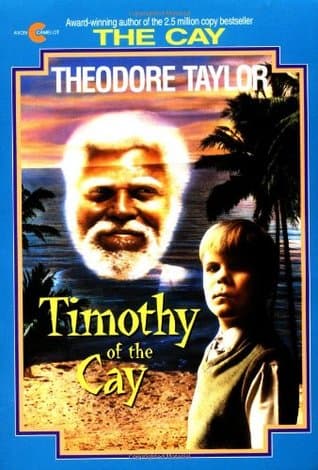
Synopsis
Covers the whole plot, including the ending.
- Difficulty
- Easy
- Pacing
- Moderate
- Mood
- Reflective, Bittersweet, Hopeful, Historical
- Read it if
- You loved "The Cay" and want to explore Timothy's backstory and Phillip's life after the rescue.
- Skip it if
- You prefer standalone stories and aren't interested in expanding on existing narratives.
Timothy of the Cay Plot Summary
Covers the whole plot, including the ending.
St. Thomas and the Early Years
Timothy, born in 1884 on St. Thomas, had a hard childhood marked by poverty and his mother's early death. His grandmother, MaMa May, raised him, teaching him about the sea and how to survive. At a young age, he started working various jobs, like fishing and loading ships, to help his family. He developed a deep respect for the ocean. His early life involved hard work and struggle in the beautiful but often tough Caribbean islands. He dreamed of owning his own fishing boat and providing for his family, battling the economic difficulties of the time.
Meeting the Owens Family
As a young man, Timothy took a job as a deckhand on a schooner that often traveled between the islands. During one trip, he met the Owens family, Americans living in Curaçao. He saw a young girl, Grace Owens, playing on deck, a detail that subtly connects to his future with Phillip. Timothy watched the family from a distance, noticing their different lifestyle. This brief meeting, though seemingly small then, gave him a sense of the wider world beyond his immediate struggles, subtly linking his future with the American community in the Caribbean.
Life as a Seaman and Fisherman
Timothy spent most of his adult life working on various boats, from fishing vessels to cargo schooners, becoming an experienced seaman. He learned to navigate by the stars, read the weather, and understand the Caribbean Sea. His knowledge of the ocean was vast. He faced many storms, successes, and losses at sea, including losing fellow sailors. Despite the dangers, the sea was his home and his way of life. He married a woman named MaMa Fee and worked hard to provide for his family, always aiming for a better life and keeping his connection to nature.
The War Approaches
As the 1940s began, World War II reached the Caribbean. German U-boats became a constant threat to shipping lanes, including those for oil from Aruba and Curaçao. Timothy, now an older, experienced sailor, continued his work, but the mood on the islands changed to one of tension and fear. He saw the increased military presence and the worry among the islanders. The war disrupted trade and made sea travel dangerous, forcing him and his community to adapt to a new reality, which would lead to the fateful voyage of the Hato.
Phillip's Rescue and Timothy's Sacrifice
In 1942, Timothy was working on the SS Hato, a freighter evacuating women and children from Curaçao. A German U-boat torpedoed the ship. In the chaos, Timothy, despite his age, acted bravely, helping others onto life rafts. He found a young, blind American boy, Phillip Enright, struggling in the water. Timothy pulled Phillip onto his small raft, ensuring the boy's survival as the Hato sank. This moment marked the start of their unusual bond, as Timothy put Phillip's safety first, setting the scene for their time on the small island.
Life on the Cay
Stranded on a deserted island, Timothy became a guardian and teacher to the blind and initially angry Phillip. He carefully organized their supplies, found water, and started a signal fire. Timothy patiently taught Phillip how to fish, gather food, and navigate their small island using his other senses. He shared his knowledge of the sea, the stars, and the island's plants and animals. Despite Phillip's early biases and anger, Timothy remained steady, showing great patience and wisdom. He slowly changed Phillip from helpless to independent, building a strong bond between them.
The Hurricane and Timothy's Death
A powerful hurricane hit the island, threatening their lives. Timothy, with his strength and selflessness, protected Phillip from the storm, taking the force of the wind and flying debris. He tied Phillip to a palm tree and used his own body as a shield. Though they survived the hurricane, Timothy was badly hurt and died soon after. His death was a great loss for Phillip, but it also showed his ultimate sacrifice and the depth of his love for the boy he had come to see as his son. Timothy's last act ensured Phillip's survival.
Phillip's Rescue and Return Home
After Timothy's death, Phillip, now able to care for himself thanks to Timothy's lessons, kept the signal fire going. A passing plane eventually spotted and rescued him. Phillip was reunited with his parents, who were happy but also sad about Timothy's death. Phillip struggled to return to his old life, finding society's comforts and rules restrictive after his experience. He missed Timothy deeply and felt a strong connection to the island. His blindness was still there, but it no longer made him helpless; he had learned to see the world differently.
Phillip's Journey to Adulthood
Back in Curaçao, Phillip enrolled in a school for the blind in the United States. He did well in his studies, especially in subjects that allowed him to connect with nature and his memories of Timothy, such as marine biology and geography. He had multiple surgeries hoping to regain his sight, a long process. His determination came from his time on the island and his wish to fully appreciate the world Timothy taught him to see. He never forgot Timothy or the lessons learned, carrying the old man's spirit with him.
Return to the Cay
Years later, as a young man, Phillip, who had partially regained his sight, returned to the island where he and Timothy were stranded. He brought a gift for Timothy, a small, carved wooden sea horse, a symbol of their journey and Timothy's love for the sea. He found Timothy's grave and spent time thinking about their time together. This return was a pilgrimage, a moment of deep closure and thanks, confirming Timothy's lasting impact on his life and his personal growth. He left the sea horse as a tribute.
Phillip's Enduring Legacy
Phillip dedicated his life to keeping Timothy's memory alive and sharing the lessons he learned on the island. He became an advocate for environmental protection and told his story, stressing the importance of respecting nature and human connection across differences. He found satisfaction in his work and continued to visit the island, ensuring Timothy's grave was cared for. Phillip's life shows Timothy's wisdom, courage, and selfless love, demonstrating how one powerful experience can shape a person's entire path and purpose.
Principal Figures
Timothy
Protagonist
An old, wise, and selfless Black seaman from St. Thomas.
Timothy is a weathered, experienced, and deeply spiritual Black man, over seventy years old, from St. Thomas. He possesses an innate understanding of the sea, its creatures, and the rhythms of nature. Despite facing a lifetime of hardship and racial prejudice, Timothy is characterized by immense patience, profound wisdom, and unwavering compassion. His primary motivation is to survive and, more importantly, to protect and educate Phillip, seeing past the boy's initial prejudices to nurture his potential. He is a natural teacher, a protector, and a figure of immense moral strength.
Relationships: Phillip Enright (Mentor, guardian, father figure); MaMa May (Grandmother, early teacher); MaMa Fee (Wife, lifelong companion)
Phillip Enright
Protagonist
A young, initially prejudiced, blind American boy.
Phillip Enright is an eleven-year-old American boy, initially spoiled and prejudiced, who becomes blind after the torpedoing of the SS Hato. His initial reaction to blindness is terror, anger, and resentment, particularly towards Timothy due to racial bias instilled by his mother. Over time, under Timothy's guidance, Phillip transforms from a dependent and helpless child into a resourceful, independent, and empathetic young man. His motivations shift from self-pity to a fierce desire for survival and a deep appreciation for the natural world and human connection.
Relationships: Timothy (Student, mentee, surrogate son); Grace Enright (Mother) (Mother, source of initial prejudice); Phillip Enright Sr. (Father) (Father, less influential during the ordeal)
Grace Enright
Supporting
Phillip's mother, who instills racial prejudice in him.
Grace Enright is Phillip's mother, a woman from Virginia who carries strong, ingrained racial prejudices. She is protective of Phillip but also subtly influences his early views on race. Her fear and anxiety during the war are understandable, but her biases are evident in her warnings to Phillip about interacting with Black islanders. While she is overjoyed at Phillip's rescue, her character highlights the societal prejudices that Timothy and Phillip must overcome. She represents the societal norms and prejudices that Phillip must unlearn on the cay.
Relationships: Phillip Enright (Mother); Phillip Enright Sr. (Husband)
Phillip Enright Sr.
Supporting
Phillip's father, an oil executive.
Phillip Enright Sr. is Phillip's father, an oil executive who moved his family to Curaçao. He is a loving father but less emotionally demonstrative than his wife. He is preoccupied with his work and the war, which often keeps him away from the family. While concerned about Phillip's well-being, he is not as directly involved in Phillip's emotional or moral development as Timothy or even Grace. He represents a stable, albeit somewhat distant, paternal presence in Phillip's life before and after the cay.
Relationships: Phillip Enright (Father); Grace Enright (Wife)
Stew Cat
Supporting
A loyal, old cat who accompanies Phillip and Timothy.
Stew Cat is an old, scraggly cat who is Phillip's companion on the Hato and subsequently on the cay. He is a source of comfort and a tangible link to Phillip's past. Timothy initially views Stew Cat as bad luck but eventually grows fond of him, seeing him as a vital part of their small family. Stew Cat's presence provides Phillip with a sense of normalcy and companionship, especially in the immediate aftermath of his blindness. He serves as a silent witness to their ordeal and a symbol of resilience.
Relationships: Phillip Enright (Companion, pet); Timothy (Initially distrusted, later accepted)
MaMa May
Mentioned
Timothy's grandmother, who raised him.
MaMa May is Timothy's grandmother, who raised him on St. Thomas after his mother's death. She instilled in him a strong sense of spirituality, a deep respect for nature, and practical survival skills. Her teachings and wisdom profoundly shaped Timothy's character and his worldview. Although she only appears in flashbacks and memories, her influence on Timothy is immense, making her a foundational figure in his life and, by extension, in Phillip's transformation.
Relationships: Timothy (Grandmother, mentor)
Themes & Insights
Overcoming Prejudice and Racism
The novel explores overcoming prejudice. Phillip, influenced by his mother, initially holds racial bias against Timothy, calling him a 'black man' and doubting his intelligence. But as they rely on each other to survive on the island, Phillip's biases fade. Timothy's patience, wisdom, and selfless actions show his deep humanity, making Phillip challenge his old ideas. This theme is central to Phillip's growth, showing how shared hardship can break down social barriers and build true understanding and love. For example, Phillip's realization that Timothy is 'black, but he is good' marks a key change in his view.
“I had been with him for over two months, and I had not seen him. I had not seen his color. I had only seen his kindness and his strength.”
Survival and Self-Reliance
Survival on the deserted island is a core theme. Timothy, with his knowledge of the sea and islands, teaches Phillip the skills needed to live off the land and sea—how to fish, find water, build shelter, and make fire. This process forces Phillip to move past his helplessness, especially after losing his sight. The harsh environment acts as a test, building Phillip's independence and strength. Timothy's lessons are not just about physical survival but also about mental toughness and adapting to extreme situations. His teachings ensure Phillip's survival after Timothy's death, proving the value of self-reliance.
“You got to learn to see with your hands, young bahss. Your ears. Everything.”
The Power of Mentorship and Unconditional Love
Timothy is a mentor and father figure to Phillip. Despite Phillip's initial anger and bias, Timothy offers him unconditional love, patience, and guidance. He teaches Phillip practical survival skills and life lessons about courage, strength, and kindness. Timothy's selfless acts, ending with his sacrifice during the hurricane, show the deep love he had for Phillip. This mentorship changes Phillip, giving him the tools to handle his blindness and the wisdom to understand the world beyond its surface, showing the power of a deep, caring relationship.
“I 'ave to go, young bahss. But I will always be wit' you. Always.”
Humanity's Connection to Nature
The novel highlights the connection between people and nature. Timothy, a man of the sea, has a deep understanding of the ocean, weather, and the island's ecosystem. He teaches Phillip to appreciate and respect nature, to understand its rhythms, and to find food and comfort in it. The island, at first a symbol of isolation, becomes a classroom where Phillip learns to 'see' with his other senses and to feel part of the natural world. This connection creates a deeper appreciation for life and a sense of belonging, changing Phillip's view of his place in the world.
“The sea, she is a cruel mistress, but she can also be a kind mother.”
Loss and Grief
Loss and grief are central to Phillip's journey. He experiences losing his sight, his familiar life, and most importantly, Timothy. The trauma of the shipwreck and his blindness first plunges him into despair. However, it is Timothy's death that truly makes Phillip face grief and loneliness. This experience, though devastating, ultimately strengthens him, as he must rely entirely on the lessons Timothy taught him. His grief becomes a reason for further growth, solidifying his independence and deepening his appreciation for their bond.
“I cried for Timothy, and for the first time in my life, I cried for myself.”
Plot Devices & Literary Techniques
Flashbacks and Foreshadowing
Narrative techniques used to reveal Timothy's past and hint at future events.
The novel uses flashbacks to reveal Timothy's rich backstory, including his childhood on St. Thomas, his experiences as a seaman, and his encounters with other characters like the Owens family. These flashbacks not only provide depth to Timothy's character but also subtly foreshadow his eventual encounter with Phillip and his profound impact. For instance, the brief mention of seeing a young Grace Owens on a ship connects Timothy's past to Phillip's future, reinforcing the idea of fate and interconnected lives. This device enriches the reader's understanding of Timothy's wisdom and resilience.
Sensory Imagery
Detailed descriptions focusing on non-visual senses to convey Phillip's experience.
Given Phillip's blindness, the narrative heavily relies on sensory imagery that emphasizes sound, touch, smell, and taste. This device allows the reader to experience the world as Phillip does, heightening empathy and understanding of his challenges and triumphs. Descriptions of the wind, the texture of sand, the taste of fish, and the smell of the sea become vivid and crucial to the storytelling, allowing the reader to 'see' the cay through Phillip's other senses. This technique effectively immerses the reader in Phillip's unique perspective.
The Cay as a Microcosm
The island serving as a contained world reflecting broader societal issues.
The small, isolated cay functions as a microcosm for the larger world, where themes of prejudice, survival, education, and human connection are played out in a concentrated setting. Stripped of societal structures and external influences, Phillip and Timothy are forced to confront their biases and rely solely on their shared humanity. The cay becomes a crucible where Phillip's character is forged, and the fundamental truths about human nature and interdependence are revealed. It allows for intense character development and thematic exploration within a confined space.
Symbolism of the Sea
The ocean representing both danger and a source of life and wisdom.
The sea is a powerful symbol throughout the novel, representing both immense danger and a profound source of life, wisdom, and spiritual connection. It is the sea that brings Timothy and Phillip together through the shipwreck, and it is from the sea that they must draw sustenance for survival. For Timothy, the sea is home and a source of ancient knowledge. For Phillip, it initially represents fear and loss, but eventually becomes a symbol of freedom, resilience, and the interconnectedness of all life, reflecting his journey of growth and understanding.
Timothy of the Cay Quotes
“I could see the ocean, but I couldn't see the sky. I was blind.”
“Dat be true, young bahss. God got his own ways of seein' things.”
“I had been born white, and Timothy had been born black. And there was a wall between us.”
“I learned more about people that day than I had in all the years I'd been alive.”
“I had to learn to see with my hands, with my ears, with my nose, with my mouth.”
“You got to be strong, young bahss. Strong like de wind, strong like de sea.”
“I was no longer afraid of the dark. I was no longer afraid of anything.”
“He saved my life, and I saved his. We were even.”
“The sea was our home now, and we were its children.”
“I could feel his strength, his courage, his love.”
“Dis cay be like a teacher, young bahss. It teach you 'bout life.”
“I never saw him again, but I saw him in my mind, walking on the beach.”
“I had learned to live without my eyes, but I knew I could not live without Timothy.”
“De storm be like life, young bahss. It come, it go. But de sun always shine again.”
Quiz
10 questions on the plot and the characters. Each answer comes with a short explanation.
Question 1
What was Timothy's profession before he became a sailor and eventually shipwrecked with Phillip?
- Fisherman
- Sugar cane cutter
- Merchant
- Dock worker
Show answer
B. Sugar cane cutter Before his life at sea, Timothy worked as a sugar cane cutter in Saint Thomas, a physically demanding job that shaped his early life.
Question 2
What significant event from Timothy's past, revealed in 'Timothy of the Cay', explains his deep connection to the sea and his desire to travel?
- He witnessed a famous sailing race as a child.
- He stowed away on a ship to escape his difficult life.
- His father was a renowned ship captain.
- He discovered a treasure map that led him to the ocean.
Show answer
B. He stowed away on a ship to escape his difficult life. Timothy's journey to the sea began when he stowed away on a schooner at a young age, seeking to escape the hardships of his life as a sugar cane cutter.
Question 3
After Phillip is rescued from the cay, what is his primary goal regarding Timothy's memory?
- To write a book about their adventure.
- To find the cay again and mark Timothy's grave.
- To become a sailor like Timothy.
- To tell the story to his parents.
Show answer
B. To find the cay again and mark Timothy's grave. Phillip's enduring mission after his rescue is to return to the cay, find Timothy's grave, and place a proper marker, honoring his friend's memory.
Question 4
What specific skill does Phillip develop after his rescue that helps him cope with his blindness and connect with the world?
- Learning to play a musical instrument.
- Becoming an expert in Braille.
- Developing an extraordinary sense of hearing and touch.
- Mastering the art of storytelling.
Show answer
C. Developing an extraordinary sense of hearing and touch. After his rescue, Phillip's other senses become acutely developed, allowing him to perceive the world in rich detail through sound and touch, a skill honed by Timothy's training on the cay.
Question 5
Which of these themes is further explored in 'Timothy of the Cay' through Timothy's backstory?
- The importance of formal education.
- The cyclical nature of prejudice and its overcoming.
- The futility of dreams.
- The isolation of old age.
Show answer
B. The cyclical nature of prejudice and its overcoming. Timothy's backstory delves into the prejudice he faced throughout his life, highlighting how he overcame these challenges and, in turn, helped Phillip overcome his own prejudices.
Question 6
What is the name of the woman Timothy loved and wanted to marry, a detail revealed in his past?
- Henrietta
- Isabelle
- Liza
- Maria
Show answer
C. Liza Timothy's past reveals his deep affection for Liza, a young woman he hoped to marry, adding another layer to his personal history.
Question 7
What specific challenge did Timothy face in his youth that mirrored Phillip's initial resistance to him?
- Being underestimated due to his age.
- Being judged and discriminated against because of his race.
- Struggling with a physical disability.
- Being abandoned by his family.
Show answer
B. Being judged and discriminated against because of his race. Timothy's early life was marked by racial prejudice and discrimination, mirroring Phillip's initial prejudiced reactions towards Timothy on the cay, emphasizing a key thematic connection.
Question 8
After Phillip's rescue, what becomes his primary academic focus in school?
- History and literature.
- Mathematics and science.
- Geography and navigation.
- Art and music.
Show answer
C. Geography and navigation. Phillip develops a keen interest in geography and navigation after his rescue, driven by his desire to find the cay again and honor Timothy.
Question 9
What is the ultimate symbolic significance of Phillip's quest to find and mark Timothy's grave?
- To prove his independence to his parents.
- To gain recognition for his survival story.
- To honor their bond and acknowledge the profound impact Timothy had on his life, transcending racial barriers.
- To fulfill a promise made to Timothy before his death.
Show answer
C. To honor their bond and acknowledge the profound impact Timothy had on his life, transcending racial barriers. Phillip's enduring quest to mark Timothy's grave symbolizes not just his gratitude but also the profound transformation he underwent, overcoming prejudice and forming an unbreakable bond of love and respect.
Question 10
What specific danger did Timothy face during his early life at sea that made him a more experienced and cautious sailor?
- Pirate attacks.
- Being caught in a hurricane that destroyed his ship.
- Mutiny among the crew.
- Running aground on a coral reef.
Show answer
B. Being caught in a hurricane that destroyed his ship. Timothy's extensive experience at sea included surviving a devastating hurricane that sank his ship, a traumatic event that taught him vital lessons about the ocean's power and preparedness.
Timothy of the Cay FAQ
What is the central premise of 'Timothy of the Cay'?
'Timothy of the Cay' explores the untold backstory of Timothy, the wise old man from 'The Cay,' detailing his life before meeting Phillip, and continues Phillip's journey after his rescue. It delves into their intertwined destinies and the profound impact they had on each other, expanding upon the original narrative.
Who are the two main characters whose lives intersect in the book?
The two main characters are Timothy, an elderly Black man from St. Thomas, and Phillip Enright, a young white American boy. Their lives dramatically intersect when they are shipwrecked together on a tiny, deserted cay during World War II, forming an unlikely bond.
What significant event brings Timothy and Phillip together?
Timothy and Phillip are brought together by the torpedoing of the S.S. Hato by a German U-boat during World War II. They both end up on the same life raft and subsequently on a small, uninhabited cay, where they are forced to rely on each other for survival.
How does Phillip's disability factor into the story?
Phillip is blinded during the shipwreck, making him entirely dependent on Timothy for survival on the cay. His blindness forces him to overcome his prejudices and learn to navigate the world through other senses, fundamentally changing his perspective.
What is the ultimate fate of Timothy on the cay?
Timothy tragically dies on the cay during a ferocious hurricane, shielding Phillip with his own body to protect him from the storm's brunt. His sacrifice ensures Phillip's survival, leaving a lasting impact on the boy.
What details are revealed about Timothy's early life and family in St. Thomas?
The book reveals that Timothy was born in St. Thomas and had a difficult childhood, working various jobs from a young age. He had a family, including a wife named Grace, and children, though details about their lives and his separation from them are explored, showing his deep roots and personal history.
Are there any previously unknown connections between Timothy and the Enright family before the shipwreck?
The book explores subtle, previously unknown connections, suggesting that Timothy might have had passing encounters or knowledge of the Enright family's presence in Curaçao before the fateful shipwreck. These details hint at a larger, interwoven tapestry of lives in the Caribbean.
What specific skills or knowledge did Timothy possess that proved crucial for survival on the cay?
Timothy possessed vast knowledge of the sea, island survival, and natural remedies, crucial for their survival. He knew how to fish, find water, build shelter, and identify edible plants, skills honed over a lifetime of experience in the Caribbean.
How does the author use the setting of the cay to symbolize themes of isolation and interdependence?
The isolated cay serves as a powerful symbol of the characters' complete detachment from their former lives and the world. This isolation forces Timothy and Phillip into total interdependence, highlighting how shared vulnerability can break down societal barriers and foster deep connection.
What is the psychological impact of Timothy's death on Phillip after his rescue?
Timothy's death profoundly impacts Phillip, leaving him with immense grief and a deep sense of loss. Psychologically, Phillip carries Timothy's memory and teachings, shaping his worldview and fostering a lifelong appreciation for the man who saved him and taught him to 'see' beyond his eyes.
How does Phillip's initial prejudice against Timothy evolve throughout their time on the cay?
Phillip's initial prejudice, rooted in his mother's biases, gradually erodes as he becomes entirely dependent on Timothy. He learns to trust, respect, and ultimately love Timothy, recognizing his wisdom and kindness, which profoundly alters Phillip's understanding of race and humanity.
What psychological coping mechanisms do Timothy and Phillip employ to deal with their dire situation?
Timothy copes through his unwavering faith, practical resourcefulness, and a focus on teaching Phillip, which gives him purpose. Phillip copes by learning new skills, adapting to his blindness, and internalizing Timothy's lessons, which helps him overcome fear and despair.
How does 'Timothy of the Cay' explore the theme of mentorship and legacy?
'Timothy of the Cay' profoundly explores mentorship through Timothy's patient guidance of Phillip, teaching him survival skills and life lessons. Timothy's legacy is his transformative impact on Phillip, whose character and values are forever shaped by his mentor's wisdom and sacrifice.
In what ways does Phillip continue Timothy's legacy after he is rescued and returns to civilization?
After his rescue, Phillip continues Timothy's legacy by advocating for the protection of the cay and its marine life, ensuring Timothy's 'home' is preserved. He also carries Timothy's lessons of tolerance and resilience, embodying the wisdom he gained on the island in his adult life.
Does the book suggest that Timothy had any premonition of his death or the hurricane?
The narrative subtly suggests that Timothy, with his deep connection to nature and vast experience, had an intuitive understanding of impending weather changes, including the hurricane. His actions leading up to the storm, such as securing their shelter, hint at a premonition or profound awareness.
How does the novel portray the complexities of racial prejudice during the WWII era in the Caribbean?
The novel portrays racial prejudice through Phillip's initial biases, inherited from his mother, and contrasts it with Timothy's stoic resilience and inherent dignity. It highlights how shared adversity can transcend such prejudices, offering a hopeful perspective on human connection despite societal divides.
What is the significance of the cay itself as a character or symbolic entity in the story?
The cay acts as a crucible, stripping away societal constructs and forcing the characters to confront their true selves. It symbolizes both isolation and sanctuary, a place of profound transformation where life and death intertwine, shaping the destinies of Timothy and Phillip.
How does Phillip's relationship with his parents change or evolve after his experience on the cay?
After his experience, Phillip's relationship with his parents, particularly his mother, is strained by his profound transformation and their inability to fully grasp what he endured. He returns with a newfound independence and a different worldview, creating a subtle emotional distance from their pre-cay relationship.
About the author
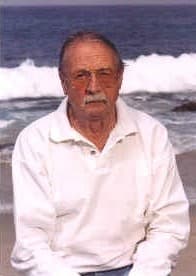
Theodore Taylor was an American author known for his contributions to children's literature and fiction. His notable work, "Timothy of the Cay," is a sequel to the classic "The Cay," exploring themes of survival and friendship. Taylor's writing often reflects his interest in adventure and the human experience.
Similar books
- Island of the Blue Dolphins
Scott O'Dell
3.8 (292k) average on GoodreadsChildren'sFeatures a young protagonist's survival and growth in isolation.
- Hatchet
Gary Paulsen
3.7 (309k) average on GoodreadsChildren'sPaulsen's 'Hatchet' is a quintessential survival story centered on a young boy, Brian, and his resourcefulness after a plane crash. It is highly focused on the immediate challenges of wilderness survival. In contrast, 'Timothy of the Cay' broadens the scope of a survival narrative by providing extensive backstory for a crucial character and tracing the aftermath and enduring influence of the survival experience over decades, delving into themes of memory, identity, and the lasting impact of mentorship, rather than just the act of surviving itself.
- Harry Potter and the Sorcerer's Stone
J.K. Rowling
4.5 (7M) average on GoodreadsFantasyRescued from a miserable life under the stairs, an orphaned boy discovers he's a wizard destined for a magical school, where he uncovers a dangerous secret tied to the dark wizard who murdered his parents.
- The Hobbit, or There and Back Again
J.R.R. Tolkien
4.3 (2.9M) average on GoodreadsFantasyA comfort-loving hobbit named Bilbo Baggins is whisked away by a mischievous wizard and a band of dwarves on an unexpected journey to reclaim stolen treasure from a fearsome dragon, discovering courage and a magical ring along the way.
- Harry Potter and the Goblet of Fire
J.K. Rowling
4.6 (2.6M) average on GoodreadsFantasyA bewildered Harry Potter, underage and thrust into a deadly Triwizard Tournament, must brave dragons, mermaids, and a resurgent dark magic to survive a year that will forever alter the wizarding world.
- Harry Potter and the Order of the Phoenix
J.K. Rowling
4.5 (2.5M) average on GoodreadsFantasyIn a year of oppressive secrets and the threat of Voldemort, Harry Potter and Dumbledore's Army secretly train for war, shown through Jim Kay and Neil Packer's dark illustrations.






Enjoyed the summary?
A summary gives you the shape of the book. The book itself has the detail, the examples and the voice.
Find Timothy of the Cay on AmazonAs an Amazon Associate, BookBrief earns from qualifying purchases. How we're funded