
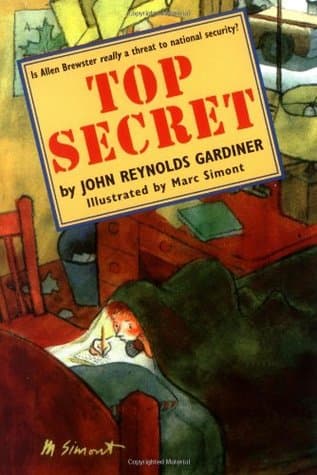
Synopsis
Covers the whole plot, including the ending.
- Difficulty
- Easy
- Pacing
- Moderate
- Mood
- Humorous, Whimsical, Engaging, Curious
- Read it if
- You enjoy humorous, light-hearted science fiction with a touch of mystery, especially if you're a young reader or looking for a fun STEM-related story.
- Skip it if
- You prefer realistic fiction, complex plots, or stories with mature themes and deep character development.
Top Secret Plot Summary
Covers the whole plot, including the ending.
Allen's Ambitious Science Project Idea
Allen, a nine-year-old boy, thinks about his upcoming science project. Unlike his classmates who choose common topics, Allen wants to explore human photosynthesis – the idea that humans could convert sunlight into food, like plants. He is inspired by a sudden thought and the wish to do something original. His parents, especially his mother, and his science teacher, Mr. Plum, are skeptical and try to convince him to choose safer, more traditional experiments. Allen is determined, driven by scientific curiosity and stubbornness. He starts researching and planning his unusual experiment, facing adult disapproval.
The Experiment Begins: Sunlight and Special Soil
Allen ignores his parents' and Mr. Plum's warnings and starts his experiment. He believes that for human photosynthesis, he needs sunlight and a special nutrient source, like plants get minerals from soil. He buys what he thinks is nutrient-rich soil from a garden store, convinced it is the key. Allen begins his daily routine: sitting in direct sunlight for long periods and secretly eating small amounts of soil mixed with water. He carefully records his observations, hoping to find proof of his theory, all while trying to keep his activities secret from his family.
Peculiar Symptoms Emerge
As weeks pass, Allen notices unusual changes in himself. His skin starts to turn green, especially after being in the sun for a long time. He loses his appetite for regular, cooked food, and instead wants raw vegetables and, more strangely, sunlight itself. He feels a strong urge to be outside, soaking up the sun's rays. His parents notice his changing skin color and his refusal to eat normal meals. They worry about his health, thinking it is an illness rather than his science project.
The Root of the Problem
The most alarming symptom appears one morning: Allen finds small, fibrous roots growing from the bottoms of his feet. This physical change confirms his theory – he is turning into a plant. The realization is exciting and scary. He tries to hide these developments from his parents, fearing their reaction and possible interference with his experiment. The roots make walking uncomfortable, and his desire for sunlight grows, making it hard to stay inside. He now truly believes his human photosynthesis experiment is working, but the results are bigger than he imagined.
Mr. Plum's Disbelief and Parental Concern
When Allen tries to explain his transformation to Mr. Plum, his science teacher dismisses it as an overactive imagination, a joke, or attention-seeking. Mr. Plum believes human photosynthesis is impossible and scolds Allen for not doing a 'real' science project. Allen's parents, seeing his green skin, lack of appetite, and strange behavior, worry more. They think about taking him to a doctor, convinced he is sick, and unwilling to believe his science project is causing his unusual symptoms.
The President's Unexpected Call
News of Allen's condition, perhaps from an anonymous tip or school leak, reaches the government. To Allen's surprise, he gets a phone call directly from the President of the United States. Unlike his teacher and parents, the President takes Allen's claims of turning into a plant seriously, understanding the scientific and national security implications of human photosynthesis. The President is interested and concerned, realizing that Allen's discovery could change food production and human survival, but also brings new challenges.
A Top Secret Mission
The President sends a team of scientists and agents to Allen's home, setting up a secure, top-secret environment. Allen is now important to the nation. He is taken to a secret facility where his transformation can be watched and studied by top scientists. He learns that his condition is a matter of national security, and he must keep his abilities a complete secret. Allen is overwhelmed but also happy to finally have adults who believe him and take his science seriously, even if it means becoming a test subject.
The Science Fair and Public Display
The school science fair approaches, and Allen is still expected to present his project, despite his top-secret status. This creates a challenge for Allen and the government agents. How can he show his 'human photosynthesis' project without revealing his plant-like transformation to the public? The President's team plans to let Allen participate without compromising national security or exposing him to unwanted attention. Allen must find a way to subtly show his findings, perhaps through a general presentation on plant biology, while keeping his personal experience hidden.
A Clever Presentation and a Surprising Outcome
At the science fair, Allen, with quiet help from the government agents, presents the theoretical ideas of photosynthesis and its possible uses, carefully avoiding any direct mention of his transformation. He uses diagrams and general scientific explanations, making his project sound smart and well-researched, but safely hypothetical. The judges, including a confused Mr. Plum, are impressed by his research and new approach, even if they do not fully understand the truth. Allen aces his science project, getting the recognition he wanted, while keeping his secret safe from public knowledge and securing his place as a scientific marvel in the eyes of the President.
Top Secret Characters
Allen
Protagonist
A nine-year-old boy who transforms into a plant-human hybrid through his science experiment.
Allen is a curious, determined, and somewhat rebellious nine-year-old. He possesses an inventive mind and a strong will, pushing forward with his human photosynthesis experiment despite the skepticism of adults. He is initially driven by a desire to do something original and to prove his unconventional ideas. As his transformation progresses, he experiences a mix of fear, wonder, and a growing connection to nature. He struggles with the disbelief of his parents and teacher but finds validation when the President takes him seriously. His journey is one of self-discovery and learning to manage an extraordinary secret.
Relationships: Mr. Plum (Skeptical science teacher); Allen's Mother (Concerned parent); Allen's Father (Concerned parent); The President of the United States (Supporter and protector)
Mr. Plum
Supporting
Allen's formidable and traditional science teacher, highly skeptical of Allen's project.
Mr. Plum is Allen's science teacher, characterized by his strict adherence to traditional scientific methods and his formidable demeanor. He represents the established scientific community's resistance to radical new ideas. He consistently dismisses Allen's human photosynthesis concept as absurd and encourages him to pursue more conventional topics. His disbelief provides a significant obstacle for Allen, highlighting the challenge of innovation against conventional wisdom. Despite his initial skepticism, he is eventually impressed by Allen's presentation at the science fair, though he remains unaware of the full truth.
Relationships: Allen (Teacher-student, initially dismissive of Allen's ideas)
Allen's Mother
Supporting
Allen's worried and protective mother, who attributes his symptoms to illness.
Allen's mother is a loving and concerned parent. She is initially dismissive of Allen's science project idea, urging him to choose something safe and practical. As Allen's symptoms manifest – green skin, loss of appetite, and peculiar cravings – her concern escalates, leading her to believe he is seriously ill. She struggles to understand her son's changes, unable to fathom the scientific reality behind them. Her reactions highlight the parental anxiety when a child exhibits inexplicable symptoms and the difficulty of accepting something truly extraordinary.
Relationships: Allen (Mother-son, initially concerned and later relieved by his 'recovery')
Allen's Father
Supporting
Allen's father, who shares his wife's concern and skepticism regarding Allen's health.
Allen's father is presented as equally concerned and baffled by Allen's condition as his wife. He supports his wife in trying to understand what is happening to their son, leaning towards medical explanations rather than scientific experimentation. He represents a grounded, practical perspective, struggling to reconcile Allen's bizarre symptoms with any logical explanation. His concern for Allen's well-being is paramount, and he is willing to seek any necessary help for his son, demonstrating typical parental protectiveness.
Relationships: Allen (Father-son, worried about his son's mysterious illness); Allen's Mother (Spousal, sharing concerns about Allen)
The President of the United States
Supporting
The leader who recognizes the significance of Allen's discovery and protects him.
The President of the United States plays a crucial role in validating Allen's experience and protecting his discovery. Unlike the other adults, the President immediately grasps the immense scientific and geopolitical implications of human photosynthesis. He acts decisively, mobilizing resources to study Allen's condition and ensure national security. The President represents foresight, open-mindedness, and the ability to act on unprecedented scientific breakthroughs. He becomes Allen's unlikely ally and guardian, understanding the profound impact Allen's transformation could have on humanity.
Relationships: Allen (Protector-protégé, taking Allen's discovery seriously); Government Scientists (Commander, overseeing the study of Allen)
Government Scientists
Supporting
A team of scientists tasked by the President to study Allen's plant-like transformation.
These unnamed scientists are dispatched by the President to examine Allen's condition and understand the mechanisms behind human photosynthesis. They are experts in various fields, brought together to analyze Allen's unique biology. Their role is to provide the scientific rigor and resources necessary to study Allen's transformation, representing the organized scientific community when it finally acknowledges an extraordinary phenomenon. They work under strict secrecy, tasked with unraveling the mysteries of Allen's plant-human hybrid state and its potential applications.
Relationships: Allen (Subjects of study, monitoring his transformation); The President of the United States (Subordinates, carrying out his directives)
Top Secret Themes
Innovation vs. Convention
The book explores the tension between new, unconventional ideas and standard scientific practices. Allen's idea of human photosynthesis is first met with disbelief and jokes from his teacher, Mr. Plum, and even his parents, who prefer traditional science projects. This theme shows the challenges innovators face when they think differently and the resistance they often encounter from those who stick to old ideas. Allen's eventual success, though secret, shows the value of questioning existing beliefs.
“'Human photosynthesis!' scoffed Mr. Plum. 'That's not science, Allen, that's fantasy! You need a real project.”
Identity and Self-Acceptance
As Allen turns into a plant-human hybrid, he deals with his changing identity. He experiences physical changes like green skin and roots, as well as new desires and a strong need for sunlight. This makes him consider what it means to be human and how his unique abilities make him different. The story is about Allen accepting his new self, even when others around him cannot understand it. His validation comes not from his immediate community, but from the President, allowing him to accept his extraordinary nature.
“He looked at his feet, and there they were, tiny, fibrous roots beginning to sprout. 'It's happening,' he whispered, a mix of fear and wonder in his voice.”
The Nature of Scientific Discovery
The story looks at how scientific discovery happens, from an initial idea to experiments and unexpected results. Allen's project, though strange, follows a basic scientific method. The book shows how big breakthroughs can come from unusual thinking and how the scientific community, first Mr. Plum and later the President's team, reacts to such discoveries. It also touches on the ethical concerns and the need for secrecy when a discovery has a large societal impact.
“Allen knew it was dangerous, but a true scientist had to take risks. He had to prove his theory.”
Trust and Disbelief
A main theme is the difference between those who believe Allen's claims and those who do not. His parents and teacher cannot accept his transformation, thinking his symptoms are illness or imagination. In contrast, the President immediately sees the seriousness and truth of Allen's situation. This shows how important open-mindedness is when facing the unknown and the isolation one can feel when their truth is met with disbelief, finding support from unexpected allies.
“No one believed him. Not his mom, not his dad, not even Mr. Plum. No one, that is, except the President of the United States.”
Plot Devices & Literary Techniques
MacGuffin (The 'Special Soil')
An item that drives the plot forward by initiating Allen's transformation.
The 'special soil' Allen obtains from the garden store acts as a MacGuffin. While its exact scientific properties or origin are not deeply explored, it serves as the catalyst for Allen's transformation into a plant-human hybrid. It's the tangible element that Allen believes is necessary for his experiment to work, alongside sunlight. Its mysterious nature allows the plot to progress quickly into the fantastic, focusing on the consequences of the transformation rather than the specifics of its botanical composition.
Dramatic Irony
The audience knows Allen is turning into a plant, while most characters remain oblivious.
Dramatic irony is heavily utilized as the reader is privy to Allen's secret transformation and the reality of his human photosynthesis, while his parents and teacher, Mr. Plum, remain completely unaware. They interpret his green skin, cravings, and odd behavior as signs of illness or childish antics. This creates humorous and tense situations, as Allen tries to hide his symptoms and explain his condition to disbelieving adults, enhancing the reader's connection to Allen's unique predicament and highlighting the adults' inability to see beyond conventional understanding.
The Unreliable Narrator (from the adult's perspective)
Allen's account of his transformation is disbelieved by adults, making him 'unreliable' in their eyes.
While Allen himself is a reliable narrator of his own experiences, the adults around him perceive his claims as unreliable. His parents think he's sick or imaginative, and Mr. Plum thinks he's making up a fantastical story. This device emphasizes the chasm between Allen's reality and the adults' conventional understanding. It forces Allen to navigate a world where his truth is dismissed, until the President's intervention, which validates his 'unreliable' narrative, proving him right and the adults wrong.
Foil Character (Mr. Plum)
Mr. Plum's traditional views contrast sharply with Allen's innovative spirit.
Mr. Plum serves as a foil character to Allen. His rigid, conventional scientific views and skepticism directly contrast with Allen's imaginative, boundary-pushing approach to science. Mr. Plum's disbelief and insistence on 'real' science highlight Allen's originality and determination. This contrast underscores the theme of innovation versus convention, making Allen's eventual, albeit secret, success against Mr. Plum's initial dismissal more impactful. Mr. Plum represents the establishment that new ideas often have to overcome.
Top Secret Quotes
“The wind howled a mournful tune, rattling the windows of the old house as if trying to tear them from their frames.”
“He knew, with a certainty that chilled him to the bone, that something was terribly wrong.”
“The secret wasn't just hidden; it was buried under layers of dust and forgotten memories.”
“Sometimes, the most ordinary things hold the most extraordinary secrets.”
“The old clock in the hall ticked with an ominous rhythm, counting down to an unknown event.”
“He felt a prickle of excitement mixed with dread, a common companion on the path to discovery.”
“The truth, like a stubborn weed, would always find a way to push through the cracks.”
“Every shadow seemed to hold a whispered secret, every creak of the floorboards a hidden message.”
“It wasn't just about finding answers; it was about understanding the questions.”
“The world was far stranger and more wonderful than he had ever imagined.”
“Courage wasn't the absence of fear, but the decision to act in spite of it.”
“He realized then that some secrets were meant to be shared, not kept locked away.”
“The faint glow of the moon cast long, dancing shadows, making ordinary objects seem otherworldly.”
“Even the smallest clue could unravel the biggest mystery.”
Quiz
10 questions on the plot and the characters. Each answer comes with a short explanation.
Question 1
What is nine-year-old Allen's chosen topic for his school science project?
- The effects of sunlight on plant growth
- Human photosynthesis
- Converting water into fuel
- The mysteries of the human brain
Show answer
B. Human photosynthesis Allen's main goal for his science project is to prove his theory about human photosynthesis, much to the dismay of his parents and teacher.
Question 2
Who is the only person who eventually believes Allen's claims about turning into a plant?
- His science teacher
- His parents
- The President of the United States
- His best friend
Show answer
C. The President of the United States Despite everyone else's disbelief, the President of the United States gets involved and is the only one who truly believes Allen's predicament.
Question 3
What are the initial physical changes Allen experiences as a result of his experiment?
- He grows taller and develops a craving for water.
- He turns green, sprouts roots, and desires sunlight.
- He starts to glow and can communicate with animals.
- His hair changes color and he develops super strength.
Show answer
B. He turns green, sprouts roots, and desires sunlight. As his experiment progresses, Allen's skin turns green, he sprouts roots, and he feels an overwhelming urge to soak up the sun, indicating his transformation into a plant.
Question 4
What is the primary conflict Allen faces as he turns into a plant?
- Convincing his friends that he's not just playing a prank.
- Balancing his science project success with national security concerns.
- Finding a way to hide his transformation from his family.
- Dealing with the discomfort of his new physical form.
Show answer
B. Balancing his science project success with national security concerns. Allen's unique condition becomes a 'top secret discovery' that could impact national security, creating a significant challenge for him beyond just completing his project.
Question 5
How do Allen's parents and formidable science teacher initially react to his idea for the human photosynthesis project?
- They are supportive and encourage his innovative thinking.
- They express disapproval and find his scheme outrageous.
- They are indifferent, believing it's just a phase.
- They immediately contact experts for advice.
Show answer
B. They express disapproval and find his scheme outrageous. The description states that Allen pursues his project 'Despite the disapproval of his parents and his formidable science teacher,' and that 'Everyone laughs at his outrageous scheme.'
Question 6
What genre combination best describes 'Top Secret'?
- Historical Fiction and Romance
- Fantasy, Children's, Mystery, Science Fiction, Young Adult
- Biography and Thriller
- Horror and Detective
Show answer
B. Fantasy, Children's, Mystery, Science Fiction, Young Adult The provided book description explicitly lists the genres as 'Fantasy, Children's, Mystery, Science Fiction, Young Adult'.
Question 7
What is the implied significance of Allen's discovery becoming 'top secret'?
- It means he will win the science fair easily.
- It suggests the potential for widespread implications, possibly for food production or human biology, making it a matter of national importance.
- It implies that only his family can know about it to protect him.
- It is a metaphor for his personal growth and secret desires.
Show answer
B. It suggests the potential for widespread implications, possibly for food production or human biology, making it a matter of national importance. The involvement of the President and the mention of 'national security' indicates that Allen's ability to photosynthesize has significant, far-reaching implications that governments would want to control or understand.
Question 8
How does the book's premise align with STEM curricula, as mentioned in the description?
- It features historical scientists and their discoveries.
- It explores a scientific concept (photosynthesis) in a creative, problem-solving, and experimental context, even if fictionalized.
- It provides detailed instructions for conducting a science experiment.
- It focuses on the engineering aspects of building a device.
Show answer
B. It explores a scientific concept (photosynthesis) in a creative, problem-solving, and experimental context, even if fictionalized. The book is about a science project involving human photosynthesis, an imaginative exploration of biological principles, which encourages scientific inquiry and problem-solving, fitting well into STEM education.
Question 9
What is the central ironic element in Allen's situation?
- He wants to win the science fair, but his project is too dangerous to reveal publicly.
- His parents disapprove of his project, yet they are the ones who ultimately help him.
- He wants to turn into a plant, but he hates gardening.
- His teacher thinks he's a genius, but he struggles in other subjects.
Show answer
A. He wants to win the science fair, but his project is too dangerous to reveal publicly. The core irony is that Allen's incredible scientific success (turning himself into a photosynthesizing human) makes his project so significant that it becomes a national secret, potentially preventing him from presenting it normally or receiving the recognition he desires for the science fair.
Question 10
How does the book compare to Jennifer Holm's 'The Fourteenth Goldfish' in terms of its appeal to readers?
- Both are historical novels about scientific breakthroughs.
- Both feature young protagonists dealing with humorous, fantastical, and science-related transformations or discoveries.
- Both are serious dramas about the ethical dilemmas of science.
- Both are non-fiction guides to conducting science experiments.
Show answer
B. Both feature young protagonists dealing with humorous, fantastical, and science-related transformations or discoveries. The description states, 'Fans of Jennifer Holm's The Fourteenth Goldfish will fall in love with this humorous story...' indicating a shared appeal in humorous, science-driven, and slightly fantastical narratives for young readers, as 'The Fourteenth Goldfish' also features a scientific discovery (reversing aging) with humorous and unexpected consequences.
Top Secret FAQ
What is "Top Secret" about?
"Top Secret" by John Reynolds Gardiner is about nine-year-old Allen, who attempts a science project on human photosynthesis despite widespread skepticism. His experiment takes an unexpected turn when he begins to transform into a plant, turning green and developing roots. Allen must then navigate his bizarre transformation, convince others of his predicament, and keep his unique condition a secret, especially when the President of the United States gets involved.
Why should I read "Top Secret"?
You should read "Top Secret" for its humorous and imaginative take on a science project gone awry, offering a unique blend of fantasy, mystery, and science fiction for young readers. It combines a relatable school setting with an extraordinary premise, making it both entertaining and thought-provoking, especially for those interested in STEM topics and a good laugh.
What is the background/setting of "Top Secret"?
The story is primarily set in a contemporary American suburban environment, focusing on Allen's home life and his elementary school. The initial conflict arises from his science class, where his ambitious project on human photosynthesis is met with disapproval. Later, the setting expands to include the high-stakes world of national security as the President becomes aware of Allen's transformation.
What are the most memorable quotes?
While specific quotes aren't provided in the summary, memorable moments likely revolve around Allen's earnest but outlandish scientific explanations, the incredulous reactions of his parents and teacher to his plant-like changes, and the President's serious but perhaps bewildered responses to Allen's 'top secret' condition.
What writing style does the author use?
John Reynolds Gardiner employs a humorous and accessible writing style, suitable for young readers, blending fantastical elements with a grounded, relatable school setting. The narrative likely maintains a lighthearted tone even amidst Allen's bizarre transformation and the involvement of national security, focusing on Allen's perspective and his attempts to make sense of his predicament.
What minor details add significant meaning?
The detail of Allen's parents and formidable science teacher's disapproval highlights the initial scientific skepticism surrounding his project, making his eventual transformation even more ironic and impactful. Also, the specification of 'nine-year-old' Allen emphasizes his age, making his scientific ambition and the weight of national security even more daunting for him.
What are some subtle foreshadowing moments?
The initial dismissal of Allen's human photosynthesis project as 'outrageous' by everyone, including his teacher, subtly foreshadows that something truly outrageous, yet perhaps scientifically 'successful' in an unexpected way, is about to happen. The very idea that he is 'determined' against such odds hints at an extraordinary outcome.
What unexpected character connections exist?
The most unexpected character connection is undoubtedly between nine-year-old Allen, a budding scientist, and the President of the United States. This connection elevates Allen's personal science project into a matter of national security, creating a humorous and high-stakes dynamic that no one, least of all Allen, could have anticipated.
What are unspoken character motivations?
Allen's unspoken motivation likely includes a deep desire to prove himself and his unconventional ideas, especially to his skeptical parents and teacher, and to achieve something extraordinary. The President's unspoken motivation would be to understand and potentially control this unprecedented biological phenomenon for the good of the nation, or perhaps for scientific advancement.
What psychological complexities do characters exhibit?
Allen exhibits the psychological complexity of a child grappling with an overwhelming and unbelievable transformation, struggling between fear, scientific curiosity, and the desire to maintain normalcy. The adults around him, particularly his parents and teacher, likely display disbelief and concern, mixed with a struggle to reconcile scientific impossibility with undeniable evidence.
What are the major emotional turning points?
A major emotional turning point is when Allen first realizes he is genuinely turning into a plant, moving from scientific experimentation to personal crisis. Another is when the President believes him, shifting the emotional burden from isolation and disbelief to the immense pressure of national security and the responsibility of his 'top secret' discovery.
How do relationship dynamics evolve?
The relationship dynamics evolve from Allen being dismissed by his parents and teacher to him being taken seriously, albeit in an alarming way. His relationship with the President introduces a new dynamic of trust and secrecy, where a powerful figure relies on a young boy, completely altering the typical child-adult power balance.
Which parts remain ambiguous or open-ended?
The summary suggests ambiguity around the long-term implications of Allen's transformation. Will he fully become a plant? Can the process be reversed? The precise nature of the 'threat to national security' and how it's resolved might also be left open to some interpretation, focusing more on the immediate humor and adventure.
What are controversial scenes or decisions?
A potentially controversial decision could be the President's choice to involve a nine-year-old in matters of national security, or perhaps Allen's own decision to continue his experiment despite warnings. Any scene where Allen's plant-like needs (e.g., needing intense sunlight) clash with normal human life could also create humorous but 'controversial' situations for his family.
"Top Secret" ending explained: how it ends & what it means
The summary doesn't explicitly state the ending, but it sets up a climax where Allen must protect his discovery and ace his science project without being a threat to national security. It's likely the ending involves Allen finding a way to stabilize his condition, perhaps reversing it, or learning to live with it while fulfilling his academic duties and safeguarding his secret, implying that even the most outlandish scientific endeavors can have profound, unexpected consequences and require careful handling.
About the author

John Reynolds Gardiner is an American author known for his contributions to children's literature. He is best recognized for his novels "Stone Fox," which tells a poignant story about a boy and his dog, and "Top Secret," a tale of adventure and mystery. Gardiner's works often explore themes of perseverance and friendship.
Similar books
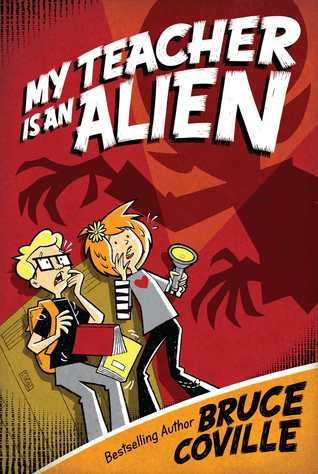
- My Teacher Is an Alien
Bruce Coville
3.8 (8k) average on GoodreadsFantasyInvolves a young student uncovering a bizarre secret that adults don't believe, leading to a comedic and adventurous situation.
- A Wrinkle in Time
Madeleine L'Engle
4.0 (1.1M) average on GoodreadsFantasyBoth books feature child protagonists navigating extraordinary, science-infused circumstances. However, L'Engle's work delves deeper into philosophical and theological questions, offering a richer tapestry of complex moral dilemmas and character development that Top Secret largely avoids. L'Engle's thematic scope is arguably more ambitious.
- Mrs. Frisby and the Rats of NIMH
Robert C. O'Brien
4.1 (164k) average on GoodreadsFantasyBoth novels feature enhanced, non-human protagonists (a plant-human in Top Secret, intelligent rats in O'Brien's) and explore themes of secret societies and scientific experimentation. O'Brien's work, however, often carries a darker, more serious tone, grappling with the ethical implications of scientific intervention and survival in a more poignant manner than Gardiner's generally optimistic narrative.
- Harry Potter and the Sorcerer's Stone
J.K. Rowling
4.5 (7M) average on GoodreadsFantasyRescued from a miserable life under the stairs, an orphaned boy discovers he's a wizard destined for a magical school, where he uncovers a dangerous secret tied to the dark wizard who murdered his parents.
- The Hunger Games
Suzanne Collins
4.3 (6.4M) average on GoodreadsFantasyIn a future where children fight to the death on live television, Katniss Everdeen volunteers for the arena, turning a death sentence into a fight for survival and a spark of rebellion.
- 1984
George Orwell
4.2 (3.1M) average on GoodreadsPoliticsIn a future where surveillance and thought control are absolute, a man's search for truth clashes with the Party, showing that hope can be a form of rebellion.





Enjoyed the summary?
A summary gives you the shape of the book. The book itself has the detail, the examples and the voice.
Find Top Secret on AmazonAs an Amazon Associate, BookBrief earns from qualifying purchases. How we're funded