

Synopsis
Covers the whole plot, including the ending.
- Difficulty
- Medium
- Pacing
- Moderate
- Mood
- Poignant, Hopeful, Emotional, Resilient
- Read it if
- You enjoy poignant coming-of-age stories about overcoming grief and finding resilience after natural disasters, with a focus on emotional depth.
- Skip it if
- You prefer fast-paced thrillers or stories without significant emotional weight and trauma.
Torn Away Plot Summary
Covers the whole plot, including the ending.
The Storm's Arrival
Jersey Cameron, a sixteen-year-old from Harmony Creek, loves storms. One spring evening, a severe storm approaches, and Jersey is home with her parents and younger sister, Marin. Despite the weather, the family tries to act normal. As tornado sirens wail, they take shelter in their basement. The tornado hits with immense force, and Jersey hears and feels their house tear apart. When the danger passes, Jersey emerges to find her home destroyed and her family gone. She is the only survivor.
The Aftermath and Grief
In the chaotic aftermath, Jersey walks through the ruined town. First responders find her and take her to a shelter. The full weight of her loss settles in when she learns her parents, Sarah and David, and her sister, Marin, did not survive. Overwhelmed by grief, shock, and survivor's guilt, Jersey struggles to understand her new, solitary life. She feels empty and isolated, unable to connect with other survivors or express her pain.
A New Home in Kansas
With no immediate family left in Harmony Creek, authorities arrange for Jersey to live with her paternal aunt and uncle, Beth and Tom, in Wichita, Kansas. Jersey barely knows them, having met them only a few times when she was young. The move is hard; Jersey is uprooted from everything familiar and forced into a new environment with strangers, increasing her sense of loss. Beth and Tom mean well but are awkward and unsure how to handle a grieving teenager, leading to initial quiet tension and discomfort.
Adjusting to the New Normal
Starting a new school in Wichita is a major challenge for Jersey. She feels like an outsider, constantly reminded of her past and the tragedy. Her grief makes it hard to engage with peers, and she often withdraws into her own thoughts. She meets other students, including a friendly girl named Chloe, but Jersey struggles to form real connections. The contrast between her lively life in Harmony Creek and her quiet existence in Wichita is stark, and she misses what she lost.
The Weight of Survival
As Jersey tries to navigate her new life, survivor's guilt plagues her. She questions why she lived when her family did not, replaying the tornado's events. Memories of her parents and Marin, though precious, also bring great pain, making it hard to move forward. She feels the heavy burden of being the only one to hold her family's memories and worries about forgetting them. This internal struggle isolates her further, as she believes no one can truly understand her experience and sorrow.
Unexpected Connections
Despite her initial reluctance, Jersey finds herself drawn to Noah, a quiet and artistic boy at her new school. Unlike others who offer empty words or avoid her, Noah approaches her with gentle understanding. He does not pry or pressure her, instead offering companionship through shared silences and subtle kindness. Their budding friendship becomes a small comfort for Jersey, a flicker of light in her dark world. Noah's presence slowly helps her feel less alone, though she still guards her deepest emotions.
Uncovering Family History
Living with Beth and Tom, Jersey learns details about her parents' past, especially the strained relationship between her mother, Sarah, and Aunt Beth. It becomes clear there was a significant rift between the sisters, which limited Jersey's contact with her aunt's family. This discovery adds another layer to Jersey's grief, as she realizes there were unresolved family issues she did not know about. She begins to see her aunt and uncle not just as new guardians, but as individuals with their own history and sorrows, helping her understand their awkwardness better.
A Trip Back to Harmony Creek
Beth and Tom, seeing Jersey's need for closure, offer to take her back to Harmony Creek. The return visit is emotionally overwhelming. Jersey walks through the remains of her neighborhood, seeing vacant lots where homes once stood and the lingering scars of the tornado. She visits the site of her former house, finding a few small, salvageable items that connect her to her past. This visit, though painful, is a necessary step in her grieving process, allowing her to confront the physical reality of her loss and begin to accept it.
Finding a Voice
Inspired by Noah's art and her own need to process emotions, Jersey starts to find an outlet for her grief. She begins writing in a journal, pouring out memories of her family and the pain of her loss. She also tentatively explores art, drawing and sketching, which helps her express feelings words cannot capture. This creative expression becomes a vital coping mechanism, helping her acknowledge and honor her family's memory while slowly moving toward healing. It is a way for her to keep them alive within herself.
Reaching Out
As Jersey slowly heals, she begins to open up to Beth and Tom. She shares stories about her parents and Marin, allowing her aunt and uncle to connect with memories of their lost family members. This shared grief and remembrance helps bridge the gap between them, changing their relationship from obligation to genuine affection. Beth, in turn, shares more about her past with Sarah, giving Jersey a fuller picture of her family history. This new openness creates a sense of belonging and family for Jersey in her new home.
The School Project
At school, Jersey participates in a project where students share a personal story. Initially hesitant, Jersey decides to write about the tornado and losing her family. Sharing her story, though incredibly difficult, is a cathartic experience. It allows her to express her pain and strength, and in doing so, she finds an unexpected sense of validation. Her classmates, who had only known her as 'the girl whose family died in a tornado,' now see her as a person with courage and a powerful story of survival.
Embracing the Future
By the end of the novel, Jersey has made significant progress in her healing journey. While the pain of her loss will always be part of her, she has learned to carry her grief without letting it consume her. She has formed strong bonds with Beth, Tom, and Noah, creating a new support system. She understands that while a tornado can destroy homes and take lives, it cannot erase love or memories. Jersey begins to embrace the possibility of a future, recognizing that even in the darkest days, hope and connection can endure, allowing her to honor her past while living in the present.
Principal Figures
Jersey Cameron
Protagonist
A resilient teenager who loses her entire family in a devastating tornado.
Jersey is a sixteen-year-old girl with a keen interest in storms, living a seemingly ordinary life in Harmony Creek. After the tornado, she is plunged into profound grief, survivor's guilt, and a deep sense of displacement. She is initially withdrawn and struggles to connect with others, feeling the immense burden of being the sole survivor of her immediate family. Her journey is defined by her struggle to process unimaginable loss and find a new sense of identity and belonging.
Relationships: Marin Cameron (Younger sister, deeply loved and missed.); Sarah Cameron (Mother, cherished and mourned.); David Cameron (Father, cherished and mourned.); Beth (Paternal aunt, initially estranged, later becomes a supportive guardian.); Tom (Paternal uncle, initially awkward, later becomes a supportive guardian.); Noah (Friend and confidant, provides quiet support and understanding.)
Marin Cameron
Mentioned
Jersey's vibrant younger sister, lost in the tornado.
Marin is Jersey's younger sister, depicted through Jersey's memories as a lively, energetic, and beloved sibling. Her presence in Jersey's memories highlights the depth of Jersey's loss and the void left by the tornado. Marin represents the innocence and joy that were abruptly taken from Jersey's life, and her memory fuels much of Jersey's initial grief and survivor's guilt.
Relationships: Jersey Cameron (Older sister, a strong bond of love.); Sarah Cameron (Mother, loved.); David Cameron (Father, loved.)
Beth
Supporting
Jersey's paternal aunt who becomes her guardian.
Beth is Jersey's paternal aunt, living in Wichita, Kansas. She is initially somewhat reserved and uncertain about how to care for her grieving niece, partly due to a past estrangement from Jersey's mother, Sarah. Despite her initial awkwardness, Beth is genuinely caring and tries her best to provide a stable, loving home for Jersey. She eventually opens up about her own history and grief, forming a deeper connection with Jersey.
Relationships: Jersey Cameron (Niece, becomes her guardian.); Tom (Husband, a supportive partner.); Sarah Cameron (Sister-in-law, had a strained relationship.)
Tom
Supporting
Jersey's paternal uncle who provides quiet support.
Tom is Beth's husband and Jersey's paternal uncle. He is a kind, steady presence, often quieter than Beth but equally committed to helping Jersey. He provides practical support and a sense of calm in the household. While he doesn't always know what to say, his actions demonstrate his care and willingness to be there for Jersey, offering a stable male figure in her life after the loss of her father.
Relationships: Jersey Cameron (Niece, becomes her guardian.); Beth (Wife, a supportive partner.)
Noah
Supporting
A sensitive and artistic classmate who befriends Jersey.
Noah is a student at Jersey's new school in Wichita. He is quiet, observant, and artistic, and he approaches Jersey with a gentle understanding that many others lack. He doesn't press her to talk but offers companionship and a sense of normalcy through shared activities like art. He becomes Jersey's first real friend in Wichita, providing a safe space for her to slowly begin connecting with the world again.
Relationships: Jersey Cameron (Friend, provides quiet support and understanding.)
Chloe
Supporting
A friendly but sometimes superficial classmate.
Chloe is one of the first students Jersey meets at her new school. She is friendly and tries to include Jersey, but sometimes struggles to understand the depth of Jersey's grief. While well-meaning, her attempts to comfort or relate can sometimes feel superficial to Jersey, highlighting Jersey's isolation. Chloe represents the typical high school experience that Jersey is now detached from.
Relationships: Jersey Cameron (Classmate, attempts friendship.)
Themes & Insights
Grief and Loss
The novel explores the many aspects of grief after an unimaginable loss. Jersey's journey shows the shock, denial, anger, sadness, and survivor's guilt that come with losing an entire family. Her struggle to find meaning and a way forward after losing her parents and sister in the tornado is central. The story illustrates that grief is not linear, and how memories, both painful and cherished, constantly shape the healing process. This is clear in her initial withdrawal and later in her therapeutic return to Harmony Creek, where she confronts the wreckage of her past.
“How could I live when they didn't? How could I breathe when they couldn't?”
Resilience and Hope
Despite the overwhelming tragedy, the novel highlights the strength of the human spirit and the power of hope. Jersey's ability to slowly adapt, form new relationships, and find ways to express her pain shows her inner strength. Her journey from utter devastation to cautiously embracing a new future shows that even after the darkest storms, there is potential for rebuilding and finding light. The theme is powerfully shown as Jersey finds her voice through writing and art, and ultimately shares her story, marking her personal growth and hope for a future.
“A tornado could tear through a town, rip apart houses, take away everything, but it couldn't destroy memories. It couldn't destroy love.”
Family and Connection
The story examines what family means, both biological and chosen. Jersey initially feels alone after losing her immediate family, but gradually builds new connections with her estranged aunt and uncle, Beth and Tom, and her new friend, Noah. The story also explores the complexities of family history, especially the strained relationship between Jersey's mother and Beth, and how understanding these dynamics can build deeper bonds. Ultimately, the novel suggests that family is not just about blood, but about the love, support, and shared experiences that connect people, offering Jersey a new sense of belonging.
“Maybe family wasn't just blood. Maybe it was the people who showed up, who stayed, who tried.”
Memory and Remembrance
Memory is crucial to Jersey's healing. She constantly revisits memories of her parents and Marin, initially finding them agonizing but eventually seeing their importance in keeping her loved ones alive. The struggle to remember every detail, along with the fear of forgetting, highlights the importance of remembrance. Her return to Harmony Creek and finding small mementos are acts of preserving memory. The theme asserts that while physical things can be destroyed, the intangible legacy of love and shared experiences endures through memory, becoming a source of strength rather than just pain.
“I was the only one left to remember them. And I had to remember everything.”
Plot Devices & Literary Techniques
The Tornado as a Catalyst
The natural disaster that initiates Jersey's journey of loss and transformation.
The tornado is not merely a setting but the central inciting incident and a powerful symbol. It acts as a brutal catalyst, stripping Jersey of everything familiar and forcing her into a journey of survival, grief, and self-discovery. Its destructive power represents the sudden, overwhelming nature of trauma and loss, while its aftermath creates the barren landscape from which Jersey must rebuild her life. The storm's unpredictable force mirrors the unpredictable nature of life's tragedies.
Symbolism of Storms
Storms represent both destruction and the cleansing, transformative power of nature.
Jersey's initial fascination with storms foreshadows the central event, giving them a dual symbolism. While the tornado brings ultimate destruction and personal devastation, storms also symbolize the tumultuous internal landscape of Jersey's grief. However, they also hint at the idea of cleansing and renewal. Just as a storm clears the air, Jersey's emotional 'storm' eventually leads to a clearing, allowing her to process her emotions and find a path towards healing and new growth.
First-Person Narrative
Allows intimate access to Jersey's internal thoughts and emotional journey.
The story is told from Jersey's first-person perspective, providing readers with direct access to her raw grief, survivor's guilt, and internal monologues. This narrative choice immerses the reader in her emotional landscape, making her struggles and eventual triumphs deeply personal and relatable. It emphasizes her isolation and the subjective experience of trauma, allowing the reader to intimately witness her process of healing and growth from the inside out.
The Journey to Wichita
The physical relocation symbolizes Jersey's forced emotional and personal displacement.
Jersey's physical journey from Harmony Creek to Wichita is more than just a change of scenery; it symbolizes her forced emotional and personal displacement. Leaving her home, school, and friends behind accentuates her isolation and the profound loss of her former life. The unfamiliarity of Wichita, her aunt and uncle, and her new school mirrors her internal state of being lost and searching for a new identity and a place to belong after her world was shattered.
Torn Away Quotes
“There are some things you can’t run away from. No matter how fast you go.”
“Sometimes the hardest thing to do is forgive yourself.”
“Being strong isn't about not being scared. It's about being scared and doing it anyway.”
“Home isn't a place, it's a feeling. It's the people you're with.”
“Every choice has a consequence. Good or bad, you have to live with it.”
“Sometimes the people who are supposed to protect you are the ones who hurt you the most.”
“It’s amazing how much you can learn about yourself when you’re forced to start over.”
“Silence can be louder than any scream.”
“You can’t fix other people. You can only fix yourself.”
“Hope is a dangerous thing. It can keep you going, or it can break your heart.”
“Sometimes the truth is messy. And sometimes, you just have to live with the mess.”
“The past is like a shadow. It follows you, no matter where you go.”
“Family isn't always blood. It's the people who show up for you, no matter what.”
“It takes a lot of courage to let someone help you.”
“Life doesn't stop just because you're hurting.”
Quiz
10 questions on the plot and the characters. Each answer comes with a short explanation.
Question 1
What natural disaster devastates Jersey Cameron's town at the beginning of the novel?
- An earthquake
- A hurricane
- A tornado
- A flood
Show answer
C. A tornado The synopsis clearly states that Jersey's town is devastated by a tornado, which leads to her losing everything.
Question 2
Where does Jersey go to live after her town is destroyed and she loses everything?
- With her best friend's family
- In a temporary shelter
- With relatives she hardly knows
- To a boarding school
Show answer
C. With relatives she hardly knows The synopsis indicates that after the tornado, Jersey is sent to live with relatives she hardly knows, who are described as 'family who might as well be strangers'.
Question 3
What is Jersey Cameron's initial attitude towards storms, before the devastating event?
- She is terrified of them and hides
- She loves watching them and dancing in the rain
- She is indifferent, seeing them as a common occurrence
- She studies them as an amateur meteorologist
Show answer
B. She loves watching them and dancing in the rain The opening lines of the synopsis state, 'Jersey Cameron has always loved a good storm. Watching the clouds roll in and the wind pick up. Smelling the electricity in the air. Dancing barefoot in the rain.'
Question 4
What specific emotional state does Jersey struggle with after the tornado, as mentioned in the synopsis?
- Anger
- Confusion
- Grief
- Anxiety
Show answer
C. Grief The synopsis explicitly states, 'As she struggles to overcome her grief, she's sent to live with relatives.'
Question 5
What is a central question Jersey faces in her new, unfamiliar environment?
- Can she make new friends quickly?
- Can she discover things no tornado can destroy?
- Can she adapt to a different school curriculum?
- Can she find a way to rebuild her old town?
Show answer
B. Can she discover things no tornado can destroy? The synopsis poses the question, 'In an unfamiliar place, can Jersey discover that even on the darkest of days, there are some things no tornado can destroy?' This highlights her central challenge.
Question 6
Which of the following themes is NOT explicitly mentioned as being part of 'Torn Away' in the synopsis?
- Love
- Loss
- Revenge
- Hope
Show answer
C. Revenge The synopsis describes the novel as 'a story of love, loss, hope, and survival.' Revenge is not listed among these key themes.
Question 7
What specific detail about Jersey's prior storm preparedness is mentioned?
- She always had a fully stocked emergency kit.
- She knew what to do when the tornado sirens sound.
- She practiced storm drills with her family regularly.
- She had a designated underground bunker.
Show answer
B. She knew what to do when the tornado sirens sound. The synopsis states, 'Jersey knows what to do when the tornado sirens sound. But she never could have prepared for this.' This highlights her knowledge of standard safety procedures.
Question 8
The synopsis implies a significant contrast between Jersey's past and present. What is this contrast primarily related to?
- Her academic performance
- Her relationship with her immediate family
- Her familiarity and comfort with her surroundings
- Her athletic abilities
Show answer
C. Her familiarity and comfort with her surroundings Before the tornado, Jersey was in her familiar Midwest home, loving storms. Afterward, she's in an 'unfamiliar place' with 'relatives she hardly knows,' highlighting a stark contrast in her environment and comfort.
Question 9
What aspect of the Midwest is mentioned as contributing to Jersey's prior experience with storms?
- Its proximity to the ocean
- Its mountainous terrain
- Its consistently unpredictable weather
- Its desert climate
Show answer
C. Its consistently unpredictable weather The synopsis notes, 'She lives in the Midwest, after all, where the weather is sure to keep you guessing.' This implies the region's unpredictable weather patterns are why she's familiar with storms.
Question 10
The phrase 'even on the darkest of days' in the synopsis suggests a particular thematic element. What is it?
- The importance of daylight saving time
- The enduring presence of hope despite tragedy
- A focus on astronomical phenomena
- The literal lack of electricity after the storm
Show answer
B. The enduring presence of hope despite tragedy The phrase 'even on the darkest of days, there are some things no tornado can destroy' directly points to the theme of finding hope and resilience amidst profound loss and despair, which is a core message of the novel.
Torn Away FAQ
What is the central conflict Jersey Cameron faces at the beginning of 'Torn Away'?
Jersey Cameron's central conflict begins with the devastating tornado that destroys her entire hometown, leading to the loss of her home, her possessions, and the familiar life she knew. This catastrophic event forces her to confront profound grief and displacement.
Where is Jersey sent to live after the tornado, and with whom?
After the tornado, Jersey is sent to live with relatives she barely knows, described as being practically strangers to her. This relocation takes her to an unfamiliar place, further amplifying her sense of loss and isolation.
What is Jersey's initial relationship with storms, and how does it change after the tornado?
Initially, Jersey has a deep affection for storms, enjoying watching clouds, feeling the wind, and dancing in the rain. After the tornado, this relationship drastically shifts, as storms become a source of trauma and fear, symbolizing the destruction she endured.
What themes does 'Torn Away' explore regarding recovery and resilience?
'Torn Away' explores themes of recovery by showing Jersey's struggle to process grief and adapt to a new environment, emphasizing the long and arduous journey of healing. It highlights resilience as Jersey learns to find hope and build new connections despite immense loss.
How does the author use the Midwest setting to enhance the story's impact?
The author uses the Midwest setting, known for its unpredictable and often severe weather, to ground the story's central event—the tornado—in a realistic context. This setting also highlights the contrast between Jersey's pre-tornado enjoyment of storms and her post-tornado trauma, making the destruction more visceral.
Are there any symbolic objects or places that represent Jersey's past life?
While specific objects aren't detailed in the synopsis, her 'home' and 'town' themselves serve as powerful symbolic anchors for her past life. The complete destruction of these places signifies the eradication of her previous identity and sense of belonging, making the search for new anchors crucial.
Does Jersey encounter other survivors from her hometown in her new location, and how does that affect her healing?
The synopsis suggests Jersey is in an 'unfamiliar place' with 'relatives she hardly knows,' implying she is largely isolated from her past community. If she were to encounter other survivors, it would likely be a complex experience, potentially offering shared understanding but also reinforcing the trauma.
Are there any subtle indications of Jersey's relatives' past experiences or their reasons for taking her in?
The synopsis doesn't provide subtle indications of her relatives' past experiences or specific reasons beyond familial obligation for taking her in. Their 'stranger' status hints at a potential lack of close prior relationship, which could create initial emotional distance or reveal unforeseen compassion.
How does Jersey's initial love for storms contribute to her psychological processing of the tornado's devastation?
Jersey's initial love for storms likely creates a profound sense of betrayal and confusion, complicating her psychological processing of the tornado. This shift from appreciation to terror could lead to a deeper, more personal form of trauma, as something she once found beautiful became her destroyer.
What psychological challenges does Jersey face in adapting to an unfamiliar environment with new family?
Jersey faces significant psychological challenges, including survivor's guilt, post-traumatic stress from the tornado, and the emotional burden of navigating grief in an unfamiliar place. She must also contend with the anxiety of building new relationships with relatives who are essentially strangers, all while trying to redefine her identity.
How does the concept of 'home' evolve for Jersey throughout the story from a psychological perspective?
Psychologically, 'home' for Jersey initially represents a physical place of comfort and familiarity. After the tornado, it transforms into an internal, abstract concept, forcing her to redefine it not as a structure, but as a feeling of safety, belonging, and connection, potentially found within herself or new relationships.
In what ways might Jersey's grief manifest differently than someone who didn't initially 'love' storms?
Jersey's grief might manifest with a unique layer of internal conflict and self-blame, perhaps questioning her past enjoyment of storms. This personal connection could make her feelings of loss more acute, involving not just the physical destruction but also the shattering of a deeply held, positive perception.
What is the primary message about 'hope' in 'Torn Away,' and how is it conveyed?
The primary message about hope in 'Torn Away' is that it can endure even after profound loss, conveyed through Jersey's journey of finding new connections and meaning despite the devastation. It suggests that hope is not the absence of darkness but the ability to find light within it.
How does the title 'Torn Away' function on both a literal and metaphorical level for Jersey's experience?
Literally, 'Torn Away' refers to Jersey being physically ripped from her home and familiar surroundings by the tornado. Metaphorically, it describes her being torn away from her past self, her innocence, and her sense of security, forcing her into a new, uncertain existence.
Is the ending ambiguous or does it offer a clear resolution for Jersey's journey?
The synopsis's phrasing, 'can Jersey discover that even on the darkest of days, there are some things no tornado can destroy,' suggests an arc towards resolution, implying she will ultimately find enduring values like love and hope. While not explicitly stated as 'clear,' it points towards a positive, albeit hard-won, discovery.
To what extent is the 'unfamiliar place' meant to be a challenge versus an opportunity for growth?
The 'unfamiliar place' serves as both a significant challenge and a crucial opportunity. It initially exacerbates Jersey's grief and isolation, forcing her out of her comfort zone. However, this very dislocation creates the necessary space for her to build a new life, forge new relationships, and discover inner resilience, leading to profound growth.
How might the 'stranger' relatives contribute to or hinder Jersey's healing process?
The 'stranger' relatives could both hinder and contribute to Jersey's healing. Their unfamiliarity might initially make her feel more isolated and misunderstood. However, their detachment from her past trauma could also offer a fresh perspective and a safe space for her to rebuild without constant reminders of what she lost, ultimately aiding her recovery.
About the author

Jennifer Brown is an author known for her work in young adult fiction. Her notable books include "Thousand Words," which explores themes of bullying and self-acceptance, and "Torn Away," a poignant story about loss and resilience in the aftermath of a tornado.
Similar books
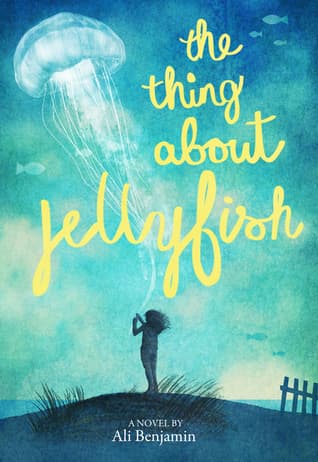
- The Thing About Jellyfish
Ali Benjamin
4.1 (27k) average on GoodreadsChildren'sExplores grief and loss through a young protagonist's journey of understanding and healing.
- Out of My Mind
Sharon M. Draper
4.4 (111k) average on GoodreadsChildren'sFeatures a resilient young protagonist overcoming significant challenges and finding their voice.
- Counting by 7s
Holly Goldberg Sloan
4.2 (61k) average on GoodreadsChildren'sDeals with a gifted protagonist experiencing profound loss and finding an unconventional new family.
- Harry Potter and the Sorcerer's Stone
J.K. Rowling
4.5 (7M) average on GoodreadsFantasyRescued from a miserable life under the stairs, an orphaned boy discovers he's a wizard destined for a magical school, where he uncovers a dangerous secret tied to the dark wizard who murdered his parents.
- The Hunger Games
Suzanne Collins
4.3 (6.4M) average on GoodreadsFantasyIn a future where children fight to the death on live television, Katniss Everdeen volunteers for the arena, turning a death sentence into a fight for survival and a spark of rebellion.
- To Kill a Mockingbird
Harper Lee
4.3 (4.5M) average on GoodreadsHistorical FictionIn the 1930s Jim Crow South, Harper Lee writes about racial injustice, moral growth, and the quiet courage of a lawyer father, Atticus Finch, as seen through his young daughter's eyes.





Enjoyed the summary?
A summary gives you the shape of the book. The book itself has the detail, the examples and the voice.
Find Torn Away on AmazonAs an Amazon Associate, BookBrief earns from qualifying purchases. How we're funded