
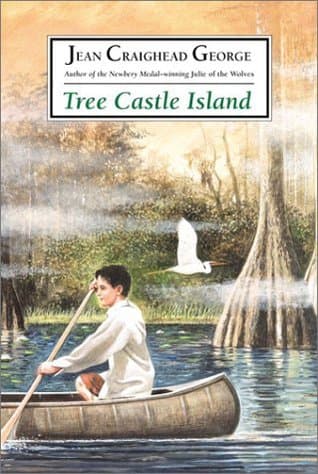
Synopsis
Covers the whole plot, including the ending.
- Difficulty
- Easy
- Pacing
- Moderate
- Mood
- Adventurous, Reflective, Educational, Mysterious
- Read it if
- You enjoy survival stories, nature exploration, and mysteries with a historical twist.
- Skip it if
- You prefer fast-paced action or urban settings.
Tree Castle Island Plot Summary
Covers the whole plot, including the ending.
The Allure of the Okefenokee
Fourteen-year-old Jack, an aspiring naturalist, builds a dugout canoe named 'Swampfire' for a solo trip into the Okefenokee Swamp. His grandmother, a knowledgeable woman, gives him supplies and a compass, but warns him about the swamp's dangers. Jack, confident in his skills, dismisses her concerns, eager to prove himself and explore the wilderness. He packs his gear, including books, sketching supplies, and food, then sets off, excited for discoveries in the swamp's heart.
First Encounters and Misfortune
Jack spends several days enjoying the swamp, observing wildlife like sandhill cranes and otters, sketching and taking notes. He feels a deep connection to the wilderness, believing he understands its secrets. However, his trip changes sharply when a large alligator, drawn by his food, attacks his canoe, tearing a hole. While fighting the gator, Jack also loses his compass. Stranded and lost, with a damaged canoe and no way to navigate, he struggles to paddle, his confidence shaken by the swamp's unpredictable nature.
Discovery on Tree Castle Island
Following a faint current, Jack finds an uncharted, almost perfectly circular island surrounded by cypress trees. He names it 'Tree Castle Island.' Exploring, he discovers an old, well-preserved treehouse, seemingly abandoned but filled with interesting artifacts. There are books, scientific instruments, and organized natural specimens. The treehouse feels like a time capsule, suggesting a previous inhabitant who shared Jack's love for nature but had a deeper, scientific understanding. This discovery sparks his curiosity, momentarily distracting him from his predicament.
Unraveling the Mystery of the Hermit
Jack begins to learn about the treehouse's former resident. He finds a journal with detailed observations of the swamp's plants and animals, along with thoughts on nature and humanity. The journal shows a highly intelligent, solitary person, likely a scientist, who chose to live apart from society. Jack learns about the hermit's routines, studies, and deep respect for the swamp. He also finds evidence of advanced knowledge, including complex diagrams and a carefully made herbarium, suggesting the hermit was a dedicated scholar, not just a survivalist.
The Hermit's Legacy: A Hidden Message
Among the hermit's belongings, Jack discovers a coded message and scientific notes detailing a theory about the interconnectedness of all life and the cyclical nature of ecosystems. The hermit, a man named Dr. George, had developed a concept of 'life energy' and its flow through the swamp, a theory that challenged conventional science. Jack, with his developing scientific mind, is captivated by Dr. George's complex work. He spends hours trying to decipher the code and understand the profound implications of the hermit's biological philosophy.
Connecting the Past to the Present
As Jack reads Dr. George's journal, he finds references to a specific rare orchid and a bird migration pattern his grandmother had mentioned. A growing sense of familiarity with some of the hermit's observations bothers him. He also notices striking similarities between Dr. George's scientific illustrations and sketches he'd seen in his grandmother's old books. The pieces slowly come together, leading him to a shocking realization about the hermit's identity and his connection to Jack's own family history.
The Revelation of Identity
Jack uncovers a hidden compartment containing old photographs and letters, confirming his suspicion: Dr. George was his grandfather, a renowned scientist who disappeared decades ago and was presumed dead. The letters reveal his grandfather, disillusioned with academia, chose to retreat to the Okefenokee to pursue his groundbreaking research alone. This revelation deeply affects Jack, as he confronts his family's past and the secret his grandmother kept. He feels a powerful connection to this brilliant, reclusive ancestor.
The Call of the Outside World
With knowledge of his grandfather's identity and his revolutionary scientific work, Jack faces a moral choice. He feels a strong desire to stay on Tree Castle Island, continuing his grandfather's legacy and immersing himself in nature. The island offers a sense of belonging he hasn't found elsewhere. However, he also understands the importance of sharing Dr. George's discoveries with the scientific community and telling his grandmother the truth. He considers the implications of revealing this secret, weighing solitude against the responsibility of knowledge.
Escape and a New Perspective
Using salvaged materials, Jack carefully repairs his damaged canoe. This act of practical problem-solving shows his renewed sense of purpose and his integration of wilderness skills with his intellectual curiosity. As he prepares to leave Tree Castle Island, he takes his grandfather's journal and some key research notes, understanding their immense value. He feels transformed, no longer just an explorer but a custodian of a significant scientific legacy. The swamp, once a place of simple adventure, now represents a deeper connection to his past and a clearer vision for his future.
Return and Reconciliation
After a challenging journey back through the swamp, Jack finally reaches home. His grandmother, worried sick, greets him with immense relief. Jack shares his extraordinary discovery about Dr. George's identity and scientific work. His grandmother, initially shocked, explains her reasons for keeping the truth hidden—to protect his grandfather's work and allow him his chosen solitude. Together, they begin to process the implications of Dr. George's legacy, promising to honor his memory and potentially share his theories with the world, bridging the gap between the wilderness and the scientific community.
Principal Figures
Jack
Protagonist
A curious and independent fourteen-year-old naturalist.
Jack is a resourceful and intelligent young boy with a deep passion for nature and science. He is initially driven by a desire for independence and to prove his self-sufficiency in the wilderness. He meticulously observes his surroundings, sketches, and takes notes, reflecting his burgeoning scientific mind. Though confident at first, he learns humility and resilience when faced with the swamp's dangers. His journey transforms him from a naive adventurer into a thoughtful, responsible young man burdened with a significant discovery.
Relationships: Grandmother (Caring guardian, source of wisdom and hidden family history.); Dr. George (Grandfather) (Unknown ancestor whose life and work profoundly influence Jack.)
Grandmother
Supporting
Jack's wise, independent, and secretive guardian.
Jack's grandmother is a strong, knowledgeable woman deeply connected to nature and the history of the Okefenokee Swamp. She provides Jack with practical advice and supplies but also harbors a significant family secret. Her initial warnings about the swamp's dangers reflect her practical wisdom and concern for Jack's safety. She is a keeper of memories and traditions, and her eventual revelation of Dr. George's identity shows her complex motivations and protective instincts regarding her family's legacy and her husband's chosen path.
Relationships: Jack (Grandmother and guardian, deeply caring and protective.); Dr. George (Husband) (Late husband whose secrets she guarded for decades.)
Dr. George (The Hermit)
Mentioned/Influential
Jack's brilliant scientist grandfather who chose a solitary life in the swamp.
Dr. George is Jack's grandfather, a brilliant but disillusioned scientist who disappeared decades prior. He chose to live in isolation in the Okefenokee Swamp to pursue groundbreaking research on 'life energy' and the interconnectedness of ecosystems, believing conventional science was too rigid. His meticulously kept journal, scientific instruments, and treehouse reveal a profound intellect, a deep respect for nature, and a philosophical mind. Though never physically present, his legacy and discoveries are the central mystery and driving force of Jack's journey, shaping Jack's understanding of science, family, and self.
Relationships: Jack (Grandfather whose life's work is discovered and carried forward by his grandson.); Grandmother (Husband whose secret she kept and whose work she implicitly protected.)
The Alligator
Antagonist/Force of Nature
A dangerous creature representing the unpredictable perils of the wild.
The alligator is not a character in the traditional sense, but rather a powerful force of nature that directly impacts Jack's journey. Its attack on Jack's canoe serves as the catalyst for his predicament, leaving him stranded and forcing him to seek refuge. It symbolizes the untamed, unpredictable, and dangerous aspects of the Okefenokee Swamp, reminding Jack that despite his knowledge, he is still vulnerable to the wild. Its presence underscores the theme of humanity's place within, rather than above, the natural world.
Themes & Insights
The Call of the Wild vs. Civilization
The novel explores the contrast between human society and nature's freedom. Jack initially seeks adventure in the Okefenokee, viewing it as a place to prove himself. His grandfather, Dr. George, represents a deeper rejection of civilization's limits for scientific pursuit and spiritual connection with nature. The island is a sanctuary for both, offering a retreat from societal expectations and a space for discovery. The conflict arises when Jack must decide whether to stay in this natural haven or return to share his discoveries with the wider world.
“The swamp offered a freedom no city could give, a freedom to think and be.”
The Interconnectedness of Life
A central theme, especially through Dr. George's scientific theories, is the idea that all living things are linked within an ecosystem. Jack's grandfather's research on 'life energy' emphasizes the cyclical flow of nutrients and energy, showing each organism's vital role. Jack's own observations of the swamp's plants and animals reinforce this, as he sees predator-prey relationships, symbiotic interactions, and the environment's delicate balance. This theme encourages a holistic view of nature and humanity's place within it, rather than as its dominant force.
“Every leaf, every insect, every creature was a thread in the great tapestry of life.”
Legacy and Discovery
The story is about discovering a hidden legacy and its impact. Jack begins his journey seeking personal discovery, but instead unearths his grandfather, Dr. George's, life's work. This legacy is not just scientific notes but a revolutionary way of understanding the natural world. Jack's role changes from explorer to inheritor, as he grapples with the responsibility of carrying forward his grandfather's groundbreaking, unacknowledged theories. The theme shows how past generations can influence the future, often unexpectedly, and how personal journeys can intertwine with larger historical and scientific narratives.
“His grandfather’s words echoed not from the past, but from a future Jack was now bound to.”
Self-Reliance and Maturation
Jack's journey is a coming-of-age story where he learns self-reliance and grows. Initially confident but naive, he underestimates the swamp's challenges. The alligator attack and loss of his compass make him vulnerable, forcing him to use his ingenuity and wilderness skills to survive. His ability to repair his canoe and navigate home shows his newfound practical competence. More deeply, his intellectual and emotional maturity grows as he deciphers his grandfather's work and grapples with the ethical implications of his discovery, moving from boyish adventure to responsible young adulthood.
“The swamp had stripped away his certainties, leaving him with only his wits and the courage to use them.”
Plot Devices & Literary Techniques
The Okefenokee Swamp
A vast, wild, and mysterious setting that acts as a character itself.
The Okefenokee Swamp is more than just a backdrop; it functions as a powerful, living entity in the story. It is both a place of immense beauty and profound danger, serving as a catalyst for Jack's transformation. Its vastness disorients him, its creatures challenge him, and its hidden depths conceal the secrets of his past. The swamp's isolation allows Dr. George to pursue his research without interference and provides the perfect setting for Jack's journey of self-discovery and the unearthing of a forgotten legacy. It represents both the allure and the peril of the untamed wilderness.
The Treehouse
A symbolic refuge and a repository of forgotten knowledge.
The treehouse on Tree Castle Island serves as a central plot device, acting as a physical manifestation of Dr. George's isolated life and intellectual pursuits. It is a time capsule, meticulously preserved, holding his journals, scientific instruments, and research. For Jack, it becomes a sanctuary and a classroom, where he learns about his grandfather's life and groundbreaking theories. The treehouse symbolizes the retreat from society, the pursuit of pure knowledge, and the enduring power of a legacy waiting to be discovered. Its elevated position also suggests a higher perspective or a detached view of the world.
Dr. George's Journal
A narrative device that reveals the past and advances the scientific mystery.
Dr. George's journal is the primary means by which Jack (and the reader) uncovers the mystery of the hermit's identity and his revolutionary scientific work. It serves as a direct link to the past, providing not only factual information about the swamp's ecosystem but also Dr. George's philosophical musings and scientific theories. The journal entries are crucial for character development, allowing Jack to connect with his grandfather's mind and eventually realize their familial bond. It is both a historical document and a scientific treatise, driving the central conflict of discovery and legacy.
The Lost Compass
A symbol of disorientation and the need for internal guidance.
The loss of Jack's compass early in his journey is a crucial plot device. It immediately plunges him into a state of vulnerability and disorientation, forcing him to rely on his instincts and observational skills rather than external tools. Symbolically, it represents his initial loss of direction and the need to find his own moral and intellectual compass. Its absence underscores the theme of self-reliance and forces Jack to engage more deeply with the natural world, ultimately leading him to Tree Castle Island and his profound discoveries.
Tree Castle Island Quotes
“The wind was a living thing, full of a thousand voices, and each one spoke to Lonnie.”
“He was an island himself now, separate and alone, and the island was teaching him its ways.”
“Every bird, every insect, every plant had a story to tell, if only he knew how to listen.”
“Fear was a cold knot in his stomach, but curiosity was a stronger, warmer pull.”
“The tree was not just a tree; it was a fortress, a home, a sentinel watching over him.”
“He learned to read the clouds, the currents, the flight of birds – a language older than words.”
“Loneliness was a taste in his mouth, but freedom was the air he breathed.”
“To survive, you had to become part of the land, not just live on it.”
“The silence was not empty; it was filled with the hum of life, the rustle of leaves, the whisper of water.”
“He was no longer just a boy from the city; he was a creature of the swamp.”
“Every sunrise was a promise, every sunset a lesson.”
“The island was his teacher, harsh but fair, demanding but generous.”
“He understood then that true strength wasn't in fighting nature, but in flowing with it.”
“The taste of wild berries, the warmth of the sun, the cool touch of water – these were his riches.”
Quiz
10 questions on the plot and the characters. Each answer comes with a short explanation.
Question 1
What is the primary mode of transportation Jack uses to enter the Okefenokee Swamp?
- A motorboat
- A handmade canoe
- A raft he built on site
- He walked in along the edge
Show answer
B. A handmade canoe Jack sets out in a handmade canoe for the legendary Okefenokee Swamp, which is central to his initial journey.
Question 2
What animal causes damage to Jack's canoe, forcing him to seek refuge?
- A black bear
- A hungry alligator
- A snapping turtle
- A wild boar
Show answer
B. A hungry alligator The synopsis explicitly states that Jack 'runs into a hungry alligator who takes a bite out of his canoe.'
Question 3
What is the name of the swamp Jack ventures into?
- Everglades National Park
- The Great Dismal Swamp
- Okefenokee Swamp
- Atchafalaya Basin
Show answer
C. Okefenokee Swamp The book's description clearly states Jack 'sets out in a handmade canoe for the legendary Okefenokee Swamp.'
Question 4
What unexpected discovery does Jack make upon reaching a remote island after his canoe is damaged?
- A hidden treasure chest
- Another lost traveler
- An abandoned scientific research station
- A rare species of bird
Show answer
B. Another lost traveler The synopsis mentions that 'When he pulls up to a remote island, he finds another surprise: a mystery that will reach far into his own past.' This 'mystery' is implied to involve another person or a situation related to human presence.
Question 5
How old is Jack at the beginning of his adventure?
- Twelve years old
- Thirteen years old
- Fourteen years old
- Fifteen years old
Show answer
C. Fourteen years old The book description states, 'Fourteen-year-old Jack sets out in a handmade canoe'.
Question 6
What broader theme is suggested by the phrase 'force him to question the world he's left behind'?
- The dangers of environmental degradation
- The conflict between urban and rural lifestyles
- Self-discovery and re-evaluation of personal values
- The importance of historical preservation
Show answer
C. Self-discovery and re-evaluation of personal values The phrase 'force him to question the world he's left behind' directly implies a theme of self-reflection, growth, and a re-evaluation of his previous life or beliefs, which aligns with self-discovery.
Question 7
What type of literary genre does 'Tree Castle Island' primarily fall under, based on the description?
- Science Fiction
- Historical Fiction
- Children's, Young Adult Adventure
- Fantasy
Show answer
C. Children's, Young Adult Adventure The provided information explicitly labels the book as 'Children's, Young Adult' and the plot clearly involves an adventure into the wilderness.
Question 8
The 'mystery that will reach far into his own past' suggests which narrative device will be employed?
- Foreshadowing of future events
- A series of flashbacks or revelations about his background
- An unreliable narrator's perspective
- A magical realism element
Show answer
B. A series of flashbacks or revelations about his background A 'mystery that will reach far into his own past' strongly indicates that the plot will involve uncovering details or events from Jack's personal history, likely through flashbacks or new revelations.
Question 9
Considering the setting and plot, what specific skill would be most crucial for Jack's survival and journey?
- Advanced rock climbing techniques
- Expert knowledge of desert flora and fauna
- Wilderness navigation and basic survival skills
- Proficiency in deep-sea diving
Show answer
C. Wilderness navigation and basic survival skills Being lost in a swamp, with a damaged canoe and encountering an alligator, highlights the critical need for wilderness navigation (to find his way home) and general survival skills to sustain himself in the environment.
Question 10
The phrase 'several idyllic days of exploring' before bad luck strikes sets up what common narrative structure?
- A 'rags to riches' story arc
- A false sense of security followed by rising action/conflict
- A 'journey to the underworld' archetype
- A 'deus ex machina' introduction
Show answer
B. A false sense of security followed by rising action/conflict Starting with 'idyllic days' and then immediately introducing 'bad luck' (getting lost, alligator attack) is a classic way to establish a peaceful beginning that is disrupted by conflict, leading into the main challenges of the story.
Tree Castle Island FAQ
What is the primary motivation for Jack's journey into the Okefenokee Swamp?
Jack is driven by a deep desire to experience the legendary Okefenokee Swamp firsthand, following in the footsteps of his ancestors and seeking a connection to the wild. He builds his own dugout canoe, named 'Swamp Witch,' to embark on this solo adventure, aiming for a sense of independence and exploration.
What significant challenge does Jack face early in his solo exploration?
While navigating the swamp, Jack loses his way, becoming disoriented amidst the labyrinthine waterways and dense vegetation. This initial challenge is compounded when a large alligator attacks his canoe, damaging it and forcing him to seek refuge on a remote island, further isolating him.
Who is the mysterious individual Jack encounters on the remote island?
Jack encounters an elderly, reclusive man named 'Mister' or 'Swamp Man' living on a tree island, who initially appears wary and uncommunicative. This man lives a self-sufficient existence, relying on his deep knowledge of the swamp for survival, and harbors secrets about his past and connection to the outside world.
What kind of 'mystery' does Jack uncover that connects to his own past?
Jack discovers that 'Mister' is actually his grandfather, whom his family believed to be dead. This revelation unravels a long-held family secret about his grandfather's disappearance and his decision to abandon his previous life for the solitude of the swamp, which deeply impacts Jack's understanding of his heritage.
How does Jack's grandfather, 'Mister,' survive in the Okefenokee Swamp?
Mister survives through a profound understanding of the swamp's ecosystem, utilizing traditional skills for hunting, fishing, and gathering. He has built a sustainable life, relying on the natural resources for food, shelter, and tools, demonstrating an intimate connection with his environment.
What is the significance of the 'Tree Castle' structure on the island?
The 'Tree Castle' is the elaborate, elevated dwelling built by Jack's grandfather, designed to be safe from rising water and swamp creatures. It symbolizes his deep integration into the swamp's environment and his desire for a secure, hidden sanctuary from the outside world he left behind.
Are there any subtle clues early in the book that hint at Mister's true identity?
Subtle clues include Mister's initial reluctance to speak about his past, his advanced knowledge of human lore and the outside world despite his isolation, and perhaps a passing resemblance or familiar mannerism that Jack might subconsciously notice but not fully comprehend until the revelation.
How does the author use the Okefenokee Swamp itself as more than just a setting?
The Okefenokee Swamp acts as a living character, a powerful force that shapes the lives of its inhabitants, including Jack and his grandfather. It represents both danger and sanctuary, a place of profound natural beauty and harsh realities, mirroring the internal struggles and discoveries of the characters.
What is the psychological impact of the isolation on both Jack and his grandfather?
For Jack, initial isolation brings fear and self-reliance, forcing him to confront his capabilities. For his grandfather, it's a chosen solitude that has fostered a deep connection to nature but also a detachment from human society, influencing his initial guardedness and later, his emotional reawakening.
How does Jack's perception of his family and 'the world he left behind' change throughout the story?
Jack initially views his family and town as his stable reality, but discovering his grandfather's hidden life forces him to question societal norms and the definition of 'home.' He realizes that there are different ways to live and finds a new respect for his family's unspoken history and the wildness within himself.
What internal conflict does Jack experience regarding his grandfather's choice to live in the swamp?
Jack grapples with understanding why his grandfather chose to abandon his family and live in isolation. He feels a mix of admiration for his grandfather's independence and resentment for the pain his disappearance caused, leading to an internal debate about loyalty, freedom, and responsibility.
How does Jack's experience in the swamp contribute to his coming-of-age journey?
His time in the swamp, facing dangers, learning survival skills, and uncovering a profound family secret, forces Jack to mature rapidly. He develops resilience, self-reliance, and a deeper understanding of life's complexities, ultimately shaping his identity and worldview.
What broader message about humanity's relationship with nature does the book convey?
The book suggests that humanity has a deep, often forgotten, connection to nature. It advocates for living in harmony with the environment, respecting its power, and finding wisdom and solace in the wilderness, as exemplified by the grandfather's chosen lifestyle and Jack's transformative experience.
Could Jack's grandfather be seen as a hero or an anti-hero, and why?
Jack's grandfather could be seen as an anti-hero. While he demonstrates incredible self-sufficiency and wisdom in nature, his decision to abandon his family caused significant pain. His heroism lies in his profound connection to the wild, but his anti-heroic traits stem from his reclusive nature and the personal cost of his choices.
Does the book suggest that returning to 'civilization' is always the best outcome, or does it offer an alternative?
The book offers an alternative perspective, suggesting that 'civilization' isn't necessarily the only or best path. While Jack eventually returns, his experience imparts a new appreciation for wildness and a different definition of success, implying that integration of both worlds, or even a simpler life, can be equally valid.
What is the symbolic meaning of the alligator attack on Jack's canoe?
The alligator attack symbolizes the raw, untamed power of nature and the immediate dangers of the swamp. It forces Jack to confront his vulnerability and pushes him deeper into the unknown, directly leading to his encounter with his grandfather and the unraveling of the mystery.
How does the concept of 'home' evolve for Jack throughout his adventure?
Initially, 'home' is a physical house and family in his town. As he explores the swamp and connects with his grandfather, 'home' expands to include the wilderness itself and the ancestral ties he discovers, suggesting that home can be a feeling of belonging and understanding, not just a fixed location.
What is the ultimate resolution for Jack and his grandfather at the end of the book?
Jack ultimately helps his grandfather reconnect, in some way, with the outside world and his family, though the grandfather remains in the swamp. Jack returns home with a profound understanding of his heritage and a changed perspective, bridging the gap between his two worlds and carrying the wisdom of the swamp with him.
About the author
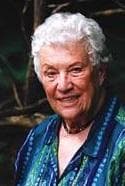
Jean Craighead George was an American author known for her works of children's fiction, particularly those that explore themes of nature and wildlife. Among her notable books are "Julie of the Wolves," which tells the story of a young girl surviving in the Alaskan wilderness, and "Tree Castle Island," which follows the adventures of children in a forest setting.
Similar books
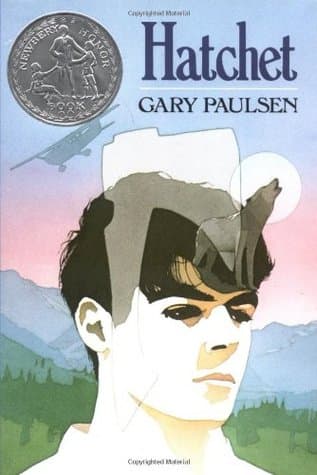
- Hatchet
Gary Paulsen
3.7 (309k) average on GoodreadsChildren'sA boy's survival story in the wilderness after a plane crash.
- Island of the Blue Dolphins
Scott O'Dell
3.8 (292k) average on GoodreadsChildren'sA young girl's solitary survival and connection with nature on a remote island.
- Harry Potter and the Sorcerer's Stone
J.K. Rowling
4.5 (7M) average on GoodreadsFantasyRescued from a miserable life under the stairs, an orphaned boy discovers he's a wizard destined for a magical school, where he uncovers a dangerous secret tied to the dark wizard who murdered his parents.
- The Hobbit, or There and Back Again
J.R.R. Tolkien
4.3 (2.9M) average on GoodreadsFantasyA comfort-loving hobbit named Bilbo Baggins is whisked away by a mischievous wizard and a band of dwarves on an unexpected journey to reclaim stolen treasure from a fearsome dragon, discovering courage and a magical ring along the way.
- Harry Potter and the Goblet of Fire
J.K. Rowling
4.6 (2.6M) average on GoodreadsFantasyA bewildered Harry Potter, underage and thrust into a deadly Triwizard Tournament, must brave dragons, mermaids, and a resurgent dark magic to survive a year that will forever alter the wizarding world.
- Harry Potter and the Order of the Phoenix
J.K. Rowling
4.5 (2.5M) average on GoodreadsFantasyIn a year of oppressive secrets and the threat of Voldemort, Harry Potter and Dumbledore's Army secretly train for war, shown through Jim Kay and Neil Packer's dark illustrations.





Enjoyed the summary?
A summary gives you the shape of the book. The book itself has the detail, the examples and the voice.
Find Tree Castle Island on AmazonAs an Amazon Associate, BookBrief earns from qualifying purchases. How we're funded