
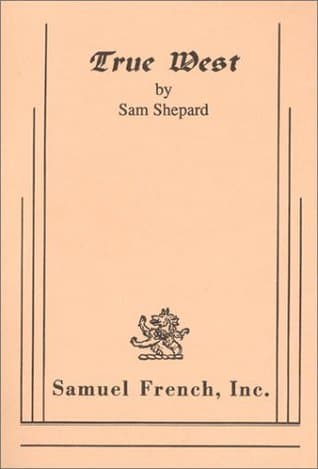
Synopsis
Covers the whole plot, including the ending.
- Difficulty
- Medium
- Pacing
- Fast
- Mood
- Intense, Raw, Darkly Humorous, Primal
- Read it if
- You enjoy intense character studies, explore themes of sibling rivalry, identity crisis, and the American Dream's dark underbelly.
- Skip it if
- You prefer clear-cut resolutions, optimistic narratives, or dislike plays that delve into raw, often uncomfortable, human behavior.
True West Plot Summary
Covers the whole plot, including the ending.
A Brother's Unwelcome Arrival
The play opens in the kitchen of the absent mother's Southern California house. Austin, a screenwriter, works on his script, a love story, for producer Sal Kimmer. He is house-sitting while his mother vacations. Suddenly, his older brother, Lee, a scruffy drifter and petty thief, appears unannounced. Lee immediately disrupts Austin's concentration, making demands, questioning his work, and asserting his dominance through intimidation. Austin tries to stay calm and focused, but Lee's presence is a constant, unsettling distraction, showing the vast differences in their lives.
Lee's Intrusion and Austin's Discomfort
Lee's disruptive behavior continues. He insists on staying at the house and demands the car keys. He talks about stealing televisions and dogs in the desert, a sharp contrast to Austin's ordered, professional life. Austin tries to be polite and accommodating, but he is clearly uncomfortable with Lee's presence and unpredictable nature. He tries to set boundaries, reminding Lee that their mother returns soon and he needs to work. However, Lee mostly ignores these pleas, focusing on his own desires and subtly undermining Austin's authority in their childhood home.
The Producer's Visit and Lee's Pitch
Sal Kimmer, the Hollywood producer, arrives to discuss Austin's screenplay. Austin wants to impress Kimmer and finalize their deal. However, Lee, despite Austin's efforts to keep him away, interrupts their meeting. Lee, with his rough charm and outlandish stories, begins to pitch his own impromptu movie idea: a Western about two men chasing each other across the desert. To Austin's shock, Kimmer becomes captivated by Lee's raw story, finding it more authentic and marketable than Austin's carefully written love story. Austin watches helplessly as his professional opportunity is taken by his brother.
Kimmer's Betrayal and Austin's Despair
After Lee's pitch, Sal Kimmer tells Austin he is no longer interested in Austin's original screenplay. Instead, Kimmer wants Austin to write Lee's Western story. This news shatters Austin's professional hopes and self-worth. He feels betrayed by Kimmer and humiliated by Lee. This professional setback triggers a deep personal crisis for Austin, who questions his identity and his structured life. The power dynamic between the brothers shifts, with Lee now holding the advantage, both professionally and in their sibling relationship.
The Role Reversal Begins
With his own project dropped, Austin reluctantly agrees to help Lee write the Western script, though without enthusiasm. As Austin descends into despair and alcoholism, he begins to adopt some of Lee's destructive habits, drinking heavily and committing petty acts of vandalism, like stealing toasters from neighbors. Conversely, Lee, now tasked with creative work, struggles with the discipline needed for screenwriting. He cannot put his vision on paper, showing his own limits despite his initial confidence. The brothers slowly begin to trade places, their personalities blurring into one another.
A Night of Desperation and Destruction
As the night goes on, the brothers' descent into chaos speeds up. Austin, fueled by alcohol and resentment, becomes erratic. He smashes a typewriter, symbolizing his rejection of his former identity and career. Lee, frustrated by his inability to write and by Austin's taunts, also contributes to the rising destruction. They engage in a bizarre spree, destroying household items, scattering toast, and creating utter disarray in their mother's kitchen. This destructive outburst shows their inner turmoil and the breakdown of their civility.
The Mother's Return and Her Disbelief
The mother returns home from her Alaskan vacation to find her house devastated. The kitchen is a wreck, filled with scattered toast, broken appliances, and chaos. Her sons, Austin and Lee, are in a violent struggle, their rivalry reaching a brutal physical climax. She is horrified and bewildered, unable to understand her sons' transformation or the extent of the destruction. Her attempts to restore order or understand are useless, as the brothers are too deep in their primal conflict.
The Final Confrontation
In a final struggle, Austin wraps a telephone cord around Lee's neck and strangles him. The mother, seeing this, flees the house in terror. Austin thinks he has killed Lee, and a chilling silence falls. However, as Austin stands over his brother's body, Lee slowly stirs. He twitches, then moves, and the play ends with the two brothers in a silent, predatory standoff, circling each other. The final scene leaves their fate ambiguous, suggesting an endless, cyclical struggle between their contrasting yet intertwined identities.
True West Characters
Austin
Protagonist
The educated, seemingly successful screenwriter whose life unravels.
Austin is initially presented as the epitome of the 'civilized' brother: educated, articulate, and professionally ambitious. He is a screenwriter working on a modern love story, representing a more intellectual and controlled approach to life. He tries to maintain order and politeness, even in the face of Lee's provocations. However, beneath his polished exterior lies a deep-seated frustration and a yearning for a more authentic, perhaps wilder, existence. His identity is heavily tied to his professional success and his perceived intellectual superiority.
Relationships: Lee (Sibling rivalry, professional competition, eventual role reversal); Sal Kimmer (Professional associate, source of betrayal); Mom (Distant, somewhat idealized figure; her home is their battleground)
Lee
Antagonist/Catalyst
The wild, unkempt drifter and petty thief who disrupts his brother's life.
Lee is Austin's older brother, a rough, unkempt drifter who embodies a more primal, untamed existence. He is a petty thief, a storyteller, and a master of psychological manipulation. Lee represents the 'true West' – a brutal, unfiltered, and instinctual way of life. He thrives on chaos and disruption, using intimidation and a raw, charismatic energy to get what he wants. Despite his lack of formal education, he possesses a shrewd, street-smart intelligence and a deep understanding of human nature, particularly his brother's vulnerabilities.
Relationships: Austin (Sibling rivalry, professional competition, eventual role reversal); Sal Kimmer (Business prospect, source of professional opportunity); Mom (Distant figure; her home is a temporary haven and battlefield)
Sal Kimmer
Supporting
The Hollywood producer who makes a pivotal decision, shifting the brothers' dynamic.
Sal Kimmer is a Hollywood film producer who represents the commercial and often superficial nature of the entertainment industry. He is initially interested in Austin's modern love story but quickly shifts his allegiance to Lee's more marketable, 'true Western' concept. Kimmer is driven by profit and popular appeal, demonstrating a willingness to abandon artistic integrity for commercial viability. He acts as a catalyst for the central conflict, inadvertently sparking the brothers' descent into chaos by validating Lee's wild ideas over Austin's established talent.
Relationships: Austin (Professional relationship, ultimately a betrayal); Lee (Potential business partner, source of inspiration)
Mom
Mentioned/Supporting
The absent mother whose house becomes the stage for her sons' destructive conflict.
The mother is largely an offstage presence for most of the play, vacationing in Alaska. Her home, a suburban oasis, serves as the setting for her sons' escalating conflict. When she finally returns, she represents the outside world's shock and disbelief at the brothers' primal regression. She is a symbol of domestic order and the 'civilized' life that her sons are systematically dismantling. Her inability to comprehend or intervene in their struggle highlights the depth of their internal and external chaos.
Relationships: Austin (Mother-son; her home is his temporary sanctuary); Lee (Mother-son; her home is his temporary refuge)
True West Themes
The Conflict Between Civilization and Wilderness
This theme is key to 'True West,' shown through Austin's and Lee's contrasting personalities. Austin represents the educated, professional man bound by social rules, while Lee embodies the raw, untamed 'wilderness' of the American West. The play explores what happens when these two forces meet in a suburban home. The destruction of the kitchen and Austin's fall into Lee-like behavior (stealing toasters, heavy drinking) show the breakdown of order and the appeal of primal freedom. The play asks if the 'civilized' self can truly suppress its wilder instincts.
“There's nothin' to write about out here. Nothin' happens. It's too quiet.”
Identity and Self-Transformation
The play deeply explores how identity changes, especially as shaped by environment, goals, and sibling dynamics. Austin's identity as a screenwriter is challenged and shattered when his project is rejected and he starts to act like Lee. Conversely, Lee, initially confident in his wildness, struggles when forced into Austin's role as writer. The brothers' literal exchange of clothes and mannerisms shows a blurring of their individual selves, suggesting that identity is not fixed but can be altered or absorbed by another, especially within intense family bonds. The play asks if one can truly escape their inherent nature or family influence.
“I'm livin' out here. This is my place.”
The Myth of the American West
'True West' takes apart the romanticized myth of the American West, showing a more brutal and ambiguous reality. Lee's 'true Western' story, though initially captivating to Sal Kimmer, is ultimately simplistic and violent, lacking the nuanced heroism often in the genre. The play suggests that the 'West' is not just a place but a state of mind—a place of raw survival, moral ambiguity, and primal conflict that still exists within the modern American psyche. The desert, often mentioned, becomes a metaphor for this untamed, dangerous aspect of the American spirit, contrasting with the suburban setting.
“I'm talkin' about a movie! A true-to-life Western!”
Sibling Rivalry and Family Dysfunction
The play's core is the intense, destructive sibling rivalry between Austin and Lee, fueled by unresolved issues and different paths. Their competition is not just for their mother's approval or professional success, but for dominance and identity itself. The absent, alcoholic father and distant mother contribute to a dysfunctional family dynamic where resentment festers. The brothers' inability to coexist peacefully leads to physical violence and the destruction of their shared childhood home, showing how deep family conflicts can become primal, almost animalistic, struggles for survival and self-assertion.
“You think I'm gonna stand around here and watch you make a fool outta yourself?”
Plot Devices & Literary Techniques
Symbolism of the Home
The mother's suburban home represents order, civilization, and the fragile domestic sphere.
The mother's house, particularly the kitchen, serves as a central symbol. Initially, it represents Austin's attempts at order and professionalism. As the play progresses, it becomes a battleground where the forces of civilization and wilderness clash. Its gradual destruction mirrors the psychological unravelling of the brothers and the breakdown of their societal facades. By the end, the ruined house reflects the complete chaos and the loss of any semblance of domestic peace, suggesting that the 'wild' has fully invaded and consumed the 'civilized' space.
Role Reversal
The gradual swapping of personalities and behaviors between Austin and Lee.
The most prominent plot device, role reversal, drives much of the play's action and thematic exploration. Austin, the sophisticated writer, devolves into a drunken, destructive figure, stealing toasters and engaging in violence. Lee, the wild drifter, attempts to write a screenplay, struggling with the discipline and structure required. This exchange of roles highlights the fluid nature of identity and suggests that the brothers, despite their apparent differences, share a deeper, primal connection or perhaps represent two sides of the same coin. It questions whether environment or inherent nature truly dictates one's path.
The Desert as a Metaphor
The desert represents freedom, lawlessness, and a primal, untamed existence.
The desert, though mostly offstage, is a powerful metaphorical presence. It is Lee's natural habitat, symbolizing freedom from societal constraints, a place of survival and raw instinct. For Austin, it represents an escape from his stifling 'civilized' life, a yearning for authenticity and danger. Lee's 'true Western' story, set in the desert, embodies the myth of the American frontier. The desert functions as a constant pull, drawing the brothers away from their suburban reality and towards a more primal, unfettered existence, ultimately influencing their destructive actions within the confines of the home.
The Typewriter
A symbol of Austin's professional identity and its destruction.
The typewriter is a concrete symbol of Austin's professional life and his intellectual identity. It is the tool of his trade, representing order, creativity, and his connection to the 'civilized' world of screenwriting. When Austin smashes the typewriter in a fit of rage, it signifies his complete rejection of his former self, his career aspirations, and the societal expectations that defined him. Its destruction is a pivotal moment in his transformation, marking his surrender to the more primal, destructive impulses embodied by Lee.
True West Quotes
“I can do anything with words. I can make them dance. I can make them sing.”
“You always got to be testing yourself, see how far you can go.”
“There's no such thing as a true story. There's only a story.”
“We're talkin' about a real movie here. A movie that can make some real money.”
“I hate the smell of toast. It reminds me of failure.”
“You think I'm gonna let you get away with this? You think I'm just gonna sit here and watch you destroy everything?”
“There's nothin' real in this house. Not a thing. It's all fake.”
“I'm not a thief. I just borrow things. And I always give 'em back. Sometimes.”
“You gotta have a dream, see. Even if it's just a little one.”
“I just wanna write something true. Something that matters.”
“It's a desert out there. And there's nothin' to drink.”
“You got a good heart, Austin. You just don't know how to use it.”
“I'm in charge now. I'm the one with the power.”
“Nobody understands the West. Nobody. It's a mystery. A complete mystery.”
Quiz
10 questions on the plot and the characters. Each answer comes with a short explanation.
Question 1
What is Austin's profession at the beginning of the play?
- A petty thief
- A film producer
- A screenwriter
- A real estate agent
Show answer
C. A screenwriter Austin is introduced as a screenwriter, working on a script he has sold to Sal Kimmer.
Question 2
What kind of movie script does Lee initially pitch to Sal Kimmer?
- A bleak, modern love story
- A trashy Western tale
- A suburban drama
- A documentary about the desert
Show answer
B. A trashy Western tale Lee pitches a 'trashy Western tale' to Sal Kimmer, which captivates the producer.
Question 3
Who is Sal Kimmer?
- Austin's brother
- A film producer
- Lee's accomplice
- The family's gardener
Show answer
B. A film producer Sal Kimmer is the producer who Austin has sold his script to, and who Lee later pitches his idea to.
Question 4
What is the primary conflict between Austin and Lee early in the play?
- Disagreement over their mother's inheritance
- Lee's attempt to steal Austin's car
- Lee's interference with Austin's film project and professional life
- A physical fight over household chores
Show answer
C. Lee's interference with Austin's film project and professional life Lee directly interferes with Austin's professional life by pitching his own idea to Sal Kimmer, leading Sal to abandon Austin's script.
Question 5
What does Sal Kimmer ultimately decide to do after hearing Lee's pitch?
- He decides to produce both Austin's and Lee's scripts.
- He rejects both scripts and leaves.
- He wants Austin to abandon his current script and write Lee's Western.
- He offers Lee a job as a script consultant.
Show answer
C. He wants Austin to abandon his current script and write Lee's Western. Kimmer is so impressed by Lee's idea that he wants Austin to 'junk his bleak, modern love story and write Lee's trashy Western tale.'
Question 6
What type of environment did Austin and Lee's father inhabit?
- A suburban mansion
- A bustling city apartment
- A desert dwelling
- A coastal fishing village
Show answer
C. A desert dwelling The text states that Austin and Lee are 'sons of a desert dwelling alcoholic,' indicating their father lived in the desert.
Question 7
Which brother is described as the 'achiever'?
- Lee
- Austin
- Their father
- Sal Kimmer
Show answer
B. Austin The description explicitly states, 'Austin, the achiever, is working on a script.'
Question 8
How does the play immediately establish Lee's character?
- As a successful businessman
- As a demented petty thief
- As a famous actor
- As a quiet, contemplative artist
Show answer
B. As a demented petty thief Lee is immediately described as 'a demented petty thief' when he 'drops in'.
Question 9
What is a central theme explored through the clash between Austin and Lee regarding the film script?
- The importance of family loyalty above all else.
- The inevitable triumph of sophisticated art over commercialism.
- The blurring lines between high art and popular culture, and the struggle for identity.
- The dangers of living in the Californian desert.
Show answer
C. The blurring lines between high art and popular culture, and the struggle for identity. The conflict over the scripts (Austin's 'bleak, modern love story' versus Lee's 'trashy Western tale') directly addresses the tension between artistic integrity and commercial appeal, and how this impacts the brothers' identities.
Question 10
The play is set against the backdrop of the 'demented terrain of the California landscape.' What does this setting primarily symbolize in the context of the brothers' relationship?
- A peaceful and idyllic environment for creativity.
- The wild, untamed, and potentially destructive aspects of their shared heritage and inner selves.
- The opportunity for new beginnings and prosperity.
- A place of complete isolation from societal norms.
Show answer
B. The wild, untamed, and potentially destructive aspects of their shared heritage and inner selves. The 'demented terrain' suggests a chaotic and challenging environment that mirrors the internal turmoil and wild nature of the brothers' relationship and their contrasting personalities, reflecting the 'alternatives that might spring' from such a place.
True West FAQ
What is the central conflict that drives the plot of 'True West'?
The central conflict revolves around the clash between two estranged brothers, Austin and Lee, as they attempt to navigate their divergent lives and creative aspirations while house-sitting for their mother. Their deeply ingrained sibling rivalry escalates when Lee, a drifter and petty thief, intrudes on Austin's professional screenwriting project, ultimately upending his career and their relationship. The tension intensifies as their roles begin to blur and their identities seemingly swap.
Who are Austin and Lee, and what are their primary characteristics at the beginning of the play?
Austin is depicted as an educated, successful screenwriter, seemingly responsible and intellectual, working on a serious modern love story. Lee, in contrast, is a wild, unpredictable petty thief and drifter, embodying a more primal, untamed spirit associated with the 'true West.' Their initial characteristics highlight a clear dichotomy between civilization and wilderness, order and chaos.
How does Sal Kimmer, the producer, influence the brothers' dynamic?
Sal Kimmer's arrival significantly escalates the conflict by showing interest in Lee's 'idea' for a Western movie, causing him to abandon Austin's pre-approved script. This shift in professional allegiance undermines Austin's identity and professional standing, forcing him to consider writing Lee's story. Kimmer's decision directly fuels the brothers' rivalry and triggers their subsequent role reversal.
What is the significance of the film script, particularly Lee's Western idea, in the play?
The film script serves as a battleground for the brothers' identities and values. Austin's original script represents his refined, modern sensibilities, while Lee's Western idea embodies a raw, violent, and idealized version of the American West. The producer's preference for Lee's story forces Austin to confront a more primitive, 'authentic' side of creativity and his own suppressed desires, blurring the lines between art and commerce, and their individual aspirations.
What happens to Austin's original script for a modern love story?
Austin's original script for a modern love story is effectively junked by Sal Kimmer, who becomes more interested in Lee's spontaneous, violent Western tale. This rejection is a significant turning point, forcing Austin to abandon his established creative path and consider writing Lee's story, which he initially despises. It symbolizes the triumph of raw, unpolished ideas over refined, intellectual ones in the commercial world.
What is the symbolic meaning behind the constant presence of toasters and other small appliances?
The abundance of toasters, golf clubs, and other mundane household items that Lee steals and Austin eventually destroys symbolizes the superficiality and clutter of modern suburban life. Lee's theft of them represents his disdain for domesticity and his connection to a more primal, acquisitive instinct, while Austin's violent destruction of them later on signifies his own descent into chaos and rejection of his former orderly existence.
How does the sound of crickets or coyotes contribute to the atmosphere?
The recurring sounds of crickets and coyotes outside the house serve as a constant reminder of the encroaching wilderness and the 'true West' that Lee embodies. They create an atmosphere of isolation and primal untamed nature, contrasting sharply with the suburban setting. These sounds subtly underscore the brothers' struggle and the pull towards a wilder, more instinctual existence, foreshadowing their eventual descent into a more animalistic state.
What is the significance of the desert in the play, especially in relation to the brothers' father?
The desert represents the brothers' origins, their untamed heritage, and the 'true West' that profoundly shaped their father, an alcoholic dwelling there. It symbolizes a harsh, uncompromising reality that contrasts with their mother's suburban home. Both brothers are drawn to and repelled by the desert, as it embodies a raw freedom and violence that is both their birthright and a source of their psychological turmoil.
How does the play subtly suggest that the mother is aware of the brothers' latent violent tendencies?
The mother's reaction upon returning home, particularly her nonchalant acceptance of the destroyed kitchen and her immediate desire to go to the desert, suggests a deep-seated familiarity with the brothers' destructive potential. Her comments about their father and her calm demeanor amidst the chaos imply that she has witnessed similar outbursts before and understands the inherent wildness within her sons. She seems to recognize the inevitable pull of their 'true West' heritage.
How does Austin's psychological state evolve throughout the play?
Austin begins as a seemingly stable, intellectual individual, but as Lee infiltrates his life and career, Austin's psychological state deteriorates rapidly. He becomes increasingly frustrated, jealous, and ultimately descends into a primal rage, destroying household items and attempting to murder Lee. This transformation reveals his suppressed wildness and the fragility of his civilized facade, suggesting a deep-seated envy and a desire for Lee's perceived freedom.
What psychological concept does the role reversal between Austin and Lee illustrate?
The role reversal between Austin and Lee illustrates the psychological concept of the 'shadow self' or the 'doppelgänger.' Austin embodies Lee's suppressed wildness and Lee embodies Austin's desire for intellectual recognition. They mirror each other's unfulfilled desires and fears, suggesting that each brother represents a part of the other's psyche that is either repressed or envied. Their merging identities highlight the fluid nature of self and the influence of shared history.
How does sibling rivalry contribute to the brothers' psychological unraveling?
Sibling rivalry acts as a powerful catalyst for the brothers' psychological unraveling, fueling their competitive nature and bringing their deep-seated resentments to the surface. Their lifelong struggle for dominance and recognition, exacerbated by their father's absence and their mother's perceived favoritism, manifests in destructive behaviors. This rivalry ultimately pushes them both to extreme acts of violence and self-destruction, as they vie for control and identity.
In what ways do Austin and Lee exhibit traits of their absent father?
Both Austin and Lee exhibit traits of their absent, alcoholic father. Lee embodies the father's wildness, unpredictability, and connection to the untamed desert, while Austin, in his later destructive phase, mirrors the father's self-destructive tendencies and inability to maintain order. They both struggle with their identity in relation to this powerful, yet absent, figure, suggesting a generational cycle of unresolved conflict and primal urges.
Is the ending of 'True West' meant to be interpreted as a literal death or a symbolic one?
The ending, where Austin strangles Lee and then the two confront each other in a primal standoff, is open to interpretation. It can be seen as a literal struggle for dominance, possibly leading to death, but more powerfully, it symbolizes the death of their individual identities and the complete merging of their personas. It suggests that they have become indistinguishable facets of the 'true West,' forever bound in a destructive, cyclical struggle.
What is Shepard's commentary on the 'American Dream' through the lens of Austin and Lee?
Shepard's commentary suggests a critique of the conventional 'American Dream,' portraying it as a facade that masks deeper, more primal desires and conflicts. Austin's initial pursuit of success and stability is undermined by Lee's raw, untamed vision, implying that the dream of suburban comfort and intellectual achievement is fragile. The play suggests that the 'true West' – a wild, violent, and authentic spirit – constantly lurks beneath the surface of modern American life, ready to erupt and challenge established norms.
How does the play challenge traditional notions of masculinity?
The play profoundly challenges traditional notions of masculinity by presenting two extreme, yet interconnected, archetypes. Austin's intellectual, domesticated masculinity is shown to be weak and easily corrupted, while Lee's primal, untamed masculinity is both alluring and destructive. Shepard suggests that both forms are incomplete and perhaps unhealthy, forcing a re-evaluation of what it means to be a 'man' in the context of American identity, blurring the lines between strength and vulnerability, control and chaos.
What does the mother's final decision to go to Alaska signify?
The mother's final decision to go to Alaska signifies her detachment from the brothers' destructive cycle and her own search for an escape or a new beginning. Alaska, a remote and wild frontier, mirrors the 'true West' in its untamed nature, suggesting that she is seeking a similar primal freedom or perhaps a place where the domestic chaos cannot reach her. It represents her abandonment of the conventional suburban life for a more elemental existence, mirroring the wildness that has consumed her sons.
Is there a definitive 'winner' in the brothers' struggle, or is it a cycle without resolution?
There is no definitive 'winner' in the brothers' struggle; instead, the play depicts a cyclical, unresolved conflict. While Austin initially gains the upper hand, his victory is tainted by his own descent into savagery, and Lee's apparent defeat is ambiguous, suggesting a continuous, almost ritualistic battle. The ending implies that their struggle is an eternal dance between opposing forces, rather than a conflict with a clear victor, highlighting the inescapable nature of their shared heritage and psychological entanglement.
About the author

Sam Shepard was an American playwright, actor, and author known for his contributions to contemporary theater. His play "True West" explores the complex relationship between two brothers and is considered one of his most significant works. Shepard's writing often delves into themes of family, identity, and the American experience.
Similar books
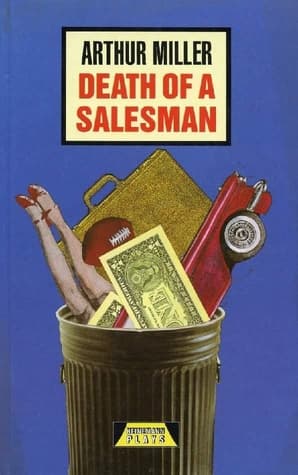
- Death of a Salesman
Arthur Miller
3.5 (186k) average on GoodreadsFictionExplores the disillusionment of the American Dream and complex family dynamics.
- A Streetcar Named Desire
Tennessee Williams
4.0 (261k) average on GoodreadsFictionFeatures raw, visceral characters and intense psychological conflict within a confined setting.
- Nineteen Eighty-Four
George Orwell
4.2 (5.5M) average on GoodreadsFictionWinston Smith dreams of truth and rebellion in a world where Big Brother watches all, but he confronts the terrifying power of a regime that controls not just actions, but thoughts.
- The Frozen River
Ariel Lawhon
4.4 (600k) average on GoodreadsFictionIn 1789 Maine, a heroic midwife's diary helps her expose a murder and get justice in a town that wants to silence her.
- A Man Called Ove
Fredrik Backman
4.4 (569k) average on GoodreadsFictionA stubborn widower, who lives by strict rules, finds his quiet world changed by a lively new family next door, making him face his past and find happiness in human connection.
- The Art of Racing in the Rain
Garth Stein
4.2 (452k) average on GoodreadsFictionThrough the eyes of Enzo, a wise and observant dog, a race car driver's family navigates a journey of love, loss, and resilience, learning that life's most important lessons often come in the curves, not just on the straightaways.




Enjoyed the summary?
A summary gives you the shape of the book. The book itself has the detail, the examples and the voice.
Find True West on AmazonAs an Amazon Associate, BookBrief earns from qualifying purchases. How we're funded