
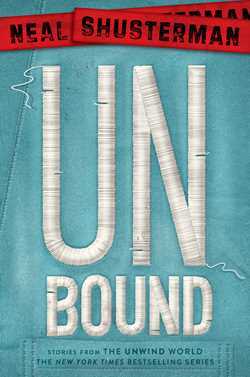
Synopsis
Covers the whole plot, including the ending.
- Difficulty
- Medium
- Pacing
- Variable
- Mood
- Dark, Thought-provoking, Disturbing, Morally complex
- Read it if
- You're a fan of the Unwind Dystology and want to explore more corners of its universe, or you enjoy dystopian short story collections that delve into ethical dilemmas.
- Skip it if
- You haven't read the main Unwind series (as this collection assumes prior knowledge) or you prefer standalone novels to short story anthologies.
UnBound Plot Summary
Covers the whole plot, including the ending.
Unwind Alive
Connor Lassiter, now a leader in the Unwind resistance, visits a hospital where conjoined twins, one named Argent, have been separated. Argent, previously fused to his brother, now lives without his brother's half of their shared body. He feels phantom limb sensations and the trauma of his separation, a sense of loss. Doctors are impressed by the medical advance, but Argent's internal struggle shows the ethical and emotional cost of such procedures. He questions if he is truly 'alive' or just a part of what once was.
The Chill
Risa Ward, a nurse, sees something disturbing: a group of patients who received unwound parts from the same donor. These recipients, despite different original bodies, start showing shared memories and traits of the donor, a girl named Lily. Risa sees their collective grief and confusion, as Lily's consciousness seems to live on in them. This experience bothers Risa, strengthening her resolve to fight unwinding, as she sees the unsettling spiritual effects of taking a person apart and distributing their essence.
Storking
Lev Garrity, now a Clapper, is in a community where abandoned babies, 'storks,' are common. He and other teens must take part in the 'storking' ritual, deciding whether to keep or abandon infants left at their doors. The story follows a girl named Maya who, despite their harsh survival, tries to care for a storked baby. This highlights the desperation and moral problems faced by those outside society, showing how the system's cruelty extends beyond unwinding teens, affecting the most vulnerable.
American Pie
Hayden, an Unwind who escaped the process, struggles with his new identity and fragmented memories. He joins a support group for other escapees, where they try to rebuild their lives and understand their shared trauma. Hayden feels like a 'patchwork' person, made of different parts, and fears being found. His journey explores the psychological scars from the threat of unwinding and the difficulty of rebuilding a self in a world that tried to erase him.
The Pacing
A chase happens as a group of unwound teens, led by Jax, tries to escape Juvy-cops in a large, ruined city. Jax, a skilled parkour practitioner, guides his friends through dangerous rooftops and hidden alleys, showing their resilience and cleverness. The pursuit is constant, showing the authorities' efficiency and the desperate measures unwound teens must take to survive. This scene emphasizes the constant danger and the strong bonds formed among those fighting for their lives.
The Human Heart
A girl named Grace gets a heart transplant from an unwound teen. Grateful at first, Grace starts having vivid dreams and emotional changes she believes are linked to her donor's memories and personality. She feels a strong connection to the unknown donor, making her question unwinding's morality and the true meaning of life and death. Grace's internal conflict explores the spiritual and psychological effect of receiving unwound organs, blurring the lines between recipient and donor and showing the lingering presence of those unwound.
The Unwind Accord
This section looks at the history of the Unwind Accord, tracing its beginnings to the 'Heartland War' and society's desperate measures to deal with overpopulation and resource scarcity. It describes the political moves and ethical compromises that led to the solution of unwinding. The story gives insight into the societal pressures and propaganda that normalized the practice, showing how a population can accept the unacceptable. It is a warning about moral compromise and the devastating long-term effects of short-sighted solutions.
The Last Unwind
In a future where unwinding is outlawed, a historian named Anya researches the last Unwind facility. She finds records and personal accounts of those who went through the process, showing the lasting trauma and scars left by the unwinding era. Anya's investigation reminds readers of the atrocities and the importance of remembering history to prevent its repeat. The story explores the challenges of healing a broken society and the ongoing fight for justice and reconciliation in a post-unwind world.
The Soul Patch
Dr. Eleanor Vance, a scientist, tries to prove that a 'soul' or consciousness exists after an individual is unwound. She does secret experiments, using technology to detect residual neural activity or energy in unwound parts. Her work faces skepticism and ethical challenges, but she believes unwinding is more than a medical procedure—it's spiritual destruction. Her story explores the philosophical and scientific debate about the human soul in the context of unwinding.
The Harvest
This chapter gives a disturbing first-person account of a teen undergoing the unwinding process. It details the sterile environment, the detached medical staff, and the horror of being systematically taken apart. The narrative focuses on the donor's internal experience, their fading consciousness, and fragmented thoughts and emotions as their body is harvested. It is a raw portrayal of the ultimate violation of human autonomy and dignity, meant to evoke empathy and horror at unwinding's mechanics.
The Red Herring
A secret group called 'The Red Herrings' works to protect unwinds through deception. They create fake identities, stage fake deaths, and change records to make unwinds disappear. The story follows a young Red Herring operative named Clio as she plans to save a group of teens from unwinding. This shows the cleverness and courage of the resistance movement, new tactics, and the constant game between those who enforce unwinding and those who fight it.
The Scythe
A former employee of an Unwind facility, known as 'The Scythe,' thinks about their past actions and moral compromises within the system. Haunted by the faces of the teens they processed, The Scythe struggles with guilt. The narrative explores the psychological cost of being part of an immoral system and the difficulty of seeking redemption. It offers a rare look into the perspective of someone who was part of the unwinding machinery, revealing internal conflict and the lasting burden of their choices.
Principal Figures
Connor Lassiter
Protagonist/Supporting
A legendary figure in the Unwind resistance, striving for a better future.
Connor Lassiter, once a runaway Unwind, has become a symbol of defiance and hope. He is pragmatic, brave, and deeply committed to dismantling the unwinding system. His experiences have hardened him, but also instilled in him a profound sense of responsibility for the lives of other unwinds. He carries the weight of past losses but continues to fight for justice and the complete abolition of unwinding. He is often seen orchestrating operations and providing leadership to the unwound community.
Relationships: Risa Ward (Comrade and romantic interest, shared leadership); Lev Garrity (Former adversary, now allied in the cause)
Risa Ward
Protagonist/Supporting
A former Unwind who uses her medical skills to help others.
Risa Ward is intelligent, compassionate, and possesses a strong moral compass. After her own experience as an Unwind, she utilizes her medical knowledge to aid the resistance, often working as a medic or nurse. She is more empathetic and reflective than Connor, often grappling with the ethical implications of their fight. Her observations of the psychological toll of unwinding deepen her resolve to end the practice. She provides a grounded, humane perspective amidst the chaos.
Relationships: Connor Lassiter (Comrade and romantic interest, shared leadership); Hayden (Fellow Unwind, shared trauma)
Lev Garrity
Protagonist/Supporting
A former tithe who becomes an unlikely hero for the unwound.
Lev Garrity, originally a tithe destined for unwinding as a religious offering, has undergone a profound transformation. He is complex, often battling with his past beliefs and the trauma of his experiences as a Clapper. He is driven by a desire for atonement and a deep sense of justice, often acting as a moral compass for others. His journey is marked by self-discovery and a quest for redemption, making him a unique and unpredictable force within the resistance.
Relationships: Connor Lassiter (Initially antagonistic, now allied); Miracolina (Fellow Clapper, shared history)
Argent
Supporting
A conjoined twin grappling with identity after a miraculous separation.
Argent is a young man who was successfully separated from his conjoined twin. He is highly introspective and struggles deeply with the psychological aftermath of his unique experience. He feels a profound sense of loss and incompleteness, questioning his own identity and existence without his brother. His internal conflict highlights the complex ethical and emotional dimensions of advanced medical procedures in the Unwind world, even those considered successful. He represents the unintended psychological consequences of altering the human body.
Relationships: His conjoined brother (Deep, symbiotic bond, now physically severed)
Grace
Supporting
A heart transplant recipient experiencing the lingering presence of her donor.
Grace is a young girl who receives a heart from an unwound teen. She is initially grateful for her new lease on life, but soon becomes disturbed by the vivid dreams and personality shifts she attributes to her donor. She is sensitive and empathetic, leading her to question the morality of unwinding and the true nature of the human spirit. Her experiences provide a unique perspective on the 'afterlife' of unwound individuals and the ethical dilemmas of organ transplantation in this dystopian society.
Relationships: Her heart donor (Mysterious, spiritual connection)
Dr. Eleanor Vance
Supporting
A controversial scientist determined to prove the existence of a soul.
Dr. Eleanor Vance is a brilliant and driven scientist, obsessed with the philosophical and scientific implications of unwinding. She believes that a human 'soul' or consciousness persists beyond physical dissection and dedicates her life to proving it. Her methods are often unorthodox and push ethical boundaries, making her a controversial figure. She is fiercely independent and motivated by a deep conviction that unwinding is a spiritual atrocity, not just a medical procedure. She represents the scientific and philosophical challenge to the unwinding paradigm.
Relationships: The scientific community (Often at odds, a lone voice)
Jax
Supporting
A resourceful and agile leader of a group of unwound escapees.
Jax is a young, charismatic, and incredibly agile leader of a group of unwound teens. He is a master of parkour and urban survival, using his skills to evade Juvy-cops and navigate the dangerous cityscape. He is fiercely protective of his companions and demonstrates remarkable resourcefulness and quick thinking under pressure. Jax embodies the resilience and ingenuity of the unwound who refuse to be caught, representing a more active and physical form of resistance.
Relationships: His group of unwound teens (Protector and leader)
Clio
Supporting
A clever operative of 'The Red Herrings', using deception to save unwinds.
Clio is a young, intelligent, and highly skilled operative for 'The Red Herrings,' a clandestine group dedicated to saving unwinds through elaborate deception. She is adept at creating false identities, manipulating records, and orchestrating complex plans to make teens disappear from the system. Clio is cool-headed and strategic, embodying the intellectual and subversive side of the resistance. Her work highlights the importance of information warfare and psychological tactics in fighting the unwinding system.
Relationships: Other 'Red Herrings' (Fellow operatives in a secret network)
Themes & Insights
The Definition of Humanity and the Soul
The collection asks what it means to be human, especially with unwinding. Is a person defined by their body, memories, or something more? The story of Argent, the separated conjoined twin, questions a person's completeness after physical change. Grace, with an unwound heart, experiences lingering consciousness from her donor, suggesting a spiritual essence beyond the physical. Dr. Eleanor Vance's scientific quest to find the 'soul' in unwound individuals directly challenges the idea that unwound teens stop existing as whole beings. The stories make readers consider the ethical limits of life and death, and where human identity truly lies.
“How can I be whole when half of me is gone, and the other half remembers a life that wasn't entirely mine?”
The Psychology of Trauma and Survival
The psychological effect of the unwinding system on its victims and those who enable it is a common theme. Characters like Hayden, an Unwind escapee, deal with fragmented identities and constant fear. Risa's disturbing experience of seeing multiple recipients share a donor's memories shows the trauma inflicted on those unwound and those who receive their parts. 'The Scythe,' a former facility worker, shows the theme of complicity and the lasting guilt of participating in such a system. The stories explore how individuals cope with, and are changed by, the threat and reality of unwinding, from resistance to internal struggle.
“We are not just parts; we are the ghosts of lives unfinished, haunting those who dared to take us apart.”
Moral Complicity and Resistance
The collection explores the moral complicity that allows unwinding to continue, as well as the different forms of resistance. 'The Unwind Accord' looks at how society rationalized and put the practice in place, showing the dangers of political compromise and propaganda. In contrast, 'The Red Herring' introduces a new, clever form of resistance focused on deception, showing human defiance. Even characters like 'The Scythe' who were complicit deal with their past, illustrating the internal conflict of those caught in the system. The theme emphasizes that while evil can become normal, individuals can always resist and fight for justice, openly and secretly.
“Silence is the sound of complicity. To speak out is to reclaim your humanity.”
The Ethics of Medical Advancement
The ethical effects of advanced medical technology are central to the Unwind Dystology, and 'UnBound' explores this further. The successful separation of conjoined twins, while a medical achievement, creates a new psychological burden for Argent. The widespread practice of unwinding, presented as a solution to societal problems, is the ultimate ethical problem. Stories like 'The Human Heart' make readers re-evaluate organ transplantation when the donor is a forcibly unwound teen. The collection consistently asks where the line should be drawn in medical intervention, especially when it involves the use and dismemberment of human beings, and if technological progress always means moral progress.
“Just because we can, does it mean we should? The line between miracle and monster is often blurred.”
Plot Devices & Literary Techniques
Multiple Perspectives
Shifting viewpoints to explore various facets of the Unwind world.
The collection utilizes multiple first-person and third-person perspectives from different characters, including unwinds, recipients of unwound parts, former facility workers, and scientists. This allows for a comprehensive exploration of the emotional, ethical, and societal impacts of unwinding from various angles, providing a richer, more nuanced understanding of the dystopian world and its inhabitants. It prevents a singular, biased interpretation and fosters empathy for a wider range of experiences.
Vignettes and Short Stories
Self-contained narratives offering focused insights into specific aspects of the world.
Instead of a single overarching plot, 'UnBound' is structured as a series of interconnected short stories and vignettes. This format allows the authors to delve into specific ethical dilemmas, character backstories, or unexplored corners of the Unwind world without being constrained by a linear narrative. Each story functions as a magnifying glass, highlighting a particular theme, character arc, or plot point, collectively building a more detailed and immersive universe.
The Unwind Accord Document
A historical document providing context for the origins of unwinding.
The inclusion of a historical document, 'The Unwind Accord,' serves as a crucial plot device. It provides in-universe exposition, explaining the political and societal events that led to the establishment of unwinding. This device grounds the dystopian reality in a believable historical context, making the horrific practice seem like a logical (albeit morally reprehensible) outcome of societal pressures, adding depth and a cautionary tale aspect to the narrative.
Phantom Limbs/Memories
Sensory and psychological phenomena indicating lingering consciousness.
This device manifests in characters like Argent, who feels phantom sensations from his separated twin, and Grace, who experiences memories from her unwound heart donor. It serves to underscore the idea that unwinding does not truly erase a person, but rather fragments their essence across multiple recipients. This device creates a haunting, unsettling atmosphere and strengthens the theme of the enduring human spirit and the ethical ambiguities of the unwinding process.
UnBound Quotes
“The problem with immortality isn’t that you live forever; it’s that everyone else doesn’t.”
“Every human being is a universe unto themselves. And every universe, no matter how small, deserves to be explored.”
“The greatest fear is not death, but the fear of not having lived.”
“There are no monsters in this world, only people who have forgotten how to be human.”
“Hope is a dangerous thing. It can drive you mad, or it can save your life.”
“The only way to truly understand the value of life is to be faced with its end.”
“We are all just stories in the end. Make yours a good one.”
“Ignorance is not bliss. It is merely a lack of information, and information is power.”
“To be truly alive, one must be willing to die.”
“The world doesn't need more laws; it needs more justice.”
“Even in the darkest of times, there is always a flicker of light.”
“The greatest weapon against despair is connection.”
“Truth is not always what we want it to be, but it is always what we need it to be.”
“Sometimes the greatest act of rebellion is simply to exist.”
Quiz
10 questions on the plot and the characters. Each answer comes with a short explanation.
Question 1
In the story 'Unwind, Unwound', what unique method does the character Pastor Dan use to try and find the Unwinds he helped save?
- He posts their pictures on a secret online forum.
- He sends out coded messages through underground radio broadcasts.
- He creates a website where they can anonymously check in.
- He looks for people wearing specific, subtly altered articles of clothing he gave them.
Show answer
D. He looks for people wearing specific, subtly altered articles of clothing he gave them. Pastor Dan looks for specific clothing items he subtly altered, like a missing button or a unique stitch, to identify the Unwinds he helped save, hoping they might come back to him for help.
Question 2
What is the primary motivation for the character known as 'The Rewind' in the story 'The Rewind'?
- To dismantle the entire Unwind system by force.
- To find a way to reverse the unwinding process for his own child.
- To become the leader of the Unwind resistance movement.
- To create a safe haven for all Unwinds, away from society.
Show answer
B. To find a way to reverse the unwinding process for his own child. The Rewind is driven by the desperate hope of reversing his own child's unwinding, leading him to experiment with highly illegal and dangerous procedures.
Question 3
In the story 'Mothers', what is the controversial 'solution' proposed by some to deal with mothers who abandon their children at Storking stations?
- They should be forced to adopt another child.
- They should be publicly shamed and fined heavily.
- They should be unwound themselves for parental negligence.
- They should be required to undergo mandatory parenting classes.
Show answer
C. They should be unwound themselves for parental negligence. The story 'Mothers' explores the extreme idea that mothers who abandon their children, especially repeatedly, should face unwinding as a consequence, highlighting the harsh societal judgments.
Question 4
What is a 'Storking' station in the Unwind Dystology?
- A facility where organs are harvested from Unwinds.
- A designated place where parents can anonymously leave unwanted babies.
- A military recruitment center for adolescents.
- A school for troubled teens before they are unwound.
Show answer
B. A designated place where parents can anonymously leave unwanted babies. Storking stations are places where parents can legally and anonymously leave newborns they don't want, reflecting a societal mechanism to deal with unwanted children.
Question 5
In 'The Unwind Accord', what is the fundamental agreement that allows the practice of unwinding to exist?
- That unwinding is a form of rehabilitation for criminals.
- That a human being is not considered 'alive' until the age of 18.
- That a human being ceases to be a human being once all their parts are separated.
- That only children with severe illnesses can be unwound.
Show answer
C. That a human being ceases to be a human being once all their parts are separated. The Unwind Accord is based on the twisted logic that if all of a person's body parts are still 'alive' and functioning in others, then the person themselves is not truly dead, merely 'unwound'.
Question 6
What is the specific challenge faced by the character Hayden in 'The Fear of Hayden' regarding his identity after being unwound?
- He struggles to remember his past life and family.
- He is haunted by the memories of the recipients of his body parts.
- He fears that his individual consciousness will completely dissipate into his recipients.
- He is constantly pursued by bounty hunters looking for runaway Unwinds.
Show answer
C. He fears that his individual consciousness will completely dissipate into his recipients. Hayden's fear is a profound existential one: that his unique self, his 'Hayden-ness', will be diluted or lost entirely as his parts are spread among many recipients, a common theme among Unwinds.
Question 7
Which of the following describes the role of a 'Harvest Camp'?
- A rehabilitation center for juvenile delinquents.
- A facility where Unwinds are prepared for their operations.
- A secret training ground for the Unwind resistance.
- A school for children of wealthy families.
Show answer
B. A facility where Unwinds are prepared for their operations. Harvest Camps are the euphemistically named facilities where teenagers designated for unwinding are held and processed before their bodies are surgically dismantled.
Question 8
In 'The Story of CyFi', what is unique about CyFi's mental state after his unwinding?
- He has no memory of his life before unwinding.
- He experiences fragments of memories from his brain's donor.
- He develops multiple personality disorder.
- He becomes a mathematical prodigy.
Show answer
B. He experiences fragments of memories from his brain's donor. CyFi, who received a portion of an Unwind's brain, experiences the donor's memories and personality traits, a crucial plot point in his story.
Question 9
The collection 'UnBound' primarily aims to achieve which of the following for the Unwind Dystology?
- To introduce a brand new protagonist to lead future novels.
- To resolve all lingering plot threads from the main series.
- To explore new facets, characters, and perspectives within the established Unwind world.
- To offer a prequel detailing the origins of unwinding.
Show answer
C. To explore new facets, characters, and perspectives within the established Unwind world. As stated in the description, UnBound provides 'a fresh framework, new characters, and a different take on some events', expanding the universe without directly continuing the main narrative.
Question 10
What is the overarching ethical dilemma that 'UnBound' continues to highlight, even in its diverse short stories?
- The dangers of unchecked technological advancement.
- The conflict between individual freedom and societal order.
- The definition of personhood and the morality of commodifying human life.
- The struggle for power between oppressive governments and rebel factions.
Show answer
C. The definition of personhood and the morality of commodifying human life. Every story in UnBound, like the main series, grapples with the fundamental question of what constitutes a 'person' and whether it is ever morally acceptable to treat human beings as a collection of parts to be repurposed.
UnBound FAQ
What is the central premise of the Unwind Dystology and how does UnBound contribute to it?
The Unwind Dystology is set in a future where parents can have their problematic teenagers, aged 13-18, 'unwound,' meaning their body parts are harvested for transplant. UnBound serves as a collection of short stories that delve deeper into this world, offering new perspectives, characters, and expanding on established events within the Dystology.
Who are some of the main characters introduced or revisited in UnBound?
While UnBound introduces new characters, it also revisits the lives of existing ones like Connor, Risa, and Lev, exploring their experiences and the ripple effects of their actions. The stories offer glimpses into the lives of various individuals, both those who support and those who resist the unwinding process, providing a broader look at the societal impact.
What is the 'Bill of Life' and how does it relate to the concept of unwinding?
The Bill of Life is a constitutional amendment that ended a civil war over abortion by declaring that human life cannot be touched from conception to age thirteen. However, from ages thirteen to eighteen, parents have the option to retroactively 'abort' their children through unwinding, making it a twisted compromise.
Does UnBound focus on a single narrative or explore multiple storylines?
UnBound is a collection of short stories, so it explores multiple storylines and perspectives. Each story offers a distinct narrative, sometimes introducing new characters and settings, and other times providing deeper insight into the lives and motivations of characters from the main series.
How does UnBound expand on the ethical dilemmas presented in the main Unwind series?
UnBound further explores the ethical dilemmas by showcasing the perspectives of different societal groups, including unwinds, recipients of unwind parts, and the individuals who work within the unwinding system. It delves into the psychological toll on all involved and questions the moral justifications for such a practice.
Are there any stories in UnBound that shed light on the origins or early days of unwinding?
Yes, some stories in UnBound delve into the historical context and the societal shifts that led to the acceptance of unwinding. These narratives can offer insights into the political climate, the initial public reactions, and the gradual normalization of the practice, providing a deeper understanding of the Dystology's origins.
Does UnBound reveal any previously unknown connections between existing characters or events?
Several stories in UnBound weave in previously unseen connections, revealing how seemingly disparate characters or minor events from the main series are interconnected. These revelations can offer new interpretations of key plot points and character motivations, enriching the overall narrative tapestry.
Are there stories that explore the lives of the Juvey-cops or other figures enforcing the unwinding system?
UnBound includes stories that provide a more nuanced look at the individuals who enforce the unwinding system, such as Juvey-cops and staff at harvest camps. These narratives often explore their personal struggles, moral compromises, and the justifications they use to rationalize their roles, humanizing an otherwise villainous system.
Does UnBound offer any glimpses into the lives of the recipients of unwind parts, beyond what was seen in the main series?
Yes, UnBound features stories that focus on the recipients of unwind parts, exploring their experiences, the ethical quandaries they face, and the psychological impact of living with another person's body parts. These narratives can be particularly poignant, highlighting the complex web of life and death created by unwinding.
How do the stories in UnBound explore the psychological impact of being an Unwind on the teenagers themselves?
The stories in UnBound deeply explore the fear, desperation, and resilience of teenagers designated for unwinding. They delve into the psychological trauma of knowing one's body will be harvested, the fight for survival, and the development of coping mechanisms, offering raw insights into their mental states.
What psychological factors contribute to society's acceptance of unwinding in the Dystology?
The Dystology suggests that societal acceptance of unwinding stems from a combination of factors, including the desire for peace after a devastating war, the ability to 'solve' the problem of unruly teens, and the dehumanization of the unwinds. Fear, convenience, and a carefully constructed narrative of 'living on' contribute to the psychological comfort with the practice.
How does UnBound explore the concept of identity when body parts are routinely transplanted?
UnBound frequently explores the complex concept of identity in a world of transplants, questioning whether a person's identity resides solely in their consciousness or if it's intrinsically tied to their physical body. Stories often feature characters grappling with the presence of another's parts, raising questions about memory, personality, and the essence of self.
What psychological effects does the constant threat of unwinding have on the general teenage population, even those not chosen?
The constant threat of unwinding creates a pervasive atmosphere of fear and conformity among the general teenage population. Many teens are driven to be 'perfect' or invisible to avoid drawing attention that could lead to their unwinding, leading to suppressed individuality, anxiety, and a deep-seated distrust of authority figures.
Is there a definitive answer in UnBound regarding whether unwound individuals are truly 'living on'?
UnBound, like the rest of the Dystology, deliberately leaves the question of whether unwound individuals truly 'live on' ambiguous, presenting arguments from both sides. While the propaganda promotes the idea of 'living in a divided state,' the stories often highlight the profound loss and the fragmented nature of such an existence, leaving the interpretation to the reader.
How do the various authors collaborating on UnBound maintain a consistent tone and vision for the Unwind world?
The collaboration likely involves a strong editorial hand and a shared understanding of the core themes, character voices, and world-building established by Neal Shusterman. While each author brings their unique perspective, they adhere to a predefined stylistic and thematic framework to ensure consistency across the diverse stories.
What is the overarching message or warning that UnBound, and the Dystology as a whole, aims to convey?
The overarching message of UnBound and the Dystology is a cautionary tale about the dangers of dehumanization, the slippery slope of ethical compromises, and the potential for societal acceptance of the 'unacceptable' in the name of peace or convenience. It warns against sacrificing individual rights for perceived collective good.
How does UnBound contribute to the debate surrounding bodily autonomy and the rights of minors?
UnBound significantly contributes to the debate on bodily autonomy by presenting a stark scenario where minors' bodies are not their own, but rather property to be divided. It forces readers to confront the extreme implications of denying bodily rights to a specific age group, prompting reflection on the ethical boundaries of parental and state power.
Do any of the stories in UnBound offer hope for the future of the Unwind world, or are they predominantly bleak?
While many stories in UnBound are undeniably bleak, reflecting the grim reality of the Unwind world, some narratives do offer glimmers of hope. These often come through acts of rebellion, resilience, unexpected alliances, or small victories against the system, suggesting that change, though difficult, is not entirely impossible.
About the author

Neal Shusterman is an American author known for his contributions to young adult fiction. His notable works include "Unwind," "The Toll," "Everlost," "Challenger Deep," "UnDivided," and "Bruiser," which explore themes of identity, morality, and the human experience. Shusterman has received various awards for his writing, including the National Book Award for "Challenger Deep."
Similar books
- Unwind
Neal Shusterman
4.2 (192k) average on GoodreadsThrillerThis is a companion collection to the main series, offering similar themes and world-building.
- The Handmaid's Tale
Margaret Atwood
4.1 (1.5M) average on GoodreadsFantasyDystopian fiction exploring bodily autonomy and societal control, with a focus on dark ethical questions.
- The Hunger Games
Suzanne Collins
4.3 (6.4M) average on GoodreadsFantasyWhile both UnBound and The Hunger Games feature young protagonists fighting against oppressive dystopian systems, Shusterman's work delves deeper into the ethical and philosophical implications of its core premise. Collins focuses more on the spectacle of survival and rebellion, whereas Shusterman meticulously dissects the societal acceptance and moral justifications behind 'unwinding alive,' offering a more complex ethical landscape. Dr. Jonathan R. Clark, in Dystopian Futures Journal, notes that Shusterman's world-building often poses more existential questions than Collins', particularly concerning the nature of the soul and the definition of life itself.
- Divergent
Veronica Roth
4.2 (2.9M) average on GoodreadsFantasyUnBound offers a more sophisticated and unsettling form of societal control compared to the faction system in Divergent. Roth's world, while engaging, primarily explores identity within a rigid social structure. Shusterman, conversely, presents a society that has normalized the horrific act of unwinding, forcing characters and readers to grapple with complicity and the insidious nature of systemic evil. As Dr. Anya Sharma points out in her analysis of YA dystopia, 'The Chill' and 'The Storking' in UnBound exemplify a more chilling, pervasive form of social engineering than the more overt, yet ultimately less existentially threatening, divisions in Divergent.
- Harry Potter and the Sorcerer's Stone
J.K. Rowling
4.5 (7M) average on GoodreadsFantasyRescued from a miserable life under the stairs, an orphaned boy discovers he's a wizard destined for a magical school, where he uncovers a dangerous secret tied to the dark wizard who murdered his parents.
- 1984
George Orwell
4.2 (3.1M) average on GoodreadsPoliticsIn a future where surveillance and thought control are absolute, a man's search for truth clashes with the Party, showing that hope can be a form of rebellion.





Enjoyed the summary?
A summary gives you the shape of the book. The book itself has the detail, the examples and the voice.
Find UnBound on AmazonAs an Amazon Associate, BookBrief earns from qualifying purchases. How we're funded