

Core Idea
- Difficulty
- Easy
- Read it if
- You're tired of self-help books that focus on 'feeling good' and want a direct, no-nonsense kick in the pants to take action and stop making excuses. You appreciate blunt language and a strong emphasis on personal responsibility.
- Skip it if
- You prefer gentle, empathetic self-help approaches or are easily offended by profanity and aggressive motivational tactics. You're not ready to confront your own role in your problems.
Key Takeaways from Unfu*k Yourself
Willingness is the First Step
You can't change what you're unwilling to confront.
Bishop states that the first step to any real personal change is a true willingness to go through the process, even if it is uncomfortable. This is not passive acceptance but an active choice to get involved, acknowledge your current state, and commit to the effort needed for change. Without this basic 'I am willing' statement, other efforts will be shallow and fail. It means letting go of excuses and truly showing up for yourself, accepting that growth often comes with discomfort and uncertainty. This willingness is a constant, conscious choice, not a one-time event.
“You can’t change what you’re unwilling to confront. You have to be willing to feel the discomfort, to be vulnerable, to make mistakes, and to look stupid. You have to be willing to be willing.”
In the book: Bishop frequently uses the analogy of a 'switch' in your brain that must be flipped. He challenges readers to stop intellectualizing their problems and instead make the visceral decision to be willing, emphasizing that the 'how' will only reveal itself after the 'what' (willingness) is established.
Try this: Identify one area where you feel stuck. Instead of trying to fix it immediately, spend a week consciously affirming, 'I am willing to address this.' Notice how this shift in mindset opens up new perspectives and possibilities. Start small, like being willing to have an uncomfortable conversation or willing to try a new routine.
Related ideas: personal-agency, proactive-mindset, discomfort-tolerance
You Are Wired to Win
Your default state is success, not failure.
Bishop strongly states that people are naturally made for success and progress, which he calls being 'wired to win.' This refers to our natural ability to be resilient, adapt, and overcome challenges. He challenges the common belief that we are flawed or meant to fail, arguing that negative self-talk and limiting beliefs hide this natural ability. By reminding us of our biological and evolutionary drive to survive and thrive, Bishop helps readers use this basic energy. He reframes obstacles as chances to show our natural 'winning' nature. It means changing from a victim mindset to one of natural power.
“You are a fucking miracle of being. You are wired to win. You've forgotten this, but it's time to remember.”
In the book: He often refers to the sheer improbability of our existence and the biological mechanisms that allow us to adapt and overcome. The very act of surviving daily life, with all its complexities, is presented as evidence of our inherent 'winning' state.
Try this: When facing a daunting task or setback, consciously reframe your internal dialogue from 'I can't do this' to 'I am wired to win, and I will find a way to navigate this.' Recall past challenges you've overcome as proof of this inherent ability.
Related ideas: self-efficacy, inner-strength, resilience
Own Your Agency: 'I Got This'
Stop outsourcing your power and take responsibility.
This statement directly challenges victimhood and blaming others. Bishop insists that real empowerment comes from taking ownership of your current situation, even if you did not cause all of it. 'I got this' is a statement of personal control, a promise to take responsibility for your reactions, choices, and ultimately, your life's path. It is not about having all the answers or being perfect, but about trusting your ability to figure things out, adapt, and move forward. This mindset removes the habit of waiting for external forces or others to solve your problems, putting control back within yourself. It is a refusal to be a passenger in your own life.
“When you say 'I got this,' you are not just saying it to yourself; you are declaring it to the universe. You are taking responsibility for your existence.”
In the book: Bishop critiques the common tendency to blame circumstances, upbringing, or other people for one's lack of progress. He uses examples of people who constantly defer decisions or complain without taking action, illustrating how this relinquishes personal power.
Try this: For any problem you're currently facing, instead of asking 'Why is this happening to me?' or 'Who can fix this?', shift to 'What can I do about this right now?' and declare, 'I got this,' even if you don't know the exact solution yet. This initiates problem-solving.
Related ideas: personal-responsibility, locus-of-control, self-reliance
Embrace the Uncertainty
Growth happens outside your comfort zone.
Bishop argues that the human desire for certainty and avoidance of the unknown stops growth and fulfillment. He says that life is naturally uncertain, and fighting this reality only causes anxiety and inaction. Embracing uncertainty means accepting that you do not need to know every step of the journey before you start. It is about developing a tolerance for not knowing and recognizing that true learning and self-discovery often happen when you are pushed outside your comfort zone. This statement frees you from needing perfect plans and allows for spontaneous action and adaptation, which are important for navigating a changing world. It is an active surrender to the flow of life.
“Uncertainty is where the magic happens. It’s where you truly come alive, where you discover your resilience, and where you grow.”
In the book: He often points out that no one ever achieved anything significant without stepping into the unknown. He might use examples of entrepreneurs or artists who took risks without a guaranteed outcome, highlighting that clinging to certainty leads to stagnation.
Try this: Instead of waiting for perfect conditions or a clear path, identify one small step you can take towards a goal, even if the outcome is unclear. Practice making decisions with incomplete information, trusting your ability to adapt as you go. For example, start that project before you have all the tools.
Related ideas: risk-taking, adaptability, comfort-zone
You Are What You Do, Not What You Think
Actions define you, not your internal monologue.
This is perhaps Bishop's most direct attack on analysis paralysis and the self-help industry's focus on changing thoughts. He states that our internal thoughts, while important, do not define us; our actions do. People often get stuck thinking about change, planning for change, or complaining about their thoughts, without taking concrete steps. Bishop cuts through this by insisting that identity is made through behavior. If you want to be a 'doer,' you must do. If you want to be 'brave,' you must act bravely. This statement shifts focus from mental exercises to tangible results, making readers face the difference between their intentions and their actual behaviors. It is about breaking free from the control of the mind and using the power of consistent action.
“You are not your thoughts; you are what you do. Your actions are the only true measure of who you are and what you stand for.”
In the book: Bishop frequently uses examples of people who endlessly 'think' about starting a business, losing weight, or improving relationships, but never actually take the necessary actions. He contrasts this with individuals who, despite doubts, simply *do* the work.
Try this: For one goal you've been thinking about but not acting on, identify the absolute smallest, most immediate action you can take in the next 24 hours. Don't overthink it; just do it. Repeat this daily, focusing on consistent, small actions over perfect planning.
Related ideas: action-over-inaction, behavioral-change, practicality
Cultivate Relentlessness
Persistence in the face of adversity is non-negotiable.
Bishop promotes relentlessness as a key trait for anyone serious about improving their life. This means a strong commitment to your goals despite setbacks, criticism, or internal resistance. He argues that success is rarely a straight path and that the ability to recover after failure, learn from mistakes, and keep moving forward is essential. Relentlessness is the answer to giving up when things get hard, a mental strength that understands that progress is often gradual and requires ongoing effort. It means adopting a mindset where quitting is not an option, making consistent, imperfect action the default way.
“Relentlessness is not about being a robot; it’s about having an unshakeable commitment to your vision, even when everything in you wants to quit.”
In the book: He often refers to the common human tendency to give up at the first sign of difficulty or discomfort. He might use sports analogies or stories of inventors who faced countless failures before achieving breakthroughs, emphasizing persistence.
Try this: Choose one challenging habit or goal you've struggled with. Commit to being 'relentless' for just one week: no matter what happens, you will not skip a day or give up. If you stumble, immediately get back on track without self-judgment. Focus on consistency over perfection.
Related ideas: perseverance, grit, determination
Expect Nothing, Accept Everything
Release attachment to outcomes and find peace in reality.
This final statement is a strong call for emotional freedom. Bishop claims that much of our disappointment, anger, and frustration comes from strict expectations about how life 'should' be, how others 'should' act, or how our efforts 'should' pay off. By having a mindset of 'expect nothing,' we detach from these often unrealistic ideas, which reduces potential suffering when reality differs. 'Accept everything' does not mean passive resignation, but an active embrace of what is, allowing us to respond constructively instead of reacting emotionally. This radical acceptance frees up much mental and emotional energy, helping us navigate life with more peace, flexibility, and real contentment. It is about finding freedom in letting go of control.
“The greatest source of human suffering is our attachment to expectations. Expect nothing, and you will never be disappointed. Accept everything, and you will find peace.”
In the book: Bishop frequently highlights how people's unhappiness is often tied to their expectations not being met – whether it's about a job promotion, a relationship, or even the weather. He might illustrate how resisting reality only prolongs suffering.
Try this: For one situation causing you stress, consciously identify your underlying expectations. Then, practice releasing them, focusing instead on accepting the current reality, whatever it may be. Ask yourself, 'What can I do now, given what is, rather than what I expected?'
Related ideas: radical-acceptance, non-attachment, emotional-freedom
The Power of Declarations
Speak your truth to shape your reality.
Bishop emphasizes that the seven statements are not just kind words or gentle affirmations, but strong, active declarations. He stresses the importance of saying them aloud, with conviction, to reprogram your subconscious and change your internal dialogue from passive complaint to active control. This practice is more than just positive thinking; it is about living the truth of these statements and making them a core part of who you are. By saying 'I am willing' or 'I got this,' you are not just wishing, but actively stating a new reality for yourself, aligning your words with your desired actions. This verbal commitment strengthens your resolve and moves you beyond intellectual understanding into a state of active ownership.
“These assertions are not affirmations to be mumbled. They are declarations to be owned, to be spoken with conviction, to become the operating system of your life.”
In the book: He contrasts the lukewarm effect of casual affirmations with the profound impact of forceful, personal declarations. He challenges the reader to 'feel' the words as they say them, rather than just reciting them mechanically.
Try this: Choose one assertion that resonates most deeply with you today. Stand in front of a mirror and declare it aloud, multiple times, with as much conviction as you can muster. Pay attention to how your body and mindset respond to this verbal commitment.
Related ideas: self-talk, affirmations, linguistic-programming
Stop Waiting for Perfection
Good enough is often better than perfect.
A common idea in the book is the harmful effect of perfectionism and overthinking. Bishop argues that waiting for the 'perfect' plan, moment, or feeling is a complex form of procrastination. This search for an unreachable ideal stops action and keeps people stuck. He supports a 'get it done' attitude, even if it means being imperfect, making mistakes, and learning as you go. The value is in doing, which creates momentum and real-world feedback, far more useful than endless theoretical planning. This focus on 'good enough' is a practical way to overcome self-imposed barriers and encourage real progress.
“The greatest killer of dreams is the pursuit of perfection. Get out of your own way and start doing the damn thing, even if it’s messy.”
In the book: He often critiques the 'analysis paralysis' common in self-help circles, where people endlessly consume information but fail to apply it. He uses examples of people who never start a project because they're too busy 'researching' or 'planning' every minute detail.
Try this: Identify a task or project you've been delaying due to fear of not doing it perfectly. Set a timer for 15 minutes and commit to working on it, accepting that the output will be 'good enough' for now. Focus on completion over flawless execution.
Related ideas: perfectionism, procrastination, action-bias
It's About You, Not Them
Your liberation is an internal journey, not dependent on others.
Bishop consistently directs the reader's attention inward, stating that the main obstacles to an improved life are self-imposed, not external. He challenges the common human tendency to blame others, situations, or systemic issues for personal unhappiness or lack of progress. While acknowledging external realities, he strongly argues that our interpretation and response to these realities, driven by internal dialogue and limiting beliefs, are what truly hold us back. This takeaway is a call for radical self-responsibility, emphasizing that true freedom and change come from facing and changing one's own internal world, rather than waiting for external conditions or people to change. Your power is in your own control and perspective.
“It isn’t other people that are standing in your way, it isn’t even your circumstances that are blocking your ability to thrive, it’s yourself and the negative self-talk you keep telling yourself.”
In the book: The entire book is structured around challenging the reader's internal narratives and beliefs. He directly states that 'it's not them, it's you,' forcing readers to look inward rather than outward for solutions, and to stop making excuses based on external factors.
Try this: When you feel frustrated or stuck due to another person's actions or an external situation, pause. Instead of fixating on what they 'should' do, ask yourself: 'What is my internal response to this, and how can I shift my own perspective or action to move forward, regardless of them?'
Related ideas: self-responsibility, internal-locus, mindset-shift
Unfu*k Yourself Quotes
“This is your life. It is not a dress rehearsal. The curtain is up, and you are on.”
“You are not your thoughts, you are what you do.”
“Your life is a direct reflection of the expectations you have for yourself.”
“Until you are ready to be uncomfortable, you won't grow.”
“You can’t think your way into a new way of acting. You have to act your way into a new way of thinking.”
“Stop waiting for permission to live your life.”
“If you want to change your life, you have to change your story.”
“The only thing standing between you and your goal is the bullshit story you keep telling yourself.”
“Uncertainty is where new happens. It is where opportunity is, and it is where growth lies.”
“The greatest gift you can give yourself is to be truly, authentically you.”
“Your life is too important to leave to chance.”
“The price of inaction is far greater than the cost of making a mistake.”
“Get off your ass and do something.”
“Don't let your past dictate your future.”
“You are powerful beyond measure, but only if you acknowledge it.”
Quiz
10 questions on the main ideas. Each answer comes with a short explanation.
Question 1
According to Gary John Bishop, what is the primary obstacle preventing individuals from thriving and leading the life they were meant to have?
- External circumstances and bad luck
- Other people's opinions and actions
- Negative self-talk and self-imposed limitations
- Lack of resources and financial stability
Show answer
C. Negative self-talk and self-imposed limitations The book emphasizes that 'it's yourself and the negative self-talk you keep telling yourself' that stands in your way, not external factors.
Question 2
Which of the following is NOT one of the seven assertions Gary John Bishop leads readers through in 'Unfu*k Yourself'?
- I am willing.
- I deserve success.
- I am relentless.
- I embrace the uncertainty.
Show answer
B. I deserve success. The seven assertions are: I am willing, I am wired to win, I got this, I embrace the uncertainty, I am not my thoughts; I am what I do, I am relentless, I expect nothing and accept everything. 'I deserve success' is not one of them.
Question 3
What does Bishop mean by the statement, 'You're a fu*king miracle of being'?
- That individuals should rely on external miracles for success.
- That each person possesses inherent value and potential that they may have forgotten.
- That achieving success requires a miraculous transformation.
- That life itself is a miracle, and we should simply observe it.
Show answer
B. That each person possesses inherent value and potential that they may have forgotten. Bishop directs readers to 'Wake up to the miracle you are,' reminding them of their inherent worth and potential, which they may have forgotten due to negative self-perception.
Question 4
The assertion 'I am not my thoughts; I am what I do' directly challenges which common self-help pitfall?
- Over-reliance on positive affirmations without corresponding action.
- Believing that external circumstances define one's identity.
- Attributing success solely to natural talent rather than effort.
- Failing to acknowledge one's emotional state.
Show answer
A. Over-reliance on positive affirmations without corresponding action. This assertion emphasizes the importance of action over mere thought, suggesting that true change comes from what you do, not just what you think or feel. It's a call to move beyond mental rumination to active engagement.
Question 5
What is the core message behind the book's 'tough-love approach'?
- To blame others for one's current circumstances.
- To accept personal responsibility and actively work to change one's mindset and actions.
- To ignore one's feelings and push through difficulties without reflection.
- To seek external validation for self-worth.
Show answer
B. To accept personal responsibility and actively work to change one's mindset and actions. The 'tough-love approach' is about cutting through BS and holding oneself accountable, providing 'an honest, no-nonsense' way to move past self-imposed limitations by taking responsibility.
Question 6
The assertion 'I expect nothing and accept everything' is most closely aligned with which philosophical concept?
- Hedonism
- Stoicism
- Nihilism
- Existentialism
Show answer
B. Stoicism This assertion strongly echoes Stoic principles of focusing on what one can control (expectations) and accepting what is beyond one's control (everything that happens), thereby reducing suffering caused by unmet desires.
Question 7
How does Bishop suggest individuals 'demolish the slag weighing you down'?
- By engaging in escapist activities.
- By seeking validation from others.
- By applying the tools and advice, particularly the seven assertions, to overcome self-imposed limitations.
- By meditating daily without taking further action.
Show answer
C. By applying the tools and advice, particularly the seven assertions, to overcome self-imposed limitations. The book's description states he 'gives you the tools and advice you need to demolish the slag weighing you down,' which refers to the practical application of his philosophy and the seven assertions.
Question 8
The assertion 'I am wired to win' serves to counteract what common internal struggle?
- The belief that success is solely a matter of luck.
- Feelings of inadequacy or the belief that one is inherently destined to fail.
- A tendency to be overly competitive with others.
- An inability to collaborate effectively in teams.
Show answer
B. Feelings of inadequacy or the belief that one is inherently destined to fail. This assertion aims to instill a fundamental belief in one's own capability and inherent drive for success, combating the internal voice that suggests one is not good enough or is predestined for failure.
Question 9
For someone struggling with procrastination due to fear of failure, which two assertions from Bishop's list would be most directly applicable and complementary?
- I am wired to win. & I expect nothing and accept everything.
- I am willing. & I am not my thoughts; I am what I do.
- I got this. & I embrace the uncertainty.
- I am relentless. & I am wired to win.
Show answer
B. I am willing. & I am not my thoughts; I am what I do. 'I am willing' addresses the initial hurdle of committing to action despite fear, while 'I am not my thoughts; I am what I do' provides the practical framework to move past mental blocks and actually take steps, directly combating procrastination.
Question 10
Considering the book's overall message, what is the 'unfu*ked version of yourself' primarily characterized by?
- A complete absence of negative thoughts or challenges.
- A state of being where one takes decisive action and embraces personal responsibility to live fully, despite challenges.
- Achieving all material desires and societal recognition.
- A passive acceptance of fate without personal effort.
Show answer
B. A state of being where one takes decisive action and embraces personal responsibility to live fully, despite challenges. The 'unfu*ked version of yourself' is about demolishing 'slag' and moving past 'self-imposed limitations' to 'Lead the life you were meant to have,' which requires active participation, responsibility, and embracing the journey with its uncertainties.
Unfu*k Yourself FAQ
What is 'Unfu*k Yourself' about?
'Unfu*k Yourself' is a no-nonsense, tough-love self-help guide by Gary John Bishop. It aims to help readers overcome self-imposed limitations and negative self-talk to live the life they were meant to have, focusing on internal change rather than external circumstances.
Does 'Unfu*k Yourself' actually work?
The effectiveness of 'Unfu*k Yourself' depends on the reader's willingness to engage with its principles and apply them consistently. It provides actionable assertions and a direct approach, but personal transformation requires active participation and commitment from the individual.
What are the seven assertions in 'Unfu*k Yourself'?
The book outlines seven core assertions: I am willing, I am wired to win, I got this, I embrace the uncertainty, I am not my thoughts; I am what I do, I am relentless, and I expect nothing and accept everything. These form the framework for personal change.
How is 'Unfu*k Yourself' different from 'The Subtle Art of Not Giving a F*ck'?
While both books use a direct, 'no-BS' approach, 'Unfu*k Yourself' focuses more on demolishing self-imposed limitations and negative self-talk through specific assertions and actions. 'The Subtle Art of Not Giving a F*ck' emphasizes choosing what to care about and embracing struggle, offering a slightly different angle on personal responsibility and values.
Who is Gary John Bishop?
Gary John Bishop is the author of 'Unfu*k Yourself' and other self-help books. He is known for his direct, 'urban philosophy' style, challenging readers to take personal responsibility and confront their limiting beliefs to achieve a more empowered life.
What does 'I am not my thoughts; I am what I do' mean?
This assertion highlights that our identity and reality are defined by our actions, not just our internal thoughts or feelings. It encourages readers to move beyond rumination and take decisive steps, emphasizing that consistent action leads to tangible change and self-definition.
Is 'Unfu*k Yourself' suitable for everyone?
The book's direct, expletive-laden language and tough-love approach may not resonate with everyone. It is best suited for individuals who are ready for a no-holds-barred challenge to their limiting beliefs and are open to a confrontational style of self-help.
How can I apply the 'I embrace the uncertainty' assertion in my daily life?
Embracing uncertainty means actively accepting that not everything can be planned or controlled, and moving forward despite not knowing the outcome. Practically, this involves taking action even when details are unclear, letting go of the need for perfect foresight, and trusting your ability to adapt.
Similar books
- Atomic Habits: An Easy & Proven Way to Build Good Habits & Break Bad Ones
James Clear
4.3 (126k) average on GoodreadsBusinessClear's 'Atomic Habits' offers a highly practical, evidence-based, and systematic approach to habit formation and behavior change, drawing on psychology, biology, and neuroscience. While Bishop champions 'You Are What You Do,' Clear meticulously breaks down the mechanics of habit loops (cue, craving, response, reward) and provides actionable strategies (make it obvious, attractive, easy, satisfying) for building positive habits and breaking negative ones. Clear's approach is far more granular and provides a concrete roadmap for change, whereas Bishop's advice is more abstract and relies heavily on sheer determination.
- Outliers: The Story of Success
Malcolm Gladwell
4.2 (556k) average on GoodreadsBusinessMalcolm Gladwell argues that true success is not just about individual talent, but about the hidden advantages of culture, opportunity, and unique experiences that shape extraordinary lives.
- The Subtle Art of Not Giving a F*ck: A Counterintuitive Approach to Living a Good Life
Mark Manson
3.9 (530k) average on GoodreadsBusinessEmbrace your flaws and stomach life's lemons, because true happiness isn't about relentless positivity, but about choosing what truly matters to give a f*ck about.
- The 7 Habits of Highly Effective People: Powerful Lessons in Personal Change
Stephen R. Covey
4.1 (524k) average on GoodreadsBusinessThis book presents seven habits that help people live more effective, purposeful lives.
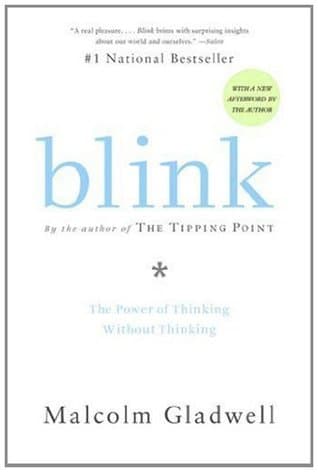
- Blink: The Power of Thinking Without Thinking
Malcolm Gladwell
3.9 (487k) average on GoodreadsBusinessExplore the hidden power of quick judgments and how 'thin-slicing' information helps skilled decision-makers succeed instantly, often without conscious thought.
- Rich Dad, Poor Dad
Robert T. Kiyosaki
4.1 (369k) average on GoodreadsBusinessRobert Kiyosaki explains that financial literacy, owning assets instead of liabilities, and making money work for you are the real ways to build wealth, lessons he learned from his biological 'poor dad' and his best friend's entrepreneurial 'rich dad.'





Enjoyed the summary?
A summary gives you the shape of the book. The book itself has the detail, the examples and the voice.
Find Unfu*k Yourself on AmazonAs an Amazon Associate, BookBrief earns from qualifying purchases. How we're funded