

Synopsis
Covers the whole plot, including the ending.
- Difficulty
- Medium
- Pacing
- Fast
- Mood
- Gritty, Suspenseful, Adventurous, Vengeful
- Read it if
- You enjoy historical fiction with strong battle scenes, a compelling quest, and a relentless antagonist, set against the backdrop of medieval England.
- Skip it if
- You prefer fantasy over historical fiction, or are looking for a light, character-driven story without significant violence or religious themes.
Vagabond Plot Summary
Covers the whole plot, including the ending.
Return to England and the Search Begins
After his adventures in France, Thomas of Hookton, an English archer, returns to his home in Hookton, England. He remembers his grandfather, Father Ralph, who spoke of a great treasure hidden there—the Holy Grail. Thomas is driven by the relic's allure and a deep desire for revenge against the black rider and his master, the Count of Vannes, who destroyed his family and village. He carefully searches his ruined home and the surrounding lands, using clues from his grandfather, a man known for his unusual beliefs and knowledge of ancient secrets. His initial efforts are frustrating, but his determination remains strong.
The Arrival of the Inquisition
Thomas's quest soon gets complicated with the arrival of Father Borja, a powerful and cruel Dominican Inquisitor. Borja, a Spaniard known for merciless interrogations and a firm belief in the Church's purity, is also tasked with finding the Holy Grail. He sees the relic as a tool to strengthen the Church's power and remove heresy. Borja's methods are brutal; he uses torture and threats to get information, and his presence darkens the English countryside. He quickly builds a network of informants and pursues any lead, however small, that might bring him closer to the Grail, setting him against Thomas.
A Clue and a Confrontation
Through careful searching and luck, Thomas finds a hidden message or symbol in his family's chapel ruins, a clue pointing to a specific place or another riddle. This discovery energizes his quest, but it also draws the attention of Borja's growing network. Thomas is ambushed by the Inquisitor's men, leading to a violent fight. Using his archery skills, Thomas fends off his attackers, but he realizes the true danger he is in. He understands that Borja is not just a rival but a deadly enemy who will stop at nothing to reach his goal, and that he must be extremely careful.
The Journey to Salisbury
The clues Thomas has gathered, along with his grandfather's notes, lead him to Salisbury. He believes the next piece of the Grail puzzle is hidden in or near Salisbury Cathedral, a place of religious and historical importance. Thomas travels there, being very careful to avoid Borja's men, who are now actively hunting him. He uses his skills as an archer and mercenary to cross the land and avoid capture. Upon arrival, he begins a quiet investigation of the cathedral and its archives, looking for hidden symbols, old texts, or any sign that might reveal the Grail's location. Salisbury's size and history present a major challenge.
Borja's Brutality in Salisbury
Father Borja, having learned Thomas's likely destination through his spies, also arrives in Salisbury. His presence immediately brings dread to the city. Borja quickly uses his authority, interrogating local clergy and citizens with his usual brutality. He believes Thomas is not only seeking the Grail but is also a heretic, making his capture even more urgent. Borja's men conduct thorough and often violent searches, creating fear and suspicion. The Inquisitor shows he will inflict pain and even death to get information, further solidifying his image as a ruthless antagonist, pushing Thomas to be even more cautious.
The Revelation of the Templar Connection
While in Salisbury, Thomas discovers a key fact: the Holy Grail's history is linked to the Knights Templar. He finds evidence suggesting his grandfather, Father Ralph, was not just an unusual priest but had a strong connection to the suppressed order, perhaps even being a former Templar or having their secrets. This explains much about the clues and the danger around the Grail. The Templars, known for their wealth and role as protectors of holy relics, were brutally suppressed by the King of France and the Pope, making any connection to them very risky. This new understanding changes Thomas's view of his quest and its true stakes.
The Pursuit to Glastonbury
Following the Templar clues, which often involve secret symbols and codes, Thomas is led to Glastonbury. This ancient site, rich in myth and legend, especially those about King Arthur and the Holy Grail, becomes the next focus of his quest. The journey to Glastonbury is dangerous, as Borja's agents are still close behind. Thomas uses all his skills in stealth and evasion to reach the sacred ground. He begins to explore the ruins of Glastonbury Abbey and the surrounding mystical landscape, believing the final pieces of the puzzle, or perhaps the Grail itself, are hidden there. Glastonbury's spiritual atmosphere adds another layer of interest to his mission.
Borja's Glastonbury Terror
Father Borja, relentlessly pursuing Thomas, also arrives in Glastonbury. His presence disrupts the peaceful and ancient atmosphere of the site. The Inquisitor, with his growing group of soldiers and torturers, terrorizes the local people, convinced they are hiding Thomas or information about the Grail. He sees Glastonbury's legends as dangerous superstitions that must be removed, and his methods become even more extreme. Borja's actions in Glastonbury show his fanaticism and complete disregard for human suffering in his pursuit of what he believes is divine will. The sacred ground becomes a battleground of wills and beliefs, with Thomas caught in the middle.
The Black Rider's Appearance
As tension rises in Glastonbury, Thomas's personal quest for revenge suddenly meets his search for the Grail. The black rider, the mysterious knight responsible for Hookton's destruction and his family's death, appears dramatically. This encounter shocks Thomas, as he thought his enemy was far away in France. The black rider is revealed to be allied with or influenced by Father Borja, or perhaps has his own agenda regarding the Grail. This sudden confrontation reignites Thomas's desire for revenge, adding a personal and emotional layer to the already high-stakes Grail quest.
The Climax at the Tor
The quest ends in a dramatic confrontation at Glastonbury Tor, a prominent hill with a rich mystical history. Thomas, having decoded the final clues, believes the Grail is hidden there. He is confronted by both Father Borja and the black rider, leading to a desperate three-way struggle. Ancient secrets about the Grail, its true nature, and its connection to Thomas's family are revealed during this intense fight. Thomas, using his archery skills and resilience, fights for his life, the Grail, and his long-awaited revenge. The Tor becomes the stage for a climactic battle of wits, faith, and force, with the Grail's fate and Thomas's future in the balance.
The Grail's True Nature and Aftermath
After the battle at Glastonbury Tor, the Holy Grail's true nature is finally revealed. It may not be a physical chalice as traditionally imagined, but something more symbolic: a piece of knowledge, a lineage, or a spiritual truth. Thomas, having survived, must deal with the results of his relentless pursuit. He has faced his enemies, but the cost has been high. The resolution of the Grail quest leaves him with new insights, but also new burdens. His journey has changed him, and he must now decide how to carry the weight of what he has discovered and lost, facing an uncertain future.
Vagabond Characters
Thomas of Hookton
Protagonist
A skilled English archer seeking the Holy Grail and vengeance.
Thomas is a pragmatic and highly skilled longbowman, hardened by war and driven by a powerful sense of injustice. He is intelligent, resourceful, and possesses an unwavering loyalty to his family's memory. Despite his mercenary background, he has a strong moral compass, though he is not above violence when necessary. His quest for the Grail is deeply personal, intertwined with his desire to avenge his family and reclaim his heritage. He is a survivor, capable of enduring immense physical and psychological hardship.
Relationships: Father Ralph (Grandfather, source of Grail clues and inspiration); Father Borja (Primary antagonist, relentless pursuer); The Black Rider (Sworn enemy, responsible for his family's destruction)
Father Borja
Antagonist
A ruthless Dominican Inquisitor obsessed with finding the Grail and eradicating heresy.
Father Borja is a fanatical and cruel Dominican Inquisitor from Spain. He is driven by an unshakeable belief in the absolute authority of the Church and is utterly convinced of the righteousness of his mission. Borja sees the Holy Grail as a tool to consolidate the Church's power and ruthlessly suppress any form of heresy. He is highly intelligent but utterly devoid of empathy, employing torture and intimidation without hesitation. His pursuit of the Grail and Thomas is relentless, making him a formidable and terrifying adversary.
Relationships: Thomas of Hookton (Primary target and rival for the Grail); The Church (Servant, believes he is acting on its behalf)
The Black Rider
Antagonist
The mysterious knight responsible for destroying Thomas's home and family.
The Black Rider is a shadowy and terrifying figure, a knight whose identity is initially shrouded in mystery. He is the embodiment of Thomas's personal vengeance, having led the attack on Hookton that killed his family. He is a skilled warrior, brutal and efficient, serving a master (initially the Count of Vannes, but later possibly aligned with Borja or pursuing his own agenda). His sudden appearance in England reignites Thomas's desire for revenge, making their eventual confrontation inevitable and deeply personal.
Relationships: Thomas of Hookton (Sworn enemy, object of vengeance); Count of Vannes (Former master/employer)
Father Ralph
Supporting/Mentioned
Thomas's grandfather, a former priest and source of the Grail clues.
Father Ralph is Thomas's grandfather, a learned and somewhat eccentric priest whose knowledge of ancient lore and cryptic prophecies sets Thomas on his quest. Though deceased, his presence is felt throughout the narrative through his notes, clues, and Thomas's memories. He was deeply connected to the secrets of the Holy Grail, possibly even having Templar ties, and entrusted Thomas with the burden of finding it. His wisdom and foresight guide Thomas from beyond the grave, making him a crucial catalyst for the entire story.
Relationships: Thomas of Hookton (Grandfather, mentor-like figure); Knights Templar (Implied connection to their secrets)
Sir Guillaume
Supporting
A loyal companion and fellow archer.
Sir Guillaume is a trusted companion of Thomas, a fellow archer and mercenary. He is loyal, brave, and provides a grounded perspective to Thomas's more intense quest. Guillaume often acts as a foil to Thomas, offering practical advice and a sense of camaraderie amidst the dangers. He is a skilled fighter in his own right and proves to be an invaluable ally in Thomas's battles against Borja's men and other adversaries. His presence highlights Thomas's ability to inspire loyalty.
Relationships: Thomas of Hookton (Loyal friend and comrade-in-arms)
Lady Jeanette
Supporting
A woman connected to the Grail's secrets, providing aid to Thomas.
Lady Jeanette is a mysterious and intelligent woman who Thomas encounters during his quest. She possesses knowledge of ancient lore and has her own reasons for being interested in the Grail. Jeanette often provides Thomas with crucial information or assistance, sometimes subtly, sometimes more directly. Her motives are complex, and her connection to the Grail's history, possibly through a Templar lineage or other secret societies, makes her a valuable but enigmatic ally. She represents the hidden networks of knowledge outside the Church's control.
Relationships: Thomas of Hookton (Ally, source of information); Knights Templar (Implied or direct connection to their legacy)
Brother Guy
Supporting
A scholarly monk who reluctantly aids Borja.
Brother Guy is a scholarly and somewhat timid monk who is pressed into service by Father Borja. He is learned in ancient texts and history, making him useful to the Inquisitor, but he is deeply uncomfortable with Borja's brutal methods. Brother Guy represents the internal conflict within the Church, between pure faith and ruthless power. He often finds himself torn between his conscience and his fear of Borja, occasionally providing subtle, unintended aid to Thomas through his scholarly insights or by inadvertently hindering Borja's progress.
Relationships: Father Borja (Forced assistant, fearful subordinate); Thomas of Hookton (Indirect and reluctant aid)
Abbot of Salisbury
Supporting
The head of Salisbury Cathedral, caught between Borja and local concerns.
The Abbot of Salisbury is a figure of authority within the Church hierarchy, responsible for the vast and ancient Salisbury Cathedral. He is a man of tradition and order, initially resistant to Borja's aggressive intrusion but ultimately forced to comply due to the Inquisitor's power. He tries to maintain peace and protect his flock while navigating the dangerous political and religious landscape created by Borja's presence. His character highlights the immense pressure local authorities faced from the Inquisition.
Relationships: Father Borja (Superior, but a source of conflict); Thomas of Hookton (Unwittingly provides refuge/information)
Vagabond Themes
Vengeance vs. Justice
Thomas's main reason for action is initially revenge for his family's destruction at Hookton. This theme explores how personal revenge can be consuming, comparing it with the pursuit of a more abstract justice. While Thomas seeks to punish the black rider, his quest for the Grail makes him consider broader questions of right and wrong, and the corrupting effect of power (as seen in Borja). The story suggests that while vengeance can drive action, true resolution often means moving past it, or at least understanding its limits. The climax often forces Thomas to choose between these two drives.
“'Vengeance is a sword that cuts both ways, boy, but sometimes, it's the only blade left to hand.”
The Nature of Faith and Heresy
This theme is central, especially through the conflict between Thomas and Father Borja. Borja represents a strict, dogmatic, and often cruel view of faith, where any difference is heresy deserving of extreme punishment. Thomas, influenced by his grandfather's more unusual views and the Templar secrets, embodies a more personal, spiritual, and questioning faith. The story explores how power can corrupt religious institutions and how the search for 'purity' can cause great suffering. The Grail itself, as a sacred object, becomes a focus for these different interpretations of belief and its boundaries.
“'God's truth is not found in the rack, Inquisitor, but in the heart.”
The Power of Legend and Myth
The Holy Grail is the ultimate legend, driving the entire plot. The novel explores how myths, prophecies, and old stories shape human actions and beliefs, even centuries later. Glastonbury, with its Arthurian connections, is a strong symbol of this. The 'truth' of the Grail might be less about a physical object and more about the lasting power of what it represents—hope, redemption, or hidden knowledge. The story suggests that legends have a deep influence, often revealing more about history and humanity than simple facts alone.
“'Some truths are too old for history books, boy. They whisper in the stones.”
The Hundred Years' War and its Impact
While the immediate setting is England, the Hundred Years' War constantly reminds the reader of the wider political and social unrest of the time. Thomas's skills as an archer are formed in this conflict, and the war's chaos allows figures like Borja to act freely, and secret societies like the Templars to hide their legacies. The war represents a period of great change, violence, and shifting loyalties, which subtly affects characters' motivations and the overall feeling of danger and uncertainty. It shows how uncertain life was and the constant threat of violence, both personal and institutional.
“'The world was a bloody place, and a man either learned to fight or he learned to die.”
Plot Devices & Literary Techniques
The Grail Prophecy
Father Ralph's cryptic predictions about the Holy Grail.
The Grail prophecy, delivered by Thomas's grandfather, Father Ralph, serves as the primary inciting incident and guiding force for Thomas's quest. These fragmented and cryptic clues, often hinting at locations, symbols, or historical connections, compel Thomas to search for the Grail. The prophecy creates a sense of destiny and urgency, justifying Thomas's relentless pursuit despite the immense dangers. It also establishes the mystical and historical depth of the Grail, suggesting it is more than just a simple object and has a profound lineage connected to Thomas's own family history.
The Inquisitor's Pursuit
Father Borja's relentless hunt for Thomas and the Grail.
Father Borja's relentless pursuit acts as a constant external threat and a major source of conflict. His presence elevates the stakes, turning Thomas's quest from a solitary search into a desperate race against a powerful and ruthless adversary. The Inquisitor's methods, involving torture and widespread surveillance, create suspense and force Thomas to be constantly on guard, employing stealth and cunning. This device not only drives the plot forward but also highlights the themes of religious fanaticism and the abuse of power within the Church.
Hidden Templar Secrets
The concealed knowledge and legacy of the Knights Templar.
The revelation of the Holy Grail's connection to the suppressed Knights Templar is a crucial plot device. It provides a historical and conspiratorial layer to the narrative, explaining the esoteric nature of the clues and the extreme danger surrounding the Grail. The Templars, known for their wealth, power, and eventual brutal suppression, serve as a historical precedent for the dangers Thomas faces. Their hidden knowledge, passed down through generations or secreted away, provides the missing pieces of the Grail puzzle, deepening the mystery and raising the stakes for its discovery.
The Black Rider as a Personal Nemesis
The antagonist who embodies Thomas's personal quest for vengeance.
The Black Rider functions as Thomas's direct, personal antagonist, embodying his desire for vengeance. Unlike Borja, who represents an institutional threat, the Black Rider is tied to Thomas's emotional trauma and the destruction of his home. His sporadic appearances, particularly his unexpected arrival in England, serve to reignite Thomas's burning hatred and remind him of his original, deeply personal motivation. This device grounds the epic Grail quest in a very human story of loss and retribution, ensuring that Thomas's personal journey remains central to the narrative.
Vagabond Quotes
“The wind was from the south and it brought the smell of the sea, and of rain, and of something else, something wild and untamed.”
“God will judge us all, but first we must judge ourselves.”
“A man without a cause is just a man with nowhere to go.”
“Fear is a cold companion, but it can keep you alive.”
“The past is a heavy chain, but sometimes it is the only thing that pulls you forward.”
“Truth is a weapon, and like all weapons, it can cut both ways.”
“There are some wounds that never heal, only scar over, and even then they ache when the weather turns.”
“Hope is a small flame, easily extinguished, but without it, we are lost in the dark.”
“War makes villains of us all, even those who fight for God.”
“Sometimes the greatest loyalty is to oneself, even when it feels like betrayal.”
“The world is full of shadows, but it is also full of light. You just have to know where to look.”
“A man's worth is not in his birth, but in his deeds.”
“Silence can be a louder scream than any shout.”
“History is not just the story of kings and battles, but of the ordinary folk caught in their wake.”
Quiz
10 questions on the plot and the characters. Each answer comes with a short explanation.
Question 1
Which year does Thomas of Hookton return to England to pursue the Holy Grail at the beginning of 'Vagabond'?
- 1342
- 1347
- 1350
- 1337
Show answer
B. 1347 The book explicitly states that Thomas returns to England in 1347, a year of conflict and unrest, to continue his quest for the Holy Grail.
Question 2
What is the primary motivation for Thomas of Hookton's quest for the Holy Grail, as mentioned in the book's description?
- To gain immense wealth and power
- To prove his loyalty to the King of England
- To avenge his family's honor
- To escape the Hundred Years War
Show answer
C. To avenge his family's honor The description states that Thomas 'sets out wanting to avenge his family's honor and winds up on a quest for the Holy Grail.'
Question 3
Who is the sinister enemy that awaits Thomas of Hookton in 'Vagabond', also seeking the Holy Grail?
- A rival English archer
- A French knight
- A bloodthirsty Dominican Inquisitor
- A renegade mercenary captain
Show answer
C. A bloodthirsty Dominican Inquisitor The synopsis clearly identifies the antagonist as 'a bloodthirsty Dominican Inquisitor who also seeks Christendom's most holy relic.'
Question 4
What title is Thomas of Hookton known by, reflecting his skill?
- The Swordsman
- The Archer
- The Knight
- The Crusader
Show answer
B. The Archer Thomas is referred to as 'the fabled archer and mercenary soldier,' and the previous book in the series is 'The Archer's Tale.'
Question 5
What major historical conflict serves as the backdrop for Thomas's quest in 'Vagabond'?
- The War of the Roses
- The Crusades
- The Hundred Years War
- The Black Death
Show answer
C. The Hundred Years War The text explicitly states the setting is 'Among the flames of the Hundred Years War'.
Question 6
What specific form of suffering does Thomas endure at the hands of the Inquisitor, besides the horrors of the battlefield?
- Imprisonment in a dungeon
- Public humiliation
- Sadistic torture
- Forced labor
Show answer
C. Sadistic torture The description mentions 'neither the horrors of the battlefield nor sadistic torture at the Inquisitor's hands can turn Thomas from his sworn mission.'
Question 7
What is the overarching theme regarding vengeance for Thomas of Hookton, as detailed in the synopsis?
- Vengeance is a corrupting force that must be overcome.
- His thirst for vengeance is unquenchable until the villain responsible for his family's destruction is dead.
- He seeks vengeance through the Holy Grail itself.
- He eventually forgives his enemies, abandoning vengeance.
Show answer
B. His thirst for vengeance is unquenchable until the villain responsible for his family's destruction is dead. The text states, 'And his thirst for vengeance will never be quenched while the villainous black rider who destroyed everything he loved still lives.'
Question 8
Who is the specific villain Thomas seeks vengeance against, responsible for destroying everything he loved?
- The Dominican Inquisitor
- A French King
- The villainous black rider
- A rival English Lord
Show answer
C. The villainous black rider The synopsis clearly specifies Thomas's vengeance is against 'the villainous black rider who destroyed everything he loved.'
Question 9
What is the relationship between 'Vagabond' and 'The Archer's Tale'?
- They are unrelated standalone novels.
- 'Vagabond' is a prequel to 'The Archer's Tale'.
- 'Vagabond' is the sequel to 'The Archer's Tale'.
- They are different titles for the same book.
Show answer
C. 'Vagabond' is the sequel to 'The Archer's Tale'. The description explicitly states 'Vagabond' is 'the sequel to The Archer's Tale'.
Question 10
What type of relic is the Holy Grail considered to be in the context of the book?
- A symbol of immense military power
- Christendom's most holy relic
- A lost treasure of the English Crown
- A magical artifact of ancient pagan religions
Show answer
B. Christendom's most holy relic The book refers to the Holy Grail as 'Christendom's most holy relic,' emphasizing its religious significance.
Vagabond FAQ
What is the primary quest Thomas of Hookton undertakes in 'Vagabond'?
Thomas of Hookton's main objective in 'Vagabond' is to continue his pursuit of the Holy Grail, believing it holds the key to understanding his father's past and the true nature of their family's legacy. This quest is intertwined with his desire to avenge the destruction of his home and family.
Who is the main antagonist Thomas faces in this book, and what is their motivation?
The primary antagonist in 'Vagabond' is Guy Vexille, a ruthless Dominican Inquisitor who also seeks the Holy Grail, but for his own twisted interpretation of divine power and control. Vexille believes the Grail will grant him immense spiritual authority and enable him to root out heresy more effectively.
How does the Hundred Years' War impact Thomas's journey?
The Hundred Years' War serves as a constant, brutal backdrop to Thomas's quest, forcing him to participate in battles like the Siege of Calais and other skirmishes. These conflicts not only delay his progress but also expose him to immense danger, test his loyalties, and provide opportunities for both allies and enemies to emerge.
What role does the 'black rider' play in Thomas's personal vendetta?
The 'black rider' represents the shadowy figure responsible for the destruction of Hookton and the murder of Thomas's family, driving his deeply personal quest for vengeance. This figure is not just a symbol but a specific individual whose identity Thomas is determined to uncover and confront, fueling much of his resolve.
What is the significance of the year 1347 in the context of the book's events?
1347 marks a pivotal year in the Hundred Years' War, particularly with the ongoing Siege of Calais, which is a major plot point in 'Vagabond.' It's a period of intense conflict and political maneuvering, setting the stage for the book's military encounters and the broader historical context of Thomas's Grail quest.
Are there any subtle clues regarding the true nature or location of the Holy Grail in 'Vagabond'?
Yes, 'Vagabond' offers subtle hints that the Grail might not be a single, tangible chalice, but rather a collection of sacred texts or a deeper spiritual understanding, echoing interpretations from Thomas's father's notes. The narrative suggests its power lies more in knowledge and belief than in a physical artifact, subtly guiding Thomas towards a less conventional understanding.
How does the character of Sir Guillaume, the Templar knight, connect to Thomas's lineage or the Grail quest?
Sir Guillaume, a surviving Templar, holds crucial knowledge passed down through his order regarding the Grail's history and its protectors, linking directly to Thomas's father's involvement. His insights suggest that Thomas's family has a long-standing, perhaps inherited, connection to the Grail's guardianship, making his quest not just personal but destined.
What is the significance of the various religious factions Thomas encounters, beyond just the Inquisitor?
Beyond the Inquisitor, Thomas encounters various religious factions, including disillusioned monks, zealous crusaders, and common folk clinging to superstition, which highlight the fragmented and often hypocritical nature of medieval Christianity. These encounters reveal the diverse interpretations of faith and power, influencing Thomas's cynical view of organized religion.
How does Thomas's experience with torture at the Inquisitor's hands affect him beyond the physical pain?
The torture Thomas endures at Vexille's hands deeply scars him psychologically, not only reinforcing his hatred for the Inquisitor but also instilling a profound distrust of authority and religious dogma. It hardens his resolve, pushing him further into his solitary quest and making him question the morality of his own actions in pursuit of vengeance.
Discuss Thomas's internal conflict between his duty as a soldier and his personal quest for the Grail.
Thomas constantly grapples with the conflict between his mercenary duties, which provide him with income and a place in the world, and his all-consuming personal quest for the Grail and vengeance. This internal struggle forces him to make difficult choices, often sacrificing one for the other, and highlights his isolated nature as he struggles to reconcile these two demanding paths.
How does Thomas's relationship with women evolve or get tested throughout 'Vagabond'?
Thomas's relationships with women in 'Vagabond' are complex and often fraught, tested by his single-minded obsession with the Grail and vengeance. He struggles with intimacy and commitment, often pushing away those who care for him due to his dangerous lifestyle and the emotional scars he carries, revealing his deep-seated fear of further loss.
What role does fate or destiny play in Thomas's journey, versus his own free will and choices?
Thomas often feels caught between a sense of destiny, particularly regarding his family's connection to the Grail, and his own free will in choosing his path of vengeance and survival. While he acknowledges the pull of inherited purpose, his brutal choices and relentless pursuit of Guy Vexille demonstrate his powerful assertion of individual agency.
Does 'Vagabond' offer a definitive answer to what the Holy Grail truly is, or does it remain ambiguous?
'Vagabond' leans towards maintaining a degree of ambiguity regarding the Holy Grail's ultimate form, suggesting it might be more symbolic or spiritual than a literal cup. While clues are revealed, the narrative avoids a simplistic definition, allowing for continued mystery and deeper philosophical interpretation in future installments.
How does Bernard Cornwell use historical accuracy to enhance the fictional narrative in 'Vagabond'?
Cornwell masterfully weaves meticulous historical detail, such as the Siege of Calais and the brutal realities of medieval warfare, into the fictional narrative, grounding Thomas's fantastic quest in a believable, harsh reality. This historical accuracy provides a rich, immersive backdrop that makes the extraordinary events feel more authentic and impactful.
In what ways does Thomas of Hookton embody or subvert the traditional 'hero' archetype?
Thomas embodies the 'hero' archetype through his courage, skill as an archer, and relentless pursuit of justice, but he subverts it with his mercenary nature, often brutal pragmatism, and deep-seated cynicism. He is not a purely noble figure, but a flawed, vengeance-driven individual whose moral compass is frequently challenged by the harshness of his world.
What is the overarching theme of 'Vagabond' concerning faith and corruption?
A major theme in 'Vagabond' is the pervasive corruption within organized religion, particularly highlighted by the sadistic Inquisitor Guy Vexille, contrasting sharply with genuine faith. The narrative explores how power can twist spiritual ideals into tools of oppression and personal gain, forcing Thomas to question the very foundations of the Church.
How does the book's ending set up the continuation of Thomas's quest in the next installment?
The ending of 'Vagabond' leaves Thomas's quest for the Grail unresolved and the 'black rider' still at large, setting up a clear continuation for the next book. While certain immediate threats are dealt with, the larger mysteries surrounding the Grail's true nature and Thomas's ultimate vengeance remain, promising further adventures and revelations.
What commentary does 'Vagabond' offer on the nature of vengeance?
'Vagabond' portrays vengeance as a powerful, consuming force that both motivates and isolates Thomas, suggesting it can be a double-edged sword. While it fuels his determination, it also threatens to corrupt him and distance him from potential happiness, illustrating the complex and often destructive nature of seeking retribution.
About the author

Bernard Cornwell is a prolific British author celebrated for his masterful historical fiction. He is best known for his Sharpe series, chronicling the Napoleonic Wars, and his Warlord Chronicles, which reimagines Arthurian legend. Cornwell's work is lauded for its meticulous research, gritty realism, and compelling narratives.
Similar books
- The Name of the Rose
Umberto Eco
4.1 (301k) average on GoodreadsHistorical FictionFeatures a medieval setting, religious intrigue, and a quest for a hidden artifact.
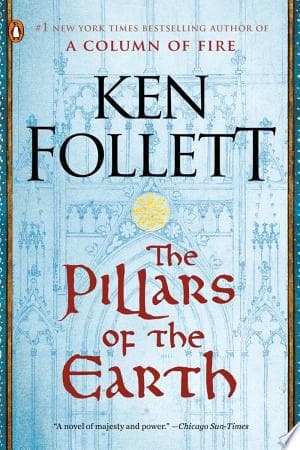
- The Pillars of the Earth
Ken Follett
4.3 (649k) average on GoodreadsFantasyEpic historical fiction set in medieval England with intertwined character arcs and significant conflict.
- Harry Potter and the Sorcerer's Stone
J.K. Rowling
4.5 (7M) average on GoodreadsFantasyRescued from a miserable life under the stairs, an orphaned boy discovers he's a wizard destined for a magical school, where he uncovers a dangerous secret tied to the dark wizard who murdered his parents.
- The Hunger Games
Suzanne Collins
4.3 (6.4M) average on GoodreadsFantasyIn a future where children fight to the death on live television, Katniss Everdeen volunteers for the arena, turning a death sentence into a fight for survival and a spark of rebellion.
- 1984
George Orwell
4.2 (3.1M) average on GoodreadsPoliticsIn a future where surveillance and thought control are absolute, a man's search for truth clashes with the Party, showing that hope can be a form of rebellion.
- Divergent
Veronica Roth
4.2 (2.9M) average on GoodreadsFantasyIn a society divided by virtues, a sixteen-year-old's difference from the norm starts a rebellion that threatens her world.





Enjoyed the summary?
A summary gives you the shape of the book. The book itself has the detail, the examples and the voice.
Find Vagabond on AmazonAs an Amazon Associate, BookBrief earns from qualifying purchases. How we're funded