
Estimated read time: 6 min read
One Sentence Summary
A government official questions the cruelty of his own empire when faced with the arrival of barbarians.
Table of Contents
Introduction
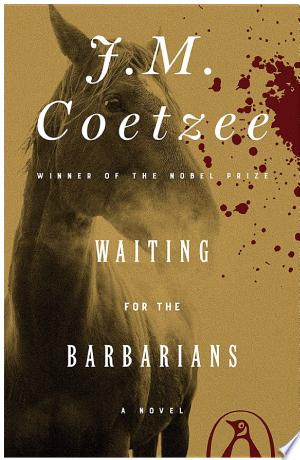
In "Waiting for the Barbarians", a thought-provoking novel written by J.M. Coetzee, the acclaimed South African author explores themes of power, identity, and the consequences of colonization. Set in an unnamed empire, the story follows the life of a magistrate who is responsible for administering justice in a frontier town on the outskirts of the empire. The novel delves into the moral complexities that arise when oppression and violence are employed in the pursuit of power. With its vivid prose and deeply contemplative narrative, "Waiting for the Barbarians" challenges readers to confront their own notions of morality and the implications of unchecked authority.
Brief Synopsis
The novel is set in a remote frontier town located at the edge of an empire. The unnamed empire is engaged in an ongoing war with the "barbarians," a nomadic group that resides beyond the town's borders. The protagonist, known only as the magistrate, is a middle-aged man who holds a position of authority in the town. Although initially content with his routine life, the magistrate's perspective begins to shift when Colonel Joll arrives.
Colonel Joll is a representative of the empire who arrives in the town with a harsh mandate: uncover any potential threats from the barbarians and eradicate them. He employs brutal tactics, including torture and intimidation, to extract information from the local population. Witnessing the atrocities committed by Colonel Joll and his men, the magistrate becomes increasingly disillusioned with the empire's methods.
The magistrate forms a connection with a young barbarian woman who has been captured and tortured by the empire. Over time, he develops empathy for the barbarians and questions the empire's characterization of them as savage enemies. This connection leads the magistrate to question his own loyalty to the empire and his role in perpetuating its oppressive practices.
As the narrative unfolds, the magistrate's internal struggle intensifies. He becomes a renegade figure, attempting to protect the barbarians and challenge the empire's authority. Ultimately, he pays a steep price for his defiance, experiencing personal and professional consequences that force him to confront the true nature of power and its impact on both oppressors and the oppressed.
Main Events
Here are some of the key events that shape the narrative of "Waiting for the Barbarians":
- Arrival of Colonel Joll: Colonel Joll's arrival in the frontier town signals a shift in the magistrate's perspective. Through his brutal tactics and willingness to employ violence, Joll represents the dark side of the empire's quest for control.
- Confrontations with the barbarians: The magistrate's encounters with the barbarians provide a different perspective on their supposed savagery. He witnesses their suffering at the hands of the empire and begins to question the validity of the empire's narrative.
- Relationship with a young barbarian woman: The magistrate forms a bond with a young barbarian woman who has been tortured by the empire. This relationship humanizes the "barbarians" and complicates the magistrate's allegiances.
- Defiance and consequences: The magistrate begins to challenge the empire's authority, attempting to protect the barbarians and expose the empire's cruelty. This results in personal and professional consequences for the magistrate, further illustrating the oppressive nature of power.
Main Characters
Here are the main characters in "Waiting for the Barbarians":
| Characters | Description |
|---|---|
| The Magistrate | The protagonist of the novel, the magistrate serves as the chief administrator of the frontier town. Initially content with his position, he becomes increasingly disillusioned with the empire's actions and questions his own role in perpetuating injustice. |
| Colonel Joll | Colonel Joll is a representative of the empire who arrives in the frontier town with a mandate to eradicate any threats from the barbarians. He employs brutal methods to extract information and execute his mission, becoming the catalyst for the magistrate's moral awakening. |
| The Barbarian Woman | The young woman who is captured and tortured by the empire becomes a source of empathy and connection for the magistrate. Her suffering and resilience challenge the magistrate's assumptions about the barbarians and elicit his defiance against the empire. |
Themes and Insights
"Waiting for the Barbarians" delves into several central themes and offers profound insights on the human condition:
- The corrupting nature of power: The novel explores how unchecked power can lead to brutality, dehumanization, and the erosion of moral values. The empire's thirst for control ultimately exposes the dark underbelly of oppression.
- The construction of "otherness": Coetzee scrutinizes the notion of "us vs. them" and interrogates the ways in which societies dehumanize and marginalize those they perceive as different. The empire's portrayal of the barbarians as "savages" highlights the dangers of such categorizations.
- The consequences of complicity: Through the magistrate's character arc, the novel examines the personal and moral consequences of complicity in an unjust system. The magistrate's gradual awakening and subsequent defiance demonstrate the price one may pay for challenging oppressive authority.
- The complexities of empathy: Coetzee explores the capacity for empathy across cultural, social, and political divides. By humanizing the barbarians through the magistrate's connection with the young woman, the novel encourages readers to question and transcend preconceived biases.
Reader's Takeaway
"Waiting for the Barbarians" is a deeply thought-provoking novel that forces readers to confront uncomfortable truths about power and oppression. Coetzee's masterful storytelling and profound insights make this a compelling read for those interested in examining the complexities of colonial societies, the erosion of moral values, and the consequences of complicity. Through its vivid characters and gripping narrative, the novel encourages readers to question the narratives of power and reflect on their own moral responsibilities.
Conclusion
"Waiting for the Barbarians" is a powerful novel that explores themes of power, identity, and the consequences of colonization. Set in an unnamed empire, the story follows the magistrate as he witnesses the brutal tactics employed by the empire to curb the barbarians. Through the magistrate's moral awakening and defiance, the novel offers profound insights into the corrupting nature of power, the construction of "otherness," the consequences of complicity, and the complexities of empathy. Coetzee's vivid prose and thought-provoking narrative make "Waiting for the Barbarians" a must-read for anyone seeking a deeper understanding of the human condition and the moral dilemmas that arise in the pursuit of power.
Waiting for the Barbarians FAQ
What is the genre of 'Waiting for the Barbarians'?
The genre of 'Waiting for the Barbarians' is fiction.
Who is the author of 'Waiting for the Barbarians'?
'Waiting for the Barbarians' is written by J.M. Coetzee.
When was 'Waiting for the Barbarians' first published?
'Waiting for the Barbarians' was first published in 1980.
What is the setting of 'Waiting for the Barbarians'?
The story is set in an unspecified border town of an unnamed empire.
Can you provide a brief summary of 'Waiting for the Barbarians'?
In this novel, the protagonist, a magistrate of a border town, questions the morality of his empire's oppressive policies when he witnesses the brutal treatment of indigenous people accused of being barbarians. He forms a relationship with a young woman from a persecuted tribe and eventually takes a stand against the empire.
What are some themes explored in 'Waiting for the Barbarians'?
Themes explored in 'Waiting for the Barbarians' include the nature of power, identity, colonialism, the effects of oppression, and the blurred lines between 'civilization' and 'barbarism'.
Is 'Waiting for the Barbarians' a standalone novel or part of a series?
'Waiting for the Barbarians' is a standalone novel and is not part of a series.
Has 'Waiting for the Barbarians' won any awards?
Yes, 'Waiting for the Barbarians' has won several awards, including the James Tait Black Memorial Prize for Fiction and the Geoffrey Faber Memorial Prize.
Is 'Waiting for the Barbarians' suitable for young readers?
'Waiting for the Barbarians' contains mature themes and scenes of violence, so it may not be suitable for young readers.
Are there any movie adaptations of 'Waiting for the Barbarians'?
Yes, a movie adaptation of 'Waiting for the Barbarians' was released in 2019, directed by Ciro Guerra and starring Mark Rylance, Johnny Depp, and Robert Pattinson.



