
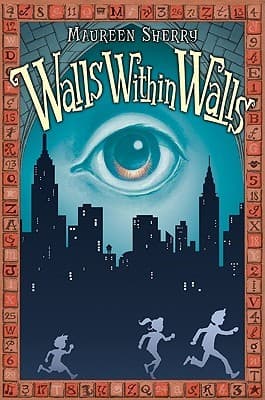
Synopsis
Covers the whole plot, including the ending.
- Difficulty
- Easy
- Pacing
- Moderate
- Mood
- Intriguing, Adventurous, Mysterious, Heartwarming
- Read it if
- You enjoy middle-grade mysteries with puzzles, historical elements, and a dash of adventure, similar to 'Chasing Vermeer'.
- Skip it if
- You prefer fantasy or contemporary realistic fiction without mystery elements.
Walls Within Walls Plot Summary
Covers the whole plot, including the ending.
The Unwanted Relocation
The Smithfork family, including siblings Brid, CJ, and Patrick, and their parents, experience a sudden change in lifestyle. Their father, a video-game inventor, becomes wealthy. They must leave their comfortable Brooklyn home and move into an opulent apartment on Manhattan's Fifth Avenue. The children dislike this move, feeling isolated and friendless in their new, sterile environment. Their parents are often absent, leaving them with a strict nanny, Mrs. B. The change is hard, and the children miss their old life and community.
A Glimmer of Mystery
One day, while exploring their new, large apartment, Brid, the eldest Smithfork sibling, finds a loose panel in a wall. Inside, she discovers a hidden compartment. It holds an antique-looking book, bound in leather and filled with strange symbols and riddles. This discovery sparks her curiosity and distracts her from her unhappiness. She shares her find with her younger brothers, CJ and Patrick, who are equally interested in the mysterious object and its potential secrets.
The Post Family's Secret
As the children look into the mysterious book, they research their new apartment's history. They learn it once belonged to a reclusive and eccentric multimillionaire named Mr. Post, who had no known heirs. Rumors say Mr. Post was obsessed with puzzles and secret codes. The children soon realize the book is not just an old item, but a piece of a larger, elaborate puzzle designed by Mr. Post. They suspect the entire apartment might be a giant riddle left by its former owner.
Unlocking the First Clue
Using their individual strengths – Brid's intelligence, CJ's computer skills, and Patrick's observation – the Smithfork children begin to decipher the clues in the book. These clues lead them to various hidden panels and mechanisms throughout the apartment, revealing more puzzle segments. Each discovery increases their excitement and determination. They quickly realize Mr. Post designed the puzzle as a path to a significant secret, possibly involving his lost fortune. The shared adventure begins to bond them, easing their earlier feelings of isolation.
A Race Against Time and a Rival
As the children progress through the puzzle, they face unexpected obstacles. They learn that a distant relative of Mr. Post, a man named Mr. Plum, also knows about the potential fortune and is trying to find it. Mr. Plum is a formidable and unscrupulous character who will stop at nothing to claim the inheritance. The children must now solve the puzzles and outwit Mr. Plum, who subtly tries to sabotage their efforts. This adds suspense and urgency to their quest, making it a race against time.
Venturing into New York City's Past
The clues in Mr. Post's puzzle are not just in the Fifth Avenue apartment. They lead the Smithfork children on a scavenger hunt across historical landmarks in New York City. From the New York Public Library to Grand Central Station and other architectural sites, the children must visit these places, interpret historical references, and find hidden symbols. This journey deepens their understanding of Mr. Post's life and the city's history. It also forces them to interact with the outside world, helping them shed their shyness and build confidence.
The Enigma of Mr. Post's Life
As the children unravel more of Mr. Post's puzzle, they uncover parts of his personal history. They learn about his solitary life, his love for a woman he could not marry, and the existence of a hidden child he never publicly acknowledged. The fortune, they realize, is not just about money, but about correcting a past injustice and ensuring his true heir receives what is theirs. This discovery adds emotional depth to their adventure, shifting their motivation from curiosity to a desire to fulfill Mr. Post's final wish.
Confrontation and Collaboration
The pursuit of the fortune ends in a tense confrontation with Mr. Plum. He tries to intercept the children, believing he is close to the final solution. However, the Smithfork siblings, having grown more resourceful and courageous, outsmart him. They use their combined intelligence and the knowledge gained from the puzzle to stay ahead. The confrontation shows their teamwork and resilience, proving their bond and ingenuity are stronger than Mr. Plum's greed.
The Final Revelation
After solving the final riddle, the Smithfork children discover Mr. Post's legacy. The fortune is substantial, but it is bequeathed not to a distant relative, but to a foundation for young talent in the arts and sciences, established in honor of his lost love. More importantly, they uncover evidence of Mr. Post's secret child, who had been adopted and lived a quiet life. The puzzle was designed to ensure this specific individual, or their descendants, would ultimately benefit from his wealth, correcting a long-standing personal regret.
A New Beginning
With the mystery solved and the fortune's purpose revealed, the Smithfork children feel a sense of accomplishment. Their adventure has brought them closer as siblings and given them a new appreciation for their new home and New York City. They no longer feel isolated in their opulent apartment; instead, they see it as a place filled with history and possibility. The experience changes their perspective, making them more confident, resilient, and appreciative of family and shared experiences over material wealth.
Principal Figures
Brid Smithfork
Protagonist
The eldest and most academically inclined Smithfork sibling.
Brid is the intellectual leader of the Smithfork siblings, often the first to grasp complex clues and think critically. Initially shy and reserved, she struggles with the move to Fifth Avenue, feeling out of place. Her love for books and puzzles makes her the primary driver of the mystery. She possesses a keen eye for detail and a logical mind, which are crucial in deciphering Mr. Post's intricate riddles. Her journey is one of growing confidence and leadership.
Relationships: CJ Smithfork (Sibling, intellectual partner); Patrick Smithfork (Sibling, protector); Mr. Post (Posthumous mentor/puzzle creator)
CJ Smithfork
Protagonist
The tech-savvy middle Smithfork sibling.
CJ is the tech wizard of the family, skilled with computers, research, and navigating online databases. He often provides the practical means to solve clues, using his digital expertise to uncover historical information or locate specific places in New York City. He can be a bit sarcastic but is fiercely loyal to his siblings. His initial disdain for their new life gradually gives way to excitement as the mystery unfolds, finding his place through his unique skills.
Relationships: Brid Smithfork (Sibling, collaborator); Patrick Smithfork (Sibling, playful rival); Mr. Post (Posthumous challenge creator)
Patrick Smithfork
Protagonist
The youngest and most observant Smithfork sibling.
Patrick is the youngest Smithfork sibling, often overlooked but possessing an uncanny observational ability. He notices details that others miss, whether it's a slight imperfection in a wall or a subtle change in a painting. He is energetic and impulsive, sometimes acting as the physical explorer of the group. His innocent enthusiasm and sharp senses often provide unexpected breakthroughs in the puzzle. He brings a youthful exuberance and a grounded perspective to the trio.
Relationships: Brid Smithfork (Sibling, looked up to); CJ Smithfork (Sibling, playful rival); Mr. Post (Posthumous guide)
Mr. Post
Mentioned
The eccentric, deceased millionaire and creator of the apartment's grand puzzle.
Mr. Post is the original owner of the Fifth Avenue apartment and the mastermind behind the elaborate puzzle. Though deceased, his personality and intentions drive the entire narrative. He was a reclusive multimillionaire with a penchant for riddles and a desire to right a past wrong concerning a lost love and a secret heir. His genius is evident in the complexity and breadth of his puzzle, which serves as both a game and a posthumous testament to his life and regrets.
Relationships: Brid Smithfork (Indirect mentor); CJ Smithfork (Indirect challenge provider); Patrick Smithfork (Indirect guide)
Mr. Plum
Antagonist
A greedy distant relative of Mr. Post, also seeking the fortune.
Mr. Plum is the primary antagonist, a distant and unscrupulous relative of Mr. Post who believes he is the rightful heir to the fortune. He is cunning, manipulative, and driven solely by greed. He attempts to thwart the Smithfork children's progress, often resorting to underhanded tactics. He represents the stark contrast to the children's more noble pursuit of the truth behind the puzzle. His presence injects urgency and danger into the children's quest.
Relationships: Brid Smithfork (Rival); CJ Smithfork (Rival); Patrick Smithfork (Rival)
Mrs. B
Supporting
The Smithfork children's strict and often detached nanny.
Mrs. B is the Smithfork children's nanny, hired after their move to Fifth Avenue. She is initially portrayed as strict, formal, and somewhat oblivious to the children's emotional needs, adhering rigidly to schedules and rules. Her presence highlights the children's isolation and lack of parental attention. Over time, her character subtly softens as she witnesses the children's growing bond and their engagement with the mystery, though she remains largely unaware of their true activities.
Relationships: Brid Smithfork (Caregiver); CJ Smithfork (Caregiver); Patrick Smithfork (Caregiver)
Mr. Smithfork
Supporting
The video-game inventor father of the Smithfork children.
Mr. Smithfork is the father of Brid, CJ, and Patrick. His sudden success as a video-game inventor is the catalyst for the family's move and the children's initial unhappiness. He is largely absent due to his work, which contributes to the children's feeling of neglect. Though well-meaning, he initially struggles to understand his children's discontent, focusing more on providing material comfort. His character represents the challenges of balancing career success with family connection.
Relationships: Brid Smithfork (Father); CJ Smithfork (Father); Patrick Smithfork (Father)
Mrs. Smithfork
Supporting
The mother of the Smithfork children.
Mrs. Smithfork is the mother of Brid, CJ, and Patrick. Like her husband, she is often preoccupied with their new lifestyle and social engagements, leaving the children feeling overlooked. She is less aware of their unhappiness than Mr. Smithfork, often trying to distract them with new possessions rather than addressing their deeper feelings. Her character emphasizes the theme of the superficiality of wealth and the importance of genuine connection.
Relationships: Brid Smithfork (Mother); CJ Smithfork (Mother); Patrick Smithfork (Mother)
Themes & Insights
The True Meaning of Wealth
The novel explores the idea that true wealth is not in possessions or status, but in family bonds, shared experiences, and purpose. The Smithfork children initially dislike their opulent new apartment, finding it isolating compared to their Brooklyn home. Their quest for Mr. Post's fortune ultimately shows that his legacy was meant to correct a past injustice and encourage creativity, not just accumulate money. This teaches the children that the most valuable treasures are intangible.
“The real treasure wasn't gold or jewels, but the story it told and the people it brought together.”
Family and Sibling Bonds
At the story's heart is the strengthening of the Smithfork siblings' relationship. Initially disconnected and unhappy in their new environment, the shared adventure of solving Mr. Post's puzzle forces Brid, CJ, and Patrick to rely on each other's strengths. Brid's intellect, CJ's tech skills, and Patrick's observation combine to form an effective team. This collaboration leads them to the fortune and creates a deep bond between them, showing that adversity can bring families closer.
“They were three separate pieces, but together, they made a whole, perfectly designed to unlock any secret.”
The Power of Curiosity and Discovery
The entire narrative is driven by the children's curiosity and their desire to uncover secrets. Brid's discovery of the hidden book starts a chain of events that leads them on a grand adventure. This theme highlights how an inquisitive mind can transform a mundane existence into an exciting journey of learning and self-discovery. The children's pursuit of answers solves the mystery and broadens their understanding of history, architecture, and human nature.
“Every hidden panel was a new question, and every answer opened a door to a wider world.”
History and Legacy
The novel includes elements of New York City's history and the concept of leaving a lasting legacy. Mr. Post's elaborate puzzle is not just a game but a carefully constructed narrative of his life, his regrets, and his desire to ensure his fortune serves a meaningful purpose. The children's journey through historical landmarks connects them to the city's past, showing how history can be alive and relevant. The story emphasizes that a person's true legacy is not just what they own, but the impact they have and the truths they reveal.
“A life isn't just lived; it leaves echoes, and sometimes, those echoes are clues.”
Plot Devices & Literary Techniques
The Apartment as a Puzzle Box
The Fifth Avenue apartment is designed as a giant, interactive puzzle.
Mr. Post, the eccentric former owner, meticulously designed his Fifth Avenue apartment to contain hidden panels, secret passages, and cryptic clues. This transforms the physical setting into a living, breathing plot device. It serves as the primary stage for the initial mystery, compelling the children to explore their new home with a sense of wonder and purpose. The apartment's intricate design not only advances the plot but also symbolizes the layers of secrets waiting to be uncovered, both within the building and within Mr. Post's past.
The Mysterious Book
An antique book filled with riddles and symbols that guides the children.
The leather-bound book discovered by Brid is the central catalyst for the plot. It contains the initial set of riddles, ciphers, and historical references that form the blueprint of Mr. Post's grand puzzle. This book acts as a continuous guide and a repository of clues, leading the children from one discovery to the next. It not only provides the narrative's direction but also serves as a tangible link to Mr. Post's mind, revealing his personality and intentions through its complex content.
The Scavenger Hunt
A series of clues leading to various locations across New York City.
As the children delve deeper into the puzzle, the clues extend beyond the apartment, transforming the quest into a city-wide scavenger hunt. This device allows the narrative to expand its scope, incorporating iconic New York City landmarks and historical facts. It provides dynamic settings for action and discovery, forcing the children to engage with the outside world and apply their problem-solving skills in diverse environments. The scavenger hunt structure builds suspense and momentum, propelling the plot forward through a series of interconnected challenges.
The Antagonist's Pursuit
Mr. Plum's concurrent search for the fortune creates urgency and conflict.
The character of Mr. Plum functions as a crucial plot device by introducing external conflict and a sense of urgency. His greedy pursuit of Mr. Post's fortune creates a race against time for the Smithfork children. His presence provides a tangible threat and raises the stakes of their adventure, forcing them to be more cunning and resourceful. This antagonistic element not only generates suspense but also highlights the moral contrast between the children's curiosity-driven quest and Mr. Plum's self-serving motives.
Walls Within Walls Quotes
“The greatest treasures aren't always found in plain sight, but hidden within the stories we tell ourselves.”
“Sometimes, the smallest key can unlock the biggest secrets.”
“History isn't just about dates and names; it's about the echoes of people's lives.”
“Fear can be a powerful motivator, but courage is what truly opens doors.”
“Every wall has a story, if you only know how to listen.”
“It's not about being fearless, but about doing what needs to be done despite the fear.”
“The past is never truly gone; it just waits for someone to find it.”
“Sometimes, you have to break a few rules to uncover the truth.”
“A good mystery isn't just about what happened, but why.”
“Even in the grandest of houses, there are always hidden corners.”
“The most valuable things are often those that money can't buy.”
“Trust is a fragile thing, easily broken and hard to mend.”
“Every puzzle piece, no matter how small, contributes to the whole picture.”
“Adventure often begins when you least expect it, and in the most ordinary places.”
Quiz
10 questions on the plot and the characters. Each answer comes with a short explanation.
Question 1
What is the primary reason the Smithfork children dislike their new life on Fifth Avenue?
- Their new school is too challenging.
- They miss their old Brooklyn neighborhood and friends, and feel neglected by their parents.
- The apartment is too small and cramped.
- They don't like their new nanny.
Show answer
B. They miss their old Brooklyn neighborhood and friends, and feel neglected by their parents. The children miss their old life in Brooklyn, their friends, and feel their parents are too busy with their new wealth, leaving them with a nanny.
Question 2
What specific item did the original owner, Mr. Post, hide within the apartment's puzzle?
- A valuable painting
- A mysterious book
- A collection of antique coins
- A map of New York City
Show answer
B. A mysterious book The apartment was turned into a giant puzzle containing a mysterious book and hidden panels, leading to the Post family fortune.
Question 3
What is the profession of the Smithfork children's father?
- A real estate developer
- A stockbroker
- A video-game inventor
- A software engineer
Show answer
C. A video-game inventor Their father is a video-game inventor who 'strikes it rich,' leading to their move and new lifestyle.
Question 4
Which of the following is NOT one of the Smithfork children mentioned in the synopsis?
- Brid
- CJ
- Annie
- Patrick
Show answer
C. Annie The synopsis specifically names Brid, CJ, and Patrick as the children who discover the secret.
Question 5
What is the ultimate goal of solving the puzzle left by Mr. Post?
- To find a secret passageway out of the apartment.
- To uncover the Post family fortune.
- To learn about New York City's history.
- To re-establish contact with Mr. Post's living relatives.
Show answer
B. To uncover the Post family fortune. The puzzle is explicitly stated to lead to 'discovering the Post family fortune.'
Question 6
How does solving the apartment's mystery impact the children's experience of New York City?
- It makes them resent the city even more.
- It causes them to race through today's New York City and uncover historical secrets.
- It forces them to leave the city permanently.
- It primarily keeps them confined within the apartment.
Show answer
B. It causes them to race through today's New York City and uncover historical secrets. The synopsis states, 'Unraveling the mystery causes them to race through today's New York City—and to uncover some long-hidden secrets of the past.'
Question 7
What is the primary theme suggested by the children's initial unhappiness despite their father's wealth?
- The importance of historical preservation.
- Money cannot buy happiness or replace genuine connection.
- The challenges of adapting to urban life.
- The allure of adventure and mystery.
Show answer
B. Money cannot buy happiness or replace genuine connection. Despite their father striking it rich and moving to a 'swanky apartment,' the children 'hate their new life' due to lack of friends and parental attention, highlighting that wealth doesn't guarantee happiness.
Question 8
The apartment's original owner, Mr. Post, is described as a 'deceased multimillionaire.' What does this detail imply about the nature of the fortune the children are seeking?
- It is likely to be a small, easily accessible sum.
- It is a substantial amount of wealth, making the treasure hunt highly significant.
- It is probably just sentimental value, not actual money.
- It refers to a collection of rare books, not monetary wealth.
Show answer
B. It is a substantial amount of wealth, making the treasure hunt highly significant. The term 'multimillionaire' directly indicates that Mr. Post possessed a large amount of money, making the 'Post family fortune' a significant financial prize.
Question 9
What is the significance of the apartment itself being described as a 'giant puzzle'?
- It suggests the apartment is poorly designed and confusing to navigate.
- It implies that the physical space is integral to solving the mystery and finding the fortune.
- It means the children have to assemble furniture to find clues.
- It is a metaphor for the children's confusing new life.
Show answer
B. It implies that the physical space is integral to solving the mystery and finding the fortune. The apartment being a 'giant puzzle' with 'hidden panels' means the architectural features and layout of the home are directly involved in the clues and the path to the fortune.
Question 10
The book is described as 'perfect for tween readers who enjoy mysteries and puzzles and books like Chasing Vermeer.' What does this comparison suggest about the nature of the mystery in 'Walls Within Walls'?
- It involves solving a crime committed by a famous art forger.
- It is likely an intellectual, clue-based mystery with codes and historical elements.
- It focuses on supernatural events and haunted locations.
- It primarily involves physical challenges and escape room-style tasks.
Show answer
B. It is likely an intellectual, clue-based mystery with codes and historical elements. Chasing Vermeer is known for its intricate, art-history-based puzzles and codes. Comparing 'Walls Within Walls' to it suggests a similar intellectual, clue-driven mystery style, often involving historical details.
Walls Within Walls FAQ
What prompts the Smithfork family's move and the children's unhappiness?
The Smithfork kids, Brid, CJ, and Patrick, are uprooted from their comfortable Brooklyn life because their father, a video-game inventor, suddenly becomes rich. They are forced to move into a lavish Fifth Avenue apartment in Manhattan, which they find isolating and far removed from their previous, cozier existence.
Who are the main protagonists of 'Walls Within Walls'?
The primary protagonists are the three Smithfork siblings: Brid, the eldest and often the most analytical; CJ, who is usually focused on technology and video games; and Patrick, the youngest, who often provides an unexpected perspective or clue. Together, they form a dynamic team to solve the mystery.
What is the central mystery the Smithfork children uncover in their new apartment?
The children discover that their new apartment, previously owned by the eccentric multimillionaire Mr. Post, is a giant, elaborate puzzle. Mr. Post designed the apartment to contain hidden panels, secret passages, and clues leading to a mysterious book and, ultimately, his family fortune.
How does the mystery connect the present-day Smithforks with the past?
Solving the apartment's puzzle requires the Smithforks to delve into the history of the Post family and Mr. Post's life, uncovering long-hidden secrets and events from the past. Their journey takes them through various historical locations and archives in New York City, linking their modern-day adventure to a bygone era.
What is the significance of the mysterious book mentioned in the apartment's puzzle?
The mysterious book is a crucial piece of Mr. Post's elaborate puzzle, serving as a key to unlocking further clues and understanding his intentions. It likely contains vital information or a cipher that guides the children toward the ultimate discovery of the Post family fortune.
Were there any subtle hints about Mr. Post's eccentric nature before the children discovered the puzzle?
While not explicitly stated, the sheer opulence and unusual layout of the Fifth Avenue apartment, combined with the fact it had been empty for some time, might have subtly hinted at the previous owner's unique personality. The children's initial feeling of the apartment being 'too grand' could be a foreshadowing of its hidden complexities.
How does the children's father's video game background subtly influence their approach to the mystery?
CJ, in particular, with his interest in technology and video games, often approaches the apartment's puzzle with a gamer's mindset, looking for patterns, glitches, and hidden levels. This background likely helps the siblings conceptualize the apartment as a solvable game, much like their father's creations.
Are there any specific historical New York City landmarks or figures that play a role in the hidden details of the puzzle?
The mystery likely incorporates several real historical New York City landmarks, such as libraries, museums, or specific architectural details, as clues or locations for the children to visit. The Post family's history would also undoubtedly intersect with prominent historical figures or events of their time, adding depth to the narrative.
What is the psychological impact of the sudden wealth and relocation on the Smithfork children?
The sudden wealth and move cause significant emotional distress for the children, leading to feelings of isolation, resentment, and a loss of identity. They miss their old friends and familiar surroundings, highlighting that material wealth doesn't equate to happiness or contentment.
How does solving the mystery help the children cope with their new circumstances and foster family bonds?
Working together to solve Mr. Post's puzzle forces Brid, CJ, and Patrick to rely on each other's strengths, improving their communication and strengthening their sibling bond. The shared adventure provides a sense of purpose and excitement that helps them overcome their initial unhappiness and adapt to their new environment.
What role does the 'nanny' play in the children's psychological state and the unfolding of the mystery?
The nanny, who effectively replaces their parents due to the parents' preoccupation with their new wealth, likely contributes to the children's feelings of neglect and isolation. Her presence, or lack thereof, might also inadvertently provide the children with the unsupervised time needed to discover and pursue the apartment's secrets.
How does the theme of 'walls within walls' manifest beyond the physical structure of the apartment?
The title 'Walls Within Walls' can be interpreted metaphorically, representing the emotional barriers the children build around themselves due to their unhappiness, the secrets held within the Post family's history, and perhaps even the superficial 'walls' of wealth that separate the Smithforks from their former lives and friends.
Is the ultimate goal of finding the Post family fortune purely financial, or is there a deeper, more symbolic reward for the children?
While the immediate goal is the fortune, the deeper reward for the children is likely not just financial. It's about restoring their sense of purpose, rediscovering the joy of adventure, strengthening their family unit, and perhaps even finding a sense of belonging in their new, previously unwelcoming home. The fortune might be a catalyst for these more profound changes.
What message does the book convey about the true value of wealth and happiness?
The book strongly suggests that immense wealth does not automatically bring happiness, as evidenced by the Smithfork children's initial misery despite their father's success. True value and happiness are found in adventure, intellectual challenge, strong family bonds, and a sense of belonging, rather than in material possessions or a lavish lifestyle.
Could Mr. Post's elaborate puzzle be seen as a final act of communication or legacy from a lonely individual?
It is plausible that Mr. Post, an eccentric multimillionaire, designed the puzzle as his final, elaborate legacy, not just to pass on wealth, but also to leave behind a story or a challenge. It could be interpreted as his way of connecting with future inhabitants or ensuring his memory lived on through an engaging, intellectual pursuit.
How does the 'mystery' genre elements blend with the 'historical fiction' aspects in the narrative?
The mystery is intrinsically tied to historical elements; solving the puzzle requires delving into the past of Mr. Post and his family. The historical fiction aspects provide the context and clues for the mystery, with the children uncovering old secrets, historical events, and period-specific details to piece together the larger puzzle.
What is the significance of the children's initial 'miserable' school year looming ahead?
The looming miserable school year emphasizes their isolation and lack of social connection in their new environment. It highlights the void in their lives that the apartment's mystery ultimately fills, providing them with an exciting, engaging alternative to their foreseen loneliness and unhappiness.
How does the book's setting in 'today's New York City' contrast with the historical elements of the mystery?
The contemporary New York City setting allows the children to utilize modern tools and technology (like CJ's video game background) to navigate the city while juxtaposing it with the historical clues and locations of Mr. Post's era. This contrast enriches the narrative, showing how the past is embedded within the present.
Similar books
- Chasing Vermeer
Blue Balliett
3.7 (28k) average on GoodreadsChildren'sFeatures children solving an art-related mystery with puzzles and codes in Chicago.
- The Westing Game
Ellen Raskin
4.0 (165k) average on GoodreadsChildren'sInvolves heirs solving a complex puzzle to inherit a fortune, with quirky characters and clues.
- From the Mixed-Up Files of Mrs. Basil E. Frankweiler
E.L. Konigsburg
4.2 (189k) average on GoodreadsChildren'sChildren run away to a museum and solve a mystery related to a statue's origins.
- Harry Potter and the Sorcerer's Stone
J.K. Rowling
4.5 (7M) average on GoodreadsFantasyRescued from a miserable life under the stairs, an orphaned boy discovers he's a wizard destined for a magical school, where he uncovers a dangerous secret tied to the dark wizard who murdered his parents.
- The Hobbit, or There and Back Again
J.R.R. Tolkien
4.3 (2.9M) average on GoodreadsFantasyA comfort-loving hobbit named Bilbo Baggins is whisked away by a mischievous wizard and a band of dwarves on an unexpected journey to reclaim stolen treasure from a fearsome dragon, discovering courage and a magical ring along the way.
- Harry Potter and the Goblet of Fire
J.K. Rowling
4.6 (2.6M) average on GoodreadsFantasyA bewildered Harry Potter, underage and thrust into a deadly Triwizard Tournament, must brave dragons, mermaids, and a resurgent dark magic to survive a year that will forever alter the wizarding world.



Enjoyed the summary?
A summary gives you the shape of the book. The book itself has the detail, the examples and the voice.
Find Walls Within Walls on AmazonAs an Amazon Associate, BookBrief earns from qualifying purchases. How we're funded