
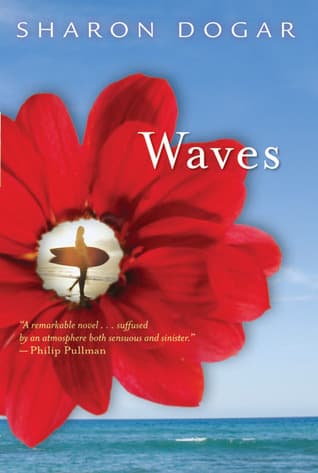
Synopsis
Covers the whole plot, including the ending.
- Difficulty
- Medium
- Pacing
- Moderate
- Mood
- Atmospheric, Melancholy, Suspenseful, Bittersweet
- Read it if
- You enjoy poignant mysteries, stories of first love and loss, and a narrative that blends present-day grief with uncovering past secrets.
- Skip it if
- You prefer lighthearted reads or find stories involving comas and family trauma too distressing.
Waves Plot Summary
Covers the whole plot, including the ending.
The Silence After the Storm
The story begins with Hal's family making the difficult choice to leave his older sister, Charley, in a coma at a London hospital. Charley was found unconscious after a mysterious event, and doctors offer little hope. To cope with their grief, Hal's parents, Sarah and David, decide to spend the summer in a rented cottage by the sea in Cornwall, a place Charley loved. Hal, feeling guilty and desperate to understand what happened to Charley, struggles with the move, feeling her absence deeply. He knows his parents are trying to escape, but he feels closer to Charley's memories by the ocean she cherished.
Whispers from the Past
Soon after arriving in Cornwall, Hal starts having strange, vivid sensations and fragmented memories. These are not his own, but glimpses into Charley's past, especially her last summer. He sees flashes of a dark-haired boy, feels strong emotions of joy and confusion, and hears bits of conversations. These 'waves' of memory are confusing but also offer a chance to connect with Charley and possibly uncover the truth about her accident. He first thinks they are hallucinations from grief but soon realizes they are too specific to be just imagination.
Meeting Finn
While exploring the beach and cliffs, Hal meets Finn, a local boy his age. Finn is quiet and observant, with a sad look. Hal is immediately drawn to him, sensing a familiarity he cannot quite place. As they spend more time together, Hal realizes Finn lives in the very cottage his family has rented for the summer, having recently moved out. Finn's presence brings stronger, clearer memories of Charley, suggesting a deeper connection between Finn and his sister. Finn is initially reserved but slowly opens up to Hal.
The Shared Cottage
Hal discovers that Finn's family, specifically his mother and an older brother, had been renting the cottage before Hal's family arrived. This further strengthens Hal's growing suspicion that Finn is connected to Charley's last summer. The cottage itself seems to hold echoes of Charley, making Hal's memories even more powerful within its walls. He tries to subtly ask Finn about Charley without revealing his ability to access her memories, fearing Finn might find him strange or mocking.
Fragments of a Romance
Through increasingly clear memory 'waves,' Hal puts together a picture of Charley's last summer. He sees her falling deeply in love with Finn's charming older brother, Jude. Their romance was passionate but secret, hidden from their parents and even from Finn. Hal witnesses their stolen moments, whispered promises, and intense connection. These memories are bittersweet, showing Charley's happiness but also hinting at tensions and potential heartbreak that might have led to her accident.
The Secret Beach
Hal's memories lead him and Finn to a secluded cove, a 'secret beach' that was clearly special to Charley and Jude. The memories intensify here, showing Charley's joy and vulnerability in this hidden spot. Finn also seems to recognize its importance, though he does not fully understand why. The cove becomes a central point for Hal's investigation, a place where he feels closest to Charley and where the past seems most alive. It is here that the emotional weight of Charley's lost love truly starts to affect Hal.
Jude's Shadow
As the memories unfold, Hal learns more about Jude. He was charming but also volatile and had a history of getting into trouble. Finn's mother, Mrs. Davies, clearly did not approve of Charley's relationship with Jude, seeing Charley as a 'distraction' or 'bad influence.' This parental disapproval created a split, forcing Charley and Jude to be even more secretive. Hal begins to see the complexities and pressures around their romance, understanding that it was not a simple, carefree summer love.
The Argument
A particularly powerful memory 'wave' shows Hal a devastating argument between Charley and Jude. The details are at first fragmented — raised voices, accusations, tears. It is clear that their relationship was under immense strain, possibly due to Jude's behavior or outside pressures. This memory is important because it suggests a direct link to the events leading up to Charley's accident. Hal feels the emotional intensity of the argument as if he were there, deepening his understanding of Charley's final moments before her collapse.
The Night of the Accident
The memories end with the night of Charley's accident. Hal experiences the confusion, fear, and physical sensations leading up to her collapse. He sees Charley running, distressed, after the argument with Jude. He feels the disorientation and the sudden, overwhelming darkness. While the memory does not provide a clear image of what caused her fall, it strongly suggests the emotional turmoil and the chase were direct causes. This raw, visceral experience leaves Hal shaken but also closer to the truth than ever.
The Confession
Overwhelmed by his own guilt and the weight of the past, Finn finally confesses to Hal. He reveals that he was there on the night of Charley's accident, having followed Jude and Charley. He witnessed the argument and saw Charley run off. He admits that he tried to help her, but in his panic and fear, he accidentally pushed her, causing her to fall and hit her head. Finn has been carrying this secret, believing he was responsible for Charley's coma. His confession is a painful release, bringing both sorrow and clarity to Hal.
The Truth Revealed
With Finn's confession and the full picture from Charley's memories, Hal finally understands the tragic sequence of events. Charley's accident was not intentional, but a terrible combination of a heated argument, a desperate flight, and Finn's accidental involvement. Hal confronts his parents, sharing the truth, which they meet with shock, grief, and a strange sense of relief. The truth is devastating, but it allows the family to start processing what truly happened, moving past the agonizing uncertainty.
A Glimmer of Hope
Armed with the truth, Hal's family begins the slow, painful process of healing. While Charley's condition remains unchanged, knowing what happened allows them to grieve more openly and release some of the suffocating guilt. Hal, having carried the burden of Charley's memories, finds a sense of peace. He and Finn, bound by their shared secret and tragedy, form a deep, lasting friendship. The ending suggests that while the pain of loss will always remain, the family has found a path towards acceptance and a fragile hope for the future, with Hal leading the way.
Waves Characters
Hal
Protagonist
A sensitive teenage boy burdened by his sister's coma and a mysterious connection to her past.
Hal is a thoughtful and empathetic teenager, struggling profoundly with his older sister Charley's coma. He feels a deep sense of responsibility and guilt, believing he needs to uncover the truth about her accident. He possesses an unusual sensitivity, which manifests as the ability to access Charley's memories. This gift becomes both a torment and a driving force, pushing him to unravel the mystery. He is observant and emotionally intelligent, often feeling more than he expresses, especially to his grieving parents.
Relationships: Charley (Devoted brother, deeply connected to her even in her coma.); Sarah (Mother) (Loving but distant due to grief; Hal feels a need to protect her.); David (Father) (Strained relationship due to shared grief and his father's stoicism.); Finn (Initially a mysterious acquaintance, becomes a close friend and confidante, sharing a tragic secret.)
Charley
Central Figure (in coma)
Hal's older sister, whose past romance and tragic accident are the core mystery.
Charley is experienced primarily through Hal's retrieved memories. She is depicted as vibrant, passionate, and somewhat rebellious, falling deeply in love with Jude during her last summer. She possesses a spirited nature and a zest for life, but also a vulnerability that makes her susceptible to intense emotions and the complexities of her secret relationship. Her accident leaves her in a coma, making her a silent, powerful presence throughout the narrative, driving Hal's quest for truth.
Relationships: Hal (Loving older sister, protective and fond.); Jude (Intense, passionate, and ultimately tragic first love.); Finn (Friendly and somewhat dismissive, unaware of his deeper feelings.); Sarah & David (Typical teenage-parent dynamic, but her secret relationship creates a distance.)
Finn
Supporting Character / Confidante
A local boy connected to Charley's past, carrying a heavy secret.
Finn is a quiet, sensitive local boy, around Hal's age, who lives in the cottage Hal's family rents. He carries a profound burden of guilt and sorrow, stemming from his involvement in Charley's accident. He is observant and empathetic, initially guarded but eventually opens up to Hal. Finn is deeply affected by the events of the previous summer, particularly his brother Jude's relationship with Charley and his own role in the tragedy. His inner turmoil mirrors Hal's, creating a strong bond between them.
Relationships: Hal (Initially a mysterious figure, becomes a close friend and co-investigator of the past.); Jude (Younger brother, admires Jude but also witnesses his flaws and volatility.); Charley (Had an unspoken crush on her, which complicates his feelings about her relationship with Jude.); Mrs. Davies (Mother) (Close relationship, but he hides his secret from her.)
Jude
Antagonist (indirectly)
Finn's older brother, Charley's first love, charismatic but troubled.
Jude is seen primarily through Charley's memories and Finn's recollections. He is charismatic, handsome, and captivating, drawing Charley into a passionate romance. However, he also possesses a volatile and troubled side, leading to arguments and a reputation for getting into trouble. His actions and temperament contribute significantly to the tragic events, though he is not malicious. He represents the intoxicating but ultimately dangerous allure of first love and youthful recklessness.
Relationships: Charley (Intense and passionate first love, ending tragically.); Finn (Older brother, admired by Finn but also a source of conflict and concern.); Mrs. Davies (Mother) (Troubled relationship, often a source of worry and disappointment.)
Sarah
Supporting
Hal's mother, overwhelmed by grief and trying to hold her family together.
Sarah is Hal's mother, deeply affected by Charley's coma. She is a loving mother but her grief has made her somewhat withdrawn and fragile. She tries to maintain a semblance of normalcy for Hal, but her sorrow is palpable. She clings to the hope of Charley's recovery while also trying to escape the painful reality by moving to Cornwall. She struggles to communicate with Hal about their shared pain, often relying on stoicism or distraction.
Relationships: Hal (Loving mother, but emotionally distant due to grief.); Charley (Devoted mother, deeply heartbroken by her daughter's condition.); David (Strained marriage due to shared grief and different coping mechanisms.)
David
Supporting
Hal's father, trying to be strong for his family but struggling with his own grief.
David is Hal's father, a stoic man who attempts to be the rock for his family in the face of Charley's tragedy. He often retreats into himself, finding solace in practicalities or quiet contemplation rather than open emotional expression. He genuinely loves his children but struggles to articulate his feelings, which can make him seem distant to Hal. He hopes the move to Cornwall will help his family heal, even as he grapples with his own profound sorrow and helplessness.
Relationships: Hal (Loving father, but struggles with emotional expression, creating a distance.); Charley (Devoted father, heartbroken by her condition.); Sarah (Strained marriage due to shared grief and different coping mechanisms.)
Mrs. Davies
Supporting
Finn and Jude's mother, disapproving of Charley and Jude's relationship.
Mrs. Davies is Finn and Jude's mother, a minor but significant character. She is protective of her sons and somewhat judgmental, particularly regarding Jude's choices and his relationship with Charley. Her disapproval of Charley and Jude's romance adds to the secrecy and tension surrounding their relationship, contributing to the tragic events. She is a pragmatic woman, trying to manage her family's struggles, especially Jude's troubled nature.
Relationships: Finn (Loving mother, but unaware of his deep secret.); Jude (Concerned and often frustrated mother due to his behavior.); Charley (Disapproving of her relationship with Jude.)
Waves Themes
Grief and Loss
The novel explores the many sides of grief, not just for the lost but for the living. Hal's family is stuck in place by Charley's coma, each member experiencing grief differently. Sarah and David withdraw, while Hal is driven to understand. The move to Cornwall is an attempt to escape their sorrow, but Charley's memories are inescapable, especially for Hal. The story suggests that true healing can only begin once the truth, however painful, is faced, allowing for real mourning instead of prolonged uncertainty. The family's inability to grieve properly due to the mystery of Charley's accident is a main conflict.
“Grief was a strange thing, a tide that pulled you under without warning, and sometimes, you just had to let it.”
The Power of Memory and the Past
Memory is not just a plot tool but a central part of 'Waves.' Hal's unique ability to access Charley's memories drives the entire story, showing how the past still strongly influences the present. These memories are fragmented and emotional, requiring Hal to piece them together like a detective. The novel argues that understanding the past, even its most painful parts, is vital for moving forward. The setting of Cornwall, a place full of Charley's recent past, strengthens this theme, making the landscape itself a holder of memory. The shared trauma of the past connects Hal and Finn.
“The past wasn't just behind us; it was a wave, constantly crashing on the shores of the present.”
First Love and its Consequences
Charley and Jude's intense, secret first love is the emotional core of the mystery. The novel shows the exciting rush of young love, but also its potential for recklessness, heartbreak, and terrible results. Their relationship is marked by passion, secrecy, and parental disapproval, which ultimately contributes to the tragic events. The story highlights how intense first love can lead to bad judgment and how its ending can have far-reaching and unintended effects, not just on the lovers but on their families and friends. It is a bittersweet look at love's shaping power.
“First love was a storm, beautiful and terrifying, and sometimes it left wreckage in its wake.”
Guilt and Responsibility
Guilt is a widespread emotion throughout the novel. Hal feels guilty for not knowing what happened to Charley and for his own feelings of not being good enough. Finn carries a heavy burden of guilt over his accidental involvement in Charley's fall, leading him to silence. The parents, Sarah and David, also struggle with guilt, wondering if they could have prevented the tragedy. The story carefully examines how guilt can fester and isolate people, preventing healing. The plot's resolution depends on the characters facing and sharing their guilt, turning it into a path towards forgiveness and shared understanding.
“The secret was a stone in his gut, heavy and cold, and he'd been carrying it for too long.”
Plot Devices & Literary Techniques
Psychic Connection / Shared Memories
Hal's unique ability to experience Charley's memories.
This is the central plot device, allowing Hal to piece together the events leading to Charley's coma. It functions as a form of retrospective narration, providing flashbacks and insights into Charley's thoughts and feelings. This 'psychic' link is never fully explained, giving it a mysterious, almost supernatural quality, but it grounds the mystery. It allows the author to reveal plot points and character motivations through a non-linear narrative, creating suspense as Hal (and the reader) slowly reconstructs the past.
The Coastal Setting
The rugged Cornish coast as a backdrop and emotional mirror.
The wild, beautiful, and sometimes dangerous Cornish coast serves as more than just a setting; it's a symbolic mirror to the family's emotional state and the tumultuous events of the past. The 'waves' themselves evoke the ebb and flow of grief, memory, and the uncontrollable forces of life. The hidden coves and dramatic cliffs provide ideal locations for secret rendezvous and later, for the unraveling of the truth. The isolation of the setting also emphasizes the family's internal struggles and the intimacy of Hal and Finn's growing bond.
The Unreliable Narrator (of memories)
Hal's memories are fragmented, emotional, and require interpretation.
While Hal is the primary narrator, the memories he accesses from Charley are not always clear or complete. They are fragmented, emotional, and sometimes disorienting, making him an 'unreliable' interpreter of the past. This device builds suspense, as Hal (and the reader) must actively work to piece together the truth from incomplete data. It reflects the subjective nature of memory and adds to the mystery, ensuring that the full picture only emerges gradually, often with surprising revelations.
The Coma
Charley's comatose state as the catalyst for the mystery and grief.
Charley's coma is the inciting incident and the constant emotional anchor of the story. It prevents her from revealing the truth herself, forcing Hal to undertake his investigative journey. The coma symbolizes the family's suspended grief and the unresolved questions haunting them. It creates immense emotional stakes, as her potential recovery (or lack thereof) hangs over every revelation. It also highlights the helplessness of the family, making Hal's unique ability even more crucial.
Waves Quotes
“The sea has a way of taking things, doesn't it? But it also gives back, sometimes.”
“Secrets are like whispers carried on the wind; eventually, someone hears them.”
“Sometimes the greatest mysteries aren't about what happened, but why.”
“Love isn't always a calm sea; sometimes it's a storm you have to weather together.”
“The past isn't a place you visit; it's a part of who you are, always with you.”
“Even the smallest ripple can create the biggest wave, given time.”
“It's hard to find your way when you don't know where you're supposed to be going.”
“The truth has a funny way of surfacing, no matter how deep you try to bury it.”
“Sometimes the only way to move forward is to let go of what's holding you back.”
“The ocean never truly forgets; it holds onto stories in its depths.”
“Being brave isn't about not being scared; it's about doing what needs to be done even when you are.”
“You can't change the past, but you can choose how it defines your future.”
“The most beautiful things are often the ones you have to search for.”
“Trust is a fragile thing, easily broken and hard to repair.”
Quiz
10 questions on the plot and the characters. Each answer comes with a short explanation.
Question 1
What is the primary reason Hal's family decides to spend the summer on the west coast of England?
- To visit relatives they haven't seen in a long time.
- To escape the painful memories associated with Charley's accident at home.
- Hal's father got a new job opportunity in that region.
- Charley's doctors recommended a change of scenery for the family.
Show answer
B. To escape the painful memories associated with Charley's accident at home. The family leaves Charley in the hospital to spend the summer on the west coast of England as a way to cope with their sorrow and the tragedy of Charley's comatose state.
Question 2
What unusual ability does Hal discover he possesses regarding his sister, Charley?
- He can communicate with her telepathically.
- He can see her as a ghost-like figure.
- He can share her memories.
- He can predict her future medical condition.
Show answer
C. He can share her memories. The synopsis states that Hal finds it harder than ever to shake his sister's presence, wondering what power is letting him share her memories.
Question 3
What is the central mystery that Hal's shared memories are hoped to reveal?
- The identity of Charley's secret boyfriend.
- The location of a hidden treasure Charley knew about.
- The deep, dark truth behind her tragic 'accident'.
- Charley's true feelings about moving away from home.
Show answer
C. The deep, dark truth behind her tragic 'accident'. Hal's ability to share Charley's memories is crucial because the family hopes these memories will 'reveal the deep, dark truth behind her tragic 'accident''.
Question 4
The book is described as a 'coming-of-age story.' What key experiences contribute to Hal's coming-of-age journey?
- Learning a new skill and making new friends.
- Experiencing first love and first loss, while struggling to save his family.
- Achieving academic success and planning for his future.
- Traveling the world and discovering different cultures.
Show answer
B. Experiencing first love and first loss, while struggling to save his family. The synopsis explicitly states, 'WAVES is a coming-of-age story about first love and first loss; about a family drowning in sorrow, and the remarkable son who is struggling against the tide to save them.'
Question 5
What is the emotional state of Hal's family as they deal with Charley's condition?
- They are optimistic about her recovery.
- They are indifferent and detached.
- They are 'drowning in sorrow'.
- They are angry and resentful.
Show answer
C. They are 'drowning in sorrow'. The book description states the family is 'drowning in sorrow' due to Charley's accident and comatose state.
Question 6
The setting for much of the story is described as a 'beach where growing up goes wrong.' What does this imply about the events that unfold there?
- It's a place where children typically misbehave.
- The beach is a site of unexpected tragedy and loss for the young characters.
- The weather at the beach is always bad, making it difficult to enjoy.
- It's a metaphor for the family's financial struggles.
Show answer
B. The beach is a site of unexpected tragedy and loss for the young characters. The phrase 'a beach where growing up goes wrong' strongly implies that the setting is where the tragic events related to Charley's 'accident' occurred or where innocence was lost.
Question 7
How is Hal characterized in relation to his family's grief?
- He is contributing to the family's despair.
- He is indifferent to their suffering.
- He is struggling against the tide to save them.
- He is completely overwhelmed and paralyzed by sorrow.
Show answer
C. He is struggling against the tide to save them. The description states Hal is 'struggling against the tide to save them,' indicating his active role in trying to uplift his grieving family.
Question 8
The book is compared to 'A LOVELY BONES for teens.' What does this comparison suggest about the novel's tone and subject matter?
- It will be a lighthearted fantasy story.
- It likely involves a deceased or comatose protagonist narrating or influencing events from beyond, focusing on a dark mystery and emotional depth.
- It's a historical fiction set in the past.
- It will primarily be a romantic comedy.
Show answer
B. It likely involves a deceased or comatose protagonist narrating or influencing events from beyond, focusing on a dark mystery and emotional depth. 'The Lovely Bones' features a deceased girl narrating her murder and its aftermath, impacting her family. This comparison suggests 'Waves' will have a similar premise of a character in a liminal state (comatose) influencing the living to uncover a dark truth, with a strong emotional and mysterious element.
Question 9
Given the genres listed (Children's, Mystery, Young Adult, Romance), which genre element is most directly tied to Hal's unique ability to share Charley's memories?
- Children's literature, as it often features imaginative elements.
- Romance, as it allows him to understand her past relationships.
- Mystery, as it's the primary tool to uncover the truth behind her accident.
- Young Adult, as it's a common trope for teen protagonists to have special powers.
Show answer
C. Mystery, as it's the primary tool to uncover the truth behind her accident. Hal's ability to share Charley's memories is explicitly linked in the synopsis to 'reveal the deep, dark truth behind her tragic 'accident'', which is the core of the mystery plot.
Question 10
The title 'Waves' likely carries symbolic meaning beyond the literal beach setting. What central theme is best represented by the imagery of 'waves' in the context of the book's description?
- The constant change of the tides, symbolizing new beginnings and adventures.
- The overwhelming and relentless nature of grief and sorrow, and the struggle to stay afloat.
- The power of nature to heal and restore the human spirit.
- The cyclical pattern of life and death, acceptance and letting go.
Show answer
B. The overwhelming and relentless nature of grief and sorrow, and the struggle to stay afloat. The description uses phrases like 'a family drowning in sorrow' and Hal 'struggling against the tide to save them,' strongly linking the 'waves' imagery to the overwhelming and relentless nature of grief and the fight against it.
Waves FAQ
What is the central premise of 'Waves'?
The central premise of 'Waves' revolves around Hal's struggle to cope with his sister Charley's comatose state after a tragic 'accident.' While his family attempts to escape their grief by vacationing on the west coast of England, Hal finds himself inexplicably sharing Charley's memories, which he hopes will reveal the truth behind her injury.
Who are the main characters in 'Waves'?
The main characters include Hal, the protagonist who can access his sister's memories; Charley, his comatose sister whose past holds the key to the mystery; and their parents, who are deeply affected by Charley's condition and struggle to maintain their family unit. Other characters likely include friends Hal makes at the beach and figures from Charley's past.
Where is the primary setting for the story?
The primary setting for the story is the west coast of England, specifically a beach town where Hal's family goes for the summer. This location serves as both a temporary escape from their grief and the backdrop for Hal's personal journey of discovery and coming-of-age.
What kind of 'accident' did Charley experience?
The exact nature of Charley's 'accident' is initially shrouded in mystery, driving the plot forward. Hal's quest to uncover the truth suggests it was not a simple mishap but possibly something more sinister or complex, involving hidden details from her life at the beach.
Is 'Waves' a standalone novel or part of a series?
Based on the description, 'Waves' appears to be a standalone novel, offering a complete story about Hal's journey to uncover the truth about Charley and his family's struggle with grief. There is no indication of it being part of a larger series.
How does Hal gain access to Charley's memories?
Hal gains access to Charley's memories through a mysterious, unexplained power that allows him to share her past experiences. This supernatural element is crucial to the plot, enabling him to piece together the events leading up to her 'accident' and understand her life more deeply.
Are there any specific recurring symbols or motifs in the book?
The title 'Waves' itself suggests a major motif, symbolizing the relentless nature of grief, the ebb and flow of memories, and the overwhelming challenges Hal faces. The beach setting likely introduces symbols of the sea, tides, and perhaps objects found on the shore, reflecting themes of loss and discovery.
What is the significance of the 'west coast of England' setting beyond a change of scenery?
The 'west coast of England' setting likely holds deeper significance than just a change of scenery. It's described as 'where growing up goes wrong,' suggesting a place intrinsically linked to Charley's past and the events leading to her 'accident,' making it a crucial, almost character-like element in the mystery.
Does the book explore the concept of an afterlife or spirits?
While the book features Hal sharing Charley's memories, it primarily focuses on a psychic connection rather than explicit exploration of an afterlife or spirits in the traditional sense. The power seems to be a conduit to her living mind, albeit one in a coma, rather than communication with a deceased entity.
How does Hal's ability to share memories affect his own emotional state and identity?
Hal's ability profoundly impacts his emotional state, forcing him to confront not only his grief but also Charley's hidden life and secrets. This immersion into her memories likely blurs the lines of his own identity, making him question his perceptions of his sister and perhaps even himself as he processes her experiences.
What is the psychological impact of Charley's coma on the family dynamics?
Charley's coma creates immense psychological strain on the family, leading to a 'drowning in sorrow' and a possible fracturing of their relationships. Her parents' decision to leave her in the hospital suggests a complex mix of grief, denial, and perhaps a desperate attempt to preserve their own sanity, leaving Hal feeling isolated in his quest for truth.
How does 'first love and first loss' contribute to Hal's psychological development?
The themes of 'first love and first loss' are integral to Hal's psychological development. Experiencing love while simultaneously grappling with the potential loss of his sister and the innocence of his family life forces him to mature rapidly, confronting complex emotions and challenging his understanding of relationships and mortality.
Does Hal experience survivor's guilt regarding Charley's condition?
It is highly probable that Hal experiences survivor's guilt, given his sister's comatose state and his active role in uncovering the truth. His struggle to 'save them' suggests a deep sense of responsibility and perhaps guilt over not being able to prevent what happened to Charley.
Is the novel's ending ambiguous, or does it provide clear answers about Charley's 'accident'?
The description implies a mystery that will be solved, suggesting the novel will likely provide clear answers about Charley's 'accident.' Hal's struggle to reveal the 'deep, dark truth' indicates a definitive resolution, though the emotional aftermath might still be complex.
How does 'Waves' compare to 'The Lovely Bones' for teens, as suggested in the blurb?
'Waves' is compared to 'The Lovely Bones' for teens due to its blend of mystery, supernatural elements (accessing memories vs. watching from the afterlife), and focus on a tragic event impacting a family. Both explore themes of loss, discovery, and the search for truth from an unusual perspective, but 'Waves' centers on a living protagonist's quest.
What is the nature of the 'first love' Hal experiences at the beach?
The nature of Hal's 'first love' at the beach is likely a poignant and formative experience. It provides a contrast to his grief, offering moments of connection and joy amidst his struggle, but also potentially adding another layer of emotional complexity as he navigates new feelings alongside his sister's tragedy.
Could Charley's memories be unreliable or distorted, challenging Hal's interpretations?
It is possible that Charley's memories, as accessed by Hal, could be unreliable or distorted, especially if they are fragmented or filtered through her comatose state. This could add a layer of complexity to the mystery, forcing Hal to critically interpret what he sees and question the full truth.
Does the book offer a message about the power of family bonds in times of crisis?
The book certainly explores the power of family bonds, albeit through the lens of crisis. While the family is 'drowning in sorrow,' Hal's struggle to 'save them' suggests a profound underlying love and a desire to heal the fractured unit, ultimately reinforcing the enduring strength of family connections despite hardship.
Similar books
- The Lovely Bones
Alice Sebold
3.8 (2M) average on GoodreadsFantasyFeatures a deceased protagonist narrating and revealing secrets about their life and death, with a focus on family grief and a mystery.
- We Were Liars
E. Lockhart
3.8 (465k) average on GoodreadsThrillerInvolves a mysterious past event, memory gaps, and a shocking revelation at a summer setting.
- To All the Boys I've Loved Before
Jenny Han
4.2 (490k) average on GoodreadsYoung AdultWhile both 'Waves' and Han's series feature young adult romance, Han prioritizes and deeply explores the intricacies of romantic relationships and familial bonds, making the romance the central driving force. 'Waves,' in contrast, uses romance as a significant subplot intertwined with a primary mystery, potentially offering less detailed romantic development for readers seeking pure romance. Han's work is often cited by researchers like Sarah J. Maas for its authentic portrayal of first love and emotional complexity within a YA context.
- One of Us Is Lying
Karen M. McManus
4.0 (216k) average on GoodreadsThrillerMcManus's novel, a popular YA mystery, shares 'Waves'' commitment to suspense and uncovering secrets. However, 'One of Us Is Lying' typically presents a more intricate, multi-perspective mystery with higher stakes and a larger cast of suspects, often delving into darker themes and moral ambiguities with less emphasis on romance. 'Waves' offers a more contained, character-driven mystery, with the romance playing a more integral role in the protagonist's emotional journey, rather than being secondary to the whodunit aspect. Researchers like Dr. Emily R. M. Smith often analyze McManus's work for its complex plotting and engagement with contemporary teen issues.
- Harry Potter and the Sorcerer's Stone
J.K. Rowling
4.5 (7M) average on GoodreadsFantasyRescued from a miserable life under the stairs, an orphaned boy discovers he's a wizard destined for a magical school, where he uncovers a dangerous secret tied to the dark wizard who murdered his parents.
- The Hobbit, or There and Back Again
J.R.R. Tolkien
4.3 (2.9M) average on GoodreadsFantasyA comfort-loving hobbit named Bilbo Baggins is whisked away by a mischievous wizard and a band of dwarves on an unexpected journey to reclaim stolen treasure from a fearsome dragon, discovering courage and a magical ring along the way.






Enjoyed the summary?
A summary gives you the shape of the book. The book itself has the detail, the examples and the voice.
Find Waves on AmazonAs an Amazon Associate, BookBrief earns from qualifying purchases. How we're funded