

Synopsis
Covers the whole plot, including the ending.
- Difficulty
- Medium
- Pacing
- Moderate
- Mood
- Dark, Suspenseful, Morally ambiguous, Disturbing
- Read it if
- You enjoy dark, psychological thrillers with a focus on moral ambiguity and the consequences of mob mentality, especially within a young adult context.
- Skip it if
- You prefer lighthearted stories, explicit resolutions, or are sensitive to themes of violence and psychological torment.
We All Fall Down Plot Summary
Covers the whole plot, including the ending.
The Trashing of the Jerome House
The novel begins with seven teenagers, 'the trashers,' breaking into the Jerome family's Cape Cod cottage. Led by Buddy Walker, the group destroys the house, fueled by alcohol and a desire for chaos. Harry, one of the trashers, feels uneasy but participates due to peer pressure. At 9:46 P.M., Karen Jerome, the daughter, unexpectedly returns home. Confronted by the intruders, Buddy pushes her down the basement stairs, causing critical injuries that leave her in a coma. The trashers flee, leaving Karen for dead.
The Avenger's Vigil
Unknown to the trashers, a figure calling himself 'The Avenger' observes the entire incident from outside the Jerome house. He is a disturbed individual with a strong sense of vengeance for perceived wrongs. The Avenger meticulously records details about the trashers as they leave, focusing on Buddy Walker. He begins to follow Buddy, learning his routines and habits, driven by a desire for him to pay for his actions. The Avenger's presence foreshadows an impending confrontation as he plans his retribution.
Buddy's Descent
After the trashing, Buddy Walker struggles to maintain his composure and his dominant position. While he publicly dismisses the incident and Karen's condition, he is privately plagued by guilt and growing paranoia. He becomes irritable and volatile, lashing out at his friends and girlfriend, Jane. Buddy tries to convince himself and others that Karen's fall was an accident, but the memory of his violence haunts him. He also senses an unseen presence, a feeling of being watched, which increases his anxiety, unknowingly sensing The Avenger's surveillance.
Harry's Conscience
Harry, a quieter and more thoughtful member of the trashing group, is deeply affected by Karen's injury. Unlike Buddy, he is consumed by guilt and remorse. He frequently visits the hospital where Karen is comatose, feeling a desperate need to atone. Harry struggles with whether to confess to the police, knowing it would implicate his friends and ruin his future. His internal conflict is central, as he grapples with his actions and Buddy's pressure to remain silent. He feels responsible, even though he didn't directly harm Karen.
Jane's Suspicions
Jane, Buddy's girlfriend, initially supports him but soon notices changes in his personality and his increasing evasiveness. She senses the tension among the group members and their shared secret. As Buddy becomes more distant and volatile, Jane questions his involvement in the Jerome incident. Her loyalty to Buddy is tested by her unease and her sense of right and wrong. She begins to piece together information, suspecting that Buddy and his friends are hiding something more serious than a prank.
The Avenger's First Move
After gathering enough information, The Avenger begins his campaign of psychological warfare. He sends anonymous, taunting letters to each of the trashers, revealing he knows what they did and is watching them. The letters aim to instill fear and paranoia, dividing the group. This raises the tension, as the trashers realize they are not safe and someone is pursuing them. The letters mention specific details of the trashing that only an eyewitness would know, confirming The Avenger's presence.
Buddy's Downfall
The Avenger's letters push Buddy further into paranoia and isolation. He believes his friends are turning against him and the police are closing in. His leadership crumbles as he alienates Jane and the rest of the group. Buddy's attempts to maintain control only make him appear more erratic and guilty. He sees threats everywhere, his mind consumed by fear and the constant feeling of being watched. This mental breakdown highlights the destructive power of guilt and The Avenger's effective psychological tactics.
The Confession and the Betrayal
Tormented by his conscience and the anonymous letters, Harry confesses the full details of the trashing to Jane. He describes Buddy's violent act against Karen and the group's cover-up. This confession confirms Jane's worst fears and strengthens her resolve to distance herself from Buddy. Harry's act of revealing the truth, though born of immense guilt, exposes the group's secret. It also creates a rift within the group, as Jane's knowledge threatens to expose them all.
The Avenger's Trap
The Avenger, meticulously planning his retribution, manipulates events to isolate Buddy. Through clues and taunts, he leads Buddy to a deserted location, a place significant to The Avenger. This confrontation is the culmination of The Avenger's plan to deliver his form of justice. Buddy, driven by fear and a desperate need to confront his tormentor, walks into The Avenger's trap, unaware of his stalker's true identity or intentions. The stage is set for a dramatic and potentially deadly showdown.
The Confrontation and Revelation
In the confrontation, Buddy faces The Avenger. The Avenger reveals he is the father of a girl previously victimized and left comatose by a similar act of violence. He blames society and the perpetrators for his daughter's fate. He sees Buddy as a symbol of this injustice and intends to make him suffer as his daughter suffered. The confrontation is intense and terrifying, with Buddy realizing the extent of The Avenger's rage and the personal nature of his vendetta. The scene is full of psychological tension and the threat of violence.
Justice or Vengeance?
During the confrontation, The Avenger clarifies that his actions are about personal retribution, not legal justice. He believes the system failed his daughter and he is taking matters into his own hands. The novel explores the moral ambiguity of The Avenger's methods, making readers question if his 'justice' is less destructive than the original crime. The legal system's failure to provide closure for The Avenger's past tragedy fuels his vigilante actions, showing the limits of formal justice and the dangerous appeal of personal revenge. Buddy experiences a terrifying ordeal, mirroring the fear and helplessness he inflicted on Karen. The Avenger's motivation comes from his past trauma, making his actions a blend of grief, anger, and a twisted sense of moral righteousness.
Karen's Awakening
Meanwhile, Karen Jerome, in a coma since the trashing, shows signs of awakening. This event, though not directly tied to The Avenger's confrontation with Buddy, has implications for everyone involved. Karen's potential recovery means she could identify her attackers, bringing legal consequences for the trashers. Her awakening creates new uncertainty and anxiety for the remaining group members, especially Harry, who has been consumed by guilt. It suggests that even if The Avenger's justice is carried out, formal consequences for the crime may still be ahead.
We All Fall Down Characters
Buddy Walker
Antagonist
The charismatic and violent leader of the trashers, responsible for Karen Jerome's injury.
Buddy Walker is initially presented as a charismatic and dominant figure among his peer group, capable of inspiring both loyalty and fear. He possesses a volatile temper and a deeply ingrained sense of entitlement, believing he can act with impunity. His actions are often driven by a desire for power and a lack of empathy for others. He is quick to anger and prone to violence, especially when his authority is challenged. Beneath his tough exterior, he is deeply insecure and struggles with guilt and paranoia after the trashing, leading to a rapid mental decline. He is a master manipulator, but his control unravels under pressure.
Relationships: Karen Jerome (Victim of his violence); Harry (Follower, later a betrayer); Jane (Girlfriend, later disillusioned by his actions); The Avenger (Target of his vengeance)
Harry
Supporting
A conflicted member of the trashers, plagued by guilt and remorse.
Harry is one of the trashers, but unlike Buddy, he is introspective and possesses a strong conscience. He participates in the trashing out of peer pressure and a desire to fit in, but he is immediately tormented by guilt over Karen's injury. He is the moral compass of the group, constantly battling his complicity in the crime. Harry struggles with the desire to confess and atone, but fears the repercussions for himself and his friends. His internal conflict drives much of the narrative, highlighting the psychological toll of guilt and the difficulty of doing the right thing under pressure. He is ultimately unable to live with the secret.
Relationships: Buddy Walker (Leader he follows, later fears); Karen Jerome (Victim he feels responsible for); Jane (Confidante he confesses to)
The Avenger
Protagonist/Antagonist (Vigilante)
A mysterious figure seeking vengeance for the harm inflicted upon Karen Jerome.
The Avenger is a mysterious and disturbed individual who acts as a vigilante, seeking retribution for the trashing and Karen's injury. His true identity is revealed to be the father of another girl who suffered a similar fate, leaving him consumed by grief and a desire for justice outside the legal system. He is methodical, patient, and ruthless in his pursuit of the trashers, particularly Buddy. The Avenger believes that society has failed to protect victims and punish perpetrators, leading him to take matters into his own hands. His actions are driven by profound personal tragedy, blurring the lines between justice and vengeance.
Relationships: Buddy Walker (Target of his vengeance); Karen Jerome (Victim he seeks to avenge (symbolically))
Karen Jerome
Victim/Catalyst
The victim of the trashing, left in a coma, whose injury sets the plot in motion.
Karen Jerome is the innocent victim of the trashers' senseless violence. Her unexpected return home and subsequent fall down the basement stairs places her in a deep coma, making her a silent but central figure in the narrative. Her comatose state serves as a powerful symbol of the innocence destroyed by the trashers' actions and the gravity of their crime. Her struggle for life fuels the guilt of Harry and the rage of The Avenger. While she has no active role for most of the story, her potential awakening is a constant threat to the trashers, representing the ultimate consequence of their actions.
Relationships: Buddy Walker (Perpetrator of her injury); Harry (Object of his guilt); The Avenger (Symbol of his personal vendetta)
Jane
Supporting
Buddy's girlfriend, who becomes disillusioned by his actions and seeks the truth.
Jane is Buddy's girlfriend, initially loyal but increasingly disturbed by his behavior after the trashing. She is observant and possesses a strong moral compass, which clashes with Buddy's evasiveness and growing paranoia. As she witnesses Buddy's descent and the internal strife among the trashers, she begins to question his involvement and the truth of what happened to Karen. Jane represents the external conscience, someone who eventually chooses truth over misguided loyalty. Her disillusionment with Buddy and her eventual confrontation with him are crucial in exposing the reality of his character.
Relationships: Buddy Walker (Boyfriend, later estranged); Harry (Confidante, receiver of his confession)
The Other Trashers (Al, Mike, etc.)
Mentioned/Supporting
The remaining members of Buddy's group, mostly followers who succumb to fear.
These characters are the other members of the trashing group, less developed than Buddy and Harry but significant in their collective complicity. They are mostly followers, susceptible to Buddy's influence and peer pressure. After the trashing, they become increasingly paranoid and fearful, especially once The Avenger begins sending his letters. Their individual reactions vary, but generally, they represent the collective guilt and the breakdown of loyalty within the group as the pressure mounts. They serve to highlight the ripple effect of the crime and the destructive nature of secrets.
Relationships: Buddy Walker (Leader they follow); Harry (Fellow participant)
We All Fall Down Themes
Guilt and Consequence
The novel explores the psychological torment of guilt and the consequences of one's actions. Harry's internal struggle, his hospital visits, and his confession show the corrosive power of guilt. Buddy, despite his bravado, is consumed by paranoia and fear, showing how even callous individuals cannot escape the mental repercussions of their deeds. The Avenger's motivation comes from the unaddressed consequences of a past crime, demonstrating that consequences can appear in unexpected and devastating ways, extending beyond legal punishment.
“'It was as if an invisible thread connected him to Karen Jerome, a thread that tightened with every beat of her silent heart.”
Vengeance vs. Justice
A central theme is the blurred line between personal vengeance and true justice. The Avenger believes he is delivering justice, but his methods are brutal, driven by personal grief and retribution, not a legal or moral framework. His actions make readers question if his 'justice' is less destructive than the original crime. The legal system's failure to provide closure for The Avenger's past tragedy fuels his vigilante actions, highlighting the limits of formal justice and the dangerous appeal of taking matters into one's own hands.
“'They call it justice. I call it making things even.”
Peer Pressure and Conformity
The novel portrays the destructive power of peer pressure, especially among teenagers. Harry's participation in the trashing, despite his discomfort, exemplifies conforming to the group dynamic and Buddy's influence. The other trashers follow Buddy's lead, afraid to challenge him or be ostracized. This theme shows how the desire to belong can lead individuals to participate in wrong actions, highlighting the fragility of individual morality when faced with strong group dynamics and manipulative leaders like Buddy Walker.
“'He hated the trashing, hated every sickening minute of it, but he hated being an outsider even more.”
Loss of Innocence
The trashing of the Jerome house and Karen's injury symbolize a loss of innocence for both the victim and the perpetrators. Karen's home is violently desecrated, and her innocence is shattered. For the trashers, their reckless act shatters their youthful innocence, replacing it with guilt, paranoia, and the harsh realities of their actions. The novel suggests that once innocence is lost, it cannot be regained, and the characters are forever marked by the events of that night. The carefree nature of their youth is replaced by a grim awareness of their capacity for cruelty.
“'The house, once a sanctuary, was now a monument to chaos, its shattered windows like vacant eyes staring at a lost innocence.”
Plot Devices & Literary Techniques
First-Person Plural Narration (Opening)
The novel opens with 'we' narration, immersing the reader in the collective mindset of the trashers.
The initial chapters of 'We All Fall Down' utilize a unique first-person plural (we) narration, placing the reader directly within the collective consciousness of the group of teenagers as they carry out the trashing. This device creates a chilling sense of complicity and immediacy, blurring the lines between the reader and the perpetrators. It effectively conveys the mob mentality and the shared, almost anonymous, nature of their destructive act. As the story progresses, the narration shifts to individual perspectives, highlighting the fragmentation of the group and the personal consequences of their collective action.
The Comatose Victim (Karen Jerome)
Karen's comatose state serves as a powerful symbol and a constant threat of revelation.
Karen Jerome's prolonged coma is a crucial plot device. As a silent, immobile victim, she symbolizes the profound impact of the crime. Her comatose state delays immediate legal consequences for the trashers, allowing the psychological drama and The Avenger's vigilante plot to unfold. However, her potential awakening hangs over the entire narrative as a looming threat, a 'sword of Damocles' that could expose the truth and bring formal justice to the perpetrators at any moment. This device maintains suspense and emphasizes the fragility of the trashers' secret.
Anonymous Letters
The Avenger's letters instill paranoia and drive a wedge between the trashers.
The anonymous letters sent by The Avenger to each of the trashers are a key plot device for psychological manipulation. These letters serve multiple functions: they confirm to the trashers that they are being watched, escalate their paranoia, and effectively break down the trust and unity within their group. By revealing intimate details of the crime, the letters demonstrate The Avenger's knowledge and power, forcing the trashers to turn on each other and fear their unseen tormentor. This device propels the plot forward by increasing tension and isolating the characters.
Dramatic Irony
The reader knows The Avenger's identity and plans before the characters do.
Dramatic irony is employed through the character of The Avenger. The reader is given insights into The Avenger's identity, motivations, and meticulous planning long before the trashers themselves become fully aware of his presence or purpose. This creates a pervasive sense of dread and anticipation, as the reader watches the characters unwittingly walk into The Avenger's traps. This device heightens suspense and allows the reader to experience the psychological torment of the trashers from a more informed, yet helpless, perspective, knowing their fate is being orchestrated.
We All Fall Down Quotes
“All I'd done was watch. All I'd done was not do anything. That was the crime.”
“Sometimes you just have to do what you have to do.”
“The past is never dead. It's not even past.”
“Innocence, he thought, was a fragile thing, easily shattered.”
“Fear was a powerful thing. It could make you do things you never thought you'd do.”
“Sometimes good intentions paved the way to hell.”
“He wondered if he would ever be free of the images, the sounds, the smells.”
“Silence could be a weapon, too.”
“Nobody was all good or all bad. Just shades of gray.”
“The truth was a dangerous thing, especially when it was inconvenient.”
“He understood then that some things, once broken, could never be truly mended.”
“The world was a cruel place, sometimes. No place for the weak.”
“Sometimes, the hardest thing to do was to forgive yourself.”
“And the silence was the worst part, the terrible, echoing silence.”
Quiz
10 questions on the plot and the characters. Each answer comes with a short explanation.
Question 1
What time did the group of 'trashers' begin their destruction of the Cape Cod cottage?
- 9:00 P.M.
- 9:02 P.M.
- 9:15 P.M.
- 9:46 P.M.
Show answer
B. 9:02 P.M. The book states that the 'trashers' entered the house at 9:02 P.M. to begin their act of vandalism.
Question 2
Who is the character that arrived home early and was subsequently injured during the trashing?
- The Avenger
- Buddy Walker
- Karen Jerome
- Jane Smith
Show answer
C. Karen Jerome Karen Jerome made the mistake of arriving home early and was thrown down the basement stairs, leading to her coma.
Question 3
What type of house was the target of the 'trashing' incident?
- Victorian Mansion
- Split-level Ranch
- Colonial Estate
- Cape Cod cottage
Show answer
D. Cape Cod cottage The initial description of the event specifies that the 'trashers' 'trashed their way through the Cape Cod cottage.'
Question 4
What is the immediate consequence for Karen Jerome after being thrown down the basement stairs?
- She calls the police.
- She slips into a coma.
- She confronts the trashers.
- She runs away from home.
Show answer
B. She slips into a coma. After being thrown down the stairs, Karen 'slips into a coma,' which is a central plot point.
Question 5
At what specific time did Karen Jerome arrive home, leading to her injury?
- 9:02 P.M.
- 9:30 P.M.
- 9:46 P.M.
- 10:00 P.M.
Show answer
C. 9:46 P.M. The text states, 'At 9:46 P.M. Karen Jerome made the mistake of arriving home early.'
Question 6
Who is 'The Avenger' mentioned in the synopsis?
- One of the 'trashers' who feels guilty.
- Karen Jerome's father.
- A mysterious observer who witnessed the entire event.
- A police detective assigned to the case.
Show answer
C. A mysterious observer who witnessed the entire event. The synopsis explicitly states, 'But The Avenger has seen it all,' implying an observer rather than a participant or family member, setting up a key character for the mystery.
Question 7
What is the primary motivation implied for 'The Avenger' by the end of the synopsis?
- To forget what happened.
- To report the crime to the authorities.
- To seek retribution for Karen Jerome's injury.
- To join the 'trashers' in future acts.
Show answer
C. To seek retribution for Karen Jerome's injury. The name 'The Avenger' strongly implies a motivation for revenge or justice for the witnessed crime, particularly Karen's injury.
Question 8
What genre elements are most prominent in the provided synopsis for 'We All Fall Down'?
- Fantasy and Romance
- Science Fiction and Historical Fiction
- Thriller and Mystery
- Comedy and Satire
Show answer
C. Thriller and Mystery The synopsis describes a violent crime, an injured victim, unknown assailants ('trashers slip away'), and a mysterious observer ('The Avenger'), all hallmarks of thriller and mystery genres.
Question 9
The phrase 'We All Fall Down' in the title could metaphorically refer to which of the following based on the synopsis?
- The physical act of Karen falling down the stairs.
- The moral decay or downfall of society/individuals involved in the trashing.
- A children's nursery rhyme popular in the book's setting.
- The collapse of the Cape Cod cottage.
Show answer
B. The moral decay or downfall of society/individuals involved in the trashing. While Karen physically falls, the title 'We All Fall Down' often carries a metaphorical weight in literature, suggesting a collective moral or societal decline, which aligns with the senseless violence depicted.
Question 10
What is the primary conflict established in the opening paragraphs of the book's premise?
- A family struggling with financial difficulties.
- A personal struggle within 'The Avenger' about whether to act.
- The aftermath of a violent, unprovoked crime and the search for justice/repercussions.
- A disagreement between Karen and her parents about her curfew.
Show answer
C. The aftermath of a violent, unprovoked crime and the search for justice/repercussions. The core of the premise is the violent crime against Karen Jerome and her home, the escape of the perpetrators, and the presence of 'The Avenger,' setting up a conflict centered on accountability and justice for the incident.
We All Fall Down FAQ
What is the central premise of 'We All Fall Down'?
The novel centers on a group of teenagers, led by Jane, who trash the Jerome family's house as a senseless act of vandalism. Their destructive spree takes a dark turn when Karen Jerome, the daughter, unexpectedly arrives home and is thrown down the basement stairs, falling into a coma. The story then follows the aftermath, focusing on the guilt of the vandals and the emergence of a vigilante known as The Avenger.
Who are the main characters involved in the trashing incident?
The core group of vandals includes Jane, the instigator and leader; Buddy Walker, who is initially hesitant but participates; and Mickey Looney, another participant. These characters grapple with the immediate consequences and their individual moral compasses after Karen is injured, forming the central conflict of their guilt and fear.
What happens to Karen Jerome after she is attacked?
Karen Jerome is thrown down the basement stairs during the trashing incident and sustains severe injuries, leading her into a deep coma. Her comatose state serves as a constant, looming consequence for the vandals and fuels the narrative's tension, as her potential recovery or demise significantly impacts their fates.
Who is 'The Avenger' and what is their role in the story?
The Avenger is a mysterious vigilante who witnesses the trashing incident and Karen's injury. This character embarks on a mission to exact revenge on the teenagers responsible, employing psychological torment and physical intimidation. The Avenger's identity and methods add a layer of suspense and moral complexity to the narrative, questioning the nature of justice.
How does the novel explore themes of guilt and responsibility?
The novel deeply explores guilt through the internal struggles of the teenage vandals, particularly Buddy and Jane. Buddy is tormented by his complicity and tries to make amends, while Jane grapples with her leadership and the unforeseen consequences. Their individual reactions highlight the varying degrees to which people accept responsibility for their actions.
What is the significance of the nursery rhyme 'We All Fall Down'?
The nursery rhyme 'We All Fall Down' is a recurring motif that symbolizes the collapse of innocence and the inevitable consequences of destructive actions. It foreshadows the moral downfall of the teenagers involved in the trashing and the physical 'fall' of Karen, subtly linking their collective actions to a broader sense of societal decay and vulnerability.
Are there any clues about The Avenger's true identity early in the book?
The novel provides subtle hints about The Avenger's identity, often through their intimate knowledge of the vandals' lives and their specific psychological targeting. While not explicitly revealed until later, careful readers might notice details in the Avenger's actions or internal monologues that connect them to a character who had a previous, perhaps unseen, connection to the Jerome family or the vandals.
How does Buddy Walker's character develop throughout the story?
Buddy Walker undergoes significant character development, transforming from a reluctant participant in the vandalism to a conscience-stricken individual desperate for redemption. He struggles with immense guilt and tries to distance himself from Jane's influence, eventually attempting to make amends for his role in Karen's injury, showcasing his internal moral battle.
What is the symbolic meaning of the trashed house?
The trashed house symbolizes the destruction of order, innocence, and the sanctity of home. It represents the psychological chaos unleashed by the teenagers' actions and the violation of personal space. The physical damage mirrors the emotional and moral damage inflicted upon Karen and the vandals themselves, serving as a constant reminder of their transgression.
How does Jane's leadership affect the group's dynamics and actions?
Jane's charismatic but manipulative leadership style is crucial to the group's dynamics, compelling the others to participate in the trashing despite their misgivings. Her dominance prevents dissent and pushes the group further into destructive behavior, highlighting how a strong personality can sway others towards morally questionable acts and leading to the tragic incident with Karen.
What psychological impact does the incident have on the individual vandals?
The incident profoundly impacts the vandals psychologically, leading to intense guilt, paranoia, and fear of retribution. Buddy is consumed by remorse, Mickey becomes increasingly anxious and unstable, and even Jane, despite her outward defiance, shows signs of internal struggle. They are haunted by Karen's comatose state and The Avenger's threats, fracturing their sense of security.
How does the novel portray the psychological effects of revenge?
The novel portrays the psychological effects of revenge through The Avenger's increasingly obsessive and violent actions. While initially driven by a desire for justice, The Avenger's methods become darker and more disturbing, demonstrating how the pursuit of revenge can consume an individual and blur the lines between justice and cruelty, ultimately questioning its moral efficacy.
What role does peer pressure play in the initial act of vandalism?
Peer pressure plays a significant role in the initial act of vandalism, particularly in compelling Buddy and Mickey to participate. Jane's dominant personality and the group dynamic create an environment where individual moral objections are suppressed, illustrating how the desire for acceptance and fear of exclusion can lead individuals to compromise their values and engage in destructive behavior.
Is The Avenger's vigilantism justified by the circumstances?
The justification of The Avenger's vigilantism is a central interpretive debate. While the initial crime is horrific, The Avenger's methods, which involve psychological torture and physical harm, raise questions about whether their actions are truly justice or merely another form of violence. The novel invites readers to consider if resorting to such extremes is ever morally permissible.
Does the book offer a clear resolution for the characters?
The book does not offer a clear or entirely satisfying resolution for all characters, leaving some fates ambiguous and the moral questions lingering. While The Avenger's identity is revealed and the immediate threat might subside, the long-term psychological scars on the vandals and the Jerome family remain, prompting readers to reflect on the lasting impact of the events.
How does the novel challenge traditional notions of good and evil?
The novel challenges traditional notions of good and evil by presenting morally complex characters and situations. The 'victims' (the vandals) are also perpetrators, and the 'hero' (The Avenger) employs morally dubious methods. This ambiguity forces readers to confront the shades of gray in human behavior and question simplistic classifications of morality, blurring the lines between right and wrong.
What is the author's message about the consequences of actions?
Cormier's message is clear: all actions, especially destructive ones, have profound and often unforeseen consequences that ripple through many lives. The novel meticulously details the chain reaction from the initial vandalism to Karen's injury and The Avenger's revenge, emphasizing that no act occurs in a vacuum and that accountability is inescapable, even if justice is complex.
Why does the author choose to reveal The Avenger's identity later in the narrative?
The author chooses to reveal The Avenger's identity later to maintain suspense and to allow the psychological torment of the vandals to intensify. This delayed reveal also permits a deeper exploration of the motivations behind vigilantism and encourages readers to consider the moral implications of their actions before knowing the full context of their pursuer's personal connection to the crime.
About the author

Robert Cormier was an American author known for his young adult fiction that often explores complex themes of morality and the human experience. His notable works include The Chocolate War, After the First Death, Heroes, Tenderness, Beyond the Chocolate War, and We All Fall Down. Cormier's writing is characterized by its realistic portrayal of adolescence and its challenges.
Similar books
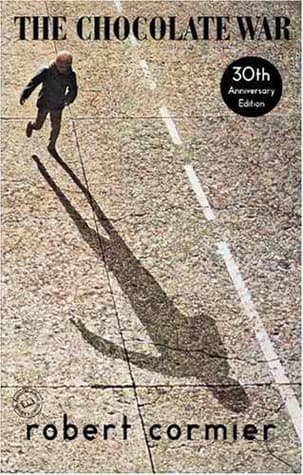
- The Chocolate War
Robert Cormier
3.5 (40k) average on GoodreadsYoung AdultExplores dark themes, mob mentality, and moral dilemmas in a high school setting.
- Lord of the Flies
William Golding
3.7 (2.3M) average on GoodreadsYoung AdultExamines the darker side of human nature and the breakdown of society among young people.
- Angels & Demons
Dan Brown
3.9 (2.7M) average on GoodreadsThrillerA Harvard symbologist races through Rome's ancient sites, deciphering cryptic clues to unmask the Illuminati and stop a vengeful plot to destroy the Vatican with a stolen antimatter weapon.
- Gone Girl
Gillian Flynn
4.1 (2.3M) average on GoodreadsThrillerA wife's sudden disappearance on her fifth anniversary reveals a web of lies and psychological warfare, exposing the secrets within a seemingly perfect marriage.
- The Girl on the Train
Paula Hawkins
3.9 (2.1M) average on GoodreadsThrillerA woman’s fascination with a seemingly perfect couple she watches from her daily train commute leads her into a dark investigation when she witnesses something that shatters their idyllic image.
- The Da Vinci Code
Dan Brown
3.9 (1.9M) average on GoodreadsThrillerA symbologist and a cryptologist race through European landmarks, deciphering ancient codes and uncovering a conspiracy that could rewrite the foundations of Christianity.





Enjoyed the summary?
A summary gives you the shape of the book. The book itself has the detail, the examples and the voice.
Find We All Fall Down on AmazonAs an Amazon Associate, BookBrief earns from qualifying purchases. How we're funded