
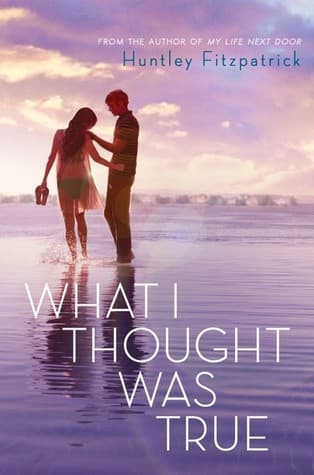
Synopsis
Covers the whole plot, including the ending.
- Difficulty
- Easy
- Pacing
- Moderate
- Mood
- Romantic, Reflective, Dramatic, Summer
- Read it if
- You enjoy contemporary YA romance with a focus on class differences, family secrets, and character growth in a picturesque summer setting.
- Skip it if
- You prefer fantasy or sci-fi, or dislike stories with significant family drama and a slower, character-driven pace.
What I Thought Was True Plot Summary
Covers the whole plot, including the ending.
The Return of Cassidy Somers
Gwen Castle, seventeen, lives on Gull Thicket, a working-class island, and dreads the summer. She wants to escape the island and the future of cleaning houses, like her mother. Worse, Cassidy Somers, the wealthy 'Stony Bay' boy with whom she had a brief, bad relationship last summer, has taken a job as the island's yard boy. His presence reminds her of past mistakes and the class difference. Gwen wants to avoid him and focus on her future, but the small island makes avoidance impossible, creating immediate tension and rekindling old feelings.
A Summer Job and Family Secrets
Gwen starts her summer job at the exclusive Gull Thicket Yacht Club, a place that represents the class divide she dislikes. She works with her best friend, Nic, and watches the wealthy summer residents, including the Somers family. Meanwhile, her father, a fisherman, acts strangely. He is secretive, often disappears, and worries Gwen and her mother. He also gives Gwen cryptic advice about leaving the island and not making his mistakes, which confuses and unsettles her, hinting at a hidden past he doesn't want to share.
Unraveling the Truth About Cassidy
Despite trying to avoid Cassidy, their paths often cross. Gwen learns that Cassidy isn't just working on the island; he lives there full-time, cut off financially by his wealthy parents after a scandal involving his older brother, Finn. Cassidy's family faces financial and legal problems, and his parents are divorcing. This changes Gwen's ideas about Cassidy's privileged life and makes her rethink her judgment of him. She sees a more vulnerable side of him, struggling with his own problems, which starts to break down her defenses.
The Developing Relationship with Cassidy
As Gwen and Cassidy spend more time together, first for work and then through shared moments, their old chemistry returns. They have secret meetings, late-night talks, and work together, allowing them to reconnect deeply. Gwen finds herself increasingly drawn to Cassidy's honesty and his efforts to handle his new reality. However, their rekindled relationship faces challenges from their different social statuses, the island's gossip, and their own insecurities from their past. They struggle to define their relationship amid outside pressures.
Nic's Resentment and the Class Divide
Gwen's best friend, Nic, is very protective of Gwen and dislikes the wealthy summer residents, especially the Somers family. Nic struggles with the economic differences on the island and sees Cassidy as a symbol of everything she hates about the 'Stony Bay' crowd. As Gwen and Cassidy grow closer, Nic's disapproval and jealousy become clear, creating tension in their long friendship. Nic's anger reflects the larger class conflict on Gull Thicket, showing the social barriers Gwen faces in a relationship with Cassidy.
The Truth About Gwen's Father
Gwen's father's mysterious behavior leads to a shocking reveal. She discovers that her father, Joe Castle, is not her biological father. Her biological father is Mr. Somers, Cassidy's father. This truth explains her father's strange advice about leaving the island and his deep resentment toward the wealthy families. The revelation shatters Gwen's understanding of her family, her identity, and her place in the world, making her relationship with Cassidy incredibly complicated with a new, unexpected familial connection.
Confronting Her Parents
Devastated and feeling betrayed, Gwen confronts her mother and Joe Castle about the secret. Her mother admits to a past affair with Mr. Somers, explaining the difficult circumstances and their decision to keep it hidden to protect Gwen and their family. Joe, despite the pain, expresses his unwavering love for Gwen, saying she is and always will be his daughter. This confrontation is emotional, forcing Gwen to deal with the implications of her parentage and the years of deception. She struggles to reconcile the loving family she thought she had with this new, complex reality.
The Fallout and Cassidy's Reaction
The truth about Gwen's biological father being Mr. Somers casts a shadow over her relationship with Cassidy. The revelation creates an uncomfortable, almost incestuous, dynamic neither of them expected. Cassidy is shocked and struggles to process the information, understanding the implications for his own family and his developing relationship with Gwen. Their connection is tested as they navigate this unforeseen obstacle, forcing them to confront their families' intertwined histories and societal expectations. The island's gossip machine works overtime, adding to their distress.
Choosing Her Own Path
As summer ends, Gwen faces important choices. She decides to embrace her identity, defined not by her biological father but by the love and upbringing of Joe Castle. She also realizes she cannot let the island's limitations or class divide control her future. She applies for scholarships and plans to go to college, determined to create her own path. This decision shows her growth and her commitment to building a life beyond Gull Thicket's expectations and secrets, demonstrating her resilience and independence.
Reconciliation and Moving Forward
Gwen and Cassidy, after much struggle and honest conversation, decide to continue their relationship, acknowledging the complexities but focusing on their true connection. They understand their journey will be unusual, but their love for each other is strong enough to overcome family hurdles. Gwen also makes up with Nic, who eventually understands Gwen's choices and apologizes for her earlier judgments. Gwen strengthens her bond with her mother and Joe, reaffirming her love and loyalty. The summer ends with Gwen looking toward the future with hope, having found a sense of self and belonging despite the upheaval.
Principal Figures
Gwen Castle
Protagonist
A determined island girl yearning to escape her predetermined future and uncover family truths.
Gwen is a sharp, observant, and sometimes cynical seventeen-year-old who lives on Gull Thicket, a working-class island. She dreams of escaping the island's confines and the perceived destiny of cleaning houses like her mother. Intelligent and fiercely independent, she initially holds strong prejudices against the wealthy 'Stony Bay' summer residents, particularly Cassidy Somers, due to a past heartbreak and the stark class divide. She is driven by a desire for self-determination and a deep love for her family, even as she grapples with their secrets.
Relationships: Cassidy Somers (Ex-boyfriend, rekindled romance, ultimately half-brother); Nic (Best friend); Joe Castle (Father (adoptive/social), loving and supportive); Gwen's Mother (Mother, secretive but loving); Mr. Somers (Biological father, wealthy summer resident)
Cassidy Somers
Love Interest/Supporting
A wealthy 'Stony Bay' boy forced to confront his family's downfall and his own vulnerabilities.
Cassidy Somers is initially perceived by Gwen as a privileged, charming, but ultimately unreliable 'Stony Bay' boy. He is handsome and charismatic but carries a hidden burden. After a scandal involving his brother and his family's financial ruin, he is cut off and forced to work on Gull Thicket, stripped of his former status. This experience humbles him, revealing his resilience, loyalty, and genuine nature. He is determined to prove himself and win back Gwen's trust, despite the escalating complications.
Relationships: Gwen Castle (Ex-girlfriend, rekindled romance, ultimately half-brother); Mr. Somers (Father); Mrs. Somers (Mother); Finn Somers (Older brother)
Nic
Supporting
Gwen's fiercely loyal best friend, deeply resentful of the wealthy summer residents.
Nic is Gwen's best friend and confidante, a strong-willed girl from Gull Thicket. She is fiercely protective of Gwen and harbors a deep-seated resentment towards the wealthy 'summer people' and the class disparities on the island. Her loyalty to Gwen is unwavering, but her prejudices sometimes lead to judgment and conflict, especially regarding Gwen's renewed connection with Cassidy. She represents the working-class perspective of the island and the challenges of breaking free from its social structures.
Relationships: Gwen Castle (Best friend)
Joe Castle
Supporting
Gwen's loving, secretive father figure who carries a hidden past.
Joe Castle is the man Gwen has always known as her father, a fisherman on Gull Thicket. He is hardworking, quiet, and deeply devoted to Gwen and her mother. His erratic behavior and cryptic advice early in the summer hint at a hidden past. Despite the shocking revelation of his non-biological parenthood, his love for Gwen is profound and unconditional. He represents the enduring power of chosen family and the sacrifices made for love.
Relationships: Gwen Castle (Daughter (adoptive/social)); Gwen's Mother (Wife)
Gwen's Mother
Supporting
A hardworking island woman who holds a significant family secret.
Gwen's mother is a hardworking woman who cleans houses for the wealthy summer residents, a fate Gwen fears for herself. She is loving and practical, but she has carried a profound secret for years regarding Gwen's true parentage. Her decision to hide the truth was driven by a desire to protect her family and maintain a stable life on the island. She struggles with the guilt of her past actions but ultimately seeks to mend her relationship with Gwen through honesty.
Relationships: Gwen Castle (Daughter); Joe Castle (Husband); Mr. Somers (Past lover, biological father of Gwen)
Mr. Somers
Mentioned/Supporting
Cassidy's wealthy, troubled father and Gwen's biological father.
Mr. Somers is a wealthy 'Stony Bay' resident and Cassidy's father, who is revealed to be Gwen's biological father. He represents the privileged class Gwen resents. He is a complex character, dealing with financial ruin, a crumbling marriage, and the fallout of his past actions. His affair with Gwen's mother decades prior set in motion the central conflict of the story, unknowingly intertwining the lives of the Castle and Somers families.
Relationships: Cassidy Somers (Son); Mrs. Somers (Wife (estranged)); Gwen's Mother (Past lover); Gwen Castle (Biological daughter)
Mrs. Somers
Mentioned/Supporting
Cassidy's mother, a wealthy woman navigating divorce and scandal.
Mrs. Somers is Cassidy's mother, a member of the affluent 'Stony Bay' community. She is depicted as someone grappling with the public humiliation of her family's financial ruin and her husband's infidelity. Her struggles highlight the fragility of wealth and social standing. She is a figure of both privilege and vulnerability, caught in the unraveling of her carefully constructed life.
Relationships: Cassidy Somers (Son); Mr. Somers (Husband (estranged))
Themes & Insights
Class Divide and Social Expectations
The novel shows the sharp class divide between Gull Thicket's working-class residents and the wealthy 'summer people' from Stony Bay. Gwen's dislike of the 'summer people' and her fear of being stuck cleaning houses, like her mother, are central to her character. This theme appears in the yacht club setting, Nic's strong loyalty to her class, and Gwen's initial judgment of Cassidy. The Somers family's financial ruin blurs these lines, showing that wealth is not always stable and making characters confront their biases. The theme questions if people can truly rise above their birth social class.
“We were islanders, and they were summer people. Two species, never meant to mix.”
Identity and Self-Discovery
Gwen's journey is about self-discovery, especially after learning her true parentage. She struggles with who she is, where she comes from, and what defines her—her biological father, the man who raised her, or her own choices. This theme is clear as Gwen rethinks her ideas about herself, her family, and her future. She learns that identity is not just about bloodline or social status but about love, loyalty, and personal choice. Her decision to pursue education and create her own path shows her developing understanding of herself.
“I was a Castle. Not a Somers. Not a secret. I was me, and I was going to be more.”
The Nature of Truth and Secrets
Secrets, both personal and family-related, drive the story. The long-kept secret of Gwen's biological father, her father's mysterious behavior, and Cassidy's family's hidden financial problems all contribute to the plot. The novel explores how these secrets affect individuals and relationships, showing how they can protect, betray, and change understanding. The characters learn that while some truths are painful, revealing them can lead to healing, honesty, and a deeper understanding of the past. The title, 'What I Thought Was True,' directly addresses this theme.
“The truth was a messy thing, full of jagged edges, and it cut deep.”
Love and Loyalty
The novel explores different kinds of love and loyalty: romantic love between Gwen and Cassidy, the strong bond of family (especially between Gwen and Joe Castle), and the lasting strength of friendship (between Gwen and Nic). Despite class differences and family secrets, love and loyalty are powerful. Joe's steady love for Gwen, even after the truth comes out, highlights that love is a choice and commitment beyond biology. Gwen's loyalty to her family and her eventual commitment to Cassidy, despite huge challenges, show how resilient these connections are.
“Love wasn't about blood. It was about who showed up. Who stayed. Who loved you, no matter what.”
Plot Devices & Literary Techniques
The Island Setting (Gull Thicket)
A physical and symbolic representation of confinement, class divide, and inescapable history.
Gull Thicket functions as more than just a backdrop; it's a character itself. Its small, insular nature ensures that characters' paths constantly cross, making avoidance impossible and fueling gossip. Symbolically, it represents Gwen's feeling of being trapped by her working-class destiny and her family's secrets. The physical bridge connecting it to Stony Bay literally and figuratively separates the two social classes, emphasizing the divide. The island's history, intertwined with the families living there, ensures that the past is always present and difficult to escape.
First-Person Narration (Gwen Castle)
Provides intimate access to Gwen's internal struggles, biases, and evolving perceptions.
Told from Gwen's perspective, the first-person narration allows readers to deeply empathize with her frustrations, dreams, and her initial prejudices against Cassidy and the wealthy summer residents. This perspective is crucial for understanding her emotional journey as she grapples with the revelations about her family and her own identity. The narrative voice highlights her growth as she moves from a place of judgment and resentment to one of understanding and acceptance, making the 'what I thought was true' aspect particularly impactful.
The Family Secret (Gwen's Parentage)
A central mystery that creates dramatic tension and fundamentally alters the characters' relationships.
The revelation that Mr. Somers is Gwen's biological father is the primary plot twist and a powerful plot device. It serves as the catalyst for Gwen's profound identity crisis, reshapes her relationship with Cassidy from romantic interest to half-sibling, and forces a re-evaluation of her entire family history. This secret creates immense dramatic tension, fueling character conflicts and driving the narrative towards its climactic confrontations and resolutions. It is the ultimate challenge to 'what Gwen thought was true' about her life.
The Yacht Club
A microcosm of the class divide and a frequent meeting point for conflicting social worlds.
The Gull Thicket Yacht Club serves as a symbolic and practical setting where the class divide is most evident. It's where Gwen works, observing the lavish lifestyles of the 'summer people,' including the Somers family. It's also where Cassidy, now working as a yard boy, frequently encounters Gwen. This location highlights the stark contrast between their worlds and forces their interactions, making it a recurring site for both tension and tentative connection between characters from different social strata.
What I Thought Was True Quotes
“Sometimes you just have to give in to the things you can't change. And sometimes, you have to fight like hell for the things you can.”
“It's funny how you can live in a place your whole life and never really know it until someone else points out all the things you've been missing.”
“The truth is, sometimes you don't know what you have until it's gone. And sometimes, even when it's gone, you still don't know what it was.”
“Love isn't always fireworks and grand gestures. Sometimes it's just a quiet understanding, a hand in yours when you least expect it, a shared laugh over nothing.”
“Secrets are like sand castles. They look solid enough, but one good wave and they're gone.”
“You can't choose your family, but you can choose how you let them affect you.”
“Being brave isn't about not being scared. It's about being scared and doing it anyway.”
“Some people come into your life and change everything, and some people just remind you of who you always were.”
“It's amazing how much you can miss someone even when they're right there, just not really there.”
“The past isn't just something that happened. It's something that lives inside you, shaping every choice you make.”
“Sometimes the hardest part of moving on is not letting go, but learning to live with what you've held onto.”
“You can't fix everyone, no matter how much you want to. Some things people have to fix for themselves.”
“The ocean always has a way of putting things into perspective. It reminds you how small you are, and how big everything else is.”
“There's a difference between what you think is true and what actually is. And sometimes, that difference can break you.”
Quiz
10 questions on the plot and the characters. Each answer comes with a short explanation.
Question 1
What is the name of Gwen Castle's island home that she wishes to leave?
- Stony Bay
- Fisherman's Landing
- Avalon Island
- The island is not given a specific name in the synopsis, only referred to as 'her island home'.
Show answer
D. The island is not given a specific name in the synopsis, only referred to as 'her island home'. The synopsis refers to Gwen's residence simply as 'her island home' without providing a specific name.
Question 2
What job does Cassidy Somers take on Gwen's island?
- Lifeguard
- Yard boy
- Fishing assistant
- House cleaner
Show answer
B. Yard boy The synopsis states that Cassidy Somers 'takes a job there as the local yard boy'.
Question 3
Where does Cassidy Somers originally come from?
- Another island nearby
- Across the bridge in Stony Bay
- The mainland
- He is a local islander, despite being rich.
Show answer
B. Across the bridge in Stony Bay The synopsis mentions Cassidy is 'a rich kid from across the bridge in Stony Bay'.
Question 4
What is Gwen's biggest fear regarding her future on the island?
- Being stuck in a relationship with Cassidy
- Having to leave the island permanently
- A life of cleaning houses, like her family
- Her family losing their fishing business
Show answer
C. A life of cleaning houses, like her family Gwen 'worries a life of cleaning houses will be her fate too', mirroring her family's occupation.
Question 5
What unexpected event occurs that challenges Gwen's perception of her future?
- Cassidy offers her a way off the island.
- She receives a scholarship to a mainland college.
- Her dad gives her some shocking advice.
- A new job opportunity arises that takes her away from cleaning.
Show answer
C. Her dad gives her some shocking advice. The synopsis states, 'just when it looks like she'll never escape her past—or the island—Gwen's dad gives her some shocking advice.'
Question 6
What social class distinction is highlighted between Gwen and Cassidy?
- Gwen is from a family of fishermen and housecleaners; Cassidy is a rich kid.
- Gwen is a summer person; Cassidy is a local.
- Gwen's family owns businesses; Cassidy's family works for them.
- Gwen is new to the island; Cassidy has lived there his whole life.
Show answer
A. Gwen is from a family of fishermen and housecleaners; Cassidy is a rich kid. The synopsis explicitly states, 'He's a rich kid from across the bridge in Stony Bay, and she hails from a family of fishermen and housecleaners who keep the island's summer people happy.'
Question 7
What is Cassidy Somers referred to as in relation to Gwen?
- Her childhood best friend
- Her Biggest Mistake Ever
- Her secret admirer
- Her new boss
Show answer
B. Her Biggest Mistake Ever The synopsis introduces Cassidy Somers as 'her Biggest Mistake Ever'.
Question 8
What is the central conflict Gwen faces throughout the summer?
- Deciding between two different romantic interests.
- Struggling to resolve what she thought was true with what really is.
- Overcoming her family's disapproval of her choices.
- Leaving the island for a new life elsewhere.
Show answer
B. Struggling to resolve what she thought was true with what really is. The synopsis concludes by stating Gwen 'struggling to resolve what she thought was true—about the place she lives, the people she loves, and even herself—with what really is.'
Question 9
What elements contribute to the atmosphere of the summer described in the book?
- A quiet, contemplative, and isolated setting.
- A tense, competitive, and academic environment.
- A gorgeous, restless summer with sparks flying and secret histories unspooling.
- A chaotic, fast-paced urban adventure.
Show answer
C. A gorgeous, restless summer with sparks flying and secret histories unspooling. The synopsis describes the summer as 'gorgeous, restless' and mentions 'sparks fly and secret histories unspool'.
Question 10
Which of the following aspects of Gwen's life is NOT explicitly mentioned as something she struggles to reconcile what she thought was true about?
- The place she lives
- The people she loves
- Her academic future
- Herself
Show answer
C. Her academic future The synopsis specifically lists 'the place she lives, the people she loves, and even herself' as areas of her struggle, but not her academic future.
What I Thought Was True FAQ
What is the central conflict Gwen faces at the beginning of the novel?
Gwen Castle is desperate to escape her small island home and the perceived fate of working in the service industry, like her family, for the wealthy summer residents. This desire is complicated by the arrival of Cassidy Somers, her 'Biggest Mistake Ever,' who takes a job as the island's yard boy, forcing her to confront their past.
Who is Cassidy Somers and what is his initial relationship with Gwen?
Cassidy Somers is a wealthy 'rich kid from across the bridge in Stony Bay' who previously had a significant, though undefined, romantic encounter or relationship with Gwen, which she now considers her 'Biggest Mistake Ever.' His presence on the island as the yard boy brings their complicated history to the forefront.
What kind of social divide is depicted in the book, and how does it affect Gwen?
The novel highlights a stark social divide between the working-class island residents, like Gwen's family of fishermen and housecleaners, and the affluent 'summer people' from Stony Bay, like Cassidy. Gwen feels trapped by her social standing and fears she is destined for a life of cleaning houses, struggling to see a path beyond the island's class structure.
What role does Gwen's father play in her journey of self-discovery?
Gwen's father delivers 'shocking advice' that challenges her preconceived notions about her future and her past. This advice acts as a catalyst, pushing Gwen to re-evaluate her life on the island, her family's history, and her own identity, ultimately helping her navigate her personal struggles.
How does the island setting contribute to the novel's themes?
The island setting symbolizes both confinement and a sense of rootedness for Gwen. It embodies the past she wishes to escape but also holds the secret histories and people she loves. Its isolation amplifies the social divides and personal conflicts Gwen experiences throughout the 'gorgeous, restless summer.'
What is the specific nature of the 'secret histories' that unspool throughout the summer?
The 'secret histories' refer to revelations about Gwen's family, particularly her father's past, and potentially Cassidy's background, that challenge Gwen's understanding of her life. These secrets force her to confront uncomfortable truths about her loved ones and the island itself, complicating her journey toward self-discovery.
Are there any subtle clues early on that hint at the true nature of Gwen's father's past?
While not explicitly stated in the synopsis, the description of Gwen's father giving 'shocking advice' suggests his past might not be as straightforward as Gwen believes. His willingness to offer unexpected guidance could subtly hint at a personal history that allows him a broader perspective on life beyond the island's typical expectations.
How does the 'Biggest Mistake Ever' evolve from a past regret into a current opportunity for growth?
Cassidy Somers, initially Gwen's 'Biggest Mistake Ever,' becomes a catalyst for her growth by forcing her to confront her past choices and emotions. His unexpected presence on the island means Gwen can no longer avoid their shared history, prompting her to process her feelings and understand the true nature of their connection, rather than just dismissing it.
What is the significance of the phrase 'what I thought was true' in relation to Gwen's character arc?
The phrase 'what I thought was true' directly reflects Gwen's journey of disillusionment and re-evaluation. She begins with firm beliefs about her future, her family, and Cassidy, but as secrets unspool, she must reconcile these initial perceptions with the complex realities, leading to a more nuanced understanding of herself and her world.
How does Gwen's fear of 'a life of cleaning houses' impact her self-worth and decision-making?
Gwen's fear of 'a life of cleaning houses' is deeply tied to her self-worth, making her feel trapped and inferior due to her family's social standing. This fear fuels her desire to escape the island and likely influences her initial judgment of Cassidy, as she struggles to envision a future that breaks free from these societal expectations.
Describe the psychological impact of the 'sparks fly' dynamic between Gwen and Cassidy, considering their past.
The 'sparks fly' dynamic between Gwen and Cassidy is psychologically complex, as it represents a powerful, undeniable attraction clashing with past regret and social barriers. This tension forces Gwen to confront conflicting emotions – residual affection, anger, shame, and longing – compelling her to process their shared history rather than simply avoid it, leading to significant emotional turmoil and growth.
How does Gwen's internal conflict between loyalty to her family/island and her desire for escape manifest?
Gwen's internal conflict manifests as a deep struggle between her love and loyalty to her family and their island traditions versus her yearning for personal freedom and a different future. She feels torn between her roots and her aspirations, leading to emotional distress as she tries to honor both aspects of her identity without sacrificing one for the other.
What is the ultimate message about social class and upward mobility that the book conveys?
The book likely conveys that while social class can present significant obstacles, it doesn't solely define an individual's destiny or worth. Through Gwen's journey, it suggests that understanding one's past, challenging assumptions, and making personal choices are more powerful in shaping one's future than merely escaping a perceived social fate.
Is the ending ambiguous regarding Gwen's final decision about staying on the island or leaving?
The synopsis implies a journey of resolution, where Gwen struggles to 'resolve what she thought was true.' This suggests that while she might come to terms with her past and present, the specific outcome of whether she ultimately stays or leaves the island could be left open to interpretation, focusing more on her internal transformation than a definitive geographical choice.
How might the 'shocking advice' from Gwen's dad challenge traditional notions of parental guidance in YA literature?
Gwen's dad's 'shocking advice' challenges traditional YA parental guidance by potentially encouraging Gwen to embrace unconventional paths or confront uncomfortable truths, rather than simply offering comfort or conventional wisdom. This advice likely pushes her out of her comfort zone, forcing her to question her own biases and forge her own difficult path, rather than relying solely on parental protection.
Does the novel suggest that true love can overcome significant social and past mistakes?
The novel certainly explores the possibility that true connection can transcend social divides and past errors. The 'sparks fly' between Gwen and Cassidy, despite her labeling him her 'Biggest Mistake,' indicates a powerful attraction that forces them to confront their history, suggesting that genuine affection has the potential to heal and rebuild, rather than being permanently derailed by prior missteps or class differences.
How does the 'restless summer' setting contribute to the overall emotional tone of the book?
The 'restless summer' setting heightens the emotional intensity of the book. Summer often symbolizes freedom and change, but the 'restless' qualifier suggests underlying anxiety and unresolved tension. This atmosphere reflects Gwen's internal turmoil and the constant upheaval as secrets unfold and her perceptions are challenged, making it a period of significant emotional growth and turbulence.
Similar books
- The Summer I Turned Pretty
Jenny Han
3.9 (152k) average on GoodreadsYoung AdultExplores summer romance, coming-of-age themes, and complex relationships in a beach town.
- Along for the Ride
Sarah Dessen
4.1 (186k) average on GoodreadsYoung AdultFocuses on summer, self-discovery, and new relationships in a small town setting.
- We Were Liars
E. Lockhart
3.8 (465k) average on GoodreadsThrillerBoth books feature a central mystery surrounding a wealthy family and a protagonist uncovering a painful truth. However, "What I Thought Was True" grounds its mystery in more realistic, albeit dramatic, family secrets and class tensions, whereas Lockhart's novel employs a more unreliable narrator and a shocking, almost gothic, twist. Fitzpatrick's narrative maintains a more conventional YA romance structure, even with its darker undertones, while Lockhart's is a psychological thriller with a romance subplot.
- Harry Potter and the Sorcerer's Stone
J.K. Rowling
4.5 (7M) average on GoodreadsFantasyRescued from a miserable life under the stairs, an orphaned boy discovers he's a wizard destined for a magical school, where he uncovers a dangerous secret tied to the dark wizard who murdered his parents.
- The Hunger Games
Suzanne Collins
4.3 (6.4M) average on GoodreadsFantasyIn a future where children fight to the death on live television, Katniss Everdeen volunteers for the arena, turning a death sentence into a fight for survival and a spark of rebellion.
- To Kill a Mockingbird
Harper Lee
4.3 (4.5M) average on GoodreadsHistorical FictionIn the 1930s Jim Crow South, Harper Lee writes about racial injustice, moral growth, and the quiet courage of a lawyer father, Atticus Finch, as seen through his young daughter's eyes.





Enjoyed the summary?
A summary gives you the shape of the book. The book itself has the detail, the examples and the voice.
Find What I Thought Was True on AmazonAs an Amazon Associate, BookBrief earns from qualifying purchases. How we're funded