

Synopsis
Covers the whole plot, including the ending.
- Difficulty
- Hard
- Pacing
- Slow
- Mood
- Reflective, Tragic, Observational, Subtle
- Read it if
- You appreciate classic literature, psychological depth, and subtle social commentary on Victorian society and childhood innocence.
- Skip it if
- You prefer fast-paced plots, clear-cut moralizing, or modern, straightforward prose.
What Maisie Knew Plot Summary
Covers the whole plot, including the ending.
The Initial Arrangement
Maisie Farange, a young girl, is the focus of her parents', Ida and Beale's, bitter divorce. The court orders Maisie to spend six-month periods alternating between her mother's and father's homes. Both parents are self-centered and use Maisie in their ongoing fights, often speaking ill of the other to her. Maisie, at first confused, starts to adopt their manipulative ways and understands their superficiality and the tensions beneath it. She often lacks emotional care, becoming an observer rather than a participant in her own life, learning to navigate their conflicting stories and inconsistent affections.
New Parental Figures Emerge
After their divorce, both Ida and Beale remarry. Ida weds the charming Sir Claude, while Beale marries Miss Overmore, Maisie's former governess. Maisie now has new stepparents, who at first seem more stable and affectionate than her biological parents. However, these new relationships soon show their complexity. Sir Claude genuinely likes Maisie and gives her much-needed warmth, but he is also weak and easily swayed by Ida. Miss Overmore, now Mrs. Beale, also shows some affection for Maisie, but her main goal is Beale's attention and money.
The Shifting Alliances of Stepparents
As Maisie gets older, she becomes more aware of the tangled relationships around her. Sir Claude and Mrs. Beale, finding common ground in their shared neglect and unhappiness with their spouses, start an affair. Maisie, with her sharp observation skills, figures out their secret meetings and the unspoken understanding between them. This puts her in an even more uncertain position, as she now knows secrets her parents are unaware of, or choose to ignore. She finds herself a silent confidante to both Sir Claude and Mrs. Beale, who, despite their affair, show her more kindness than her own parents.
The Disappearance of the Parents
Over time, both Ida and Beale grow tired of their parental duties. Ida focuses on her social life and new partners, often leaving Maisie with Sir Claude. Beale, similarly, disappears for long periods, leaving Maisie with Mrs. Beale. Maisie's biological parents effectively abandon her, showing their great selfishness and lack of real concern for her. This abandonment, though painful, also strengthens Maisie's reliance on her stepparents, especially Sir Claude, who, despite his flaws, offers a sense of stability and affection her parents never truly gave.
Maisie's Growing Awareness
As Maisie nears adolescence, her innocence slowly turns into a clear, if unspoken, understanding of the moral complexities and hypocrisies of the adults around her. She processes their lies, infidelities, and self-deceptions through her own unique perspective, developing a quiet wisdom beyond her years. She learns to interpret their coded language, their evasions, and their attempts to manipulate her. This growing awareness is not cynical, but a deep, almost philosophical acceptance of the flawed nature of those who should care for her. She becomes a silent witness, observing the unfolding drama with detached yet deeply felt intelligence.
The Proposal to Mrs. Wix
Mrs. Wix, Maisie's long-suffering governess and the only consistent moral guide in her life, becomes increasingly worried by the immoral environment Maisie lives in. She suggests a solution: that Maisie should live permanently with her and Sir Claude, who, despite his affair with Mrs. Beale, Mrs. Wix sees as the most redeemable of the adults. Mrs. Wix believes that Sir Claude, with his underlying decency, could change and provide a stable, morally sound home for Maisie if he committed to her and left Mrs. Beale. This idea shows Mrs. Wix's deep concern for Maisie's moral upbringing, even if her plan seems unrealistic.
The Trip to France
With her parents mostly absent, Maisie is in France with Sir Claude and Mrs. Beale. This change of place does little to alter the basic dynamics of their unconventional family. Mrs. Wix, always watchful, joins them, continuing to argue for Maisie's moral well-being. The trip to France is a temporary escape from Ida and Beale's direct influence, but it also increases the emotional pressure on Maisie, who is now even more closely involved with the two adults having a secret affair. The foreign setting highlights Maisie's feeling of displacement and her reliance on these two flawed figures.
Maisie's Ultimatum
The situation reaches a turning point when Maisie is given an ultimatum. Sir Claude and Mrs. Beale, now settled in their relationship, propose that Maisie live with them permanently. However, Mrs. Wix, shocked by their immorality, insists that Maisie must choose between a life with her and a morally upright existence, or a life with Sir Claude and Mrs. Beale, which she sees as a path to ruin. This forces Maisie, still a child, to make an impossible decision, one with great moral and emotional weight. She is caught between her affection for Sir Claude and Mrs. Beale and her respect for Mrs. Wix's moral principles.
The Confrontation and Sir Claude's Decision
Maisie, torn between her affection for Sir Claude and Mrs. Beale and her loyalty to Mrs. Wix, tries to navigate the impossible choice. Sir Claude, despite his genuine fondness for Maisie, proves too weak to resist Mrs. Beale's influence and the comfort of their established illicit relationship. He cannot make the moral commitment Mrs. Wix demands, which would involve leaving Mrs. Beale and living a proper life for Maisie's sake. His decision to stay with Mrs. Beale confirms Maisie's understanding of his weakness and the unlikelihood of any true moral change for the adults around her.
Maisie's Final Choice
Faced with Sir Claude's inability to choose her over Mrs. Beale, Maisie makes a deep and heartbreaking decision. Despite her love for Sir Claude and the appeal of a comfortable life with him and Mrs. Beale, she chooses to leave them and stay with Mrs. Wix. This choice shows Maisie's rejection of the moral compromises and superficiality that have defined her life. It is a strong assertion of her developing moral compass and her desire for a life based on integrity, even if it means giving up the affection and material comforts offered by her stepparents. Her decision marks her true coming-of-age.
Principal Figures
Maisie Farange
Protagonist
A precocious and morally discerning child caught between her divorcing parents and their new spouses.
Maisie is a highly observant and intelligent young girl, initially confused by the complexities of her parents' divorce and subsequent remarriages. Over time, she develops an extraordinary capacity for understanding the unspoken truths and moral failings of the adults around her. She is remarkably resilient, adapting to her constantly shifting environment, and learns to interpret their manipulative behaviors and hypocrisies. Despite her tender age, she possesses a profound moral compass, which she eventually asserts in a decisive act of self-preservation and integrity.
Relationships: Ida Farange (Biological mother, manipulative and neglectful); Beale Farange (Biological father, equally manipulative and neglectful); Sir Claude (Stepfather, affectionate but weak-willed and complicit in an affair); Mrs. Beale (Miss Overmore) (Stepmother, initially governess, affectionate but morally compromised and complicit in an affair); Mrs. Wix (Governess and moral guardian, a constant source of stability and moral guidance)
Ida Farange
Antagonist/Supporting
Maisie's beautiful, flamboyant, and utterly self-absorbed mother.
Ida is Maisie's biological mother, characterized by her striking beauty, social ambition, and profound selfishness. She uses Maisie as a tool in her ongoing battles with Beale and shows little genuine affection or concern for her daughter's well-being. Her life is dominated by social engagements and a succession of lovers, ultimately leading her to neglect Maisie almost entirely. She embodies the superficiality and moral bankruptcy that Maisie learns to navigate.
Relationships: Maisie Farange (Daughter, used as a pawn); Beale Farange (Ex-husband, source of ongoing conflict); Sir Claude (Second husband, whom she also neglects)
Beale Farange
Antagonist/Supporting
Maisie's handsome, equally self-absorbed, and irresponsible father.
Beale is Maisie's biological father, mirroring Ida in his vanity, irresponsibility, and lack of genuine parental feeling. He is charming but fundamentally unreliable, using Maisie to spite Ida and neglecting her whenever it suits his desires. Like Ida, he prioritizes his own pleasures and social life over his daughter's needs, eventually disappearing from her life almost entirely. His moral failings contribute significantly to Maisie's difficult upbringing.
Relationships: Maisie Farange (Daughter, used as a pawn); Ida Farange (Ex-wife, object of his animosity); Mrs. Beale (Miss Overmore) (Second wife, whom he also neglects)
Sir Claude
Supporting
Maisie's kind but weak-willed stepfather, married to Ida.
Sir Claude is Ida's second husband and Maisie's stepfather. He is genuinely fond of Maisie and provides her with more warmth and affection than her biological parents. However, he is morally weak, easily manipulated by Ida, and eventually embarks on an affair with Mrs. Beale. Despite his underlying decency and his desire to do right by Maisie, he lacks the strength of character to make a firm moral stand, ultimately choosing his illicit relationship over Maisie's welfare.
Relationships: Maisie Farange (Stepdaughter, whom he genuinely cares for); Ida Farange (Wife, whom he is dominated by); Mrs. Beale (Miss Overmore) (Mistress, with whom he forms a strong bond)
Mrs. Beale (Miss Overmore)
Supporting
Maisie's governess turned stepmother, married to Beale, and later Sir Claude's mistress.
Initially Maisie's governess, Miss Overmore later marries Beale Farange, becoming Mrs. Beale. She is more attentive to Maisie than Beale but is also driven by self-interest and a desire for social advancement. She forms an intimate relationship with Sir Claude, Maisie's stepfather, creating a morally complex environment for the child. Despite her compromised position, she shows a degree of affection for Maisie, but her loyalties are ultimately to Sir Claude and her own desires.
Relationships: Maisie Farange (Former charge, then stepdaughter, whom she shows affection); Beale Farange (Husband, whom she eventually neglects); Sir Claude (Lover, with whom she shares a strong bond)
Mrs. Wix
Supporting
Maisie's devoted and morally upright governess.
Mrs. Wix is Maisie's governess, a plain but deeply moral and devoted woman. She is the only consistent and truly benevolent adult in Maisie's life, serving as her moral compass and protector. She is acutely aware of the corrupting influence of Maisie's parents and stepparents and tirelessly advocates for Maisie's moral education and well-being. Her unwavering commitment to integrity and her belief in the importance of a 'sense of responsibility' guide Maisie's final, pivotal decision.
Relationships: Maisie Farange (Charge, whom she loves and protects); Sir Claude (Potential moral convert, whom she hopes to save for Maisie's sake)
The Countess
Mentioned
One of Ida's social acquaintances/lovers.
The Countess is a figure associated with Ida Farange's extravagant social life and her various romantic entanglements. She represents the superficial, morally lax society that Maisie's mother inhabits, further illustrating Ida's disinterest in her daughter and her focus on personal pleasures.
Relationships: Ida Farange (Social acquaintance and romantic interest)
Themes & Insights
Loss of Innocence and Moral Development
The novel clearly shows Maisie's journey from a naive child to a morally aware young girl. At first, Maisie is an innocent pawn, unable to grasp the adult world's complexities. However, through constant exposure to her parents' and stepparents' lies, infidelities, and selfish behaviors, she develops a deep, unspoken understanding of morality. Her 'knowledge' is not cynical, but a hard-won wisdom that allows her to make a key moral choice at the end, rejecting the adults' superficiality and compromise for a life of integrity, as seen when she decides to stay with Mrs. Wix over Sir Claude.
“She was to remember in after-years that she had had a dim sense of the whole place being full of people who were all there for a purpose connected with her, but of whom she was no more than the little instrument.”
The Corrupting Influence of Adulthood
A main theme is the damaging effect of irresponsible and morally corrupt adults on a child. Maisie's parents, Ida and Beale, are examples of selfishness, using their daughter as a tool in their personal fights and neglecting her emotional needs. Their new spouses, Sir Claude and Mrs. Beale, while at first offering some comfort, eventually give in to their own moral failings, having an affair that further complicates Maisie's world. The novel shows adulthood not as a state of wisdom or protection, but often as one of great moral weakness and self-indulgence, forcing Maisie to become the moral center of her own life.
“She was a ready receptacle for anything, and she had no questions.”
Appearance vs. Reality
The novel always highlights the difference between how adults present themselves and their true characters. Maisie's parents maintain a facade of politeness while privately engaging in bitter arguments. Sir Claude and Mrs. Beale appear outwardly charming and caring, yet they conduct a secret affair. Maisie, through her sharp observation, learns to see through these deceptive appearances, understanding the real nature of their relationships and motivations. This theme highlights the manipulative nature of the adult world and Maisie's unique ability to see past its surface.
“She was a small winged creature caught in the cross-currents of a great gale.”
The Nature of Love and Affection
The story explores different forms of 'love' and affection, often showing them to be conditional, superficial, or self-serving among the adults. Ida and Beale's 'love' for Maisie is transactional and brief. Sir Claude and Mrs. Beale offer Maisie real warmth, but their affection is tied to their illicit relationship, making it morally compromised. In contrast, Mrs. Wix's love for Maisie is pure, unconditional, and morally driven, representing the only true and lasting affection Maisie receives. This contrast forces Maisie to tell the difference between genuine care and self-interested attachment.
“She had a sense that she was not wanted—that she was rather in the way.”
Plot Devices & Literary Techniques
Focalization through a Child's Perspective
The story is told almost entirely through Maisie's limited but intensely observant point of view.
Henry James employs focalization through Maisie's perspective to create a unique narrative voice. The reader experiences the complex adult world through the eyes of a child, who, while not fully grasping the explicit details of adult immorality, acutely senses its implications and consequences. This technique allows James to subtly critique societal hypocrisy without overt authorial commentary, as Maisie's innocent yet penetrating gaze reveals the moral decay around her. Her interpretations, often unspoken, are more powerful than direct exposition, forcing the reader to piece together the adult drama.
Symbolism of Names
Character names often subtly reflect their personalities or roles.
While not always explicit, some character names carry symbolic weight. 'Farange' suggests 'far range' or being distant, reflecting the emotional distance and neglect of Maisie's parents. 'Wix' might imply 'wick' or a guiding light, aligning with Mrs. Wix's role as Maisie's moral compass. This device adds a layer of subtle meaning, reinforcing character traits and thematic elements without being overly didactic, inviting the reader to consider the deeper implications of the characters' identities.
The Unreliable Narrator (in a nuanced sense)
The narrative is filtered through Maisie's developing understanding, making her interpretation of events a key element.
While Maisie is the focalizer, her understanding evolves throughout the novel. Her initial innocence means she doesn't fully grasp the explicit nature of the adult relationships and moral failings. The 'unreliability' comes from the reader's need to interpret and fill in the gaps of what Maisie observes but doesn't fully articulate. This creates dramatic irony and allows James to explore the nuances of perception and the gradual dawning of moral awareness in a child. The reader often understands more than Maisie initially does, but through her eyes.
What Maisie Knew Quotes
“The child was a convenient pretext, a blessing of sorts, a screen for the others to look at each other through.”
“She was a ready receptacle, a perfectly empty vessel into which, day by day, convenience dropped its store.”
“It was as if she had been a little shuttlecock, kept going by the battledores of her parents' divorce.”
“She was old enough now to understand that there was a great deal that was not said, and that what was not said was often the most important.”
“Maisie knew what she knew, and she knew it better than anyone could have told her.”
“The truth was a great, complicated ball of string that her elders were perpetually trying to untangle, or perhaps to tangle further.”
“Her innocence was a sort of shield, but it was also a sort of lens, through which she saw things with a terrible clarity.”
“She was a small, still point in the midst of a general agitation.”
“What Maisie knew was not a matter of what she had been told, but of what she had seen and felt.”
“It was a world of explanations that never explained, and of reasons that were never reasonable.”
“She had become a little connoisseur of these arrangements, a critic of the conjugal and extra-conjugal.”
“The effect of her presence was to make everyone a little more artificial.”
“She was a repository of other people's history, a living record of their infidelities and their discontents.”
“Her little heart had learned to beat in the rhythm of their complications.”
“To be clean, to be clear, to be free: these were the things she vaguely yearned for.”
Quiz
10 questions on the plot and the characters. Each answer comes with a short explanation.
Question 1
What is Maisie Farange's primary legal status after her parents' divorce?
- She lives permanently with her mother, Ida.
- She lives permanently with her father, Beale.
- She is placed in the care of a governess, Mrs. Wix.
- She is shuttled back and forth between her parents every six months.
Show answer
D. She is shuttled back and forth between her parents every six months. After her parents' divorce, Maisie's custody arrangement dictates that she spends six months with her mother, Ida, and then six months with her father, Beale, in a continuous cycle.
Question 2
Who is Mrs. Wix in relation to Maisie?
- Maisie's stepmother, Miss Overmore.
- Maisie's governess and a maternal figure.
- A family friend who occasionally visits Maisie.
- The lawyer representing Maisie's interests.
Show answer
B. Maisie's governess and a maternal figure. Mrs. Wix is Maisie's governess, initially hired by Ida, and she becomes the most consistent and morally upright maternal figure in Maisie's life.
Question 3
What is the primary characteristic of Maisie's parents, Ida and Beale Farange?
- They are devoted to Maisie's education and well-being.
- They are financially stable and provide a comfortable home.
- They are self-absorbed, neglectful, and morally lax.
- They maintain a civil relationship for Maisie's sake.
Show answer
C. They are self-absorbed, neglectful, and morally lax. Ida and Beale are consistently portrayed as self-absorbed, irresponsible, and more concerned with their own romantic entanglements than with Maisie's emotional or moral development.
Question 4
Who does Maisie's father, Beale Farange, eventually marry after his divorce from Ida?
- The Countess.
- Mrs. Wix.
- Miss Overmore, Maisie's former governess.
- Lady Clanricard.
Show answer
C. Miss Overmore, Maisie's former governess. Beale Farange marries Miss Overmore, who was initially Maisie's governess while she was living with her mother, Ida.
Question 5
What does Maisie primarily 'know' throughout the novel, in terms of her perception of adult relationships?
- She understands the true nature of love and commitment.
- She is aware of the adults' constant deceptions, infidelities, and moral compromises, often without explicit understanding.
- She believes her parents are genuinely trying their best for her.
- She is completely oblivious to the complexities of adult life.
Show answer
B. She is aware of the adults' constant deceptions, infidelities, and moral compromises, often without explicit understanding. Maisie's 'knowledge' is her innocent yet acutely observant perception of the scandalous and morally ambiguous relationships and deceptions among the adults around her, often piecing together truths from hints and omissions.
Question 6
Who is Sir Claude?
- Ida's second husband, and Maisie's stepfather.
- A wealthy suitor of Mrs. Wix.
- Beale's brother and Maisie's uncle.
- Maisie's tutor, hired by Beale.
Show answer
A. Ida's second husband, and Maisie's stepfather. Sir Claude is Ida Farange's second husband, making him Maisie's stepfather. He is kind to Maisie but also morally weak and easily swayed.
Question 7
What is the ultimate decision Maisie makes regarding her future at the end of the novel?
- She chooses to live with her mother, Ida, and the Count.
- She chooses to live with her father, Beale, and Mrs. Beale.
- She chooses to remain with Mrs. Wix, rejecting Sir Claude and the life he offers.
- She decides to run away and live independently.
Show answer
C. She chooses to remain with Mrs. Wix, rejecting Sir Claude and the life he offers. After being presented with the choice to live with Sir Claude (and potentially Mrs. Beale) or with Mrs. Wix, Maisie ultimately chooses the moral constancy and affection of Mrs. Wix, rejecting the compromised adult world.
Question 8
How does Henry James primarily use Maisie's perspective to convey the story's themes?
- Through explicit moral judgments and criticisms from Maisie.
- By having Maisie engage in direct confrontations with her parents and stepparents.
- Through her innocent but increasingly perceptive observations of adult behavior, often without full understanding of its implications.
- By presenting Maisie as a fully articulate narrator who explains the adult world to the reader.
Show answer
C. Through her innocent but increasingly perceptive observations of adult behavior, often without full understanding of its implications. James employs a focalized narrative through Maisie's consciousness. We see the world through her eyes, observing adult behavior and conversations, and gradually piecing together the moral decay, even if Maisie herself doesn't always grasp the full depravity.
Question 9
What is the significance of the various governesses and tutors in Maisie's life (Miss Overmore, Mrs. Wix, Sir Claude's former governess)?
- They represent the stable, moral foundation of Maisie's upbringing.
- They highlight the frequent turnover and instability in Maisie's care, often becoming entangled in the parents' affairs themselves.
- They are all uniformly dedicated to Maisie's intellectual development.
- They serve as Maisie's only true friends and confidantes.
Show answer
B. They highlight the frequent turnover and instability in Maisie's care, often becoming entangled in the parents' affairs themselves. The series of governesses, particularly Miss Overmore and Mrs. Wix, underscores the instability of Maisie's home life. Miss Overmore marries Beale, and even the morally upright Mrs. Wix is constantly threatened with dismissal or abandonment, highlighting the precariousness of Maisie's support system.
Question 10
The novel is often cited as an example of James's exploration of what literary technique?
- Omniscient narration with a detached authorial voice.
- Stream of consciousness, delving directly into Maisie's unfiltered thoughts.
- Focalization through a child's consciousness, limiting the reader's information to what the child perceives.
- Epistolary format, told entirely through letters.
Show answer
C. Focalization through a child's consciousness, limiting the reader's information to what the child perceives. Henry James masterfully uses focalization through Maisie's consciousness. The reader experiences the complex adult world only as Maisie perceives it, often understanding more than the child herself, but always filtered through her innocent yet observant perspective.
What Maisie Knew FAQ
What is the central premise of 'What Maisie Knew'?
'What Maisie Knew' follows the young Maisie Farange as she navigates the increasingly complex and morally ambiguous world created by her divorced parents, Beale and Ida Farange. The novel explores her innocent perception of their adult relationships and the subsequent remarriages and affairs that define her childhood.
Who are Maisie's parents and what are their key characteristics?
Maisie's parents are Beale and Ida Farange, both depicted as extraordinarily selfish, vain, and irresponsible. They use Maisie as a pawn in their post-divorce squabbles, primarily concerned with their own social lives and financial benefits rather than their daughter's well-being or moral development.
How does Maisie's custody arrangement evolve throughout the story?
Initially, Maisie's custody is split between Beale and Ida, with her spending six months with each. This arrangement becomes more complicated as both parents remarry, leading to Maisie being passed between various stepparents and their new partners, often with little regard for her stability.
Who are Sir Claude and Mrs. Wix, and what roles do they play in Maisie's life?
Sir Claude is Maisie's stepfather, married to Ida, and Mrs. Wix is her governess. Sir Claude is portrayed as somewhat charming and kind, but ultimately weak-willed, while Mrs. Wix is Maisie's most consistent and morally grounded caregiver, though often struggling to assert influence.
What is the significance of Maisie's 'knowing' in the title?
Maisie's 'knowing' refers to her gradual, often unspoken, understanding of the adult world's immoralities and complexities, particularly the illicit relationships surrounding her. She doesn't explicitly articulate this knowledge but demonstrates it through her observations, silences, and subtle reactions to the adults' behavior.
What hidden detail suggests the true nature of Beale Farange's marriage to Miss Overmore?
The swiftness and casualness of Beale's marriage to Miss Overmore, who becomes Mrs. Beale, immediately after his divorce from Ida, subtly hints at the superficiality of his affections. His subsequent abandonment of Maisie to Mrs. Beale and Sir Claude further underscores his lack of genuine paternal commitment.
How does the novel subtly imply the affair between Sir Claude and Mrs. Beale?
The novel implies the affair through their increasing proximity, shared responsibilities for Maisie, and the way Maisie is passed between them while Ida and Beale are absent. Their eventual decision to live together, presenting themselves as Maisie's primary guardians, solidifies this unspoken understanding.
What is the unspoken understanding between Maisie and Sir Claude regarding his relationship with Mrs. Beale?
Maisie and Sir Claude share an unspoken understanding that he is involved with Mrs. Beale. Maisie, in her innocence, accepts this as part of her convoluted family structure, while Sir Claude, in turn, treats her with a tenderness that implicitly acknowledges his moral compromise and her unique position.
How does the ending, with Maisie choosing Mrs. Wix, reflect her acquired 'knowing'?
Maisie's final choice to remain with Mrs. Wix and forgo the chance to live with Sir Claude and Mrs. Beale, despite her affection for Sir Claude, demonstrates her developed moral discernment. She recognizes the inherent instability and impropriety of their arrangement, choosing a life of integrity, even if it means poverty.
How does Maisie's innocence function as a psychological shield throughout the novel?
Maisie's initial innocence allows her to absorb the shocking behaviors of the adults around her without immediate trauma, interpreting their actions through a child's lens. This shield gradually wears down as she accumulates more 'knowledge,' but it initially protects her from outright cynicism or despair.
What psychological impact do her parents' constant battles have on Maisie?
Her parents' constant battles create a deep sense of instability and emotional neglect, forcing Maisie to become prematurely self-reliant and observant. She learns to manage their egos and navigate their conflicting demands, developing a keen sensitivity to adult moods and unspoken tensions.
Analyze Sir Claude's psychological complexity: is he genuinely good or merely weak?
Sir Claude is a complex character who embodies both genuine affection for Maisie and profound weakness. He struggles with moral responsibility, often choosing the path of least resistance and illicit romance over his duties, yet his moments of kindness toward Maisie suggest a latent goodness he cannot fully actualize.
How does Mrs. Wix represent an alternative psychological model to Maisie's parents?
Mrs. Wix represents a model of moral integrity, self-sacrifice, and unwavering devotion to a child's well-being, standing in stark contrast to Maisie's hedonistic and selfish parents. Her poverty and lack of social standing underscore her moral richness, offering Maisie a stable, if humble, psychological anchor.
Is Maisie a victim, an observer, or an active agent in her own story?
Maisie begins primarily as a victim and observer, passively shunted between her parents and stepparents. However, by the novel's end, her decisive choice to align with Mrs. Wix demonstrates her emergence as an active agent, making a profound moral decision that shapes her own future.
How does James use Maisie's limited perspective to comment on Victorian society?
James uses Maisie's limited, innocent perspective to satirize the hypocrisy and moral decay of upper-class Victorian society. By showing adult scandals through a child's eyes, he highlights the absurdity and self-deception of those who prioritize appearances and pleasure over genuine ethics.
Could Sir Claude and Mrs. Beale have offered Maisie a stable, albeit unconventional, family life?
While Sir Claude and Mrs. Beale genuinely care for Maisie, their proposed family life would have been inherently unstable due to its illicit nature and their own fickle characters. Maisie's choice suggests she understands that their affection, though real, couldn't guarantee the moral and emotional security she ultimately needed.
What is the ultimate message about childhood and morality that James conveys?
James conveys that even in the most morally compromised environments, a child's innate sense of right and wrong can develop. The novel suggests that while innocence is vulnerable, it can also lead to profound moral clarity, ultimately exposing the superficiality and corruption of the adult world.
How does the novel's ending with Maisie and Mrs. Wix, despite its poverty, offer a form of triumph?
The ending is a triumph of moral integrity over material comfort and social acceptance. Maisie chooses a life of principled poverty with Mrs. Wix, implicitly rejecting the hollow, morally bankrupt lives of her parents and stepparents, thus securing her own ethical future.
About the author
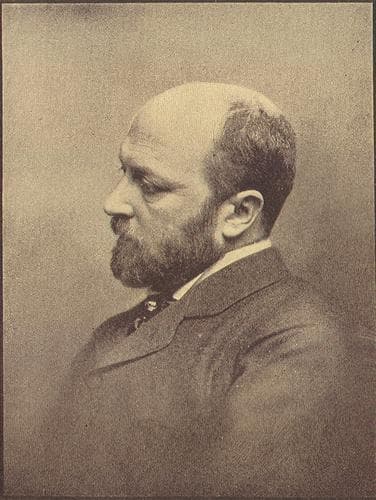
Henry James was an American-British author. He is regarded as a key transitional figure between literary realism and literary modernism, and is considered by many to be among the greatest novelists in the English language. He was the son of Henry James Sr. and the brother of philosopher and psychologist William James and diarist Alice James.
Similar books
- The Portrait of a Lady
Henry James
3.8 (73k) average on GoodreadsHistorical FictionShares James's intricate prose, focus on a young woman's moral awakening, and social critique.
- A High Wind in Jamaica
Richard Hughes
3.8 (9k) average on GoodreadsChildren'sExplores childhood innocence and moral ambiguity in a complex adult world.
- Great Expectations
Charles Dickens
3.8 (652k) average on GoodreadsHistorical FictionFeatures a child's perspective on a flawed adult world and a journey of self-discovery amidst social complexities.
- The Turn of the Screw
Henry James
3.4 (104k) average on GoodreadsMysteryWhile both What Maisie Knew and The Turn of the Screw employ a limited, often unreliable narrator (a child and a governess, respectively) and explore themes of innocence and corruption, Maisie focuses on social and psychological realism within a domestic setting. The Turn of the Screw, in contrast, delves into the supernatural and psychological horror, leaving the reader to question the reality of the perceived haunting. Maisie's moral clarity, despite her youth, stands in stark contrast to the governess's increasingly unhinged perspective, offering different lenses through which James explores psychological distress and moral ambiguity.
- Nineteen Eighty-Four
George Orwell
4.2 (5.5M) average on GoodreadsFictionWinston Smith dreams of truth and rebellion in a world where Big Brother watches all, but he confronts the terrifying power of a regime that controls not just actions, but thoughts.
- The Frozen River
Ariel Lawhon
4.4 (600k) average on GoodreadsFictionIn 1789 Maine, a heroic midwife's diary helps her expose a murder and get justice in a town that wants to silence her.






Enjoyed the summary?
A summary gives you the shape of the book. The book itself has the detail, the examples and the voice.
Find What Maisie Knew on AmazonAs an Amazon Associate, BookBrief earns from qualifying purchases. How we're funded